

Why the Best PCB Supply Chains Are Built Like Relationships, Not Transactions: Lessons for Satellite Communication PCB Programs
What actually makes a long-term PCB supply chain partnership work — shared
After years of working with telecommunication PCBs, I have gradually come to realize a fundamental truth: a truly excellent board is not merely the result of stacking up impressive technical specifications. While those flashy technical metrics are certainly important, the factors that truly determine success or failure are often the fundamental process steps that are easily overlooked.
I recall a project last year where a client urgently needed a batch of Telecommunication PCB samples. The manufacturer we selected boasted that they possessed the most advanced inspection equipment available; however, the moment we received the first batch of boards, we discovered issues with impedance matching. It wasn’t until we toured their workshop that we pinpointed the root cause: the problem lay in a most basic process—the etching stage—where workers, in an effort to rush production, had cut the etching time short by ten minutes. Such a compromise on a minute detail directly resulted in the entire batch of boards needing to be scrapped and remade.
Nowadays, I place particular emphasis on a manufacturer’s daily management habits. For instance, are the workshop’s temperature and humidity logs readily accessible? Do employees proactively cross-reference their work against the process instruction cards while performing their tasks? These seemingly trivial details often serve as a far more accurate reflection of a manufacturer’s true capabilities than any expensive piece of inspection equipment.
Regarding the testing process, I hold a somewhat unconventional view. Many people strive for 100% automated inspection, but I place greater faith in the value of manual re-inspection. On one occasion, automated optical inspection (AOI) indicated that a board was flawless; yet, a veteran technician, simply by shining a flashlight across the surface at an angle, discovered two minute defects in the substrate material. This type of judgment—rooted in years of experience—is something that machines, for the time being, simply cannot replicate.
The delivery phase is where a manufacturer’s true mettle is truly put to the test. I have encountered numerous manufacturers who produce exquisite samples, only to stumble and fall short once the transition is made to mass production. Truly reliable suppliers will proactively discuss the details of material preparation with you—such as how to control batch-to-batch variations in copper foil, or what constitutes an appropriate shelf life for prepregs. They might even share their suppliers’ delivery schedules with you to analyze together.
A small factory I recently collaborated with left a deep impression on me. Although they are modest in size, before every shipment, the factory manager personally spot-checks three boards and hand-writes the test data on the back of the packing slip. This seemingly “old-fashioned” approach actually puts our minds completely at ease—you know that someone is personally taking full responsibility for the quality of that specific batch.
Ultimately, the quality of a communications board doesn’t hinge on outstanding performance in a single stage, but rather on the stable, collaborative effort of the entire manufacturing chain. It’s like cooking a good pot of soup: while the heat control and seasonings are certainly important, what truly determines the flavor is often the freshness of the ingredients and the care the chef puts into it.
Having worked with communications equipment for years, I’ve come to realize something: finding the right PCB supplier can be an even bigger headache than selecting the actual chips. Just last week, a project hit a roadblock due to impedance control issues; when the boards were powered up, the signal jittered wildly—looking just like an ECG readout. We later discovered that the supplier had set the tolerance for the microstrip line widths far too loosely.
Many people focus solely on the price quote right from the start, trying to haggle down the cost. In reality, the greatest risk with communications boards lies in “hidden costs.” For instance, a purchasing agent once chose a new, unproven factory just to save a mere 30 cents per board; the result was that every single impedance test on the samples failed—all “in the red”—necessitating a complete rework that delayed the project schedule by two weeks. In moments like that, you quickly realize that those suppliers advertising “special low prices” often lack even a basic understanding of fundamental PCB stack-up structures.
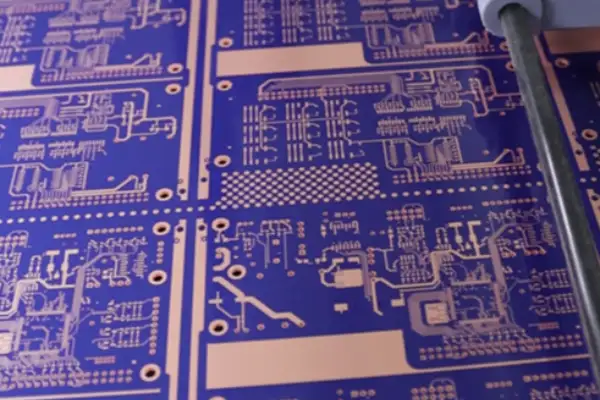
My current strategy is to prioritize technical competence above all else. When sending out an RFQ, I directly attach my impedance control requirements and target TDR test waveforms; any supplier response containing vague qualifiers like “approximately” or “should be” gets immediately rejected. One factory in Shenzhen really impressed me: their engineers proactively requested our design files so they could verify details like return path matching—a level of professional diligence that is far more valuable than simply offering a rock-bottom price.
During the small-batch trial production phase, I typically order around 50 boards—not to test their functional performance, but specifically to subject them to destructive testing. On one occasion, I placed a batch of boards into a high-temperature, high-humidity chamber; three days later, we discovered that the solder mask had begun to blister. The supplier didn’t hesitate for a second—they immediately remanufactured the entire batch. That kind of unwavering sense of responsibility is precisely what communications projects need most. Recently, while engaging with several manufacturers specializing in boards for specific applications—such as telecommunications—I noticed an interesting phenomenon: the truly knowledgeable sales representatives are often the ones who advise you against blindly chasing high-end specifications. For instance, for standard base stations, ordinary TG-grade materials are often sufficient to withstand environmental stresses; there is no need to insist on high-speed laminates. The money saved by opting for standard materials is often enough to fund two additional rounds of product debugging.
Ultimately, finding a supplier for telecom boards is much like finding a marriage partner: focusing solely on the “dowry”—the price tag—makes you prone to falling into pitfalls. Instead, you must assess whether they have the capacity to stand by you and help you navigate the various extreme operating conditions that arise throughout a product’s entire lifecycle.
I have always found the process of selecting PCB suppliers for telecommunications equipment to be quite fascinating. Companies across the market constantly emphasize their key performance metrics—for example, “Company X Co., Ltd.” might tout its 100% on-time delivery rate—yet behind these figures often lie deeper, more complex realities.
Last year, we partnered with a new supplier for a specific project. Their promised engineering support sounded comprehensive on paper: rapid DFM (Design for Manufacturability) analysis, dedicated teams to support high-speed circuit design, and so on. However, upon actual engagement, we discovered that while these services did indeed exist, their response times were significantly slower than anticipated. This was particularly evident when we encountered complex signal integrity issues; their technical support team required multiple rounds of internal verification before they could provide a viable solution.
In my view, evaluating a supplier requires looking beyond surface-level data; one must prioritize their ability to handle unforeseen problems. On one occasion, we encountered a batch with quality inconsistencies. The supplier—which had heavily advertised its high-quality standards—took nearly a full week to complete the closed-loop 8D report process. In contrast, a slightly smaller supplier managed to provide a root cause analysis and proposed corrective actions within just two days.
In the telecommunications sector, the demands placed on suppliers of PCBs for Telecommunication are particularly rigorous, serving as a true test of their comprehensive capabilities. Solely chasing the lowest unit price may necessitate compromises in other critical areas, such as material consistency or process stability. We once selected a supplier with a highly attractive price quote in an effort to reduce costs; however, midway through production, we discovered that fluctuations in the parameters of their base materials caused the entire batch to fail our RF performance standards.
Nowadays, I place greater value on a supplier’s willingness to truly understand our specific needs, rather than simply executing a list of technical specifications. An ideal partnership should function as an extension of our own engineering team—capable of proactively identifying potential design risks and offering constructive optimization suggestions. This level of synergy requires time and mutual effort to cultivate, but once established, it can significantly boost a project’s probability of success.
Price is, of course, important; however, I have gradually come to realize that the cheapest solution often conceals the most expensive hidden costs. This is especially true when selecting partners in the telecommunications equipment sector—a field where the demands for reliability are exceptionally high—where it is absolutely essential to strike a balance between short-term financial gains and long-term strategic value. I’ve always found PCB design within the telecommunications industry to be particularly fascinating. I recall a conversation with some engineers who mentioned that the circuit boards used in modern base stations must be capable of withstanding temperatures as low as -40°C. This brought to mind the frozen lakes of my hometown during winter—it is truly no small feat for equipment to operate stably in such an environment. For instance, base stations deployed within the Arctic Circle must not only contend with material embrittlement caused by extreme cold but also guard against the corrosive effects of ice formation on circuit interfaces; this necessitates the use of PCB substrates featuring extremely low coefficients of thermal expansion and specialized moisture-resistant coatings.
When designing PCBs for telecommunications equipment, material selection is a far more complex undertaking than one might imagine. While standard FR4 laminates may suffice in lower frequency bands, they perform much like an old shortwave radio receiver when pushed into the millimeter-wave spectrum—producing an alarming amount of signal noise. During a laboratory visit, I observed circuit boards fabricated with specialized ceramic-filled materials, which demonstrated a marked improvement in signal purity. The engineers conducted a comparative demonstration: at the 28 GHz frequency band, a standard laminate board exhibited an insertion loss exceeding 3 dB, whereas a board utilizing a PTFE composite material incurred a loss of merely 0.5 dB. Such a discrepancy can be exponentially amplified within dense antenna arrays.
Nowadays, many equipment manufacturers are adopting a hybrid approach to multi-layer PCB design—for instance, by utilizing specialized high-frequency materials exclusively for critical signal layers. This strategy is akin to tiling the bathroom while laying hardwood floors in the other rooms during a home renovation—it effectively balances cost efficiency with performance assurance. At the implementation level, a common practice involves employing high-performance laminates—such as Rogers 4350B—on the outer layers to handle RF signals, while utilizing modified FR4 on the inner layers to carry power circuitry. Through precise impedance-matching design, materials with differing dielectric constants are harmonized to function cohesively.
The most extreme example I have ever encountered was a circuit board stacked with over forty distinct layers. The engineers likened this design to constructing a multi-tiered transportation network for data streams—with each individual layer serving a specific, dedicated function. However, as the layer count increases, thermal management becomes a formidable challenge. To address this, they implemented a system involving copper thermal pillars embedded within the power planes; combined with blind and buried via technology, this approach successfully kept thermal resistance below 0.8°C/W. This structural design innovation resulted in a reduction of nearly 20°C in the chip junction temperature compared to traditional solutions. A recent project left a strong impression on me: when designing PCBs for 5G base stations, some manufacturers obsessively pursue the latest material technologies, while others focus on optimizing existing manufacturing processes. In reality, both approaches are viable. The former might involve adopting Liquid Crystal Polymer (LCP) substrates to achieve a dielectric constant breakthrough of 2.2; the latter might involve optimizing etching precision to control line width tolerance within ±0.02mm. Both paths effectively enhance signal integrity.
The operating environments for communication equipment vary drastically. Core network equipment housed in server rooms enjoys a climate-controlled environment with constant temperature and humidity, whereas equipment mounted on towers must withstand the harsh elements—wind, sun, and rain—on its own. This disparity directly dictates the design direction of the PCB: should the priority be the pursuit of ultimate performance, or environmental adaptability? For instance, PCBs in coastal base stations must be encapsulated with conformal coatings for protection, whereas circuit boards within data centers can boldly leverage high-density interconnect (HDI) technologies.
Sometimes, designing PCBs feels akin to building with blocks. One must consider whether the material of each individual “block” is appropriate—for instance, high-frequency circuits require low-loss substrates, high-current lines demand thick copper foil, and RF sections require strict control over dielectric constant fluctuations. Simultaneously, one must ensure the structural stability of the entire assembly. This necessitates precise calculations regarding the thermal expansion coefficient (CTE) matching between various layers to mitigate the risk of delamination during thermal cycling.
Currently, there is a great deal of discussion within the industry regarding material selection. Some believe that traditional FR4 substrates are destined for obsolescence. However, in the sub-6GHz frequency band, FR4—when optimized with specific glass fiber weaves—can still maintain a dielectric loss tangent (tan δ) below 0.008. My own view is that the key lies in finding the optimal balance between performance and cost-effectiveness. For example, in the context of rural base stations, utilizing medium-loss materials in conjunction with signal compensation algorithms is often a more economical and practical solution than blindly chasing after high-end materials.
After all, communication infrastructure projects must take into account the cost implications of large-scale deployment. Saving just 50 yuan on materials for a single base station translates to a difference of 50 million yuan across a nationwide network of one million base stations—and this figure doesn’t even account for the subsequent maintenance and replacement costs incurred if materials are over-engineered beyond actual requirements. I’ve recently observed an interesting trend: some manufacturers are beginning to port PCB technologies originally developed for consumer electronics over to communication equipment. While this approach may encounter initial compatibility hurdles—for instance, the “Any-Layer HDI” technology commonly used in smartphone motherboards requires a complete redesign of thermal dissipation pathways when adapted for use in base station equipment—it represents a promising avenue for innovation. However, such cross-disciplinary experiments often yield unexpected breakthroughs. One company, for instance, adapted the vapor chamber technology typically found in graphics card heat sinks for use in base station power amplifier chips, resulting in a power density increase of over 30%.
Ultimately, the PCB design for telecommunications equipment is a perpetual quest to find the optimal solution amidst a multitude of constraints. Designers must satisfy rigorous environmental demands—such as base stations in desert regions needing to withstand temperatures of 80°C and sand erosion, or high-altitude equipment needing to mitigate the risk of electrical arcing under low atmospheric pressure—while simultaneously keeping manufacturing costs in check. This necessity has driven designers to develop board-shape optimization algorithms akin to solving a jigsaw puzzle, boosting material utilization rates from 65% to 89%. Furthermore, they must guarantee reliable operation for the next decade or more. This entails incorporating sufficient design margins—for instance, applying positive tolerance controls to copper foil thickness to accommodate the inevitable performance degradation that accompanies component aging. Indeed, this line of work truly demands a spirit of true craftsmanship.
I recently chatted with several friends in the telecommunications equipment sector about the process of selecting suppliers, and I noticed a significant divergence in what people prioritize regarding “PCBs for Telecommunications.” Some place a premium on a supplier’s ability to respond rapidly; personally, however, I do not believe speed should be the sole metric.
In a project I once managed, we—in an effort to accelerate the schedule—selected a Shenzhen-based supplier that boasted a 24-hour turnaround time for design solutions. The result? When the first batch of boards arrived, we discovered severe signal loss at high frequencies. While they were indeed fast, their control over manufacturing process details was clearly inadequate. We subsequently switched to a factory in Suzhou; although the initial communication phase took three days longer, they were able to maintain impedance tolerances within a tight 3% margin.
This experience taught me that one simply cannot rush the production of PCBs for telecommunications equipment. For instance, even a minor deviation in the RF boards of a 5G base station could compromise coverage across an entire cell site. Consequently, whenever I now discuss potential collaborations with suppliers, I place a greater emphasis on whether their quality control processes incorporate real-time monitoring.
Of course, different scenarios call for different choices. During the prototyping and validation phase, one might indeed prioritize a supplier with rapid response capabilities; however, once the project transitions to mass production, one must return to the fundamental priority: manufacturing precision.
During a visit to a PCB manufacturing facility in Wuhan, I observed a fascinating phenomenon: the yield rate for the boards they produced for standard consumer electronics reached an impressive 98%, yet the yield rate for the production line specifically dedicated to telecommunications equipment remained stalled at 92%. The factory director gave a wry smile as he explained that the entire 6% cost premium was consumed by the rigorous processes of impedance control and dielectric constant testing. This experience further solidified my conviction that the entry barrier for communication-grade PCBs is indeed on a different level.
There is a common misconception in the industry today—a persistent belief that PCBs from foreign suppliers are inherently more reliable. In reality, we conducted tests last year on comparable products from a major German manufacturer and a firm based in Wuxi; at a frequency of 10 GHz, the difference in insertion loss between the two was less than 0.2 dB.
Ultimately, selecting a supplier for communication PCBs is much like getting fitted for prescription lenses: neither the most expensive option nor the quickest turnaround is necessarily the best. The critical factor is whether the supplier can precisely match your specific technical parameters. Sometimes, domestic firms actually possess a deeper understanding of the unique requirements of local projects—details such as specific moisture-resistance ratings or vibration-resistance standards.
When it comes to selecting circuit boards for telecommunications equipment, many people’s first instinct is to focus solely on the loftiness of the technical specifications. However, I have observed an interesting phenomenon: suppliers who constantly tout their certifications are often the very ones most prone to stumbling when it comes to actual delivery. Just last month, we tested samples submitted by a factory that boasted a full suite of UL certifications; yet, in the high-frequency bands, the signal attenuation of their boards proved to be even worse than that of standard, generic substrates.
I am increasingly convinced that selecting a supplier is akin to finding a true partner—simply scrutinizing certificates is futile. We work with one supplier that hasn’t even bothered to apply for ISO 9001 certification; yet, their engineers proactively engage with us to discuss the intricate design details of our telecommunication PCBs. For instance, during a recent 5G base station project, they suggested incorporating a “guard ring” within the impedance-controlled zones—a practical application of operational experience that holds far more value than any formal certification.
Another prevalent misconception in the industry is the belief that a supplier isn’t truly reliable unless they hold a dozen or more certifications. However, I have found that while many established manufacturers may possess certification documents that have yellowed with age, their actual production lines are often still running on equipment from a decade ago. Conversely, some up-and-coming factories—despite having fewer certificates—utilize flexible production lines capable of rapidly adjusting process parameters to precisely meet the evolving demands of telecommunications equipment.
I recall a specific detail that emerged during a product acceptance inspection: samples of telecommunications PCBs provided by a supplier developed micro-cracks following thermal cycling tests. Rather than simply falling back on their certifications, they immediately dispatched a process engineer to our laboratory—overnight—to investigate the issue. Ultimately, it was discovered that the lamination temperature profile required adjustment. This proactive attitude toward problem-solving proved far more effective than the thick stack of certificates sitting in their folders.
Of course, that’s not to say certifications are entirely useless; it really depends on how you utilize them. My preference is to first ask suppliers to provide a complete data package from a recent mass-production project—specifically, their failure analysis reports. I once encountered a factory that held automotive-grade certification, yet three consecutive batches of their PCBs failed to meet copper plating uniformity standards. We later discovered that they had merely inherited the certification through a corporate acquisition.
In the telecommunications industry, the greatest pitfall is dogmatism. I’ve seen far too many procurement departments treat a checklist of certifications as gospel, only to overlook suppliers who possess genuine technical prowess. A truly effective partnership should resemble a game of table tennis: a dynamic, back-and-forth technical dialogue is far more valuable than a one-sided audit. After all, these circuit boards are destined for deployment in real-world network environments; perfect data generated within a laboratory setting can sometimes actually serve to mask underlying practical issues.
After years of working with communications equipment, I’ve come to a realization: finding the right PCB supplier is even harder than finding a life partner. Just last month, a project of ours nearly went off the rails thanks to a supplier—let’s call them . They boasted of specializing in PCBs for the telecom sector, yet during the First Article Inspection, we discovered that their impedance control deviations exceeded acceptable limits. This reminded me of a small-scale factory we worked with previously; despite their modest size, they consistently managed to keep their tolerances within a tight ±5% margin.
For PCBs used in telecommunications equipment, the most critical concern is performance instability. We once tested a base station board and detected anomalous signal attenuation; upon disassembly, we discovered that moisture absorption by the laminate material had caused a drift in the dielectric constant. Nowadays, whenever I discuss a potential partnership with a supplier, I bring a hygrometer along to tour their workshop; I scrutinize their storage environment even more closely than I do their price quotes.
Many people assume that simply engaging a major manufacturer guarantees smooth sailing—but that is not necessarily the case. Last year, in an effort to simplify the process, we selected a publicly listed corporation, only to get badly burned. In a push to boost production volume, they slashed the lamination time for a 20-layer board by 15%, resulting in widespread delamination and blistering across the entire batch. In stark contrast, I recall a small, family-run workshop in Zhejiang province where a veteran craftsman would meticulously inspect the wall of every single plated-through hole using a magnifying glass.
Recently, I’ve been experimenting with a payment structure that is directly tied to specific quality inspection milestones. For instance, we might release an initial 30% payment only after the First Article Inspection has been formally approved, and then settle another 40% once the small-batch aging tests have been successfully completed. While this approach can be somewhat cumbersome, it effectively compels suppliers to establish robust, rock-solid quality control protocols. Just last week, a new supplier—prompted specifically by our payment terms—voluntarily upgraded their X-ray inspection equipment to meet our standards. In reality, when it comes down to the wire, the competition in the telecommunications industry is ultimately a battle of supply chains. I have seen far too many exquisitely designed circuit boards fail during the mass production phase, just as I have seen boards with ordinary designs secure massive orders thanks to stable quality control. Nowadays, whenever I evaluate a potential supplier, I always ask for a specific detail: Can your production line workers instantly retrieve the Automated Optical Inspection (AOI) parameters from three months ago? The answer to this question is often far more telling than any certification certificate.
Whenever I come across technical documentation that makes PCB procurement sound incredibly complex, I can’t help but chuckle. In truth, finding a circuit board supplier for telecom equipment isn’t nearly as mysterious as some make it out to be. After managing several base station projects, I’ve noticed a consistent pattern: manufacturers who spend all their time boasting about their multi-layer board capabilities often fail to execute even the most basic impedance matching correctly.
I recall a project last year that required high-frequency materials for an antenna board. We reached out to several vendors who claimed to be “specialized” PCB suppliers, only to discover that they couldn’t even guarantee the stability of the dielectric constant. One vendor even tried to convince me that standard FR4 material—a common laminate—was suitable for millimeter-wave frequency bands; it was absolutely preposterous. Eventually, we found a smaller-scale manufacturer whose engineers were upfront with us, explaining that high-frequency laminates require specialized processing techniques. They even showed us their laboratory’s temperature profile records—that is what I call a reliable approach.
The greatest fear in the telecom industry is signal attenuation; sometimes, the soldering quality of a single connector can impact the entire base station’s coverage area. I have encountered countless signal integrity issues caused by the improper selection of PCB laminates—problems that become an absolute nightmare to debug during the later stages of a project.
Many manufacturers are currently pushing the concept of “green manufacturing.” While I appreciate the sentiment, I believe environmental metrics should be considered after—not before—meeting core quality standards. After all, the primary objective of telecom equipment is to ensure network stability; we must not let the tail wag the dog.
When selecting a supplier, what I value most is whether their engineering team is willing to communicate candidly—discussing the problems they’ve encountered and exactly how they resolved them. This level of transparency is far more substantial than any flashy technical specifications; after all, circuit boards are designed to function in real-world environments, not merely to sit on display in a laboratory.
I recently came across a particularly interesting case involving a small-scale manufacturer. Despite their modest size, they provided a detailed signal integrity test report for every single production batch—going so far as to clearly document the compensation measures implemented to address microstrip edge effects. This kind of pragmatic, down-to-earth attitude is far more impressive than the hollow promises often made by some of the industry’s larger players. Ultimately, finding a PCB supplier is akin to finding a business partner; while technical capability is undoubtedly important, the true key lies in whether both parties can collaborate effectively to resolve issues when they arise. This is particularly critical in fields like telecommunications, where reliability requirements are exceptionally high—sometimes, a single minute detail can determine the success or failure of an entire project.
I have long felt that many people harbor misconceptions regarding the circuit boards found within communication equipment. People tend to fixate on flashy technical specifications while overlooking the fundamentals: the underlying design philosophy of the circuit board itself is what ultimately determines the potential of the device.
I recall an instance where I was helping a friend troubleshoot a signal interference issue; upon opening the device, I discovered that the internal trace layout was an absolute mess. Impedance matching had been completely neglected, causing high-frequency signals to reflect chaotically at various bends and corners. This experience drove home the realization that even the finest components are rendered useless when placed on a poorly designed circuit board.
The requirements for circuit boards in the telecommunications industry are, in reality, quite pragmatic. Superiority is not defined by the sheer number of layers used or the costliness of the materials; rather, the critical factor is a deep understanding of how signals behave at different frequencies. For instance, when processing high-speed data, even a minuscule deviation in impedance can be enough to compromise the performance of the entire system.
I have encountered many engineers who place excessive emphasis on layer count, operating under the assumption that “more layers equal higher sophistication.” However, what truly matters is the synergistic relationship between each layer. Sometimes, a well-executed eight-layer design can outperform a haphazardly stacked twenty-layer board. It is much like constructing a building: simply increasing the number of floors does not guarantee a more comfortable living environment; the key lies in the structural integrity and logical layout of the interior.
Thermal management is another aspect that is frequently underestimated. As modern devices become increasingly powerful, heat accumulates far more rapidly than we might anticipate. Merely adding a few ventilation holes is woefully insufficient; one must begin considering thermal conduction pathways right from the initial stages of material selection and layout design.
I recently came across a fascinating case study: a certain manufacturer implemented a remarkably clever impedance compensation design on their circuit board, enabling them to achieve the performance characteristics typically associated with high-end board materials while utilizing standard, ordinary materials. This demonstrates that innovation need not always rely on “throwing money at the problem” by piling on expensive materials; sometimes, simply shifting one’s perspective is all it takes to overcome a technical bottleneck.
Ultimately, designing circuit boards for communication equipment is akin to crafting a precision instrument. Every single detail reveals its true value over the course of long-term operation. The devices that continue to function reliably for a decade or more are invariably backed by a profound understanding of fundamental engineering principles and a rigorous mastery of manufacturing processes. While recently tidying up my studio, I stumbled upon a few old circuit boards. These boards—which once powered the very first router in my home—now look particularly fascinating. Back then, telecommunications equipment was far less complex than it is today; yet, it was precisely these foundational PCBs that revolutionized the way we communicate.
Modern communication devices place increasingly rigorous demands on circuit boards. I recall helping a friend debug a base station module last year; the design of that PCB was simply astonishing. It had to maintain stable operation across a wide range of extreme environments—from sub-zero temperatures to scorching heat—while also withstanding electromagnetic interference. This reminded me of the old-fashioned telephones I used to take apart as a child; their internal circuit boards were far simpler, whereas today, to support high-speed data transmission, even the board materials themselves must be custom-engineered.
On one occasion, while visiting a telecommunications exhibition, I observed PCB samples displayed by various manufacturers. Some focused on high-frequency signal transmission, others emphasized thermal management capabilities, and still others showcased innovative multi-layer stacking designs. This experience made me realize that selecting a suitable PCB supplier involves looking beyond just the price tag; it is far more critical to assess whether they truly grasp your specific requirements. For instance, the material specifications for RF modules differ entirely from those for data processing units.
An engineer colleague of mine once shared a relevant anecdote. His team had tested samples from three different suppliers; the one they ultimately selected was not the cheapest option, but their engineers demonstrated an exceptional ability to quickly comprehend the design specifications—going so far as to propose technical improvements during the initial prototyping phase. This level of collaborative technical proficiency is invaluable in the telecommunications sector, given the rapid pace at which equipment undergoes iteration.
With many people currently discussing the advent of 6G technology, I anticipate that it will present a fresh set of challenges for PCB design. Higher operating frequencies will necessitate even more intricate circuit routing, while increasingly complex signal processing tasks will demand higher-density multi-layer stacking. I sometimes find myself wondering whether the future will bring about PCB materials specifically tailored to individual communication standards—much like the specialized substrate materials that some manufacturers have already begun to develop.
In reality, after working in this field for some time, one comes to realize that effective PCB design is ultimately about striking a delicate balance between performance and cost. Pursuing absolute peak performance at all costs can result in prohibitively high manufacturing expenses, whereas being overly frugal can compromise the stability and reliability of the device. Mastering this balance requires both seasoned experience and a profound understanding of telecommunications technology.
Whenever new communication devices are unveiled, I invariably pay close attention to the underlying PCB technologies they employ. Sometimes, a seemingly minor innovation can trigger a dramatic leap in performance—and therein, perhaps, lies the most captivating aspect of this entire field. After all, in the world of telecommunications, every single technological advancement holds the potential to reshape the very fabric of our daily lives. I often feel that people tend to view 5G through an overly mystical lens. Whenever I see those promotional videos featuring dazzling visual effects of data streams, I can’t help but chuckle—what truly underpins all of that is, in reality, nothing more than humble circuit boards. They sit inside base stations, within servers, and even right on the motherboard of your mobile phone. Without this tangible hardware foundation to handle signal processing and data exchange, even the most advanced network standards would be nothing more than castles in the air.
I have watched field technicians on telecom projects hoist equipment onto their shoulders, climb towering masts, and perform installation and debugging tasks; behind their efforts lies the painstaking work of countless engineers, who have meticulously scrutinized every single circuit trace on every PCB. Details such as thermal stability, signal interference immunity, and long-term operational durability are what ultimately determine the network quality experienced by the end user. Sometimes, when you suddenly pick up a full-strength 5G signal in a rural area, that sensation of seamless connectivity is actually the result of countless hardware modules working in perfect concert.
Nowadays, many people are discussing 6G and even more distant future technologies, but I believe the industry would be better served by settling down and solidifying its foundations first. High-quality PCBs for telecommunications act like the steel skeleton of a building: they remain hidden from view, yet they determine just how high the entire communication network can rise and how long it can endure. I have noticed that some manufacturers, in an effort to cut costs, skimp on materials and manufacturing processes; this kind of shortsighted behavior inevitably manifests in high network drop-off rates or fluctuating latency.
A truly superior connectivity experience is never achieved merely by stacking up impressive technical specifications. Last year, while visiting a small mountain town, I was able to conduct a video conference with perfect fluidity. The local operator wasn’t using the very latest equipment models, but the circuit boards they had selected were specifically optimized to handle the complexities of the local terrain. This kind of pragmatic approach is, in my view, far more valuable than the blind pursuit of technical benchmarks.
Ultimately, every major leap forward in communication technology requires a corresponding physical infrastructure capable of supporting it. If the cornerstone is not solid enough, even the most brilliant blueprints will fall short of their potential when put into practice. This industry needs more enterprises willing to buckle down and focus on fundamental R&D—rather than empty talkers who constantly preach about “disruption” yet fail to produce even a single stable, reliable circuit board.
What actually makes a long-term PCB supply chain partnership work — shared
Practical, experience-based strategies for how to reduce PCB procurement risks — from
Real factory-floor lessons on how to optimize a PCB manufacturing process —
- Expert en production de petites et moyennes séries
- Fabrication de circuits imprimés de haute précision et assemblage automatisé
- Partenaire fiable pour les projets électroniques OEM/ODM
Heures d'ouverture : (Lun-Sam) De 9:00 à 18:30
Get quote, solution or any question, Andre always here to help