

Why the Best PCB Supply Chains Are Built Like Relationships, Not Transactions: Lessons for Satellite Communication PCB Programs
What actually makes a long-term PCB supply chain partnership work — shared
Throughout my years in the electronics product sector, I have increasingly come to believe that finding the right manufacturing partner is paramount—more important than anything else. I recall when I first started out, I felt compelled to personally oversee every single stage—I was so hands-on that I practically wanted to solder the circuit boards myself! However, I soon discovered that it was simply impossible to manage it all alone. It wasn’t until I found a reliable manufacturer for custom circuit boards that I grasped the true essence of control: it is not about doing everything yourself, but rather knowing when to delegate specialized tasks to those with the expertise to handle them.
They are not merely a factory that accepts orders and executes production; they function more like our technical consultants. On one occasion, when our product design hit a roadblock, their engineers proactively suggested adjustments to our circuit layout—a move that ultimately saved us half a month of development time. This collaborative experience made me realize that a good partner allows you to focus your energy on core innovation, rather than getting bogged down in the minutiae of manufacturing details.
The word “reliable” sounds simple, yet in the manufacturing world, it carries immense weight. From material selection to production processes, and from delivery schedule management to quality control inspections, every single stage serves as a litmus test for a manufacturer’s level of professionalism. What I appreciate most about our current partner is their unwavering commitment to transparency: they always lay potential issues out on the table for discussion, never concealing potential risks merely to secure an order.
In truth, choosing a manufacturing partner is much like selecting a co-founder for a startup; simply evaluating price quotes and technical specifications is far from sufficient. What matters most is whether your core values align. Some manufacturers may offer lower quotes, but they often cut corners on materials and workmanship—ultimately costing you far more in the long run. A truly reliable partner, however, will grow alongside you and demonstrate an even deeper commitment to the quality of your product than you do yourself.
Nowadays, I place particular emphasis on a manufacturer’s willingness to invest in research and development (R&D). A top-tier supplier of custom circuit boards will not be content with merely executing orders based on provided schematics; instead, they will proactively track industry trends and cultivate a reserve of cutting-edge technologies. Only through such collaboration can we foster sustainable product competitiveness, rather than merely engaging in a simple OEM relationship.
Ultimately, there are no shortcuts in manufacturing. Rather than chasing after so-called “perfect solutions,” it is far more worthwhile to invest the time in finding a partner willing to stand shoulder-to-shoulder with you in the trenches. When both parties share the common goal of creating an exceptional product, many technical hurdles often resolve themselves quite naturally—this is the most profound lesson I have learned over the years.
I have always felt that selecting a circuit board supplier is akin to choosing a business partner; simply reviewing technical specification sheets is far from sufficient. Just last week, a client approached me with technical documentation from three different suppliers, seeking my opinion. While the data densely packed into those documents certainly appeared highly professional, the true determinant of a successful partnership often lies in factors that extend far beyond mere technical parameters.
I recall a project we undertook last year involving custom-made circuit boards that required the handling of high-frequency signals. At the time, we were evaluating two potential suppliers. One supplier’s technical documentation boasted impressively precise alignment tolerances; the other’s data, while perhaps not quite as dazzling on paper, was accompanied by a proactive invitation for us to visit their facility and observe their production processes firsthand. Upon touring the second supplier’s workshop, we discovered that their staff routinely calibrated their equipment to correct for even the slightest deviations—even those deviations that were too minute to impact the yield rate of standard products. This unwavering commitment to minute details instilled in us a far greater sense of confidence.
Nowadays, many manufacturers are eager to tout their automated inspection systems, claiming they can achieve a 97% product yield rate. However, I am far more interested in how they choose to handle the remaining 3%. During a final acceptance inspection on one occasion, we noticed a minor alignment discrepancy on a batch of boards—a deviation that, in reality, fell well within the industry’s standard tolerance limits. Yet, the supplier insisted on completely remanufacturing the entire batch from scratch. We later learned that their internal quality control manual contained a specific clause stating: “Any defect perceived by the client constitutes a major defect.” Such an attitude provides a sense of assurance that no certification certificate could ever match.
In truth, the sheer scale of a factory is rarely the primary factor I prioritize. I have certainly witnessed the impressive spectacle of streamlined production lines spanning workshops of over a thousand square meters…
I have always found the process of sourcing circuit board manufacturers to be quite fascinating. Many people tend to jump straight to superficial inquiries—asking only about pricing or whether a discount is possible. However, what truly matters is observing how they approach and address the specific requirements of your project.
A friend of mine once learned this lesson the hard way when he sought out a manufacturer for a batch of custom-made circuit boards. He naively assumed that simply finding a supplier who offered the lowest quote would solve all his problems. As it turned out, that supplier required a minimum order quantity of 5,000 units—a volume far exceeding the actual needs of his fledgling startup. Consequently, he ended up with an entire warehouse full of unsold circuit boards, a situation that nearly caused his company’s cash flow to collapse. Later, I helped him find a new manufacturer called “Will.” What I appreciated most about them was their ability to understand a client’s actual situation. Not every project requires mass production right from the start; sometimes, you just want to produce a few prototype boards to validate your design concepts—right? Will excels in this regard; their engineers take the time to understand your project’s current stage before recommending a suitable solution.
I remember one instance when I urgently needed to modify an RF circuit design. I messaged their technical lead at 2:00 AM, and to my surprise, he replied within half an hour—even jumping straight into a video conference to discuss the proposed changes. That kind of responsiveness is a real lifesaver, especially during the critical stages of product iteration.
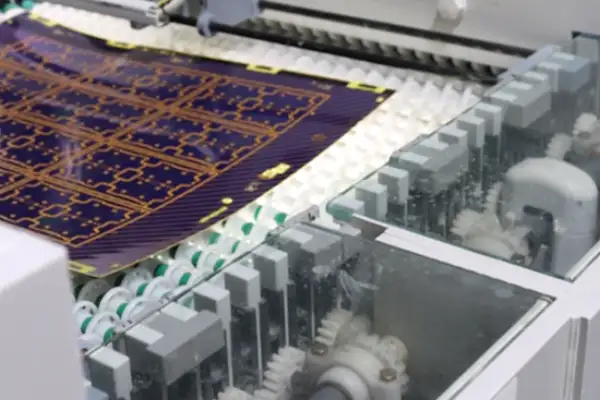
Regarding pricing, I don’t think you should judge a manufacturer solely by the numbers they quote. Some vendors offer very attractive unit prices, but once you factor in hidden costs—such as engineering fees and tooling charges—the total cost ends up being much higher. Will takes a different approach: they lay out all costs transparently. Even for the most basic minimum order quantity—just a single board—they provide a detailed breakdown of every expense so you know exactly where your money is going.
My partners and I have now established a clear working rhythm: during the new product development phase, we exclusively work with manufacturers capable of handling small-batch trial production; once the design matures, we then transition to suppliers geared for mass production. This phased approach to collaboration allows us to mitigate risk without incurring excessive costs during the early stages.
In truth, choosing a manufacturer is a lot like choosing a spouse: simply focusing on the “dowry”—or the price tag—is pointless. What really matters is whether the two parties can work together harmoniously over the long term.
I’ve always found the process of designing and manufacturing circuit boards to be quite fascinating—sometimes, all the time you spend drafting schematics and selecting components pales in comparison to the practical value of simply finding a reliable supplier.
I recall making a rookie mistake the last time I ordered custom-made circuit boards: I mistyped a single letter in the part number for a specific component. As a result, the entire batch of capacitors we procured turned out to be completely useless. You simply cannot afford to be sloppy with such details; every component’s specifications and parameters must be cross-checked at least three times—especially for obscure or niche models, where the manufacturer’s remaining stock might consist of only a few hundred units.
Nowadays, whenever I communicate with the factory, I make a point of singling out the coordinate placement file for rigorous verification. The robotic arms on the SMT assembly line show no mercy—a discrepancy of even 0.1 millimeters can render an entire board unsalvageable. I once witnessed a production line come to a halt because the rotational angle for a specific IC had been entered incorrectly; the entire batch of boards subsequently required manual rework—a completely avoidable blunder. When selecting components, I place a particularly high priority on supply stability. I steer clear of specialized components that require importation—no matter how inexpensive they might be—because the risk is simply too high. Should we encounter customs clearance delays or if the manufacturer suddenly discontinues production, the entire project could grind to a halt.
In fact, the most hassle-free approach is to involve your suppliers during the design phase itself. They can provide real-time feedback, letting you know which components are well-stocked and which are prone to shortages—a proactive measure far superior to attempting damage control after the fact.
I’ve noticed an interesting phenomenon recently: many engineers are constantly chasing after the very latest chip models. Yet, in reality, older, more mature, and stable models are often far better suited for mass production. After all, the core objective of custom circuit board design is reliability and repeatability—not merely showing off technical prowess.
I’ve always found the process of designing custom circuit boards to be fascinating. When people receive the finished product, they often see only the polished, final form—the precisely arranged components and neat routing lines, which are indeed a feast for the eyes. However, they rarely stop to consider the myriad trivial-seeming, yet absolutely critical, details that lie beneath the surface.
Take solder paste, for instance. It might look as ordinary as toothpaste—something you can just squeeze out and apply, right? It’s actually not that simple! I’ve seen instances where engineers, in an effort to save time, haphazardly selected a generic, off-the-shelf solder paste to pair with their meticulously designed board layouts. The result? The entire production batch was compromised—either suffering from “cold joints” that caused signal instability or, worse, completely desoldering and detaching when exposed to high temperatures. That crushing sense of failure is something only those who have lived through it can truly understand.
That is why, nowadays, I place far greater value on a supplier’s ability to meticulously control these fine details than I do on simply finding the lowest price quote.
I recall one particularly demanding project that required us to pack complex functionality into an extremely compact space. This meant our circuit board needed to be highly integrated, while also effectively addressing thermal management challenges. We reached out to several suppliers at the time; most either declared it “impossible” or quoted a prohibitively high cost. That is, until we found a team willing to work alongside us, iteratively fine-tuning the manufacturing process. Not only did they help us optimize the solder paste printing parameters, but they also devised innovative solutions for mounting our specialized components. Ultimately, they not only delivered the boards on schedule but also significantly enhanced the product’s overall reliability.
The value derived from this kind of collaborative partnership far outweighs any minor savings one might gain on manufacturing fees alone! Naturally, the manufacturing process for custom circuit boards is inherently fraught with variables; from the initial design schematics to the final product, there are simply too many stages where things can go wrong. For instance, even a mere 0.1-millimeter deviation in the apertures of a solder paste stencil can lead to uneven paste distribution, thereby compromising solder joint quality. Similarly, if the temperature profile for reflow soldering is not configured correctly, even the most brilliant design can be ruined in an instant. These seemingly minor details often determine the ultimate success or failure of an entire project.
I have come to realize that when selecting a manufacturing partner, one should not focus solely on whether they possess state-of-the-art equipment or offer rock-bottom prices. Far more important is whether they are willing to invest the time to truly understand your specific requirements—and whether they are proactive in proposing solutions whenever issues arise. After all, circuit boards are not standardized commodities; each one may present its own unique set of challenges. Only those with genuine industry expertise can truly help you minimize the associated risks.
Ultimately, manufacturing custom circuit boards is less about simply placing an order for mass production and more about engaging in a collaborative, highly meticulous craft. It tests not only technical proficiency but also patience and a profound sense of responsibility. To this day, I vividly recall the anxiety I felt when a single, minor oversight nearly caused an entire project to be delayed; I also remember the overwhelming sense of relief and joy when, one by one, those problems were finally resolved. These experiences have taught me a vital lesson: in the relentless pursuit of efficiency and cost-effectiveness, one must never forget to leave ample room—and priority—for quality.
Whenever I receive a package containing prototypes of custom circuit boards, a specific detail always comes to mind: the seemingly tedious process of preparing design files actually conceals a multitude of nuances and pitfalls that are all too easily overlooked.
Just last week, a friend working in the smart home sector asked me why his circuit boards consistently encountered problems during the surface-mount assembly stage. I asked him to send over his Bill of Materials (BOM) for review; as it turned out, the specifications listed for his resistors and capacitors were a confusing mix of naming conventions from different manufacturers. This reminded me of a similar mistake I made early in my career, when I naively assumed that providing only a rough approximation of component model numbers would suffice. I later learned that when suppliers encounter such vague descriptions, they are left with two undesirable options: either engage in a time-consuming back-and-forth to verify the details—thereby delaying the production schedule—or simply procure components based on default specifications, which can result in the entire batch of boards suffering from functional anomalies.
Regarding Gerber files—the standard format for PCB design data—many people assume that simply exporting the various design layers marks the end of the process. However, it is only after receiving feedback from the manufacturing facility that one truly grasps just how troublesome the consequences of file-naming inconsistencies can be. On one occasion, I mistakenly assigned the file extension for the solder mask layer to the copper layer data; consequently, when the boards were fabricated, every single solder pad was completely covered by the green solder mask, rendering them utterly impossible to solder. Nowadays, before packaging my design files for submission, I use a dedicated Gerber viewer to meticulously inspect each layer, much as one would proofread a written document. Although this adds a bit of extra time to the process, it serves as an invaluable safeguard against far more significant losses and setbacks down the line. In reality, the most easily underestimated aspect of PCB design is the critical role played by the solder paste layer file. I once designed a board featuring a fine-pitch QFN chip; because the aperture dimensions for the solder paste layer hadn’t been optimized, three consecutive production batches suffered from solder bridging issues during mass manufacturing. The problem was only resolved after we adjusted the aperture ratios on the stencil. Such minute details often remain hidden until the actual production phase, at which point the issues finally surface.
The process of ordering custom circuit boards is never simply a matter of tossing your design files over to a factory and then resting on your laurels. From providing precise descriptions for every component in the BOM to adhering to standardized naming conventions for each layer file—these seemingly basic tasks are precisely what determine whether the final product succeeds on the very first attempt.
I’ve always found the world of custom circuit boards quite fascinating. Many people tend to fixate solely on the price right from the start; however, what you should really be concerned about is whether the supplier can genuinely grasp your specific requirements. After all, “custom-made” circuit boards aren’t off-the-shelf commodities; every project comes with its own unique set of design challenges.
I recall a smart home project we worked on last year that required specialized impedance control. We reached out to several manufacturers, but they all claimed they couldn’t handle it using their standard processes. Eventually, we found a company run by a former engineer; he immediately pinpointed three specific routing clearances in our schematics that needed adjustment. That level of professional expertise is where the true core value lies.
Regarding procurement strategy, my personal habit is to first ask potential suppliers to provide a detailed technical proposal for evaluation. Some manufacturers submit quotes that are incredibly sparse—failing to even specify the base material model—and I typically skip over those immediately. Conversely, those who take the initiative to ask about the specific application scenarios for the board tend to make for much smoother partners down the road.
While it’s true that there are manufacturers in the industry today who advertise “no minimum order quantity” (starting from just a single board), if you’re looking to establish a long-term partnership, I’d recommend budgeting for a trial run of at least five boards. This quantity is sufficient to verify the manufacturer’s process capabilities without placing an undue financial burden on a startup team.
I’ve recently engaged with several up-and-coming manufacturers and noticed an interesting trend: some companies that advertise extremely low starting prices actually make up the difference by inflating their engineering fees. For instance, one company advertised PCB prototyping for as little as 30 yuan per board, yet they charged a whopping 2,000 yuan for the initial tooling/setup fee.
That’s why, whenever I review a quote now, I insist on a fully itemized breakdown—separating out the costs for board fabrication, stencil creation, testing, and any other specific line items.
Ultimately, finding a circuit board supplier is a bit like finding a spouse: you can’t simply base your decision on the size of the dowry. What matters most is whether they have the patience to iterate on the product alongside you, and whether—when problems inevitably arise—they try to deflect blame or actively work toward a solution. On a previous project, component procurement delays created a tight deadline; our partner proactively adjusted their production schedule to slot our order in. That level of cooperation was far more valuable than simply saving ten dollars.
Ultimately, designing custom circuit boards is a process that requires constant fine-tuning. The first production run inevitably involves areas that need adjustment; the key is finding a partner willing to grow alongside you.
Price is certainly a factor to consider, but rather than wearing yourself out over saving a few hundred dollars, it is far better to spend a little extra for the peace of mind that lets you sleep soundly at night.
I’ve always felt that those “universal” circuit boards—the ones touted as being capable of anything—are like “one-size-fits-all” shirts in a department store: they might seem to fit well enough at a glance, but in reality, they don’t fit properly anywhere. I experienced this firsthand last year while helping a friend retrofit a piece of vintage audio equipment; the off-the-shelf development boards available on the market either had incompatible interfaces or featured power supply modules so over-engineered they could practically fry an egg. Truly effective solutions often lie in the details—such as a signal amplification circuit designed specifically for a sensor array, or a flexible substrate custom-tailored to fit within a cramped enclosure.
Many people mistakenly believe that customization is just a money pit; in fact, the opposite is often true. Last month, while working on a smart planter project, we initially planned to simply stack together a series of off-the-shelf modules. However, we soon discovered that the superfluous Bluetooth functionality alone accounted for 30% of the total cost. We subsequently redesigned the board to eliminate the redundant circuitry, and the overall cost actually dropped by 20%. This approach—prioritizing precise matching—is akin to having a suit custom-tailored: every extra inch of fabric is simply a waste.
Interestingly, the most mentally taxing part of the customization process was not, in fact, the technical aspect. On one occasion, while working on moisture-proofing for medical equipment, the back-and-forth communication with the manufacturer regarding the details of the coating process took even longer than the time spent drafting the circuit diagrams. After all, a manufacturer cannot simply read your mind; the more specifically you articulate key parameters—such as impedance requirements and temperature tolerance—the closer the final product will come to matching your vision.
I’ve seen far too many teams stumble over the “good enough” mentality. I once had a client working on outdoor surveillance systems who, initially to save effort, opted for consumer-grade chips; consequently, the entire system crashed when a cold snap hit. They later switched to industrial-grade components paired with conformal coating; although the cost per board increased slightly, it saved them from significant hidden expenses in future maintenance. Ultimately, there are some costs you simply cannot afford to skimp on.
Nowadays, whenever I take on a new project, I start by asking two questions: What is the board’s core mission? And in what environment must it survive, and for how long? The answers often point directly toward the optimal design direction. It’s much like selecting tires for an off-road vehicle versus a city commuter car: while both appear to be nothing more than round rubber objects, the underlying technical nuances—the “tricks of the trade”—are worlds apart.
I’ve recently been tinkering with a fascinating project: retrofitting traditional woodworking tools with smart sensors. This involves squeezing circuitry into the curved handle of a wood plane—a task that also requires accounting for the impact of fine wood dust. This kind of challenge—like “dancing in shackles”—is actually quite exhilarating; after all, anyone can lay out a standard rectangular board, but truly demonstrating one’s mastery lies in successfully building a complex system within the tightest of constraints.
Ultimately, custom circuit board design is akin to the art of translation: translating abstract requirements into copper traces, and reconciling physical limitations with functional demands within a minuscule footprint. When I see a circuit I designed with my own hands operating with precision in a specific real-world scenario, the sense of fulfillment is something no off-the-shelf module could ever provide.
Whenever I see those standardized development boards gathering dust in a drawer, I find myself wondering: why must we constantly settle for pre-packaged solutions? Last year, while working on a smart home gateway, I discovered that every available off-the-shelf module on the market was either lacking the necessary interfaces or consuming excessive power, leaving me with no choice but to pursue a custom design. The process of commissioning custom-made circuit boards from a manufacturer is much like having a suit tailored by a bespoke tailor: it may seem simple on the surface, but in reality, it is a discipline filled with subtle nuances and technical intricacies at every turn.
When I first started dabbling in custom circuit board design, I naively assumed that I could simply hand over my design files to a manufacturer and be done with it. I soon discovered, however, that different manufacturers can interpret the exact same design file in wildly different ways—sometimes to a degree that is absolutely worlds apart. On one occasion, the prototype boards I received back from a manufacturer failed to even meet basic impedance matching requirements; yet, the manufacturer brazenly insisted—with a completely straight face—that the issue lay in my design files, claiming I hadn’t clearly specified those parameters. This experience taught me that custom procurement is not merely a game of price comparison, but rather a process of technical collaboration requiring full-spectrum engagement.
Nowadays, whenever I encounter a project requiring customization, I begin by dedicating half a day to a “requirements brainstorming session” with the engineering team. For instance, during the development of an industrial sensor node last month, we didn’t just discuss signal integrity at the circuit level; we also anticipated potential soldering yield issues that might arise during subsequent mass production. Spending an extra ten minutes discussing these details during the initial communication phase can potentially save two weeks of rework time down the road.
Many people assume that selecting a custom supplier is simply a matter of finding the one with the most attractive quotation sheet; however, I place far greater value on the responsiveness of their engineering team. On one occasion, having discovered a minor flaw in a design at 2:00 AM, I tentatively sent a message to an engineer at our partner factory. Within ten minutes, they initiated a video call, sharing their screen to highlight the proposed modifications using red annotations. This level of synergy cannot be mandated by contractual clauses; rather, it is the product of a sense of trust forged through a long period of mutual adaptation and collaboration.
In truth, while there is a veritable sea of domestic manufacturers capable of producing custom circuit boards, those truly worthy of a long-term partnership are often distinguished by their willingness to assign a dedicated team specifically to your project. I have a regular manufacturing partner in Dongguan that, whenever a new project launches, proactively dispatches a process engineer to participate in our design reviews—identifying in advance which routing layouts might compromise the efficiency of the surface-mount assembly process. This forward-thinking mindset—prioritizing the client’s needs at the earliest stages—is far more valuable than simply shaving a few pennies off the quoted price.
Recently, while assisting a friend’s company in evaluating motherboard procurement for medical equipment, I observed that many decision-makers tend to fall into one of two extremes: either obsessively stacking technical specifications or rigidly adhering to a strict budget ceiling. In reality, effective customization should be akin to bespoke tailoring—it must not only address current functional requirements but also leave ample room for future iterations. The supplier we ultimately selected even managed to achieve superior thermal dissipation performance by simply adjusting the dielectric thickness, all without increasing the number of PCB layers.
After navigating through seven or eight custom projects, my most profound realization is this: the truly critical element is never the circuit board itself, but rather the team behind it—the people who genuinely understand your design intent. On one occasion, just prior to mass production, our supplier discovered a batch-specific parameter drift in a certain chip component. They proactively recommended a minor adjustment to our compensation circuitry; although this extended the lead time by two days, it successfully averted the risk of a full product recall. It is precisely this kind of professional judgment and foresight that constitutes the most invaluable asset in the realm of custom procurement.
If you, too, are contemplating the custom manufacturing route, resist the urge to rush straight into price comparisons. Instead, identify two or three potential suppliers and commission a small-batch trial production run first. During the process, observing details—such as the speed of their engineering feedback, their procedures for handling quality issues, and even the professionalism of their designated contact person—often reveals their true capabilities far more accurately than any certification listed in a brochure. After all, a successful custom manufacturing partnership should serve to amplify your product’s creative vision, rather than becoming a stumbling block on the path to mass production.
I’ve always found the process of sourcing circuit board suppliers to be quite fascinating. Many people jump straight to asking about pricing and lead times, but what they really ought to be asking is whether the supplier can truly grasp their underlying design intent. I’ve witnessed far too many instances of rework caused by poor communication; even when the design files were clearly and meticulously annotated, the resulting “custom-made” circuit boards still fell just short of the mark.
Last year, we had a project that required circuit boards made from specialized materials, so we approached five different suppliers to produce prototypes. Three of them flatly stated they couldn’t handle the job. The other two accepted the order, but the finished products failed completely to meet the requirements for high-frequency circuitry. Later, we connected with our current partner; their engineers spent a full week meticulously analyzing our design schematics—going so far as to proactively suggest minor adjustments to specific routing details. This level of dedication to technical minutiae made me realize that a truly excellent supplier should function as a technical partner, not merely as a simple fabrication facility.
Now, whenever I evaluate a potential new supplier, I make a point of presenting them with some particularly challenging design drafts. Their initial reaction speaks volumes: do they rush to provide a quote, or do they prioritize identifying and addressing the technical hurdles? On one occasion, I deliberately embedded a subtle design conflict within the files; as it turned out, only two of the suppliers detected the issue before proceeding to the prototyping stage. That caliber of professional competence is something no marketing brochure can ever truly convey.
The greatest pitfall in custom circuit board manufacturing is making assumptions. We once chose a new supplier for a project specifically to save on costs, and they gave us every assurance that there would be no issues. The result? Thirty percent of the boards in the initial batch required rework—a delay that ultimately cost us far more in lost production time than the money we had originally saved. Since then, I’ve been willing to allocate a slightly larger budget to ensure I partner with suppliers who possess proven experience with similar types of projects.
In fact, there is a very simple method for gauging a supplier’s reliability: observe the depth of the questions they ask. If their inquiries focus solely on lead times and order quantities, chances are they operate a standardized, assembly-line-style workflow. However, if they dig deeper—asking about specific application scenarios, load characteristics, or even the intended operating environment—it’s a strong indication that they truly understand the technical nuances of the field. After all, a circuit board does not exist in isolation; it must function effectively as an integral component within the complete electronic device.
We are currently working on a custom project designed for high-temperature environments, and our current supplier proactively offered to conduct complimentary aging tests on the boards. This level of service—going above and beyond the scope of our contract—actually makes me even more inclined to pursue a long-term partnership. Ultimately, a robust supply chain relationship is built on mutual success; a unilateral focus on driving down prices will, in the end, only compromise product quality.
Sometimes, looking at the various versions of circuit board prototypes in our lab, I feel as though they resemble the same dish prepared by different chefs: the ingredients may be similar, but it is the mastery of technique—the “heat control” and attention to detail—that ultimately determines success or failure. And what we are seeking is precisely that chef who possesses the deepest understanding of the ingredients’ inherent characteristics.
What actually makes a long-term PCB supply chain partnership work — shared
Practical, experience-based strategies for how to reduce PCB procurement risks — from
Real factory-floor lessons on how to optimize a PCB manufacturing process —
- Expert en production de petites et moyennes séries
- Fabrication de circuits imprimés de haute précision et assemblage automatisé
- Partenaire fiable pour les projets électroniques OEM/ODM
Heures d'ouverture : (Lun-Sam) De 9:00 à 18:30
Get quote, solution or any question, Andre always here to help