

Why the Best PCB Supply Chains Are Built Like Relationships, Not Transactions: Lessons for Satellite Communication PCB Programs
What actually makes a long-term PCB supply chain partnership work — shared
I have long felt that many factories today have their priorities backward when it comes to technology adoption. Everyone talks about “smart manufacturing,” yet very few actually manage to lay a solid foundation in the basics. Take PCB production, for instance: instead of spending a fortune on a host of flashy AI systems, it would be far more effective to first master the management of the most fundamental parameters within the manufacturing workflow. I have seen too many factories rush to implement “digital twin” technologies before they have even mastered basic environmental controls like temperature and humidity; the result is that while their simulations may look impressive on screen, actual production continues to be plagued by issues.
During a recent visit to a supplier, I observed a fascinating phenomenon. Their workshop supervisor showed me their production records—a thick stack of parameter logs that were recorded manually, day in and day out. When I asked why they didn’t simply use an automated system for data acquisition, he gave a wry smile and explained that their equipment was too old and the interfaces were incompatible. Yet, ironically, this “old-school” approach made them exceptionally sensitive to even the slightest fluctuations at every stage of the process. On one occasion, when the concentration of the etching solution underwent a subtle shift, a veteran technician—relying solely on his experience—detected the problem nearly half a day before the automated system even triggered an alarm. This experience reminded me that, sometimes, an over-reliance on technology can actually cause us to lose our intuitive feel for the manufacturing process itself.
Nowadays, many suppliers love to showcase the sophistication of their AI-driven visual inspection systems; however, the factors that truly determine the quality of a PCB are often those invisible details lurking beneath the surface. For instance, the impact of raw board storage duration on moisture absorption rates, or the minute adjustments made to pressure curves during the lamination process—it is these seemingly insignificant factors that ultimately hold the key to achieving high production yields. There is a small factory we have partnered with for years that never talks about lofty, high-level concepts; instead, they have distilled the key operational points for every process step into catchy rhymes. Their workers have these rhymes memorized backward and forward—and, ironically, they encounter fewer quality issues than factories that rely on expensive MES systems.
In fact, when auditing suppliers, what I value most is their attitude toward process parameters. I have encountered companies that produce beautifully crafted CPK reports, only to discover upon entering the workshop that even their micrometers haven’t been calibrated. Sure enough, we later found that their data had been manually manipulated after the fact. True process capability should be reflected in the daily details of production, not merely in reports designed to pass inspections.
I had a profound realization recently while helping a friend optimize the PCB soldering process at his factory. We experimented with using AI to recommend parameter combinations, but ultimately, we found that the most effective method remained the “old-school” approach: having veteran technicians manually adjust preheating times based on the day’s weather conditions. Perhaps in the manufacturing sector, the value of human insight and experience can never be fully digitized.
Ultimately, an effective PCB production workflow should be a fusion of technology and experience, rather than a blind pursuit of “smart” automation. Sometimes, the simplest improvements yield the best results—for instance, retrofitting sensors onto older equipment often offers a higher return on investment than installing an entirely new production line. The key lies in finding the rhythm that suits your specific factory, rather than being swept along by every new buzzword or concept.
I have seen far too many people oversimplify the process of PCB manufacturing. They often assume that as long as the schematics are drawn correctly and premium materials are purchased, a high-quality board is guaranteed. In reality, nothing could be further from the truth. What truly distinguishes a top-tier factory is its ability to maintain rigorous control over every single stage of the production process.
Take circuit etching, for example. If you hand the exact same design file to two different factories, the resulting boards can turn out completely different. Some factories produce boards with rough, jagged circuit edges that resemble sawteeth; others manage to achieve perfectly straight, crisp lines that are incredibly precise and uniform. While these differences might not be visible to the naked eye, they can make a world of difference in the performance of high-frequency circuits.
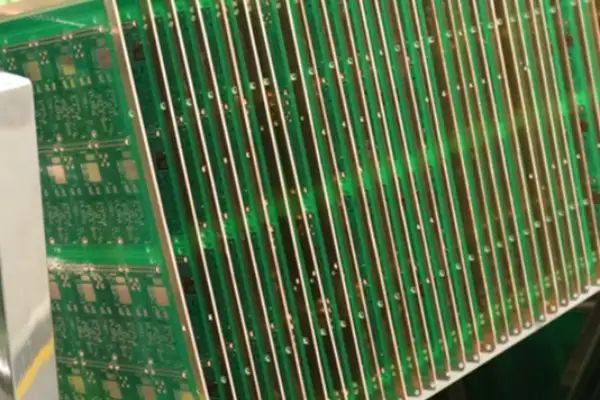
I pay particular attention to temperature control during the lamination stage. During one factory visit, I noticed that—despite utilizing state-of-the-art presses—they had set their allowable temperature fluctuation range far too wide. A worker even remarked to me, “A ±5°C variance is perfectly normal; it’s not going to burn the board.” I shook my head immediately; while that level of tolerance might be acceptable for standard consumer electronics boards, it would almost certainly lead to catastrophic failures in automotive electronics applications.
The management of electroplating tanks is an even more intricate discipline. High-caliber factories tend to tend to their chemical baths with the same meticulous care one would devote to an infant—monitoring concentrations and fine-tuning parameters on a daily basis. Lesser factories, on the other hand, simply wait for a problem to arise before scrambling to apply a remedy. The most extreme case I’ve ever witnessed involved aging plating solution; it caused the copper thickness on the hole walls of an entire batch of boards to fall below standard specifications. Consequently, just six months after the customer installed these boards into their devices, they began to experience widespread failure.
Ultimately, the PCB production process is essentially a marathon of details. If even a single minor step is slightly off, the final product will suffer a significant drop in quality. Some factories are constantly focused on rushing schedules and boosting output, forgetting that quality is the true foundation of their existence.
Nowadays, when selecting business partners, I place particular emphasis on their process documentation. I would never entrust a critical order to a factory that cannot even properly chart its temperature and humidity curves. Effective process management should be as natural as breathing—it shouldn’t require last-minute scrambling or “cramming.”
I was recently quite impressed by a supplier that has implemented a proactive warning system for every critical process step. For instance, if the viscosity of the solder mask ink approaches a critical threshold, the system automatically triggers an alert to replace the material. This kind of forward-thinking approach is far superior to mere post-production inspection.
At the end of the day, making PCBs is much like cooking: having high-quality ingredients isn’t enough; you also need a chef who knows how to master the heat. This process demands not only experience but, more importantly, a scientific mindset.
PCBs may look simple on the surface, but there are actually many intricacies involved. I’ve seen far too many cases where procurement specialists simply compared technical specifications to find the lowest price—only to fall into costly pitfalls. What truly determines the quality of a circuit board is rarely the age or sophistication of the equipment, but rather the stability of the production process itself.
Take impedance control, for example: a client once insisted on driving down the price by choosing a small-scale factory, only to find that their high-frequency signals became completely chaotic. Upon disassembling the boards later, they discovered that the factory hadn’t even properly controlled the thickness of the base material; the dielectric constants varied by as much as 10% between different production batches. Issues like this are impossible to detect by simply reviewing inspection reports; you have to verify whether the factory is continuously monitoring and tracking the fluctuation ranges of its critical processes.
There is a term called “CPK” (Process Capability Index); while quality assurance professionals likely understand it well, procurement specialists often overlook its significance. I like to think of CPK as a factory’s “muscle memory”—much like a chef’s intuitive feel for the wok; consistent, stable execution is far more valuable than the occasional stroke of brilliance. I once toured a Japanese-owned factory where every workstation was equipped with a real-time data acquisition system; the operators themselves could monitor the CPK curves for the specific batch they were working on. This kind of company-wide, participatory quality consciousness represents true manufacturing mastery.
In essence, the tolerance ranges specified in a technical datasheet are akin to the passing grade on an exam: some factories aim for the bare minimum—just scraping by with a 60% score—whereas truly excellent factories ensure that their performance consistently remains at a stable 85% or higher. In the production of multilayer PCBs, even a temperature deviation of just two degrees during the lamination process can completely compromise interlayer alignment. Such subtle discrepancies are often undetectable during the prototyping phase; the underlying issues only surface—manifesting as high scrap rates—once mass production begins.
Nowadays, whenever I encounter a new supplier, the first thing I ask for is their CPK trend charts for key processes over the past six months; this provides far more meaningful insight than simply reviewing their certification certificates. On one occasion, I discovered that a major manufacturer—despite possessing state-of-the-art equipment—had CPK values for their electroless copper plating process that consistently hovered around 0.8. This indicated that the uniformity of the hole walls in every batch of boards was essentially a matter of pure chance—and, sure enough, mass production issues eventually erupted.
Truly reliable factories set their internal standards even higher than their clients’ requirements. For instance, if a client specifies an impedance tolerance of ±10%, the factory’s internal control standard might be set at a stricter ±5%. This practice of self-imposed rigor is the true guarantee of quality. After all, the PCB manufacturing process is a tightly interconnected chain; any fluctuation in a single link can trigger a domino effect, ultimately compromising the final product’s performance. While recently walking through the workshop, I observed a rather interesting phenomenon: everyone was busy taking various measurements and filling out record sheets to the brim, yet when asked whether those figures were actually accurate, no one could give a clear answer. This reminded me of a previous incident involving a supplier who delivered a batch of circuit boards. The thickness data they provided looked absolutely perfect, but during our actual processing, we kept encountering alignment errors. We later discovered that the micrometer they had used hadn’t been calibrated in six months, resulting in readings that were 0.02 millimeters thinner than the actual thickness. This incident made me realize that in the PCB manufacturing process, if even the most fundamental measurements cannot be trusted, then all subsequent process controls are akin to building a structure on sand.
In fact, many factories easily fall into this trap, believing that simply purchasing expensive inspection equipment guarantees that everything will run smoothly. For instance, when scanning circuit traces using an Automated Optical Inspection (AOI) system, the data displayed on the screen can certainly look impressive; however, if the equipment’s optical calibration is faulty, it might misidentify a burr as a gap or incorrectly deem a cold solder joint as acceptable. During mass production, such discrepancies can snowball into massive issues. I recall an instance where a client complained about significant fluctuations in impedance values. After an extensive investigation, the root cause turned out to be the X-ray fluorescence (XRF) spectrometer used to measure copper thickness—operators across different shifts had varying habits when placing samples; some would press down firmly, while others placed them gently, resulting in readings that differed by as much as 5%.
This is where the value of MSA (Measurement System Analysis) becomes apparent. It is not as esoteric as some might imagine; essentially, it employs a systematic approach to verify whether our human observations and our tools are reliable—for example, by having three… When inspectors use the same microscope to measure the diameters of the same set of solder pads, if the values obtained by three different individuals differ by an amount greater than the specified tolerance, it indicates that either the judgment criteria need to be standardized or the inspectors require retraining to sharpen their visual acuity. This type of cross-validation is particularly critical in flexible circuit board manufacturing, as the inherent elasticity of the substrate material can introduce visual errors into two-dimensional dimensional measurements.
Even more insidious are issues regarding the stability of the measurement system itself. Last month, our laboratory’s ionic contamination tester suddenly began reporting values that were consistently 0.8 μg/cm² higher than expected for every sample tested. Initially, we suspected a fault in the cleaning process; however, after cross-referencing against a standard reference board, we discovered that the issue lay with the aging electrodes within the instrument itself. This type of gradual drift is easily overlooked, yet it could potentially lead to an entire batch of automotive electronics boards being erroneously rejected for failing cleanliness standards. Consequently, we now regularly use standard reference samples to generate trend charts; if three consecutive data points exceed a predefined warning threshold, it automatically triggers our instrument calibration protocol.
Ultimately, quality control is not merely about stacking up inspection steps; the key lies in ensuring that every measurement stage accurately reflects the true state of the product. It is akin to measuring a product—no matter how exquisitely crafted—with a ruler that has blurred markings; you simply cannot obtain meaningful feedback. Recently, we have been experimenting with extending the principles of Measurement System Analysis (MSA) to our supplier evaluation process—for instance, by requiring suppliers to provide reports on the repeatability of key process parameters. This approach offers a far more accurate reflection of their actual quality control capabilities than simply looking at their overall pass rates. After all, the entire PCB manufacturing process can only be considered truly “in control” when every single data point generated on the production line can withstand rigorous scrutiny.
I have seen far too many factories treat Failure Mode and Effects Analysis (FMEA) as nothing more than a bureaucratic exercise performed solely to satisfy auditors. In reality, the true value of FMEA lies in compelling the team to proactively identify and analyze potential failure points before they occur. For instance, the most easily overlooked aspects of the PCB manufacturing process are often those seemingly insignificant details—such as a slight deviation in the additive mixture ratio—which can have a cascading effect on the plating uniformity of an entire batch of boards.
On one occasion, while conducting a line audit, we discovered that a specific batch of boards was exhibiting micro-short circuit defects. Upon tracing the root cause, we found that an operator—in an effort to accelerate production—had skipped a critical cleaning step. In standard FMEA documentation, such human factors are often categorized as “low-probability events”; yet, in practice, they occur with a frequency far higher than typically assumed.
A truly effective FMEA process should be dynamic in nature. For example, we subsequently implemented real-time monitoring systems within our plating line; whenever an electrical current anomaly is detected, the system automatically adjusts the process parameters. Such preventive measures are far more effective than relying solely on retrospective sampling and cross-section analysis.
Many people mistakenly believe that Process FMEA (PFMEA) is merely a matter of filling out forms and assigning numerical scores. In reality, the most valuable component of the entire exercise is the collaborative discussion and analysis undertaken by the team. Only by bringing together individuals from diverse roles for a brainstorming session can we uncover potential risks that might otherwise remain invisible if relying solely on individual experience. For instance, a materials controller might mention that certain batches of substrate exhibit an unusually high moisture absorption rate, prompting a process engineer to immediately recognize the potential repercussions for the subsequent lamination process.
Nowadays, many factories place an excessive reliance on automated equipment while inadvertently neglecting the human element. Yet, no matter how sophisticated the machinery, it still requires human operators for both operation and maintenance. We once encountered a situation where a change in additive suppliers led to instability in the copper deposition process; it was only later that we discovered the new supplier’s product was significantly more sensitive to temperature fluctuations.
Ultimately, an FMEA (Failure Mode and Effects Analysis) should not be treated merely as a static report to be filed away, but rather as a “living document” that requires continuous updating. Whenever an anomaly occurs on the production line or a process adjustment is implemented, the associated risk levels should be re-evaluated. This approach is essential for truly transforming quality control from a reactive exercise—merely “fighting fires” as they arise—into a proactive strategy focused on prevention.
I have observed many individuals harboring misconceptions regarding PCB manufacturing. They often assume that simply purchasing the most advanced equipment and utilizing the most expensive materials is sufficient to produce high-quality boards. In reality, the entire production workflow functions more like an organic, interconnected system. What truly determines the final quality are, in fact, those seemingly insignificant details within the daily operational routines.
I recall visiting a factory’s production line on one occasion and noticing a fascinating phenomenon. Although the equipment they utilized was not the very latest model, the consistency of their product output was exceptional. I subsequently observed that their operators had a specific habit: during shift handovers, they would meticulously record even the slightest deviations or subtle changes in the equipment’s performance. This seemingly superfluous habit of detailed record-keeping actually rendered the entire production process fully traceable.
Many people focus too intently on technical parameters while overlooking the human factor. Even the most sophisticated automated systems require human intelligence to interpret data and make necessary adjustments. For instance, during the etching process, an operator’s keen judgment regarding the concentration of the chemical solution can often detect potential issues long before any automated machine alarm is triggered. This type of intuition—honed through accumulated experience—is arguably the most invaluable asset in the realm of quality control.
A common misconception currently prevalent in the industry is the excessive pursuit of total automation. However, a truly stable production system is one that achieves a perfect synergy between human operators and automated equipment. I have witnessed factories that rely exclusively on intelligent systems; whenever an anomaly arises that falls outside the parameters recognizable by their algorithms, the entire production line descends into chaos.
In essence, a robust PCB manufacturing process is akin to the art of cooking: it demands a constant sensitivity to the “heat”—that is, the dynamic conditions of the process. Attempts to resolve every issue by rigidly applying a fixed set of parameters often prove counterproductive. What truly matters is the establishment of a dynamic system capable of continuously sensing and responding to changes as they occur. I recently had a chat with a veteran industry expert, and he made a rather interesting observation.
Ultimately, the essence of PCB manufacturing isn’t about striving for perfection in any single stage, but rather about ensuring the coherence and adaptability of the entire process. Factories capable of making flexible adjustments based on real-world conditions are often the ones that produce the most reliable products—and therein, perhaps, lies the true art of manufacturing.
I’ve recently been discussing the subject of selecting PCB suppliers with a few friends in procurement, and I’ve noticed that many people still place far too much emphasis on price. They often assume that simply finding a cheaper manufacturer will save on costs, but the result is frequently a case of false economy.
In reality, the most critical aspect to focus on within the PCB manufacturing workflow is process stability. I’ve visited numerous factories equipped with state-of-the-art imported machinery, yet the quality of the boards they produced remained inconsistent. The root of the problem lay in their lack of meticulous control over the manufacturing process itself.
I recall an instance where we were auditing a potential new supplier; their workshop looked incredibly modern, but when I requested their CPK data, the supervisor stammered and failed to produce any complete records. We subsequently partnered with a smaller facility—one whose equipment wasn’t quite as cutting-edge—yet they maintained detailed process records for every single stage of production, going so far as to conduct long-term tracking of how fluctuations in temperature and humidity impacted product quality.
Nowadays, many manufacturers love to boast about the sheer number of high-end machines they own, but I am far more interested in whether they have established a robust system for process monitoring. A truly excellent supplier will proactively share examples of their process improvement initiatives with you, rather than simply relying on physical product samples to make their case.
I was once deeply impressed by a small manufacturing facility we worked with. They had an engineer who would conduct daily spot-checks on production line data; if he detected even a minor fluctuation in a specific parameter for three consecutive days, he would immediately adjust the manufacturing process. This level of sensitivity to process dynamics is far more valuable than any piece of advanced machinery.
I view the selection of a supplier as akin to choosing a business partner: the key criterion is whether they genuinely prioritize process control. Some large-scale manufacturers excel at maintaining a polished facade, yet their actual execution often falls short; conversely, it is often the small-to-medium-sized manufacturers—those who pay meticulous attention to detail—that consistently deliver the most stable and reliable product quality.
Given the fierce competition in the industry today, it is becoming increasingly difficult to maintain a foothold based solely on low prices. Only those suppliers capable of continuous improvement throughout their processes are truly worthy of being long-term partners. After all, no one wants to spend their days constantly worrying about product quality; it is stable processes that ultimately ensure a worry-free collaborative experience.
Ultimately, high-quality PCB manufacturing isn’t about how advanced the equipment is, but rather how diligently every single stage of the process is controlled. This capability for process management is where the true core competence lies.
Having worked in the circuit board manufacturing industry for over a decade, I’ve come to a profound realization: many people tend to overcomplicate quality control. They often like to employ a host of sophisticated tools and jargon to demonstrate just how “professional” they are.
In reality, it all boils down to one thing: executing simple tasks with thoroughness and precision.
Take the PCB production process, for instance: there are only a handful of critical steps, yet every single stage requires someone to genuinely dedicate their attention to monitoring the minute details.
I’ve seen far too many engineers spend their time writing reports while rarely venturing onto the production floor to observe the actual operational processes.
I recall an instance where we encountered a baffling issue: impedance readings for boards from the exact same batch would vary by over 10% depending on when the measurements were taken.
Initially, everyone suspected it was either a material defect or aging equipment; we spent two weeks troubleshooting with absolutely no results. Eventually, I simply grabbed a stool, sat right next to the testing station, and spent an entire day observing. What I discovered was that the operator’s technique varied with every measurement—sometimes the probe was pressed down heavily, sometimes lightly, and even the angle of contact showed subtle discrepancies.
This was a classic case of overcomplicating a simple matter: the expensive, precision instruments we had invested in were ultimately defeated by a fundamental issue regarding physical contact. This incident taught me a valuable lesson: no matter how sophisticated the equipment, it still requires human operation—and the variability inherent in human actions is often the most easily overlooked variable.
Subsequently, we implemented a very simple adjustment: we equipped every testing station with a fixed, calibrated fixture to ensure the probe contacted the board surface at the exact same angle and pressure every time. Thanks to that single minor modification, our product pass rate for that month jumped by five percentage points.
Many people assume that quality control requires implementing methodologies like Six Sigma or complex statistical models; however, the most effective improvements often stem from the most direct and straightforward observations. I’ve since adopted a specific habit while leading my team: I spend at least half a day each week walking the production floor—not to conduct inspections, but to uncover those genuine operational details that often get obscured by standardized procedures. Sometimes you may discover that an experienced employee’s method of operation differs from the written work instructions, yet yields even better results. In such instances, you must promptly document and standardize this new approach rather than rigidly clinging to the existing documentation. Speaking of MSA (Measurement System Analysis), many people treat it merely as a tool to satisfy auditors—generating a report only to toss it into a folder afterward. This completely defeats the original purpose of the exercise.
Its true value lies in using data to identify fluctuations caused by human factors, and then specifically optimizing operational protocols to address them.
I am particularly opposed to the practice of overcomplicating simple processes in the pursuit of perfect data. Some engineers, aiming to make their GR&R values look impressive, design a convoluted series of steps for operators; ironically, this often serves only to increase uncertainty.
A robust quality system should aim to make operations simpler, not more complex. After all, every minute that ticks by on the production line represents real money flowing away.
We recently conducted an experiment in our drilling process: we streamlined the original seven-step inspection procedure down to just three steps, focusing our monitoring efforts on the two most critical parameters. Surprisingly, product consistency actually improved compared to before.
This demonstrates that, at times, simply eliminating unnecessary interventions constitutes an improvement in itself.
Ultimately, after working in the manufacturing sector for so many years, my deepest realization is this: true, sustainable quality improvement stems from a consistent focus on daily details—not from some sudden, miraculous “black technology.”
The factories that consistently execute simple tasks flawlessly, day in and day out—year after year—are invariably the ones that emerge as the ultimate winners.
I’ve spent over a decade working in PCB manufacturing. “Continuous improvement”—it sounds like such a lofty, sophisticated concept, doesn’t it? But to put it plainly, it simply means refusing to let yourself get too comfortable.
Just think about it: within the “PCB production process,” how many steps are currently running on autopilot—driven purely by habit? For instance, an experienced employee might insist: “I’ve been using this specific parameter for ten years, and we’ve never had a problem.” But the market has changed! Minor flaws that customers might have tolerated in the past could now be deal-breaking issues.
I recall a time when a supplier complained that our method of handling raw PCB laminates was too antiquated, leading to chronic delays in delivery. At first, we felt they were being overly picky; however, we eventually realized that our own internal processes genuinely required adjustment.
In truth, the most dangerous pitfall is a mindset that resists change—a rigid adherence to the status quo. I once walked through the workshop and noticed an operator at a specific workstation had skipped several steps in the inspection routine. When I asked him why, he replied: “It doesn’t matter; Quality Control will catch any issues at the end anyway.” That kind of thinking is the most dangerous thing of all.
True improvement often begins in those places that seem the most insignificant. For instance, a newly hired technician once suggested shifting a specific testing stage to an earlier step in the process; this simple change ended up saving a significant amount of time on rework.
Speaking of customer feedback: I personally cherish every complaint we receive, as it represents the most direct opportunity for improvement. Some might view being the subject of a complaint as a loss of face, but I prefer to see it as a diagnostic report delivered right to our doorstep.
Nowadays, many factories are talking about digitalization. However, I’ve found that the key isn’t about how many systems you implement, but rather whether the people involved are willing to embrace change. No matter how sophisticated a system is, if the people operating it are still stuck in old mindsets, the system simply won’t be effective.
Sometimes, the simplest improvements turn out to be the most effective. For example, simply adjusting the placement of tools so that operators have to take a few fewer steps—accumulating these small details can lead to a substantial boost in the efficiency of the entire production line.
I believe the most critical aspect of working in this industry is maintaining a keen sense of sensitivity—sensitivity to details, sensitivity to change, and a commitment to taking every piece of customer feedback seriously. Only then can we ensure that our entire production process remains in a constant state of optimization.
Ultimately, improvement isn’t the responsibility of a single department; it is everyone’s responsibility. From senior management down to the frontline staff, everyone needs to share this collective mindset.
I’ve seen far too many factories where quality control has devolved into a game of “after-the-fact” damage control. Whenever a problem arises, they scramble to hold emergency meetings, trace the root causes, and make hasty parameter adjustments—this kind of “firefighting” management leaves everyone constantly exhausted and running in circles. Truly effective quality control should be proactive and forward-looking—much like a master chess player who looks three moves ahead.
Take PCB manufacturing, for example. A potential supplier once approached us seeking a partnership, proudly presenting data showing a 99% pass rate. However, I insisted on reviewing their CPK values. The results revealed that while their pass rate looked impressively high on paper, the CPK for their critical process steps actually fell below 1. This indicated that their production process was akin to walking a tightrope—at any moment, even the slightest fluctuation could trigger a major failure.
We ultimately chose to partner with a different supplier whose CPK consistently remained above 1.5. We’ve been working with them for three years now, and their products have never once caused a stoppage on our production line.
Many people mistakenly view FMEA (Failure Mode and Effects Analysis) as nothing more than a bureaucratic exercise involving filling out forms. This completely misses the point. Whenever our team embarks on a new project, we bring together representatives from design, process engineering, and quality control for a brainstorming session. These aren’t the typical rigid, formal meetings; instead, we gather around a whiteboard—drawing diagrams and engaging in lively discussion: “What would happen if the etching time deviated by 5%?” “How should we respond if the lamination temperature suddenly fluctuates?” These types of discussions frequently help us uncover potential risk points that might otherwise have gone unnoticed. I recall an instance where we discovered that a certain new material might develop micro-cracks under high-temperature and high-humidity conditions. Although the probability was a mere 0.3% (three parts per thousand), the potential consequences were severe. Consequently, we adjusted our material selection strategy during the design phase, effectively resolving this potential issue before it ever manifested.
Effective quality control does not rely solely on inspectors acting as gatekeepers; rather, it requires every stage of the process to possess the inherent capability for self-correction. When your CPK values are sufficiently high and your FMEA is sufficiently thorough, quality issues will occur less and less frequently—this, indeed, represents the pinnacle of quality management!
I have recently been pondering a specific question: Why do some factories consistently maintain stability in their PCB production workflows, while others seem plagued by perpetual problems? Many might assume the answer lies in the sophistication of the equipment or the complexity of the manufacturing processes. However, in my view, the true determinants of success or failure are often found in seemingly insignificant details.
Take the etching stage, for instance; many people focus their attention primarily on equipment upgrades or automation. Yet, I believe that if one fails to fully grasp even the most fundamental control parameters, even the finest equipment becomes utterly useless. I have witnessed numerous factories invest vast sums in acquiring new machinery, only to have entire batches of boards scrapped because operators arbitrarily tweaked the parameters. Fundamentally, this is not a technical issue, but a management issue.
There is a curious phenomenon I have observed: many engineers tend to keep their accumulated expertise locked away in their minds. They view this knowledge—honed over years of experience—as a personal treasure not to be readily shared with others. However, this very practice creates hidden vulnerabilities within the production process. I recall visiting a factory where I discovered they possessed no written standard operating procedures whatsoever; instead, they relied entirely on knowledge being passed down orally from veteran technicians. Consequently, the moment a veteran technician took leave, the entire production line would descend into chaos.
In reality, formulating a detailed plan is not the difficult part; the true challenge lies in bringing that plan to life. Consider, for example, the temperature control of the etching solution: many assume that simply setting a permissible range is sufficient. However, what truly matters is understanding why that specific range was chosen—and what consequences would ensue if the parameters were to deviate from it. Only when operators grasp the underlying principles will they execute their tasks conscientiously, rather than merely mechanically pressing buttons.
I hold a particular appreciation for the approach of meticulously deconstructing every single stage of a process. In PCB manufacturing, for instance—from substrate preparation to final testing—every individual step should be governed by clear, explicit standards. However, these standards must not be rigid or inflexible; rather, they should be adaptable and capable of being adjusted dynamically to suit actual, real-world conditions. It is much like cooking: although a recipe might specify adding exactly five grams of salt, if the ingredients you purchased that day happen to be particularly salty, you must adjust accordingly and add a little less.
A friend recently complained to me that the quality control system at their company exists in name only. Upon inquiring further, I discovered that while they possess a voluminous collection of documentation—intended solely to satisfy auditors—actual implementation is an entirely different story. This reminded me of a case I encountered some time ago: a factory experienced a quality issue during the etching stage, and the subsequent investigation revealed that an operator had unilaterally altered the conveyor speed simply to save effort.
Therefore, effective management is not about drafting a pile of documents that no one reads; rather, it is about ensuring that everyone understands why specific procedures are necessary. When employees truly grasp the significance of every control parameter, they will refrain from making arbitrary changes; instead, they will proactively offer suggestions for improvement. This type of bottom-up optimization is often far more effective than top-down directives.
I view manufacturing as being akin to tending a garden: simply watering and fertilizing on a fixed schedule does not guarantee a beautiful bloom. You must understand the plant’s specific nature—knowing precisely when it requires sunlight and when it needs shade. The same principle applies to PCB manufacturing: having standardized processes is not enough; there must also be dedicated individuals who nurture and care for every single stage of the operation.
What actually makes a long-term PCB supply chain partnership work — shared
Practical, experience-based strategies for how to reduce PCB procurement risks — from
Real factory-floor lessons on how to optimize a PCB manufacturing process —
- Expert en production de petites et moyennes séries
- Fabrication de circuits imprimés de haute précision et assemblage automatisé
- Partenaire fiable pour les projets électroniques OEM/ODM
Heures d'ouverture : (Lun-Sam) De 9:00 à 18:30
Get quote, solution or any question, Andre always here to help