

After a TPU PCB Defeated Several Factories, We Were Forced to Take the Board Apart to Survive
Several fabricators turned down our 38-layer TPU PCB. Splitting it into a
After years of equipment integration, the lesson is consistent: a turnstile is only as reliable as its small, easily overlooked control board. Split grounds, shared power rails, thin inner copper, weak via plating and soft laminate cause far more field failures than the motor or the software. A turnstile access control PCB works best when power-loss release and fire interlock run on pure hardware, infrared inputs use adaptive thresholds, Wiegand and RS485 interfaces get proper isolation and termination, and the board is built by a multilayer or HDI manufacturer that shares its cross-section reports and thermal-stress data. The sections below walk through each lesson from real projects, and a short FAQ follows at the end.
After so many years in equipment integration, my biggest takeaway is that the stability of a turnstile has nothing to do with how thick the housing is or how powerful the motor is. It comes down to that unremarkable turnstile control board. When I first started out, I was like most people: I kept picking at the access controller and the platform software, convinced that card-swipe delays and false infrared alarms had to be a problem with the host system or the reader. Then a scenic-area gate project failed repeatedly, and after two all-nighters I traced the problem to the power integrity and signal return paths of the PCB itself. The ground on that board had been split in a complete mess, and the transient current from the motor driver was coupling straight into the Wiegand interface. The reader kept failing to read cards now and then, and of course the turnstile went silly. You could swap in as many readers as you liked and it would make no difference.
From then on I became more careful. For any core Turnstile Access Control PCB, I try not to take the finished board that the turnstile maker has already fitted. Instead I draw the schematic myself for the actual scenario and have a dedicated multilayer PCB manufacturer build it. Some people feel this is just reinventing the wheel, but it is not. To control costs, turnstile makers mostly use two-layer boards as standard, and routing is badly restricted. The moment you add multiple infrared curtains, a fire-alarm dry contact, CAN bus and similar features, the trace spacing and interlayer interference become unbearable. If you build your own multilayer board, keep the analog ground and digital ground strictly separate and guard the clock lines with ground, the anti-interference capability of the whole system immediately goes up a level. This is a cost you should not cut.
There are plenty of pitfalls in finding a multilayer fabricator, too. At first, for convenience, I had a batch of six-layer boards made at a so-called multilayer PCB supplier. When they came back, the hole copper thickness was insufficient, and the registration during lamination was also off. After more than a hundred boards were made and the components soldered, during debugging the infrared sensor beside the motor went wild every time the motor powered up, and the anti-pinch monitoring logic collapsed outright. Later I took that batch of boards for cross-section analysis and found both inner-layer shorts and opens, a typical process failure. This lesson taught me that choosing a multilayer fabricator matters as much as choosing components. However nice your design parameters are, if process capability cannot keep up, what comes out is a pile of scrap.
Now, when I face a turnstile with tight space requirements, such as the ultra-thin speed gates found in commercial buildings, I simply go to an HDI PCB manufacturer with real capability. These boards use blind and buried vias, with laser holes drilled directly from the top layer to the third layer, which completely isolates the motor drive loop from the high-speed digital signal layers. The whole board can be made very compact without worrying about crosstalk. The shipment from the HDI PCB supplier I used earlier had very stable control of dielectric thickness and copper thickness, and the board warpage was small too, so after installation in the turnstile housing there was no stress-induced hidden broken trace. Although the unit price is about double that of an ordinary through-hole board, once on site for two years it basically has no hard failures, which is far more cost-effective than constantly sending engineers to replace boards later.
In the end, the most easily ignored physical layer in the access control chain is precisely this PCB. No matter how carefully the software logic is written, if the board beneath the turnstile has inadequate process quality, poor adhesion or drifting impedance, what the user experiences directly is stalling, false blocking, or even pinching people. I have handled real-name-registration passages at construction sites where the cabinet reaches sixty or seventy degrees in summer and drops to more than ten degrees below zero in winter. The boards used there must have an immersion gold finish so that the pads do not blacken and oxidize within a few months. These seemingly basic details are far more effective than piling on a bunch of fancy protection chips. Turnstile PCB is a game of understanding multilayer process and base material, and only when you have done this homework thoroughly does the access control system you build really have a solid foundation.
After a long time in the turnstile business, my biggest takeaway is this: however beautiful the hardware design is, the real test comes at the production stage. Especially that palm-sized control board, the Turnstile Access Control PCB, which is simply the backbone of the whole device. Yet many people have no idea that if you pick the wrong factory to process it, everything afterward is a pit.
I took a fall a few years ago on a campus turnstile project. The board was already drawn, the schematic verified over and over, and the motor drive and infrared sensing chains both had redundancy. But in the first mass-production batch, several hundred units were shipped to the site, and in less than three months strange problems began to appear: the gate wing would occasionally jam, and a restart would fix it for a while. We investigated for a whole week before finding that it was neither a software bug nor a component failure. The vias on the PCB were going open-circuit in high humidity. The location was a semi-outdoor passage with heavy dew in the morning and a temperature drop at night, and an ordinary two-layer board simply could not withstand this kind of attack from thermal expansion and contraction plus moisture. When we later dissected the boards, the copper on the inner walls of several vias was as thin as paper, and cracks were directly visible under the microscope.
This incident taught me a lesson. When making a turnstile control board, whether you use an ARM or some other main controller, the underlying problem is not in those high-end datasheet specifications but in who you choose to laminate those few layers of board for you. Now, whenever a scenario involves people passing through, I basically no longer use small shops that only do single and double-sided boards. I turn to an experienced multilayer PCB manufacturer, even if the unit price is a notch higher. Why? Turnstile environments are all sorts of strange. A tripod turnstile at a scenic area has to withstand severe cold of minus twenty degrees and scorching sun at seventy degrees. The real-name passages at construction sites eat dust every day, and the vibration is like a pile driver. These physical shocks cannot be solved by simply adding a housing. The adhesion of the copper foil and the glass transition temperature of the base material, if even slightly off, will eventually tear the pads right off. So I have told many friends who make entrance and exit equipment: do not skimp on the PCB, especially when you need multilayer routing to isolate motor interference and protect weak sensor signals.
Another point that people easily overlook is space. Many swing gates and flap gates in commercial buildings are now becoming slimmer, the internal cavity is squeezed very tightly, yet the control board still has to support denser sensing light curtains and faster door-opening response once it is squeezed in. At this point an ordinary through-hole board simply cannot fit, and you must go to HDI. Last year I had a project where the turnstile housing was only as thick as a palm, and inside it we still had to integrate a face recognition module and the card reader power supply, with unreasonably high component density. In the end we could only find a supplier specializing in HDI PCB for prototyping. Laser-drilled microvias combined with stacked-via design compressed what would have been a four-layer stack-up solution into a single six-layer one-step HDI board, and the signal integrity problems were solved along the way. But there is one honest truth here: not every factory that claims to do HDI is reliable. Some HDI PCB suppliers bought a few laser drilling machines and started taking orders, but their via-fill plating process control is unstable, with no copper in the hole or excessive dimpling, leading to cold solder joints and a whole chain of problems. I tried three before settling on one with a good reputation for multilayer high-density boards. They even dare to open to you the raw data of their impedance testing and thermal-stress testing, which is more useful than any verbal promise.
To go further, a multilayer PCB supplier and a multilayer PCB manufacturer are sometimes not the same thing, and a trader may be sandwiched in between. The turnstile manufacturing circle is not large, but demand is not small, and some middlemen take your Gerber files and subcontract them around, so in the end you do not even know on which line the board was produced. If a batch inconsistency appears, traceability is impossible. Now I would rather spend more time dealing with the factory directly and have them update the lamination-structure cross-section report for me every month, especially for the fire-alarm dry-contact signal lines on the control board and the sensing loop of the gate-wing anti-pinch. If the copper there is not thick enough or is over-etched and fails at a critical moment, it is more than just equipment downtime.
In the end, different scenarios place vastly different demands on this small control board. You cannot apply the parameters of an indoor office building to a construction site gate, nor can you move the high-throughput logic of a subway turnstile unchanged to a temporary passage that needs low-power battery operation. Every scenario forces the hardware to make trade-offs, and what really lets these designs land is a manufacturer who can do the board material, stackup and hole process conscientiously and properly.
The longer I do turnstiles, the more I feel the water around the control board runs deep. When I first got into passage logic, everyone’s attention was on motor drive and infrared detection, and few people seriously thought about the board itself. Later, after in-depth talks with several manufacturers of Turnstile Access Control PCB, I found that once the hardware architecture is chosen wrongly, everything afterward is an endless pit.
I remember a project where the device started having problems after sitting outdoors for less than two months, either false infrared alarms or delayed motor response. In the end the root cause was on the board. To save budget at the time, we had used an ordinary multilayer fabricator and had not considered the need for high-density interconnect. In fact, a high-performance turnstile control board, especially one that must simultaneously handle multiple infrared sensors, drive a brushless motor and judge passage logic in real time, often has a routing density greater than imagined. When an ordinary multilayer board is laid out on both sides and the vias multiply, signal integrity collapses directly. Later we switched to a professional HDI PCB manufacturer for a new prototype, using one-step laser blind vias to separate the core signal layers from the power layers, and all that messy interference calmed down instantly.
Many people do not realize this and think any multilayer PCB supplier can handle a turnstile mainboard. In fact the difference is large. The turnstile main controller must not only handle ordinary mixed analog and digital signals but also deal with extreme scenarios such as emergency power loss and fire-alarm linkage. The most outrageous case I met was a device whose gate wings stopped halfway during a fire test. The cause was that the power-switching circuit had not been isolated, and once the backup power stepped in, the signal ground drifted. Since then I have insisted that the board factory, at the layout stage, treat the power-loss detection and backup power switching paths separately, with length matching. That is not something an ordinary multilayer PCB manufacturer can understand; you need a team that has genuinely worked on industrial-control or automotive electronics boards.
There are even more pitfalls in detection. In the early days we used 16 pairs of infrared beams, thinking they would cover more densely and make anti-tailgating more sensitive, but in fact, as the number of infrared channels rises, the sampling speed demanded of the control board multiplies. When the gate wings open and close, if the detection signal responds slowly, it is easy to mistake a normal pedestrian for tailgating. Later we worked with an HDI PCB supplier to optimize the routing, moving the analog front end of the infrared receiving module directly to the board edge to reduce trace length, and only then did the sampling delay come down. Throughput also improved. Under the impact of the morning rush hour, gate wing action and detection can cooperate precisely, without the embarrassing situation where people have passed and the gate wing is still half closed.
In the end, for a device like the turnstile, mechanics and structure are the skeleton and the control board is the nervous system. Whether you are making a Turnstile Access Control PCB or choosing an HDI PCB manufacturer, the core is to understand the real pressure of the passage scenario. It is not simply a matter of letting people through; you have to consider how to ensure the gate wings do not hurt anyone under various failure modes, and how to complete a safe posture at the instant of power loss. No matter how impressive the software is, it cannot make up for a hardware shortfall here.
Turnstile control boards on the market today look rich in interfaces, but using them in practice can wear you out. I have handled several campus and office building projects, and my deepest takeaway is that the RS485 and Wiegand on the board must never be treated as ordinary I/O ports. Wiegand is a single-ended pulse, and when a motor or high-current device starts nearby and the ground is not handled properly, the reader loses card numbers for no apparent reason. Once, after a long on-site investigation, we found it was because the optocoupler isolation on the Turnstile Access Control PCB had not been done thoroughly, and common-mode noise had come along the ground line.
That is not even the biggest headache. To save effort, many integrators tie the power of all peripherals to the same rail, so if any reader shorts out, the entire mainboard goes down. My own habit is to completely separate the power supply loops of the RS485 interface, the Wiegand interface and the Ethernet PHY on the PCB, with each return path going its own way. It sounds simple, but anyone who has done layout knows that once interface density goes up, this becomes extremely troublesome. A double-sided board simply cannot pull them apart, and you have to go multilayer. This is when you discover how important a reliable multilayer PCB manufacturer really is.
Of the whole crowd of factories on the market claiming they can make turnstile control boards, many return prototypes with the inner copper quietly cut to 0.5 ounce and ground bounce so noisy that the RS485 eye diagram cannot be looked at. The multilayer PCB supplier I later settled on, at the very least, honestly lays down enough copper on the power layers, and can also control the differential pair routing to 100 ohm impedance as I require. That is how it should be done. If the board size is limited and blind and buried vias must be used, then you need a dedicated HDI PCB manufacturer. Do not laugh, there really were projects where the housing was made so thin that we were forced onto HDI, with trace width and spacing shrunk to 3 mil, and we had to try another HDI PCB supplier three times before the yield came up.
In the end, choosing a PCB supplier is choosing engineering capability. Take a signal like Wiegand: the voltage swing ranges from 5 to 12 volts, and during hot-plug it may even spike to several tens of volts. Without real TVS diodes and varistors laid out, relying on software filtering is just fooling yourself. The RS485 bus is also one where beginners often overlook the termination resistor position. If the 120 ohm resistor is not placed at the farthest end of the bus and is instead put on the mainboard as a jumper, such a board will drop offline from time to time once it is on site. I have stepped in all these pits, and now when I design a board I simply make the termination matching of CAN and RS485 switchable, so it can be configured on site without opening the housing, which saves a great deal of time arguing with after-sales.
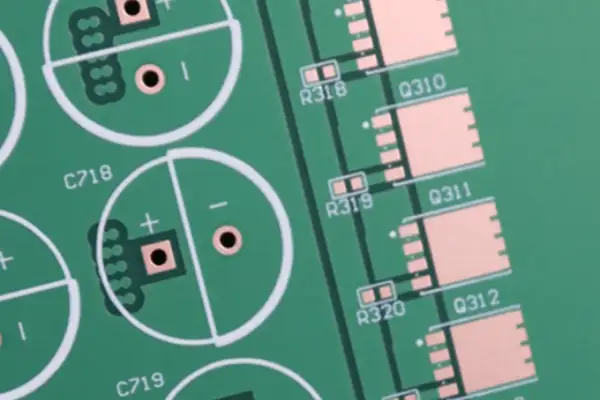
Many people now talk about turnstiles and keep dragging in algorithms and face recognition, as if the board only needs to run. But anyone who has actually tripped up in a project knows that the control mainboard is the hidden black hole that decides your later operations and maintenance cost. A Turnstile Access Control PCB looks about the same sitting in a showroom: a green board with all the necessary interfaces. But once it is installed in an open-air turnstile at a scenic mountaintop and goes through three months of moisture and day-night temperature swings, all the problems come out. If it is not a burnt chip, it is a reader that drops offline from time to time, and maintenance staff run back and forth, costing more than the ticket money.
In the last two years I have almost stopped using boards that carry the banner of “universal,” and would rather find someone to redraw them. Especially for construction-site real-name-registration scenarios, only those who have crouched on site know how bad the power supply environment is. A generator drives a row of turnstiles, the voltage fluctuates, and instant power loss followed by restoration can happen several times a day. At such a time you cannot rely on software alone for data protection. If the power-loss detection circuit on the board reacts a few milliseconds slowly, attendance records are lost, and later the workers will quarrel that they worked a whole day and nothing was recorded, and when you show them the log it is all broken. So I require the power section to carry a supercapacitor, and make sure the MCU has enough time to push data into the ferroelectric memory, instead of relying on that little bit of battery.
Interestingly, the more of these custom boards I make, the more I find that locating a reliable supplier is more tormenting than the design itself. In the past, for convenience, I simply threw the job at a factory that made simple double-sided boards, and the hole diameter tolerance came out too large, the through-hole parts wobbled after insertion, and the cold solder rate in wave soldering was extremely high. Only later did I understand that the motor drive loop, the reader signal lines and the network port traces in a turnstile are all squeezed together, and if the board layers are not planned well, the interference makes life miserable. Now I have basically moved this kind of industrial control board to multilayer, four layers at the minimum. With a complete ground plane, EMC problems are much smaller, and the reader no longer jumps around when a relay switches.
There is a perception gap here: many people think multilayer boards cost too much to use. But once you add up after-sales rework and the labor of on-site replacement, that little price difference is nothing. The key is to find a truly knowledgeable multilayer PCB manufacturer, not a small workshop that only plays the price game. The one I work with is basically a house that specializes in industrial control boards and automotive electronics contract manufacturing. From the beginning they talk with you about copper thickness, via plugging, and conformal coating processes, and they even suggest adding copper bars to the motor drive loop on the turnstile control board to strengthen overcurrent capability. This kind of experience is not something just any multilayer PCB supplier can give. Some suppliers, when you ask them to do impedance control, argue with you about unit price for ages. Stay away from those.
Also, real-name turnstiles are increasingly moving toward miniaturization. The old clumsy, bulky black boxes are gradually being phased out, passage gate bodies are getting narrower, and the board size is squeezed along with them, so sometimes HDI boards are a must. With finer traces and tighter spacing, when picking an HDI PCB manufacturer you have to look at the precision and yield of their laser drilling. Once I got greedy and used a factory with no blind-via copper-filling experience. The board went through reflow twice and the via openings simply cracked. Under the microscope it was all micro-cracks, and that whole batch of boards was eventually scrapped. So afterwards, even at a slightly higher price, I insisted on an HDI PCB supplier with mature high-density interconnect experience, especially one that has made mobile phone mainboards or security equipment boards. Their control over fine lines really is different.
In the end, what runs on the turnstile as a carrier is passage logic and real-name data, but what ultimately supports it all is that PCB which looks so unremarkable. If you choose it as a generic consumer product, it will give you trouble every day. If you treat it as a functional part that needs special care, getting fussy about component selection, stackup design and fabrication process, then once on site it will instead stay quiet, and that is the real way to save money.
I recently took on a turnstile control project, and after all the struggle my biggest feeling is that hardware work is most afraid of assumptions. Especially that Turnstile Access Control PCB: it does not look big, but it is the key to whether the whole device can wrap things up cleanly at the instant of power loss. Many schemes overlook leaving enough margin in the energy-storage capacitor on the power-loss detection. Capture the waveform on an oscilloscope and you will see that the time window between detecting the power loss and the main controller truly dying is far harsher than the datasheet says. I once paid for this myself: the capacitor was chosen too small, the MCU had not finished writing its registers, and the gate wing stopped halfway, almost touching a person.
When choosing the main controller, everyone likes to compete on MCU computing power, but what I actually care about is interrupt response and cooperation with peripherals. Do not listen to people who say a turnstile must use a DSP. Later, on a mobile-payment turnstile lane, we used a Cortex-M4 whose clock speed was not especially high, but we reserved a high-priority timer specifically for the motor channel. The current loop was calculated rock steady, and the gate wing moved as smoothly as if it had been greased. By contrast, in the past I tried letting one MCU take on every job, running the communication protocol and computing FOC at the same time. When the infrared sensor traffic got heavy, the position loop could not keep up, and the motor shook like it had malaria.
Later I redrew the board and deliberately separated the main controller from the motor pre-driver, with the power supply also cleanly cut apart. For prototyping I found an HDI PCB manufacturer, because the traces on that board were dense and only a six-layer one-step HDI could hold down impedance and crosstalk. Reliable HDI PCB manufacturers are hard to find these days. The first two shops I sent boards to had inner layers so misregistered they looked like a Picasso painting, and after I switched to one that specializes in multilayer boards, communication was much smoother. Now, every time I send out a board like the Turnstile Access Control PCB that mixes high power and weak signals, I first have the multilayer PCB supplier run a signal simulation. Do not think it a bother; it really saves trouble.
For the motor section, I did not use an integrated driver. I still prefer to build my own N-MOS half bridge, with an encoder for closed-loop position control. The MCU only sends commands and reads current, while a small chip underneath acts like an executive secretary, shouldering the dirty work of PWM commutation. This lightens the load on the main controller, and even if one day I add a face recognition module, the system will not slow down, and the gate wing still swings through the same number of degrees. Looking back now, for real-time control equipment like this, do not always try to have one chip do everything. Split the burden a little, and stability goes up a big step.
Some time ago our factory replaced a batch of new turnstiles, and the gate wings always showed a jerky feel when closing halfway, sounding like the gears were fighting each other. When we opened the control board, good grief, the traces were as tangled as a spider web, and the Hall signal passed right beside the motor driver with no shielding at all. How could that not cause problems? A component like the gate wing, squeezed by crowds every day, actually has much stricter requirements for control accuracy than many people imagine. During low-speed retraction, even a slight fluctuation in torque feels like a series of “coughs” in the hand.
Later I specifically compared the two approaches of pure Hall commutation and encoder closed loop. Hall sensors are cheap and rugged, but expecting them to finely govern the angle of a gate wing is basically unrealistic. Think about it: how many pulses are there per revolution? Even with a filter circuit, the jitter at the commutation points cannot be fully smoothed out, and the motor torque itself carries ripple. In those few tenths of a second when the gate wing is about to pinch someone and must immediately spring back, what counts is agility. The position granularity a Hall sensor provides is too coarse, and it easily makes the anti-pinch algorithm misjudge. The resistance has clearly been met, but the controller still thinks it has not arrived, and then the person really gets pinched. An encoder is much finer, with hundreds or even thousands of pulses per revolution, so the angle of the gate wing is perfectly clear. But you cannot use one carelessly either. I tried an optical encoder with sloppy wiring, and once PWM noise got in, the position feedback jumped, and the gate wing would hesitate in mid-air. That feeling is particularly eerie, as if someone suddenly yanked on it.
This forces you to put serious effort into the routing of the Turnstile Access Control PCB. The Hall signals and the encoder differential pairs must both be treated as sensitive high-speed signals, with short traces kept far away from the hissing motor phase lines. I have paid for this. When I used an ordinary two-layer board for the prototype, the ground bounce noise simply could not be suppressed, the 100 ohm termination matching of the encoder was not done properly, the impedance jumped around, and the signal overshoot was severe. Later I simply raised the board density and found a reliable multilayer PCB manufacturer to rebuild the prototype, using a six-layer board with a complete ground plane and power layer separated out. The effect was immediate. The jerky, burr-like feel at low speed disappeared at once, and the gate wing moved as smoothly as if greased. When choosing a multilayer board supplier, you really cannot go only for the cheap one. Some manufacturers who claim they can do HDI have process control that is nowhere near adequate, and if the microvia registration is off even slightly, crosstalk between signal layers goes up.
This year we are already working with an HDI PCB manufacturer specializing in high-density boards to stack the board more compactly, an eight-layer two-step design with blind and buried vias fitted together tightly. It is not for showing off, but because today’s turnstiles are more and more highly integrated, needing face recognition and also a screen of a dozen or so inches, with the board area squeezed down to a palm size. Without the technology of an HDI PCB supplier it simply cannot be routed. The filter resistors and capacitors for the encoder and Hall signals can now be tucked directly under the BGA, traces are shortened by almost half compared to before, and noise basically cannot form a threat. The turnstile trade is quite interesting: the hardware foundation decides everything, and a seemingly unremarkable control board directly determines whether hundreds of people can pass in and out smoothly every day.
I first got into passage turnstiles about five years ago, when I had just moved from multilayer boards for consumer electronics to industrial control. When the first Turnstile Access Control PCB prototype came back, it completely confused me. When the power was cut, the turnstile door did not release automatically as expected but jammed there, blocking the entire lane. Only after the post-mortem did I find that the power-loss switching logic depended too heavily on the MCU, and at the instant the energy-storage capacitor voltage dropped below the undervoltage threshold, the MCU simply had no time to react. The frustration was very direct: it was not that the chip was bad, but that the power priority and hardware release logic on the board had not been thought through from the start.
So when I later designed similar turnstile control boards, I put the power-loss detection circuit and the release path of the energy-storage capacitor at the very front, with higher priority than the motor drive and the communication bus. Power-loss detection must be fast. Not “very fast,” but faster than the capacitor voltage sags. The detection circuit samples directly from the output of the switching power supply, divides it down and feeds it to an independent comparator, with the reference voltage set with a hysteresis of a few tens of millivolts. The latched output directly shuts off the external device supply loop and at the same time triggers the hardware release of the gate wing. This logic does not go through the MCU at all and relies only on resistors, capacitors and gate circuits, with the time constant held at the millisecond level. You will find that when you truly hand the power-loss scenario over to hardware, the robustness of the whole system improves a great deal, because the software process chain of “wait for an interrupt, check a flag, then pull an IO” is no longer reliable when the supply sags to near the MCU undervoltage threshold.
The trouble on the infrared curtain side is of a different flavor. A passage turnstile has at least ten pairs of infrared beams, and the signal at the receiving end is especially easily pulled off by ambient light. On rainy days, once the lens is covered with muddy water, the DC bias of the receiving diode drifts, and a fixed threshold simply cannot be used. The most headache-inducing case I have seen was a subway station turnstile, where for a few minutes in the morning facing the sun it falsely reported tailgating in batches, and station staff had to cut the circuit temporarily, which was quite embarrassing. Later we worked with an HDI PCB manufacturer with a lot of industrial-control experience, separating the layout of analog conditioning from digital processing. The receiving end was routed on a four-layer board with an independent low-noise power plane, and every infrared receiving channel was AC-coupled and amplified before being sent into a window comparator with a programmable threshold. The threshold is not hard-coded; a small MCU on the board adjusts it dynamically based on the distribution of signal amplitude over the previous half hour. This dynamic threshold strategy sounds simple, but when it is put into practice it demands very low layout noise. For example, the motor drive switching node must stay far from the analog traces at the receiving end, and the ground return paths must not overlap.
Speaking of PCB manufacturing and suppliers, I have stepped in quite a few pits. Some multilayer PCB suppliers deliver boards with large impedance control deviation, and the fringe-field crosstalk makes the analog signal at the infrared receiving end jitter by a dozen or so millivolts, and no amount of software filtering helps. Later I found that for this kind of board, it is best to go to an HDI PCB supplier that specializes in high-density interconnect, whose laser drilling is more precise, interlayer alignment more stable, and impedance consistency far better than an ordinary multilayer fabricator. Especially when the board needs to fan out a 0.5 mm pitch BGA to run the main controller chip, finding a multilayer PCB manufacturer that understands impedance control and differential routing will save a great deal of later debugging time. Moreover, this type of supplier has a better concept of the voltage withstand and CTI value of board materials. Because of safety regulations, passage turnstiles have very strict creepage distance and electrical clearance requirements, and ordinary FR4 may not pass certification, so they can help choose a suitable material combination.
Looking back now, the electrical control design of a passage turnstile is essentially about handling deterministic behavior at power loss and the anti-interference of the infrared receiving signal chain. Once those two weak points are fixed, the turnstile rarely has an accident whether it faces sudden power loss or heavy rain. One stubborn point of mine is that I never let the power-loss release action go through the software flow of the MCU, and I never use a fixed threshold at the infrared receiving end. Those are my two bottom lines. As for the rest, such as the topology of the backup power and how peripheral power is switched, every team has its own implementation, but physical reliability must be built on direct hardware response, and only then does this Turnstile Access Control PCB truly stand firm. All of this experience was rolled out of projects, and the boards scrapped and nights stayed up all ended up as design rules.
The biggest pit I have stepped in over these years of making turnstile passage boards was mixing infrared detection with the motor. At the time I always felt the software logic was wrong, and spent all day adjusting the state machine and changing filter parameters. Yet once the motor started, the infrared signal still jumped around, the passage lights flashed randomly, and the gate wing did not close when it should, then suddenly pinched you when it should not. Later, when I captured it with an oscilloscope, I found that the power rail of the infrared receiving diode had a very deep disturbance at the moment of motor commutation, 200 mV with glitches on top. It would be a miracle if detection worked normally.
The root cause was not in the code but in the board. At that time, to save effort, the whole board used a single 5V rail to power everything, and the analog front end of the infrared receiver, the MCU and the motor driver were all tied together. PWM chopping noise poured straight down the power line into the infrared channel, and the receiving diode output carried a ripple synchronized with the motor frequency. Set the detection threshold high and there was no response, set it low and it triggered constantly. The final thorough fix was to redo the board: the infrared branch was split off separately from the input power, passed through a low-noise LDO first and then powered the receiving diodes and the op amp, with the LDO ground tied at a single point to the power ground, far away from the return path of the motor drive. After this change, those inexplicable misjudgments never appeared again. You see, in making a turnstile control board, how you cut the power domains is far more useful than all the threshold tuning in software.
To go deeper, the same is true of anti-pinch. Many designs make anti-pinch a pure software function: the infrared detects a person, the MCU enters an interrupt, the state machine judges, and a command is sent to close the motor. Running through this chain takes a dozen milliseconds even at best, and while the motor is still pushing hard, the gate wing has already pinched the person. My preferred approach is to pull a hardware path directly: the conditioned infrared receiving signal is split off to the enable pin of the motor driver chip, pulled low directly through an overvoltage comparator, without passing through the MCU. The response time is then just the delay of the op amp and comparator, a matter of tens of microseconds, much faster than any software polling. Of course, this again places requirements on board layer routing, because if such a fast signal is coupled with high-power circuits, the work is wasted.
For this kind of board, a two-layer design is basically out of the question. The infrared front end is a small analog signal, the motor drive is high voltage and high current, and there are also digital buses, a network port, and sometimes an RFID reader squeezed in. Without routing them separately it simply cannot be done. My current scheme starts at four layers at least, clearly distinguishing analog ground, digital ground and power ground, with the power layers also split and key signals on inner layers. For even smaller volume, such as the slim turnstiles in subways, HDI is needed. Blind and buried vias let the infrared receiving array and the main controller to motor channel be packed very compactly while impedance stays easy to control. Finding an HDI PCB manufacturer is something that takes some care. Some factories hand you a stackup, but they themselves do not understand the signal return path, and when the board comes back the ground bounce makes you doubt your life.
Back to detection accuracy: anti-tailgating requires resolving a 30 mm spacing, and this is not only a matter of algorithms. One turnstile I had on hand used six pairs of infrared beams arranged staggered top and bottom, with the transmit and receive angles locked down. This requires that the mounting positioning hole deviation of every infrared pair on the PCB must not exceed 0.1 mm, otherwise the light path shifts and the effective spacing actually becomes larger. The interlayer alignment accuracy of the multilayer board manufacturer directly decides this. A board made by a multilayer PCB manufacturer equipped with laser direct imaging and CCD alignment is a completely different thing from one printed by an ordinary exposure machine. I also paid for this a few times before settling down, and now I only work long-term with suppliers who can perform impedance testing and are willing to show me cross-section reports.
After so many years, one feeling runs particularly deep: many people are willing to spend big money on the motor and the control algorithm, yet the board gets a casual prototype and goes straight into use. In a product like the turnstile, mechanics and electronics are so tightly coupled that once the motor vibrates or the infrared shifts, the whole passage logic collapses. A reliable multilayer PCB or HDI PCB, with the power and signals routed smoothly from the start, gives you a foundation no matter what algorithm you tune later. When looking for a supplier, do not look only at the price. Ask whether they have previously made similar high-speed mixed boards for industrial control or security, and check whether their recommended stackup is reasonable. That matters far more than how many dollars per square meter.
Anyone who has worked on a turnstile control board should have felt this: it looks simple, but when you really try to fit all kinds of interfaces onto one board, things are completely different from the surface. Last year we revised a passage turnstile control board. Just the Wiegand readers alone numbered four, plus two RS485 channels connected to the host and the screen, and a pair of CAN for linkage, with Ethernet, relays and a high-torque motor driver beside them. The first hardware version came out looking simply unbearable, with traces wound like a spider web, and ground bounce noise caused so much Wiegand packet loss that I began to doubt my life.
During the post-mortem we later figured out that this kind of Turnstile Access Control PCB cannot be stacked up in the way of a conventional industrial control board. Once interface density goes up, the stackup and partitioning matter more than the schematic design. We had sent the job to five multilayer board fabricators for prototypes, and the best-performing multilayer PCB manufacturer was not the one with the lowest price but the one most willing to spend time helping us tune the stackup design. Their engineer called us directly and asked whether the Wiegand traces were on the top layer and too long, and suggested that right after the optocoupler the two Wiegand data lines be dropped through a via to an inner layer, following a separate ground isolation island. Interference in differential mode noticeably dropped. Honestly, that advice was more useful than two months of our own fumbling.
Finding a reliable HDI PCB supplier is equally important for this kind of board. This generation of turnstile required the main controller core board and the interface base board to be made as a single piece, reducing the contact hazards from pin headers and sockets, and the board size could not be enlarged, so we could only go toward high density, and the routing density forced us to use laser blind and buried vias. The multilayer PCB supplier we originally worked with had no problem making through-hole boards, but when we moved to HDI the control of impedance and layer offset was not so steady. We changed two, and the HDI PCB manufacturer we finally used is in Shenzhen and specializes in hard boards for security and access control. They had many stackup schemes similar to a Turnstile Access Control PCB on hand, and during prototyping they held the offset between the laser hole and the inner layer pad within 50 microns, which greatly affects the intra-pair length matching of the RS485 differential pairs. Only then did I realize that choosing an HDI PCB manufacturer is not just about whether they can make it, but also whether they understand the interface characteristics of this kind of board.
The details of interface handling are also worth mentioning. Wiegand and RS485 are completely different things. Wiegand is a single-ended pulse with a very low interference threshold, so we later routed every Wiegand signal through optocoupler isolation, and the pull-up resistor and filter capacitor on the optocoupler output side must sit right against the MCU pin with no detour in between, which finally solved the occasional failure to read card numbers. The trouble with RS485 is the placement of the common-mode choke and the termination resistor beside the transceiver. The first time, we put them a bit far from the connector and also placed the TVS in the middle. The result was worse than putting them directly behind the terminal with the differential pair running close together, and only then did EMC testing go smoothly. This experience was in fact also repeatedly stressed by the technical support of that multilayer PCB supplier, who even sent over photos of a few failed boards, and one look made it clear.
Looking back, although the underlying logic of a turnstile control board is the collection and driving of various states, what truly affects stability is often the board-level physical implementation. If at the start you find a supplier that has both logic-board capability and multilayer and HDI experience, the rework time saved later is considerable. Of course I would not recommend a specific name; I just feel that for this kind of board you should not look only at price. Interfaces like Wiegand and RS485 very easily become the weak link, and a reliable board is well worth the small difference in prototype cost.
When I used to make turnstile boards, what gave me the most headaches was not the functional logic but the boards that looked just fine and yet showed all kinds of inexplicable small faults once running. One time at a site, during a reader hot-plug, the screen flickered a few times with a beep and the MCU rebooted outright. I investigated for a long time before finding that, on a four-layer board handling several isolated grounds, the copper cut looked clean, but the isolated grounds of several interfaces shared a stretch of return ground copper on one layer. The common-mode spike from the hot-plug ran along that shared impedance to the pins of other chips. That batch of boards used ordinary multilayer construction, and the ground plane simply had no room to maneuver. Later I switched to a multilayer PCB manufacturer that could also build a Turnstile Access Control PCB, went straight to six layers, and strictly separated the isolated grounds of fire alarm, reader and motor drive by layer and zone, and also added an independent copper island to the power layer. After that, similar problems never appeared again.
On the fire-alarm side, many people are used to letting the MCU parse the dry-contact signal and then act, assuming software polling is enough. But one of our turnstiles, during a fire-resistance test, lost its communication bus to the heat before the fire had really burned much. The MCU waited for a response indefinitely, and the gate wing did not move at all. After that I firmly advocated making the fire-response chain independent. The dry-contact signal comes in, passes through optocoupler isolation, and directly drives the door-lock release relay behind it. The energy-storage capacitor used by this relay must also be a separate one, not taken from the main power rail. There is no fancy technique here, only a bottom line: no matter what the MCU is doing, and however far the main power has sagged, once the fire signal arrives the door must open immediately.
Speaking of power, the backup scheme for opening the door automatically at power loss is also somewhat roundabout. In the early days we used battery switchover, but at the instant the voltage dropped it would still cause abnormalities in the MCU storage area. Later we simply added a large-capacity supercapacitor on board, together with a voltage monitoring chip. Once an input power loss is detected, the capacitor extends power to the core actuator for a few hundred milliseconds, and pure hardware logic releases the gate wing. This change places no small demands on the internal routing of the multilayer board, so I later discussed with the multilayer PCB supplier we work with switching to a two-step HDI process. The board shrank considerably while signal integrity became even more stable. Now, when looking for an HDI PCB manufacturer, you must choose an experienced one. Otherwise, if the laser drilling tolerance is large, the interlayer misregistration raises the power supply’s internal resistance, and the charge and discharge characteristics of the capacitor on the fire-alarm side will be wrong.
Over these years I have gradually come to feel that, for a security device like the turnstile, what deserves the most thought on the PCB are exactly those unremarkable power paths and isolated ground strategies. However flashy the processor selection is, if hard indicators such as fire-alarm linkage and reader hot-plug stability cannot pass, it is all for nothing. After working with HDI PCB suppliers for a long time, I also understood that a good board is truly not a matter of how many layers there are, but of how each layer of copper is used and whether it can hold the last line of access control safety under the most extreme working conditions.
I have built many passage turnstile control boards and found a problem that most people do not take seriously: whether the board itself can withstand those several million open-close cycles. However beautiful the drawing, and however much drive current margin you have reserved, once this PCB base gives out midway, the whole device collapses at once. A Turnstile Access Control PCB of that kind cannot simply be a general industrial control board put to use. Every day it must endure repeated mechanical stress transmission, the instantaneous current impact of motor decoupling, and temperature swings of several tens of degrees between morning and night in an outdoor cabinet. Stacked together, these place requirements on the lamination strength and via reliability of a multilayer board that are an order of magnitude higher than for an ordinary digital circuit board.
I stepped in a pit a few years ago. To meet the deadline, I went to a multilayer PCB manufacturer whose quote was especially low. Several prototype boards showed no flaws at all, with clear silkscreen, flying probe test passed, and even cross-section reports provided. But when we actually ran a small batch, all the problems were exposed. On an aging bench simulating 5 million open-close cycles, some boards reached only a little over seven hundred thousand cycles when the MOS transistors in the motor drive branch began to burn out at random, and sometimes the gate wing stopped dead halfway. At first I always assumed it was a component quality or heat dissipation design flaw. I pulled the boards off and inspected them layer by layer with X-ray, and only then found micro-cracks in the inner-layer power copper at the corners of the vias, with some places simply pulled apart. The substrate used by that factory had never reached the 150 degree Tg it claimed, and once thermal stress came up, Z-axis expansion tore the hole copper straight apart. After we switched to a multilayer PCB supplier that specializes in automotive electronics, they re-verified our stackup structure with us, forced the vias under heat-generating components to be resin-filled and capped, and also increased their stock of high-Tg board material, and after that no such mishap occurred again in testing. The purchase unit price of a single batch of boards rose by less than fifteen percent, but it lets the turnstile hold steady through those several million actions, and the on-site board replacement cost saved is by now many times over.
There was another project where the turnstile shape was squeezed so thin that the control cavity was under 8 millimeters, and the traditional multilayer board plus connector scheme simply could not fit. We could only hold the board thickness to 0.8 millimeters and still split out eight layers to route all the signals, and at that point there was nothing for it but to talk to an HDI PCB manufacturer. The first HDI PCB supplier we approached had laser drilling equipment that could only do one-step blind vias, and they were accustomed to stacking electroless copper directly at the bottom of the blind vias without filling them flat. We took the sample boards for thermal cycling, and as soon as the temperature reached the minus fifteen degree step, the resistance of several blind vias fanning out the BGA jumped, signal lines mysteriously lost their reference layer, and the logic analyzer captured a lost pulse every now and then. Later we switched to another factory that did three-step HDI, using large-aperture laser drilling plus full-board plating copper fill. The bottoms of their microvias were smoothly rounded and the connection area to the bottom copper was clearly much larger. When the board was thrown into a thermal shock chamber and flipped back and forth between minus thirty and eighty degrees, even after several hundred cycles we did not see a single failure point. The reliability of “5 million cycles” is not built merely by picking a good capacitor or a good motor; what really holds the bottom line is those places inside the PCB where each layer of copper bites tightly into the base material. If the inner-layer bonding strength of a Turnstile Access Control PCB is inadequate and the hole copper ductility is poor, then even with aerospace-grade chips everywhere, it will stop working exactly when it should not.
Now when I order boards, whatever the other side calls itself, multilayer PCB manufacturer or HDI PCB supplier, I do not first care how fine a trace they can print or how small a hole they can make. I first ask for density test data, cross-section morphology, and the hole-copper fracture rate under long-term thermal stress. Any supplier who cannot provide such data, I assume by default does not understand what a high-frequency reciprocating-action device really needs. After all, a turnstile is not sitting there to show blinking lights. Every movement it makes tests the constitution of the connections inside the board. If you take the PCB too lightly, the maintenance bills afterward will get thicker page by page.
A few years ago, on one turnstile project, whenever the motor started there was always a piercing “zzzt-hmmm” noise, especially in the quiet office lobby in the early morning, and the customer complained directly that it did not sound like what high-end equipment should. At first we kept tweaking the drive parameters, raising the carrier frequency from 16k to 20k and then to 24k. The sharp electromagnetic whine did get a little smaller, but the mechanical vibration still gave people goose bumps. Later we simply took the whole Turnstile Access Control PCB out to measure, and found that the problem was not the PWM frequency at all. The stackup of the board itself had not been handled well, the drive loop and the signal ground were mixed together, and the noise from the power traces coupled over and disrupted the MCU’s current sampling, so the motor phase current waveform jittered like an electrocardiogram.
The factory we worked with at that time made cheap multilayer boards. They squeezed the four-layer board down to about 0.4 yuan per square centimeter and delivered quickly, but impedance control was basically left to chance. We switched to a multilayer PCB supplier focused on industrial control, paid double the prototyping fee, and wrapped the drive loop with a complete power plane and ground plane. The switching ringing of the motor drive MOSFETs immediately converged, and running the same firmware on that board, you had to press your ear against the turnstile housing to hear a very faint hiss. From then on I learned my lesson. For motor drive work, choosing a multilayer PCB manufacturer is not about how small a minimum trace width and spacing it can achieve, but about asking clearly about copper thickness, dielectric thickness tolerance, and whether they can do impedance coupon testing. Especially if the copper in the drive section is too thin, a large current brings a temperature rise, and the on-resistance of the MOSFET then drifts upward with temperature, so noise and heat “carry each other’s sedan chair” in a vicious cycle that cannot be stopped.
Later, when making a narrow-passage turnstile, the board size was cut in half and the boss slapped the table demanding HDI. I looked at several HDI PCB suppliers. Their microvia processes were mature, but we stepped into a pit on the drive layout. An HDI board has high trace density, and the ground return path of the drive loop is often interrupted by vias, so noise coupling is far more serious than on an ordinary through-hole board. One HDI PCB manufacturer gave us an idea: drill blind vias directly under the driver IC down to the inner-layer power ground, keep only low-noise small signals on the surface layer, and use laser drilling to shorten the critical loops to the minimum. After adjusting the board, we also switched the brushless motor drive from square wave to sine wave. The torque ripple became too small to feel, and even when a card was swiped late at night, the barrier action went by with a muffled “swish” and not a trace of high-frequency hissing.
So now I have set a hard rule on turnstile projects: for any board with a drive current above 5 amperes, the core stackup must use at least six layers, and the supplier’s quality control must be able to provide a cross-section report for every batch. When choosing a multilayer PCB manufacturer or HDI PCB supplier, you do not rank them from lowest to highest price. You first look at whether the factory has made motor driver boards of the same type and whether it can provide impedance control and temperature-rise simulation data. Noise is rather mysterious: every extra cent spent on the board early on comes back tenfold in the silence specification at the end. On the Turnstile Access Control PCB it may look like just a driver chip and a few MOSFETs, but it determines how the whole turnstile is rated in the customer’s eyes. Once the motor makes a noise, all the effort spent on the hydraulic damping and the material craftsmanship is wasted, and people only feel that it is loud.
A while ago, one project wore me out. An outdoor turnstile in northern China simply went down in winter, and in the end it turned out that the motor drive section on the mainboard could not withstand the low-temperature shock. This made me re-examine the selection criteria for the Turnstile Access Control PCB boards in my hands. In the past I always felt that finding a reliable multilayer PCB manufacturer to build the board was enough, and only later did I understand that the scenario determines things far more complex than the logic on the schematic.
Among the turnstile mainboards I have dealt with, few can be used in every place with one board. In scenarios like the subway, with high frequency and high safety demands, the gate wings must act quickly and precisely, and the current spikes when the motor starts and stops can easily burn hidden damage into the copper foil of an ordinary board material. At that time I specifically looked for a supplier with a lot of experience in HDI PCB. Laser blind vias compressed the distance between the drive loop and the main controller to the limit, and copper heat-dissipation blocks were embedded directly in the middle of the multilayer board. For a 1.2-meter turnstile, the mainboard thickness was held to 1.6 mm, yet it could continuously withstand a 40A transient impact. If you did the same thing with a conventional through-hole board without an HDI stackup, the volume would be at least half again larger, and signal integrity would be hard to guarantee. For the differential lines of infrared anti-tailgating, even a slight stub can turn the return loss into a mess.
Many people think a turnstile control board is just a bunch of relays and optocouplers, with no high-speed signals, so a double-layer board is more than enough. That is only true when no communication protocol upgrade comes along. Turnstiles in commercial buildings now routinely run gigabit TCP/IP, plus two CAN channels to interface with fire alarm and building control, and Wiegand and RS485 in large numbers. I paid for this once. To save trouble, I went to a multilayer PCB supplier that made ordinary double-sided boards, and crosstalk between the board layers locked one CAN bus completely at a certain node voltage. The gate wing stopped half open, and dozens of people were jammed at the turnstile. Later we switched to a supplier that could provide simulation reports and re-routed a six-layer board, giving the communication area its own complete ground plane and isolation slots, and only then did that problem disappear. This shows that choosing a multilayer board manufacturer is not only about how many layers they can laminate, but about whether they understand how you divide ground layers and power layers.
The motor is another pit. The motor types in turnstiles are now quite varied, with brushed, brushless and servo all having appeared. Some cheap schemes, to save cost, simply use a brushed DC motor with limit switches, and the back EMF and stall current can melt the solder on the driver MOSFETs. My habit now is that, whichever multilayer PCB manufacturer I use, before production I have them apply a dedicated heavy-current copper thickness process, 2 oz at the minimum, with the freewheeling loop of the gate wing motor routed on an inner layer with wide copper, not sharing a return path with the logic area. For the outdoor tripod turnstile, the kickback force from tourists pushing the arm can turn the motor into a generator in an instant, so I had the supplier mount TVS diodes and freewheeling diodes directly at the board edge, with especially large pads, and the conformal coating must cover the roots of the connectors, otherwise moisture gets in and causes corrosion.
When it comes to scenarios, the more you say, the more it is all details. For real-name construction-site turnstiles, most people think it is enough for the board to be dustproof, but in fact the instant of power loss is the killer. The main controller has no time to save parameters gracefully, and the gate wing must complete its release before the capacitor charge is exhausted. At that point, the energy-storage capacitor charging loop on the board and the power-loss detection comparator must be completely independent of the operating system, and one whole layer of the multilayer board is set aside for the emergency release logic, driven directly by hardware. I once tried integrating this logic into a software interrupt, and one unannounced power cut locked the gate wing and left the workers all jammed at the door. After talking with the HDI PCB supplier, I made that hardware release module a separate small zone, isolated from the main controller by two-step blind and buried vias, and only then did I feel at ease.
When picking a supplier, many times it is not about the numbers on the quotation but about whether they are willing to sweat the details with you. I have worked with a relatively small HDI PCB manufacturer. The scale was not large, but they could customize the stackup scheme for turnstile boards. For designs like the subway where fire-alarm linkage is mandatory, they built the bleeder loop for door-opening at power loss directly into an inner interlayer, physically severing its relationship with the main controller. A design like this simply cannot be routed without HDI high-density interconnect. Some big factories, on the other hand, only give you a standard lamination structure and find even one more question a bother.
So, back to the board that went down in the cold at the start of this story: the problem finally came down to the fact that no thermal compensation copper had been placed under the pad of the motor driver chip, and at minus 20 degrees Celsius the board material shrank and pulled the solder joints apart.
A few years ago a turnstile project nearly drove me crazy. The board ran fine in the laboratory, but after being installed at a subway entrance, it began to crash occasionally in less than two months. When we took it down and looked, there were micro-cracks under several capacitors around the main controller chip, not the kind visible at a glance, which had to be found with a magnifier along the edge of the solder joints. Later, cross-section analysis revealed that the problem was in the lamination of the multilayer board at the board factory: the flow of the prepreg had not been controlled, and when the board went through hot and cold shocks, Z-axis expansion pulled the copper foil at the root of the pad into a hidden fracture. At that time I truly understood that a schematic with no errors and routing that passes DRC is still far from surviving 5 million passes through the gate in the field.
Afterwards I specifically looked for a manufacturer that did both multilayer boards and HDI boards, not the kind that only takes large-volume consumer orders. When I talked with their engineering manager about turnstile gate control PCBs, he asked me directly: this board needs to run more than 5 million cycles, right? Does the copper near the power transistors need to be 2 ounces? Should the pad surface finish be changed to immersion gold, not HASL? That is how it should be. The prototype then was an eight-layer two-step HDI board, stacking the main controller, motor drive, Wiegand reader and dry-contact isolation onto one small board, and because space was limited, the Turnstile Access Control PCB had to be made as compact as possible. The stackup design and the blind and buried via reliability verification took nearly a month, but it was worth it. In the end, that batch of boards was installed in turnstiles and ran continuously for nearly two years in a semi-outdoor scenic-area setting with day-night temperature swings of twenty-some degrees, and not a single unit let us down.
So I am very picky about suppliers now. A reliable multilayer PCB supplier cannot necessarily do high-density HDI well, and conversely, an HDI PCB supplier who is very good at consumer mobile phone mainboards is often at a loss when handed a requirement like an industrial-grade turnstile board with thick copper and high-current traces. The “5 million” for turnstiles is not a false claim. It requires that the solder joints and vias can withstand the current shock at every motor start and stop and every braking energy feedback event as a person passes through. When choosing an HDI PCB manufacturer, I particularly look at their interlayer registration accuracy and the inner copper thickness uniformity, because these directly affect whether the buried vias are still reliable after repeated thermal cycles. Multilayer board manufacturing is really more like a craft. Anyone can buy the equipment parameters, but there are truly few who can make the lamination temperature and resin flow time work within an extremely narrow process window.
In the end, when making this kind of passage control board, you have to imagine the scenario rougher still: a child hanging on the gate arm to play, a cleaner bumping into it with a wet mop, even a scenic area at midnight with frost at more than ten degrees below zero. Your board has to stay awake through all of it and not go wrong. Stretching the lifespan to 5 million cycles cannot be achieved by shouting; it is achieved by thoroughly understanding every link of the supply chain from the front end to the back end.
Several fabricators turned down our 38-layer TPU PCB. Splitting it into a
Anyone in RF knows the Distributed Antenna System PCB in an in-building
A trailer brake controller suddenly lurches, and after hours of checking the
- Experte für die Produktion kleiner bis mittlerer Chargen
- Hochpräzise PCB-Fertigung und automatisierte Montage
- Zuverlässiger Partner für OEM/ODM-Elektronikprojekte
Geschäftszeiten: (Mo-Sa) von 9:00 bis 18:30
Get quote, solution or any question, Andre always here to help