

Heat Dissipation Challenges and Solutions in PCB Circuit Board Design
Circuit boards are more than just that green board in a phone
When it comes to choosing a turnkey PCB service provider, many people easily fall into a misconception—overly focusing on the price tag. I’ve seen too many teams try to save a little money on their budget, only to suffer huge setbacks in material supply. The most important question to ask is: does this supplier truly have the capability to support you throughout the entire product lifecycle?
I remember last year we had a smart home project where the initial quote from a supplier was incredibly attractive. However, during mass production, we discovered their so-called “common material inventory” was utterly unreliable. When the main control chip was out of stock, they could only shrug and say there was a global shortage. That’s when you realize a supplier’s material sourcing capabilities are ten times more important than unit price. A truly reliable partner will warn you during the design phase about which components are prone to supply disruptions and even prepare alternative solutions in advance.
Now, when my engineers and I evaluate new suppliers, we specifically observe their communication style. If the sales representative only repeats platitudes like “delivery time is no problem,” it’s basically a no-go. But if they can provide specific soldering yield data for a particular BGA chip or proactively analyze your design files for potential heat dissipation issues, that’s genuine professionalism. After all, Tillverkning av kretskort isn’t like selling vegetables; low prices alone are far from enough.
One instance that particularly impressed me was when a supplier proactively provided three different layer stack-up solutions before prototyping. They not only compared the signal integrity differences between each version but also detailed the material procurement difficulties associated with each solution. This customer-centric approach is far more trustworthy than manufacturers who boast about the number of imported devices they possess. Ultimately, turnkey services test comprehensive capabilities, from component procurement to final testing, where any failure can cripple the product.
This was further confirmed recently while collaborating with an automotive electronics team. Automotive-grade components often involve procurement cycles of up to six months, making the supplier’s close relationship with the original manufacturer crucial. Once, a sensor suddenly ceased production, and our partner managed to secure the last batch of stock through a distributor. This crisis management ability transcends price tags. Therefore, my attitude towards turnkey service providers is becoming increasingly clear: short-term focus on pricing, long-term focus on the ecosystem. Partners who can weather supply chain storms with you are the ones you can truly entrust with your business.
I’ve always felt that many people misunderstand PCB outsourcing. They often think that outsourcing the entire manufacturing process means relinquishing control. Actually, it’s quite the opposite.
I’ve seen too many teams stumble over component procurement. A friend who works in smart home technology was stuck for three whole months last year because of a single power chip. He encountered obstacles everywhere he tried to find suppliers. Switching to a turnkey model actually made things much easier.
What impresses me most about this service is that it entrusts specialized tasks to specialists. Trying to navigate the component market yourself might leave you unable to even distinguish between genuine and counterfeit products.
This is especially true for PCB manufacturing. The quality of manufacturing processes varies greatly among manufacturers. Once, I visited a supplier’s production line and discovered they hadn’t even implemented basic anti-static measures.
Choosing a reliable service provider changes the entire work rhythm. You don’t have to chase material delivery dates every day, nor do you have to worry about the production line suddenly shutting down.
What truly convinced me to fully adopt this model was a product iteration experience. We needed to complete a small-batch trial production within two weeks; traditionally, just waiting for materials would take ten days.
This model is particularly well-suited to today’s fast-paced product development rhythm. You don’t have to be bogged down in supply chain minutiae, allowing you to focus your energy on truly important technological innovations.
Of course, not all projects are suitable for a full-service approach. For example, certain specialized fields requiring customized components may necessitate a hybrid model.
Ultimately, it’s like finding a partner. The key is to find a service provider who understands your product concept. They can’t just mechanically execute production orders; they need to provide professional advice.
Now, I value more whether the service provider can proactively anticipate potential problems, such as material shortages or process risks. This is far more valuable than post-mortem remediation.
A good turnkey PCB service should make you feel like you have a professional partner, not just a simple foundry.
Having worked in the electronics industry for a long time, I’ve noticed an interesting phenomenon: many manufacturers are now touting the power of smart factories. I think those fancy production lines are largely meaningless for ordinary developers. What truly impressed me is the shift in the turnkey PCB service model—it’s moving from simply making boards to solving real-world problems.
Previously, finding a PCB manufacturer meant sending a Gerber file and waiting for a quote. Now it’s completely different. Last week, a project required a special heat dissipation solution: the turnkey provider directly suggested changing a certain component to an embedded copper block; this also involved adjusting the layout of three surrounding chips; and finally, they performed thermal simulation for the entire board. This kind of deep collaboration used to require contacting four or five suppliers.
Customized components are where the real value lies. Once, we needed to achieve antenna impedance matching within a limited thickness: the manufacturer not only redesigned the FPC’s stack-up structure but also helped us connect with a supplier capable of making ultra-thin ferrite beads. This cross-domain resource integration capability is far more practical than simply advertising a “52-layer board.”
A global footprint sounds impressive; however, in practice, the delivery speed of Southeast Asian factories is actually slower than that of second-tier manufacturers in Dongguan. The key is the speed of problem response—a good turnkey provider will have engineers directly create group chats to discuss design flaws; this instant feedback is ten times more useful than so-called “11 global offices.”
Recently, I’ve increasingly felt that competition in the PCB industry ultimately boils down to competition within the ecosystem. A service provider that can handle component selection, circuit optimization, and even software debugging in a package deal is the truly reliable long-term partner. After all, nobody wants to spend time sending files back and forth between factories.
I always laugh when I see teams that just dump their PCB designs on factories and wait for the finished product. They call it “worry-free,” but I think they’re handing their lifeline to strangers. Yes, “Turnkey PCB” sounds great—you just throw your drawings in and someone else handles the entire process: material procurement, production, and assembly. But how many pitfalls lie behind this? Only those who have experienced it truly understand.
I’ve seen too many startups get ripped off by so-called one-stop services. Last year, a friend who works in smart home technology hired a service provider that claimed to offer a complete solution. The capacitors they sourced didn’t meet low-temperature requirements, and after mass production, the products all malfunctioned in the northern winter. Guess what? The contract stated, “The customer assumes full responsibility after confirming the bill of materials,” meaning the provider had already absolved themselves of all responsibility. The real risks are never on the production line, but in the unseen links of the supply chain.
What is the biggest fear in PCB manufacturing? It’s not a technical difficulty, but an information gap. You hand over the design to factory engineers to manufacture boards according to standard procedures, but your product may need to withstand special environments, such as high temperature and humidity or frequent vibration. These details simply cannot be conveyed to the production line from drawings alone. Once, we were manufacturing motherboards for industrial equipment. Although heat dissipation margins were clearly provided, because the airtightness of the installation space wasn’t emphasized, the boards manufactured by the factory using conventional processes overheated and crashed on-site. Later, we simply sent engineers to the factory for two weeks to completely resolve the problem.
Many people now believe in the convenience of “all-inclusive” solutions, but professional matters ultimately require professional oversight. I’d rather spend more money to control key material batches myself and personally visit the factory to inspect first-article testing than plant a landmine for convenience. Good collaboration should involve both parties understanding design and manufacturing, refining details together, rather than simply throwing a requirement at someone.
Ultimately, turnkey services are suitable for standardized products. Any project with a bit of innovation requires a more flexible collaboration model. Next time someone boasts about a one-stop service, ask a few more questions: How are component channels managed? What is the design change response time? Can testing standards be customized? After asking around, you’ll find that the so-called “turnkey” is nothing but a sophisticated lie.
I always feel that many people have a misconception about turnkey PCBs, as if they can just throw in the design and wait for a perfect product. Actually, it’s not that simple. A truly reliable partner will repeatedly confirm every detail with you.
I remember a project we had last year. The board looked great when it was finished, but it had problems when powered on. Later, we found that one of the capacitors had a voltage rating that didn’t meet the requirements; the supplier’s component was one grade lower than what we needed. This experience taught me a lesson: even the best design can’t withstand faulty raw materials.
A good turnkey service provider should be like a meticulous housekeeper, scrutinizing everything from the moment the components arrive at the factory. They have to go through every batch of materials, not only checking if the model number is correct, but also verifying that the parameters truly meet the specifications. Sometimes they even have to cut open a few samples to check the internal structure. This meticulousness is the guarantee of quality.
The testing phase is even more crucial. Just seeing that the board can power on isn’t enough; they have to simulate real-world usage scenarios and put it through the wringer. High-temperature and low-temperature cycling tests, prolonged full-load operation—these seemingly arduous steps actually help us eliminate potential problems in advance.
I particularly value transparency in the production process. Once, during a visit to a partner’s factory, I saw that they had a unique QR code on every board, making everything traceable, from the batch of materials to who operated the machine. This meticulousness is reassuring.
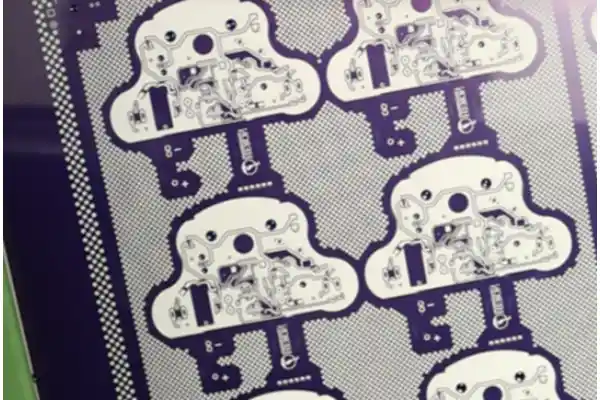
Ultimately, hiring a turnkey service isn’t about saving time; it’s about finding a professional partner. They need to understand the manufacturing details better than you do, and be able to spot problems you haven’t considered. Good collaborations are mutually beneficial; their rigorous quality control process actually helps us refine our product design.
Now, when I meet with suppliers, I specifically ask about their quality control processes. If they only vaguely say, “We have standard procedures,” I’ll basically pass on them. A truly professional team can explain how they specifically verify each step, and even share past mistakes.
After all, with PCBs, a small oversight can ruin the entire project. It’s better to invest in finding the right partners upfront than to try to fix things later, right?
When working on electronics projects, I place particular emphasis on the smoothness of the entire process. Having previously dabbled in hardware development, one of the biggest headaches was simultaneously coordinating with several suppliers – one PCB manufacturer, one component purchaser, and each communication was costly and prone to errors.
Later, I encountered suppliers offering all-inclusive services, which significantly reduced my worries. They integrated everything from design to materials. For example, in a recent project requiring impedance control boards, the client’s engineering team proactively identified potential issues during the initial assessment and provided several alternatives for us to choose from. This early intervention approach avoided many subsequent problems.
I have a deep understanding of the materials aspect as well. The chip supply in the market fluctuates wildly; sometimes components readily available during the design phase become unavailable within two months. Good service providers have their own supply chain databases, enabling them to quickly identify components prone to failure and even prepare alternative models in advance. Once, I encountered a niche sensor, and it was thanks to their recommended pin-to-pin compatible solution that we didn’t fall behind schedule.
Actually, what I appreciate most about Turnkey PCB isn’t their low prices, but their ability to integrate fragmented information. For example, during procurement, they clearly tell us which materials are in sufficient stock and which require anticipated delivery dates. This transparency makes project scheduling much more reliable. After all, the biggest fear in hardware development is a sudden blockage in any stage that throws the entire plan into chaos.
Now, unless it’s a particularly simple board, I prefer to find a partner who can handle everything in one go. The time and effort saved is far more valuable than simply trying to lower the price.
I’ve always felt that many people overcomplicate PCB outsourcing. You don’t need to get bogged down in technical jargon or process details—the key is finding a truly knowledgeable partner. Our team experienced this firsthand last year when developing smart home devices.
We had a project that required flexible PCBs made of special materials. We spent two months trying to get the samples working without success. Later, we found a reliable turnkey PCB service provider and discovered the key wasn’t the numbers on the technical specifications—their engineers directly pointed out the thermal deficiencies in our design. This practical experience was far more valuable than the numbers on the quote.
Many people focus excessively on surface costs. But what truly matters is overall efficiency—including time and trial-and-error costs. A good partner can help you compress a three-month cycle into three weeks, completing the entire process from design to mass production. The savings in manpower and resources during this process can be far greater than the money saved simply by comparing prices.
I particularly value the responsiveness of service providers. Once, during a chip shortage crisis, they provided three alternative solutions on the same day, along with a compatibility test report. This rapid response is the essence of turnkey services.
Looking back, choosing outsourcing wasn’t about dumping problems on others, but rather achieving a win-win situation through professional division of labor. Our team can focus more on product innovation, while manufacturers can leverage their expertise. This is the collaborative approach that modern business should take.
I’ve always felt that many people misunderstand PCB manufacturing. While so-called turnkey PCB services do make it easier for beginners to quickly get started, over-reliance on these services can actually hinder a deeper understanding of the manufacturing process.
I remember the first time I tried assembling a PCB myself, I encountered a very interesting situation. I chose a seemingly simple audio amplifier project, but during the soldering process, I discovered that the tiny PCB traces were much more fragile than I had imagined. Especially when installing several large through-hole components, a slight mishap can damage the already etched circuitry.
This made me realize a problem: modern electronics manufacturing increasingly tends to outsource all processes to specialized manufacturers, but have we lost our mastery of fundamental processes as a result? Take the simplest example of soldering; many people now skip the manual soldering step altogether and opt for assembling pre-made modules.
In reality, handling the installation of each component by hand provides a completely different experience. For instance, when installing through-hole components with leads, you need to consider the lead bending angle, control the soldering temperature, and even pay attention to the component’s heat dissipation. These details may be simplified in standardized production, but they are crucial for understanding how circuits work.
Some seasoned electronics enthusiasts I know still insist on building single-sided circuit boards by hand. They draw the circuit directly on the copper-clad board and then use etching to create the traces. Although this method may seem primitive, it allows one to truly understand the role of each component in the circuit.
Of course, I’m not saying professional manufacturing is bad. When projects reach a certain level of complexity, specialized equipment is indeed necessary. But if you truly want to deeply understand electronics, start with the most basic hands-on practice. After all, even the most sophisticated automated equipment cannot replace the intuitive feeling gained from debugging circuits by hand.
Sometimes, the simplest experiments are the most illustrative. For example, try building a flashlight circuit using the most basic components and then observe the impact of changes in each component on the entire system. This firsthand experience is far more direct than reading countless theoretical documents.
Ultimately, electronics manufacturing should be a process full of exploration and enjoyment. Rather than pursuing the fastest and easiest solution, enjoy every step of building a circuit from scratch. After all, the real value lies not only in the functionality of the final product but also in the experience and understanding accumulated throughout the entire process.
I recently chatted with some friends who are starting hardware businesses and found they shared a common misconception: they always felt that outsourcing PCB production to service providers was simply a matter of convenience. Actually, it’s not that simple.
Many people think turnkey PCB manufacturing is just about finding a foundry to make the boards and that’s it. But anyone who’s actually worked on several product cycles knows the key isn’t in the manufacturing process itself.
I’ve seen too many teams fail at the testing stage. A friend’s product experienced intermittent malfunctions after launch. Return testing revealed that a certain component’s performance degraded at low temperatures. The service provider they hired did perform routine functional tests.
But the problem was the lack of specialized reliability testing for the product’s actual usage environment. For example, medical equipment requires thousands of hours of continuous operation testing, and industrial controllers need to simulate stability under power grid fluctuations. These customized testing solutions require service providers to have professional testing equipment and experienced engineering teams capable of simulating extreme conditions in real-world usage scenarios. Without this targeted verification, the product is like a raw recruit untested in real-world combat—it appears to function normally on the surface but hides fatal flaws.
When choosing a service provider, my top priority is the completeness of their testing system. Some suppliers cut corners on testing to lower prices. On the surface, this seems to save costs, but once product quality issues arise…
The losses in after-sales service and brand reputation far outweigh the initial savings. Taking consumer electronics as an example, the logistics and labor costs of mass recalls can be several times the cost per circuit board, not to mention the long-term damage to brand image caused by negative reviews on social media. These hidden costs are often difficult to quantify in the early stages of a startup, but they can become the final straw that breaks the camel’s back.
A truly reliable service provider should be able to recommend appropriate testing solutions based on your product’s application scenario. For example, outdoor equipment should focus on temperature and humidity cycling testing; automotive electronics must pass vibration testing.
These professional suggestions are often more important than simply comparing prices. Excellent service providers will also establish test data archives, recording the fluctuation trends of test parameters for each batch. When a product needs iteration, this historical data can help engineers quickly locate design weaknesses. For example, if the ESR value of a capacitor shows a regular shift in high-temperature batches, this provides a clear direction for design optimization.
When it comes to cost control, many people’s understanding remains superficial. Indeed, large-scale procurement can reduce material costs.
However, what is easily overlooked is that the cost savings achieved by excellent service providers through optimizing production processes can be even more substantial. For example, they know which processes can be combined and which tests can be parallelized. I’ve seen suppliers increase daily capacity by 15% without increasing equipment investment by adjusting the track speed matching of SMT production lines; others have improved solder paste utilization by 20% by optimizing stencil aperture design. This process optimization capability requires know-how accumulated through long-term service to different clients, a competitive advantage that emerging foundries find difficult to replicate.
Now, when choosing a service provider, I always ask about their anomaly handling procedures. One company I worked with recorded operator numbers and environmental parameters for each critical process.
These details may seem insignificant. For example, recording furnace temperature profile deviations in reflow soldering and monitoring flux density changes during wave soldering. When soldering defects occur, this data can immediately indicate whether it’s due to equipment parameter drift or a material batch issue. A more professional approach is to establish SPC (Statistical Process Control), which issues early warnings before quality anomalies occur by monitoring the trend changes of key process parameters in real time, achieving true preventative quality control.
However, when quality problems do occur, the specific link can be quickly located.
Ultimately, good turnkey services should be deeply participatory collaborations. It’s more than just contract manufacturing; it’s about turning the service provider’s expertise into a competitive edge for your product.
This value goes far beyond simply comparing unit prices. For example, a service provider might discover that a client’s test point spacing doesn’t meet the requirements of automated testing equipment and proactively suggest layout modifications to improve test coverage. Another might use past cases to alert clients to supply chain risks for certain chip models and recommend alternative solutions. These professional suggestions, extending beyond the contract, often help clients avoid fatal pitfalls.
After all, the success or failure of hardware products often lies in those easily overlooked details.
I’ve always felt that choosing a turnkey PCB service is a bit like hiring a renovation company—you can certainly go to the building materials market and supervise the construction team yourself, but entrusting professional tasks to professionals is much more worry-free. This was particularly evident last week when I helped a friend with his smart home project. He originally planned to find PCB manufacturers and component suppliers separately, but just coordinating delivery dates almost caused the product to miss the trade show.
A truly reliable turnkey supplier is like a technical partner. I remember when our team first submitted Gerber files, the other company’s engineer called in the middle of the night to point out that a via was too close to the edge and could easily break—a detail we wouldn’t have noticed ourselves. They even advised us to adjust the board layout priority based on the procurement cycles of less common components in the BOM.
Many startups fall into the trap of thinking they can only feel secure if they control everything themselves. But the reality is, when you’re simultaneously monitoring software debugging, hardware testing, and material delivery, the scattered energy can actually slow down the overall progress. Good partners can help you turn the production process into a black box—you only need to focus on the input design files and the quality of the output product.
Once, we had a rush order requiring samples in three days. The supplier directly mobilized their long-term cooperative resources, expediting everything from board material preparation to SMT scheduling. This kind of flexibility is impossible to achieve with small, piecemeal orders; after all, the bargaining power of individual customers and bulk customers is completely different.
Ultimately, the core of the turnkey model isn’t outsourcing, but complementarity. Just like you wouldn’t abandon your own server maintenance just because you’re using cloud computing, but rather entrust the infrastructure to a more specialized team, allowing you to focus more on core innovation. The same principle applies to PCB manufacturing. Letting specialists handle the specialized supply chain is perhaps the optimal solution for fast-paced R&D.
I always laugh when I see people describe PCB manufacturing as some kind of precision surgery. Those of us in hardware know that no matter how impressive the standard process sounds, it ultimately gets stuck on materials. Last month, I was helping a friend with a smart home project. The board design was completed in two days, but a power management chip was in global shortage. We switched suppliers three times, and they all said it would take twelve weeks.
Actually, the most tangible advantage of turnkey PCBs now is that they help us withstand supply chain fluctuations. You can never predict which niche component will suddenly become unavailable. I’ve encountered situations where Bluetooth modules were completely outsourced by major TWS earphone manufacturers, and surface mount technology (SMT) factories had to raise prices temporarily. Last year, during a typhoon in Shenzhen, the entire SMT line shut down, delaying delivery by half a month. But the turnkey service provider was able to mobilize backup capacity, reducing the loss to three days.
What’s truly worry-free is their approach to handling alternative components. Once, when a microphone interface needed an urgent redesign, I sent an email in the morning and received five compatible solutions by the afternoon, along with yield comparisons. This flexibility is far more practical than simply pursuing process precision. After all, in mass production, a few tenths of a millimeter of error might not be as important as having all the necessary materials.
Small teams should now focus more on supply chain resilience than technical parameters. I’ve seen too many teams obsessively fixating on impedance control, only to have their entire batch of goods stalled by a single, two-cent resistor or capacitor. Most consumer electronics don’t actually require such strict tolerances. Shifting the cost of trial and error to specialists allows for faster market validation.
I’ve been pondering something lately: why are more and more hardware teams shifting towards full-service PCB manufacturing? The answer is quite simple—everyone is increasingly realizing how important it is to entrust specialized tasks to specialists.
Previously, when we did projects ourselves, we wanted to handle everything from PCB design to soldering. The result? Coordinating with different suppliers consumed most of our energy, not to mention the wrangling when problems arose. Later, after trying the turnkey model, we discovered how much worry a reliable manufacturing partner can save.
I remember a smart home project last year. We initially planned to complete sample production in three months. However, due to delays in component procurement, the entire project was dragged out by almost two months. Later, we switched to a manufacturer that provided full-process services. They handled material allocation and production scheduling for us, and we ended up delivering a week ahead of schedule. The value of this kind of professional service cannot be simply reflected in price comparisons.
Many startups fall into a misconception: they feel that outsourcing manufacturing will lead to a loss of control. But the reality is quite the opposite—professional turnkey service providers often offer more stable quality control systems. They have dedicated engineering teams to track production anomalies and mature supply chain management experience, things that small teams cannot quickly establish on their own.
I particularly appreciate service providers who make manufacturing details transparent. For example, regularly sending production progress photos and proactively providing feedback on process difficulties. This kind of service attitude makes the collaboration feel very reassuring.
Ultimately, choosing full-service manufacturing is not about being lazy and relinquishing control, but a smarter way to allocate resources. By outsourcing highly repetitive production processes, the team can focus on core R&D. After all, in this era, the speed of iteration is the core competitive advantage.
Sometimes, looking at the various development boards piled up in the studio, I think, if we had encountered these reliable manufacturing service providers a few years earlier, perhaps many projects could have avoided a lot of detours.
Circuit boards are more than just that green board in a phone
From disassembling old routers to visiting electronics manufacturing plants, I gradually realized
As an electronics enthusiast, I’ve come to understand firsthand the impact of
- Expert på produktion av små till medelstora serier
- Kretskortstillverkning med hög precision och automatiserad montering
- Pålitlig partner för OEM/ODM-projekt inom elektronik
Öppettider: (mån-lör) från 9:00 till 18:30