

How Do PCBs for Medical Devices Hold the “Last Line of Defense for Life”?
In the field of medical electronics, attention often focuses on complex algorithms;
I’ve been thinking about circuit boards lately and found that many people immediately focus on material parameters, which is putting the cart before the horse. Take a case I encountered last month, for example. The client kept worrying about whether the Tg value was high enough and whether the substrate’s coefficient of thermal expansion exceeded the limit. But upon disassembling it, the problem wasn’t there at all—the plated through hole wall plating of the Plated Through Hole PCB was as thin as paper. Have you ever seen a pancake with a hole? The plating cracks instantly under high temperature. Even a high Tg value can’t save it then.
The real problem is the vastly different deformation rates of materials at different temperatures. For example, when the board is heated, the copper in the Z-axis stretches frantically, but the copper can’t keep up. This tension is like two people dancing out of sync—they’ll inevitably step on each other. Sometimes you think choosing a substrate with a low coefficient of thermal expansion is enough, but the quality of the through-hole copper is the real critical factor.
I’ve seen too many factories treat test reports like gospel, ignoring a fundamental fact: meeting parameter standards doesn’t guarantee a successful process. Just like cooking, fresh ingredients aren’t enough; the key is controlling the heat. Once, we deliberately used ordinary FR4 substrate in an experiment but extended the plating time by 20%. The result was that this batch of boards was more stable during reflow soldering than those using more expensive materials.
Many engineers now turn pale at the mention of “axial heat,” but the temperature change itself isn’t the problem; the problem is whether the materials can deform in synergy. Just like choosing clothes, in winter, it’s not about wearing the thickest single down jacket, but about a proper combination of inner and outer layers.
Ultimately, PCB reliability is a systemic engineering project. Instead of obsessing over a single parameter, it’s more important to examine the connections between different stages. After all, the board needs to function in a real environment, not just sit on a report card with impressive numbers.
I’ve seen too many people attribute the failure of Plated Through Hole PCBs to problems in later processes. In reality, many hidden problems are sown during the drilling stage. I remember once when the factory sent a batch of sample boards for testing, we found unstable signal transmission. We cut the boards open and immediately understood—those seemingly smooth hole walls were actually riddled with microcracks.
The heat generated during drilling softens and then solidifies the resin. If this process isn’t controlled properly, it can create invisible cracks in the hole walls. We later solved the problem by adjusting the drill bit speed and feed parameters. Sometimes, workers, in order to meet deadlines, increase the feed speed, which is counterproductive.
The electroplating process isn’t about thicker is better either. Some people think that thicker plating on the hole walls guarantees reliability, but the result is the opposite. Excessively thick copper layers can actually reduce elasticity, making them more prone to cracking during thermal expansion and contraction. I once handled a communication base station board that fractured during high and low temperature cycling tests due to an excessive pursuit of thickness.
What’s truly important is the uniformity of the plating layer. This is especially true for deep holes with large aspect ratios, where current distribution is difficult to achieve uniformly. We conducted comparative tests in the lab and found that using a pulsed power supply for the same plating time yielded significantly better plating uniformity than using a DC power supply. However, many small factories are still using outdated DC plating equipment to save costs.
Recently, a client in the automotive electronics industry complained to me that their suppliers consistently failed to meet reliability standards. I suggested they add cross-section sampling during acceptance testing. The results revealed the root cause was incomplete resin removal. Residual resin affected the quality of chemical copper plating, naturally reducing the effectiveness of subsequent electroplating.
This industry needs more practical experience rather than simply copying theoretical data. Sometimes, a slight adjustment to a single parameter can lead to drastically different results; the key is understanding the interrelationships between each process.
I always find it particularly interesting to see those failure reports about PCB through-holes. Many people immediately bring out various testing equipment and analytical procedures. Having worked in factories for so many years, I’ve found that most problems don’t need to be so complicated.
Have you ever seen the circuit boards in those old-fashioned radios? The through-holes look almost endearingly rough now. Back then, workers would just use soldering irons to thread and solder wires without considering aspect ratios or ring width design. Strangely, these boards still function perfectly after decades.
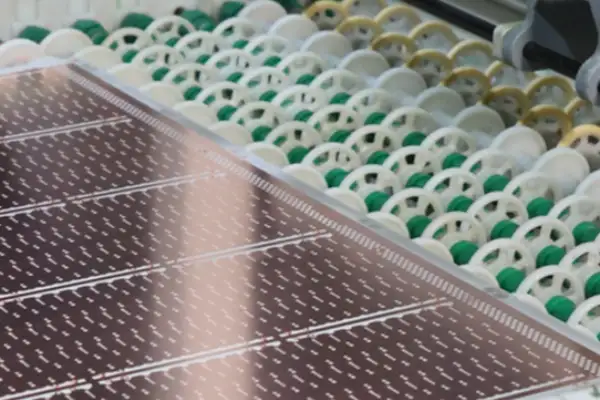
Today’s engineers rely too much on data, neglecting the most basic laws of physics. Take plated through-hole PCBs, for example. The key isn’t how advanced the testing methods are, but whether you can understand how current flows inside the through-hole. I’ve seen too many cases where a simple thermal expansion and contraction problem is treated with energy dispersive spectroscopy.
I remember once a customer complained about a batch of open-circuit through-hole faults, and they insisted on a full set of CT scans and metallographic sections. Guess what? It turned out the coolant concentration used during drilling was incorrect, causing insufficient adhesion of the plating on the hole walls. This kind of problem could be seen with a magnifying glass examining the cross-section, yet they spent hundreds of thousands on testing.
What truly matters is the feel of the manufacturing process. Experienced technicians can tell the plating solution’s condition simply by touching the board surface to check the temperature, and they can judge whether drilling fouling will occur by listening to the drill bit’s sound. This experience is far more reliable than instrument readings.
Of course, I’m not saying modern testing technology is useless. But it’s better to focus on prevention than to wait for problems to arise. For example, simply adjusting the feed rate can avoid most hole wall defects; why wait until cracks appear to analyze the crack path?
Sometimes I feel this industry is too focused on sophisticated solutions, forgetting that the essence of engineering is pragmatism. Next time you encounter a through-hole problem, try asking experienced technicians for their opinions; you might find the answer faster than a lab report.
By the way, speaking of the symbol, I always think of the hand-drawn diagrams in old repair manuals. People are now used to seeing 3D renderings, which has led to a loss of intuitive understanding. Technological progress is certainly a good thing, but some old experiences are indeed worth preserving.
Ultimately, PCB manufacturing is both a science and a craft. Being too reliant on data or experience can easily lead you astray. Ideally, quality control should be achieved by holding the test report in one hand and feeling the temperature of the board in the other, combining both perspectives.
I always feel that the most easily underestimated aspect of PCB design is those seemingly insignificant vias. I remember once encountering a strange problem while debugging a board—a product that functioned normally at room temperature exhibited signal abnormalities in a high-temperature environment. After much troubleshooting, I discovered that a via for a critical signal was experiencing a slight impedance change during alternating high and low temperatures. This incident made me realize that seemingly simple via plating actually involves many intricacies.
Through-hole plating truly tests the ability to anticipate overall operating conditions. For example, industrial control boards face vibration environments, requiring more precise copper thickness for vias compared to consumer electronics; while via design in high-frequency circuits must consider signal integrity. I once saw a colleague cut corners on the power layer by omitting a ground via, resulting in an EMC test failure. These details often test an engineer’s experience more than the main circuit design.
Now, when designing boards, I pay special attention to the connection methods of vias across different layers. In power supply channels, multiple vias are intentionally drilled to form parallel connections and reduce impedance. For high-speed signal lines, the number of vias is controlled to avoid introducing unnecessary parasitic parameters. This layered approach stems from a painful lesson learned – previously, to save space, digital and analog ground vias were mixed, resulting in high noise levels.
In fact, plated vias are like load-bearing walls in a building; their appearance is not visible, but they determine the overall stability of the system. I habitually reserve test points in critical signal channels to verify via performance through actual measurements. After all, even the most perfect simulation data is not as convincing as performance under real-world conditions. A recent motor drive board I designed specifically added redundant vias to the power circuit, and this proved advantageous during long-term aging tests.
The most troublesome issue is encountering damaged vias during repairs. Once, while replacing a chip, I accidentally tore off the copper foil in a via, requiring jumper wires to fix it. Therefore, I now use pad reinforcement designs for areas requiring repeated soldering, which increases costs slightly but avoids many subsequent problems. This experience, gained from practical mistakes, is more practical than textbook theory.
I recently encountered a particularly frustrating problem: a circuit board that looked perfectly fine, after being installed in a device, started malfunctioning after a while. Guess what? The problem lay in those tiny through-holes. These through-holes appeared shiny and clean on the surface, but in reality, they had developed micro-cracks inside, causing intermittent signal interruptions.
This is especially common with plated through-hole PCBs. Sometimes, even after thorough testing before shipping, these underlying problems remain undetected. The most extreme case I’ve encountered was a device that suddenly failed after running for over six months; upon disassembly, the faulty through-hole was discovered.
In fact, these through-hole problems are often hidden issues introduced during the manufacturing process. For example, improper drilling pressure or uneven copper plating can leave hidden problems. These problems gradually manifest when the device is exposed to temperature changes or mechanical vibrations. The most frustrating thing is that these types of problems are difficult to detect in advance.
I’ve seen engineers spend a lot of time trying to find these kinds of problems. They might repeatedly check the circuit design, replace various components, but still not find the real cause. Those tiny cracks were only discovered under a microscope.
Now, I pay special attention to this issue when designing circuit boards. Besides selecting reliable board materials, I also require manufacturers to strictly control the drilling and copper plating processes. After all, nobody wants their designed equipment to malfunction due to such a small problem.
This is especially true for demanding applications. For example, in medical equipment or industrial control systems, the failure of any connection point can lead to serious consequences. Therefore, I now pay special attention to these seemingly insignificant details.
Having worked in factories for many years, I’ve noticed an interesting phenomenon: people tend to overcomplicate problems. Take Plated Through Hole PCBs, for instance. Many people, upon encountering issues with the hole walls, immediately start researching complex theories, when sometimes the answer lies in the most basic steps.
I remember once encountering a batch of boards with inexplicable open circuits. Cross-section analysis revealed minute cracks in the plating on the hole walls. The team’s first reaction was to adjust the plating parameters, but after two weeks of effort, the problem remained unsolved. Later, I accidentally discovered a slight deviation in the humidity control of the drilling workshop—such a seemingly unrelated detail.
Drilling contamination is indeed a tricky problem. Once, we shortened the descaling time to meet a deadline.
Speaking of descaling process selection, there’s a misconception in the industry. The most extreme example I’ve seen is a factory prioritizing efficiency. Actually, there’s a very intuitive way to judge whether descaling is thorough.
Ultimately, sometimes we’re too fixated on finding sophisticated solutions. Like that old joke: spending millions on testing equipment.
Next time you encounter hole wall issues, try going back to the basics—perhaps the answer lies in those fundamental daily operations?
Recently, while reviewing some old circuit boards, I noticed an interesting phenomenon: the most durable parts of equipment used for over a decade are often the components with through-holes. This reminds me of a problem many people overlook when blindly pursuing high-density designs—sometimes the most basic processes are the most reliable.
Take a medical device we returned for repair last month, for example. Upon disassembly, we found that the Plated Through Hole PCB connector on the motherboard was in better condition than the adjacent BGA-packaged chip. This has happened more than once. Many engineers now believe through-hole technology is outdated, but this view is too simplistic.
I once visited a long-established factory that was still using a modified traditional process to produce military-grade circuit boards. The manager pointed to the electroplating tank and said that their through-hole copper plating thickness was 5 micrometers thicker than the industry standard. It doesn’t sound like much, right? But those 5 micrometers extend the product’s lifespan by more than three years.
I’ve seen too many cases of simplifying processes to save costs. For example, reducing the desmearing step or shortening the electroplating time. The problems may not be apparent in the short term, but after a year or two, with frequent thermal expansion and contraction, microcracks begin to appear. By then, it’s too late to regret it.
Interestingly, some high-end fields are now returning to through-hole technology, especially in applications that need to withstand mechanical vibration, such as automotive electronics or industrial controllers. In these scenarios, the solder joints of surface-mount components are prone to fatigue, while through-hole leads are as solid as a foundation.
Of course, I’m not saying that through-holes should be used in all situations. But retaining this design in critical areas is indeed a wise move. Last time I redesigned a power module, I specifically changed the mounting method of the power transistors to through-hole mounting. The result was a 30% improvement in temperature difference testing performance; even the client was surprised by the significant effect of such a simple change.
Ultimately, good circuit board design should be like building with blocks—use tenons and mortises where possible, don’t use glue. Through-holes, a classic technology proven over decades, are valuable not for their novelty, but for their reliability.
Every time I see circuit boards returned for repair due to through-hole issues, I feel particularly moved. Many people think that as long as the traces are connected, everything will be fine, but the unseen details are the real key to success or failure.
I remember last year a client brought me a prototype board complaining that the signal was always unstable during testing. I examined his board carefully under light and found that the edges of several key vias were noticeably dark. Later, using a microscope, I confirmed that the board was indeed too thin overall, and the design hadn’t considered heat dissipation, causing micro-cracks to appear at the connections of the through-holes when local temperature changes occurred. These microcracks gradually expand during thermal cycling tests, especially along high-frequency signal transmission paths, causing impedance abrupt changes and signal reflections, severely impacting communication quality. For example, in high-speed digital circuits or RF applications, even micron-sized defects can increase the data error rate.
I especially want to remind everyone that choosing the appropriate thickness of board material should not be based solely on price. Sometimes, choosing a thinner substrate to save costs results in higher costs for remediation during subsequent assembly. It’s like building blocks where the base is unstable; no matter how beautifully the top is stacked, it will easily collapse. For example, in multilayer board design, if the core material is too thin, interlayer slippage or uneven resin flow can easily occur during lamination, leading to inconsistent dielectric constant distribution. I once saw an eight-layer communication board that, due to the use of cheap, thin material, experienced excessive warpage during SMT reflow soldering, requiring complete scrapping and rework, with losses far exceeding the material cost difference.
I think many people misunderstand the metal coating on through-holes. It’s not simply about whether it’s plated or not; it’s about the uniformity of the metal coating throughout the hole wall. Once, we compared samples from two factories with boards of the same nominal thickness. One factory’s through-holes were noticeably thinner in the middle, while the other maintained a consistent metal layer throughout. This difference mainly stems from the factory’s control over the electroplating process. Excellent factories use pulse plating and specialized oscillation devices to create turbulence in the plating solution within the deep holes, avoiding the “dog-bone effect.” Manufacturers with poor processes often only deposit copper at the hole openings, with the thickness in the middle section possibly less than 60% of the standard value, making it extremely prone to breakage under mechanical stress.
Many engineers now prefer to design very small vias, believing it saves space. However, it’s crucial to consider the ratio between board thickness and hole diameter. Sometimes, even a slight increase in hole diameter can significantly improve production yield. I’ve seen too many cases where excessive pursuit of miniaturization has resulted in inconsistent via quality across entire batches. For example, when the board thickness reaches 1.6mm, using a 0.2mm hole diameter results in an 8:1 depth-to-diameter ratio, making it nearly impossible to guarantee uniform hole wall thickness with conventional vertical electroplating. Enlarging the aperture to 0.3mm and reducing the aspect ratio to 5.3:1 not only increases the electroplating pass rate from 65% to 90%, but also reduces the risk of residual copper inside the vias by 50%.
Actually, a very intuitive way to judge the quality of a board is to look at its cross-sectional treatment. Truly conscientious manufacturers will focus on the metal deposition process to ensure that the metal structure inside each via is sufficiently dense. I usually return products with a rough columnar crystal structure to the supplier for rework. High-quality via walls should exhibit a fine equiaxed crystal structure, which requires precise control of additive concentration and current density. Our lab has conducted comparisons; the ductility of the plating layer with an equiaxed crystal structure is 3 times higher than that with columnar crystals, and it can withstand more than 1000 cycles of -55℃ to 125℃ in thermal shock testing.
Ultimately, these details often determine whether a product lasts three or five years. The difference may not be apparent in the short term, but time will prove which investments are worthwhile. For example, automotive electronic circuit boards are required to perform backlight testing on through-holes, meeting a Level 9 standard (meaning uniform light transmission without black spots on the hole walls). This stringent standard is based on a ten-year lifespan.
Sometimes I think of circuit boards as a building’s foundation; a deep and solid foundation is essential for the building to withstand the elements. The same principle applies to circuit boards. Just as high-rise buildings require deep-rooted foundations, the through-holes of high-reliability circuit boards must ensure a robust interlocking structure with each layer of copper foil. We’ve used scanning electron microscopy to observe failed samples and found that early-failure through-holes showed obvious delamination at the interface between the inner wall and the laminating medium.
Recently, I’ve increasingly felt that working in this industry is like a traditional Chinese medicine doctor diagnosing a patient—observation, listening, questioning, and palpation. The more you see and touch, the more you can judge the true quality of a product from subtle details. This is why I always advise young engineers to visit factories and observe the production process firsthand. For example, when observing an electroplating line, pay attention to whether the current contact points of the cathode rod are oxidized, and whether there is crystallization or blockage in the chemical circulation pipes. These seemingly unrelated details will ultimately be reflected in the quality of the hole walls. Experienced engineers can determine whether the copper plating thickness meets standards simply by touching the edge of the board.
After all, no matter how perfect the drawings are on paper, they ultimately need to be implemented with actual materials and processes—a principle that holds true in any industry. Especially in high-end applications such as 5G equipment and medical instruments, via quality is no longer a simple electrical connection issue, but a system engineering problem related to signal integrity, thermal management, and mechanical reliability.
I’ve always felt that the most easily overlooked aspect of PCB design is those tiny vias. I remember once, while designing a high-frequency circuit board, I discovered that signal attenuation was extremely severe. After much troubleshooting, I finally found the problem lay in those seemingly insignificant vias—they act like tollbooths on a highway, obstructing signal transmission. Specifically, vias introduce additional parasitic capacitance and inductance, especially in the frequency range above GHz. These parasitic parameters can mismatch with the characteristic impedance of the transmission line, causing signal reflection and energy loss. For example, in a 10Gbps high-speed serial link, an unoptimized via can cause eye diagram closure, drastically increasing the bit error rate.
Many engineers now strive to make boards thinner and thinner. However, I believe that in certain scenarios, a slightly thicker board is necessary to ensure the stability of through-holes, especially for industrial equipment boards that need to withstand mechanical stress. Too thin a board can cause through-holes to break easily, like fragile straws. For example, in engineering machinery control boards, when the board thickness is less than 1.0mm, the copper layer of through-holes is prone to cracking during vibration testing. Increasing the board thickness to 1.6mm improves the bending resistance of the through-holes by more than 40%.
I have a different opinion regarding copper plating. In one project, a client insisted on Class 3 standards, causing production costs to skyrocket. Later, we conducted comparative tests and found that as long as the copper plating on the inner wall of the through-hole is uniform, even if the highest standard is not met, it can still meet the needs of most applications. In fact, through micro-focus X-ray inspection, we found that under the Class 2 standard, as long as the copper thickness uniformity of the hole wall is controlled within ±15%, its conductivity and mechanical strength are perfectly sufficient for consumer electronics products, while the cost is about 30% lower than Class 3.
The most troublesome issue for me with plated through-hole PCBs is thermal management. Once, during the development of a power module, a failure to properly consider the thermal expansion coefficient of through-holes led to connection failures at high temperatures. Since then, I’ve paid special attention to checking the stability of through-holes under different temperature conditions. For example, in temperature cycling tests from -40℃ to 125℃, the difference in CTE between the through-hole and the FR-4 substrate can cause stress cracks in the copper layer. Now, we use through-hole plating or select high Tg materials with CTE matching to mitigate this problem.
While many manufacturers are now promoting full SMT solutions, I still believe that through-hole technology is irreplaceable in certain areas. For example, high-power devices or connectors that need to withstand vibration still rely on robust through-holes to ensure reliability. In electric vehicle motor drive boards, through-hole components provide a more stable heat conduction path than BGA packages, and the tensile strength of their solder joints can be more than three times that of SMT components.
Recently, while working on an automotive electronics project, I discovered an interesting phenomenon: although industry standards for through-holes are becoming more lenient, actual applications require even stricter process control because the circuit density is now much higher than before; even a slight deviation can render the entire board unusable. For example, in HDI board design, a 0.2mm diameter microvia, if its position is offset by 5μm, may short-circuit with adjacent signal lines. This necessitates that the positioning accuracy of laser drilling be controlled at the micrometer level.
I believe that judging the quality of vias shouldn’t solely rely on standard parameters; it’s more important to consider the actual application scenario. Just like buying clothes, you can’t just look at the size chart; you have to try them on to know if they fit. Sometimes, pursuing theoretical perfection too much can lead to impractical application. For instance, vias in medical devices require a focus on long-term reliability, while consumer electronics prioritize a balance between cost and yield.
The ideal solution is to flexibly adjust standards according to specific needs rather than rigidly adhering to a particular specification level. After all, circuit boards are ultimately meant to function in real-world environments, not as exhibits displayed in laboratories. For example, in the aerospace field, we add redundant designs to vias, employing double-hole or back-drilling processes; while in smart home products, we can reduce the stringent requirements for via processes by optimizing the layout.
I’ve always felt that the electroplating process is the most easily overlooked stage in PCB manufacturing. Many people focus on circuit design, unaware that plating quality is the key factor determining a board’s lifespan. I remember once our factory received a rush order, and to meet the deadline, we halved the electroplating time. As a result, these boards frequently experienced signal interruptions during assembly and testing. Upon disassembly, we discovered that the plating on the plated through-hole PCB walls was riddled with cracks.
Later, under a microscope, we discovered the problem. A normal plating layer should be evenly distributed like fine sand, but the problematic boards had a distinct columnar structure. This structure, while seemingly robust, is actually particularly prone to cracking under thermal expansion and contraction. Each columnar crystal is like a vertically arranged matchstick, extremely fragile under lateral forces.
Interestingly, this phenomenon is not unavoidable. Experienced technicians control the crystallization process by adjusting the current waveform. They rely less on expensive additives and focus more on the stability of fundamental parameters. For example, maintaining a constant solution temperature and controlling the appropriate anode-cathode distance are often more practical than pursuing new processes.
The most beautiful plating I’ve ever seen was in a long-established factory. Although their electroplating workshop has outdated equipment, experienced workers insist on manually adjusting the solution concentration. Under an electron microscope, the cross-section of the finished boards reveals a uniform, fine grain arrangement, like compacted sugar, completely without directionality. This structure evenly distributes stress regardless of the direction of application.
Many manufacturers now blindly pursue electroplating speed, which is counterproductive. In fact, appropriately reducing the current density and extending the plating time can achieve a denser coating. This is like simmering soup; the flavor naturally improves when the heat is just right, but rushing to increase the heat will only destroy the original taste of the ingredients.
Recently, we tried adding ultrasonic vibration to the pre-plating stage, and the effect was unexpectedly good. The tiny bubbles generated by the vibration disrupt the directionality of crystal growth, preventing the formation of a single columnar structure. Although production efficiency decreased by 10%, product yield increased by nearly 30%, making it a worthwhile trade-off.
Ultimately, PCB manufacturing is an art of balance. Too fast, too slow, too concentrated, or too diluted will all affect the final result. Those seemingly insignificant process parameters often determine the reliability of the finished product; sometimes, going slower leads to greater success.
Actually, there’s a very intuitive way to judge the quality of the plating: hold the finished board up to the light and observe the reflection from the hole walls. Uniform reflection indicates fine crystallization, while obvious striped reflections should raise a red flag, often a precursor to columnar crystals. Timely adjustments are still possible.
Ultimately, good processes are developed through trial and error, not calculation. Even the most precise theories must be applied to actual production conditions—that’s the most interesting aspect of manufacturing.
I’ve seen too many boards reworked due to through-hole issues. Sometimes customers come to me with test reports, completely bewildered: “Everything was normal before shipping! But after installing components, it malfunctions after a short time.” These problems often lie in those seemingly insignificant through-holes.
The most troublesome aspect of plated through-hole PCBs is their concealment. You might think passing electrical tests means everything is fine? Actually, those tiny hidden problems are quietly accumulating. I remember a case where an industrial control board frequently experienced signal loss after six months of use. Upon inspection, several through-hole walls were found to have micro-cracks. Even more bizarrely, these cracks weren’t continuous but intermittent, like cracks in a wall appearing and disappearing.
The real problems often lurk where you can’t see them. For example, the heat generated during drilling softens the resin, forming a thin layer of drill residue. If the residue isn’t thoroughly removed, it acts like a time bomb embedded in the hole wall. Initially, it might only cause slight changes in impedance, but with temperature variations and mechanical vibrations, these small problems will slowly amplify until they suddenly erupt.
The most troublesome case I encountered was intermittent conductivity in through-holes; a light tap on the board would cause the resistance to fluctuate—this fault was like a game of hide-and-seek. Later, cross-sectional analysis revealed uneven copper thickness in the holes, with some areas as thin as paper. This defect is difficult to detect in routine testing because the pressure of the test probe causes the thin copper layer to temporarily make contact and conduct.
Many manufacturers now simplify processes to reduce costs, but this often backfires. For example, reducing plating time results in excessively thin copper in the holes, or omitting certain cleaning steps leaves hidden dangers. These cost-cutting practices may not show immediate problems, but they significantly reduce product lifespan.
Truly reliable PCBs require strict control at every stage. From material selection and drilling parameters to chemical cleaning and electroplating processes, neglecting any detail can lead to problems. Sometimes, spending a few cents to thicken the copper in the holes or adding an extra cleaning step can prevent huge repair costs later.
Ultimately, the reliability of through-holes isn’t determined by a final inspection but rather throughout the entire manufacturing process. Just like a house with a poor foundation, no matter how beautiful the decoration, it’s all for naught. Those seemingly minor process details often determine the fate of the entire board.
In the field of medical electronics, attention often focuses on complex algorithms;
After years of navigating the hardware industry, I’ve observed an interesting phenomenon:
As a practitioner in the circuit board manufacturing industry, I am keenly
- Expert på produktion av små till medelstora serier
- Kretskortstillverkning med hög precision och automatiserad montering
- Pålitlig partner för OEM/ODM-projekt inom elektronik
Öppettider: (mån-lör) från 9:00 till 18:30