

How Do PCBs for Medical Devices Hold the “Last Line of Defense for Life”?
In the field of medical electronics, attention often focuses on complex algorithms;
Whenever I see people talk about PCB stackup design as if it were some mystical art, I can’t help but chuckle. In reality, it’s not nearly that complicated; the key is simply figuring out exactly what you need. I’ve seen plenty of engineers get bogged down right from the start, agonizing over which materials to use or how to control impedance—only to end up turning a simple problem into an unnecessarily complex one.
Speaking of material selection, I feel many people harbor a bit of a prejudice against FR-4. While it’s true that its dielectric constant can fluctuate with temperature, most standard digital circuits simply don’t require that level of stability. Insisting on pairing a basic microcontroller with a high-frequency material is akin to putting racing tires on a commuter car—it’s a complete waste of resources. A recent industrial control board I designed serves as a perfect example: I used a moderately priced modified FR-4 for the critical signal layers and opted for the basic-grade material for the power layers; the money I saved was enough to purchase three complete sets of debugging tools.
What truly demands careful attention is the issue of trace width precision. I learned this the hard way during a previous prototyping run: traces I had calculated to be 4 mils wide during the design phase came back measuring under 3.5 mils—a discrepancy that caused the impedance to drift by 8%. I’ve since learned my lesson; now, whenever I lay out a board, I proactively consult the fabrication house regarding their specific etching compensation parameters, and I prefer to set my initial trace widths slightly wider to be safe. Here’s a tip worth sharing: this detail becomes increasingly critical as the copper weight increases; for boards utilizing 1oz copper or heavier, it’s best to build in a width margin of at least 10%.
The actual stackup structure itself, however, is certainly worth investing some extra thought into. I make it a habit to place sensitive signals on the inner layers, reserving the outer layers exclusively for power planes. This approach prevents surface microstrip lines from being adversely affected by ambient humidity.
I’ve always felt that the most vexing aspect of PCB design is the issue of cost. Whenever I’m working on a multi-layer board, I find myself constantly agonizing over how to arrange the PCB stackup to ensure it’s cost-effective. Sometimes I see others attempt to save a little money by mixing different laminate materials—only to find that the time spent on debugging later on ends up costing them far more than the money they initially saved.
In reality, many people fail to realize just how significant an impact the choice of lamination scheme has on the overall cost. I recall one specific case where an engineer opted for a mixed-material approach to reduce material expenses, only to run into serious trouble during the manufacturing phase. The different laminate materials possessed varying coefficients of thermal expansion, causing the production yield to plummet. When the final figures were tallied, it actually turned out to be more expensive than if they had simply used a uniform material throughout.
Nowadays, I tend to prioritize a comprehensive assessment of the entire product lifecycle cost right from the budgeting stage. For fields with stringent reliability requirements—such as automotive electronics—it is far more cost-effective to invest a bit extra upfront in high-quality laminates than to face frequent repairs and maintenance down the road. After all, the stability of the circuit board directly impacts the overall reputation of the product.
A recent project really drove this point home for me. The client originally intended to use inexpensive base materials for a six-layer board; we advised them to upgrade the materials for two of the signal layers. Although this increased the cost per board by 15%, it boosted the production yield by 20 percentage points—making it the more economical choice in the long run.
Ultimately, a good PCB stackup design is much like laying the foundation for a house: the parts you cannot see are often the most critical. Rather than attempting to apply a band-aid fix after the fact, it is far wiser to thoroughly plan out your lamination strategy right from the very beginning.
It gives me a headache every time I see someone oversimplify the process of PCB stackup design. Just last week, a client came to me with an eight-layer board design they had created themselves, asking why the impedance values consistently failed to meet specifications during small-batch production. I opened the design file and immediately understood the problem: they had routed all of their traces right up against the absolute edge of the impedance tolerance limits.
This reminded me of the mistakes I made when I was first starting out in the industry. Back then, I naively believed that the values derived from theoretical calculations were the absolute “gold standard.” It wasn’t until I witnessed firsthand—on the factory floor—that the actual thickness of the laminate materials could fluctuate by as much as ±10%, that I realized just how fragile those “perfect” calculations truly are when confronted with the realities of mass production.
Consequently, whenever I’m designing a stackup configuration these days, I make it a habit to build in a little extra headroom. For instance, if a client requests a 50-ohm impedance, I will design it to fall within the 45 to 48-ohm range. This isn’t merely being conservative; rather, it creates a buffer zone to accommodate manufacturing variations.
I was recently involved in a project that left a lasting impression on me: the client insisted on using an ultra-thin dielectric layer to achieve a compact layout. During our initial discussions, we repeatedly warned him that this specific material was prone to thickness deviations during the lamination process. However, he felt we were being overly cautious; consequently, during the prototyping phase, the impedance deviation reached a peak of 15%. We eventually resolved the issue by adjusting the dielectric thickness, but the project’s delivery schedule had already been delayed by two weeks.
Many people assume that finding a suitable PCB supplier is simply a matter of comparing prices; in reality, the critical factor is whether they possess a comprehensive validation process. One manufacturer I’ve worked with performs simulated lamination tests prior to production; they use X-rays to measure the actual dielectric thickness and then back-calculate the resulting impedance values. Data derived from such methods is truly reliable.
During a factory visit on one occasion, I observed their engineers meticulously calibrating new materials by conducting detailed comparative analyses—recording impedance data under various lamination parameters. This seemingly “clumsy” approach is, in fact, the most effective way to reflect real-world conditions accurately.
Ultimately, design cannot remain confined solely to the software realm; one must also account for the actual operational dynamics of the machinery on the factory floor. Nowadays, whenever I complete a PCB stackup design, I ask myself: “If this design encounters the worst-case manufacturing conditions, will its performance still be guaranteed?” By asking this question repeatedly, one naturally develops the habit of incorporating sufficient design margins.
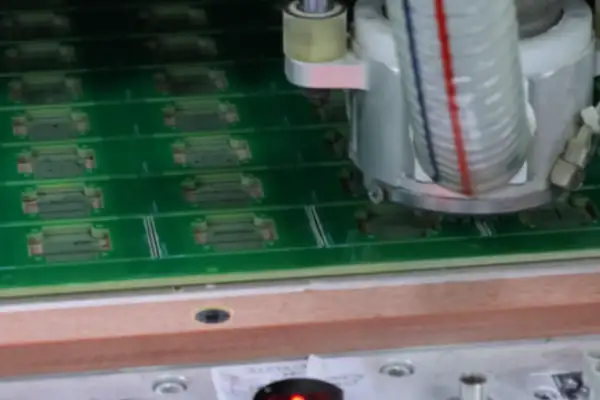
I recall a medical device project where the client initially felt the impedance tolerance we proposed was excessively wide. It wasn’t until they reviewed the inspection report—replete with dense arrays of data points—that they fully grasped the rationale behind our approach: the variations inherent in the production line are far more complex than one might imagine.
Good design is not about calculating values to several decimal places; rather, it lies in finding the optimal balance between theoretical ideals and practical realities.
I have encountered numerous engineers whose immediate reaction upon completing a PCB stackup design is to run a Design Rule Check (DRC). The moment the “green light” appears—indicating no rule violations—they assume everything is in perfect order; this mindset is, in fact, quite dangerous. While a DRC is certainly capable of verifying fundamental parameters—such as trace widths and spacing—it is utterly incapable of detecting the chemical interactions that occur between different materials. This is akin to checking only the tire pressure on a car while completely overlooking whether the engine is properly matched to the transmission.
On one occasion, I took over a project where the board designed by my predecessor had passed every test in the laboratory without issue. However, once the product entered mass production, the third manufacturing batch began to experience widespread failures. A teardown analysis revealed that microscopic cracks had formed within the internal circuitry—a problem stemming from the use of two different substrate materials with vastly disparate Coefficients of Thermal Expansion (CTE) during the lamination process. During thermal cycling, the differing rates at which these materials expanded and contracted generated internal stresses intense enough to physically sever the copper traces.
Such insidious issues are virtually impossible to detect during the standard single-board testing phase. At the time, the high-frequency materials we employed possessed CTE values significantly lower than those of standard FR4; consequently, the differential expansion and contraction between these two material types during temperature fluctuations effectively planted a “time bomb” deep within the circuit board.
A truly robust PCB stackup design demands that material properties be treated as the primary design consideration—rather than simply resting on one’s laurels once the Design Rule Check (DRC) has passed. Nowadays, whenever I undertake a multilayer board design, I make a point of creating a dedicated material library where I clearly annotate the CTE and Tg values for every material used—much like a chef must first understand the unique characteristics of each ingredient before beginning to cook.
We recently encountered a fascinating case study: while working on a 16-layer board project, our team deliberately arranged the materials in a sequence that paired adjacent signal layers with the materials exhibiting the closest CTE values. Although this approach entailed a slightly higher material cost, it resulted in an 18% improvement in yield rates during mass production compared to previous projects. This type of “hidden” cost savings—derived from improved manufacturing efficiency—is ultimately far more significant than the mere pursuit of the lowest possible raw board material price.
Ultimately, PCB stackup design is not merely a game of stacking layers; it is a discipline rooted in material mechanics. The next time you complete a stackup design, resist the urge to immediately click the DRC button; instead, ask yourself this critical question: Will these various material layers be working against one another when subjected to cycles of extreme heat and cold?
Whenever I see someone treat PCB stackup design as nothing more than a simple exercise in layer ordering, I feel compelled to revisit the fundamentals of the subject. Just last week, I encountered a case where an engineer sandwiched high-speed signal traces between two power planes—believing this to be an “ideal” configuration—only to discover that the prototype board suffered from inexplicable crosstalk issues the moment it was powered on. This type of problem is utterly undetectable via standard DRC checks; it is akin to renovating a house while obsessing solely over the aesthetic appeal of the wall colors, yet completely neglecting the structural engineering requirements for the load-bearing walls.
I often liken the PCB stackup to the structural blueprint—the skeletal framework—of a building. You would never attempt to erect the walls of a building before determining the placement of the stairwells; yet, in the realm of PCB design, this is precisely what many engineers do—they complete the schematic capture and physical routing first, only to circle back and attempt to adjust the stackup configuration as an afterthought. I once encountered an interesting phenomenon while helping a client revise a six-layer PCB design: they had placed their critical clock signals on the outer layers, believing this would facilitate debugging. In reality, signals on the outer layers are more susceptible to external interference, and controlling their impedance is significantly more challenging. We subsequently adjusted the layer stackup, moving the clock signals to an inner layer positioned adjacent to a ground plane; the quality of the resulting eye diagrams improved by a full tier almost immediately.
The truly tricky issues are often the subtle details that simulation software fails to flag as errors. Examples include the temperature-dependent dielectric constant variations of different core materials, or thickness inconsistencies caused by the flow of prepreg during lamination. I once tested prepreg sheets from two different manufacturers and found that, for a 1.6mm-thick board, the dielectric thickness could vary by as much as 8 microns. While this figure may seem negligible, for 56Gbps signals, it is sufficient to induce significant phase distortion. Consequently, whenever I design high-speed PCBs now, I insist that the board manufacturer provide a detailed lamination stackup table, rather than simply specifying a generic total board thickness.
This point was further reinforced recently while I was working on a PCB for an automotive radar system. The client had initially designed it as a standard four-layer board; however, the 24GHz millimeter-wave signals suffered severe attenuation when routed through ordinary FR4 material. We ultimately opted for a hybrid stackup structure: the high-frequency section utilized Rogers Corporation materials specifically for the signal transmission layers, while the standard digital circuitry remained on lower-cost FR4. Although this asymmetrical stackup increased manufacturing complexity and cost, it proved far more effective than simply adding shielding enclosures—an alternative solution that had been considered.
Many people view PCB stackup design merely as a game of shuffling layer orders; in reality, it involves a complex interplay of considerations spanning materials science, electromagnetic field theory, and manufacturing capabilities. I once came across a fascinating case study involving a failed industrial control board: while every signal integrity simulation passed perfectly, an improper spacing between the power and ground planes resulted in excessively high Power Delivery Network (PDN) impedance. Consequently, the moment the chip powered up, the supply voltage experienced a sudden drop of 30%. This is the kind of problem you could stare at signal quality reports for hours on end without ever detecting.
Ultimately, a well-designed PCB stackup—much like a finely crafted cocktail—requires a meticulous balance and layering of its constituent elements. You cannot simply cram all high-frequency signals into adjacent layers, nor can you leave power planes isolated and suspended in limbo. I’ve developed a habit recently: whenever I define a PCB stackup scheme, I deliberately reserve a 20% margin of spare layers. These seemingly idle layers often prove to be lifesavers during later design revisions. After all, no one can foresee every potential issue at the very start of a project; having a flexible structure is far more practical than chasing a theoretically “optimal” solution.
The true test of one’s expertise lies in making trade-offs under cost constraints. For instance, when downsizing an eight-layer board to a six-layer one, rather than mechanically merging layers, it is often better to completely rethink the signal flow. Sometimes, sacrificing a bit of routing convenience to achieve a more robust reference plane proves to be the more cost-effective choice. This requires the ability to anticipate circuit behavior—not merely adhering to standard design rules.
I recently encountered a particularly interesting situation: a multilayer PCB warped into the shape of a small boat immediately after passing through the reflow soldering oven. This incident compelled me to re-examine PCB stackup design issues—aspects I had previously tended to overlook. We sometimes become so fixated on signal integrity and impedance control that we neglect the most fundamental aspect: physical structural stability.
The root cause of that specific problem lay in the combination of core materials and prepregs used in the stackup. On one side of the board, two layers of prepreg were stacked atop one another, whereas the opposite side consisted solely of core material. You might think, “What’s the big deal?” However, during the lamination process, the resin within the prepreg layers flows; the resulting pressure imbalance between the two sides caused the board to warp and curl up like a burnt pancake.
Even more troublesome is the fact that such warping can trigger a chain reaction. One client’s board appeared perfectly fine after the Surface Mount Technology (SMT) assembly stage, but the problems surfaced during the subsequent BGA packaging process—because the board was uneven, an entire row of solder balls suffered from open joints (cold solder joints). We later disassembled and analyzed the board, only to discover minute cracks within the vias located in the corners.
In reality, the phenomenon of PCB warping is quite subtle. As temperatures fluctuate, the differing coefficients of thermal expansion among the various materials generate internal mechanical stress. Some engineers, in an effort to optimize cost-efficiency, mix and match materials from different manufacturers—a practice that often inadvertently sows the seeds of future reliability issues.
My current approach is to simulate the thermal stress distribution during the initial design phase, paying particular attention to areas featuring thick copper plating and high-density via arrays.
I recall an instance where I was assisting a client with a design revision. In an attempt to cut costs, they had forced a design with an uneven copper distribution into production. The result? The entire first batch of boards had to be scrapped—a financial loss that exceeded the money they had attempted to save by a factor of ten or more. Ultimately, PCB manufacturing is a complex systems engineering endeavor where every stage is inextricably linked; sometimes, it is the most fundamental issues—such as structural symmetry—that are most likely to cause a catastrophic failure.
Nowadays, whenever I review a PCB stackup proposal, I pay particular attention to ensuring a balanced layout of core materials and prepregs. This is far less of a headache than attempting damage control after the fact—after all, no one wants the board they designed to end up looking like a piece of abstract art, right?
Over my years in PCB design, I’ve gradually noticed a recurring pattern: sometimes, the biggest headaches aren’t caused by complex, high-density routing, but rather by what appear to be the simplest elements—the vias.
I recall a specific instance where I was reviewing the stackup proposal for a six-layer board. A junior engineer confidently asserted that a 4-mil via diameter would be perfectly adequate—after all, the DRC (Design Rule Check) hadn’t flagged any errors. However, problems surfaced during the prototyping phase.
Upon performing a cross-sectional analysis, we discovered that the copper distribution on the via walls resembled a rollercoaster ride: in some spots, the copper was thick enough to be reflective, while in others, it was so thin that light shone right through it.
Later, after consulting with the manufacturer, I learned that vias of this specific size are notoriously difficult to process during the electroplating stage; the plating solution simply cannot flow through them smoothly.
Just think about it: inside such a narrow conduit, the plating solution has to be forced through under high pressure—how could it possibly deposit uniformly?
On one occasion, while visiting the manufacturing floor, I happened to witness them performing a micro-section analysis. After slicing open and polishing a sample, they placed it under a microscope; immediately, the flaws in what had been considered a “perfect” design were laid bare—the via walls exhibited distinct depressions, and in several spots, there were even traces that looked as if the copper had been corroded away.
The lead technician pointed at the monitor and explained that defects of this nature are virtually undetectable during standard visual inspections; it is only later, during thermal stress testing, that cracks begin to propagate outward from these structural weak points.
Consequently, I’ve adopted a new habit: for any design utilizing micro-vias, I now make a point of explicitly specifying the precise electroplating requirements as a separate annotation.
After all, the final product yield isn’t merely a number calculated by simulation software; it is the cumulative result of meticulously fine-tuning countless parameters on the actual production line.
Recently, on a specific project, we opted for a more conservative 6-mil via design—and, counter-intuitively, it passed reliability testing two weeks earlier than a previous iteration where we had attempted to push the design limits to the absolute extreme.
This experience drove home a valuable lesson: sometimes, taking a step back can truly open up a world of possibilities.
Whenever I see people debating PCB stackup designs and getting hung up on exactly which “Class” standard they should adhere to, I can’t help but chuckle. It reminds me of renovating a house and getting into a heated argument over exactly how many coats of paint should be applied to the walls—in reality, whether or not the home is truly comfortable to live in depends on the fundamental elements: the structural integrity of the walls and the layout of the plumbing and electrical systems. I have seen far too many engineers spend their time comparing the nuances of Class standards while overlooking more fundamental issues. On one occasion, our team took over a high-frequency project where the client repeatedly emphasized the absolute necessity of meeting Class 3 standards; yet, we subsequently discovered that they hadn’t even properly planned the basic PCB stackup—the power plane was actually sandwiched between two high-speed signal layers. This kind of misplaced priority made me realize that many people treat industry standards as a sort of “protective talisman,” forgetting that the design itself is the true core.
In reality, the stacking arrangement is much like building with blocks: the specific characteristics of each individual material directly influence the overall stability of the structure. For instance, we once utilized a novel substrate material that, in theory, boasted excellent performance; however, during the actual lamination process, a mismatch in the coefficient of thermal expansion caused slight deformation in the internal circuitry. This incident drove home a profound lesson: even the most advanced Class certifications cannot salvage a design from fundamental errors in material selection. True design competence lies in a deep understanding of the specific properties of each material layer—rather than merely applying standard classifications.
Nowadays, when communicating with manufacturers, I focus more on their actual process capabilities rather than simply grilling them on whether they can meet Class 3 requirements. One supplier once candidly admitted that their plating line was better suited for thick-copper designs; attempting to force Class 3 uniformity in via copper plating would, paradoxically, make the board more susceptible to void defects. Such practical, real-world experience holds far greater value than the mere numbers listed in standard documentation.
Ultimately, PCB design is akin to constructing a house for electronic signals; the structural integrity determines how securely those signals can reside within it. Rather than obsessing over whether an annular ring might “break out” (breach the pad boundary), it is often more productive to spend that time optimizing the thickness of the interlayer dielectric or adjusting the copper-pour density. These seemingly basic decisions often contribute far more to overall reliability than the relentless pursuit of the highest possible standards.
Recently, while working on an automotive electronics project, we abandoned our fixation on Class 3 requirements in favor of a more pragmatic stackup strategy. By incorporating additional ground planes and refining our blind-via designs, we actually achieved superior thermal dissipation performance. This experience further reinforced my conviction that a truly excellent design should be like a bespoke suit—the perfect fit matters far more than the label sewn inside.
I’ve recently been contemplating the subject of PCB stackups and have noticed that many people tend to get overly fixated on symmetry. While it is true that a symmetrical PCB stackup can help mitigate board warping issues, striving for absolute symmetry can, at times, introduce other complications.
I recall a specific instance involving a six-layer board design where, in the interest of maintaining symmetry, we placed two power planes on the two innermost layers. The result was a convoluted return path for high-speed signals, as the signals were forced to traverse across split planes in order to locate a complete reference plane. In that scenario, what was intended as “perfect symmetry” actually became a liability. In practice, I tend to prioritize the ease and integrity of signal return paths above all else.
The design of plane layers is a particularly fascinating subject. Some designers feel compelled to keep power and ground planes strictly segregated; however, for high-speed signals, the reference plane does not necessarily need to be strictly classified as either a power plane or a ground plane. The critical requirement is simply to provide the signal with a continuous, uninterrupted reference surface.
I have encountered situations, for instance, where a differential signal needs to traverse across multiple distinct regions of the board. Excessively emphasizing the purity of reference planes can, counterintuitively, degrade signal quality. In such instances, a more pragmatic approach might involve slightly relaxing the strict requirements for plane integrity. After all, engineering is fundamentally about finding the optimal balance amidst various constraints.
Impedance control is another topic worthy of discussion. Many designers focus solely on trace width and dielectric thickness while overlooking the influence of adjacent layers. In reality, the reference planes situated above and below a signal layer can exert a far greater influence on impedance than we might initially imagine.
I occasionally encounter designs where, in pursuit of theoretical perfection, the PCB stackup becomes unnecessarily complex. However, the reality is that intricate stackups drive up manufacturing costs while offering only marginal improvements—if any—to actual performance.
In my view, the most critical aspect is understanding the current flow path. Signals invariably seek the return path of least impedance; therefore, rather than obsessing over achieving a perfectly symmetrical layout, it is far more productive to focus on how to provide the smoothest possible return channel for each individual signal.
The subject of PCB stackups is quite fascinating. I have observed many designers prioritize the use of high-end materials while neglecting fundamental layout logic. Sometimes, a simple four-layer board—provided the relative positioning of the power and ground planes is handled correctly—can deliver far superior results compared to a design that blindly stacks a greater number of layers.
I recall an instance where I helped a friend debug an industrial control board. The original design had sandwiched the high-speed signals between two power planes, resulting in such severe crosstalk that normal communication was impossible. We subsequently adjusted the stackup order to place the critical signals immediately adjacent to the ground plane, and the problem vanished instantly. In truth, signal quality often hinges on proximity to a stable reference plane—not on the costliness of the substrate material used. For instance, when a signal layer sits adjacent to a ground plane, the return current for high-frequency signals forms a direct “image loop” within the ground plane; this tight coupling significantly mitigates the risks of electromagnetic radiation and crosstalk. Conversely, signals sandwiched between power planes can inadvertently generate parasitic coupling capacitance due to the potential difference existing between distinct power domains.
Some modern tutorials tend to portray stackup design as an overly complex process, implying that one must rigidly adhere to specific, fixed formulas. However, the reality is that every PCB has unique requirements: some prioritize thermal management, others focus on cost optimization, and still others must balance these factors with RF performance considerations. Blindly applying textbook examples without regard for context can easily lead one astray. For instance, automotive electronics boards typically prioritize the strategic placement of thermal layers, whereas consumer electronics products might place a greater emphasis on the precise control of impedance. I typically begin by identifying the most sensitive signal paths on the board and then arrange the placement of the other layers around them. For instance, it is best to isolate digital circuitry from analog sections using a ground plane, while high-speed differential pairs require complete reference planes situated both above and below them. Although this approach seems simple, it effectively prevents numerous headaches and debugging issues later in the design process. In practice, simulation software can be used to pre-analyze the characteristic impedance under various stackup configurations, paying particular attention to whether impedance continuity at corners meets the required specifications.
I once encountered a six-layer board design where all power planes were concentrated in the two innermost layers; consequently, the return paths for signals on the outer layers were fragmented into disjointed segments. Such details may appear trivial, yet they directly impact the overall stability of the entire board. Therefore, rather than obsessing over theoretically perfect solutions, it is more productive to spend time contemplating how current will actually flow in the circuit. Specifically, whenever a high-speed signal needs to switch layers, decoupling capacitors must be placed nearby to provide the shortest possible return path; otherwise, ringing will occur at the signal edges.
Ultimately, stackup design is akin to spatial planning: one must ensure that each layer fulfills its specific function without interfering with the others. Occasionally, breaking with convention—such as substituting a power plane with a ground plane or deliberately creating an asymmetrical structure—can actually provide effective solutions for the unique requirements of specific scenarios. The key lies in understanding precisely what kind of environment currents and electromagnetic fields require to function reliably and predictably. For example, in mixed-signal systems, the digital ground plane is sometimes intentionally extended beneath the analog section to achieve noise isolation through a controlled “split-crossing” design.
I recently encountered a case where a designer, in pursuit of ultimate signal integrity, expanded a board to twelve layers; however, actual testing revealed that the ringing on critical signals was even more pronounced than it had been on an eight-layer version. It was subsequently discovered that the excessive segmentation of the planes had disrupted the return paths. This experience reinforced my conviction that, at times, “less is more”—simply adding more layers or components does not necessarily solve problems and may, in fact, create new complications. This is particularly true in backplane design, where impedance discontinuities caused by improper power plane segmentation are frequently observed; in such instances, reducing the segmented areas is often a more effective solution than simply increasing the layer count.
Truly practical stackup designs often possess a certain “handmade” quality—a subtle roughness characterized by details such as intentionally widening the spacing in specific areas or allocating extra shielding layers for sensitive signal lines. These nuances rarely appear in standard design tutorials, yet they often serve as the defining distinction between a seasoned expert and a novice designer. In RF circuit design, for instance, experienced engineers often array ground vias along both sides of a microstrip line; this seemingly arbitrary placement actually provides additional electromagnetic shielding.
A common pitfall in PCB design is an excessive pursuit of theoretical performance metrics at the expense of practical manufacturing capabilities. I have encountered numerous engineers who design highly complex laminate stackups, only to discover later that they cannot find a manufacturer capable of producing them reliably. Sometimes, a simple four-layer board proves more reliable than an eight-layer one; this is not a technical issue, but rather a failure in engineering mindset.
I recall a project last year where the team spent two weeks optimizing the PCB stackup, utilizing three different dielectric materials to achieve impedance matching. While the design was theoretically flawless, the factory informed us that the lamination process for such a mixed-material stackup required specialized equipment—incurring a 30% surcharge just for tooling costs. Even more problematic was the two-month lead time for one of the high-frequency materials, which completely derailed the product’s entire launch schedule.
In reality, such extreme material combinations are often unnecessary. Thanks to years of development, standard FR-4 material now offers performance capabilities sufficient for the vast majority of applications. Rather than obsessing over theoretical parameters, it is far more prudent to contact the manufacturer early on to verify their process capabilities. I once visited a factory specifically to observe the lamination process; only then did I realize that even minute fluctuations in the temperature profile could compromise the thickness uniformity of the dielectric layers.
Nowadays, when I embark on a design, I begin by compiling a checklist: identifying which parameters are absolutely critical and must be guaranteed, and which are open to compromise. For instance, impedance requirements for digital circuitry can often be relaxed somewhat, whereas the RF section demands strict control. This hierarchical approach to design requirements often helps avoid a great deal of unnecessary trouble.
Another easily overlooked issue is the proper matching of coefficients of thermal expansion (CTE) within the PCB materials. I once worked on a board that performed flawlessly during initial testing, yet developed cracks in its BGA solder joints after undergoing thermal cycling tests. We later discovered that the substrate materials used for the power plane and the signal layers were sourced from different manufacturers; although their electrical properties were similar, their thermomechanical characteristics differed significantly.
Ultimately, PCB design is a systems engineering discipline that requires balancing electrical performance, manufacturability, and cost. Sometimes, taking a step back to select more mature materials and process technologies can actually lead to a faster and more successful project outcome. After all, even the most perfect design remains nothing more than a blueprint if it cannot be manufactured—or if its production yield is unacceptably low.
In the field of medical electronics, attention often focuses on complex algorithms;
After years of navigating the hardware industry, I’ve observed an interesting phenomenon:
As a practitioner in the circuit board manufacturing industry, I am keenly
- Expert på produktion av små till medelstora serier
- Kretskortstillverkning med hög precision och automatiserad montering
- Pålitlig partner för OEM/ODM-projekt inom elektronik
Öppettider: (mån-lör) från 9:00 till 18:30