

Why the Best PCB Supply Chains Are Built Like Relationships, Not Transactions: Lessons for Satellite Communication PCB Programs
What actually makes a long-term PCB supply chain partnership work — shared
I’ve always felt that the most troublesome aspects of PCB manufacturing are those seemingly minor but highly impactful quality issues. I remember once a batch of products in our factory experienced inexplicable short circuits, resulting in a rework rate as high as 15%. At the time, everyone thought it was a material problem, but it was later discovered that inadequate temperature and humidity control in the workshop caused changes in solder paste activity.
Many people overcomplicate quality control; the key is simply establishing a simple and effective monitoring mechanism. We later set up inspection points at every stage of the process, essentially equipping the production line with countless eyes. Especially in the soldering process, we now use microscopes to inspect solder joint quality, and if any problems are found, we immediately stop the machine and adjust the parameters.
Speaking of failure cases, the one that impressed me most was a customer complaint about a product malfunctioning after three months of use. Disassembly revealed that moisture absorption by the substrate had led to a decline in insulation performance. This lesson made us realize the importance of environmental control; now we even strictly record the temperature and humidity in the storage area.
In fact, the biggest fear in PCB manufacturing is the recurrence of problems. We established a problem tracking system; every anomaly is entered into a database, and the system automatically issues warnings when similar problems occur. This closed-loop management has increased our first-pass yield from 82% to 95%.
Once, during a visit to a competitor’s factory, I found they were still relying on the experience of veteran workers to judge quality. This model might work for small batches, but to ensure consistency in large-scale production, a systematic quality control process is essential. Our introduction of automated optical inspection equipment, although a significant investment, has effectively solved the fatigue error problem inherent in manual visual inspection.
I believe the most challenging aspect of quality control is balancing efficiency and rigor. Being too strict can impact production capacity, while being too lenient can create hidden problems. Our approach is to differentiate between critical and general processes. We implement 100% inspection on processes affecting core product functionality, while using statistical sampling for other processes.
Recently, we’ve been experimenting with correlating quality control data with production process parameters to predict quality trends in advance. This idea originates from the preventative maintenance concept in the automotive industry. Although still in the exploratory stage, it has already helped us avoid several potential quality incidents.
Ultimately, quality control isn’t just the responsibility of the quality management department; it requires the participation of everyone. We regularly organize visits for our production line employees to customer factories, allowing them to witness the consequences of quality issues firsthand. This direct experience is far more persuasive than any rules or regulations.
Sometimes, I feel that quality control is like treating an illness—prevention is always more important than cure. Rather than analyzing the causes of failure after problems occur, it’s better to do solid work upfront. This requires companies to invest in equipment and employee training, but in the long run, it’s absolutely worthwhile.
Looking back on the days when the production line consistently maintained a product pass rate of over 98%, and recalling the experiences of constantly “putting out fires” to resolve issues, I am filled with a multitude of emotions. Quality control is indeed a process requiring continuous improvement—there is no ultimate “best,” only the possibility of doing better.
I’ve seen too many people oversimplify circuit board manufacturing. They always think that as long as the design drawings are correct and the production line is running, good products will come out. In reality, what truly determines quality often lies in those seemingly insignificant details.
Take cleanliness, for example. Many people think that wiping the surface clean after soldering is enough. But the real problem lies in the invisible ion residue. Once, we encountered a batch of boards that passed all visual inspections, but after the customer installed them, short circuits started appearing one after another. Upon investigation, we discovered that excessive flux residue had formed conductive channels in a humid environment. This kind of problem cannot be detected with the naked eye; it requires professional ion cleanliness testing to uncover.
Now, each of our boards has a unique code, making the entire process traceable from substrate input to finished product packaging. This practice was initially done to pass customer audits, but we later discovered its greatest value was actually helping us improve our own processes. For example, last week a batch of products experienced a sudden drop in yield during testing. Through code backtracking, it was discovered that the solder paste application parameters of a certain pick-and-place machine had drifted. Without a complete manufacturing history, this problem might not have been discovered until a large batch of products were scrapped.
Functional testing is also frequently misunderstood. Some people think that as long as the indicator light is on after powering on, everything is fine. However, the real test lies in simulating real-world usage scenarios. We once produced a batch of industrial control boards that passed all routine tests, but a memory leak appeared during a 72-hour continuous stress test. This kind of problem simply wouldn’t be apparent in short-term testing.
What struck me most was a case I handled last year. A customer returned a batch of defective products. The production records, checked according to the serial numbers, showed that the ion residue detection data for that batch of boards was all normal during the cleaning process, but one piece of equipment had previously triggered a temperature anomaly alarm during functional testing. At the time, the production line personnel assumed it was a misjudgment and simply reset the equipment to continue production. Later, upon disassembling the defective boards, they discovered that a chip had minor thermal damage. This lesson made us realize that we must not only record data but also learn to interpret the signals behind the data.
Ultimately, good quality control isn’t about piling up testing items, but about connecting every step into an organic whole. Like a jigsaw puzzle, each individual test report might seem perfect, but only by piecing them together logically can you see the full picture of product quality.
Sometimes, looking at those coded boards on the assembly line in the workshop, I feel like they have a life of their own. Behind each number lies a complete journey from raw materials to finished product, and our job is to ensure that every step of that journey leaves a true trace. After all, the reliability of electronic products isn’t determined by the final inspection, but by the dedication permeating every manufacturing detail.
Recently, we’ve been trying to correlate ion cleanliness data with environmental temperature and humidity, and we found that residual values are indeed higher during the rainy season than in the dry season. Although still within acceptable limits, this trend analysis helps us adjust cleaning parameters in advance. The highest level of quality control is probably this kind of foresight—not dealing with problems after they occur, but preventing them from even having a chance to appear.
In fact, after working in this industry for a while, you realize that true quality control is more like an art, requiring finding a balance between strict standards and flexible adaptation.
I’ve always felt that many people overcomplicate PCB manufacturing. In reality, it boils down to controlling a few key points; if you do that, quality will be good. I remember once a batch of boards on our production line suddenly had soldering defects. After investigating for a long time, we finally discovered that a specific batch of [specific component] had a problem. Having experienced this many times, I’ve learned that even the best equipment can’t replace reliable [specific component selection].
Material management is something you can’t afford to be careless about. Some manufacturers use materials of dubious origin to save costs; it may be cheaper in the short term, but the subsequent rework costs are much higher. We now have every batch of materials undergo three inspection processes. Although it’s tedious, it definitely avoids a lot of trouble.
Speaking of quality control processes, I think the most important thing is to form a closed loop. Discovering a problem isn’t the end; the key is to be able to trace it back to its source. In our workshop, we encountered a situation where improper storage of solder paste required the rework of an entire batch of products. After that, we posted operating procedures at each workstation, making them easily accessible to employees.
In fact, high rework rates often hide deeper management problems. For a while, we kept finding short circuits during the final testing phase. We adjusted our employee training methods, changing theoretical explanations to hands-on practice, which directly reduced the defect rate by 30%. Employees remember things much better after handling them themselves.
I think the worst thing in this industry is blindly relying on automation. Even the most intelligent system still requires human operation. I’ve seen factories spend a lot of money on traceability systems, but because employees weren’t cooperative and data entry was messy, it was completely ineffective. Now, we emphasize the importance of every data entry in our new employee training; after all, accurate data is the cornerstone of quality control.
Sometimes, simple methods are more effective. For example, placing magnifying glasses at key workstations allows employees to see the solder joint condition more clearly during self-inspection. This small change is more practical than adding inspection steps. Quality improvement doesn’t necessarily require sophisticated solutions; starting with the details often yields more significant results.
What I dislike most is simply blaming a quality problem on a single department. PCB manufacturing is an interconnected process; from design to production, every step must be responsible for quality. We now organize weekly cross-departmental meetings where everyone reviews recent defective products. This open discussion approach has resolved many of the past issues of passing the buck.
Ultimately, quality control tests people’s sense of responsibility. Even the most perfect process is useless if the people executing it aren’t dedicated. I often tell the team that our goal isn’t to find a large number of defective products, but to make everyone proud of the quality of their work. This shift in mindset is key to quality improvement.
I’ve always found circuit board manufacturing quite interesting. Many people think that as long as the equipment is advanced enough, you can make good boards, but that’s not the case. Last year, I visited a long-established factory. Their machines weren’t the latest, but their product pass rate was significantly higher than their competitors.
When the workshop foreman showed me around the production line, he pointed to the etching tanks and said, “Look, each tank here is equipped with three sets of sensors. Temperature, concentration, and flow rate data are directly connected to the central control room. Once, a night shift worker forgot to add stabilizer, and the system detected the fluctuation and automatically stopped the conveyor belt. This real-time monitoring is much more effective than post-production sampling.” They also implemented a dual verification mechanism for each sensor to prevent misjudgments caused by single-point failures. For example, temperature probes are cross-verified with infrared thermometers to ensure data reliability.
They have a unique approach to quality control, dividing it into three levels. Operators record basic data hourly, engineers analyze trends daily, and management reviews overall yield weekly. This tiered management system ensures everyone knows what they are monitoring. Operator data is displayed in real-time on workstation screens, using colors to distinguish normal and abnormal ranges; engineers use statistical software to identify minute deviations and provide early warnings of potential risks.
I remember most clearly the improvement case in the drilling process. Traditionally, drill bits were replaced periodically, but by monitoring drill bit wear, they discovered that different board materials resulted in significantly different wear levels. Now, they adjust the replacement cycle based on the board type, ensuring quality while saving costs. For example, high-hardness drill bits are used for fiberglass boards, while a gradual replacement strategy is adopted for flexible circuit boards, saving over 200,000 yuan annually in consumable costs alone.
In the electroplating process, they don’t rely heavily on standard parameter tables but have established a dynamic adjustment mechanism. For example, when abnormal surface roughness of copper foil is detected, the cleaning effect of the preceding process is traced back. This cross-process, coordinated inspection can uncover many hidden problems. They even link the lifespan of the plating solution to the product type; high-frequency circuit boards use new solutions, while ordinary boards are allowed a slightly longer lifespan.
Once, I saw a quality inspector spend over half an hour hunched over a microscope just to confirm a micrometer-sized circuit gap. I asked if it was worth spending so much time, and he countered by asking if I knew where the customer would use this board—in medical equipment. Later, I learned that these customers have extremely high requirements for circuit impedance stability; a gap could cause excessive electromagnetic interference, potentially affecting the signal transmission accuracy of devices like pacemakers.
Many factories now pursue full automation, but I believe that even the best equipment needs human supervision to understand the underlying reasons for data changes. During new employee training, experienced engineers guide them through manual sample making—this seemingly tedious method actually cultivates a sensitivity to the process. For example, manual soldering allows for a direct feel for the solder paste’s flowability; this tactile experience is extremely valuable when adjusting reflow oven temperatures.
Recently, they’ve been experimenting with image recognition technology to detect solder mask defects. However, experienced workers still prefer to personally inspect a few boards daily to judge whether the machines are合格 (qualified/acceptable). They can sometimes spot potential risks, and this accumulated experience is invaluable and hard to replace. Once, the algorithm failed to detect a slight crack at the edge of the solder mask, but an experienced worker noticed the problem from a difference in gloss, preventing a batch of automotive circuit boards from delaminating due to temperature variations.
In fact, after working in this industry for a while, you realize that what truly affects quality are seemingly insignificant details. For example, changes in workshop temperature and humidity, the completeness of employee shift handover records, and even the placement of cleaning tools can indirectly affect the final product. They require the vacuum cleaner ducts to be disassembled and cleaned weekly because they’ve found debris residue contaminating precision solder pads; shift handover records must include insights into handling any abnormalities during the shift, forming a knowledge base for continuous improvement.
I’ve developed a habit of smelling the air first thing when I enter the workshop for any unusual odors. Changes in the smell of chemicals are often the earliest signal of process abnormalities, more direct than any instrument alarm. Of course, this requires years of accumulated experience. For example, if the etching solution emits a pungent ammonia smell, it indicates a pH imbalance; an excessively sweet flux may indicate an abnormal dilution ratio. These odor clues can provide warnings of process deviations ten minutes earlier than electronic sensors.
Many people think the key to PCB production is the production line, but I believe the source is more important. I’ve seen too many factories spend a fortune on equipment only to be ruined by a few rolls of substandard copper foil, leaving them heartbroken. Having worked in this industry for over a decade, I increasingly believe that quality control isn’t a matter of a single step, but rather a state of mind where you’re on high alert from the moment you receive your first batch of materials.
I particularly value the AVL (Automatic Visual Recognition) process. It’s not simply a matter of making a list. Every time a new supplier sends samples, I make it a habit to personally visit their workshop to observe their operational procedures and whether the workers are carelessly placing things. These details are often more authentic than certification certificates. One supplier I’ve worked with for five years decided to continue the partnership because I saw them using different colored labels for different batches of materials in their warehouse. This attention to detail is more reliable than any promise. When it comes to inspection, many people like to make the standards overly complex. I think the key is to grasp a few critical points. For example, issues like substrate moisture are sometimes invisible to the naked eye, but you can find clues by looking at the reflection at an angle under specific lighting conditions. Our team has used this simple method to stop two batches of boards that almost resulted in mass scrapping. Of course, the necessary instrumental testing is still essential, but experiential judgment can often fill in the blind spots of the instruments.
I have a lot of experience with the storage environment. In the summer in the south, humidity can easily reach 80%. We specifically prepared enclosed shelves with dehumidifiers for sensitive materials. Although the cost is a bit higher, it’s negligible compared to the cost of rework. Once, a neighboring factory lost over 300,000 yuan because an entire batch of boards developed an orange peel texture due to improper storage of solder resist ink. This lesson made me insist on making warehouse temperature and humidity records a daily check item.
What’s most easily overlooked are the details in material flow, such as whether the material handler wears an anti-static wrist strap as required, and whether the prepreg is used up within the specified time. These seemingly trivial requirements often determine the stability of the final product. I’ve developed a habit of walking around the material rack area every day before starting work, feeling the temperature change of the packaging bags with the back of my hand. Over time, even the new quality inspector has learned this intuitive way of judging.
I’ve seen too many teams think PCB manufacturing is too simple. They always feel that quality is only a matter to consider on the production line—this idea is actually quite dangerous. After leading several projects myself, I’ve discovered a pattern: teams that constantly complain about the supplier’s unstable quality control often overlook a crucial link—the decisions made during the design phase have already sown the seeds of potential problems.
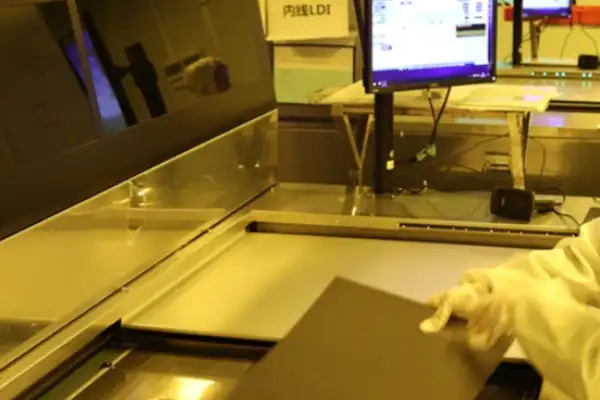
I remember a client who manufactures industrial control equipment complaining to me about a problem they encountered—their product performed perfectly during small-batch trial production, but the yield rate plummeted during mass production. Initially, they thought it was a problem with the PCB manufacturing quality control process, but after investigation, they discovered that several seemingly insignificant details in the design documents had been overlooked, such as minor deviations in pad size and component spacing. These deviations were not noticeable in the sample stage, but they became fatal defects on high-speed placement machines.
This incident made me realize a very real issue: many people see Design Component Manufacturing (DFM) as an extra burden, but in reality, it’s the most worthwhile venture capital investment. Our team now spends a lot of time meticulously refining design details when working on new projects. This isn’t to pursue perfection, but to avoid greater losses later. Once, we argued fiercely with the supplier over insisting on adjusting the layout of a component, but the final 99% yield rate in mass production silenced everyone. This seemingly superfluous effort in the early stages often saves six-figure rework costs later.
When it comes to cost control, many people’s first reaction is to lower the unit price. However, true savings come from stability. I’ve seen too many cases where trying to save a few dollars on board material or processing fees resulted in the scrapping of entire batches of boards. Worse still, some problems only surface when they reach the customer, at which point the cost goes beyond just money; it also includes damage to reputation.
I now place great emphasis on the connection between design and manufacturing. Designers may understand the theory, but they may not understand the actual production conditions in a factory. Factory engineers, on the other hand, tend to fall into habitual thinking and are reluctant to question the design team’s decisions. Therefore, our team mandates that designers regularly visit the factory workshop, walk the entire production line, and see firsthand how their designs are manufactured. This cross-disciplinary understanding often leads to more pragmatic design solutions.
Ultimately, quality isn’t determined by the final inspection process, but rather by the accumulation from the very first component placement. I increasingly believe that a good product is the result of joint refinement by both design and manufacturing. One-sided efforts can never achieve optimal results.
PCBs, while seemingly robust, are actually much more delicate than imagined. I’ve seen many factories focus on post-production inspection, thinking that problems can be identified only after they arise. However, the truly reliable approach is to minimize the possibility of contamination at its source.
I remember once visiting the production line of a long-established factory, and what surprised me most was their attention to detail. Workers had to pass through three air showers before entering the workshop, and even the ballpoint pens were specially made dustproof models. This level of meticulousness is directly reflected in the yield rate; their circuit boards almost never showed common contamination problems.
Many people think quality control is just about labeling and following procedures, but it’s much more than that. Good quality control should be as natural as breathing, integrated into every stage of production. For example, particle counting is performed at the workstations every shift change. This isn’t just to pass inspections, but because they truly understand the potential short-circuit risk that even a single speck of dust can cause.
Our own experience has also proven that relying solely on manual inspection is no longer sufficient to meet today’s precision demands. Especially with the increasingly complex internal structure of multilayer boards, it’s impossible to see through them with the naked eye. Only after introducing an automated optical inspection system did we discover many potential problems hidden in products that were previously considered acceptable.
When it comes to contamination control, the most easily overlooked factor is human error. Once, we discovered a batch of boards with unexplained spots, and the investigation revealed that it was caused by hand cream residue from a new employee. From then on, we even included the formula for hand sanitizer in our management.
Static electrostatic discharge (ESD) protection is a complex subject; it’s not simply a matter of wearing a wristband. Seemingly unrelated details like seasonal humidity changes and the choice of flooring materials can all affect the final result. Interestingly, since we upgraded our ESD protection level, even the cost of component procurement has decreased because suppliers, knowing our strict inspection standards, are more willing to provide high-quality materials.
Ultimately, quality management in PCB manufacturing isn’t about some magical solution, but rather the accumulation of countless small decisions. It requires the entire team to develop an instinctive reaction, like instinctively buckling up while driving. When everyone treats quality as their own responsibility, those complex processes actually become simpler.
I’ve always felt that many people misunderstand quality control in PCB manufacturing. They always think that simply piling on various high-end equipment guarantees quality. In reality, I’ve seen too many factories equipped with the most advanced automated optical inspection systems yet still experiencing frequent problems.
What truly determines quality isn’t the equipment itself, but the design philosophy of the entire quality control process. For example, one supplier we worked with before insisted on setting up manual re-inspection points between each process step. This seemingly traditional approach is actually more reliable than simply relying on machines because the human eye can detect subtle anomalies that machines struggle to identify.
An interesting phenomenon is that many manufacturers over-rely on automated testing, neglecting the most basic component screening process. I once disassembled a batch of defective products and discovered the root cause was that the purchasing department had mixed capacitors from different batches to save costs. Even the most sophisticated testing equipment struggles to detect this kind of problem.
I particularly admire manufacturers who implement robust controls at the source. They rigorously audit each component supplier and even send personnel to the factory to supervise the production process. This proactive quality control is far more efficient than discovering problems afterward and then reworking them.
In actual production, the most easily overlooked aspect is the connection between different processes. For example, if the soldered boards are not properly protected when transferred to the testing area, they are prone to electrostatic discharge damage. These potential risks often only surface during final product testing, by which time it is difficult to trace the specific cause.
Recently, we have tried introducing a real-time data monitoring system into our production line, which not only records test results but also tracks environmental parameters for each process. This change revealed that temperature fluctuations have a much greater impact on the performance of certain sensitive components than expected. Now we dynamically adjust production parameters based on daily temperature and humidity.
Ultimately, quality control isn’t a solitary effort at any single stage; it requires the coordinated efforts of the entire manufacturing chain. From component procurement and warehousing to final product packaging and shipping, every point of contact needs clearly defined responsibilities and inspection standards.
I’ve recently been thinking about an interesting phenomenon: many people believe that the more complex the PCB manufacturing quality control process, the more effective it is. This is actually a misconception. Quality control isn’t achieved by simply piling on testing steps; it’s more like a dynamic equilibrium that requires constant adjustment. Sometimes, excessively pursuing perfect control at every stage can actually make the entire process rigid.
I remember visiting a friend’s factory once and noticing their quality inspectors repeatedly checking the same solder joint under a microscope, neglecting the overall electrical performance matching of the board. This overemphasis on local details often leads to overlooking larger-scale quality issues. Just like repairing a computer, sometimes a problem that could be solved by replacing a capacitor, but going through the entire testing process, might actually introduce new problems.
Failures are rarely caused by a single step. For example, a common open circuit problem might be due to batch variations from the substrate supplier or fluctuations in the etching solution concentration. Simply blaming the operator in a particular process will miss real opportunities for improvement. The most effective approach I’ve seen is involving design engineers in on-site problem analysis; they can often uncover subtle relationships between process parameters and design expectations.
Regarding the choice of inspection methods, there’s a current trend of blindly pursuing high-end equipment. In many cases, routine visual inspection combined with basic electrical testing can detect over 80% of problems. Interestingly, some experienced technicians can identify potential defects that X-ray inspection struggles to detect based on experience alone; the value of this accumulated experience is often underestimated.
Truly effective quality control should be like a traditional Chinese medicine practitioner taking a pulse—focusing on both specific symptoms and the overall picture. For example, when a batch of soldering defects occurs, instead of rushing to adjust the reflow soldering profile, it’s better to first check if the solder paste supplier has changed its raw materials. This systemic thinking is more important than any inspection equipment.
A recent case was very enlightening: a batch of boards passed all tests, but malfunctioned at the customer’s end. It was later discovered that residue from the cleaning process had formed micro-conductive pathways under specific temperature and humidity conditions. This cross-process interaction precisely illustrates that quality control needs to break down departmental silos and adopt a holistic perspective.
Ultimately, good quality control should be as natural as breathing, integrated into the entire manufacturing process, rather than being abruptly inserted into various testing checkpoints. It requires a deep understanding of the product lifecycle and the wisdom to flexibly adjust according to actual conditions. After all, even the most sophisticated instruments cannot replace a person’s grasp of the essence of technology.
I was recently chatting with an old friend who works in hardware. He mentioned that a new batch of boards at his company had problems; several had slight short circuits discovered during soldering. He was quite puzzled: they had all been tested and were good before leaving the factory. This reminded me of many newly hired engineers who think that as long as the electrical performance of a PCB is good, it’s acceptable. But that’s not the case. The quality of a board is accumulated from the design stage all the way to every detail at every stage of the production line. Sometimes, the problem lies in places you yourself can’t even notice.
I’ve seen many teams focus solely on final testing. This is certainly not wrong—but testing is merely verification; true quality control should begin earlier. For example, material selection is particularly critical in the early stages of PCB manufacturing. The thickness of the board material, the quality of the copper foil, and even differences in the brand of solder resist ink can all affect the final result. Once, we tried using a different supplier for copper-clad laminates for prototyping and found no abnormalities, but delamination occurred in small-batch production. We later discovered that the board material had excessive moisture absorption.
Adjustments to process parameters during production are also easily overlooked. For example, controlling the concentration of the etching solution or matching the drilling speed and feed rate—these seemingly minor variables, if out of control, will compromise the stability of the entire batch. I prefer to set up several key checkpoints on the production line rather than waiting until the end for concentrated testing; this allows for faster problem detection and timely adjustments.
Quality control cannot rely solely on quality inspectors; it requires the entire team’s awareness. From the design engineer drawing the first line to the operators on the production line, everyone at every stage must understand how their work affects the final product’s reliability. In a previous project, the designer failed to consider heat dissipation paths during layout, leading to excessive localized temperature rise. Although this was later resolved by thickening the copper layer, it significantly increased costs. If someone had pointed this out from the beginning, this detour might have been avoided.
I believe a good quality control process should be flexible and adaptable. It shouldn’t be just a set of rigid rules but should be able to adjust to different product types and complexities. For example, the focus for high-density interconnect boards is definitely different from that for ordinary double-sided boards. The former might focus more on microvia precision, while the latter emphasizes preventing warping and deformation.
Ultimately, ensuring quality isn’t just about passing customer inspections; it’s about taking responsibility for your product. Think about it: if every board works stably, maintenance costs will be significantly reduced, and this is a long-term investment in brand reputation.
I’ve seen too many people oversimplify quality. They always think that installing a few testing instruments will solve the problem. In reality, true quality is a habit gradually cultivated throughout the entire production process.
I remember once visiting a factory’s production line. Their operators would naturally check their work after each step. This self-discipline wasn’t forced by regulations. When everyone treats the next step as their customer, the entire process flows much more smoothly.
Speaking of PCB manufacturing quality control, I think the most easily overlooked part is actually the most basic. For example, many people think that a few degrees Celsius difference in workshop temperature doesn’t matter, but the impact on precision circuits can be far greater than imagined. I’ve seen cases where temperature and humidity fluctuations caused poor soldering, and it took a lot of effort to find the root cause.
The concept of a quality control line is quite interesting, but I prefer to understand it as a progressive sense of responsibility. Everyone at every stage, from design to production, should understand the consequences of their decisions. Once, we encountered a design flaw; if production had proceeded according to the original plan, problems would have occurred. It was only because the engineer asked an extra question during the design phase that we avoided a major problem later.
Many companies are now pursuing automated inspection, which is certainly correct. But I’ve found that what’s truly reliable is the combination of people and technology. Even the most advanced equipment needs knowledgeable people to operate it. Sometimes, experienced technicians can spot subtle issues that machines can’t detect with a single glance.
Ultimately, quality control isn’t just a bunch of cold, hard rules; it’s about ensuring every participant truly understands why things are done the way they are. Only when quality awareness is integrated into every detail of daily work can we say the system is truly effective.
I’ve seen too many people oversimplify PCB design. They think that once they’ve drawn the circuit diagram, they’re done. But the real challenge begins the moment you send the file to the factory.
I remember once designing a board with a particularly small pad. At the time, I thought as long as the dimensions were accurate, it would be fine. But when the sample arrived, soldering kept failing. Later, I realized it was because the ratio of the pad to the via diameter hadn’t accounted for deviations in actual production. These kinds of details are completely invisible in design software.
Now, I prioritize Design for Manufacturing (DFM) in every project. It’s not some profound theory; it’s about getting those in the manufacturing process involved early on. Their experience can help you avoid many pitfalls.
For example, once, the spacing I left for components during layout seemed sufficient. But the manufacturer reminded me that their equipment required more operating space. This suggestion directly prevented subsequent placement problems. Many people think quality inspection is the factory’s job. I believe designers should proactively conduct these checks. After all, we ourselves best understand the design intent.
A recent project gave me a profound insight. When implementing impedance control, I repeatedly confirmed trace width tolerances with the factory. Although it took two extra days of communication, the final product’s first-pass yield was exceptionally high.
Good PCB design is actually similar to cooking. Having a recipe isn’t enough; you also need to understand the actual conditions of the kitchen. Those seemingly redundant communication steps often determine the final success or failure.
My current habit is to review the design from the manufacturer’s perspective before each board submission, checking for any potential ambiguities.
Ultimately, PCBs aren’t just theoretical concepts. They ultimately need to be manufactured. In this process, design and manufacturing must work together seamlessly, like partners.
Recently, while wandering around the workshop, I noticed an interesting phenomenon:
Everyone talks about how intelligent automated equipment is, but few people really pay attention to the seemingly simple physical parameters. Take board thickness control, for example. It’s like making a crepe cake; each layer has a different shrinkage rate. Last week, we encountered a case where a customer complained about fluctuating impedance values. After investigating for a long time, we found that the prepreg had micron-level thickness differences during hot pressing. Even the most advanced AOI scanner can’t detect this kind of problem.
Actually, the most troublesome part of PCB manufacturing isn’t the high-tech aspects, but rather these basic processes. For example, the consumption of additives in the electroplating tank is like simmering soup over a long fire—a slight miscalculation and the flavor changes. Once, we noticed uneven copper thickness on the hole walls for three consecutive days, only to find that the filter cartridge was clogged, causing poor chemical circulation. This detail might appear as a fluctuation in flow data in a monitoring system, but experienced technicians would directly check the vibration frequency of the pump.
Speaking of monitoring methods, I think some factories are now overly reliant on digital dashboards. I remember a competitor who introduced a complete intelligent central control system, only to have all the pressing parameters fail due to sudden changes in temperature and humidity in the workshop during the rainy season. Later, they hung simple temperature and humidity meters next to each machine, and experienced workers would jot down a couple of data points during their daily inspections, which ironically triggered three early warnings of major anomalies. Sometimes, the simplest, most basic methods are more reliable than high-tech ones.
Reflow soldering temperature profile monitoring is another typical example. Six-point temperature measurement sounds precise, but in actual production, when new and old components are mixed, the difference in heat capacity renders the temperature data meaningless. We later changed to attaching different colored thermal stickers to the carrier—red for large capacitors, blue for chips—and inferring the actual heating by observing the degree of color change on the stickers. This rudimentary method actually reduced the soldering defect rate by three percentage points.
As for quality control, I’ve seen too many factories get it backwards. They always think quality is inspected—rushing to produce a bunch of boards on the production line and then dumping them on the quality control department to find fault. This idea is actually quite dangerous.
The truly knowledgeable approach is to incorporate quality awareness into every stage of the production process. For example, a recent project we undertook perfectly illustrates this – the client required high-density boards to maintain signal integrity stability within a 0.3% error margin to pass acceptance testing. The stringent performance indicators within this range meant that all data points could not exceed the allowable fluctuation limits; otherwise, the entire batch would have to be reworked or even scrapped, resulting in significant losses! Therefore, before starting production, we conducted simulation analysis to determine the optimal parameter combination. We then adjusted and optimized the solution based on actual conditions until all technical requirements were met before officially entering mass production. This saves time and reduces waste – a win-win situation!
In fact, many problems stem from details – seemingly insignificant factors such as fluctuations in etching solution concentration or deviations in lamination temperature can accumulate and lead to significant performance degradation or even complete product failure, causing huge economic losses and reputational damage. This impacts a company’s long-term development prospects and limits its market competitiveness. must ensure that every step is done properly from the very beginning, leaving no hidden dangers and avoiding any luck (a mentality of taking chances) to guarantee a flawless and successful delivery.
What actually makes a long-term PCB supply chain partnership work — shared
Practical, experience-based strategies for how to reduce PCB procurement risks — from
Real factory-floor lessons on how to optimize a PCB manufacturing process —
- Expert på produktion av små till medelstora serier
- Kretskortstillverkning med hög precision och automatiserad montering
- Pålitlig partner för OEM/ODM-projekt inom elektronik
Öppettider: (mån-lör) från 9:00 till 18:30
Get quote, solution or any question, Andre always here to help