

Why the Best PCB Supply Chains Are Built Like Relationships, Not Transactions: Lessons for Satellite Communication PCB Programs
What actually makes a long-term PCB supply chain partnership work — shared
Why Technical Fit Matters More Than Raw Performance
I’ve always found industrial control an interesting field. Conversations often slide into a kind of technical “arms race,” as if the only way to settle a debate is by comparing real-time performance numbers or bus bandwidth figures. But after years of talking with friends who build equipment, I’ve come to believe that what actually determines whether a Machine Controller PCBA works well isn’t the most impressive specs — it’s whether it fits your team’s working style.
Take a project we worked on. We wanted to upgrade the control system on a small sorting machine. The market offered fully integrated drive-and-control boards, as well as modular PLC backplane solutions. On paper, the integrated board, with its higher density and smaller footprint, looked like the more “advanced” choice. But our team was already stretched thin on software talent and unfamiliar with low-level driver development. A highly integrated board would package away a lot of low-level functionality, which sounds nice — but the moment we needed to fine-tune IO response timing for a specific field condition, we’d be completely dependent on the supplier’s support, with no ability to act ourselves. We ended up choosing a relatively open PLC backplane architecture paired with standard digital and analog modules. It wasn’t the highest-performance option, but it gave us plenty of flexibility. Our electrical engineers could handle most of the logic using familiar ladder diagrams; for anything requiring more complex algorithms, our software engineers could write a function block in a higher-level language and plug it in. That sense of control mattered enormously for a small team.
This gets at a point I want to make: when choosing a PCBA or any PCB assembly service, “tech-stack fit” can matter more than raw “technical sophistication.” Are you matching an experienced team to a mature product line, or are you trying to push the most cutting-edge architecture into completely unfamiliar territory? These are two entirely different situations. I’ve seen cases where teams blindly chased an embedded ARM solution, assuming a high-performance processor would solve every problem, only to have the entire project schedule dragged down by real-time OS tuning issues or difficulty finding a suitable fieldbus driver. In contrast, some manufacturers who stuck with mature commercial PLC core boards for secondary development, even though their raw compute looked less impressive, shipped quickly and reliably — because the supplier had already worked through all the pitfalls for them.
On the topic of suppliers, this is also a critical piece. A good PCB assembly supplier offers far more than soldering components onto a board. They can tell you which package types hold up better under vibration, and which circuit designs resist grid harmonics better in a factory environment — real knowledge accumulated from countless past failures. This is especially true at the SMT PCB assembly stage, where process quality directly determines long-term operational stability. No matter how elegant a board’s design, if the pick-and-place process isn’t solid, cold joints and poor solder connections will pile up, and the board can fail within months in a humid, dusty workshop. My view is: don’t just look at a supplier’s quote and lead time — find out which industries their production line has served, and whether they’ve handled orders with high-reliability requirements. Spending a bit more on manufacturing quality upfront can save enormous field maintenance costs down the line.
Finally, cost calculations need to take a longer view. Many people, when selecting a solution, only focus on the price of the main chips on the BOM. But a Machine Controller PCBA’s full lifecycle cost also includes development and debugging time, the convenience of future maintenance and upgrades, and losses from production stoppages caused by system instability. A more open solution with thorough documentation, even if the upfront hardware cost is slightly higher, may end up more economical overall because it dramatically shortens the development cycle. Industrial-floor logic is sometimes just this simple: working reliably matters more than running fast.
Choosing a Supplier Is Choosing a Long-Term Partner, Not Just a Price Sheet
I’ve been thinking about something interesting lately — how to actually evaluate a machine controller’s circuit board. When people think of choosing a PCBA supplier, their first instinct is usually to compare specs and price sheets, as if all that dense data tells the whole story. But I don’t think it’s that simple — it’s really more like choosing a long-term partner.
Take a project we worked on. We needed a reliable PCB assembly supplier to build the core boards for a batch of motion controllers. We got quotes from several companies, and one had an especially attractive price. Their SMT PCB assembly process looked reasonable on paper too. But after our engineers talked with them a bit more, we found their experience with high-density routing and signal integrity for specific signals was fairly shallow — they were basically following a standard process. That set off alarm bells. Controllers, especially hardware used in precision equipment, need stability and reliability that can’t be guaranteed just by accurate pick-and-place. It requires an understanding of the specific application context — even an intuition for it. In the end, we didn’t choose the cheapest option.
So you see, we’re often too fixated on finding a single “optimal solution” — a perfect PCBA that handles every scenario. That’s actually a misconception. There’s no universal key in industrial applications. A simple packaging machine controller and a high-speed laser cutting controller have vastly different requirements for PCB assembly services. The former likely prioritizes cost control and stable long-term supply, while the latter treats signal integrity as almost the top priority. For instance, even a small signal ringing or crosstalk event in a laser cutting controller can cause a millimeter-scale deviation in the cutting path — a level of precision error that packaging machinery typically tolerates just fine.
I’ve seen teams that, during the design phase, throw every conceivable function interface onto one board — “we might need it someday.” The result is something big, expensive, and unstable. Good design is actually about subtraction. You need to be clear on what the machine’s core control task really is, which functions absolutely must live on this core PCBA, and which can be handed off to peripheral modules or expanded via a bus. Once the hardware architecture is clear, talking to suppliers becomes far more efficient, and they can offer a solution that genuinely fits your needs. For example, isolating an infrequently used communication interface or a specific sensor driver into a small separate module not only simplifies the main board’s layout and reduces EMI risk, it also makes future maintenance and upgrades easier.
Ultimately, choosing a PCBA supplier — especially for hardware involving complex control — means you can’t treat them merely as a manufacturing plant. They should be an extension of your technical chain, ideally with some understanding of your industry and application. Sometimes a supplier’s suggestion about thermal handling for a chip, or an alternative component recommendation, can help you avoid a major pitfall. That value never shows up on a price sheet. For example, they might warn you, based on experience, that a seemingly suitable DC-DC power chip tends to fail more often under prolonged high-temperature vibration, and recommend a more rugged industrial-grade alternative instead.
There are too many companies offering PCB assembly services today, all claiming to be fast, good, and cheap. But very few genuinely sit down with you to figure out how to make the controller more rugged and durable. My experience is: don’t just listen to them talk about how advanced their equipment is — ask about similar past projects and how they solved problems that came up. Be cautious with anyone who only shows you standard process documents. Teams with real substance light up when discussing technical details — they can talk with you about customizing conformal coating processes for your board, or share how they reduced cold-joint risk on high-pin-count BGA chips by optimizing the reflow temperature profile.
Ultimately, hardware is both the carrier of software and its constraint. A great Machine Controller PCBA should be like a good stage — letting software algorithms dance smoothly, not tripping them up at every turn. Achieving that requires deep understanding of the final product’s performance from the design concept all the way through PCB assembly, at every step. This requires suppliers to have real collaborative design capability, offering insight from a manufacturability, testability, and long-term reliability standpoint early on, working with you to polish every detail of that “stage.”
Beyond PLCs: When Custom ARM/DSP Boards and SMT Assembly Make More Sense
Every time I see people debating what solution to use for industrial control, I can’t help but chime in. Many people jump straight to PLC the moment machine control comes up, as if it’s the only correct path. I’ll admit PLCs perform stably in a lot of scenarios, especially on older machines with simple, repetitive logic. But I want to talk about a less-discussed corner — a lot of newer equipment today has quietly switched to more flexible solutions.
I’ve seen engineers who are especially drawn to building their own control boards from scratch — starting with PCB layout, selecting an ARM or DSP chip, then finding PCB assembly suppliers to manufacture the board. This process is genuinely a lot of work, and debugging is no picnic either. But the payoff is complete control over the entire system — add whatever function you want, without needing anyone else’s approval. Of course, this requires the team to have solid technical depth; not every shop can pull it off. This kind of deep customization capability is especially valuable when developing equipment that needs unique algorithms or deep integration with new types of sensors, letting you tie control logic more tightly to your business logic.
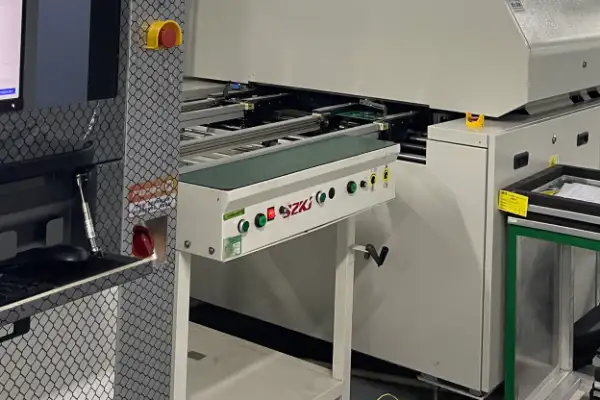
On SMT PCB assembly, process improvements have moved fast lately. Doing small-batch pick-and-place in-house used to be a nightmare, with painfully low yield. Now, many professional PCB assembly services can handle it quickly and well, at a cost far lower than you’d expect. What does that mean? It means small and mid-size manufacturers now have a real shot at custom control solutions, without being locked into a handful of big-brand PLCs. These services typically offer a full package — component sourcing, placement, reflow, in-circuit testing (ICT), and functional testing (FCT) — dramatically lowering the barrier and risk of hardware development.
I think a lot of people overlook one key point: machines are getting smarter, and they need more than simple switch-level control now. Some equipment needs to do basic image recognition, or real-time trajectory planning — tasks that place real demands on processor capability, where a traditional PLC architecture can start to struggle. In these cases, an ARM-based core board paired with a suitable operating system can actually perform better, and overall cost may not even end up higher than a high-end PLC. For example, on a flexible assembly line, vision-guided positioning or complex multi-axis coordinated interpolation motion often requires a processor running Linux or a real-time operating system (RTOS) to provide sufficient compute power and software ecosystem support.
Of course, I’m not saying PLCs should be phased out. In especially harsh environments, or where reliability requirements are close to obsessive, mature PLC solutions are still the first choice. Their entire ecosystem has been refined over decades — every pitfall has been hit, every optimization already made — and that kind of accumulated experience can’t be caught up to overnight. In critical process industries like power generation and chemical processing, for instance, a PLC’s hardware reliability, interference resistance, and software architecture aligned with industry safety certifications remain an irreplaceable foundation.
What I want to emphasize is that choices should be diversified. Sometimes we get too used to a certain path, assuming that because everyone does it that way, it must be right, and we forget to look for better possibilities. How a machine’s controller PCBA should be designed should start from actual requirements, not from habit. For simple sequential control, almost anything works, but for handling complex data or requiring frequent feature updates, an open platform may be a better fit. Path dependency often blinds us to supply chain cost, maintenance flexibility, and the pace of technology iteration.
I know a friend who builds small automation equipment. He used to rely on a particular brand’s micro PLC, and later switched to a self-designed Cortex-M-based board built with an established PCBA supplier. There were plenty of headaches at first, but once he worked through them, he found the whole system’s response speed improved, cost dropped by a third, and he could quickly modify features based on customer needs. This example won’t apply to everyone, but it at least proves a different path exists — and works. His main challenges were early-stage driver development and hardware stability testing, but once he built up his own code base and test process, later projects moved much faster.
Ultimately, which solution to use depends on what problem you’re trying to solve and how many resources you’re willing to invest in solving it. There’s no absolute right or wrong — only fit or mismatch. Instead of blindly following trends, it’s worth taking a step back and carefully analyzing your actual needs — you might find that a seemingly niche choice delivers unexpected value. When evaluating, don’t just look at initial procurement cost — calculate the total cost of ownership across the full lifecycle, including development efficiency, feature expandability, maintenance convenience, and adaptability to future technology shifts.
Custom PCBA vs. Industrial PC: Paying for Power You Don’t Need
I recently talked with a few equipment-building friends about how they approach controller selection, and noticed something interesting — everyone seems a bit torn, unsure which of a pile of options is right. My own view might be a bit different: I think the issue often isn’t which solution is technically superior — it’s what your specific project actually needs.
Take a small-batch project we worked on. Early on, we considered using an off-the-shelf industrial PC motherboard. That thing is genuinely powerful — runs Windows, Linux, feels capable of anything. But after running the numbers carefully, we abandoned that idea. On one hand, the cost was noticeably higher; on the other, we realized we didn’t actually need most of the complex software capability it offered. Paying an extra 80 percent in cost and power consumption for 20 percent “power” we’d never use just didn’t add up.
So we turned to custom PCB assembly instead. This path sounds like more hassle, but once you get through it, you see its appeal. The biggest advantage is flexibility. You can precisely configure every interface and peripheral to match your machine’s function — need a few serial ports, add exactly that many; CAN bus is a must, so it’s there; for motion control, you carefully plan the pulse output and encoder input circuitry. It’s like a blank canvas — you paint exactly what you need. For example, you can choose a processor core at a specific performance tier and build the leanest possible peripheral circuitry around it, meeting compute requirements while keeping material cost tightly controlled. This “tailored fit” approach avoids paying for redundant functionality.
Of course, many people immediately think of PLC. PLCs are genuinely stable and reliable, plug-and-play, low-hassle. But their ceiling is also clear. The moment your control logic gets even slightly more complex, or you need to handle something like image recognition, you’ll feel it start to strain. At that point you might think — why not just find a board that can run a lightweight neural network? That’s exactly where custom PCBA shines. You can integrate a dedicated AI accelerator chip or a high-performance vision processing unit — something standardized PLCs simply can’t do.
That said, I should note: choosing custom means taking on more responsibility. On the hardware side, you need reliable PCB assembly suppliers to build a solid, stable board for you. SMT PCB assembly quality directly determines your product’s underlying foundation. Details like power design and electromagnetic compatibility can’t be treated casually. A poor power layout, for instance, can cause instability under specific loads, while inadequate EMC design might prevent your device from passing certification or cause it to interfere with other equipment on-site.
The software investment is even more commonly underestimated. You’d think porting Linux over is enough to make it work? Far from it. From driver adaptation to application-layer development to system stability testing, the entire process can consume far more time and manpower than you’d expect. You need to build or find an experienced embedded software team to handle u-boot porting, kernel trimming, filesystem construction, and real-time optimization — this is nowhere near as simple as calling ready-made function libraries.
So my conclusion is: don’t chase trends, and don’t fixate on spec sheets. There’s no “best,” only “most suitable.” For standard equipment with clearly defined functions and large production volumes, a mature PLC solution may still be the first choice — it’s been tested by both time and the market, and stability is its greatest value.
If your machine genuinely has unique performance requirements — say, handling several high-speed tasks simultaneously or needing extreme real-time performance — investing time in a dedicated Machine Controller PCBA may well be worth it. This upfront investment pays off in long-term performance and cost advantages.
As for industrial PCs, they’re more like an all-purpose backup option — their value really shows when your equipment is essentially a highly complex information-processing hub that needs to run various commercial software. Otherwise, it’s likely an over-provisioned choice.
Ultimately, the selection process is a continuous balancing act — finding your own equilibrium point among performance, cost, development timeline, and long-term maintenance. There’s no standard answer for this process; you can only work it out through your own experimentation and trial and error.
When a Compact Embedded Design Beats an Industrial PC Motherboard
I’ve always felt that many people default to an industrial PC PCBA when selecting a machine controller — as if handling complex tasks, like a device that needs to coordinate vision and precision motion, absolutely requires an x86-based industrial computer motherboard. Behind this instinct might be a desire for the security of “sufficient performance” — the feeling that a more general-purpose platform guarantees future expandability and software compatibility.
But some of my own project experiences have made me reconsider this default. Once, when selecting a controller for an inspection device, we initially considered a standard industrial PCBA approach — using a mature industrial motherboard, plugging in various cards via PCIe, splitting vision processing and motion control between them. It seemed like a clean architecture with plenty of “guaranteed” resources. But once we actually dug into planning it, problems emerged. The first challenge was physical space. A complete industrial PC PCBA, plus peripheral expansion cards and necessary thermal modules, took up far more volume than we expected. Our device’s internal space was already tight, and this approach forced us to redesign the entire mechanical structure — costs immediately shot up.
What really gave me headaches was reliability and maintainability. Industrial field environments are often unfriendly — vibration, dust, and humidity/temperature swings are constant. Active cooling designs with fans have always struck me as a latent failure point. While many PCB assembly suppliers offer wide-temperature components and conformal coating services to boost reliability, that’s fundamentally patching an architecture that wasn’t originally built for harsh conditions. Extra protective measures mean extra cost and time, and you’ll always be wondering when that fan might stop turning.
We eventually shifted toward a highly integrated embedded approach — and it wasn’t as simple as just swapping the processor. We found a partner specializing in SMT PCB assembly who could offer end-to-end service from design through production. Together we designed a custom controller PCBA that integrated the motion control core, high-speed I/O, and vision processing interface all onto one board. We used a powerful multi-core ARM chip paired with an FPGA to handle extremely time-critical pulse sequences. As a result, the board’s overall size shrank by at least 60 percent, power consumption dropped significantly, and passive cooling became entirely sufficient.
Many people worry about the software ecosystem and development difficulty of embedded solutions. That’s a real concern, but not insurmountable. Today’s open-source toolchains and mature real-time operating systems are already quite powerful. By moving away from dependency on non-real-time systems like Windows and the complex patches or expansion cards that come with them, the whole control loop’s determinism and response speed actually improved fundamentally. The software team needed time to get familiar with the new development environment, but once they did, they found they had far greater control over the code, and debugging became more direct.
Of course, I’m not dismissing traditional PCBA architecture entirely. Its strength lies in extreme flexibility and abundant off-the-shelf resources. If your product line has many variants, small production runs per batch, or you need to frequently swap function cards based on customer needs, a modular industrial PC architecture’s advantages become obvious. Some large PCB assembly services companies have very mature supply chains in this space. But for machines that prioritize high reliability, long service life, fixed function, and large-scale deployment — like many dedicated equipment controllers on automated production lines — I believe a purpose-built embedded route often delivers better overall cost and user experience.
So my view is: rather than getting stuck debating which architecture is theoretically stronger, it’s better to go back to the machine’s actual application scenario. What environment will this machine operate in? What’s its expected service life? How large is the production volume? What’s the expected pace of software iteration? Get clear answers to these questions, and which solution fits better usually becomes obvious. “Technically achievable” shouldn’t be the sole basis for a decision — cost, reliability, and the final user experience deserve equal weight.
Rethinking “Integration”: Flexibility Doesn’t Mean Everything Soldered to One Board
I’ve always found the idea of consolidating a machine’s control functions onto one highly integrated board interesting. Many people, the moment PCBA design comes up — especially designs that combine logic control and motor drive on one board — assume it’s a reluctant compromise, sacrificing flexibility purely to squeeze down cost. I see it a bit differently.
In my view, the concept of “integration” itself has many layers. It doesn’t necessarily mean soldering everything onto the same board. I’ve seen designs that place the core compute unit and critical drive circuitry on a main board, while making peripheral interface modules and sensor adapters pluggable sub-cards. Does that count as “integration” in some sense? I’d say yes — it achieves highly unified management of function and electrical connectivity, without fully locking off future possibilities.
On the topic of selection, many people fall into a common trap: always searching for an “ultimate solution” that solves everything. When choosing a main processor, for instance, they’ll agonize over whether to use a high-performance MCU or an FPGA. Often the issue isn’t how powerful the chip itself is — it’s whether your design approach leaves room for future change. A well-designed PCBA should be like a well-planned city’s main road system — the core arteries are fixed and efficient (like critical power and signal traces), but the surrounding neighborhoods (the various functional modules) can be expanded or renovated as needed. Simply chasing the smallest possible footprint by cramming everything together can actually make later maintenance and production sourcing extraordinarily difficult.
I’ve worked with quite a few PCB assembly suppliers, and their service philosophies vary widely. Some specialize in large-volume, highly standardized SMT PCB assembly — one production line churning out thousands of identical boards. Others focus on small-batch, high-mix production, able to respond quickly to engineering changes and even help optimize a design for easier debugging and maintenance. Neither capability is objectively superior.
For a machine that needs to run stably for years, the reliability of its “brain” — the Machine Controller PCBA — often matters more than initial procurement cost. A design that’s overly compact, poorly cooled, and requires a full board swap for any repair can actually turn out more expensive from a full-lifecycle perspective.
So my view is: when making these design decisions, “flexibility” shouldn’t be simplistically understood as “features can be freely added or removed.” True flexibility is architectural resilience — it means the marginal cost your PCBA pays to handle future uncertain requirements, whether a minor process parameter tweak or the need to add a communication interface, stays low enough.
Behind that is really a test of how deeply the designer understands the machine’s actual working logic, and the wisdom to balance short-term efficiency against long-term adaptability.
Real-Time Determinism: Why Clock Speed Is the Wrong First Question
I’ve been thinking lately about why everyone jumps straight to clock speed when discussing Machine Controller PCBA selection. That habit needs to change. In equipment control, especially in scenarios with demanding timing requirements, a processor’s “real-time capability” often matters more than its GHz number. What I mean by real-time isn’t raw speed — it’s how punctually and reliably it responds to external events. Think about it — if a high-precision motion axis or a high-speed flying shear’s action timing is off by even a few microseconds, or a few hundred nanoseconds, the resulting product could be scrap.
I’ve seen many projects where, early in planning, the team leans toward selecting an impressive-sounding general-purpose processor or an application chip capable of running full Linux. That makes sense on the surface — after all, every machine today wants a nice touchscreen interface, network connectivity, and the ability to process complex data. But that’s exactly where problems start. When you cram all these flashy features and your core control logic into the same chip and the same operating system, “determinism” starts to blur. OS thread scheduling, memory management, network interrupts — all of these introduce unpredictable delay, what we commonly call jitter. For logic control and motion control tasks that require strict cyclical execution, this kind of jitter can be fatal.
My view is a bit different: when considering a PCBA’s processor architecture, it’s better to physically or logically separate “real-time tasks” from “non-real-time tasks.” That doesn’t necessarily mean using two separate chips — though the dual-core heterogeneous architecture (say, a Cortex-A core running Linux for the interface, and a Cortex-M core running RTOS for hard real-time control) is indeed a popular approach. But it comes with a cost: communication between the two cores can itself become a new latency bottleneck, requiring very careful design of the data exchange mechanism. Sometimes a simpler, more blunt approach is actually more effective — using a microcontroller purpose-built entirely for control to handle all time-sensitive tasks, letting it focus exclusively on PWM generation, encoder capture, or high-speed IO scanning. Meanwhile, non-real-time functions like the user interface and data logging can be handed off to a separate board, or a separate processor on the same board, communicating asynchronously through a simple serial or Ethernet connection. The biggest benefit of this approach is risk isolation — your core control loop is never interrupted just because someone is swiping frantically on a screen, or the system is downloading an update in the background.
On PCB assembly service selection, this point matters a great deal too. Many suppliers emphasize their placement precision and high-density assembly capability, which is important, of course. But for industrial control boards, I believe reliability testing and long-term supply stability deserve top billing at the negotiating table. A PCBA might serve inside a machine for ten years or longer, during which vibration and temperature/humidity swings are a constant test. Your PCB assembly suppliers need to understand these requirements, not just treat it like an ordinary consumer electronics board. They need to apply additional process considerations — stricter screening and hardening for critical components like crystal oscillators, memory chips, and even the processor handling real-time tasks itself.
Back to SMT PCB assembly — component placement and routing have an enormous impact on signal integrity and interference resistance. This is especially true for lines carrying high-speed pulse signals, like servo drive commands or encoder feedback — if routed poorly and noise or crosstalk gets introduced, no processor algorithm, however good, can compensate. This directly affects the whole system’s real-time performance. So during the design stage, you can’t rely solely on EDA software’s auto-routing — analog signal regions, digital power regions, and high-frequency clock traces need manual intervention and careful planning.
Overall, I think evaluating a machine controller requires stepping outside the mindset of comparing specs. It isn’t a simple hardware competition — it’s a systems engineering challenge. You need to start from the control outcome you actually want to achieve and work backward to determine what peripherals your processor needs, how fast a response speed is required, and then create a clean, reliable operating environment for it. Sometimes sacrificing a bit of clock speed and multitasking capability in exchange for unwavering timing determinism is an absolutely worthwhile trade in many industrial scenarios. Never forget: what we’re ultimately controlling isn’t the chip — it’s the machine itself, and the real physical world’s sense of time is far stricter than the digital one.
Choosing the Right Bus: Why the Newest Protocol Isn’t Always the Right Answer
Over the years, working with many friends in industrial equipment, I’ve noticed that the moment controller PCBA design comes up, people’s first instinct is to dig into various bus technical specs. That’s not wrong, but you need to first be clear on what kind of “nervous system” your machine actually needs. Bus selection is more like the answer to that question, not the starting point. For instance, you might spend enormous effort planning a PCBA that supports the latest real-time Ethernet protocol, but if your device is fundamentally a standalone machine with simple actions, that complex network configuration could actually become a burden on cost and maintenance.
Take a small project we did — the client wanted a desktop device to control a few stepper motors. Early on, they were drawn in by the marketing materials of various SMT PCB assembly suppliers, believing that only an Ethernet solution with time-sensitive networking capability could be considered “advanced.” But after we sat down and analyzed it carefully, that machine’s motion logic was extremely fixed and slow, with almost no strict synchronization requirement between axes. We ended up using a very basic ARM core paired with simple digital I/O expansion, and that solved it. That PCBA board was remarkably simple, and cost dropped considerably. The client later admitted that if they’d gone with a complex Ethernet bus architecture, they would have paid for a feature they never used.
That makes me wonder — are we often led astray by “technology trends”? The industry today seems to be rushing en masse toward connecting everything via real-time Ethernet, as if not doing so makes you obsolete. But for a lot of real industrial applications, especially cost-sensitive small and mid-size equipment manufacturers, reliable, simple, and rugged is what actually wins. The classic CAN bus, though its bandwidth admittedly feels a bit tight by today’s standards, still thrives in a huge number of small and mid-size machines. Why? Because it’s stable, resistant to interference, and its development toolchain is about as mature as it gets. A well-designed CAN-bus-based controller PCBA can, for many applications, have a longer service life than solutions chasing the latest Ethernet standard.
Of course, I’m not saying new technology is bad. When you’re dealing with a large, multi-axis coordinated printing press or packaging line, a scenario that needs nanosecond-level synchronization precision, you have to go with the advanced option. At that point, your PCB assembly services provider needs to bring real expertise to the table. It’s not just about choosing an Ethernet PHY chip that supports a precise clock protocol — the entire board’s layout and routing need to serve signal integrity. Details like matched-length differential pair routing and impedance matching directly determine whether your data packets drop at critical moments. A PHY with poorly controlled jitter can destabilize the entire motion control loop.
So my view is: don’t treat bus protocol as the first checkbox in a decision tree. You should start from the machine itself — what task does it need to accomplish? How tightly do the various actuators need to coordinate? What’s the electrical noise environment like on-site? Where’s the budget ceiling? Once you lay out the answers to these questions, the right bus type, and even the whole controller PCBA’s hardware architecture, becomes clear. Sometimes a hybrid architecture is actually the optimal answer — using a high-performance bus for the core motion control section to ensure synchronization, while connecting less time-critical peripheral sensors and actuators through a more economical method. Finding that balance point is where the real value of design work lies.
Power Isolation and Signal Routing: The Hidden Details That Determine Field Survival
I’ve always felt that a lot of people misunderstand controller PCBA design, fixating on flashy specs and so-called “advanced” features. What actually determines whether a board can withstand punishment in an industrial field is usually hidden in the most unremarkable places.
I’ve seen too many projects where the team, at selection time, only looked at how powerful the main chip was and how many IO ports it had, only to have the equipment fail on the shop floor from a power fluctuation or poorly handled grounding. That’s when you realize computing power is meaningless. The biggest difference between a good Machine Controller PCBA and an ordinary board isn’t how many megahertz it can run — it’s that near-obsessive isolation design in its power and signal paths.
Take power, for example. Many engineers think buying an off-the-shelf switching power module and plugging it in is good enough — saves hassle. But in the field, 24V DC is a genuinely “dirty” environment — surges and reverse polarity are everyday occurrences. A truly reliable controller PCBA has front-end power circuitry designed like a fortress. This isn’t as simple as adding a few fuses and TVS diodes — it means physically isolating noise and interference right from the input port. For example, beyond standard protection, a design might use a common-mode choke to suppress high-frequency noise, plus a pi-filter to further smooth voltage, ensuring the downstream core circuitry gets clean power even when large motor start-stop events cause the grid to shake violently.
I place particular weight on a PCB assembly services provider’s skill in this area. Some suppliers, when doing SMT PCB assembly for you, simply solder according to the drawing and call it done. But a good supplier will repeatedly confirm with you whether the power section’s layout and routing are optimal, and may even suggest adding extra filtering or isolation layers in critical places. They understand that a poorly placed via, or a power trace running too close to a noise source, can become a failure point that’s extremely hard to diagnose later.
This isolation mindset should run through the entire design process. It’s not just about power — every digital signal, communication interface, and analog acquisition channel should be evaluated for electrical isolation needs. I know a fully isolated approach costs more — a single optocoupler or isolated DC/DC module might cost as much as the main chip itself. But you need to weigh a different calculation: what’s the production loss from a single interference-caused crash? What’s the labor and time cost of tracking down a fault in the field? For example, using an isolation module on an RS-485 communication line can effectively prevent communication garbling or batch interface-chip damage caused by ground potential differences between different pieces of equipment.
Many PCB assembly suppliers love to boast about their placement precision and how clean their soldering looks — surface-level things that certainly matter, but I care more about whether they understand the underlying logic of industrial design. For instance, how should heat-generating components on a board be arranged to form an effective thermal path? How should digital and analog ground be partitioned to preserve signal integrity while avoiding crosstalk? These details often determine a product’s ultimate lifespan. An excellent supplier will proactively run thermal simulation and signal integrity pre-analysis, rather than discovering problems only at the testing stage.
On the topic of thermal design — another interesting topic — the now-popular low-power ARM architecture PCBA genuinely runs much cooler, allowing a fully sealed, fanless enclosure design, which is a real blessing for dusty or humid environments like textile workshops or food processing facilities. This design completely eliminates the risk of fan dust buildup, seizing, or moisture intrusion, improving MTBF (mean time between failures).
But don’t assume that choosing a low-power chip means you can ignore thermal design entirely. I’ve seen cases where, to cut cost, a board was made extremely compact, with all components crammed together so heat couldn’t escape — the moment summer arrived, the processor would overheat and throttle, and the equipment would slow to a crawl. A well-planned layout should follow the principle of the shortest possible thermal path, placing major heat sources near the board edge or reserving areas in contact with the metal enclosure, using the entire equipment structure for passive cooling.
Real-World Case Studies: Zynq FPGA Precision, CAN Bus Longevity, and Purpose-Built Simplicity
I’ve been in this industry for over a decade, and I’ve worked on all kinds of equipment controller projects — from simple early microcontrollers to today’s complex heterogeneous computing platforms. I’ve noticed that many people, the moment PCBA design comes up, immediately jump to finding an off-the-shelf core board or dev board, thinking it’s the easiest path. Ironically, this mindset is often the root cause of projects running into trouble later. Those seemingly similar ARM core boards can perform wildly differently in real industrial environments, especially when handling high-speed signals or requiring long-term stable operation.
Take a laser cutting machine project we worked on. The client initially used a common industrial motherboard-plus-motion-control-card approach, running Windows with a real-time extension kernel. Debugging went smoothly at first, and every function looked great. But once it hit the client’s actual shop floor, problems appeared one after another: heavy workshop dust caused the fan to jam, leading to overheating and system crashes; unscheduled Windows updates frequently broke the real-time kernel; and vibration on the PCIe interfaces eventually led to intermittent gold-finger contact issues. Every incident required sending someone on-site to troubleshoot for hours, and beyond client complaints, maintenance costs were alarmingly high.
We eventually scrapped the original approach entirely and moved to a custom PCBA design based on the Xilinx Zynq platform. That decision was controversial internally at the time, since it meant designing hardware from scratch and learning an entirely new FPGA development toolchain and workflow. Upfront investment was indeed higher than we’d estimated, and engineers worked overtime to get the first version out.
But the results were immediate — we moved all real-time control logic, including galvo mirror trajectory calculations and precise laser pulse timing, into the Zynq’s FPGA fabric, implemented entirely in hardware. This meant these most time-critical tasks were no longer subject to OS scheduling influence. The ARM core, meanwhile, focused on running Linux to handle the human-machine interface and network communication — the less urgent tasks. The whole control system’s footprint shrank by more than two-thirds, power consumption dropped, and most importantly, reliability jumped by more than one full tier. The mysterious crashes from before nearly vanished, and the client reported the equipment ran continuously for months without a single issue.
Of course, I’m not suggesting every project should use an advanced solution like Zynq. Sometimes over-engineering brings unnecessary cost and complexity instead.
I remember a client making edge-banding machines for woodworking. Their equipment’s functionality was actually very fixed — just a handful of standard process steps — but their annual production volume was huge, tens of thousands of units. They initially wanted a sophisticated approach too, using a general-purpose PLC controller, but per-unit cost couldn’t be brought down, and margins were thin.
After carefully analyzing their needs, we suggested a different path — developing a dedicated, fully integrated PCBA board.
We chose a cost-effective Renesas RX65N microcontroller and integrated every needed function onto one board: digital I/O drivers, motor drive circuitry, temperature sampling circuitry — all on it. The resulting board was remarkably clean, with BOM cost dropping by nearly half compared to their original PLC-based approach.
Because it eliminated a huge amount of external wiring and connectors, assembly efficiency on the finished machine improved too, and failure rates dropped noticeably. For this kind of fixed-function, high-volume equipment, a dedicated integrated board is the optimal solution — controlling cost while ensuring reliability.
So coming back to choosing a PCB assembly supplier — my view is there’s no one-size-fits-all standard answer.
It depends on your product’s specific positioning. If your equipment targets the high end, with extreme performance and reliability requirements, an SMT PCB assembly approach like Zynq is worth the investment, even if the upfront development is more difficult. If your product is a standardized, volume-driven device, you should pursue extreme cost optimization and partner with suppliers skilled at high-cost-efficiency, high-volume PCBA production.
Many people, when choosing PCB assembly services, tend to fall into one of two extremes: either chasing the lowest price and ending up with an unreliable small workshop and disastrous quality, or blindly trusting a big-name company and paying a hefty premium for features they’ll never use.
My personal experience is to look carefully at a supplier’s past similar case studies, and ideally get contact information for their existing clients to privately check on actual field feedback.
Why “More Isolation” Doesn’t Automatically Mean “More Reliable”
Talking with a few equipment-building friends recently, I noticed people discussing machine controllers always lean toward “maxing out the spec.” As if you’re not making a real industrial product unless you pile on components. That mindset is actually quite dangerous.
Take PCBA, for example. Many people think adding isolation to every I/O port is a foolproof strategy. I used to think that too. But in one project, after adding isolation modules to every digital signal, problems appeared — cost jumped considerably, the board became crowded and ran hot, and worse, the noise generated by those isolated power supplies caused several nearby analog signal readings to jump around unpredictably, making them unusable.
That experience taught me a lesson: in PCBA design, “more” doesn’t necessarily mean “better.” Real reliability is about getting it exactly right, not covering every base indiscriminately.
Many factory floor environments today are actually not that harsh anymore — production lines are highly automated, temperature and humidity are well controlled, and vibration is minimal. In this kind of environment, spending heavily on military-grade components that can withstand negative forty degrees, or isolating every single interface, is pure waste, and can actually introduce new failure points by adding excess components. For example, in a clean electronic assembly workshop, an ordinary commercial-grade chip’s failure rate in the 0–70°C range doesn’t statistically differ much from an expensive extended industrial-grade chip. Blindly stacking high-spec components not only increases BOM cost and design complexity, it can also introduce supply chain risk to future production and maintenance due to inconsistent lead times across different component suppliers.
I think when choosing an SMT PCB assembly supplier now, you should pay more attention to whether they can help you achieve this kind of “just right” design. A good supplier won’t just push you toward expensive components — they’ll analyze the actual application scenario with you, figuring out where reinforcement is needed and where things can be simplified. Based on rich experience, they can offer specific recommendations like “use isolation on long-run RS-485 interfaces, but skip it on CAN bus connections inside the cabinet” — achieving an optimal balance between cost and reliability.
On the topic of application context, I’ve seen many engineers, for the sake of convenience, simply buy an off-the-shelf industrial PC module and mount it in their enclosure, thinking that’s the safest route. But this essentially outsources the core of your controller entirely — you lose the most critical control over your own product. The moment that industrial PC module is discontinued or replaced, your entire product line may need to change with it.
Leading your own PCBA design, even starting with a custom core board, lets you better manage your product’s lifecycle and iteration pace — which matters enormously for industrial equipment, since a machine might be sold for ten years or longer. By defining your own core board interface specification, even if the main chip needs an upgrade, you only need to swap the core board rather than redesign the entire baseboard — protecting both hardware investment and software ecosystem significantly.
Future machine controllers will certainly incorporate more intelligent elements, like edge compute units, but that doesn’t mean the PCBA itself needs to become impossibly complex. On the contrary, the basic control section should become more stable and more streamlined, handing complex data processing tasks off to dedicated co-processors or expanding through an open architecture. For example, you could adopt a “main controller + FPGA” or “main controller + dedicated AI accelerator module” architecture, letting real-time control and intelligent analysis each handle their own job, connected through a high-speed bus — ensuring both the determinism and stability of low-level control, while flexibly adapting to the rapid evolution of higher-level algorithms.
So my view is: stop blindly chasing so-called “industrial-grade” configurations. Spend more time thinking through where your machine will actually operate, how far signals need to travel, and what interference exists nearby. Working through these concrete questions is far more useful than adding a few extra isolation chips. Running a detailed on-site EMC pre-test and mapping out the system’s noise profile often reveals the real interference sources, enabling precise, targeted protection rather than blanket isolation.
Find PCB assembly service providers who understand your product’s logic, and work with them to build a solution that’s solid, not bloated — that’s the real path to controlling cost while ensuring quality. After all, the customer paying for your machine only cares whether it works well and runs reliably — nobody pays extra just because you used the most expensive materials.
Matching the Controller to the Task, Not to a Trend
I’ve recently noticed something interesting — many people get a headache the moment machine controller PCBA selection comes up, assuming the technical bar is intimidatingly high. It’s really not that mysterious. I’ve worked with quite a few PCB assembly suppliers, and the SMT PCB assembly services they offer are actually quite mature already — what matters is whether you’re clear on what you actually need.
Many people jump straight to asking “which solution is best” — and that question itself is a bit off. There’s no universal “best,” only “most suitable.” If you’re building a device that needs fast response and high-precision synchronization, you might need to consider boards that support deterministic networking — some controllers already integrate this capability, guaranteeing data arrives within a specified time window, which matters enormously for certain industrial scenarios. But if you’re just doing sequential logic control, it may not be worth the extra cost. For example, a simple conveyor belt start-stop control and a CNC machine requiring multi-axis precision interpolation have vastly different requirements for controller core and bus latency. The former might be handled fine by a generic PLC, while the latter must rely on a dedicated control card with features like time-sensitive networking (TSN) or EtherCAT.
Another point people often overlook is so-called “future expandability.” Many marketing pitches today talk about reserving AI compute headroom on a PCBA, or supporting all kinds of emerging protocols — sounds cool, right? But I’ll pour some cold water on that — often it’s just a marketing gimmick. Think carefully: how long is your product’s actual lifecycle? How fast is technology actually iterating? Is it really worth investing extra hardware cost now, potentially even sacrificing some current stability, for a feature you might only need in three to five years — or might never need at all? I’ve seen teams choose an overly complex PCB assembly approach chasing “cutting-edge,” only to have their basic control functionality suffer because of the added design complexity, making debugging slow and painful. For example, reserving an M.2 interface that might never be used can increase PCB layer count and routing congestion, actually introducing signal integrity risk — putting the cart before the horse.
So my view is: don’t let flashy concepts lead you around. Choosing a machine controller fundamentally comes back to your machine’s core task. What environment does it need to work in — high heat and humidity, or dust and vibration? How many input/output signals does it need to handle, and how demanding is the real-time requirement? What’s its expected service life, and what’s the technical skill level of the maintenance staff? Get clear, concrete answers to these questions before talking to a PCB assembly supplier, and you’ll get a genuinely reliable solution. A good supplier will offer targeted recommendations, based on your specific operating conditions, on industrial-grade component selection, thermal design, conformal coating process, and even connector locking mechanisms — details that often matter more than a chip’s clock speed.
Ultimately, a good controller PCBA should function like a machine’s nerve center — reliable and focused on doing its job well, not an edge-compute node trying to do everything while excelling at nothing. Sometimes a simple, focused design actually delivers longer stable operation and lower total cost of ownership — a principle that holds across many industries, and especially in hardware selection. Think about it: those relay-logic controllers still running steadily on production lines for over a decade, with a single fixed function but extremely high reliability — their value lies precisely in doing one thing well.
Of course, I’m not saying new technology is bad — I just think that before embracing it, we need to first get the fundamentals solid. Once your basic control logic is as natural and reliable as breathing, it becomes far more sound to consider adding intelligent layers like vision recognition or predictive maintenance — a more robust evolutionary path, one that ensures every dollar of hardware investment delivers real value.
What actually makes a long-term PCB supply chain partnership work — shared
Practical, experience-based strategies for how to reduce PCB procurement risks — from
Real factory-floor lessons on how to optimize a PCB manufacturing process —
- Expert på produktion av små till medelstora serier
- Kretskortstillverkning med hög precision och automatiserad montering
- Pålitlig partner för OEM/ODM-projekt inom elektronik
Öppettider: (mån-lör) från 9:00 till 18:30
Get quote, solution or any question, Andre always here to help