

Heat Dissipation Challenges and Solutions in PCB Circuit Board Design
Circuit boards are more than just that green board in a phone
I’ve always felt that many people have a very rigid understanding of controlled impedance PCBs. They always focus on calculating the values with extreme precision – agonizing over differences of a few tenths of an ohm – but neglect the dynamic changes in actual applications.
I remember once debugging a high-frequency board and discovering an interesting phenomenon. Theoretically, the Dk value of the material we used was very stable – but in actual testing, we found significant differences in signal response at different frequencies. That’s when I realized that simply pursuing perfect matching at a specific frequency is actually meaningless.
What’s truly important is whether the performance is stable across the entire operating frequency band.
When choosing a controlled impedance PCB manufacturer, I value their engineering adaptability more – teams that can analyze specific application scenarios with you are often more reliable than those who only focus on technical parameters.
There’s a common misconception about impedance matching that assumes everything is fine as long as the terminal is matched – in reality, every link along the entire path from the driver chip to the receiver will have an impact – including those seemingly insignificant via transitions.
I’ve seen too many engineers spend time optimizing trace widths while neglecting the coupling effects between adjacent signal lines – resulting in boards with serious crosstalk that require redesign – this kind of misplaced effort is truly regrettable. The Dk stability of materials is indeed crucial, but there’s no need to over-mythologize it—ordinary FR4 materials are reliable enough for most low-to-medium frequency applications—unless you’re dealing with extreme cases like millimeter-wave devices.
Ultimately, controlled impedance design is more like finding a balance between art and science—respecting physical laws while flexibly adapting to real-world constraints—that’s the most interesting part.
After years of working with circuit boards, I’ve come to realize that many people overcomplicate controlled impedance PCBs. It’s actually as simple as adding salt to a dish—too much salt and it’s inedible, too little and it’s bland—the key is finding that perfect balance.
I’ve seen many engineers argue with manufacturers over simulation results—insisting on accuracy to three decimal places. But in actual production, a 5% fluctuation in copper foil thickness is perfectly normal once the etching machine starts running. Once, we were making a car radar board, and the customer insisted on 50 ohms ±5% based on simulation reports. The first batch of boards all failed the thermal cycling test—later, when we widened the tolerance to ±10%, they passed inspection on the first try.
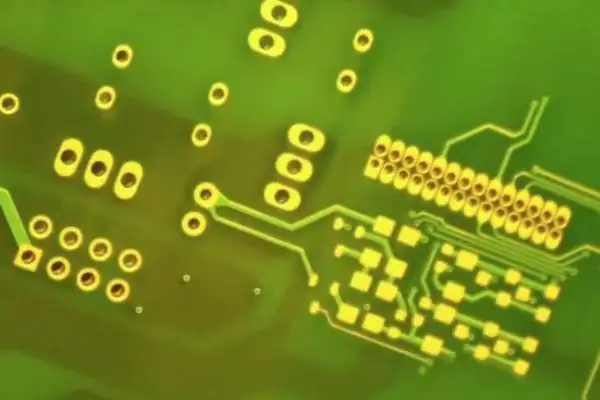
Now, when I look for controlled impedance PCB manufacturers, I don’t pay much attention to their boasted certifications—you can buy those with money. I directly ask them for impedance test reports from the last three months’ production batches—only those with data fluctuations of no more than 15% across twenty consecutive batches are considered reliable. One factory showed us their real-time monitoring screen in the workshop—they test the dielectric constant of each roll of substrate before it’s put into storage, and an alarm goes off automatically if the lamination temperature deviation exceeds two degrees. That’s what I call real expertise.
Recently, there was a rather interesting case—when making a 5G base station power amplifier, we tried using a new composite material, but the simulation model and the actual impedance differed by 20%. Later, we found that the Dk value provided by the material supplier didn’t match the actual production process—this made me realize that even the most advanced simulation tools must be grounded in production line data. Now, the first thing I do when collaborating with manufacturers is to have them synchronize the batch number of the substrate they are currently using with the design files.
Speaking of future trends, I think AI won’t be able to replace the experienced touch of a master craftsman anytime soon—last week, when I visited a factory, I saw a master craftsman judging the thickness deviation of the copper foil by simply feeling it with his fingers—this kind of experience isn’t something you can find in a database. However, the cloud platform has indeed simplified things – now the design team can see the current temperature curve of the lamination press in real time – which is much more efficient than sending emails back and forth for confirmation.
Ultimately, impedance control is essentially an art of communication – designers need to understand the fluctuation range of the etching solution concentration, and production line technicians need to understand the importance of equal length for differential pairs. Once, we encountered a particularly demanding customer who insisted on controlling the differential impedance of USB 3.0 to 90 ohms ±1% – resulting in half a month spent just on engineering confirmation. In reality, the truly critical factor for signal integrity is phase consistency, not obsessing over those few percentage points of impedance deviation.
Lately, I’ve increasingly felt that a good controlled impedance PCB manufacturer should be like a skilled traditional Chinese medicine doctor – able to understand both the ideal values on the design drawings and the actual pulse of the production line. The factory we collaborated with last time was quite interesting – they created a production process file for each board, even recording the pH fluctuations of the immersion gold plating bath – this level of detail is more effective than any certification.
Recently, while chatting with a friend who works on RF circuits, I discovered an interesting phenomenon – many people think that simply drawing the lines correctly is enough to handle controlled impedance PCB design. In fact, it’s much more complex than imagined.
I remember a project last year that almost went wrong. We designed the microstrip line width according to conventional parameters and sent it to a controlled impedance PCB manufacturer for prototyping. Testing revealed that the actual value differed from the theoretical value by nearly 15%. Later, we discovered the problem was in the substrate – the dielectric constant fluctuations of different batches of FR4 were much larger than we anticipated.
Now, for every new project, I first ask several suppliers for their material parameter sheets, especially the dielectric constant stability data. This is far more important than simply focusing on line width. For example, some high-frequency board suppliers provide DK test reports for each batch; this data helps predict the actual impedance fluctuation range. Once, we compared Rogers 4350B boards from three manufacturers and found that although the nominal dielectric constant was 3.48 for all of them, the batch-to-batch variation of one manufacturer could reach ±0.05, while another could control it within ±0.02. Once, I tried using thinner copper foil to reduce losses, and while the high-frequency performance improved, the manufacturing difficulty increased significantly. The manufacturer reported that the fine lines were prone to over-etching during the etching process, resulting in actual line widths several micrometers smaller than the design values. Especially when using 12μm ultra-thin copper foil, the etching factor became difficult to control, and the jagged edges of the lines increased noticeably. This made me realize the need to adjust the line width compensation value based on the copper thickness; for example, 18μm copper foil requires an additional 3μm, while 12μm copper foil might require more than 5μm.
Therefore, I now place great importance on tolerance control, especially the uniformity of dielectric thickness during multilayer board lamination. If the dielectric thickness deviation of any intermediate layer exceeds 10%, the characteristics of the entire stack will deviate. In fact, controlling the amount of resin flow during the lamination process is crucial. For example, deviations in the resin content of the prepreg (PP sheet) can lead to differences in dielectric layer thickness. Once, by requiring the supplier to use high-precision positioning molds, we reduced the interlayer thickness deviation of an 8-layer board from ±12% to ±7%.
One experience worth sharing is not to rely too much on the ideal models in simulation software. It’s best to have the manufacturer perform impedance strip tests in advance and adjust the parameters after two or three actual prototypes; this is much more cost-effective than rework later. We once overlooked the impact of the solder mask on impedance during simulation, and the result was that the green ink reduced the single-ended impedance by 2Ω, while the black ink had a smaller impact. Now we require manufacturers to cover the impedance test strips with the actual ink to be used for measurement.
Recently, I encountered a case where they pursued a strict tolerance of ±5%, controlling the line width to within 0.1 millimeters. However, the yield rate during mass production was only slightly over 60%. In fact, loosening the standard to ±8% resulted in lower overall costs. This is because when the line width accuracy requirements are too high, manufacturers need to use more expensive laser direct imaging equipment, and full inspection is required for each batch. A tolerance of ±8% can be reliably achieved with ordinary LDI equipment, reducing equipment wear and labor time by more than 30% during mass production.
Ultimately, controlled impedance design is about finding a balance between electrical performance and manufacturability. Sometimes, slightly adjusting the stack-up structure or changing the material brand is more effective than stubbornly pursuing a specific parameter. For example, changing a symmetrical stack-up to an asymmetrical structure, although theoretically more complex to calculate, makes it easier to control the dielectric thickness tolerance during actual production. Once, we switched to a low-loss material from a Japanese brand; although the unit price was 15% higher, the improved yield actually reduced the cost per board by 8%.
I’ve developed a habit of asking manufacturers about their most proficient process parameters before each design, such as which dielectric thickness is most stable and which line width has the smallest tolerance on their production lines. Designing in conjunction with their strengths often yields much better results. For example, one manufacturer has particularly precise control over 4mil core board thickness, so we try to arrange critical impedance layers at this thickness; another manufacturer has the most stable control over 4-6mil line widths, so we avoid using fine lines below 3mil.
Truly reliable controlled impedance PCB manufacturers won’t just give you a quote; they will proactively share processing data from similar cases. This practical experience is far more useful than textbook formulas, because even the most precise theoretical calculations ultimately depend on the process capabilities of the production line. For instance, one manufacturer showed us data from 1000 batches of impedance boards, showing that the actual impedance standard deviation was smallest for 5mil line widths with 0.5oz copper thickness. This empirical data directly helped us optimize our new design. I recently chatted with a friend who works on high-speed circuits and realized that many people’s understanding of controlled impedance PCBs is still superficial, focusing only on surface parameters. In reality, the key factors affecting performance are often hidden in the most fundamental physical characteristics. For example, we often focus on copper foil thickness but overlook the actual impact of copper foil surface roughness on high-frequency signals. Those seemingly standard parameter tables can sometimes lead to overlooking subtle differences in practical applications.
Once, a project I was involved in encountered signal integrity problems. All impedance calculations matched theoretical values, but actual tests consistently showed abnormal attenuation. Later, we switched from ordinary copper foil to an ultra-low roughness type, and the problem was immediately solved. This made me realize that when choosing a controlled impedance PCB manufacturer, you shouldn’t just look at their standard parameter tables; you should also pay attention to whether they understand the profound impact of material characteristics on the final performance.
The stability of dielectric thickness is also an easily underestimated factor. Some manufacturers use non-standard thickness prepregs to reduce costs, which can lead to fluctuations in the actual impedance of boards in the same batch. I remember one test where the impedance values in different areas differed by more than twice the nominal tolerance. The root cause was insufficient uniformity in dielectric thickness control during the lamination process.
Now I tend to view PCB stack-up design as a dynamic equilibrium process, not simply stacking parameters, but considering the interaction between materials. For example, the type of copper foil affects etching accuracy, and the uniformity of dielectric thickness relates to overall impedance consistency. These factors are interconnected; simply pursuing a single ideal value may be counterproductive.
Truly reliable manufacturers will have in-depth discussions with you about the application scenario before production, such as whether your circuit’s operating frequency range requires particular sensitivity to temperature changes. They provide not only processing services but also engineering-level collaboration. This kind of in-depth cooperation is often far more meaningful than simply comparing quotes.
I recently chatted with an RF design engineer and discovered an interesting phenomenon – many people think that simply calculating the correct trace width is enough to handle controlled impedance PCBs. In reality, it’s much more complex than that.
I remember a project last year where the signal eye diagram collapsed across the entire batch of boards due to a careless choice of dielectric material. Later, after switching to a reliable controlled impedance PCB manufacturer, we realized that they had already included Dk stability in their technical white papers, but we hadn’t read them carefully.
Sometimes I feel that PCB manufacturers are like experienced traditional Chinese medicine practitioners; they can predict signal quality by examining the stack-up structure. For example, I saw them insert a semi-cured prepreg layer in the middle of a six-layer board to adjust the overall dielectric constant, which was indeed smarter than simply stacking ordinary FR-4 layers.
Vias are particularly interesting. I’ve seen people place high-speed signal vias next to power plane splits to save space, resulting in three times the expected crosstalk. Later, they changed it to surrounding the vias with ground vias at the layer transition, and the waveform immediately became clean.
Another time, during debugging, I found that the bit error rate of a differential signal fluctuated. It turned out that the reference plane switched from the ground plane to the power plane during layer transitions. Although theoretically both are copper layers, the noise characteristics of different power networks are vastly different.
Now, every time I design a board, I deliberately leave a 20% margin for impedance compensation. After all, board material batch variations and etching tolerances are all variables. It’s better to try several impedance curves upfront than to add flywires later.
What surprised me most was when the board manufacturer suggested widening the surface trace width by 5 microns, saying that the new copper-clad laminate had a lower Dk value. This kind of detailed experience is something that simulation software can’t calculate.
In fact, high-speed design is like cooking soup; a slight difference in temperature changes the taste. Sometimes you have to trust the experienced hands of the master.
When I first started working with high-speed circuit design, I always thought that those who discussed controlled impedance PCBs were making a big deal out of nothing – wasn’t it just printing copper lines on a board? It wasn’t until my own designed gigabit Ethernet board frequently dropped packets that I realized the problem. Those seemingly smooth traces are actually complex electromagnetic field systems at high frequencies.
I remember once debugging a video processing board and noticing subtle stripes occasionally appearing on the screen. At first, I thought it was a software problem and spent several days troubleshooting. Later, using an oscilloscope, I discovered it was caused by ringing in the clock signal. The root of the problem was that we used ordinary FR4 board material without strict controlled impedance design, causing reflections on the transmission lines. That experience made me understand the importance of choosing a professional controlled impedance PCB manufacturer; they know how to precisely control characteristic impedance by adjusting dielectric thickness and trace width.
Many people easily overlook that what affects the transmission line characteristics on a PCB is not only the traces themselves but also the integrity of the reference plane. I had a board with a perfectly designed stripline, but a small gap in the power layer caused significant discontinuities in a local area. This kind of detail often requires manufacturers to have extensive process experience to anticipate and avoid problems.
When designing high-speed circuits, I now pay particular attention to the dielectric constant stability of the board material, especially the loss factor at high frequencies. Ordinary epoxy resin materials show a significant performance decline above 1 GHz, while professional manufacturers usually recommend polytetrafluoroethylene or ceramic-filled materials that are more suitable for high-frequency applications. Although these materials are more expensive, they ensure signal integrity.
What impressed me most was visiting a PCB factory and seeing them use a vector network analyzer to test and calibrate each batch of boards, rather than simply relying on the data sheets provided by the material supplier. This attention to detail is crucial for ensuring the consistency of mass-produced products; after all, even the best design requires precise manufacturing to be realized.
As signal speeds continue to increase, relying solely on empirical estimation is no longer sufficient. We now use electromagnetic field simulation software to create pre-models, taking into account the effects of connectors, vias, and even the solder mask layer. However, ultimately, the manufacturing process must accurately reproduce the design intent. This requires close communication between the design and manufacturing teams to achieve true collaborative optimization.
I recently had a conversation with a friend who works on communication equipment, and I discovered an interesting phenomenon. Their team spent over half a year optimizing antenna design, but the network speed test results were worse than those of a ready-made module purchased by the neighboring team. They later found the problem lay in a seemingly ordinary circuit board. This reminded me of a common misconception among engineers: they often think the performance bottleneck is at the chip or algorithm level, neglecting the most fundamental physical medium in the signal transmission process.
In fact, the requirements for high-frequency circuits now exceed the capabilities of traditional PCBs. I’ve seen many design drawings with numerous impedance values marked, but when sent to the factory for production, they were processed using conventional methods, resulting in the entire batch of boards being scrapped. This waste is essentially a misunderstanding of signal transmission characteristics—when the frequency reaches the GHz level, the current behaves more like it’s sliding on the surface of the conductor rather than flowing uniformly through the entire cross-section.
A more vivid analogy: a regular circuit board is like a country dirt road—it just needs to be passable for vehicles—while a controlled impedance PCB is more like a magnetic levitation track. The former might become muddy and unusable after heavy rain, while the latter must maintain constant driving conditions regardless of the weather. This difference explains why we need to find professional controlled impedance PCB manufacturers; they truly understand how micron-level variations in trace width affect signal integrity.
Last year, I visited a factory that manufactures components for medical equipment, and their quality control process impressed me. Each batch of boards was placed in a constant temperature and humidity environment for 24 hours before cutting, because even a 0.1% fluctuation in moisture content can cause a shift in the dielectric constant. This dedication to precision initially seemed overly cautious until I saw the boards they made for pacemakers—the impedance error of every trace on those boards was controlled within 1%.
Many people simply understand impedance matching as applying calculation formulas, but the most crucial aspect is the ability to dynamically adjust during the manufacturing process. For example, during the lamination of multi-layer boards, the flow of the prepreg changes the dielectric thickness; experienced technicians compensate for this change by adjusting the pressure curve. These process details are what differentiate ordinary factories from professional manufacturers.
Sometimes I think this industry is very much like the work of old-fashioned watchmakers: it requires both a macroscopic understanding of electromagnetic theory and the patience to handle micron-level deviations. After all, when signal rise times enter the picosecond range, even the roughness of the gold-plated surface becomes a contributing factor. This is why I always advise startup teams to incorporate impedance control during the prototyping phase to avoid having to completely redesign the architecture later on.
Recently, I’ve seen some manufacturers starting to use terahertz wave scanning to create 3D models of finished boards, which is a significant improvement over traditional slicing and inspection. However, ultimately, even the most advanced technical methods can’t replace developing an intuitive understanding of precision. I’ve seen some of the most skilled engineers who can estimate the approximate resin content of a board just by feeling its weight – this kind of accumulated experience is the real competitive advantage.
In my years of working with circuit boards, I’ve come to a profound realization – many people overcomplicate controlled impedance PCBs. In essence, it’s simply about ensuring the signal travels smoothly along the transmission line without any problems. I’ve seen many engineers agonizing over deviations of a few tenths of an ohm in simulation results, but there’s really no need to be so anxious.
I remember last year, a client who manufactured communication equipment required their boards to have a 50-ohm impedance with a tolerance of ±7%. When the first batch of samples was tested, some points showed an 8% deviation, and the client was extremely anxious, demanding that we stop production and make corrections. Later, we tested several more sets of data from the same batch of boards and found that the fluctuation range was completely within the normal manufacturing process. This incident made me realize that sometimes, overly pursuing theoretical perfection can lead to neglecting the practical realities of production. In reality, impedance deviations are often influenced by multiple factors such as uneven dielectric thickness, copper foil roughness, and etching factors, which are all normal fluctuations in production. For example, dielectric thickness usually has a tolerance of ±10%, which directly leads to corresponding changes in impedance values.
When choosing a controlled impedance PCB manufacturer, I value their testing capabilities the most. Some small manufacturers claim to be able to do impedance control, but they don’t even have proper TDR equipment and rely entirely on experience-based estimations – this kind of collaboration is too risky. Good manufacturers design test strips on the edge of the panel, which allows them to monitor the stability of each batch of boards without affecting the layout of the main board. I particularly appreciate manufacturers who proactively provide test data; they clearly indicate the fluctuations in the impedance curve, giving you a more intuitive understanding of the board’s characteristics. Professional TDR equipment can accurately measure picosecond-level time delay variations and plot impedance distribution along the transmission line, which is crucial for analyzing impedance consistency.
High-frequency signals are particularly sensitive to impedance matching. For example, if the impedance of the RF lines in a 5G base station is not properly controlled, the signal quality will immediately suffer. However, not all circuits require such high precision. For ordinary consumer electronics, controlling the critical networks while relaxing the requirements for other parts can reduce costs and improve yield. For example, the USB or HDMI interfaces on a mobile phone motherboard require strict control of 90-ohm differential impedance, while a tolerance of ±15% is perfectly acceptable for ordinary GPIO signal lines. This reduces the number of lamination layers and improves material utilization.
Recently, we encountered an interesting case where a client required a 100-ohm differential impedance, but the board thickness was limited to within 0.8 mm. Conventional stacking schemes simply couldn’t meet the target value. We then tried a combination of special core materials and prepreg, and after three rounds of prototyping and debugging, we not only met the impedance requirements but also saved the client 15% in costs. This flexible problem-solving approach is more valuable than simply pursuing technical parameters. Specifically, we selected a low-dielectric constant M6G core material combined with 1080 prepreg, and by adjusting the lamination parameters, we controlled the uniformity of the dielectric layer thickness to within 3%.
The biggest challenge in transmission line design is idealized modeling. The impedance values calculated by the software always have some deviations in actual production. The smart approach is to leave an appropriate margin for adjustments during the manufacturing process. I usually add protective ground planes on both sides of critical signal lines, but this technique shouldn’t be overused, as it can affect wiring density. Typically, a design margin of ±5% is reserved for high-speed signal lines. For example, a 50-ohm line would be designed within a range of 48-52 ohms, effectively avoiding deviations caused by insufficient or excessive etching.
The real test of skill lies in handling impedance discontinuities. Vias and connectors are prone to reflections. A good design doesn’t completely eliminate discontinuities but rather smooths out the transitions to reduce the overall impact on the signal. Sometimes, fine-tuning the pad shape is more effective than using expensive materials. For example, using an anti-pad design at BGA vias, and compensating for capacitive load by controlling the etching degree of non-functional pads, this structural optimization can reduce the impedance variation rate by more than 20%.
Ultimately, impedance control is a means, not an end. I’ve seen too many people spend all their energy pursuing a perfect impedance curve while neglecting overall signal integrity. Doing the fundamental work well is more important than chasing the latest technology, because even the most accurate simulations need to be verified by actual testing.
Circuit boards are more than just that green board in a phone
From disassembling old routers to visiting electronics manufacturing plants, I gradually realized
As an electronics enthusiast, I’ve come to understand firsthand the impact of
- Эксперт в области мелко- и среднесерийного производства
- Высокоточное изготовление печатных плат и автоматизированная сборка
- Надежный партнер для электронных проектов OEM/ODM
Часы работы: (пн-сб) с 9:00 до 18:30