

What Documents Are Required for PCB Production: A Field Guide From Real Industrial Weighing Controller PCB Projects
Many engineers focus too much on technical parameters early on and overlook
Prototype PCB Assembly Services: Why Your Working Sample Is Not Proof of Anything
Too many teams misunderstand what the prototype assembly stage is actually for. Seeing a board light up and then reaching for the champagne is a pattern I have watched play out far too often. The team passes functional validation on the sample, declares success, then transfers to mass production — and discovers that defect rates are running at 30 percent. That sequence is not unusual in this industry. It is a foreseeable outcome of treating prototypes as endpoints rather than process probes.
The value of prototype PCB assembly services is not in producing a few boards that work. It is in using small-volume production to stress-test the manufacturing environment before scale creates irreversible problems.
What Experienced Engineers Do Differently
Engineers who have learned this lesson — usually by experiencing the alternative — make a specific choice: they require prototype suppliers to use the same solder paste type used on the production line. Adjusting a soldering iron temperature by hand can produce a beautiful joint on a workbench. That kind of individual adjustment masks real problems. The production line will not extend heating time for a marginally oxidized pad. The reflow oven runs on the temperature profile it was set to, and nothing else.
A smart-home product project brought this into focus. The product ran flawlessly in the lab. The first production batch generated a wave of returns. Investigation revealed that passive components used during the sample stage differed in brand from the production batch. The electrical parameters looked equivalent. Under sustained high-temperature operation, they were not. This category of detail is routinely dismissed during prototyping — and routinely surfaces as a critical defect at volume.
The documentation habit I have developed: even for a five-board prototype run, I require the supplier to provide a complete process report. Solder paste thickness, reflow profile, peak temperature — every parameter recorded. These records look bureaucratic at the sample stage. At the moment of transferring to a production factory, they become the most valuable document in the project.
Solder Paste Is Not a Generic Consumable
This is a lesson that tends to be learned through a production failure. Solder paste pulled from cold storage and mixed for a few seconds before use works fine on a small batch — volume is low, the paste stays active long enough. On a production line, paste dispensed at the start of a shift operates at a different activity level than paste dispensed six hours later. Reduced paste activity affects wetting tension distribution. Elements that should lie flat begin to stand up during reflow. I managed exactly this failure on a smart-home controller trial production run: the reflow oven was set correctly, but paste that had been improperly conditioned produced inconsistent surface tension, and capacitors along board edges tombstoned consistently.
Stencil aperture design is another area where prototype shortcuts create production problems. A general-purpose stencil template that works adequately for a sample run may produce bridging and insufficient solder volume in volume production. If the stencil is engineered for the actual board at the prototype stage — with aperture dimensions and thickness matched to the specific components and pad geometry — the transition to production is smoother. Doing this upfront costs more in tooling. It costs considerably less than discovering the problem after production has started.
Component Batch Variation: The Hidden Variable
One source of prototype-to-production divergence that receives too little attention is component batch variation. A sensor specified for a medical device performed with excellent response speed during sample testing. When the production order was fulfilled, the supplier had changed wafer source. The part number was identical. The sensitivity threshold had shifted. Heart rate detection data began showing erratic variation in production units.
This risk cannot be fully eliminated, but it can be managed. Requiring that prototype assemblies use components from the same supply channel planned for production, and verifying that the specific batch characteristics match the design assumptions, gives meaningful protection. The additional lead time this sometimes requires is recoverable. A production batch of defective units is not.
PCB substrate condition is a related variable that sample stages routinely ignore. Laboratory prototypes use freshly manufactured boards. Production boards may have spent months in warehouse storage before assembly. Surface finish oxidation develops over time. Subtle changes in solderability affect joint formation in ways that bare-eye inspection cannot detect. Deliberately aging boards before prototype assembly — storing them for one to two weeks under representative conditions before soldering — can surface this vulnerability before it reaches production.
Equipment Matching Between Prototype and Production
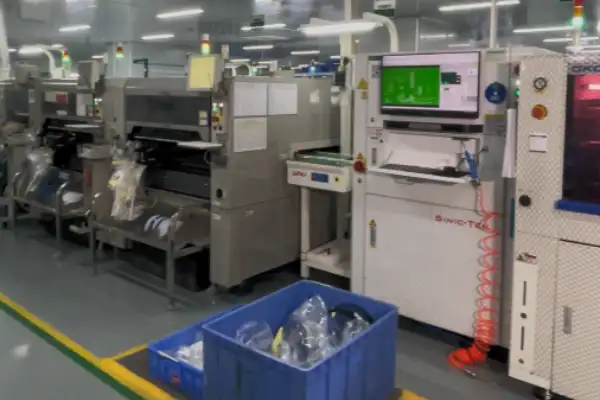
A team I consulted with faced exactly this scenario: their small-batch trial production passed every test, then the first production run showed consistent RF module placement error producing millimeter-scale misalignment that degraded antenna performance without causing obvious electrical failure. The root cause: their prototype assembly service had used a high-precision, low-speed placement machine. The production line used a high-speed machine. The difference in placement dynamics had never been validated. Equipment compatibility between prototype assembly and intended production line is a verification step that should be explicit — not assumed.
I now include this as a standing question when evaluating prototype assembly options: what is the process delta between your prototype line and a standard high-volume assembly environment? The answer reveals how representative the prototype results will actually be.
Testing Standards Must Match Production Reality
Prototype functional testing is a baseline, not a ceiling. Some failure modes appear only under specific environmental conditions — temperature cycling, vibration, humidity exposure. Building these into the prototype test regimen, even in simplified form, surfaces issues that pass-at-ambient testing will never catch. A team that skips an interface stability test during prototype validation because it seems unnecessary discovers the problem in production when the interface fails under temperature variation.
For BGA and other area-array packages, functional testing is insufficient. Internal joint quality is not observable by any means other than X-ray inspection. The cost of X-ray inspection on a prototype run is small. The cost of a production recall is not. Teams that skip X-ray at prototype stage on the grounds that the part functioned are making a bet that the joint geometry matches the electrical behavior. Sometimes that bet pays off. When it does not, the consequences are disproportionate.
AOI at the prototype stage provides value that human visual inspection cannot match. Passive component placement deviations of 0.1 mm, solder joint meniscus irregularities, and insufficient wetting coverage are all detectable automatically. These findings do not necessarily indicate functional failure at prototype volumes — but they predict failure modes that will appear at production scale. Treating AOI output as process feedback rather than pass-fail screening generates the most useful information at this stage.
Bridging Prototype to Production
The moment that consistently surprises teams is when they realize that moving from prototype to production is not a scaling operation. It is a process-design operation. The production environment has tighter tolerances on operator actions, less room for individual adjustment, and higher sensitivity to any parameter that was managed manually during prototyping.
One team I worked with made the transition deliberately. They used their first prototype run to document every manual intervention that their assembler made — temperature adjustments, manual realignments, cleaning steps — and then designed those interventions out of the process before production. The result was a production process with substantially fewer variables and a first-pass yield that held consistent across batches.
Skipping pilot production and moving from sample data directly to tooling is a risk that occasionally works out and regularly does not. One case where it failed: the heat sink mass added to the production assembly introduced a board micro-deformation that caused BGA joint failure during transport vibration. The structural reinforcement required to address this added cost that exceeded the pilot production savings many times over.
The prototype is not the goal. It is the first iteration of a process that needs to be manufacturable at scale, consistently, by people who were not in the room when the design was created. Every decision made at the prototype stage either builds toward that goal or defers risk that will surface later. Deferring risk in hardware development is not free — the cost is paid with interest.
Many engineers focus too much on technical parameters early on and overlook
As someone who has worked in PCB outsourcing for years, I’ve found
Cramming a camera, amplifier, dual-mic array, and Wi-Fi radio into a palm-sized
- Эксперт в области мелко- и среднесерийного производства
- Высокоточное изготовление печатных плат и автоматизированная сборка
- Надежный партнер для электронных проектов OEM/ODM
Часы работы: (пн-сб) с 9:00 до 18:30
Get quote, solution or any question, Andre always here to help