

Why the Best PCB Supply Chains Are Built Like Relationships, Not Transactions: Lessons for Satellite Communication PCB Programs
What actually makes a long-term PCB supply chain partnership work — shared
I’ve always found the process of selecting PCB coatings to be quite fascinating. Many people start by asking, “Which material is the most ‘high-end’?”—but in reality, that question misses the mark entirely. What truly matters is the specific operating environment your circuit board will actually have to face.
Take, for instance, an outdoor weather station project I helped a friend modify last year. They initially selected a type of conformal coating—marketed as a “universal” solution—only to find that the equipment began exhibiting data drift less than three months after being installed in a coastal region. Upon disassembly, we discovered that while the coating offered decent moisture resistance, it simply could not withstand the corrosive effects of the salt-laden sea breeze. We subsequently switched to a silicone-based material specifically engineered for enhanced solvent resistance; although the cost was slightly higher, the unit has continued to operate stably for over six months now.
Sometimes, particularly in high-temperature environments, the flexibility (or hardness) of the coating proves more critical than its waterproofing capabilities. I’ve witnessed far too many instances where an overly rigid coating, subjected to temperature fluctuations, physically tore the solder joints right off the components. In such cases, materials with greater elasticity actually offer superior protection for the circuit board—even if their official waterproofing ratings aren’t the absolute highest available.
There is another subtle detail that is often overlooked: many people over-clean their circuit boards prior to coating, inadvertently damaging the board’s original protective layers. In reality, simply ensuring the absence of gross contaminants is sufficient; in fact, trace amounts of residual flux can actually enhance the adhesion of the coating. This point becomes particularly evident when repairing older equipment; circuit boards that have accumulated a bit of age are often easier to effectively protect than brand-new ones.
I recently tested a novel composite material that pleasantly surprised me. Rather than aiming for the “universal” protection sought by traditional materials, this new compound is specifically engineered to provide enhanced protection tailored to very specific scenarios. For instance, for the mainboards of medical equipment—which require frequent alcohol wiping—we prioritize optimizing solvent resistance. Conversely, for industrial control boards that remain enclosed within a chassis for extended periods, we emphasize enhanced mold resistance. This customized approach is far more practical than blindly stacking technical specifications.
Ultimately, selecting a coating is much like getting fitted for eyeglasses: a higher prescription isn’t necessarily better; the key is finding the right fit. I once encountered a case involving the repair of an automotive ECU; the original manufacturer had used a very standard acrylic coating, yet because it was properly integrated into the vehicle’s overall design, it performed flawlessly for ten years. In contrast, some projects insist on utilizing top-tier materials, only to suffer premature failure due to incompatibility with other components.
Truly effective protection should be something the user forgets is even there. It is like the water-resistance feature on a smartphone: you don’t constantly dwell on it, but it steps up to do its job when it matters most. PCB coatings should function in the same way—acting as silent guardians of a product’s reliability rather than mere marketing gimmicks.
I have long felt that many people possess only a superficial understanding of PCB coatings. They often assume that simply brushing on a layer of paint is enough to resolve any issues. In reality, the process is far more complex.
I recall helping a friend repair the mainboard of a piece of outdoor equipment last year. The board had indeed undergone a surface coating treatment; however, upon opening it up, we found it was heavily corroded. Where did things go wrong? The coating was too thin. Rainwater had seeped through the crevices between components and subsequently became trapped inside.
Nowadays, many manufacturers skimp on costs by applying an extremely thin coating layer. Ironically, this can be even worse than applying no coating at all; once moisture penetrates, it cannot evaporate, leaving the entire board essentially submerged in water.
I subsequently performed a comprehensive “three-proofing” treatment on that device. The critical factor lies in maintaining the coating thickness within a reasonable range: a layer that is too thick can hinder heat dissipation, while one that is too thin fails to provide adequate protection.
There is another crucial detail that many people tend to overlook: the cleaning process prior to coating. I once observed workers spraying the coating immediately after soldering components; residual flux trapped beneath the coating caused it to bubble and blister. Such a protective layer is, in essence, nothing more than a decorative facade.
Truly effective PCB protection should be treated as a comprehensive systems engineering challenge. The coating process must be taken into account as early as the design phase—for instance, by ensuring sufficient clearance around high-heat components and applying masking treatments to connector interfaces.
I currently favor a “selective coating” approach, focusing intensive protection specifically on sensitive areas. This strategy ensures effective protection without compromising the product’s overall performance. Honestly, what gives me the biggest headache is the issue of rework. The conformal coatings used by some manufacturers are simply impossible to remove. When repairs are needed, the only option is to replace the entire component—which drives costs up significantly.
Recently, I experimented with a new type of coating. Once cured, it takes on a semi-rigid consistency that can be easily stripped away using a specialized solvent. It is particularly well-suited for equipment that requires frequent maintenance.
Ultimately, effective protection isn’t just about looking at technical specifications; the solution must be designed with the actual operating environment in mind. After all, every circuit board faces a unique set of conditions.
Sometimes, the simplest approach proves to be the most effective. For instance, with boards destined for hot and humid environments, I often recommend adding a waterproof enclosure. This offers a far more reliable layer of protection than relying solely on a coating.
The subject of circuit board protection is actually quite fascinating. Over the years, I’ve noticed that whenever people hear “PCB coating,” they tend to think only of waterproofing and dustproofing; yet, its true value extends far beyond that. I once encountered a circuit board inside a piece of industrial equipment that had been treated with a specific type of conformal coating; it operated flawlessly for five years in an atmosphere saturated with chemical fumes. That experience compelled me to rethink the true significance of protective coatings.
Polyurethane materials, in particular, possess unique advantages in this regard. I recall once dismantling an old nautical instrument for repair and discovering—quite by accident—that its circuit board had been treated with a polyurethane coating. Although the external casing was heavily rusted and pitted, the internal circuitry remained in pristine condition. The protective layer formed by this material is remarkably resilient and does not crack or degrade in response to temperature fluctuations. However, one must exercise caution: polyurethane is highly sensitive to ambient humidity during the curing process; if the air is too dry, bubbles are prone to forming on the surface.
Conversely, I feel that many modern electronic products go overboard in their pursuit of extreme protection ratings. I’ve seen numerous consumer electronics boards coated with such thick layers of protective varnish that they become impossible to clean or repair later on. Given that products like smartphones typically have a lifecycle of only two or three years, there is simply no need to employ such extreme protective materials. Instead, it is devices such as industrial controllers and outdoor surveillance systems—equipment designed to operate continuously for many years—that truly warrant the investment in superior protective coatings.
Different types of protective materials possess distinct characteristics; the key lies in matching the material to the specific requirements of the application. Some manufacturers, in an effort to simplify operations, apply the exact same coating to their entire product line—a practice that is fundamentally illogical, as the material requirements for a high-temperature environment differ completely from those of a humid environment. I once handled a case involving an outdoor device where the initial coating softened under the intense heat of summer, resulting in a short circuit; the problem was ultimately resolved only after we switched to a more suitable coating material. The curing process for protective coatings is crucial; it’s not simply a matter of brushing it on and calling it a day. I’ve seen instances where small manufacturers, rushing to meet deadlines, cut corners on curing times—the result was poor adhesion, causing the coating to peel off with just a light scratch. To do the job right, one must adjust process parameters—such as temperature control and timing—based on the specific material properties. Paying attention to these details often determines the final outcome.
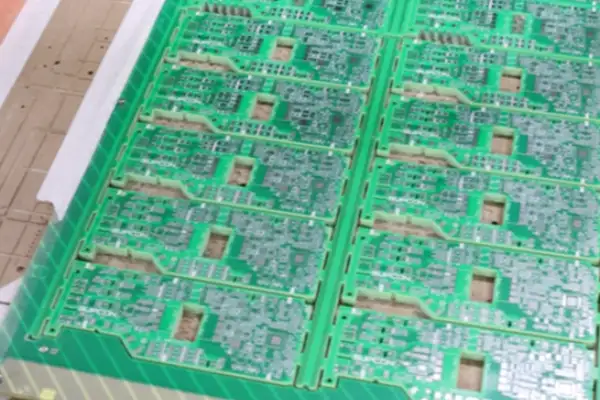
Ultimately, when selecting a protective solution, you must consider the product’s actual operating environment, its expected lifespan, and the feasibility of future repairs. The most expensive option isn’t necessarily the best; rather, the goal is to find the optimal balance. Sometimes, a simpler solution proves to be more reliable—a judgment best made through practical experience.
I’ve always found the subject of PCB protection coatings quite fascinating. Back when I was assisting my advisor with projects in the lab, I gained exposure to a wide variety of PCB coating processes. I once ran into trouble while applying a protective coating to a board equipped with sensors: the high temperatures required for traditional thermal curing ended up rendering the sensors inoperable.
UV curing is, indeed, astonishingly fast. I recall an instance while rushing to produce prototypes where I used a UV lamp; the coating hardened in a matter of seconds. However, reality is rarely that idealized. Those “shadow zones”—areas hidden beneath components like chips—are a constant source of headaches.
I later discovered that a dual-curing process is actually far more practical. You use UV light to cure the exposed surfaces first, then allow time to handle the curing of the concealed areas. This progressive approach ultimately proves to be more reliable.
Nowadays, whenever I see advertisements touting “instant curing,” I can’t help but chuckle. Anyone who has actually worked with PCBs knows it’s never quite that simple—especially when dealing with boards featuring flexible connectors, where the process feels more like performing magic with light and shadow.
What impresses me most is the rapid pace of material innovation today. The conformal coatings we used years ago had a pungent, acrid odor; the water-based formulas available now are much milder—though, admittedly, waiting for them to cure completely still requires a bit of patience.
In the end, choosing a protective solution is like cutting a key: it must be tailored to the specific lock mechanism. Some prioritize speed, others value eco-friendliness; personally, I believe the best solution is whichever one effectively protects the board without compromising the performance of its components.
I’ve always found the process of applying protective coatings to PCBs to be a fascinating endeavor. Many people might assume it’s nothing more than simply brushing a layer of material onto the board—but anyone who has actually done the hands-on work knows that it’s far from being that simple.
I once experimented with using a purely UV-curable coating; it was indeed incredibly fast—the job was done in just a few seconds. However, the problem was obvious: areas obscured by components received absolutely no UV exposure. Consequently, parts of the coating would harden while others remained soft. Later, I realized there was a different approach: use UV light to rapidly cure the surface layer, and then allow the coating to complete the remaining curing process gradually on its own. This method ensures efficiency while simultaneously resolving the issue of “dead spots”—areas that would otherwise remain uncured.
PCB coating is actually quite a nuanced discipline. You have to consider how the coating performs across various temperatures; after all, circuit boards can generate significant heat during operation. I’ve encountered situations where the coating became brittle under high temperatures—a truly vexing problem.
Speaking of curing methods, I find that combining UV light with other techniques yields superior results. For instance, some materials continue to react even after UV exposure; this means that even if certain areas aren’t directly illuminated, they will eventually complete the curing process over time. This gradual, progressive curing process is particularly well-suited for circuit boards with complex geometries.
I recall an instance where I had to coat a board fitted with heat sinks; naturally, no light could reach the areas beneath the heat sinks. Relying solely on UV curing would have been a recipe for disaster. Instead, I switched to a different material: I used UV to rapidly cure the surface layer, then left the rest to time. When I inspected the board the following day, I found that even the most difficult-to-reach corners had fully cured.
In this line of work, you eventually realize that there is no such thing as a universal, one-size-fits-all solution. Every circuit board presents a unique situation, requiring you to select materials and methods based on specific requirements. The key is to understand the distinct characteristics of various curing methods; only then can you make truly reliable choices.
Sometimes I see newcomers obsessing over achieving rapid drying times, inadvertently overlooking the long-term stability of the coating. While speed is certainly desirable, it should never come at the expense of quality. A truly effective coating must be capable of standing the test of time.
That protective film applied to circuit boards is actually quite fascinating. I used to think it was nothing more than a simple coat of paint! That was until I witnessed firsthand what happens to an unprotected board after just two weeks of operation in a humid environment—the component pins had turned green, and the circuit traces were corroded into a tangled mess resembling a spiderweb. It was only then that I truly understood why seasoned veterans in the field constantly emphasize that “effective protective coating is even more critical than the selection of the components themselves.”
Nowadays, many manufacturers tend to chase after the “halo effect” associated with novel coating materials. However, I’ve noticed that many fundamental aspects are often overlooked—for instance, the critical cleaning process that precedes PCB coating is frequently treated as a mere formality. I once visited a factory and saw workers preparing boards for coating simply by giving them a couple of quick blasts of compressed air! You have to realize that residual flux trapped beneath the coating will slowly corrode the copper traces over time! Surely, it’s these minute details that are the true determinants of effective protection?
In fact, the curing process itself is quite a test of patience. Have you ever seen cases where someone—in a rush to meet a deadline—cut the UV exposure time in half, only to end up with a blistering coating? All that time they thought they were saving ultimately just turned into after-sales repair costs! The truly reliable approach is to design a tiered curing protocol tailored to different coating thicknesses—particularly for edge areas, which require longer penetration times to form a complete protective layer.
Speaking of repairs, I actually hold a slightly different view: many people treat “repairability” and “protective efficacy” as mutually exclusive concepts, but that really isn’t necessary! Last year, we tested a type of peelable coating that yielded excellent results—it provided ample protection during normal operation yet could be easily removed from critical areas whenever repairs were needed. This balanced mindset offers far more practical value than simply chasing after the “ultimate protection” at all costs!
Recently, when I encountered the concept of “self-healing coatings,” I actually felt a bit apprehensive. While the laboratory data looks impressive, how reliably can the microcapsule rupture rate actually be controlled within the chaotic environment of a real-world production line? Rather than pinning our hopes on a coating that can magically heal itself, we would be better off focusing on making our foundational protection methods more robust. After all, the vast majority of failures stem from deficiencies in fundamental manufacturing processes, not from a lack of “cutting-edge” technological gimmicks!
Ultimately, the reliability of electronic products can never be achieved through a single technological breakthrough alone. It is, fundamentally, a matter of systems engineering—one that demands a clear-eyed understanding and meticulous attention to every single stage, from material selection to the actual application and processing techniques.
I’ve often thought that when it comes to PCB protection, many people tend to overcomplicate things. At the end of the day, isn’t it really just a matter of “dressing” the circuit board—providing it with a protective garment? The catch is that this garment must be breathable yet waterproof, and it certainly cannot hinder the board’s functionality. Take PCB conformal coating, for instance: selecting the right material is merely the first step.
I’ve seen plenty of novice engineers focus their entire attention solely on choosing the right coating material. While it’s true that the market offers a wide variety of conformal coatings, the actual effectiveness of the protection is often determined by the application and curing processes themselves. For instance, if certain areas of the board require masking—are you really going to just slap on a piece of standard adhesive tape and call it a day? If so, you’d better get ready for some rework.
I recall a specific instance where we were testing a piece of outdoor equipment; simply because the connector contacts hadn’t been properly masked off, the coating seeped into them, resulting in poor electrical contact and a subsequent failure. Later, we switched to specialized laser-cut fixtures; the edges came out so neat they looked as if they had been sliced with a knife.
The curing stage, in particular, is a highly technical undertaking. It’s not as simple as just cranking up the temperature to speed things up. Every material has a temperament of its own—some require a gentle, slow-and-steady approach, much like simmering a pot of soup over a low flame.
I am particularly opposed to those “one-size-fits-all” curing protocols. I once had a supplier who swore up and down that their paint could be universally cured at 120°C for just half an hour.
Honestly, what gives me the biggest headache is that half-baked “selective coating” work—the kind where they claim a robot is performing precision operations.
When it comes right down to it, sometimes watching a seasoned veteran apply the coating by hand actually feels more reliable.
That’s why I’ve developed a habit: whenever I’m inspecting a finished coating, the first thing I do is hold the board up to a light source to check the reflection.
I’ve always found the process of applying protective treatments to circuit boards quite fascinating. Many people assume you can just slap a layer of coating on and call it a day, but there’s actually a great deal of nuance involved.
I remember helping a friend repair an audio amplifier last year; when I opened it up, I found the entire board was covered in mold. A closer inspection revealed that the previous protective coating hadn’t been applied properly, allowing moisture to seep in through the tiny crevices between the components. This is actually a surprisingly common occurrence; people often mistake the coating process for nothing more than brushing on a simple layer of paint, only to end up trapping moisture inside the board instead.
Nowadays, many manufacturers tend to obsess over coating thickness, believing that the thicker the layer, the more secure the protection. I, however, believe the key lies not in thickness, but in the uniformity and penetration of the coating. The areas surrounding intricate components are particularly prone to forming “dead zones” (uncoated gaps); if the coating material lacks sufficient flow properties, it simply won’t reach—let alone cover—those critical areas.
I personally prefer a zone-specific approach to treatment. For instance, power supply sections generate a lot of heat, so they call for a coating with excellent thermal dissipation properties; conversely, high-frequency circuit areas are sensitive to dielectric constants, requiring the selection of specific, specialized materials. This kind of differentiated treatment is far more reliable than simply applying a single, uniform coating across the entire board.
I recently experimented with a new type of nano-coating, and the results were surprisingly impressive. Unlike traditional coatings, which form a thick, visible film, this material creates an invisible protective layer directly on the surface of the components. Its greatest advantage is the ease of repair: it can be effortlessly removed using standard solvents without causing any damage to the component pins. That said, this particular coating isn’t really suited for highly humid environments, so its suitability ultimately depends on the specific application scenario.
When it comes to ease of maintenance, I believe this should be thoroughly considered right from the design phase. I have seen far too many circuit boards where components requiring frequent replacement are intermingled with standard components; consequently, every time a repair is needed, the protective coating over the entire area has to be scraped away. If vulnerable components were grouped together—or if test points were strategically reserved—during the design stage, it would save a significant amount of trouble during subsequent maintenance.
Environmental considerations are also gaining increasing importance these days. Some of the coatings used in the past indeed had pungent odors, but newer materials have made significant improvements in this regard. However, to be honest, there is often a trade-off between environmental friendliness and protective performance; finding the right balance is a true test of one’s technical expertise.
It is sometimes fascinating to watch experienced technicians handle rework tasks. They select specific removal methods based on the type of coating involved: using a heat gun to gently warm the surface until the coating softens and peels away, or employing specialized solvents to precisely dissolve the coating in a localized area. This type of experience-driven technique is difficult to codify into a standard procedure; it requires extensive hands-on practice to master the proper touch.
Ultimately, protective treatment is not a crude, simplistic process; it requires flexible adaptation to specific needs. After all, every circuit board operates within a unique environment and faces distinct operational demands; blindly applying a generic, standard solution is often a recipe for trouble.
I have encountered far too many people who oversimplify the concept of PCB coating. They tend to assume that simply spraying on a random layer of paint will solve all their problems—a mindset that is actually quite dangerous.
I recall a friend who manufactures outdoor surveillance equipment complaining to me last year that his circuit boards were constantly failing. Upon inspection, we discovered that the generic coating he had chosen began to blister within just three months of exposure to a humid environment. This serves as a reminder of a point that many engineers tend to overlook: true protection involves far more than simply encasing a circuit board and calling it a day.
The factors to consider when selecting appropriate conformal coating materials are far more complex than one might imagine. For instance, certain applications require a flexible coating to accommodate thermal expansion and contraction; high-temperature environments demand materials capable of withstanding prolonged thermal shock; and some specialized applications even require the coating to be transparent to facilitate future inspection and repair.
I strongly disagree with the notion that “the thicker, the better.” I once saw a circuit board coated so heavily that it looked as if it were encased in a candy shell—only to find that the excessive thickness subsequently caused heat dissipation issues. In reality, achieving the just-right thickness is the true key to success.
When it comes to specific application scenarios, the differences become even more pronounced. The protective standards required for automotive electronics are naturally distinct from those for household appliances, while the reliability demands placed on industrial equipment are significantly more rigorous than those for consumer electronics. Some of the new materials currently on the market are truly impressive—they manage to maintain excellent protective performance while simultaneously meeting environmental standards. However, these new materials also require us to invest time in adapting to and learning how to use them effectively.
Ultimately, successful PCB coating requires a comprehensive understanding of the entire product lifecycle—from material selection during the design phase to process control during manufacturing, and finally to maintenance and upkeep in the post-production stage; every aspect must be considered holistically.
I sometimes recommend that clients conduct small-scale pilot tests first; after all, performance under actual operating conditions remains the ultimate benchmark for verifying the effectiveness of any protective solution.
In my view, the ideal scenario is for the protective coating to be integrated as an intrinsic part of the product design, rather than being treated as a remedial afterthought. This approach ensures both optimal protective performance and effective cost control.
It is always disheartening to see circuit boards fail due to inadequate protection. These are often issues that could have been easily avoided with a little foresight and care; instead, a desire to cut corners for the sake of convenience ends up resulting in far greater losses.
At the end of the day, effective protection should be unobtrusive—working silently in the background without imposing unnecessary burdens, yet stepping up to perform its vital function precisely when it matters most. That is the true objective we strive to achieve.
I’ve always found the subject of PCB protection quite fascinating. Many people tend to focus their attention primarily on equipment parameters—such as setting the machine temperature or specifying the coating thickness—but I’ve discovered that the factors that truly determine the effectiveness of the protection are often those subtle details that are easily overlooked.
Take PCB coating itself, for instance. During a comparative test in the lab one day, I observed an intriguing phenomenon: the exact same coating material exhibited vastly different performance characteristics depending on the humidity levels during the curing process. When humidity was too high, a hazy film would form on the surface; conversely, when humidity was too low, microscopic cracks were prone to appearing. This experience made me realize that environmental control is often far more critical than merely striving for absolute precision in temperature settings.
The choice of coating application method also warrants careful consideration. I’ve seen far too many engineers—in an effort to simplify the process—opt for a blanket spray application across the entire board surface. The result is often that adhesive ends up covering areas that should remain uncoated, thereby complicating future maintenance and repair work. In reality, selective coating technologies have matured significantly; by simply implementing proper masking procedures beforehand, one can precisely protect only those specific areas that require environmental shielding.
Regarding the curing process, I hold a somewhat unconventional view. Many people are fixated on achieving rapid curing times; however, curing the material too quickly can actually lead to concentrated internal stresses within the coating. This is particularly problematic around components with significant vertical profiles (requiring “climbing” coverage), where micro-cracks frequently develop. By deliberately slowing down the curing rate—allowing the material ample time to flow and fully penetrate the surface—the resulting protective layer proves to be far more robust and reliable. When it comes to inspecting coating quality, I’ve found that the most practical methods are often the simplest ones. A basic visual inspection—perhaps aided by a magnifying glass—can reveal over 80% of potential issues, such as “orange peel” texture or uncoated areas. This approach is often more direct and effective than relying solely on complex instrumentation, though, of course, essential basic verifications—such as insulation resistance testing—remain indispensable.
While recently working on a batch of industrial control boards, I noticed a subtle issue: discrepancies in the coefficients of thermal expansion among different components can cause the protective coating to undergo slight delamination during thermal cycling. This serves as a reminder that the compatibility between the coating material and the component materials must be carefully considered during the design phase, rather than waiting until the production stage to attempt a remedy.
In fact, the longer one works in this field, the more one realizes that the most effective protection is built upon a flexible application of knowledge grounded in an understanding of material properties—rather than a rigid adherence to standard parameters. After all, the operating environment for every circuit board is unique; adjustments must be made based on actual conditions, and that is where the true value lies.
I’ve always found the subject of PCB conformal coating quite fascinating. I recall an instance in the workshop where a senior technician was troubleshooting a pinhole issue on a board; it was a real headache. The coating appeared to provide perfect coverage to the naked eye, yet under a microscope, tiny pinholes were revealed that left the underlying circuitry directly exposed.
Many people assume that simply applying the coating is sufficient. In reality, the curing process is the critical factor. I’ve witnessed far too many cases requiring rework due to incomplete curing. Such issues are particularly distressing when they occur in equipment requiring high levels of reliability.
When selecting coating materials, one should not rely solely on the data presented in technical datasheets. For instance, some materials claim to possess “self-healing” capabilities for pinhole defects—a concept that sounds wonderful in theory, but whose actual performance in practice can be highly inconsistent. I tend to favor materials that have undergone extensive, long-term validation; even if they come at a higher upfront cost, they ultimately save on future maintenance expenses.
Modern coating technology has indeed advanced significantly. Whereas we previously had to repeatedly inspect the integrity of the coating manually, some intelligent systems can now monitor the curing status in real-time, thereby dramatically boosting operational efficiency.
However, even the most sophisticated technology requires human oversight. Experienced technicians can assess the degree of curing simply by observing subtle changes in the coating’s luster—a form of expertise that no machine can replicate.
Ultimately, PCB conformal coating is not merely a simple application process; it is a complex systems engineering endeavor that requires a comprehensive consideration of material properties, process parameters, and equipment conditions. Every single stage of the process must be treated with meticulous care to ensure the final quality of the product.
What actually makes a long-term PCB supply chain partnership work — shared
Practical, experience-based strategies for how to reduce PCB procurement risks — from
Real factory-floor lessons on how to optimize a PCB manufacturing process —
- Эксперт в области мелко- и среднесерийного производства
- Высокоточное изготовление печатных плат и автоматизированная сборка
- Надежный партнер для электронных проектов OEM/ODM
Часы работы: (пн-сб) с 9:00 до 18:30
Get quote, solution or any question, Andre always here to help