

Distributed Antenna System PCB Design: PIM, Multiband Isolation and High-Frequency Laminate Selection for In-Building Coverage
Anyone in RF knows the Distributed Antenna System PCB in an in-building
After working in the PCB manufacturing industry for a while, you realize that the factors truly determining quality are often not the most conspicuous ones. I’ve seen numerous factories go to great lengths to make the immersion gold finish look visually stunning, only to inadvertently neglect the more fundamental aspects of the process. For instance, we once handled a batch of thick copper boards where the client requested a multilayer structure utilizing mixed laminates; however, issues with plating detachment emerged during the subsequent processing stages.
Subsequent troubleshooting revealed that the pre-treatment was inadequate; the copper surface micro-etching lacked sufficient uniformity before the boards were sent directly into the immersion gold bath. This oversight is particularly fatal in the production of high-frequency boards, as signal transmission demands an exceptionally high degree of surface flatness. In reality, many people focus obsessively on the thickness of the gold layer while forgetting that the electroless nickel deposition is actually the critical link in the entire process chain.
I recall a particularly illustrative case: a specific batch of PCBs looked visually flawless immediately after the immersion gold process, yet micro-cracks appeared in the pads during the component insertion (assembly) stage. Analysis revealed that the issue stemmed from increased brittleness caused by unstable phosphorus content within the nickel layer. This phenomenon occurs more readily in thick copper PCBs because the discrepancy in the coefficient of thermal expansion between the base laminate and the plated finish is significantly greater.
Nowadays, when manufacturing High-Density Interconnect (HDI) boards, we pay particularly close attention to the effectiveness of the activation process immediately preceding the immersion gold bath. Even a slight deviation from standard concentrations in the palladium catalyst solution can result in uneven coverage of the subsequently deposited gold layer. While issues of this nature might go unnoticed on standard double-sided boards, they can be amplified into fatal defects on multilayer boards constructed from mixed materials.
In my view, the greatest pitfall in this industry is rigidly adhering to standard parameters. The characteristics of the laminate materials vary with every batch, as do the ambient temperature and humidity; consequently, the pace of the manufacturing process must be adjusted according to actual conditions. For instance, during the humid summer months, the pre-dip time needs to be extended appropriately; otherwise, the effectiveness of the micro-etching process will be compromised.
Truly superior process engineering is defined by its ability to respond flexibly to unforeseen circumstances. We once received a rush order requiring a specialized surface finish.
By optimizing the circulation and filtration system within our immersion gold bath, we managed to compress a process that typically takes eight hours down to just five—and, remarkably, the yield rate for that batch actually exceeded our usual standards.
Ultimately, PCB manufacturing is an industry built upon a continuous cycle of trial and error. Relying solely on Standard Operating Procedures (SOPs) is far from sufficient; what matters most is cultivating in our engineers a keen sensitivity to the minute details of every single process step.
Much like a physician diagnosing a patient, one cannot rely solely on laboratory test results; a comprehensive judgment must be formed by integrating those data points with the actual, real-world context.
We have recently begun experimenting with novel inspection techniques to monitor the chemical nickel deposition process, with the aim of achieving more precise control over fluctuations in phosphorus content.
After all, for high-frequency applications, the compositional stability of the plating layer is of far greater importance than its mere thickness.
Occasionally, clients get fixated on superficial details—such as the specific shade of the immersion gold finish—when, in reality, their primary concern should be whether that plating layer can withstand the rigorous thermal stress of the subsequent reflow soldering process.
I often tell my team that we must treat every single solder pad as a living, breathing entity; from the initial degreasing stage right through to the final immersion gold plating, every step in the process shapes its very trajectory of existence.
This entire process demands both patience and meticulous attention to detail; any oversight at any single stage will inevitably leave its indelible mark upon the final product.
Whenever I see those gleaming, gold-plated PCB samples, I can’t help but chuckle. While that shimmering surface layer certainly catches the eye, anyone with true industry expertise knows that it is, in essence, nothing more than mere ornamentation. I recall a client last year who came to us proudly flaunting their multilayer PCB design, boasting that they had utilized the most expensive immersion gold plating process available. Yet, upon testing, we discovered that their signal integrity was an absolute disaster, and the high-frequency performance fell woefully short of the required specifications.
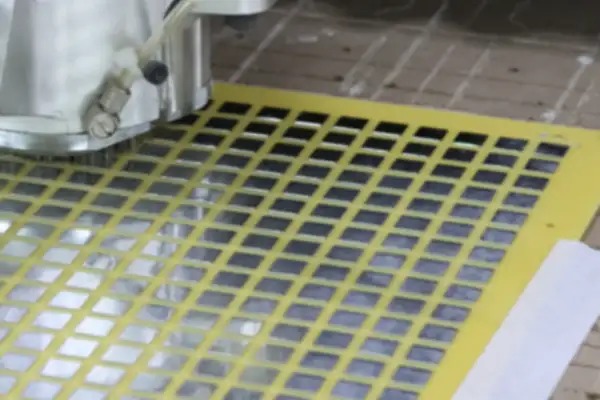
Truly reliable circuit boards, more often than not, possess an appearance that is humble and unpretentious. Much like the thick-copper PCBs we used in a past industrial controller project—boards that looked rather drab on the surface yet were capable of withstanding massive current surges—I sometimes feel that clients who obsess over aesthetics are completely missing the point. It reminds me of the old idiom “buying the casket and returning the pearls”—prioritizing the packaging over the contents.
Nowadays, many manufacturers love to boast about the prowess of their PCB immersion gold processes. But honestly, that feature is akin to a screen protector on a smartphone—it’s merely the outermost protective film. What truly determines a circuit board’s performance is the choice of base material and the stack-up design. I’ve seen far too many high-frequency PCB projects fail—causing entire RF systems to collapse—simply because unsuitable dielectric materials were selected.
The use of mixed materials lies at the very heart of modern electronic design. The reason Mixed Laminate Multilayer PCBs are so challenging to manufacture is that the coefficients of thermal expansion for the various materials must be precisely matched. This demands a deep understanding of material properties from engineers, rather than a mere stacking of layers. Sometimes, to optimize a single parameter, we must repeatedly fine-tune the specific ratios of several different materials.
Clients who focus solely on superficial appearances often give us major headaches. They constantly demand the flashiest processes and the most dazzling aesthetics, yet are unwilling to invest the necessary time in fundamental design work. This “putting the cart before the horse” approach brings to mind another old saying: “gilded on the outside, rotten on the inside.” True engineering elegance should be reflected in performance stability and longevity, not in flashy, superficial surface finishes.
I have always believed that a well-designed circuit board should resemble a meticulously calibrated mechanical watch: every component performs its specific function, ensuring the entire mechanism operates with precision and reliability. Designs that place excessive emphasis on aesthetics often end up faltering at the most critical junctures. After all, the true value of an electronic product lies in what it does, not merely in how it looks.
I recently chatted with a few friends who work in hardware design, and I noticed a common misconception regarding PCB surface finishes—many seem to believe that simply seeing a golden-yellow surface is a guaranteed sign of high board quality. It’s actually quite an interesting subject. I once managed an industrial control project where, in an effort to save on the budget, we opted for a standard hot air solder leveling (HASL) finish. The result? After just six months of operation in a humid environment, the solder joints began to oxidize. We subsequently switched to an immersion gold finish; the boards were then deployed in the exact same environment and performed flawlessly for three years without a single issue. However, a gold surface isn’t always the universal solution.
I recall a medical device project last year that required high-frequency signal transmission capabilities. The engineering team initially insisted on using a thick-copper PCB paired with an immersion gold finish. Later testing revealed that high-frequency signals generated unnecessary losses on the surface of the gold layer. We eventually resolved this issue by switching to specialized high-frequency PCB materials combined with a specific surface finish.
The design of multilayer boards presents even more interesting challenges. On one occasion, while designing a 12-layer multilayer board using mixed materials, we discovered that discrepancies in the coefficients of thermal expansion between the different materials caused micro-cracks to form in the immersion gold layer during thermal cycling. We ultimately resolved this issue by adjusting the sequence of the lamination process. This experience made me realize that—contrary to appearances—surface finishing is not a standalone step; it must be considered in conjunction with the overall board design.
Nowadays, I approach projects involving thick-copper PCBs with particular caution. Excessively thick copper foil can easily hinder the proper exchange of chemical solutions during the immersion gold process, leading to “black pad” defects. After encountering this issue during the development of a power module, we switched to a solution involving selective thick gold plating; this approach allowed us to both control costs and ensure reliability.
In reality, every surface finishing process has its own suitable application scenario. For instance, immersion silver is often sufficient—and more cost-effective—for standard consumer electronics, whereas the full electroless nickel immersion gold (ENIG) process is typically reserved for high-reliability equipment. The key lies in making a choice based on the product’s actual operating environment and requirements, rather than blindly chasing after so-called “high-end” processes.
I recently encountered an interesting case involving an automotive electronics project. The team adopted a selective immersion gold strategy, applying the finish only to critical solder pad areas. This approach ensured connection reliability while avoiding unnecessary cost increases—a mindset well worth emulating.
Ultimately, choosing a PCB surface finish is much like choosing an outfit: you shouldn’t focus solely on appearance, but must also consider the actual occasion and practical requirements. Sometimes, the most expensive option is not necessarily the most suitable one; finding the right balance is the key.
I’ve always found the process of selecting a PCB surface finish to be quite fascinating. Many people tend to fixate on the price right from the start; however, they should really prioritize understanding exactly what characteristics their product actually requires.
Take, for example, a communications base station project we worked on previously. At the time, some members of the team insisted on using a thick-copper PCB combined with an immersion gold finish, believing it would ensure more stable signal transmission. However, actual testing revealed that in a high-frequency environment, the magnetic properties of the underlying nickel layer actually became a source of interference. That experience taught me a valuable lesson: sometimes, the most expensive solution is not necessarily the most appropriate one.
I’ve also encountered quite a few engineers who are overly fixated on the thickness of the immersion gold layer, operating under the assumption that “thicker is always better.” In reality, the standard thickness is perfectly adequate for the vast majority of consumer electronics products; pursuing excessive thickness merely results in unnecessary cost increases. However, for industrial equipment destined for long-term storage, it is indeed advisable to apply a slightly thicker surface finish.
When it comes to selecting suppliers, I don’t believe scale should be the sole criterion. While large manufacturers certainly enjoy a price advantage, smaller firms often offer more flexible customization services. For instance, we once had a project involving a hybrid-stackup multilayer PCB that required specialized processing; after approaching several major manufacturers who all claimed they couldn’t handle it, it was ultimately a small-to-medium-sized supplier that stepped in and solved the problem for us.
There is an interesting trend emerging in the industry right now: an increasing number of people are beginning to re-evaluate their criteria for selecting surface finishes. In the past, people might have habitually opted for Electroless Nickel Immersion Gold (ENIG); now, however, they are taking a more rational approach, carefully assessing whether the use of gold is truly necessary. This is particularly relevant for specialized applications—such as high-frequency PCBs—where a simpler finish, like Organic Solderability Preservative (OSP), can sometimes yield superior results.
I have always maintained that technical decision-making should not be rigid. Every project possesses its own unique characteristics; rather than blindly following trends, it is far more prudent to take a step back and analyze the actual requirements. After all, effective engineering design isn’t about selecting the most expensive materials, but rather about identifying the most suitable solution.
Oh, and one more crucial point: don’t place too much blind faith in so-called “industry standards.” Many of these specifications were established years ago; given the advancements in modern technology and materials, it is entirely feasible—and often beneficial—to consult with your suppliers and negotiate adjustments to specific parameter requirements.
Ultimately, the most important attribute in this line of work is maintaining an open mind. New technologies and processes are constantly emerging, and what constitutes “best practice” today could very well be overturned tomorrow. Instead of rigidly clinging to outdated methods, you are far better off engaging with your peers and exchanging experiences—that is where the real value lies.
Have any of you encountered similar situations? You know—those instances where you initially took a specific technical choice for granted, only to later discover that there was actually a superior alternative available?
Whenever I see those gleaming, highly polished PCB surface finishes, I’m reminded of an interesting phenomenon: many people assume that the shinier the plating, the higher the quality. In reality, I once encountered a multilayer PCB where the pads appeared to be shimmering with gold, yet developed micro-cracks immediately after component assembly. It wasn’t until we cross-sectioned the board for analysis that we discovered the underlying issue lay within the nickel layer.
That experience prompted me to pay closer attention to the performance of thick-copper PCBs in high-frequency environments. I discovered—particularly when designing hybrid-material multilayer boards—that the selection of a surface finish is a far more complex undertaking than one might initially imagine. For instance, while the ENIG process offers an aesthetically pleasing finish, if the rate of the displacement reaction is not meticulously controlled, it can inadvertently create an invisible zone of structural weakness within the nickel layer. In a subsequent project involving a multilayer PCB designed for high-frequency signal transmission, I initially debated whether to use standard Electroless Nickel Immersion Gold (ENIG) plating. However, prioritizing long-term reliability, I ultimately opted for a process that strictly controlled the phosphorus content. This decision proved critical; particularly in environments subject to significant temperature fluctuations, the solder joints remained stable even after five years.
There is a subtle detail that is often overlooked: when a multilayer PCB must handle both power and high-frequency signals simultaneously, the thermal dissipation properties of the thick copper layers can interact with the surface finish. During one test, I discovered that variations in the thickness of the immersion gold layer could lead to localized mismatches in the coefficient of thermal expansion. Although invisible to the naked eye, X-ray analysis revealed microscopic delamination within the structure.
Regarding the issue of “Black Pad”—a defect characterized by brittle solder joints—I believe it cannot be simply attributed to a single specific parameter; rather, it is often a matter of the overall compatibility of the entire process chain. For instance, we once resolved a persistent issue with solder joint brittleness by adjusting the lamination sequence of a multilayer board in conjunction with specific immersion gold plating parameters. This experience underscored the necessity of adopting a holistic perspective in PCB manufacturing.
Nowadays, when I encounter clients who insist on maximizing plating thickness to the extreme, I tend to advise them to first evaluate their actual application scenarios. Sometimes, a moderate immersion gold thickness—combined with a well-engineered thick copper design—offers far greater value than blindly stacking up parameters. After all, the ultimate objective of a circuit board is not merely aesthetic appeal, but the ability to function stably across diverse environments for a decade or more.
Selecting the appropriate surface finish for a PCB often boils down to how the specific demands of the application scenario challenge the design. I have encountered numerous engineers who immediately gravitate toward immersion gold—perceiving it as the gold standard for high-end stability—yet, in many instances, spending that extra money is entirely unnecessary.
Consider, for example, boards destined to sit in storage for six months or longer; Hot Air Solder Leveling (HASL) actually presents a highly practical and sensible choice. While it may not offer the same level of flatness and smoothness as immersion gold, it is more than adequate for the vast majority of standard industrial equipment. I once worked on a project involving agricultural monitoring devices where the PCBs, once assembled, would remain deployed in the field for over six months before being powered up for testing. The client at the time adamantly insisted on using immersion gold, which drove the production costs nearly 30% above budget—only for us to later realize that this particular batch of equipment required no such high-precision surface finish.
However, when it comes to high-frequency signals, I hold a somewhat different view. Many people assume—almost reflexively—that high-frequency PCBs must utilize immersion gold. In reality, modern high-frequency substrate materials—when paired with an appropriate surface finish—offer a much broader spectrum of viable options. Multilayer boards constructed using hybrid lamination techniques and optimized processing parameters can deliver performance that fully meets the required specifications; the critical factor lies in ensuring the surface finish is properly matched to the specific characteristics of the high-frequency signals being transmitted. The handling of thick-copper PCBs is a particularly interesting topic; as the thickness of the copper foil increases, the difficulty of surface finishing multiplies. Controlling the uniformity of Electroless Nickel Immersion Gold (ENIG) becomes challenging, making it prone to defects. In this context, Hot Air Solder Leveling (HASL)—or tin-plating—demonstrates its superior adaptability. Although it results in slightly higher surface roughness, this factor is not critically detrimental for high-current applications.
Regarding the issue of cost, I believe many people fall into a common misconception: they attribute the price premium of ENIG solely to the quantity of gold consumed. In reality, wastewater treatment and equipment maintenance constitute the major cost drivers—especially for small-batch orders—where the overhead costs of setting up and running the production line can actually exceed the material costs themselves.
Selecting a surface finish for multilayer PCBs requires a holistic, big-picture perspective. I once encountered an eight-layer board design where the client was torn between the conflicting requirements of impedance control and thermal dissipation. Ultimately, we adopted a hybrid solution featuring localized ENIG combined with selective HASL; this approach successfully kept overall costs in check while ensuring optimal performance in critical areas.
Ultimately, choosing a surface finish is much like getting fitted for eyeglasses: you must base your decision on your actual prescription rather than blindly chasing the most expensive lenses available. The right choice is always the best choice—and sometimes, the cost savings you achieve are enough to fund two additional rounds of prototyping.
I have always found the subject of PCB surface finishing to be particularly fascinating. Whenever I discuss it with engineers, I notice that everyone tends to focus on slightly different aspects. Take, for instance, a multilayer PCB project I encountered recently.
It involved a high-frequency board destined for use in telecommunications equipment. Initially, the client was agonizing over whether to adopt a thick-copper design to enhance thermal dissipation. After several rounds of discussion, we discovered that the root cause of the issue actually lay in the selection of the hybrid laminate materials; the disparity in the coefficients of thermal expansion between the different laminates was causing micro-cracks to form during the soldering process.
Speaking of soldering, one simply cannot overlook the subject of surface finishes. I have seen far too many people blindly chase the flatness of immersion gold, only to neglect their actual practical requirements. A friend of mine in the industrial control sector insisted on applying an immersion gold finish to a standard double-sided PCB; as a result, the cost of the board doubled instantly. In reality, that particular board didn’t even feature any fine-pitch components, meaning a far more economical surface finish would have been perfectly adequate.
I recall working on a project for a medical device company last year; they were particularly concerned about solderability issues because their product had to undergo multiple high-temperature sterilization cycles. We subsequently conducted comparative testing and discovered that the critical factor wasn’t the thickness of the plating layer, but rather the cleanliness of the pre-treatment process.
While many manufacturers are currently promoting various novel surface finish technologies, I remain convinced that the choice must ultimately be dictated by the specific application scenario. I recently encountered a client who attempted to impose automotive-grade standards on a consumer electronics product; such high specifications were truly unnecessary—a complete waste of resources.
My recommended approach is to first clearly define the product’s intended service life and environmental operating conditions, and then decide on the appropriate manufacturing process. For instance, equipment intended for long-term outdoor use requires a primary focus on oxidation resistance, whereas laboratory instrumentation might prioritize a high first-pass yield for soldering.
I’ve also observed a recent trend where people tend to overcomplicate the design of multilayer PCBs. In reality, provided that impedance control and thermal dissipation paths are properly planned, the remaining aspects are merely matters of fine-tuning details. Sometimes, a simple and reliable solution proves far more practical than chasing after the very latest technological trends.
Ultimately, PCB manufacturing is a process of trade-offs; every choice carries a corresponding cost. The key lies in identifying the optimal balance point that best meets the specific requirements at hand.
I recently discussed PCB surface finishes with several engineer friends and realized that many still hold a rather superficial understanding of the immersion gold process—viewing it merely as “plating a layer of gold.” In reality, the critical element of a PCB immersion gold finish is that invisible underlying layer of nickel.
One particular project left a lasting impression on me. We were designing a “thick copper” PCB for an industrial controller—a board featuring interfaces that required frequent plugging and unplugging. The client initially insisted on using the thickest possible immersion gold plating; however, during testing, we encountered issues with pads detaching from the board. We subsequently discovered that the nickel layer was insufficiently thick, allowing the gold layer to interact directly with the underlying copper substrate. That experience taught me that, sometimes, the most conspicuous parameter can actually be the most deceptive.
Nowadays, many high-frequency circuit designs arbitrarily specify that “High Frequency PCBs” must utilize a specific, rigid gold thickness right from the outset. In reality, the requirements for immersion gold vary drastically depending on the specific application scenario. For instance, areas designated for soldering have entirely different requirements for the gold layer compared to areas intended solely for electrical contact; the former requires the gold to dissolve rapidly into the solder, while the latter demands high wear resistance.
The most extreme example I’ve ever encountered involved a “mixed-laminate” multilayer PCB designed for a medical device manufacturer. They segmented the board into three distinct zones, each utilizing a different thickness of immersion gold plating tailored to the specific functional requirements of that particular area. In the power section, the thinnest gold plating is applied; in the signal section, a moderate thickness is used; and in the connector section, the thickest layer is applied. This differentiated approach—rather than uniformly applying the thickest immersion gold across the entire board—resulted in a 30% cost savings while simultaneously enhancing reliability.
In multilayer PCB design, surface finishes are often treated as an isolated element; however, what truly impacts performance is the interplay and compatibility among the various layers within the entire plating system. It is akin to constructing a building: one cannot focus solely on the thickness of the exterior tiles while neglecting the bonding strength of the underlying cement layer.
During a teardown of a decade-old device from a certain brand, I discovered that the solder joints on its immersion-gold PCB remained perfectly intact. Conversely, boards from the same era that had pursued an “extreme” gold thickness actually exhibited brittle cracking. This experience led me to realize that, in the realm of electronics manufacturing, a moderate degree of “imperfection” can sometimes prove more enduring than excessive over-engineering.
I recently had an interesting conversation with several hardware engineer friends regarding PCB surface finishes. We all agreed that, nowadays, selecting a manufacturing process requires looking beyond the mere “pretty numbers” listed in a datasheet.
I encountered a similar situation during a project I managed. We were working on a high-frequency communication device that required a specialized thick-copper substrate to facilitate thermal management. Initially, the supplier recommended using a standard immersion-gold process for the solder pads.
However, during testing, we observed a curious phenomenon: although the plating appeared visually uniform and smooth, actual soldering revealed inconsistencies in wettability.
It was only after we experimented with a hybrid-material multilayer PCB design that we pinpointed the root cause: when the thick-copper substrate was laminated with dielectric materials of differing properties, the significant disparity in their coefficients of thermal expansion created localized stress concentrations, thereby compromising the adhesion and stability of the plating layer.
This scenario highlighted the distinct advantages of aluminum wire bonding; in certain specific contexts, this technique proves far more practical than simply chasing maximum plating thickness.
In fact, many engineers today fall into a common trap: over-focusing on a single metric—such as blindly pursuing maximum plating thickness or optimizing a specific parameter—while neglecting the broader issue of overall system compatibility.
A classic example I’ve witnessed involved an engineer who, in an effort to boost high-frequency performance, opted for a design featuring an ultra-thin nickel layer. Consequently, during the subsequent assembly phase, the solder joints exhibited insufficient mechanical strength—a textbook case of “gaining one thing only to lose another.”
The truly reliable approach is to tailor the process strategy to the specific application scenario—for instance, applying specialized surface treatments to critical signal paths while maintaining a more economical and practical configuration for general-purpose areas. This balanced strategy ensures that both cost constraints and performance requirements are effectively met. Sometimes, the simplest solution turns out to be the most effective. There is no need to introduce unnecessary complexity merely to chase after so-called high-end specifications—after all, reliability is what truly matters!
Anyone in RF knows the Distributed Antenna System PCB in an in-building
A trailer brake controller suddenly lurches, and after hours of checking the
A bidirectional OBC board led me into vehicle-grid interaction by accident. I
- Эксперт в области мелко- и среднесерийного производства
- Высокоточное изготовление печатных плат и автоматизированная сборка
- Надежный партнер для электронных проектов OEM/ODM
Часы работы: (пн-сб) с 9:00 до 18:30
Get quote, solution or any question, Andre always here to help