

Tire Pressure Monitoring PCB Failures: From Corroded Battery Pads to Antenna Detuning Inside the Rim
A tire pressure sensor that lost signal after six months, taken apart,
I think many people fall into a trap when choosing a multilayer circuit board manufacturer – they focus too much on impressive-sounding technical parameters. In reality, what truly determines product success or failure is often the stability of the most basic processes.
I remember last year we switched to a new PCB manufacturer for a project. Their brochure was full of various certifications and technical specifications. But when the first batch of boards arrived, we found uneven plating – the surface looked glossy and beautiful, but an X-ray revealed the inner layer copper thickness distribution was like a zebra pattern.
This problem is even more pronounced in high-end HDI boards. Once, we designed a 20-layer board that required stacked microvias. The supplier boasted about their laser drilling technology during initial discussions, but in actual production, they couldn’t even guarantee the most basic hole diameter consistency.
I later discovered a pattern – you should be wary of manufacturers who constantly talk about “any-layer HDI” and “ultra-thick board processing.” Truly reliable multilayer PCB manufacturers are more willing to discuss their quality control processes with you. For example, how they adjust etching parameters through daily impedance testing, or how their engineering team adjusts the lamination plan when dealing with special materials.
One detail is very telling – good manufacturers will proactively discuss their plating bath maintenance records with you, rather than just showing you perfect samples from their lab.
Now, when I deal with suppliers, I pay more attention to the responsiveness of their engineering team. Once, we needed to adjust the back-drilling depth on short notice. The engineer from the other company called us via video call in the middle of the night to confirm the parameters. This pragmatic attitude was more reassuring than any technical specifications.
In fact, there are only a few manufacturers in the industry that can truly produce boards with 50 layers or more. Most customers still need suppliers who can reliably and consistently produce 8-16 layer boards.
Recently, we had a medical device project that required impedance control. The test report provided by the manufacturer was so detailed that it included micro-section analysis of each impedance trace. This emphasis on fundamental quality is what modern electronics manufacturing needs most.
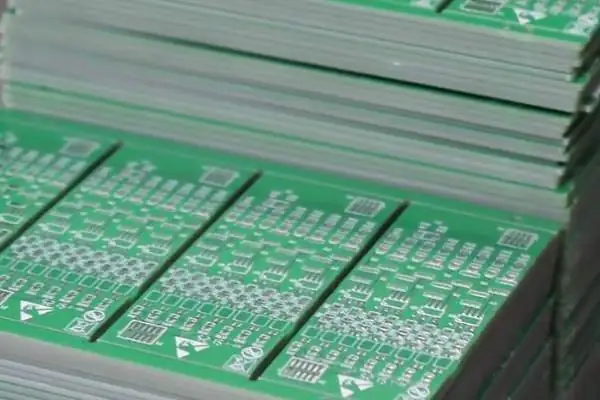
I recently talked to some friends who work in hardware development and noticed an interesting phenomenon – when choosing multilayer circuit board manufacturers, everyone tends to focus on equipment parameters. However, the models of imported exposure machines and laser drilling machines are not the most critical factors. What truly makes the difference are often the intangible things.
I remember last year we had a project that required a sixteen-layer board for testing high-frequency signal integrity. The first supplier provided a very impressive process document, but during prototyping, they couldn’t even control the impedance tolerance. Later, we switched to a smaller multilayer PCB manufacturer. Their engineer came to our lab with a vector network analyzer and spent two days repeatedly adjusting the stacking structure to solve the problem.
This made me realize that a good PCB manufacturer should be a partner who is willing to roll up their sleeves and work with you. There’s a misconception in the industry that collaboration simply means delivering drawings on time. In reality, true collaboration should be like playing table tennis, with back-and-forth interaction. We throw out design requirements, and they respond with process expertise and optimization suggestions.
For example, once we wanted to use ultra-thin core material for a flexible area. A senior process engineer reminded us to add a copper foil grid pattern in the bending area. This detail later improved the product life test data by three times. This ability to drive design innovation from the manufacturing end is the core value.
Some recent cutting-edge cases have further convinced me that future manufacturing competition will no longer be a competition of single aspects. A team working on medical devices and their manufacturing partner even jointly developed a dedicated detection algorithm that can automatically identify micro-hole drilling defects through X-ray images. This deep level of collaboration goes beyond traditional client-supplier relationships.
Ultimately, choosing a manufacturer is like finding a fitness coach. What matters is not how luxurious the equipment is, but whether they can understand your physical differences and help you adjust your movements. After all, even the most advanced production line needs someone who understands the product to operate it. I recently chatted with some friends who work in hardware development, and I found that many of them, when choosing a PCB manufacturer, immediately ask, “How many layers can they make?” This approach is a bit narrow-minded. Just like you shouldn’t only consider the top speed when buying a car, simply pursuing a higher number of layers can lead to overlooking more critical factors.
I remember last year a team developing industrial control equipment asked me to recommend a supplier, and their first requirement was a manufacturer capable of producing 20-layer boards. However, after discussing their needs, we found that their boards only actually required 8 layers to meet performance requirements; the real issue was signal integrity design. Later, they switched to a PCB manufacturer specializing in low-to-medium layer counts, which not only reduced costs by 30% but also, due to the manufacturer’s expertise in impedance control, allowed them to pass electromagnetic compatibility testing on the first try. This manufacturer provided free signal simulation services upfront, which revealed a common-mode noise issue in the original design. They suggested adding a ground via array around the critical signal lines, and this targeted advice improved product yield by 15%.
Some manufacturers now like to advertise “support for XX layers” as a selling point, but the real test of their capabilities lies in yield rate and stability. One multi-layer circuit board manufacturer I’ve worked with, although primarily focusing on boards with 12 layers or less, has a particularly robust quality management system. During one mass production run, when there were subtle fluctuations in the raw materials batch, the production line was able to automatically adjust parameters to ensure the characteristic impedance error was controlled within 3%. These kinds of details are what truly demonstrate a manufacturer’s level of expertise. Each of their production lines is equipped with real-time dielectric constant monitors, allowing them to dynamically adjust etching time based on the actual performance of the substrate. This process adaptability resulted in a batch consistency of over 99.8%.
Another easily overlooked factor is the manufacturer’s flexibility and cooperation. Previously, a medical project required design optimization and prototyping within two weeks. Most large PCB manufacturers required standard lead times, but only one small-to-medium-sized multi-layer PCB manufacturer was willing to send engineers to collaborate on the debugging process. Ultimately, they optimized the layer structure, reducing a 10-layer board to 8 layers while achieving the same performance. This manufacturer also proactively provided samples with three different surface treatment options for testing, and the selective gold plating process they ultimately chose saved 40% in costs compared to the original plan.
Ultimately, choosing a partner is like putting together a puzzle; the key is to look at the shape of the missing piece, not blindly pursue something that seems impressive but doesn’t fit. Sometimes, a specialized multi-layer manufacturer is more suitable for your project needs than a generalist who lacks expertise in specific areas. After all, excelling in a particular field is more competitive than being mediocre at everything. For example, there’s a manufacturer specializing in military-grade 8-layer PCBs, whose blind and buried via technology can achieve a micro-hole diameter of 0.1mm. This kind of specialized expertise is difficult for conventional multi-layer PCB manufacturers to achieve.
I think there’s a misconception in the industry right now, which is treating technical specifications as the only criterion. Truly excellent manufacturers should be like experienced traditional Chinese medicine practitioners, recommending the most suitable solution based on your product’s lifecycle. For example, small-scale startup projects might only need 4-6 layers with basic processes, while industrial equipment requiring long-term supply might need to consider material aging characteristics – these implicit indicators are far more important than the number of layers. I once saw a manufacturer recommend TG170 high-Tg material for outdoor equipment; although the initial cost was 15% higher, the insulation resistance remained above 92% of the new product’s value after five years.
Ultimately, finding a supplier isn’t about checking specification sheets, but about finding a partner who can grow with you. When I visited a PCB manufacturer’s laboratory, I saw that they had created dedicated process archives for their customers, even archiving data on the ductility of a specific batch of copper foil from five years ago. This long-term perspective is the foundation of cooperation. They also established a material aging database, which can predict the PCB lifespan curve based on the customer’s product usage environment. This data accumulation is more valuable than simply expanding production capacity.
Instead of getting bogged down in a numbers game, it’s better to look at the manufacturer’s actual case studies. Once, I deliberately submitted a design with flaws for a quote. Some suppliers quoted directly based on the drawing, while others pointed out the unreasonable placement of the heat dissipation holes. This kind of technical feedback capability is where the value lies. More professional manufacturers would even use thermal simulation software to demonstrate improved solutions, showing that the chip junction temperature could be reduced by 18℃ after optimization. This kind of visual demonstration is particularly convincing.
Now I value a manufacturer’s problem-solving mindset even more. A good partner can help you transform “what you want” into “what you need.” For example, we wanted to use expensive materials for high-speed signal layers, but the other party suggested optimizing the wiring on ordinary materials, saving costs while achieving the same effect. This kind of wisdom is far more practical than simply competing on parameters. They proved through calculations that using serpentine traces to compensate for delays could control the timing tolerance by an additional 5ps compared to using expensive materials. This engineering mindset is the core competency.
I recently chatted with several friends who do hardware design, and I found that many people fall into a trap when choosing a PCB manufacturer – they always think that the bigger the scale, the better. In fact, this industry is all about finding the right fit. Sometimes, what you need isn’t the top-tier multi-layer circuit board manufacturer, but the one who truly understands your needs. I remember a friend who works in smart home technology. He hired a very reputable company to manufacture an eight-layer board, but their standard procedures were too rigid; even changing a test point took three days. Later, he switched to a medium-sized but highly specialized multi-layer PCB manufacturer, where the engineers communicated directly via group chat, and they delivered an optimized solution in two days.
This experience made me realize that choosing a manufacturer is like choosing a partner. You need to see if they are willing to spend time understanding your product’s application scenarios. For example, the requirements for PCBs used in automotive electronics are completely different from those for medical equipment. The former might focus more on environmental adaptability, while the latter has stringent standards for material safety. Simply comparing technical parameters can overlook these details.
Many small and medium-sized PCB manufacturers are now specializing in niche areas. I know a factory that specializes in industrial control boards. Although they don’t produce high-end boards with more than twenty layers, they have their own methods for thermal design and impedance control. Their clients are long-term partners who have been working with them for over five years. This stability is more practically meaningful than simply pursuing cutting-edge technology.
In fact, the industry doesn’t lack manufacturers capable of producing high-precision PCBs; what’s lacking are partners who can think from the customer’s perspective.
I often find the process of choosing a multi-layer circuit board manufacturer particularly interesting. Every time I see complex electronic devices operating, I think about how many layers of design are supporting them. Many people may not understand how crucial it is to find the right multi-layer PCB manufacturer; they’re not just producing circuit boards, but helping us bring our imaginative ideas firmly to reality.
I remember a time when our team had a particularly bold design concept, and internal discussions concluded that it was too difficult to implement. Later, we found a reliable PCB manufacturer, and their engineers actually transformed our seemingly far-fetched ideas into feasible solutions. This process made me understand that good manufacturers are actually exploring possibilities with us; their processes and technologies are often more advanced than we imagine.
Many of the truly cutting-edge products in the industry today are backed by similar collaborative models. Designers propose concepts, and manufacturers use their professional capabilities to realize these ideas; neither is dispensable. Sometimes, it even feels like we’re not just designing products, but jointly pushing the boundaries of technology through this collaboration.
I’ve seen too many cases that prove that choosing the right partner can elevate the quality of the entire project by several levels. After all, even the best ideas will remain just blueprints if you can’t find a team to bring them to life. That’s why I now place great importance on manufacturers’ innovative thinking and problem-solving abilities, not just their ability to offer low prices.
Ultimately, the evolution of electronic products is never the result of a single effort. We need manufacturers who are willing to challenge the limits of technology, who dare to try new materials, new structures, and new design concepts. It is this close collaboration that allows more innovative products to appear in our lives.
After interacting with many multilayer circuit board manufacturers, I’ve made an observation—many people underestimate the technical challenges involved. A few days ago, a client who makes medical equipment brought in a design for a twenty-layer board, with a circuit density so high it looked like someone had drawn a subway map on a postage stamp with a pencil. This is where the difference between PCB manufacturers becomes apparent: some factory salespeople will only repeatedly ask, “How many pieces do you need?” and “When do you need them?”, while those who truly understand the business will work with engineers to check if the impedance control is reasonable and whether the routing of high-speed signal lines will cause crosstalk.
Many clients now realize that choosing a supplier isn’t about who has the prettiest brochures. A multilayer PCB manufacturer I worked with last year was very interesting; their engineers proactively suggested changing an eight-layer board to a ten-layer hybrid structure. Although the cost was slightly higher, it eliminated the trouble of adding shielding later. This kind of product-oriented thinking is far more valuable than manufacturers who constantly send out “price reduction notices.”
Once, I visited the laboratory of a long-established PCB manufacturer and saw them using laser scanning to detect the metallization degree of microvias. The vice president in charge of technology pointed to the microscope and said that customers are demanding increasingly higher reliability. For example, circuit boards used in automotive electronics must withstand the high temperatures and vibrations of the engine compartment. This requires more than just imported equipment; they need their own process database. They even put sample boards through hundreds of cycles of testing in environments ranging from -40 degrees Celsius to 150 degrees Celsius.
In fact, good manufacturers understand this principle: customers ultimately buy not just green circuit boards, but the assurance that the entire product will operate reliably. The most extreme example I’ve seen is an industrial equipment manufacturer who had to recall an entire batch of goods from a customer’s site because the previous supplier’s boards occasionally experienced inexplicable signal interference. Later, we switched to a manufacturer specializing in high-reliability multilayer circuit boards. Although the unit price was 15% higher, we haven’t encountered similar problems since.
Recently, I’ve noticed a trend: many small and medium-sized PCB manufacturers are starting to focus on specific areas. One factory in Shenzhen specializes in long, narrow boards used in LED displays, while another company in Suzhou focuses on the integration of flexible and rigid circuit boards. This approach is quite smart – instead of competing head-on with large multilayer PCB manufacturers in all areas, it’s better to perfect a specific process. After all, customers are becoming more professional, and they clearly know what kind of technical support their products require.
Ultimately, this industry is undergoing a very interesting transformation: ten years ago, everyone was competing on who could achieve finer line widths and spacing; now, the competition is about who can truly understand the application scenarios of the customer’s products. I once chatted with a customer who makes autonomous driving radar, and he said that the ideal PCB supplier should be like a silent partner, capable of both digesting unconventional design ideas and silently maintaining quality standards. This sounds a bit abstract, but upon closer reflection, it’s true – a good manufacturer makes you almost unaware of their existence because all potential problems are resolved before production even begins.
I’ve always believed that choosing a multilayer circuit board manufacturer is like finding a long-term business partner. Many people focus too much on the numerical indicators on the technical specifications sheet—which is certainly not wrong—but what truly determines the quality of the partnership is often the invisible details.
I remember an interesting phenomenon I observed during a visit to a multi-layer PCB manufacturer’s production workshop. Their sample cabinet displayed over twenty different types of substrates with varying dielectric constants. The engineer casually picked up a board and said, “This model has a dissipation factor 40% lower than conventional FR4, but the price is only 15% higher.” This made me realize that good manufacturers aren’t just selling standard products; they’re providing solutions. For example, they recommend suitable surface treatment processes based on the customer’s product application scenarios, such as immersion gold for high-density pads and tin plating for high-current applications. This customized advice helps customers avoid many potential problems.
Impedance control is a particularly good indicator of a manufacturer’s expertise. Some manufacturers treat impedance as a purely mathematical problem, giving you a calculation formula and calling it a day; however, truly professional teams consider the impact of etching factors on line width, dielectric flow during the lamination process, and even the surface roughness differences of different batches of copper foil. The most meticulous approach I’ve seen is that they perform impedance strip testing before each batch production, controlling the actual values within ±5% of the theoretical values. This precision is crucial for high-speed digital circuits, especially when the signal rate exceeds 10Gbps, as even small impedance deviations can lead to eye diagram closure.
Speaking of special structures, I have to mention cavity design, a niche but critical technical point. Once, we needed to mill a square groove in the middle of a circuit board to place a sensor. Most manufacturers said it would require extra tooling costs and time; however, an experienced manufacturer adjusted the CNC milling cutter path and achieved the irregular cavity processing with standard tools, saving us two weeks of waiting time. They also shared a small trick about chamfering the cavity edges to prevent micro-cracks in the substrate caused by stress concentration.
Many customers now like to compare prices, but I’ve found that multi-layer PCB manufacturers truly worth long-term partnerships provide very detailed quotations—they break down material costs, process difficulty, and expected yield rates. Conversely, those who quote a single price often introduce various additional costs during the subsequent engineering confirmation process. For example, I once saw a quotation that clearly listed the layer-to-layer alignment tolerance for blind and buried vias as 75 micrometers, which is much stricter than the industry standard of 100 micrometers. Although the unit price was slightly higher, it actually reduced the assembly scrap rate.
Ultimately, choosing a PCB manufacturer isn’t about choosing the cheapest or the one with the most advanced technology; it’s about choosing the one that best understands your product needs. A good manufacturer can provide constructive suggestions during the design phase, such as where ordinary materials can replace expensive special materials and which aspects require maintaining high standards. This kind of advice, based on practical experience, is more valuable than any technical manual.
A recent project gave me a profound insight: the original design used high-end high-frequency board materials, but the manufacturer suggested using lower-cost halogen-free materials for non-critical signal layers. This not only met environmental requirements but also saved 30% on material costs—this value goes beyond a simple manufacturing relationship. They also helped us optimize the arrangement of thermal vias, reducing thermal resistance by 15% without increasing processing difficulty.
Instead of worrying about whether a manufacturer has Rogers certification, it’s better to actually see their material management system. Truly professional PCB manufacturers even keep strict records of the storage temperature and humidity of core materials and prepregs; this is far more reliable than the cooperation logos in their brochures. During one inspection, we found that their copper foil warehouse maintained a constant humidity of 45% RH. This attention to detail ensures that the materials won’t delaminate due to moisture absorption during lamination.
Ultimately, circuit board manufacturing is a practical science; beautiful equipment isn’t enough. You also need an engineering team that can solve real-world problems. Next time you evaluate a supplier, ask them about the technical challenges they’ve encountered in the past three months and how they solved them—this answer is often more telling than any certification. For example, one manufacturer shared a case study of using plasma treatment to solve the metallization of PTFE material vias; this kind of accumulated experience is the core competency.
I recently had a conversation with a friend who works in smart hardware, and I discovered an interesting phenomenon—their team spent over half a year developing a new product but stumbled when it came to finding a multi-layer circuit board manufacturer. They thought that finding a factory with ISO certification would be enough, but 30% of the first batch of samples had signal interference.
This reminds me of another lesson: last year, a medical equipment company almost delayed its product launch because it chose a PCB manufacturer that lacked professional failure analysis capabilities. At the time, they encountered a strange problem – the circuit board worked normally at room temperature, but intermittent circuit breaks occurred in low-temperature environments. Upon disassembly, they discovered the problem was due to a mismatch in the thermal expansion coefficients of the inner copper foil and the substrate material.
In fact, many small and medium-sized multi-layer PCB manufacturers, although they have ISO9001 certification, have inconsistent actual implementation standards. Once, I visited a factory, and their testing procedures seemed complete, but upon closer questioning, I discovered that their high-temperature and high-humidity testing was done using a simple constant-temperature box instead of a professional environmental chamber.
I think there’s a simple way to judge whether a manufacturer is reliable – ask them about the most complex failure cases they’ve handled in the past six months. Those who can clearly explain the root cause of the problem and the corrective measures are usually reliable; those who only make excuses about material problems should be viewed with caution.
Recently, I came across a very interesting manufacturer. They created a miniature sample library for each batch, archiving slices of semi-finished products from the production process. If problems arise later, they can quickly compare and analyze the samples. This attitude towards testing is more reassuring than those who only talk about their qualifications.
Ultimately, choosing a supplier is like choosing a partner. Looking only at certificates is useless; you need to see if they truly understand your product’s application scenario. After all, the reliability of a circuit board isn’t built on 100% final inspection, but rather is embedded in the details of every manufacturing step.
A tire pressure sensor that lost signal after six months, taken apart,
A decade in solar taught me that most MPPT controller PCB failures
A fiber laser marking machine that ran perfectly for six months can
- Эксперт в области мелко- и среднесерийного производства
- Высокоточное изготовление печатных плат и автоматизированная сборка
- Надежный партнер для электронных проектов OEM/ODM
Часы работы: (пн-сб) с 9:00 до 18:30
Get quote, solution or any question, Andre always here to help