

What Documents Are Required for PCB Production: A Field Guide From Real Industrial Weighing Controller PCB Projects
Many engineers focus too much on technical parameters early on and overlook
When designing 5G equipment, the most vexing issues encountered are often not problems with the signals themselves. I recall an instance where I was debugging a millimeter-wave module and found that its performance remained consistently unstable. It was only later that I discovered the root cause lay in the circuit board’s temperature distribution: after the chip had been operating for a period, localized temperature spikes caused the dielectric constant to shift, thereby compromising phase coherence.
Many people tend to overlook a crucial fact: the stability of high-frequency signals is, in reality, intimately linked to the distribution of the thermal field. During my work on RF circuit design, I have found that even the most minute temperature differences can induce variations in the signal path. This is particularly true in multilayer board structures, where discrepancies in the thermal expansion coefficients of different materials can generate mechanical stress—which, in turn, adversely affects the characteristics of the transmission lines.
I remember a specific project where we attempted to resolve a heat-dissipation issue by utilizing an aluminum-substrate PCB. We discovered that while its thermal conductivity was excellent, it resulted in a drastic increase in high-frequency signal loss. We eventually found the optimal balance by switching to a specialized, high-thermal-conductivity dielectric material, coupled with the strategic placement of thermal vias. This experience taught me that single-mindedly pursuing peak performance in one specific area often proves counterproductive.
Nowadays, when addressing thermal management in RF circuits, I place a greater emphasis on the holistic, co-design approach for the entire system. For instance, rather than simply stacking up thermal materials, I design gradient-based heat-dissipation structures positioned around the primary heat sources. On occasion, I even intentionally leave certain areas open to facilitate natural thermal convection—a method that, surprisingly, often yields superior results compared to forced-air cooling.
Ultimately, the key to resolving these types of issues lies in gaining a deep understanding of the actual pathways through which heat flows. I typically begin by using an infrared camera to observe the circuit board’s operational state and identify the true hotspots. Often, what we perceive as the primary heat source may merely be a superficial symptom; the actual thermal bottleneck might be hidden beneath an adjacent power management chip.
A recent project has given me a fresh perspective on thermal vias. In the past, I tended to drill as many vias as possible; however, I later realized that an excessive density of vias can actually compromise the integrity of the ground plane. Consequently, I now prioritize the distribution pattern and quality of the vias rather than simply their quantity.
When facing the challenges posed by 5G systems, I believe the most critical factor is maintaining an open mind. Sometimes, experience gained from traditional microwave design can actually become a constraint; it may be necessary to step outside established frameworks and seek solutions from the perspectives of materials science—or even fluid dynamics. After all, once frequencies reach the millimeter-wave band, many physical phenomena begin to exhibit entirely new characteristics.
Years of practical experience have increasingly convinced me that effective RF design is, at its core, the art of balancing various competing factors. One must simultaneously ensure signal integrity, manage thermal dissipation, and account for manufacturability. No single solution is perfect; the key lies in finding the optimal balance point for the specific application scenario at hand.
While designing 5G RF boards, I observed an interesting phenomenon: many people, the moment shielding is mentioned, immediately think of a metal enclosure coupled with grounding. In reality, the issue is far more complex. On one occasion, while testing a millimeter-wave module, we encountered severe signal interference; despite having installed a fully enclosed shielding can, the results were poor. We subsequently discovered that the interior of the can had inadvertently formed a resonant cavity, which actually amplified noise at specific frequencies. In such situations, simply increasing the number of ground solder points is entirely ineffective; the key lies in disrupting the regular, uniform structure of the cavity. For instance, when addressing a resonance issue we encountered in the 28 GHz band, we designed the inner walls of the shielding can with an asymmetrical, sawtooth-like edge pattern. This successfully reduced the cavity’s Q-factor by 40%—a result far more significant than what could have been achieved by merely adding more ground connections. Since the resonant frequency is directly correlated with the dimensions of the cavity, it is necessary to first use simulation software—such as HFSS—to model the standing-wave distribution, and then strategically place RF-absorbing materials or structural discontinuities accordingly.
Thermal dissipation issues are also frequently underestimated. I recall an instance where a client complained that their equipment was experiencing frequent signal dropouts when operating in high-temperature environments. Upon disassembling the unit, we discovered that the shielding can was acting like a pressure cooker, trapping heat inside. We subsequently experimented with perforating the top of the can with a honeycomb pattern of small holes; this allowed us to maintain effective RF shielding while simultaneously creating a “chimney effect” to facilitate airflow. However, the placement of these perforations requires careful consideration; they must be positioned to avoid areas of maximum RF radiation intensity, lest they inadvertently create signal leakage paths. Practical testing has revealed that when aperture sizes are smaller than λ/10, they generally do not cause significant leakage in frequency bands below 18 GHz. However, it is crucial to ensure that the spacing between apertures exceeds the wavelength to prevent the formation of diffraction gratings. Using thermal imaging equipment, we have observed that a well-designed aperture layout can reduce the chip junction temperature by more than 15°C.
We have learned some hard lessons regarding material selection. In our early work, we utilized a composite shielding material that offered excellent shielding effectiveness; however, its coefficient of thermal expansion did not match that of the PCB, causing the board to warp under significant temperature fluctuations. We now prefer using flexible thermal interface pads, which serve the dual purpose of conducting heat while accommodating a certain degree of mechanical deformation. During one test, we discovered that silicone pads embedded with metallic fillers performed surprisingly well, achieving an optimal balance between thermal dissipation and electromagnetic shielding. For this class of materials, the content of silver-nickel particles must be carefully controlled within the 60% to 80% range; this ensures both a shielding effectiveness of 80 dB in the 5 GHz band and a thermal conductivity of 4 W/m·K. Particular attention must be paid to the pad thickness, which requires a precision of within 0.1 mm; excessive thickness can create air gaps that compromise thermal conduction.
Electromagnetic Bandgap (EBG) structures are theoretically promising, but their practical implementation is far more complex than what is typically described in academic papers. We once experimented with incorporating such structures between antenna arrays; while this did indeed improve isolation, it came at the cost of increased PCB layer count and manufacturing complexity. Sometimes, the simplest solutions prove to be the most effective—for instance, appropriately adjusting component placement is often a more economical approach than retrofitting various shielding structures later in the design cycle. For example, by rotating the polarization axes of two adjacent phased-array antennas by 30 degrees, we were able to improve isolation by 6 dB—a result achieved without the need for the two additional dielectric layers that an EBG structure would have required. However, one must remain vigilant regarding how mutual coupling changes during beam steering operations; this requires rigorous validation across the entire beam-scanning range.
My greatest challenge lies in balancing these often-conflicting design requirements. Pursuing superior electromagnetic shielding often entails compromising on thermal dissipation, while striving for higher component integration density can frequently lead to increased electromagnetic interference. On one occasion, in an effort to meet a client’s strict size constraints, we were compelled to place a power amplifier chip in close proximity to a highly sensitive receiver, resulting in severe self-oscillation issues. We eventually resolved the problem by etching a trench into the ground plane; however, such a specialized design approach necessitates extensive iterative simulation and validation. We have since developed a comprehensive multi-physics co-simulation workflow: we first employ electromagnetic simulations to identify high-current density regions, then use thermal simulations to verify the efficacy of the heat dissipation pathways, and finally conduct mechanical stress analyses. This entire iterative process often requires more than ten cycles to reach a satisfactory conclusion. Nowadays, I find it amusing whenever I see technical documentation touting a “perfect solution.” In actual engineering practice, every case is a unique exercise in the art of compromise. Take, for instance, a recent project where I designed a communication module for a drone: I had to simultaneously ensure millimeter-wave performance and keep the weight in check. Ultimately, I settled on a non-standard solution—a combination of a hollowed-out shielding enclosure and directional heat-dissipation fins—a configuration you won’t find in any textbook. This design involved cutting wedge-shaped slits into the sides of the shielding enclosure; this approach not only disrupted the cavity resonance modes at 76 GHz but also leveraged the airflow generated during flight to enhance heat dissipation. The weight was successfully kept under 3 grams—40% lighter than traditional solutions.
I view RF design as akin to solving a three-dimensional puzzle, requiring simultaneous consideration of multiple dimensions: electromagnetic, thermal, and mechanical. Sometimes, the most inconspicuous details turn out to be the most critical; for instance, a seemingly arbitrary bump on a shielding enclosure might actually be a meticulously calculated feature designed specifically to disrupt resonance modes. This line of work offers no “standard answers”; instead, the most reliable asset is the experience accumulated through a process of continuous trial and error. I recall a specific case where simply switching to a smoother gold-plated surface improved millimeter-wave insertion loss by 0.2 dB—a subtle nuance often overlooked in theoretical calculations, yet one that could ultimately determine whether or not a system passes certification testing. Solving a problem in this field often feels like solving a multi-dimensional equation, requiring the simultaneous optimization of seven or eight mutually constraining parameters.
I recently chatted with some friends in the RF field about the development process for 5G base stations, and I realized that many people tend to oversimplify the challenges involved. They often assume that they can successfully complete the project simply by laying out the PCB based on the chip manufacturer’s reference design, only to hit a wall at every turn during the actual debugging phase.
I remember an engineer who came to me with a millimeter-wave board he had designed. The layout appeared quite neat and orderly on the surface, yet during actual testing, it failed to meet even the most basic performance specifications. We eventually traced the problem back to the handling of the microstrip line corners; in the 28 GHz band, a single right-angle turn can cause the signal to attenuate by more than half. This is the kind of minute detail that would be completely ignored in low-frequency designs, yet in a 5G system, it becomes a fatal flaw.
Perhaps the most vexing aspect of RF PCB design is the fact that every single element is interconnected and mutually influential. You might select a high-end board material to boost performance, only to see your production costs immediately double; conversely, you might attempt to resolve interference issues by increasing the number of PCB layers, only to find yourself facing a new set of thermal management challenges. This kind of trade-off becomes even trickier in the 5G era, because as frequencies rise, the impact of material properties—specifically dielectric constant and loss tangent—on system performance becomes increasingly pronounced.
I now tend to view an RF board as a complete electromagnetic system. From the very moment a signal leaves a chip pad, it embarks on an adventurous journey. The placement of vias, the method of power decoupling, and even the thickness of the solder mask—all are quietly altering the quality of that signal. I recall one instance where we found that our phase noise specifications consistently failed to meet requirements; after two weeks of troubleshooting, we finally discovered that the culprit was a single ground via positioned too close to a transmission line.
As 5G evolves toward even higher frequency bands, these challenges will only become more complex. I have observed some engineers who are new to the field attempting to solve novel problems using traditional mindsets—for instance, still relying on λ/4 transformers for impedance matching, while forgetting that in the millimeter-wave band, the very characteristics of the transmission lines themselves have fundamentally changed. This kind of cognitive rigidity is often far more daunting than the technical challenges themselves.
In fact, I believe that RF design is currently undergoing a quiet revolution. In the past, we relied heavily on experience and trial-and-error; now, however, there is a much greater need for a systematic approach to thinking. For example, when we recently helped a client resolve an issue involving harmonic interference, we didn’t merely redesign the filtering circuitry; we also overhauled the entire board’s power distribution scheme. This kind of holistic perspective is proving to be particularly critical in today’s 5G systems.
As I watch the industry advance toward 5G-Advanced, I actually find these challenges rather fascinating. Solving a new problem feels, each time, like unraveling a complex riddle. Perhaps that is the true allure of RF design—there are always new peaks waiting for us to climb.
After spending so many years in RF design, the things that give me the biggest headaches are those intangible, invisible electromagnetic characteristics. This has been especially true during my recent 5G projects, where the challenges posed by the millimeter-wave band have completely redefined my understanding of the field.
I distinctly remember the first time we tested a 28 GHz board: the simulation data looked absolutely perfect, yet the actual measured results fell significantly short. We eventually discovered that the root of the problem lay in the most fundamental aspect—impedance matching. The standard values found in textbooks simply do not apply in high-frequency environments; instead, they must be recalculated specifically for the particular frequency band in use.
On one occasion, while attempting to debug an antenna array, we ended up iterating through seven or eight different revisions of the entire circuit board. Time and again, I would convince myself that this time everything would be fine—only to encounter yet another unexpected source of signal loss. Eventually, I discovered the culprit lay in the ground plane spacing of the coplanar waveguide; even a mere 0.1-millimeter deviation was enough to trigger a drastic impedance mismatch.
Nowadays, when designing, I place much greater emphasis on the impact of the actual operating environment. For instance, the performance of an identical microstrip line structure can differ by as much as 20% depending on whether it is tested in a controlled laboratory setting or installed within an equipment enclosure. This realization taught me that I cannot rely too heavily on simulation software; extensive physical prototyping and verification are indispensable.
Recently, I began experimenting with integrating both digital circuitry and RF components onto a single printed circuit board—a move that introduced a fresh set of challenges. The rapid switching transients inherent to digital signals can couple through the power planes, thereby interfering with sensitive millimeter-wave circuitry; consequently, specialized shielding layers are absolutely essential to ensure proper isolation.
At times, RF design feels akin to walking a tightrope: one must simultaneously safeguard signal integrity while keeping costs and manufacturing complexity in check. This is particularly true when utilizing specialized materials, where the supplier’s manufacturing precision directly dictates the ultimate performance outcome.
I now tend to favor a modular design approach, segmenting the circuitry for different frequency bands into distinct functional blocks. Although this may introduce some additional connection losses, it vastly simplifies the debugging and troubleshooting process. After all, in real-world applications, reliability often takes precedence over achieving peak theoretical performance.
These experiences have impressed upon me that there are no “standard answers” in high-frequency circuit design; every project demands a fresh re-evaluation of fundamental principles. Rather than obsessing over achieving flawless simulation results, it is far more productive to channel one’s energy into rigorous physical testing and iterative optimization.
While debugging a 28 GHz antenna board, I stumbled upon a fascinating phenomenon: despite having selected a high-frequency laminate with the lowest nominal loss specifications, the actual measured performance fell short of expectations by nearly 20%. It was only after sectioning the board and subjecting it to scanning electron microscopy (SEM) that I pinpointed the root cause: microscopic, sawtooth-like irregularities on the copper foil surface—structures invisible to the naked eye. These microscopic surface undulations force electromagnetic waves to traverse a longer, more circuitous path—much like climbing a mountain. This effect is particularly pronounced in the millimeter-wave band, where the skin depth is merely a few tenths of a micron; in such scenarios, a rough copper surface can effectively force the signal to travel a path that is 30% longer than the physical distance. Specifically, as electromagnetic waves propagate across the conductor’s surface at near-light speeds, these sawtooth edges trigger multiple reflections and scattering events—a phenomenon technically referred to in engineering as the “serpentine effect.”
Nowadays, many engineers tend to fixate too narrowly on parameters such as dielectric constant and loss tangent when selecting materials, inadvertently overlooking the critical importance of the physical compatibility and interface quality between the substrate and the copper foil. On one occasion, our laboratory compared two types of laminates featuring copper foil nominally classified as “HVLP” (High-Volume Low-Profile). One utilized a rolled copper process, while the other employed electrolytic deposition. The results revealed a difference in insertion loss of 0.2 dB/inch at 40 GHz. We subsequently discovered that the surface crystal structure of the rolled copper was far more uniform—resembling a polished mirror—whereas the electrolytically deposited copper, even after surface treatment, still exhibited micron-scale peaks and valleys. In the millimeter-wave frequency band, this disparity significantly impacts phase coherence—a critical factor, particularly in phase-sensitive designs such as phased-array antennas.
In reality, the requirements that 5G equipment imposes on PCBs are more akin to those for precision instruments than for traditional circuit boards. For instance, the total length of the feeder network on a base station antenna board may exceed half a meter; if the loss in each segment of the microstrip line increases by just 0.1 dB, the overall efficiency of the system can plummet by several percentage points. The most extreme case I have witnessed involved a prototype micro-base station; because it utilized standard electrolytically deposited copper, conductor losses surged under high-temperature conditions, causing the beamforming precision to spiral completely out of control. During the subsequent debugging process, we discovered that the antenna’s side-lobe levels had risen by 5 dB—a deviation that rendered the device completely non-compliant with 3GPP protocol requirements.
Regarding the control of copper foil roughness, a common pitfall to avoid is an excessive fixation on achieving an ultra-smooth surface. We once experimented with ultra-smooth copper foil, only to discover that it lacked sufficient adhesion to certain high-frequency substrate materials, resulting in delamination after thermal cycling. We subsequently realized that one must strike a delicate balance between surface roughness and bonding strength—much like choosing footwear, where one cannot prioritize slip resistance to the exclusion of a proper, comfortable fit. Consequently, our current design specifications explicitly require suppliers to provide the Rz and Ra values (roughness parameters) for their copper foil profiles, in addition to subjecting the materials to thermal stress testing. Typically, we stipulate that the Rz value be maintained within 3 microns, while simultaneously ensuring a peel strength of no less than 0.8 N/mm.
During recent testing of a hybrid dielectric material, we observed yet another phenomenon: a single roll of copper foil can exhibit vastly different performance characteristics depending on the resin content of the underlying substrate. Substrates with a higher resin content tend to fill the microscopic depressions in the copper foil more effectively during the lamination process, thereby creating a flatter interface; however, this very “filling effect” can, in turn, compromise impedance uniformity. These observations lead me to conclude that the selection of PCB materials is less a matter of simply choosing components and more akin to formulating a precise recipe—a complex interplay in which every variable, from the microscopic orientation of copper crystals to the macroscopic dielectric lamination process, is inextricably linked to every other. For example, on a PTFE substrate, the interaction between resin flow characteristics and copper foil morphology gives rise to unique electromagnetic boundary conditions.
Sometimes, when looking back at mobile phone motherboard designs from a decade ago, the requirements for signal integrity seem almost primitive—like something out of the Stone Age. Nowadays, even a standard filter board for the sub-6 GHz band requires careful consideration of the copper foil’s surface roughness—to say nothing of millimeter-wave antenna arrays. I once disassembled a competitor’s product and noticed that they had even implemented a gradient roughness design at the corners of their transmission lines—a true masterclass in attention to detail. This design effectively suppresses current crowding at the corners, keeping impedance discontinuities within a mere 1%.
In reality, the best method for validation remains testing under actual operating conditions. Our lab maintains a stock of various copper foil samples—ranging from standard (STD) grades to High-VLP (HVLP) grades—and we deliberately subject them to continuous waveform acquisition tests within an environment of 85°C and high humidity. We frequently observe that samples which show negligible differences at room temperature exhibit significantly divergent loss curves when subjected to the combined stresses of high temperature and high frequency—a phenomenon that is notoriously difficult to model perfectly using simulation software. In particular, the temperature coefficient of copper foil varies depending on its surface topography; samples with higher surface roughness tend to generate additional eddy current losses at elevated temperatures.
Having learned these lessons the hard way, I now make it a point to request 3D surface profiles of the copper foil from our material suppliers before I even begin laying out a circuit board.
After years of working on RF boards for 5G systems, I’ve come to a profound realization: sometimes, the most vexing challenges aren’t the sophisticated algorithms or complex protocols, but rather the seemingly trivial details—such as capacitor placement or noise suppression techniques. These seemingly fundamental elements are often the true determinants of a system’s ultimate success or failure.
I recall an instance where I was debugging a millimeter-wave module: the simulation results looked flawless, yet the actual measured phase noise consistently failed to meet specifications. After days of troubleshooting, I finally traced the problem back to a tiny decoupling capacitor. That 100pF ceramic capacitor was positioned just a fraction of a millimeter too far from the chip’s power pin; the resulting parasitic inductance compromised the effectiveness of the high-frequency noise filtering. That experience drove home the point that, in the realm of RF engineering, even millimeter-scale errors can trigger a qualitative shift in performance.
Many people fall into the trap of believing that simply using high-quality capacitors guarantees a trouble-free design. In reality, the physical layout is the true critical factor—especially when operating frequencies venture into the millimeter-wave band. Every single millimeter of added transmission line in the signal path introduces additional loss—to say nothing of the detrimental effects of unnecessary vias and sharp right-angle bends. When these seemingly minor details accumulate, they can be enough to drag down the performance of the entire system.
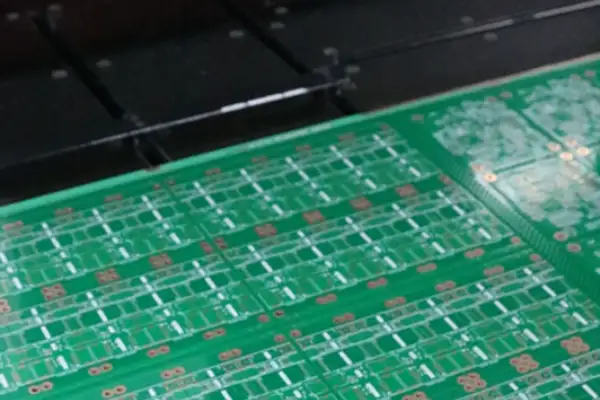
Regarding noise suppression, my personal takeaway is that rather than chasing a single, perfect solution, it is far more effective to establish a layered defense system. High-frequency components require small-capacitance capacitors placed in immediate proximity to the chip pins; the mid-to-low frequency bands, conversely, demand the collaborative effort of capacitors with varying capacitance values. The greatest challenge here lies in balancing filtering efficacy against spatial constraints—particularly when PCB real estate is at a premium, where the placement of every single component requires repeated, careful deliberation.
Another frequently overlooked aspect is electromagnetic compatibility (EMC) design within the three-dimensional space; the choice of PCB stackup structure significantly impacts the board’s overall shielding effectiveness. Sometimes, simply adding an extra ground plane proves far more effective than merely piling on additional filtering components. I make it a habit to reserve mounting locations for shielding cans in critical areas—a proactive measure that saves a great deal of trouble compared to attempting remedial fixes after the fact.
In essence, RF design is akin to a process of subtraction—continuously eliminating factors that degrade performance. Whether through layout optimization to shorten signal paths or through intelligent stackup design to minimize interference, the ultimate objective remains the same: to ensure the signal is transmitted as cleanly and purely as possible. This process demands both a broad, holistic perspective and an unwavering attention to the minutest of details.
After working in the field of 5G RF design for some time, one begins to notice a rather interesting phenomenon: many people are in a rush right from the start to dive into complex circuit topologies or the latest cutting-edge chip solutions. Yet, I have come to believe that it is often the most fundamental principles that truly serve as the ultimate test of one’s technical mastery.
Take planar design, for instance. The seemingly simple act of laying down copper traces actually conceals a wealth of profound technical knowledge. High-frequency signals are notoriously capricious—they rarely follow a straight line, opting instead to take the path of least impedance. If you fail to provide a sufficiently smooth return path for the signal, it is akin to asking a race car driver to navigate a course through a muddy field while searching for signposts.
I have observed numerous novice designers focus their entire attention on the signal traces, only to stumble and fall into the pitfalls associated with the ground plane.
I recall an instance while debugging a millimeter-wave module: the circuit layout had been executed in strict accordance with the manufacturer’s datasheet, yet we simply could not achieve the target reception sensitivity. We eventually discovered that an inconspicuous hairline crack in the ground plane had caused the signal return current to go astray, inadvertently transforming the board itself into an unintended antenna.
The greatest nightmare in RF design is precisely this kind of hidden interference source—sometimes the noise doesn’t even originate externally, but rather from the board itself, playing a game of hide-and-seek with you.
Power distribution is another notorious trouble zone. Do you really think that simply dropping in a dozen or so decoupling capacitors is enough to ensure everything runs smoothly? In reality, circuits operating in different frequency bands have vastly different requirements regarding power supply ripple. For instance, a VCO circuit is as sensitive to low-frequency noise as a newborn baby just waking from sleep, whereas a mixer is far more concerned with the spectral purity of the high-frequency band.
On one occasion, our team spent two weeks tracking down a phase noise issue, only to discover that the culprit was clock harmonics from the digital circuitry coupling into the RF section via a shared power plane. We finally resolved the problem by switching to a star-topology power distribution scheme, augmented with ferrite beads for isolation.
Nowadays, whenever I see design layouts where the RF and digital sections are haphazardly intermingled, I can’t help but want to offer a word of caution: these two entities are fundamentally incompatible neighbors. If you insist on cramming them together, trouble is bound to ensue sooner or later.
The truly reliable approach is to establish clear boundaries for each functional block—much like urban planning requires distinct zones for residential and commercial areas. Low-frequency control circuitry should be placed on one side, high-frequency core modules on the other, and the two separated by a “wall” of ground vias.
Of course, real-world engineering projects often present situations where space is at a premium. In such cases, one must learn to make trade-offs—for instance, prioritizing the integrity of the Low Noise Amplifier (LNA) section, even if it means compromising slightly on the Power Amplifier (PA) section. After all, the LNA ultimately determines the lower limit of the system’s receiving sensitivity.
While working on a 28 GHz array project recently, we encountered yet another novel challenge: as wavelengths shrink to the millimeter scale, even surface roughness begins to impact insertion loss. This forced us to re-evaluate—and ultimately refine—our specifications for the copper foil surface treatment processes used on our PCBs.
Ultimately, the RF challenges posed by 5G are akin to dancing on the tip of a needle: one must cram ever-more functionality into a finite space while simultaneously ensuring that the various modules coexist harmoniously. This delicate art of balancing competing demands may well represent the true value that an engineer brings to the table.
Designing boards for 5G millimeter-wave applications is a completely different ballgame compared to traditional RF engineering. The first time I tackled a 28 GHz design, I discovered that even the microscopic irregularities on the surface of the copper foil could wreak havoc on the signal integrity. At high frequencies, current tends to hug the surface of the conductor; if the copper foil is as rough as sandpaper, the electrical signal is forced to traverse a miniature mountain range, resulting in an additional insertion loss of 30 to 40 percent. At that point, it ceases to be a simple conductor and effectively becomes an obstacle course.
Nowadays, whenever I see design proposals that still rely on standard FR4 substrate materials, I can’t help but shake my head in disbelief. While dielectric loss is negligible at low frequencies, it becomes a critical issue in the millimeter-wave band, where the signal attenuates significantly with every inch of travel. I once tested a circuit board material—marketed by a certain brand as “low-loss”—only to find that at 39 GHz, its actual loss exceeded the specified nominal value by a staggering 20%. This immediately tanked the radiation efficiency of the entire antenna array. We eventually stabilized the situation by switching to a ceramic-filled composite substrate, but the cost skyrocketed exponentially.
Once wavelengths shrink to just a few millimeters, every structural feature on the board—no matter how small—becomes a potential source of drama. I recall a layout where I placed two vias too close together; the simulations showed no errors, yet the actual working circuit produced an unexpected resonance spike. A subsequent frequency sweep using a Vector Network Analyzer revealed that these two tiny holes had formed a quarter-wave resonant cavity, effectively distorting the antenna’s radiation pattern. Nowadays, when designing layouts, I subject even the shapes of the solder pads to a full-wave electromagnetic simulation.
The most vexing challenge is the conflicting requirements of different frequency bands. Sub-6 GHz circuitry, prioritizing coverage range, demands thick dielectric layers; conversely, the millimeter-wave section requires precise impedance control, necessitating thin laminates. I once attempted a hybrid stack-up design, but the mismatch in coefficients of thermal expansion caused the board to warp into the shape of a potato chip during the reflow soldering process. We eventually resolved the issue using a partitioned design combined with laser-drilled interconnects—though the manufacturing costs alone were enough to buy three oscilloscopes.
These lessons have taught me that in high-frequency design, it is more productive to emphasize holistic synergy rather than obsessing over individual parameters in isolation. For instance, when selecting a substrate, one shouldn’t focus solely on the dielectric loss tangent (Df); one must also consider whether the weave pattern of the fiberglass fabric might induce phase inconsistencies. I once encountered a material that yielded impressive Df values in lab tests, yet in practical application, we discovered that its fiberglass mesh was too coarse; this resulted in an 8% discrepancy in dielectric constant between different polarization directions—a flaw that instantly degraded our circularly polarized antenna into an elliptically polarized one.
Ultimately, millimeter-wave circuit boards are not merely “calculated into existence,” but rather “tuned into existence.” No matter how precise a simulation model may be, it is no substitute for actual trial and error. Consequently, for every design revision now, I ensure I leave ample margin for tuning—for example, by incorporating trim-adjustable matching stubs on transmission lines and adding optional shielding rings around ground vias. After all, when the wavelength becomes comparable in magnitude to the board’s manufacturing tolerances, we are essentially dealing with the capricious nature of electromagnetic fields.
Over my years in RF design, I’ve come to realize something: selecting a PCB substrate is a lot like finding a romantic partner. When you’re young, you think “good enough” will suffice; but after suffering the consequences, you learn that there are certain qualities you simply cannot compromise on. For instance, in today’s 5G systems, traditional FR-series substrates are like ill-fitting shoes—fine for a casual stroll, but a guaranteed disaster if you actually try to run.
I recall a time when I was helping a client revise a design. To save costs, they insisted on using standard FR-grade materials for a millimeter-wave application. The result? During testing, the signal attenuation was so severe it was utterly unrecognizable. I’m not trying to scare you, but high-frequency signals are incredibly delicate; if the dielectric material “absorbs” even a tiny amount of energy, the entire link budget can collapse. It’s like trying to carry water in a colander—it looks like you’re doing something, but in reality, you’re retaining nothing.
What’s even more of a headache is that FR materials tend to throw a tantrum when temperatures rise. One summer, while conducting high-power tests, the board got hot enough to fry an egg, and the impedance curve jumped around like an ECG readout. We didn’t stabilize the situation until we switched to a specialized high-frequency substrate—a material with a dielectric constant as steady as a veteran accountant balancing the books, remaining completely unperturbed even across a 30-degree temperature swing.
In reality, there is a wide variety of materials available today, and you don’t necessarily need to chase after the absolute “top-tier” specifications for every project. For scenarios like Sub-6GHz applications, a modified epoxy resin can strike an excellent balance between performance and cost. The key is to thoroughly understand the equipment’s intended operating environment—after all, you wouldn’t expect a base station’s PCB to be as delicate as a smartphone’s, would you? I typically ask clients: “Is this board going to be deployed in the rugged outdoors, or will it sit safely in a climate-controlled server room?” The answer to that question determines the grade of material we select.
I’ve recently observed an interesting phenomenon: some people obsess so much over achieving ultra-low loss parameters that they completely overlook manufacturing process compatibility. One manufacturer insisted on using a specific high-end PTFE material, only to end up with a pitifully low production yield. Had they simply switched to a more easily processed ceramic-filled substrate—which offered nearly identical performance—they would have saved significantly on rework costs. Ultimately, good design isn’t a contest of raw parameters; it’s about finding the optimal balance point.
The true test of an engineer’s skill lies in how thoroughly they master the nuances of material characteristics. For instance, understanding the specific distribution patterns of fiberglass within a substrate allows you to avoid critical resonance frequencies; likewise, understanding how copper foil roughness impacts insertion loss enables you to optimize your trace routing strategies. It is precisely these minute details that separate the exceptional designs from the merely adequate ones. Working on 5G RF boards is a fascinating endeavor. When I first started dabbling in the millimeter-wave band, I felt as though it was an entirely different beast compared to traditional RF design. In the past—working in lower frequency bands—I could often get by on sheer experience; now, however, at frequencies exceeding 24 GHz, every single detail demands a complete re-evaluation.
I recall one instance where I was designing a feed network for an antenna array. I initially assumed that a slight detour in the microstrip routing wouldn’t matter much; however, testing revealed that the resulting phase shift was wildly off. The wavelengths at millimeter-wave frequencies are simply too short; even a minuscule increase in trace length can completely throw the phase alignment into disarray. It was at that moment that I truly grasped why the choice of PCB substrate is so critical; standard FR4 material is simply unusable, as even the slightest instability in the dielectric constant can render the entire signal chain useless.
Thermal management is another major headache. High-frequency components consume significant power and generate a great deal of heat; if heat dissipation isn’t handled properly, temperature fluctuations will alter the substrate’s electrical properties, causing signal performance to drift uncontrollably. I’ve seen cases where engineers, in pursuit of ultra-low signal loss, selected substrate materials with poor thermal conductivity—only to find that the device’s performance degraded severely shortly after being powered up.
Then there is the issue of system integration. In 5G devices, digital and RF circuits are often packed tightly together, making it all too easy for switching noise from the digital circuitry to crosstalk into the sensitive millimeter-wave receive paths. Simple physical partitioning isn’t enough; one must carefully consider grounding and shielding strategies right from the layout design phase—sometimes even going so far as to mill isolation slots into the PCB or incorporate dedicated shielding enclosures.
The testing phase presents yet another formidable challenge. Calibrating probes at millimeter-wave frequencies is notoriously difficult, and errors introduced by test fixtures often mask the device’s true performance characteristics. I once spent a considerable amount of time debugging a power amplifier, repeatedly failing to achieve the expected results, only to eventually discover that the degree of curvature in the test cables was adversely affecting the impedance matching.
Ultimately, 5G RF design requires a seamless fusion of electromagnetic field theory, practical engineering experience, and real-world manufacturing processes. Every project brings with it a fresh set of challenges, yet it is precisely these challenges that make this field so captivating.
After years of working on 5G RF boards, I’ve observed a rather interesting phenomenon: many engineers tend to get fixated—right from the start—on theoretical calculations and simulation data. My own view, however, is that what truly determines success or failure are those seemingly insignificant physical details.
Take, for instance, something as simple as a solder pad. On one occasion, in a relentless pursuit of extreme miniaturization, we compressed the pad spacing for 0402-sized components to the absolute limit—only to find, during the surface-mount assembly process, that the solder paste simply bridged together into a single continuous mass. While reworking a board, I gazed through the microscope at the clustered solder joints and suddenly realized that, sometimes, giving components a little “breathing room” actually leads to more stable overall performance.
The placement of test points is also a science in itself. I recall a debugging session where the flying probes kept missing their targets; after hours of troubleshooting, we discovered that the test points were positioned too close to the shielding can—the probes were hitting the metal frame the moment they descended. Since then, we’ve made it a habit during the layout phase to cross-reference the test point locations against the stencil drawings, ensuring they aren’t obscured by adjacent components or situated too close to the board’s edge.
What gives me the biggest headache is the handling of vias in high-frequency circuits. On one project operating in the millimeter-wave band, we kept encountering anomalous signal loss. After repeated rounds of troubleshooting, we finally traced the issue back to coupling effects between the vias and the microstrip lines. We subsequently adjusted the via arrangement—spacing them out like soldiers standing guard—and, in doing so, successfully minimized the parasitic effects.
In truth, RF design is much like tending a garden: you cannot let the plants crowd together and compete for nutrients, nor can you space them so far apart that they lose the mutual support they need. Behind those seemingly rigid spacing rules lies a wealth of experience—lessons learned by our predecessors at the cost of real time and money. Nowadays, when laying out a board, I deliberately build in a little extra margin—not because of any technical limitation on my part, but to provide a buffer for manufacturing tolerances. After all, even the most precision-engineered equipment is prone to the occasional jitter.
In a project I’m currently working on, we increased the spacing between RF traces by 20% beyond the standard specifications. The result? The first-pass yield rate during mass production actually improved. This has only reinforced my conviction that, in the realm of high-speed electronics, sometimes taking a step back truly opens up a wider horizon.
After years of working with RF circuits, I’ve come to a profound realization: many people oversimplify the concept of 5G. They assume that simply cranking up the operating frequency is enough to solve the problem; in reality, the true challenges lie hidden in the places you cannot see.
I recall a debugging session last year involving a millimeter-wave board, where I found myself staring blankly at the waveforms displayed on the Vector Network Analyzer. The simulation results had been flawless, yet the actual test results consistently fell just short of the mark. We eventually discovered that the dielectric constant of the PCB substrate was drifting by a mere 0.2 under high-temperature conditions—and that tiny deviation of 0.2 was enough to shift the entire operating frequency by 300 MHz.
There is a common misconception circulating in the industry right now: the belief that one must use the most expensive materials available to successfully design and manufacture 5G RF boards. In reality, the key isn’t how high-end the materials themselves are, but rather whether you can thoroughly master their specific characteristics. I’ve seen engineers use standard FR4 substrates to create excellent 28 GHz array antennas, while others—using high-end Rogers materials—have produced boards that were an absolute disaster.
Packaging is an even bigger trouble spot. Some engineers, in their quest for miniaturization, pack chips together so densely that heat dissipation becomes a major issue. I personally prefer to leave ample space for heat to dissipate naturally—even if it means the board ends up being slightly larger.
While working on a 39 GHz project recently, I observed an interesting phenomenon: when I adjusted the spacing of the antenna array to 0.7 times the wavelength, the system actually demonstrated the best stability in real-world scenarios—even though the theoretical gain wasn’t at its absolute peak. This kind of practical insight is something simulation software can never provide.
Speaking of simulation, modern EDA tools are indeed powerful, but I’ve always felt that one shouldn’t rely on them exclusively. This is especially true for RF circuits; no matter how precise a model is, it simply cannot replicate the process variations that occur during actual manufacturing. I make it a habit to include several extra test points at critical locations; this is far more cost-effective than having to rework the board after the fact.
In reality, the greatest pitfall in RF design is getting too hung up on perfection—insisting on chasing theoretically ideal values. Sometimes, making a slight compromise can actually yield superior overall performance. Take transmission line impedance control, for instance: in practical applications, a tolerance of ±10% often has negligible impact, yet striving to achieve a ±1% tolerance can easily cost several times as much.
Lately, I have increasingly come to believe that a skilled RF engineer should resemble a traditional Chinese medicine practitioner—one who not only understands theory but also possesses the intuitive diagnostic skills of “observation, auscultation, inquiry, and palpation.” While data from test instruments is undoubtedly important, sometimes intuitive judgments—such as feeling the temperature fluctuations of a circuit board or listening to the audible characteristics of a signal—prove to be even more reliable. After all, RF engineering is a rather enigmatic discipline; there always seems to be an elusive, indefinable gap between theoretical models and real-world reality.
After working in the field of 5G RF engineering for some time, you begin to realize that theoretically “perfect” designs often fail to work in practice. I have seen too many engineers rigidly adhere to textbook-style symmetrical structures, only to end up with boards that are overly complex and expensive. In reality, sometimes a slight departure from conventional norms can yield surprisingly effective results.
I recall a project involving a millimeter-wave module where the deadline was so tight that there was absolutely no time to engineer a “perfect” stack-up. Instead, we simply placed the RF traces on the layer immediately beneath the surface layer, backed by a solid ground plane. Unexpectedly, the performance exceeded our wildest expectations. The key lay in ensuring the shielding was sufficiently dense and robust; once that was achieved, all our concerns regarding radiation leakage simply resolved themselves.
Many people, the moment RF design is mentioned, immediately think of adding metal shielding cans. I, however, find those components to be space-consuming and cost-inflating. It is often far more effective to simply distance sensitive circuits from noise sources during the layout phase and ensure the grounding is solid. Sometimes, a simple yet brute-force approach—such as dropping several dense rows of ground vias in critical areas—proves far more effective than any fancy, sophisticated shielding scheme.
When it comes to planar layout design, I particularly dislike the practice of pursuing symmetry merely for the sake of symmetry. A circuit board is not a work of art; a slight degree of asymmetry is rarely a catastrophe. What truly matters is ensuring the integrity and smoothness of the current return paths—preventing the signal from “losing its way home.”
I once spent half a day troubleshooting a resonance issue in a 28 GHz antenna array. Eventually, I discovered the culprit was an improperly handled corner of the power plane, which was causing unintended coupling. I simply surrounded that entire problematic region with a dense array of ground vias, and the issue vanished completely. That kind of practical insight is something you simply cannot learn from textbooks. Nowadays, I tend to approach these challenges with a more flexible mindset. For instance, when encountering scenarios involving particularly high frequencies, I proactively implement localized shielding measures rather than applying a blanket shield across the entire system. This approach is both cost-effective and weight-efficient—a crucial consideration given the current trend toward lighter and thinner devices, where every single gram counts.
Ultimately, the true difficulty in 5G RF system design lies not in merely adhering to a rigid set of rules and regulations, but rather in finding the optimal balance within real-world constraints. Sometimes, the simplest—or even the most “old-school”—solutions prove to be the most reliable.
I’ve recently been delving into the design of RF circuit boards for 5G systems, and it’s proven to be a fascinating endeavor. Back when I worked on lower frequency bands, the process felt fairly straightforward—mostly just a matter of following standard routing protocols. However, now that I’m dealing with millimeter-wave frequencies, it’s an entirely different ballgame.
I recall an instance while debugging a 28 GHz antenna array: the simulation results looked absolutely ideal, yet during actual testing, the signal strength dropped by over 20 dB. We eventually discovered the culprit: the surface roughness of the copper foil on the PCB substrate hadn’t been properly controlled. While micron-scale surface irregularities have negligible impact on low-frequency signals, in the millimeter-wave band, these minute bumps and ridges effectively cause electromagnetic waves to ricochet around as if trapped in a maze.
Environmental factors—specifically the weather—have also proven to be a major headache. Last summer, while testing a 60 GHz module, we were caught in a thunderstorm; within just half an hour, the bit error rate (BER) skyrocketed to an unusable level. It turned out that rain-induced attenuation of millimeter-wave signals is far more severe than we had anticipated. Consequently, we had to incorporate a specific “weather compensation” term into our link budget calculations—a critical design consideration that has become absolutely essential for high-frequency systems.
The characteristics of different frequency bands vary so drastically that, while traditional design methodologies remain applicable for sub-6 GHz bands, the shift to millimeter-wave frequencies necessitates a complete re-evaluation of even the most minute details—such as the thickness of the solder mask layer. I once discovered that a mere 0.5-mil variation in the thickness of the green solder mask caused the insertion loss at 40 GHz to fluctuate by 1.2 dB—a level of precision requirement that would have been utterly unimaginable in the era of low-frequency design.
What surprised me most, however, was the significant impact the human body has on signal propagation. During a demonstration, I inadvertently—and ever so slightly—obscured the antenna array with the palm of my hand; instantly, the receiver lost data from three separate streams. As a result, we were compelled to deploy four distinct antenna arrays positioned around the device, utilizing intelligent switching logic to dynamically mitigate signal blockage issues—a design strategy that would have been entirely unnecessary to even consider during the sub-6 GHz era.
Even the selection of PCB substrate materials has evolved into a delicate balancing act. High-frequency applications demand materials with lower signal loss characteristics, yet these specialized materials can easily double the manufacturing cost. Consequently, we are often forced to navigate a complex trade-off, striving to strike the optimal balance between achieving superior performance and maintaining cost-effectiveness. I’ve seen instances where teams, in pursuit of extreme performance specifications, selected exorbitantly priced PCB laminates—only to find that the total cost of the finished device rendered it completely uncompetitive in the market. It truly requires making decisions based on the realities of the specific application scenario.
Nowadays, RF design feels more like performing a delicate dance within a microscopic world; every single detail has the potential to trigger a chain reaction.
After years of working on 5G RF boards, my deepest realization is this: when it comes to material selection, there is simply no such thing as “copying someone else’s homework.” Every time a new project launches, you have to re-evaluate the delicate balance between performance and cost from scratch.
I’ve seen far too many teams that, right out of the gate, aim straight for the most high-end RF laminates—only to see their budgets spiral completely out of control. In reality, the sections that truly require top-tier materials are often limited to just a few critical traces within the antenna feed network; the rest of the board can typically be handled using standard FR-4 laminates.
Hybrid-lamination structures are indeed an excellent solution, but implementing them in practice is far more complex than one might imagine.
Discrepancies in the coefficients of thermal expansion between different materials can lead to minute deformations during the lamination process—a flaw that proves absolutely fatal for designs operating in the millimeter-wave frequency bands.
I recall one instance during testing where we discovered anomalous insertion loss in the 28 GHz band. We spent two grueling weeks troubleshooting the issue, only to finally discover that a nearly invisible layer separation—undetectable to the naked eye—had occurred at the interface of the hybrid laminate structure.
We were eventually able to resolve the problem by fine-tuning the temperature profile of our lamination process.
Speaking of material selection, the market is currently flooded with a dazzling array of low-loss dielectric materials; however, I firmly believe that one should not rely solely on the data sheets provided by the manufacturers.
In real-world applications, the surface treatment applied to the copper foil often has a far greater impact on high-frequency performance than is commonly acknowledged.
While ultra-smooth copper foil can indeed help minimize conductor losses, it is also highly susceptible to peeling issues when subjected to thermal stress.
During the pilot production phase of a previous project, we encountered a widespread issue where solder pads were detaching en masse; we later traced the root cause back to insufficient adhesion between the copper foil and the substrate.
Consequently, whenever I participate in design reviews these days, I place particular emphasis on scrutinizing the reliability test reports provided by the material suppliers—rather than focusing exclusively on the electrical parameters.
Another easily overlooked factor is that while FR-4 materials from different manufacturers may share nearly identical nominal specifications, their actual dielectric constant stability—once processed into a finished PCB—can vary significantly.
This variability poses a significant challenge to impedance consistency during mass production—a critical issue, particularly for phased-array antenna designs that demand extremely tight control over phase error tolerances. We recently encountered this very issue while developing a millimeter-wave front-end module: during small-batch pilot runs, performance was flawless; however, once we scaled up to mass production, phase consistency began to fluctuate. Upon investigation, we discovered the root cause lay in minute drifts in the dielectric constant of the FR-series substrate material across different manufacturing batches.
There is no single “standard answer” for resolving such issues; one must rely on accumulating experience through repeated trial and error.
Sometimes, the simplest approach proves to be the most effective. For instance, encircling critical signal traces with a ring of grounded shielding vias can significantly reduce mutual interference between adjacent lines—a solution that offers far better cost-effectiveness than simply chasing after high-end materials.
Ultimately, excellent RF design is not about pursuing extreme performance parameters in isolation, but rather about identifying the most balanced solution within a given set of constraints. In this process, a deep understanding of material characteristics often proves far more critical than relying solely on the idealized models found in simulation software.
Designing RF boards for 5G applications is a completely different ballgame compared to the past. When I first started working with high-frequency circuits, I assumed that simply getting the schematic to validate correctly was the end of the story. Later, I realized that the real headaches stem from those invisible, intangible physical characteristics. For example, passive components you’ve meticulously selected might perform flawlessly at low frequencies, but behave completely differently once you push them into the millimeter-wave band. The actual values of inductors and capacitors drift with frequency, and the impact of parasitic parameters becomes amplified to a level that simply cannot be ignored.
I recall one instance where a filter I designed produced absolutely beautiful curves in the simulation environment; yet, during actual physical testing, we discovered the insertion loss was nearly 3 dB higher than expected. After hours of troubleshooting, we finally traced the problem back to the surface-mount capacitor’s package, which was introducing an unintended inductive effect. This type of issue is virtually unheard of in standard digital circuit design, yet in the RF domain, it is practically a daily occurrence.
The testing phase itself is another major source of headaches. Standard multimeters and oscilloscopes are essentially useless—mere ornaments—in a high-frequency environment. You are compelled to utilize specialized equipment, such as Vector Network Analyzers (VNAs), and the requirements for calibration procedures are incredibly stringent. The choice of connectors, the quality of the cables, and even fluctuations in ambient temperature can directly compromise the validity and accuracy of your measurement results.
I also remember a specific project where every performance metric met the required standards within the controlled laboratory environment; however, once the system was deployed in the field, we encountered signal instability issues. Subsequent troubleshooting revealed that the problem was caused by mutual interference between different frequency bands—an issue that is notoriously difficult to fully simulate during conventional laboratory testing.
Currently, there is a growing trend within the industry toward embedding more passive components directly into the PCB substrate itself; this technique helps mitigate the parasitic effects typically associated with surface-mount technology. However, doing so imposes stricter demands on the PCB fabrication process—particularly regarding interlayer alignment precision and the control of dielectric uniformity.
Faced with these challenges, I believe the most critical attributes are patience and an unwavering attention to detail. Sometimes, a single minor oversight can necessitate scrapping the entire project and starting over. Rather than striving for a “first-time-right” outcome, it is far more effective to focus greater energy on upfront verification and iterative optimization; counterintuitively, this approach often ends up saving overall development time.
Such is the nature of high-frequency circuit design: you are constantly grappling with a myriad of unexpected phenomena. Yet, with every new problem solved, you gain a deeper understanding of the fundamental nature of electromagnetic fields—a sense of accomplishment that is difficult to find in other disciplines.
While debugging a 5G base station antenna board, I encountered an intriguing phenomenon: sometimes the simulation results looked pristine, yet the actual measured performance was a completely different story. This was particularly true for dense arrays of vias; though visually uniform and orderly, they often caused significant trouble within the millimeter-wave frequency bands.
I recall one instance where, in an effort to accelerate the schedule, we skipped the back-drilling process. Consequently, we detected a bizarre notch—a sharp dip in performance—at the 28 GHz band. We later discovered the culprit was the residual stub left behind in the vias; that extra segment of copper plating acted like a mischievous whistle, resonating at a specific frequency.
Nowadays, having worked extensively with high-frequency boards, I’ve developed a habit: whenever I encounter a stack-up design exceeding six layers, I immediately begin analyzing how to optimize the via structures. Sometimes, it is well worth the extra cost to implement blind and buried vias, as this is far less troublesome than the endless cycles of testing and troubleshooting required to fix issues later on.
A recent project presented an even more extreme challenge: we had to maintain stable signal transmission at 37 GHz on a board with a thickness of 2.4 mm. We experimented with various ground-via fencing schemes, only to discover that the key lay not in the sheer quantity of vias, but in precisely controlling the length of the residual stub within each individual via.
Speaking of the testing phase, the most vexing challenge is distinguishing between losses introduced by the test fixtures themselves and the inherent performance characteristics of the PCB material. On one occasion, we mistakenly attributed a phase shift caused by the connector to dielectric loss within the board material—nearly pinning the blame on our supplier. It was only after we insisted on performing a TRL (Thru-Reflect-Line) de-embedding calibration that we realized it was a false alarm.
Ultimately, the true test of one’s expertise lies in the ability to foresee these potential pitfalls during the initial design stages. For instance, by analyzing the electric field distribution via simulation, one can identify—well in advance—which specific vias are likely to become sources of electromagnetic leakage. This proactive approach is far more effective than attempting to patch up issues retroactively through testing. I’ve noticed that many engineers tend to fall into one of two extremes: either relying too heavily on simulation data or blindly trusting test results. In reality, both require dynamic cross-validation; this is especially true when encountering novel substrate materials, where traditional models often fail.
Recently, while experimenting with cutting slots in the power plane to isolate RF sections, I made an unexpected discovery: this technique actually helps reduce crosstalk between vias. Although it adds some complexity to the manufacturing process, the trade-off is well worth it when weighed against potential signal integrity issues.
Ultimately, designing PCBs for the 5G spectrum is akin to walking a tightrope—it requires finding a delicate balance between manufacturing costs and performance. Sometimes, seemingly crude, “old-school” workarounds prove far more effective than textbook-perfect solutions.
After years of designing RF boards for 5G applications, one realization stands out above the rest: there are times when you’re convinced you’ve calculated every parameter to perfection, yet the actual performance still falls just short of the mark. This issue becomes particularly acute in areas where high-power signal paths are crammed onto the same board alongside sensitive receiver chains.
I recall one specific debugging session where, as soon as we ramped up the transmit power, the receiver sensitivity plummeted. We spent two grueling weeks troubleshooting the issue before finally discovering that the power supply routing was the culprit. The power trace had inadvertently looped halfway around the Low-Noise Amplifier (LNA), coupling noise directly into it—a high-frequency noise coupling effect on the power line that we hadn’t even considered during our simulations. While such issues might be negligible in standard digital circuits, in the RF domain—and particularly within the high-frequency bands of 5G—they can be absolutely catastrophic.
Many people assume that RF design simply boils down to laying out transmission lines and ensuring proper impedance matching; however, the true challenges often lie hidden within seemingly insignificant details—such as the precise placement of a via or the specific geometry of a copper pour. On one occasion, in an effort to optimize the performance of a microstrip line, we adjusted the spacing between its adjacent ground vias; the result was a nearly 3 dB improvement in phase noise. This kind of fine-tuning expertise is rarely found in textbooks; rather, it is a “sixth sense” cultivated through extensive hands-on debugging experience.
Speaking of transmission lines, many engineers tend to get fixated on calculating impedance values with absolute mathematical precision. While this is undoubtedly important, one must not overlook the fact that the dielectric constant of the actual PCB substrate fluctuates with frequency—a phenomenon that becomes particularly pronounced in the millimeter-wave bands. I’ve witnessed instances where engineers designed 28 GHz circuitry based solely on low-frequency test data, only to find that they had to scrap and completely redesign their entire impedance-matching network.
Another easily overlooked factor is thermal management. The heat generated by high-power amplifiers during operation causes the PCB substrate to expand, which, in turn, alters the electrical characteristics of the transmission lines. If the thermal design is inadequate, performance begins to drift as soon as the temperature rises—an issue that becomes particularly pronounced during continuous operation.
In my view, the most essential requirement for 5G RF design is a systems-level mindset; one cannot focus solely on isolated components. Sometimes, resolving an interference issue may necessitate optimization spanning from the antenna all the way to the power management chip; every single stage must be considered holistically. This truly puts an engineer’s ability to maintain overall command of the system to the test.
In fact, every time I successfully resolve a thorny problem, I gain a deeper understanding of RF design. This sense of accomplishment feels far more rewarding than simply completing a project—even though the process itself can be quite grueling.
Many engineers focus too much on technical parameters early on and overlook
As someone who has worked in PCB outsourcing for years, I’ve found
Cramming a camera, amplifier, dual-mic array, and Wi-Fi radio into a palm-sized
- 중소규모 배치 생산 전문가
- 고정밀 PCB 제작 및 자동화된 조립
- OEM/ODM 전자 프로젝트를 위한 신뢰할 수 있는 파트너
영업 시간: (월~토) 9:00~18:30
Get quote, solution or any question, Andre always here to help