

Why the Best PCB Supply Chains Are Built Like Relationships, Not Transactions: Lessons for Satellite Communication PCB Programs
What actually makes a long-term PCB supply chain partnership work — shared
The most egregious case I’ve ever witnessed involved OSP-treated boards being stored in a humid environment; consequently, the pads oxidized and became completely unusable in less than two months. Cases like this have driven home a crucial point for me: proper storage conditions are often far more critical than the specific surface finish technology you choose. Nowadays, many people blindly chase after new technologies while failing to even implement basic moisture-proofing measures effectively. Rather than agonizing over which PCB surface finish to choose, it would be far more prudent to first verify whether your production environment meets the required standards.
Sometimes, the simplest solution proves to be the most reliable. For the vast majority of consumer electronics products, an improved HASL finish is perfectly adequate; there is no need to spend extra money on performance features you will never actually utilize.
We recently tested a new OSP formulation that is rumored to extend shelf life; however, its true effectiveness remains to be seen once it enters mass production. It is precisely these types of incremental improvements that serve as the true indicators of a healthy and evolving industry.
Ultimately, selecting a surface finish is much like choosing a pair of shoes: a proper fit is far more important than mere aesthetics. A technology that others tout as a miraculous cure-all may, in reality, be completely ill-suited to the specific characteristics of your product.
What one truly needs to be wary of are the “theorists”—those who needlessly overcomplicate simple matters. They often lack even the basic competence to properly configure a reflow soldering temperature profile, yet they brazenly presume to dictate how production processes should be executed.
I hold the utmost admiration for engineers who possess the flexibility to adapt their processes based on the actual requirements of a product—those who instinctively know when to adhere to traditional methods and when to venture into innovation.
I have always found the process of selecting a PCB surface finish to be quite fascinating; unlike a mathematical equation, it rarely yields a single, definitive “correct answer.” Whenever engineers gather to debate whether to employ HASL, OSP, or ENIG, one is invariably met with a diverse array of differing opinions.
I recall a consumer electronics project we undertook last year where we initially intended to use an OSP finish to keep costs down. However, during the pilot production phase, we discovered that a small number of boards exhibited pad oxidation after being stored for just two weeks. Although the failure rate was low, given that the finished products might sit in distribution channels for several months, we ultimately decided to switch to an ENIG finish. This decision increased the per-board cost by approximately 8%, yet it successfully averted the risk of potentially massive customer complaints further down the line.
At times, I observe the disparities in how different manufacturing facilities interpret and execute the very same process. Take lead-free HASL, for instance: some manufacturers can consistently maintain a tin-layer thickness within a tight tolerance of 2 to 3 microns, whereas boards produced by other facilities feature surfaces—even in critical BGA areas—that are visibly uneven and irregular. Such discrepancies in minute details often carry far more weight than the mere choice of the process itself.
Many of my industry peers today harbor an almost superstitious reverence for ENIG, operating under the misguided assumption that “more expensive” automatically equates to “better.” In reality, for industrial control projects that do not require extended storage periods, the OSP-finished boards we deployed over three years ago continue to operate with rock-solid stability—with their surface solder joints remaining as bright and pristine as the day they were installed. The key lies in making judgments based on the actual usage scenarios of the product, rather than blindly following the latest trends. Friends I’ve recently connected with in the automotive electronics sector are even going so far as to mix and match different surface finish processes on a single circuit board. For instance, they might apply a standard ENIG finish to the main body of the board while treating the gold finger contacts with a separate hard gold plating process. This kind of flexible thinking has truly opened up a realm of new possibilities.
Ultimately, selecting a surface finish is much like seasoning a dish: there is no absolute right or wrong—only what is appropriate for the specific context. The key lies in truly understanding the unique characteristics of each process and making a decision based on your product’s lifecycle, cost structure, and operating environment. This process requires accumulated experience, but even more so, it demands an open mind—a willingness to remain flexible and ready to adjust your strategy at any moment.
Every time I come across articles that hype up PCB surface finishes as something mystical or miraculous, I can’t help but laugh. It’s as if selecting a surface finish were a beauty pageant—an exercise in arbitrarily ranking technologies as superior or inferior.
I once handled a batch of boards treated with OSP. They sat in storage for four months before finally reaching the soldering line; when we inspected them, the pads had already turned dark and tarnished. It was a truly hair-raising moment. The “shelf life” of this organic protective film is much like that of a supermarket salad—you never know exactly when it’s going to suddenly go bad.
In contrast, an older technique like HASL possesses a certain rugged authenticity. While surface flatness can indeed be an issue, at least the tin layer you see is solid, tangible solder—unlike certain other finishes where the plating is so thin it feels almost deceptive.
I had a client who insisted on using ENIG (Electroless Nickel Immersion Gold) for a single, baffling reason: it “looked premium.” When I asked him if he realized that the gold layer was actually thinner than a coat of nail polish, he was left speechless for quite some time. This type of misconception regarding surface finishes is all too common—the persistent belief that if it costs more, it must be better.
What I find truly fascinating is observing the varying levels of process proficiency across different manufacturing facilities. Take HASL, for instance: some factories can control the process to produce a tin layer that is beautifully uniform, while others turn out boards that look like nothing more than melted candle wax. In moments like these, you realize that the true key to a successful surface finish lies not in the technology itself, but in the people executing it.
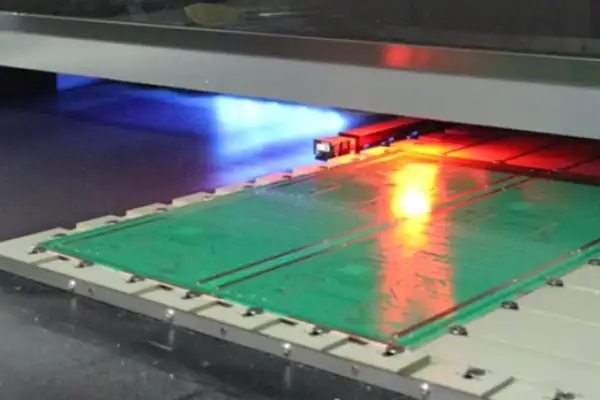
While chatting with several friends in the PCB industry recently, I noticed an interesting phenomenon: whenever it comes to selecting a surface finish, people tend to follow the crowd and opt for the most expensive option—the ENIG (Electroless Nickel Immersion Gold) process. This is actually a practice well worth scrutinizing.
I recall an instance last year when I was helping a small smart-home startup refine their product designs; I noticed that every single one of their circuit boards featured a gold finish. When I asked for the rationale behind this choice, they simply replied, “High-end products deserve the very best.” However, when I opened up one of their thermostats to take a closer look, I found the board densely populated with tiny 0402-package resistors and capacitors, with barely a handful of QFN chips in sight. In such a scenario, an OSP (Organic Solderability Preservative) finish would have been entirely sufficient—and would have saved them a full 30% on costs.
Speaking of the HASL (Hot Air Solder Leveling) process—or “tin spraying,” as it’s often called—many people dismiss it as unsophisticated and obsolete. Yet, during a visit to a local industrial controller factory last week, I noticed that every single one of their main control boards was processed using a lead-free HASL line. An experienced senior technician pointed to the 2mm-pitch connectors lining the edge of a board and remarked, “For these large solder pads, HASL is the most practical choice; gold plating, ironically, makes them more susceptible to cold solder joints.” I observed boards moving along the assembly line that had already passed through three rounds of reflow soldering, yet their solder joints remained perfectly plump and lustrous.
Of course, gold plating does indeed have its own indispensable applications. I once handled a batch of circuit boards for medical devices that required the bonding of ultra-fine 0.1mm gold wires; in that specific instance, there truly was no viable alternative to ENIG. However, such specialized requirements likely account for less than 5% of the needs within the broader consumer electronics market.
Interestingly, many engineers today treat the selection of a surface finish as if they were purchasing an insurance policy—they simply pick the most expensive option first, regardless of actual technical requirements. I once encountered the main circuit board for a pair of consumer-grade headphones that had been treated with a “thick-gold” immersion process—despite the fact that the largest component on the entire board was merely a BGA-packaged Bluetooth module. Underlying such decisions is often a mindset best described as “seeking to avoid blame rather than to achieve excellence.” Ultimately, selecting a surface finish is much like getting fitted for eyeglasses: you have to base your choice on your actual prescription—you shouldn’t ignore your specific vision needs just because a pair of designer frames looks stylish. The next time you’re about to design a PCB, take a moment to consider practical metrics such as component density, soldering cycles, and storage conditions; relying on these tangible factors is far more reliable than blindly chasing after so-called “high-end” processes.
The process of selecting a PCB surface finish is actually quite fascinating. When I first started out in circuit board design, I often found myself bewildered by all the technical jargon. Finishes like HASL—with their shiny, metallic luster—certainly looked reliable; however, I later discovered that they can cause issues when used with fine-pitch components. I once designed a board that required the installation of miniature sensors; unfortunately, the unevenness of the tin plating on the pads caused a short circuit between two adjacent pins. From that moment on, I fully grasped the critical importance of surface flatness.
Boards treated with ENIG feel as smooth as silk to the touch. The gold layer not only gives the board a premium aesthetic, but—more importantly—it serves to protect the underlying copper traces from oxidation. However, the cost associated with this particular process can be quite painful to swallow. One small-batch manufacturer I worked with would tack an additional 15% onto the budget every time we opted for an ENIG finish.
As for OSP, it acts like an invisible suit of armor for the copper traces. The greatest advantage of this organic protective layer is that it is both cost-effective and environmentally friendly.
When selecting a surface finish, you shouldn’t rely solely on technical data sheets. For instance, we once had to select a finish for a piece of outdoor equipment. Although ENIG offers the best corrosion resistance, given that the device had a projected lifespan of only three years, we ultimately opted for the more economical OSP solution.
Every surface finish process has its own specific use case. Nowadays, whenever I encounter a new project, I start by asking: How long will this batch of boards need to be stored? How dense are the components that need to be soldered? What is the budget? Once these questions are clearly answered, making the right choice becomes a much simpler task.
Recently, while helping a friend design a smart home controller, I utilized the lead-free HASL process. Although its surface flatness is merely average, it was perfectly adequate given that the minimum spacing between components on the board was a generous 1 millimeter. Crucially, the entire batch of boards was scheduled to be fully assembled within three months, meaning there was no need to account for long-term storage requirements.
Ultimately, choosing a surface finish is much like choosing a pair of shoes: only your feet can truly tell you whether or not the fit is right. Don’t Be Swayed by Fancy Technical Specifications; Finding the Best Fit for Your Specific Needs Is What Truly Matters
When it comes to selecting a PCB surface finish process, I hold a somewhat unconventional view: many people focus excessively on technical specifications while overlooking the impact of the actual production environment.
I recall a medical device project last year where we nearly missed our delivery deadline simply because we chose the wrong PCB surface finish. At the time, the team insisted on using the ENIG process, believing it offered the highest reliability; however, we discovered that improper control of the gold layer thickness actually led to an increased rate of solder voids. In reality, within a workshop environment characterized by stable temperature and humidity, an OSP finish can often demonstrate superior cost-effectiveness—particularly for low-to-mid-range consumer electronics.
I have seen far too many engineers treat HASL as a universal solution, yet this traditional process often falls short when dealing with miniaturized components. On one occasion, while debugging a board featuring a 0.3mm-pitch BGA package, the height discrepancies between pads—a direct result of the Hot Air Solder Leveling (HASL) process—led to a 30% failure rate due to solder bridging.
The true determinants of a surface finish’s effectiveness are often the details that remain invisible in the technical data sheets—such as moisture-control measures during storage and transport, or the pre-treatment steps performed prior to component placement. Some manufacturers assume that simply selecting ENIG guarantees peace of mind, yet they overlook the impact that fluctuations in the gold-plating bath concentration can have on solder joint strength.
Nowadays, when faced with R&D prototype boards that are likely to undergo multiple rounds of rework, I tend to recommend that clients opt for lead-free HASL combined with selective gold plating. Although the upfront cost is slightly higher, this approach eliminates the risk of the OSP film degrading or failing during subsequent reflow cycles.
What struck me most was a visit I paid last year to a small appliance manufacturer. By utilizing a basic OSP process in conjunction with nitrogen-assisted soldering, they managed to achieve a first-pass yield exceeding 99%. This demonstrates that even the most sophisticated surface finish is only as effective as the corresponding process capabilities that support it.
Sometimes, as I observe the array of multi-colored circuit boards moving along the production line, I feel that selecting a surface finish is akin to an act of artistic balance: one must simultaneously consider the precision requirements for component placement and the practical pressures of inventory turnover—after all, not every enterprise can absorb the additional costs associated with ENIG.
Recent testing has revealed that certain domestically produced OSP solutions, when stored under vacuum-sealed conditions, can maintain their shelf life for over 12 months. This has prompted me to re-evaluate the perceived limitations of traditional processes; perhaps our past biases regarding certain technologies stemmed simply from a lack of awareness regarding the latest advancements.
The subject of PCB surface finishes is truly fascinating; every time I engage in a discussion with engineers on this topic, I invariably discover a fresh perspective. I’ve seen far too many people get hung up right from the start on the cost difference between HASL and ENIG. In reality, what truly deserves your attention is process compatibility. Take, for instance, a smart wearable project we worked on last year: initially, to save on budget, we opted for lead-free HASL. We quickly hit a roadblock, however, when dealing with chips featuring a 0.3mm pitch—fluctuations in pad flatness caused our component placement offset rate to skyrocket. We subsequently switched to ENIG; although the unit cost rose by 20%, the labor hours saved on rework ended up being three times greater than the additional material cost.
Some people still tend to view gold plating as an exclusive luxury reserved for high-end products; however, many consumer electronics manufacturers are now adopting modified versions of ENIG. I recall a smart home client who initially insisted on using an OSP coating to cut costs—that is, until they discovered that their inventory of semi-finished boards had begun to oxidize and turn black while sitting in the warehouse, leaving them with deep regrets. Surface finishing is essentially an insurance policy for your circuit board:
You might go ten years without ever needing that protection, but if a failure occurs just once, the cost you pay will be steep.
Amidst the global shift toward lead-free manufacturing, one must be particularly wary of “false value.” Traditional leaded HASL is indeed inexpensive and robust, but the EU’s RoHS Directive looms like a sword of Damocles overhead; should you suddenly receive an overseas order, you simply won’t have enough time to switch your manufacturing processes.
I recommend that small-to-medium batch projects adopt a lead-free approach right from the start. While the initial costs may be slightly higher, doing so helps you avoid the hidden inefficiencies and costs associated with frequently switching over your production lines.
I’ve also noticed an interesting phenomenon recently: many startup teams tend to go overboard in their pursuit of a “premium feel” for their surface finishes. They might be designing a simple controller requiring only single-sided component placement, yet they insist on using Electroless Nickel Immersion Gold (ENIG)—only to find that insufficient gold layer thickness actually triggers the dreaded “black pad” phenomenon.
The truly smart approach is to ask your PCB manufacturer to produce prototype boards using various surface finishing options, letting the actual soldering results speak for themselves. After all, no matter how impressive the theoretical data may look on paper, it can never compete with a consistently high yield rate on the actual production line.
Ultimately, selecting a surface finish is much like choosing an outfit: you must dress for the occasion and the specific requirements at hand, rather than blindly chasing the latest trends.
Automotive electronics—which must endure high temperatures and high humidity—require the “armor-grade” protection provided by ENIG, whereas indoor home appliances can rely on lead-free HASL to last through their entire product lifecycle.
Recently, while helping an agricultural machinery manufacturer redesign their boards, we even employed a hybrid approach: using ENIG for the critical contact points on the main board, while retaining the thicker plating of HASL for the power module sections. This flexible, pragmatic mindset proved to be far more economical and practical than simply applying a one-size-fits-all standard solution. Choosing the right PCB surface finish is indeed a fascinating topic. Whenever I see engineers agonizing over whether to opt for OSP or Electroless Nickel Immersion Gold (ENIG), I feel it’s a bit like choosing a pair of shoes—only the wearer truly knows if they fit. I’ve seen far too many people stumble over this decision; sometimes, “more expensive” really doesn’t mean “better.”
I recall a friend working in smart home technology last year who insisted on applying ENIG to every single board. Consequently, once the product hit the market, they discovered their production costs were 15% higher than their competitors’, and sales consistently failed to take off. Later, they switched to OSP; not only did it provide perfectly adequate performance, but it also slashed their costs by a full third. This raised a question in my mind: Are we perhaps too enamored with—or superstitious about—so-called “high-end” solutions?
In reality, OSP performs quite stably when handling standard components, particularly in consumer electronics that don’t require long-term storage. While its oxidation resistance may not be quite as robust as ENIG’s, the typical lifecycle of most electronic products is only two or three years; is it really necessary to pay such a hefty premium to guard against such low-probability events?
Of course, ENIG has its advantages, too. For instance, when working with precision connectors or high-frequency circuits, the level of surface flatness it provides is truly unmatched by other processes. The problem, however, is that many application scenarios simply don’t require these specific characteristics. It’s akin to outfitting a standard family sedan with racing tires—aside from driving up costs, it serves no practical purpose.
Speaking of cost considerations, I don’t believe we should focus solely on the unit price. I once worked on a medical device project where, in an attempt to save a little money, we chose Hot Air Solder Leveling (HASL). The result? Issues with surface flatness caused our SMT placement yield to drop by five percentage points. Such “hidden costs” are often far more significant—and worthy of attention—than the mere price difference between surface finishes. Consequently, whenever I make a choice now, I prioritize the overall manufacturing cost rather than simply comparing the raw figures on the PCB quotation sheet.
I’ve also recently observed another phenomenon: many engineers tend to overlook process compatibility. For example, certain OSP formulations may not be compatible with specific solder pastes. This incompatibility might go unnoticed during the pilot production phase, only to become a massive headache once mass production begins. That is why I now make it a mandatory requirement for suppliers to provide compatibility test reports; this step is absolutely non-negotiable.
Ultimately, selecting a surface finish is much like choosing an outfit—it all depends on the occasion. OSP is an excellent choice for mass-produced consumer electronics, whereas industrial equipment requiring high reliability might necessitate a switch to Immersion Gold. The key is to clearly identify your actual requirements and avoid being led astray by various marketing pitches.
Sometimes, I advise clients to create a simple decision matrix—listing factors such as reliability requirements, budget constraints, and production lead times, and assigning scores to each. The solutions selected through this method are often far more reliable than those chosen based solely on intuition. After all, engineering decisions should be driven by data; relying solely on experience can easily lead to blind spots.
I’ve also noticed a recent trend: as environmental regulations become increasingly stringent, certain traditional processes may face restrictions. This is compelling many manufacturers to re-evaluate more eco-friendly alternatives, such as Organic Solderability Preservative (OSP). It appears that, beyond technical specifications and costs, regulatory trends have become a variable that can no longer be ignored.
Ultimately, there is no one-size-fits-all answer. The important thing is to maintain an open mind and make judgments based on the specific characteristics of each project. After all, our goal is to produce high-quality products, not to remain rigidly attached to a particular manufacturing process.
Oh, and there’s one more detail worth noting: the actual execution quality of the same process can vary drastically from one manufacturer to another. Sometimes you select the right process, but if you choose the wrong supplier, the final result will still be compromised. That’s why, before making a final decision, I now make a point of visiting the supplier’s facility to inspect their production lines firsthand—it’s far more telling than simply looking at samples.
Whenever I come across articles that hype up ENIG as the ultimate solution—implying that a product is doomed to fail without it—I can’t help but chuckle. Having worked on numerous projects, I’ve found that success or failure is often determined by the most fundamental process choices. For instance, if applied correctly, Hot Air Solder Leveling (HASL) can cut costs by 30% without compromising performance in the slightest; the key lies in truly understanding its specific characteristics. I recall a project involving a batch of industrial controller boards where HASL was precisely what enabled the boards to successfully pass rigorous salt spray testing.
Nowadays, many people blindly chase after high-end processes, thereby unnecessarily complicating simple problems. I remember a smart home project team last year that insisted on using ENIG, only to end up dragging down their entire production line. In reality, given the required soldering density, OSP would have been perfectly adequate—and its superior surface flatness would have actually been better suited for high-speed pick-and-place assembly. Once they switched to OSP, their production yield rates actually improved.
I have a strong aversion to that “one-size-fits-all” mentality when selecting processes. PCB surface finishes are like keys: they must be precision-matched to fit the specific application scenario perfectly. While OSP’s oxidation resistance might indeed be a cause for concern in high-temperature, high-humidity environments, it is simply unnecessary—and wasteful—to apply such excessive protection to standard consumer electronics. Sometimes, when clients demand that smartwatches meet military-grade standards, it leaves me utterly dumbfounded—it’s a situation that is both frustrating and amusing.
Recently, I’ve noticed a fascinating trend: an increasing number of automotive electronics manufacturers are reverting to the hot air solder leveling (HASL) process. They’ve discovered that—thanks to improved solder formulations—HASL actually performs more reliably in vibration tests than some of the more expensive alternatives, particularly in high-current circuit areas. This “back-to-basics” approach aptly demonstrates that no manufacturing process is inherently superior or inferior; the key lies in knowing how to leverage its strengths while mitigating its weaknesses.
What gives me the biggest headache, however, are comparative tests conducted in isolation from real-world application scenarios. Laboratory data might look pristine on paper, but once those boards hit the production line, the reality can be entirely different. The truly reliable approach is to take prototype boards and run them through the actual production line for a couple of days. This is far more useful than simply poring over datasheets and agonizing over technical parameters; after all, the feedback provided by the soldering technicians is often far more intuitive and insightful than any instrument reading.
Ultimately, the process of selecting the right technology is a test of one’s understanding of the entire product lifecycle—from design and mass production all the way through to after-sales support. The specific requirements at each of these stages influence the final decision. Sometimes, by consciously foregoing certain performance metrics, you can actually carve out a larger share of the market. Mastering this delicate art of balancing trade-offs is where the true value of an engineer lies.
Whenever I see people agonizing over which PCB surface finish to choose, I can’t help but chuckle. Do you really believe that those “textbook answers” can solve real-world problems? After spending years monitoring production lines in various factories, I’ve observed an interesting phenomenon: the most common mistake engineers make is relying too heavily on textbook-style decision-making logic.
I recall a client last year who brought me a design proposal and insisted—for the sake of reliability—on using Electroless Nickel Immersion Gold (ENIG). The result? The very first batch of boards suffered from the dreaded “Black Pad” defect. In reality, their smart home product didn’t require such a high-end surface finish at all; they simply wasted 30% of their budget and caused unnecessary delays in delivery. Sometimes, opting for Organic Solderability Preservative (OSP) is actually a more sensible choice than blindly jumping to ENIG—especially for consumer electronics with relatively short product lifecycles.
I’ve seen far too many teams stumble when it comes to selecting PCB surface finishes. One client, a manufacturer of industrial control equipment, insisted on using lead-free HASL. Consequently, because the boards sat in storage for over six months, they experienced significant soldering defects. They had completely failed to account for the actual storage conditions within their workshop—can you really blame the surface finish itself in a situation like that? Every surface finish has its own unique “personality” or quirks; the key is to select one that aligns seamlessly with your specific production pace and warehousing environment.
Nowadays, many engineers shake their heads dismissively at the mere mention of HASL, viewing it as an obsolete technology. Yet, for the vast majority of standard applications, it remains the most cost-effective option available. This is particularly true for projects that are cost-sensitive and do not require long-term storage; there is simply no need to pay a premium for performance capabilities that you will never actually utilize. Just last week, a startup team asked me why their prototype boards—which worked perfectly using an OSP finish—started encountering issues once they switched to small-batch production. The answer is quite simple: they failed to account for the fact that during mass production, the boards would spend much longer sitting in a warehouse.
What truly matters is understanding the actual conditions your product will undergo, rather than rigidly fixating on theoretical specifications. In one medical device project I managed, everyone initially insisted on using ENIG; however, we later discovered that a simple Immersion Silver process actually delivered superior high-frequency performance. The greatest pitfall in this industry is blindly following the crowd; every project is unique, so you must conduct your own tests and validations rather than simply copying someone else’s solution.
I recently assisted a client—a manufacturer of communication base stations—with a technical evaluation. They originally intended to use ENIG, but during actual testing, they discovered that the signal loss caused by the nickel layer became a performance bottleneck at specific frequencies. They subsequently switched to an OSP finish with a specially formulated composition, which allowed them to both control costs and meet their performance requirements. Therefore, do not let so-called “industry consensus” restrict your options; practical application remains the only true test of validity.
Ultimately, selecting a PCB surface finish is much like choosing a pair of shoes: finding the right fit is far more important than simply picking the most stylish option. You must take into account factors such as production lead times, storage environments, budget constraints, and even the skill level of the assembly technicians—these practical considerations are far more relevant than the mere numbers listed in a process parameter datasheet.
I’ve always felt that selecting a PCB surface finish is somewhat akin to choosing footwear—the most expensive option isn’t necessarily the best; what truly matters is the terrain you intend to traverse. Many people, the moment “PCB Surface Finishes” are mentioned, instinctively assume that ENIG is the safest and most reliable choice; however, this mindset often leads them straight into technical pitfalls.
I recall an instance where I was helping a friend select a surface finish for a small-batch production run. They were adamant about using a Hot Air Solder Leveling (HASL) finish; consequently, by the time the boards arrived during the rainy season in southern China, their surfaces had already begun to tarnish. We later discovered that, in humid environments—particularly during cross-provincial transit—the oxidation rate of standard HASL finishes is far faster than commonly assumed. Nowadays, I advise clients who insist on using HASL to at least require vacuum packaging accompanied by desiccant packets, and—ideally—to ensure that the assembly line begins processing the boards within one week of their arrival.
The OSP process is indeed well-suited for consumer electronics applications, but there is a critical detail to keep in mind: the stability of the chemical solutions varies drastically between different brands. During a recent test involving a sample board treated with a domestic OSP solution, the solder pads exhibited slight discoloration after just the first reflow soldering cycle; by the third cycle, the surface had completely lost its solderability. We subsequently switched to a Japanese-branded OSP solution, and after undergoing the exact same three reflow cycles, the solder joints remained perfectly robust and well-formed. So nowadays, whenever I evaluate an OSP process, the very first thing I ask the manufacturer is which batch of chemical solutions they are currently using.
The most persistent headache, however, remains the “Black Pad” issue associated with ENIG finishes. Last year, during a medical device project, our spot checks revealed sporadic instances of Black Pad in a specific batch of PCBs. Upon cross-sectioning the boards, we found the nickel layer to be corroded—resembling a honeycomb structure—even though the supplier’s accompanying phosphorus content report clearly indicated that the levels fell within the acceptable range. We eventually discovered the root cause: their gold plating bath had been kept in service for over half a year beyond its recommended lifespan. Such latent defects act like ticking time bombs; they may remain dormant during mass production, only to trigger equipment failures after a year or so of field operation.
In reality, selecting a surface finish process requires looking beyond mere price tags or blindly following industry trends. Instead, the decision must be grounded in specific factors such as the product’s lifecycle, storage environment, and anticipated number of soldering cycles. For instance, for products that frequently require rework or repair, I generally advise against using OSP. Conversely, for cost-sensitive, high-volume consumer electronics, a HASL (Hot Air Solder Leveling) finish—particularly when paired with nitrogen protection—often proves to be a more pragmatic and sensible choice.
I’ve also recently observed a growing trend where some manufacturers are adopting a hybrid approach—utilizing ENIG for the main board while opting for OSP on auxiliary boards. This “one-two punch” strategy is actually quite clever; it effectively keeps costs in check while simultaneously ensuring the reliability of critical components. However, to successfully implement such a scheme, one must ensure that the contract manufacturer maintains rigorous production segregation protocols; otherwise, cross-contamination between the different chemical baths could end up creating even greater complications.
Ultimately, there is no such thing as an inherently “good” or “bad” surface finish process—only the one that is most suitable for the specific application. It is much like choosing footwear: even the most expensive pair of hiking boots would be ill-suited for running a marathon. The key lies in carefully assessing the terrain ahead before making your final decision.
Occasionally, when looking back at boards designed five or six years ago, I realize that the process choices we considered “perfect” at the time may now appear outdated. Such is the nature of this industry: there will always be new challenges and problems waiting for us to solve.
What actually makes a long-term PCB supply chain partnership work — shared
Practical, experience-based strategies for how to reduce PCB procurement risks — from
Real factory-floor lessons on how to optimize a PCB manufacturing process —
- 중소규모 배치 생산 전문가
- 고정밀 PCB 제작 및 자동화된 조립
- OEM/ODM 전자 프로젝트를 위한 신뢰할 수 있는 파트너
영업 시간: (월~토) 9:00~18:30
Get quote, solution or any question, Andre always here to help