

Printed Circuit Manufacturer or Middleman in Disguise? What Buyers of a Welding Machine Controller PCB Keep Getting Wrong
During circuit-board procurement, many people assume they’re working directly with a Printed
I’ve always felt a lot of people understand Rapid Prototyping too narrowly. They fixate on the word “fast” — as if getting a board back in three days settles everything. In reality, the key here was never speed itself.
I remember, working on a Vibration Monitoring PCB smart-home project last year, we ran through five prototype revisions back to back. The first version even had the power connector drawn backward — that kind of basic mistake, in a traditional manufacturing flow, would have delayed things by at least two weeks. But precisely because we used a local rapid-prototyping service, we caught the problem the very next morning and started revising the next design that same afternoon.
The real value lies in the frequency of iteration, not the speed of any single round. Think about it — if every discovered problem meant waiting three weeks for a new board, the team’s enthusiasm would have burned out long ago. Now we can test in the morning, revise the drawing in the afternoon, and send a new file to the factory that same evening — that kind of rhythm keeps the whole team sharp and sensitive to problems.
Once, I even brought a half-finished unit directly to a client site, demonstrating it while recording their reactions — those subtle facial expressions are more honest than any survey report. This kind of real-time feedback is exactly the essence of rapid prototyping — it turns the design process from working behind closed doors into open exploration.
I now feel genuinely put off by ads treating “24-hour delivery” as their main selling point — it’s completely misleading for beginners. What genuinely matters is whether you can fix a problem the moment you find it, not obsessing over a number on a calendar. Sometimes slower is actually better — for example, choosing a higher-precision process might cost an extra half day, but it avoids major trouble once you reach mass production.
What does the ideal state look like? Making prototyping feel as natural as conversation — you have an idea, immediately turn it into a physical object to validate, then keep adjusting based on feedback. The whole process should flow smoothly, with no need to deliberately chase a speed metric.
At the end of the day, hardware development is more like sculpture than assembly-line production — you need multiple rounds of refinement to see the true shape. Chasing speed alone often ruins the work.
I’ve found something genuinely interesting in product development — a lot of people treat Rapid Prototyping as a simple step. In reality, this is far more complex than we assume.
I remember a mistake our team made last year while designing a smart-home device. Rushing to meet a deadline, we skipped several critical steps, and the resulting sample couldn’t even run basic function. That experience taught me something: genuine rapid prototyping isn’t just chasing speed — it’s finding the optimal path while guaranteeing quality.
Sometimes I wonder why so many teams stumble at the prototype stage. Maybe everyone is too eager to see a finished product and ends up overlooking the importance of the design itself. Good design should connect every stage solidly, like building with blocks.
Recently I came across a medical-device company’s case — they spent three months repeatedly polishing a prototype whose exterior barely changed, but whose internal structure was adjusted more than a dozen times. That obsession with detail actually saved them half the time during later mass production.
I now lean toward viewing prototyping as a conversational process — designers, engineers, even users need to communicate ideas through a physical object. Theorizing on paper will never match the direct feedback of actually holding something in your hands.
Speaking of which, I have to mention the collaborative design tools popular today — they’ve genuinely helped a lot. Team members can see 3D model changes in real time and offer revision suggestions promptly — that immediacy is especially helpful for shortening the development cycle.
That said, tools are ultimately just a support — what genuinely matters is human judgment. Knowing when to stick with the original plan and when to start over requires a sense of balance that only comes through extensive practice.
The most impressive prototype designer I’ve ever met was an elderly gentleman with thirty years of mechanical-engineering experience. He could anticipate downstream process issues right at the sketch stage — that kind of intuition, built from accumulated experience, is genuinely admirable.
At the end of the day, the value of rapid prototyping isn’t speed itself — it’s achieving maximum validation at minimum cost. That’s what makes it so compelling.
I’ve seen too many teams treat Rapid Prototyping as a tool for rushing a deadline. They’re in a hurry to get a model in front of investors to show off renderings, forgetting that a prototype’s real value lies in exposing problems. Last week, a smart-hardware team showed me their third-version sample — the exterior was already close to production-ready, but user testing data showed seventy percent of people couldn’t figure out how to use the hidden button. At that point, modifying the mold costs more than twenty times what a rough early prototype would have cost.
Actually, the cruder the early prototype, the better. I often suggest teams first build an interaction framework out of foam board or even cardboard — what matters is letting real users get their hands on it. Last year, helping with a usability test for a medical-device project, the first-version prototype was just a 3D-printed shell with a few light-up button-cell batteries attached. It turned out nurses wearing rubber gloves found the touch area too small — that discovery directly changed the entire product’s interaction logic.
Many people imagine going to market as a hundred-meter sprint — I think it’s more like feeling your way through fog. The data you collect from each round of testing is like the beam of a flashlight — limited range, but enough to help you avoid the pit right in front of your feet. A common misconception is always wanting to build the perfect prototype in one shot, when the genuinely efficient approach is rapid trial and error, iterating in small steps. I remember a team building a kitchen scale who initially wanted Bluetooth connectivity, only to discover after three rounds of testing that what users actually needed most was waterproofing.
When choosing a development partner, don’t just look at whether they have high-end equipment — what matters is whether they understand your industry’s logic. A good partner helps you translate testing data into concrete design adjustments, rather than simply machining to the drawing. Once, a design partner we worked with noticed users unconsciously tilting the device during trials, so in the next version they added extra weight to the base — a detail even our own product manager hadn’t noticed.
At the end of the day, rapid prototyping isn’t a shortcut to save time — it’s a way to reduce future risk at a controllable cost. When you see that first rough model turning in a user’s hands, requirements that once existed only on paper suddenly become concrete and vivid. That kind of real feedback carries more weight than any polished design document.
I’ve been mulling over something recently — why are more and more people in hardware relying on outsourced services? We used to assume everything had to be done in-house to feel reliable. But look around now — even large companies are outsourcing part of their work.
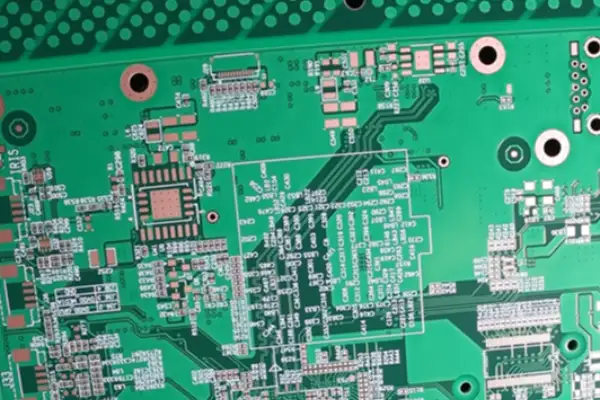
I remember helping a friend with a smart-home project last year. Originally, we planned to draw the board ourselves and route it in-house. Just finding the right footprint took two full days. Eventually, out of options, we found a professional team to help with Rapid Prototyping. To our surprise, we had a testable sample in three days. That experience made me realize: are we wasting too much time on things we’re not good at?
Actually, what hardware development fears most is repeated revision — especially PCB design work, whether you’re routing a simple board yourself or relying on a specialized multilayer pcb supplier for a demanding stack-up. Get one detail wrong and you have to tear the whole thing down and start over. I’ve seen someone struggle an entire weekend over a grounding issue, only to find it was a software display error. In situations like that, having a professional team review it can save an enormous amount of time and energy.
Many startup teams have gotten smarter about this. They’re more willing to hand professional work to professionals, focusing their own energy on core-function development. This approach genuinely works — it guarantees quality while controlling cost. And outsourcing service providers usually have a mature design process, seamlessly connecting everything from schematic to layout to final production.
Of course, some people worry about high communication costs, feeling that handing off the design means losing control. My experience is: as long as you clearly state requirements upfront and follow up on progress regularly, it’s fine.
At the end of the day, whether to outsource or do it yourself depends on the specific situation.
If the project timeline is tight, the workload heavy, or it involves a complex high-speed circuit, finding a professional team is definitely the more worthwhile choice.
If it’s a simple single-sided board or a learning exercise, doing it yourself is genuinely fun too.
I’ve recently noticed something interesting — even students working on school projects have started using these services.
What does that tell you? Professional division of labor is becoming an industry norm.
I’ve always felt a lot of people overcomplicate rapid prototyping. Once, tinkering with a robotic-arm joint component in my studio, it suddenly hit me — the real value isn’t how advanced the machine itself is, it’s how you actually use it. That time, I directly printed five connectors at different angles using ordinary PLA material and installed them for testing, and found that the third version actually had three times the load-bearing capacity I’d expected.
I used to think you needed to buy the most expensive industrial-grade equipment to make something good, and later found that’s not the case at all. Once, helping a friend fix a drone propeller mount, I used an ordinary desktop printer to try three different infill structures and found that a honeycomb support pattern, though using 20% more material, doubled crash resistance directly. This kind of instant validation opportunity is simply impossible in a traditional manufacturing flow — after all, opening a mold means waiting well over half a month.
Nowadays, even neighborhood hardware shops offer 3D-printing service. Last time I went to get a faucet handle made, the shop owner pulled up a model on the computer, and it was printed and installed in fifteen minutes. What strikes me most about this kind of manufacturing seeping into daily life isn’t just the technology itself — it’s how it completely shatters our understanding of what “production” even means.
I remember a smart-flowerpot project once that needed sensors embedded inside a ceramic shell — a traditional process would require firing it three separate times, while composite printing technology completes structural formation and circuit embedding in one pass. Even though the finished surface was a bit rough, that complete creative experience from zero to one is something no outsourced manufacturing could ever provide.
I’ve recently been trying to use recycled plastic as print material, and found that gear sets printed from coffee-capsule shells had surprisingly good wear resistance. That kind of freedom to adjust material properties on the fly is exactly what makes rapid prototyping so compelling — you never know what surprise the next experiment will bring, like playing with creative Lego, except this time even the building blocks are molded on the spot.
I’ve seen too many teams oversimplify rapid prototyping. They always think finding an overseas factory to make samples will save some money. What happens? A month later, they receive the item and find the dimensions are wrong, and have to start all over. This kind of hassle isn’t saving money — it’s wasting life. A common misconception, for example, is comparing only the surface processing unit price while overlooking uncontrollable factors in international logistics, like customs-clearance delays or material deformation from temperature and humidity changes during transport. Not to mention the communication gap caused by time-zone differences — a single back-and-forth email exchange over an issue wastes two whole days.
Anyone who genuinely builds products knows iteration speed determines life or death. Last week, our team used Rapid Prototyping to validate a structural issue in three days — going through a traditional overseas manufacturing process, it would probably still be floating on the ocean by now. With that big a time gap, which would you choose? We used photopolymerization 3D-printing technology — revising the CAD model in the afternoon, and testing the assembly clearance the very next morning. This kind of instant feedback lets engineers simultaneously adjust surrounding component design, forming a closed-loop optimization.
Some people think small-batch trial production overseas is more cost-effective — actually overlooking the hidden costs. Communication cost, time-zone gaps, and the most dangerous risk of all — intellectual-property exposure — add up to potentially ten times more than the processing fee you saved. Once, a startup team sent their design files to an overseas workshop, only to find a similar product appearing on an overseas e-commerce platform ahead of schedule. Tracing it back for accountability, they found the other side had taken the order through a shell company, and in the end, they had no recourse at all.
I genuinely don’t understand teams who insist on waiting for a perfect design before building a prototype. A product is refined through iteration, not conceived in one’s head. Seeing a physical object early — even a rough version — exposes problems a drawing could never reveal. Just like phone-case design — a 3D rendering shows a perfect fit, but only a physical prototype reveals the stress-concentration point where your fingers actually grip it.
I remember a smart-hardware team last year who insisted on pushing their first prototype version to near-production quality, got stuck on a particular component, and three months later found the market already claimed by a competitor. If they’d used rapid prototyping earlier to validate core function first, the outcome could have been completely different. They were fixated on CNC-machining an aluminum-alloy enclosure, while their competitor used resin 3D printing to validate the circuit layout and then went straight to a plastic-enclosure version to capture the market first.
Now, good local prototyping services can already deliver: send the file today, get the physical object tomorrow. That kind of speed lets you boldly try and fail, because when the cost of failure is low, you dare to innovate. Some service providers even offer material-kit service — for example, providing ABS, nylon, and clear resin prototypes simultaneously, making it easy to compare impact resistance across different materials.
At the end of the day, the biggest value of rapid prototyping is helping you maintain a rhythm. Like running — stopping and restarting is the most exhausting; sustained small steps actually take you further. What product development fears most is a stall — the cost of re-aligning a design after team enthusiasm has cooled often exceeds the prototyping fee itself.
Teams still hesitating over whether to spend a bit more on rapid prototyping should calculate the opportunity cost. Launching a month late might cost you the entire market window — that matters far more than the processing fee. Especially for consumer electronics, missing the back-to-school or holiday sales window can put enough inventory pressure to sink a startup.
I think building a product is like cooking a dish — you have to taste and adjust as you go. By the time you’ve shipped an entire set of ingredients back from overseas only to find you added too much salt, the meal is basically ruined. A good chef adjusts in stages — testing the spice ratio first, then adjusting the heat — similar to product development, validating the mechanical structure first before optimizing the exterior curves.
Recently, while reviewing a friend’s new-product prototyping process, I noticed something interesting: the more experienced a team, the more they value early iteration speed — they clearly understand what resources to invest at which stage. Mature teams build a tiered prototyping system: use FDM for quick validation at the concept stage, switch to SLA for detail refinement at engineering validation, and only move to silicone remolding for small-batch trial production.
At the end of the day, rapid prototyping is a way of thinking — it lets you validate maximum uncertainty at minimum cost. In today’s pace of change, this capability is no longer a bonus — it’s a survival skill. It’s like a small scout boat used at sea — the main fleet adjusts course based on its feedback, far wiser than blindly charging into a reef zone.
I’ve always felt a lot of people have a slight misunderstanding about rapid prototyping — as if simply owning a 3D printer means any idea can instantly become a physical object. In reality, anyone who’s actually used one knows it’s not that simple. I remember the first time I tried using Rapid Prototyping to make a small part, just adjusting the material parameters took me two full days. The idea that pressing print means sitting back and waiting for a finished product is about as naive as thinking buying an oven makes you a master baker.
What’s most fascinating about 3D printing is how it makes an abstract concept tangible. Last week, I designed a model with a moving joint — pulled out from the computer screen, it was just a bunch of lines, and a few hours later, it could actually click and rotate in my hand. That magic moment from virtual to physical is what genuinely moves me most about prototyping. But don’t be fooled by those flashy videos either — succeeding seven times out of ten print attempts already counts as lucky; the rest either collapse the support structure or jam the filament halfway through.
Once, building an enclosure prototype for a smart-home project, I clearly left space for sensor mounting holes during modeling, only to find, once printed, the tolerance was off by half a millimeter. This kind of detail problem is invisible on screen — only holding the physical object reveals the design flaw. Now, for any prototype, I always print a small test piece first — even if it costs an extra half day, it’s still better than reworking later.
I recently saw someone using a composite-material printer to make a flexible circuit board — that’s a genuinely new idea. The rigid form of a traditional circuit board really does limit a lot of creativity — if you could directly print conductive traces onto elastic material, wearable-device design freedom would expand enormously. That said, at this stage, this kind of technology is still too costly for hobbyists — a single roll of specialty filament alone could buy three ordinary printers.
At the end of the day, rapid prototyping is more like a trial-and-error tool than some magical cure-all. It won’t turn a bad idea good, but it lets a good idea expose its problems faster. Every time I pull a still-warm prototype off the print bed, I think: this three-dimensional object is less a finished result than the starting point for the next iteration.
I’ve recently been mulling over something: why do more and more hardware people treat Rapid Prototyping as an essential workflow? We used to have to wait several weeks to see a physical result from a circuit board.
I remember debugging a sensor module with a friend last year and feeling this deeply. At the time, we revised the design five or six times in the lab before finally locking it in. If we’d relied on the traditional back-and-forth shipping-and-waiting approach, the project timeline probably would have stretched at least two more months.
Actually, a lot of teams have already recognized the importance of rapid validation. A smart-home team I know, for example, runs three or four small-batch test-board prototyping cycles every week. This high-frequency iteration let them complete the entire validation from concept to mass production within two months.
Once, visiting their studio, I found the wall covered in different circuit-board versions — including a few early revisions of a Vibration Monitoring PCB destined for a multilayer pcb manufacturer’s production line — like collecting stamps, genuinely interesting. The person in charge told me every board had a debugging story behind it worth writing into a mistake log — that kind of experience is especially valuable for future product optimization.
I think the most fascinating part of modern hardware development is how quickly a design concept can turn into a physical object — this process itself is full of creativity. When you turn the circuit diagram in your head into a physical board you can hold in your hand, that sense of satisfaction is something pure software development can never match.
Platforms like PCBWay have genuinely changed the game — they let small-to-mid-sized teams enjoy the kind of R&D rhythm that used to be reserved for big companies. A few days ago, I saw a college-student team’s work — through rapid prototyping, they iterated a smart-agriculture monitoring device through more than ten versions before graduation. This kind of hands-on opportunity would have been unimaginable five years ago.
That said, worth noting: rapid prototyping doesn’t mean blind trial and error. Before every revision, you need to think clearly about your optimization goal. I’ve seen some teams treat prototyping like a modification shortcut, ending up trapped in a cycle of endless minor tweaks — genuine efficiency gains come from targeted validation, not mechanical repetition.
At the end of the day, the essence of hardware innovation is turning an idea into a testable physical object via the shortest possible path. Choosing the right partner along the way gets you twice the result for half the effort — after all, good design needs matching manufacturing capability to maximize its value.
I’ve recently been thinking about a question: why do so many teams treat Rapid Prototyping as a simple sampling tool? That actually overlooks its core value. I remember our team using Amtech for a smart-home project last year and discovering something interesting — genuinely efficient rapid prototyping isn’t about chasing speed itself.
That time, we tried an unconventional approach: deliberately slowing down the pace of building the first prototype version. We focused on understanding how users interact with the physical product. The unexpected result: this seemingly “slow” process actually helped us finalize the product design three weeks ahead of schedule.
Amtech has a particular design philosophy that left a strong impression on me: they don’t advocate blindly chasing iteration count. Once, talking with their engineers, I heard a vivid metaphor — a prototype is like the tasting spoon used while cooking soup: it’s not about drinking more of it, but about tasting the change in flavor at the critical moment.
Many teams today get trapped in the myth of “fast,” wishing they could produce ten versions a day. But genuinely valuable rapid prototyping should be like building with Lego — every module needs a clear design intent.
The most failed prototype case I’ve seen was a team that rushed out a 3D-printed enclosure. They got the physical object within 24 hours, but during assembly found every single screw hole misaligned. That kind of speed-for-speed’s-sake approach actually dragged down overall progress.
What’s interesting is that once we shifted focus from “how many days to finish a prototype” to “what problem each version solves,” the whole team’s collaboration style changed. Hardware engineers started proactively participating in software-interface discussions, and marketing staff could take a physical model to run early user testing — that kind of cross-functional collision is the most compelling part of rapid prototyping.
Sometimes I feel this industry’s understanding of “fast” is too superficial. Genuine speed isn’t how fast a robotic arm moves — it’s how fast a team’s understanding synchronizes. When you see a mechanical engineer rush into a meeting holding a prototype still warm from printing, saying “now I understand why users need this button,” that kind of efficiency gain is something no piece of equipment could ever match.
At the end of the day, good rapid prototyping should be like a dialogue, not a monologue. It requires building a shared language between people from different professional backgrounds. This process can’t be rushed, and it can’t be dragged out either — the key is finding the rhythm that belongs to your own team.
I’ve always felt today’s 3D-printing technology gets a bit over-mythologized. A lot of people, the moment rapid prototyping comes up, think of plastic toys or architectural models. What’s actually interesting is the equipment that can directly print functional components.
Last year, in a lab, I encountered a machine that could print circuit boards. That equipment used a special conductive ink. Drawing the trace pattern directly onto a substrate made it power up and work. The whole process needed no chemical etching or high-temperature soldering.
This technology is completely different from traditional 3D printing. It’s more like painting with electronic material.
What left the deepest impression was trying to print a temperature-sensor circuit. From design to physical object took only forty minutes.
Some manufacturers are now starting to pay attention to how this field is developing.
That said, this kind of equipment still has plenty of limitations right now.
The most extreme one I’ve seen was a machine that could process five different materials simultaneously.
That kind of multi-material integrated printing is the real future trend.
I recently noticed a brand called Nano trying some interesting things.
Their equipment can print micro-circuits onto a flexible substrate.
This kind of technology is especially useful for wearable devices.
Imagine — someday, making a smart wristband might be as simple as printing a sticker.
Of course, it’s still far too early to say this could replace traditional PCB manufacturing.
But at the very least, it offers a new direction of thinking for hardware development.
In the past, making a circuit-board prototype meant sending it to a factory and waiting several days.
Now you can validate a design idea directly in the office.
That kind of instant feedback matters enormously for bringing a creative idea to life.
Once, back in my student days, I got burned exactly this way at a science-innovation competition.
At the time, waiting for a circuit board delayed the entire project timeline.
If only we’d had the kind of conditions available today.
That said, technological progress always exceeds imagination.
Maybe in a few more years, we’ll see a truly full-function electronic product printed directly, start to finish — and by then, the same speed and flexibility will apply just as much to something as specialized as a Vibration Monitoring PCB destined for a heavy copper PCB manufacturer‘s production line as to any consumer gadget.
During circuit-board procurement, many people assume they’re working directly with a Printed
Does PCB delivery time always feel impossible to predict? Drawing on real
Practical, experience-based insights on how to ensure PCB quality consistency — from
- 중소규모 배치 생산 전문가
- 고정밀 PCB 제작 및 자동화된 조립
- OEM/ODM 전자 프로젝트를 위한 신뢰할 수 있는 파트너
영업 시간: (월~토) 9:00~18:30
Get quote, solution or any question, Andre always here to help