

Printed Circuit Manufacturer or Middleman in Disguise? What Buyers of a Welding Machine Controller PCB Keep Getting Wrong
During circuit-board procurement, many people assume they’re working directly with a Printed
Why are artificial intelligence and big data not the key to determining the lifespan of industrial equipment?
When many people discuss the future of modern manufacturing, they always focus on cutting-edge concepts such as artificial intelligence algorithms or cloud big data. Of course, these technologies are reshaping the face of the industry. However, in my observations over more than ten years in the industry, I have found that the factors that really determine whether a set of complex equipment can continue to operate stably for more than ten years are often not these seemingly cool innovative technologies. Instead, the most basic and often overlooked core components, such as the quality of circuit boards, are the cornerstone that supports the long-term reliable operation of the entire system.
The actual value of a high-quality printed circuit board far exceeds the impression given by its appearance, especially under harsh working conditions. The drive motherboard inside a high-precision servo control system responsible for driving a heavy-duty robotic arm needs to withstand hundreds of instantaneous high-current surges and the electrical stress caused by frequent starts and stops every day. It is also deployed in chemical production. The circuit base materials of various sensing and control units in workshops or coastal areas are exposed to corrosive gases or high-humidity environments full of salt spray all year round. If ordinary consumer electronics-level boards are used, they are likely to fail within a few months, leading to unexpected shutdown of the entire production line. The economic losses caused are far beyond the cost of replacing a circuit board.
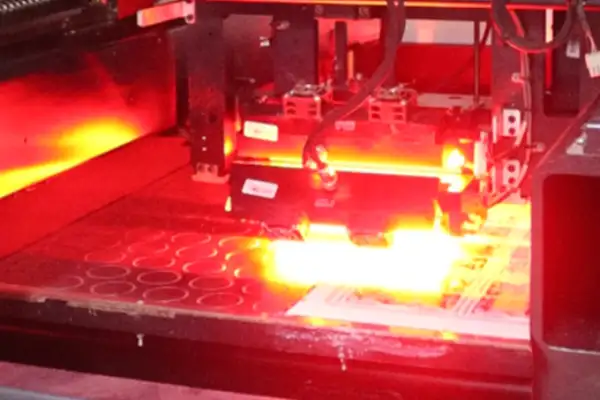
Therefore, a common misunderstanding in the current industry is to try to deal with all application scenarios with a single standard. This may be feasible in the field of consumer electronics, but it is difficult to work in industrial production that has extreme requirements for reliability. For example, the simple double-sided panels commonly seen in smart speakers are obviously unable to withstand the continuous high temperature and strong vibration environment in steel plants. There are essential differences between the technical requirements and application logic of the two.
It is not uncommon for real cases of surge in maintenance costs due to wrong selection of circuit board materials. I have been exposed to the case of a food packaging machinery manufacturer. Their production line equipment frequently experienced intermittent failures. After layers of investigation, it was finally discovered that the root cause of the problem was a multi-layer printed circuit used on the main control board. The internal insulation medium of the circuit board gradually deteriorated due to being in a humid environment for a long time, resulting in imperceptible micro-short circuits, resulting in abnormally unstable signal transmission. The customer initially chose civilian-grade boards to reduce initial procurement costs, but ended up paying a huge price that far exceeded the savings due to repeated production line shutdowns.
Why is it necessary to carry out targeted scenario design for industrial control motherboards with different functions?
This case profoundly reveals the necessity of customized design based on specific application scenarios. You cannot directly apply the design ideas of a programmable controller motherboard for logic operations to a motor drive board responsible for high-power output. The core tasks undertaken by the two are completely different and their reliability requirements are also very different. The former may need to efficiently process massive digital switching signals and connect numerous sensor networks. The latter must prioritize the flow capacity of large current paths, heat dissipation efficiency, and resistance to strong electromagnetic interference. These differences will inevitably lead to the two adopting completely different technical routes in base material selection, stack design, and welding processes.
At present, many excellent electronic manufacturing service providers have begun to practice this concept. They will recommend different grades of copper-clad laminates to customers based on the actual deployment environment of the terminal equipment, such as whether it faces continuous high temperature, severe vibration or excessive dust, or suggest adding special protective coatings such as conformal paint. These seemingly small details are precisely the key to ensuring long-term trouble-free operation of the equipment.
In the final analysis, the primary goal of modern industrial production automation is not to pursue the variety and novelty of functions, but to ensure that production tasks can be executed stably and reliably. Under this framework, a seemingly simple printed circuit actually constitutes the underlying physical basis for the realization of all intelligent functions. Its quality directly determines all the advanced technologies in the upper layer. Whether algorithms and control strategies have practical significance is exactly the reason why the so-called weak foundation shakes the mountain. The pursuit of ultimate reliability in this field is far more pragmatic and challenging than chasing novel concepts, because the test behind this is a deep understanding of material science processes and countless engineering details rather than simple assembly and integration capabilities.
Why are complex multi-layer designs sometimes inferior to simple and optimized four-layer structures?
Recently, I discovered an interesting phenomenon when communicating with several colleagues engaged in production line automation. Whenever I mention Industrial Automation PCB design solutions for harsh environments, many people will subconsciously tend to adopt higher-level technical paths. It seems that if the stack is not more than ten layers or does not introduce complex isolation measures, it will be unprofessional. However, I think this is sometimes mixed with the tendency of over-design.
Take a traditional production line upgrade project we participated in last year as an example. It was originally planned to use a new high-end Multilayer PCB solution to reconstruct its motion control system. In theory, this solution can provide excellent signal integrity. However, after actual implementation, not only the development cost increased significantly, but also the debugging cycle was significantly prolonged. Later, a senior engineer proposed a simplified idea by carefully re-layout planning the motor drive line and sensor feedback line and optimizing the grounding scheme. Instead of simply relying on physical layering to achieve the necessary isolation effect, a deeply optimized four-layer printed circuit solution was ultimately adopted. Surprisingly, this relatively simple-structured main control has shown extremely high stability in actual operation. The movement accuracy of the robotic arm fully meets the production cycle requirements and has continued to operate without failure for more than half a year.
This experience prompted me to reflect on whether we are sometimes too superstitious about the complexity of technology when facing complex industrial control requirements. It is true that in specific scenarios such as high-frequency data acquisition or precision measurement that require extremely high signal integrity, precision Multilayer PCB has irreplaceable value. However, in many common application scenarios, such as ordinary conveyor belt control systems or the implementation of repetitive grabbing actions, a well-thought-out four to six-layer laminate structure with reasonable layout and wiring is often enough to provide stable service for several years. The key is to accurately identify real needs rather than blindly stacking technical specifications.
How to avoid falling into the trap of flashy technical perfectionism during the design phase?
I find that many engineers tend to fall into a technical perfectionist mindset in the early stages of design, trying to foresee and prevent all potential failure modes and isolate all possible sources of interference. The result is often the creation of expensive and complex hardware solutions, but their actual operating stability may not be better than those of more simple and elegant designs. In fact, the most important core indicators at industrial production sites are always the availability and long-term service reliability of the equipment rather than the advancement of the technology used. A simple and reliable circuit that can work silently in the harsh environment of the workshop for more than five years is far more practical than a highly complex product with outstanding theoretical parameters but requiring frequent maintenance.
Therefore, I established a basic principle for the team. Problems that can be solved with a four-layer laminate structure and clever layout should never be easily upgraded to a six-layer laminate. Electrical isolation that can be achieved with routing techniques should be prioritized over adding physical layers. Non-critical defects that can be compensated for at the software level do not need to be passed on to the hardware design. Each additional layer not only means a significant increase in cost, but also may introduce new manufacturing yield risks. The end customer usually will not pay for a premium for features that exceed their actual needs.
Of course, this does not advocate going to the other extreme, that is, completely ignoring the rationality and foresight of the design. Necessary power isolation, effective shielding measures and adequate heat dissipation considerations are still indispensable core elements. The key is to find the optimal balance point between multiple constraints such as performance indicators, manufacturing cost, product reliability and development cycle, rather than blindly chasing gorgeous data on the parameter table or popular technical concepts in the industry. Essentially serving Industrial The core mission of printed circuits in the field of automation is to ensure the reliable operation of machinery and equipment rather than simply to demonstrate the technical strength of the engineering design team. Although this principle is easy to understand, it is easily obscured by various factors in daily work.
Why is substrate selection and robustness more important than simply stacking more layers?
Many people imagine that the mysteries of printed circuits used in harsh environments are too complicated. Although it is essentially different from the thin and flexible internal components in consumer electronics, its underlying logic is actually quite simple, that is, it must ensure that it can withstand the continuous pressure brought by harsh working conditions within its intended life. The longer you work in the industry, the more you can understand a profound truth. The root cause of many troublesome field failures does not stem from the insufficiency of sophisticated algorithms, but lurks in the most basic physical level. For example, the most basic substrate selection link is often ignored.
I have encountered similar situations many times. The prototype performed perfectly in the standard test environment of the laboratory. Once it was deployed to the real factory workshop and ran for several months, various sporadic failures began to occur. After in-depth investigation, it was found that the root cause of the problem was that the base material of the main control board had undergone slight deformation due to local continuous overheating, which eventually led to fatigue cracks in key solder joints. Only then did the designer deeply understand the importance of the basic characteristics of the board, such as the glass transition temperature, a parameter called the Tg value. Numbers are like the foundation of a building, which determines whether the overall structure can remain stable under high thermal loads. Imagine that various drives and controller modules are densely installed in a compact control cabinet. Heat accumulation is almost inevitable. If the copper-clad laminate used has insufficient heat resistance, as the internal temperature rises, the rigidity of the entire printed circuit will decrease, causing problems such as solder joint stress concentration. Therefore, in my design plan review, any application in Industrial For the key components of Automation PCB, I will give top priority to the long-term heat resistance and anti-aging performance of the material instead of blindly adopting the latest technical specifications or the highest nominal parameters.
As the level of functional integration increases, robust multi-level design solutions become an inevitable choice. As heterogeneous functional modules such as high-speed digital interfaces, precision analog front-ends, and high-power drive units need to be integrated simultaneously on a single printed circuit board, Multilayer is adopted. PCB has become a mainstream trend. However, the design of multi-layer stacks is far from being as straightforward as simply laminating several single boards. It involves a series of delicate challenges such as the planning of power supply ground planes, how to avoid noise sources, and electrical isolation strategies between different voltage domains. A series of delicate challenges such as electrical isolation strategies between different voltage domains need to be dealt with carefully. Based on personal experience, I think that instead of unilaterally pursuing higher stack levels or extreme minimum line widths, it is better to use engineering The design focus is placed on the robustness and manufacturability of the solution. Even a theoretically perfect eight-layer lamination design solution is no more than an armchair exercise if it exceeds the capabilities of the partner manufacturer’s existing process or results in a low production yield. Excellent design engineers should have certain back-end manufacturing knowledge and be able to predict which design decisions may cause hidden dangers in the production process to avoid risks in advance.
In the final analysis, the development of electronic products for industrial applications is essentially an art of seeking balance. Designers must find the optimal solution that is most suitable for the current project between multiple and often conflicting goals such as performance indicators, production cost, long-term reliability, and project delivery cycle. In some cases, choose a mature technology solution that has been verified in a large number of fields and match it with a reliable company that understands the characteristics of the industry. Partners are far wiser than chasing a new technology with dazzling parameters but insufficient stability verification. This is also one of the fundamental differences in design philosophy between industrial products and consumer products. The latter may focus more on novel functional experiences and ultimate cost performance, while the former requires it to be able to work consistently and stably within the next five or even ten years of service. Unsurprisingly, this is the highest compliment.
During circuit-board procurement, many people assume they’re working directly with a Printed
Through a real case from a Vibration Monitoring PCB smart-hardware project, this
Does PCB delivery time always feel impossible to predict? Drawing on real
- 중소규모 배치 생산 전문가
- 고정밀 PCB 제작 및 자동화된 조립
- OEM/ODM 전자 프로젝트를 위한 신뢰할 수 있는 파트너
영업 시간: (월~토) 9:00~18:30
Get quote, solution or any question, Andre always here to help