

PCB Manufacturing Standardization: Why the Best Server Cooling Controller PCB Designs Break the Rulebook on Purpose
PCB manufacturing standardization brings quality assurance and industry-wide coordination, but it also
Choosing a PCB supplier sometimes really can’t rely on the flashy surface stuff. Take response speed, for instance — I’ve seen too many suppliers treat “instant reply” like a golden badge of honor. But think about it: does replying fast actually mean they value you? Not necessarily. It could just be an autoresponder template, or simply having more customer-service staff. What actually makes me feel a supplier is dependable is, ironically, the ones who don’t reply the fastest but whose every message shows real thought. They’ll raise specific questions about your design file — is this trace width too aggressive? Will that hole spacing over there affect heat dissipation? That kind of reply is genuinely valuable, because real technical capability is backing it up.
On certifications, many companies today hang ISO9001-type certificates everywhere, as if having that piece of paper settles everything. It doesn’t. I once dealt with a supplier whose walls were covered in every kind of certification, yet the boards they produced had problems even with basic impedance control. It later turned out their certification was “packaged” through a middleman, and the actual production process never changed at all. So now, when I look at certifications, I focus more on how they actually execute those standards. I’ll ask: how often do you run internal audits? How was the last issue you found actually resolved? These details say far more than the certificate itself.
The automotive industry’s IATF16949 certification is even more worth scrutinizing — it sounds impressive, but it can also carry more inflated claims. Some suppliers, desperate to land automotive orders, work hard to obtain this certification, but their actual production capability and management can’t keep up. I remember one factory audit where the other side kept saying “we’re 16949-certified,” and when we actually walked the shop floor, even the temperature-and-humidity records were incomplete. That kind of so-called “automotive-grade” capability is really just an empty shell.
So now, when I evaluate a supplier, I focus much more on their actual problem-solving ability. For example, I’ll send over a design draft with a potential issue and see whether they can quickly identify the key risk points; or I’ll deliberately ask a tricky technical parameter question in an email and observe whether the response is professional. These details reflect the real level far more than response speed and certification counts. After all, we’re looking for a partner for the long haul, not a salesperson who only says nice things.
Every time someone asks me how to pick a dependable PCB supplier, I can’t help but smile — too many people in this business overcomplicate simple things. I’ve seen someone take a twenty-page evaluation form to a factory audit only to get charmed by a carefully staged performance. I’ve also seen someone place too much faith in so-called international certification, only to get burned on the most basic soldering process.
Actually, judging whether a supplier is trustworthy doesn’t require that much fancy machinery. Last year, we worked with a mid-sized factory, and on our first visit to their shop floor, we saw a quality inspector openly call over the production-line supervisor to argue about a solder-joint flaw right in front of the customer. That kind of detail says more than any certificate — whether the quality department has real authority, whether employees habitually hide problems or proactively solve them, you can tell at a glance from these everyday interactions.
On remote audits, I actually think video calls reveal more than you’d expect. Last month, I had a southern supplier livestream a pick-and-place line changeover directly from a phone, with their engineer narrating in real time why they chose a specific nozzle type — that kind of improvised response is far more genuine than a rehearsed factory tour. Of course, the key is making sure the other side feels you’re there to collaborate, not to find fault.
Financial stability is a subtle thing. I once dropped a supplier who was technically top-notch but had been losing money for years — their chief engineer privately told me they hadn’t updated their inspection equipment in three years because of tight cash flow. I learned my lesson and now make a point of taking non-core staff — like a quality inspector or warehouse manager — out to eat, since what they complain about often reveals the real operating condition far better than a financial statement.
The most ironic part is that sometimes the less you carry yourself like an auditor, the more clearly you see the truth. Once, I pretended to be interested in a special board material and called to inquire — the sales rep on the phone stammered for half an hour without being able to find a technical staffer, yet the very next day I received their brochure bragging about “24-hour expert support.” That kind of contradiction is itself the most effective evaluation.
At the end of the day, finding a supplier is like making a friend — the ones who keep saying “the customer is always right” are less reliable than a veteran technician on the shop floor casually saying “this design might cause problems.” After all, a PCB is something you build, not something you talk up. A genuinely good factory has even the cleaning staff knowing which piece of equipment has been breaking down recently — and that kind of information will never show up in a formal report.
When picking a PCB supplier, I have a habit — first check how many of their old customers keep coming back for more orders. Repeat-business rate is far more telling than any brochure. After all, a circuit board is an industrial product, not something you buy on a whim — every collaboration involves production-line adjustments, which are costly, so if quality is unstable or communication is a hassle, who would want to keep going through that?
I remember trying out a new factory for a small-batch project last year. Their sales rep replied especially fast, giving us a quote within two hours — at the time, it felt like great efficiency. It turned out that during production they didn’t even understand basic impedance matching, and the whole batch came back scrapped. We later learned that company’s foreign-trade team specialized in landing orders quickly, while their technical team couldn’t keep up — chasing response speed while sacrificing professionalism.
Now I pay much more attention to a supplier’s actual case history, especially their pool of stable customers who’ve stuck around for more than two years. These long-term partnerships tend to reflect a company’s real level. Some companies may not have the flashiest repeat-order numbers overall, but if you look closely, their client list quietly includes a few industry leaders — that kind of substance is far more trustworthy than a pretty number.
Genuinely capable factories don’t chase instant responsiveness for its own sake — they spend time understanding your design needs and proactively flag potential risks in your drawings. The value of that kind of professional attitude far exceeds a mechanical, fast quote — after all, board quality directly affects the whole system’s performance, and nobody wants to gamble product reliability for a faster response time.
Watching how a supplier treats old customers is also an interesting angle. Some companies offer special discounts to attract new orders, while others keep optimizing their production process so returning customers can feel real, tangible improvement. The latter tends to build a more lasting partnership, because what a customer values isn’t just price — it’s sustainable, guaranteed quality.
At the end of the day, evaluating supplier capability requires looking from multiple dimensions — you need to pay attention not just to how they attract new customers, but also to how they retain old ones. This process is like a puzzle where every detail can affect the final judgment, but the ones that never lie are always the long-term partners who vote with their feet.
Choosing a PCB supplier is genuinely interesting. I’ve seen too many people focus entirely on price, haggling forever, only to end up with a board full of problems.
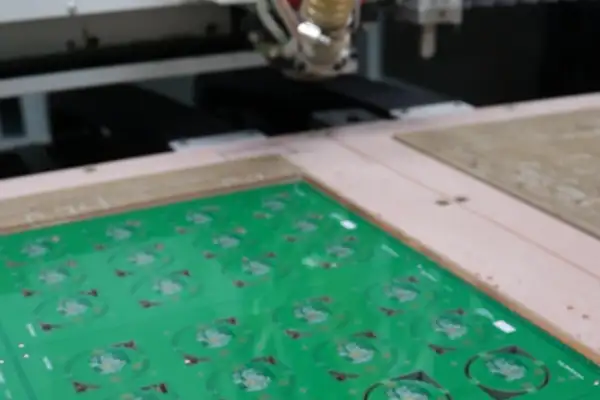
Actually, judging whether a supplier is trustworthy comes down to how they handle specific technical details — impedance control, for example. Do they truly understand your requirement, or do they just nod along? I’ve dealt with suppliers who said “no problem” verbally but delivered a product with over 10% impedance deviation, making it useless for high-speed signals. I eventually understood you need to have them produce actual test data to prove their process capability — promises alone mean nothing.
Stack-up design is another easy place to stumble. You might think that saying “8-layer board” means everyone’s on the same standard — that’s not the case at all. Different suppliers’ definitions of a “standard” stack-up can vary wildly, in both thickness and dielectric material. The safest approach is sending over your own detailed stack-up structure table and having them quote and produce strictly according to it, saving a lot of back-and-forth disputes downstream.
Material stability also can’t be ignored. Some small factories quietly swap material batches to cut cost, and performance can vary wildly from one batch to the next — what they produce today might not match what they produce next week. A dependable supplier proactively provides traceability information and inspection reports for key materials, giving you peace of mind.
At the end of the day, evaluating supplier capability takes patience — ask more, look more, compare more. Don’t just look at the price number; the technical strength behind it is what actually matters.
Choosing a PCB supplier is genuinely interesting. I’ve seen quite a few people treat how to evaluate pcb supplier capability far too simply. Some think checking qualification certificates is enough — those documents can indeed give you a preliminary impression. But what actually matters is how these suppliers perform in real operation.
I remember once inspecting a supplier that looked fully qualified on paper. Their showroom was lined with every kind of certification. But walking onto the shop floor, I found the workers’ operations weren’t disciplined enough. That made me realize documents only reflect one dimension of the picture.
I later started paying more attention to their workflow and technical staff’s professional level. Once, I worked with a supplier who wasn’t large in scale, but their engineers had remarkably precise attention to detail. That kind of technical rapport is often far more convincing than surface-level data.
Actually, evaluating a supplier requires looking at the question from multiple angles. Every company has its own characteristics; you can’t simply measure them all against one uniform standard.
Sometimes the most unremarkable detail reveals the most — like how fast they respond to a sudden order, or their attitude toward solving a quality problem. These all reflect a company’s true level.
I think what matters most is finding a partner who genuinely understands your needs, not just a contract manufacturer who completes orders. Only that kind of partnership can last and truly guarantee product quality.
At the end of the day, choosing a supplier isn’t a simple scoring exercise — it needs to be built on a deep mutual understanding of each other’s capabilities and needs. Only that way can you form a genuinely win-win situation.
Finding a PCB supplier feels a bit like opening a mystery box every time — you never know how much water is hiding behind their impressive-sounding qualifications. My last supplier is a perfect example — the UL certification mark shone brightly on their website, and then the first batch delivered to the customer had insulation problems. It later turned out their certification had expired more than two years ago, and the website info was never updated.
After enough experiences like this, you understand one truth: a certification is like a driver’s license — having one doesn’t mean you can actually drive a truck well. No matter how eye-catching the UL or IPC stickers are, you still have to personally check the file number for it to count. I’ve made a habit of having suppliers send over their latest certification-scope list directly, focusing on whether the covered material types and process parameters actually match my product’s needs.
Some factories especially love name-dropping “IPC member” as a golden credential. In reality, paying a membership fee is enough to become a member — that’s an entirely different matter from actual production capability. What’s actually worth paying attention to is whether they’re certified against a specific standard like IPC-A-600, and whether production-line staff undergo regular IPC skills training.
Automotive-electronics projects demand even more scrutiny. Just holding an IATF16949 certificate isn’t enough — you need to specifically ask how many layers of high-density board they’ve handled, and whether they have experience with high-low-temperature-cycling testing. I’ve seen too many suppliers wave a generic quality-management-system certificate to land automotive orders, while actually being unable to stabilize even basic impedance control.
Now, when I evaluate a supplier, I go directly to the shop floor to look at their equipment-maintenance records and inspection process — comparing against the actual hardware is far more reliable than reading a certificate. After all, a circuit board has to actually work in a real system; no amount of paper qualification can substitute for a sample with fully filled solder joints.
Choosing a PCB supplier, a lot of the time really isn’t about whose PowerPoint deck looks the prettiest. I remember visiting a supplier once who seemed especially professional — the equipment list and process-flow diagrams shown in the meeting room were flawless. But once we got to the actual production line, we discovered the “latest model” drilling machine they’d listed had actually been in use for eight years, and its precision had long since fallen behind.
That experience taught me a lesson: the key to evaluating supplier capability is personally seeing their equipment in operation. Some factories hide old machines in a corner to handle small-batch orders, while a genuinely dependable supplier insists on monthly calibration even for equipment bought five years ago. I’ve since made a habit of randomly spot-checking maintenance records for three machines purchased in different years.
Actually, talking with operators often reveals a more genuine picture. Once, at a factory in Dongguan, I noticed an inspector frowning while recording data, and getting closer, I found the measuring tool they were using had a blurry scale. This kind of detail never shows up in a carefully arranged slide deck, yet it directly affects every board’s yield.
Now, whenever I visit a new supplier, I make a point of touring the shop floor specifically at three in the afternoon. That time slot reveals the most: whether equipment shows abnormal temperature after running for a long stretch, whether employees simplify their process out of fatigue. I’ve seen a factory keep their sample area spotless, only to find, after turning around and opening their material cabinet, semi-finished units piled in disarray — that kind of inconsistency between appearance and reality is more dangerous than a technical parameter falling short.
While recently helping a friend’s company screen suppliers, I ran into a telling example: two companies both claimed they could produce 20-layer boards. Company A’s presentation used a 3D animation to demonstrate a fully automated production line; Company B just gave us a phone-shot photo of their equipment. But an on-site visit found Company A’s “smart production line” was actually automated only at the beginning and end stages, while Company B, though with older equipment, had hand-written improvement-suggestion notes stuck at every workstation. In the end we chose Company B, because their enthusiasm for process optimization couldn’t be faked.
At the end of the day, judging a supplier’s real strength is a bit like dating — you can’t just look at retouched photos; you need to spend time together. The ones eager to show you certificates first are often less reliable than the ones who proactively invite you to their quality meetings. After all, a genuinely confident company is never afraid of you looking into every corner of their shop floor.
I’ve seen too many companies get burned by supplier selection. Procurement departments comparing three quote sheets often think they’re being smart, when really they’ve completely missed the point. A circuit board is a foundational component that determines an entire product’s reliability — choosing the wrong supplier is like using inferior cement when laying a building’s foundation, and this matters just as much for something as unglamorous as a Packaging Machine PCB that has to run reliably for years on a factory floor.
What genuinely tests a supplier’s capability is their response speed when handling non-standard requirements. Last year, a project of ours needed special impedance control, and ordinary factories all said they’d need two weeks to schedule production. The supplier we’d worked with for years directly adjusted their line and delivered a sample in three days. That kind of flexibility can’t be measured just by comparing prices.
Many people think evaluating a supplier just means checking the equipment list and certifications. I’ve visited plenty of factories with genuinely new machines, yet operators who couldn’t even explain basic process parameters. By contrast, companies with slightly older equipment but engineers who could rattle off every process-control point off the top of their head felt far more reassuring.
Supply-chain management fears nothing more than the inability to respond to the unexpected. Once, when raw material suddenly ran short, our primary supplier mobilized every channel resource to keep supply uninterrupted, while a backup supplier couldn’t even maintain basic inventory. That’s when you see who’s genuinely running a serious business and who’s just doing transactions.
I now pay particular attention to a supplier’s employee turnover rate. I’ve visited a factory where 70% of staff had been there over five years, and even the cleaning crew could name every engineer. That kind of company’s quality stability barely needs worrying about, because their experience is embedded in their people.
Some people treat procurement as a simple buy-sell relationship, when in reality choosing a supplier means choosing a technology partner for the next three to five years. A good supplier proactively flags design risks and stocks new materials ahead of time; a poor one needs to be chased a dozen times just to hit a basic delivery date. That gap matters far more than the unit-price difference.
What bothers me most are procurement managers who only chase the lowest price. They can never calculate that the after-sales cost from insufficient supplier capability is ten times more than the procurement fee they saved. When a product fails, the customer isn’t going to listen to your explanation that it’s because you chose a circuit board twenty cents cheaper.
Now, every time I evaluate a new supplier, I bring an R&D engineer along. The questions a technical person asks tend to hit exactly the right nerve — like how they control drilling precision, or how they handle warping in high-frequency board material. These details are what truly reflect a company’s real strength.
Actually, there’s a very simple standard for judging whether a supplier is good: see whether they’re willing to make their production process fully transparent. Companies willing to let you tour the shop floor anytime and explain every process step in detail are usually not bad; the ones that always find excuses to avoid a visit deserve extra caution.
Every time someone asks me how to judge whether a PCB factory is trustworthy, I think it’s actually a genuinely interesting question. Many people start by staring endlessly at report numbers, but I have to say, focusing only on surface-level data can easily lead you astray. Some people, for example, place a lot of weight on CPK values, thinking higher is always better — but that’s a bit like an exam score that can be crammed for and doesn’t necessarily reflect real capability. I remember once visiting a supplier whose metrics all looked beautiful, only to discover they’d specifically selected their newest equipment and most skilled workers to produce the test samples, while normal production wasn’t like that at all.
There’s also the question of delivery time. Seeing a report showing 100% on-time delivery might make you feel secure — but there’s actually a lot going on behind that. I’ve seen plenty of suppliers set an especially generous lead time — something that could genuinely be done in two weeks gets quoted as a month, and then when they deliver two days early, you’re supposed to praise their punctuality. This kind of numbers game, once you see through it, actually makes you trust them less.
The suppliers that genuinely feel trustworthy to me tend to be the ones who sweat the details. For example, they’ll proactively tell you what trouble came up during production and how they solved it, instead of just presenting pretty numbers. Once, a small factory we worked with found a slight color discrepancy in a batch of board material — even though it had zero impact on function, they insisted on working overtime to redo the batch themselves. That kind of attitude is more reassuring than any report.
At the end of the day, choosing a supplier isn’t about picking the student with the best test scores — it’s about finding a partner who can genuinely stand shoulder-to-shoulder with you for the long haul. The ones willing to openly share real difficulties and work through problems together with you tend to be more trustworthy than the ones who only ever show you perfect data. After all, in business, everyone runs into surprises — what matters is whether the other side hides them or deals with them honestly.
I’ve had plenty of hard lessons choosing PCB suppliers. I remember once, rushing to get boards for an urgent project, I chose a factory that looked pretty solid — they held a full set of IPC certifications, and their shop floor was clean and orderly. The boards they produced had terrible impedance control, unable to even guarantee basic signal integrity. That’s when I realized certificates alone really can get you burned.
Now, when I look at suppliers, I pay more attention to how they actually implement process standards. Take the IPC-A-600 acceptance standard, for example — a lot of factories talk about it constantly, but very few actually follow it item by item in practice. I’ll directly ask their QA team how they spot-check plated-copper thickness, whether they do cross-section analysis, especially for designs with a high thickness-to-diameter ratio — these details reveal the real level far more than a certificate.
One approach I find genuinely practical is running a medium-difficulty design as a trial production — say, a 6-layer board with HDI blind/buried vias and impedance control — and watching the speed and quality of their engineering feedback. From document review to DFM suggestions, you can see the real experience of their engineering team. Some factories can’t even give a reasonable stack-up recommendation, let alone electromagnetic-compatibility analysis.
I place a lot of weight on a supplier’s ability to handle special processes — high-frequency board-material processing, or rigid-flex boards, for example — these aren’t things you can solve by just tweaking a couple of parameters. You need to see whether they have dedicated equipment and accumulated process expertise. Once, I ran into a supplier who wasn’t large in scale but had over a decade of experience in the RF/microwave board segment — their impedance control could hit within ±7%, more reliable than many bigger factories.
Actually, discussing specific case studies during an evaluation is far more useful than looking at marketing materials. Ask them about the most complex project they’ve handled and how they solved the typical problems that came up — the ones who can clearly walk through process details and countermeasures tend to be more trustworthy. After all, PCB manufacturing is a deeply practice-driven industry; no matter how pretty the data on paper looks, it’s no substitute for real, hands-on experience.
Finding a supplier is a path I’ve taken plenty of wrong turns on. I used to think that as long as the other side had solid technical skill, that was enough — until I got burned and realized you have to view them as a complete partner, not just a number on a quote sheet.
Many people jump straight to asking about price and lead time — surface-level things. But what actually matters is the stuff you can’t see. How do you judge a supplier’s real capability? I usually pay attention to the rhythm of how they handle problems day to day. When something unexpected comes up, do they proactively coordinate resources, or find excuses to deflect? That reveals their ability to respond far better than any marketing material.
On capacity flexibility — once, I urgently needed to add to an order, originally assuming I’d be turned down, and that supplier adjusted their production schedule within three days. It later came out they always kept 20% of their capacity idle specifically for emergency needs. That seemingly “wasteful” strategy actually became their competitive edge. So now, I find whether a supplier reserves buffer capacity more meaningful than simply looking at their maximum output.
Financial health is another easily overlooked point. Once, a partner suddenly asked to raise the prepayment percentage, and it later turned out their cash flow was tight. Now I specifically observe details like employee turnover rate and equipment-upgrade frequency — companies that keep investing tend to be more stable.
On a recent project evaluating a PCB supplier’s overall capability, I paid special attention to how they handle small-batch orders. Some factories barely bother with this kind of demand, while others specifically optimize their quick-turn prototyping process. This difference in attitude often reveals whether a company’s business philosophy is short-term profit-chasing or long-term development.
Actually, finding a supplier is a lot like making a friend — whether they come through when it counts often depends on what’s been built up day to day. The ones always chasing orders on price alone might turn around and sacrifice quality the moment profit gets squeezed; the ones focused on technical depth and disciplined management tend to be far more trustworthy.
I remember a longtime partner who, last year, proactively helped us redesign our test process, boosting yield by five percentage points. That kind of above-and-beyond investment made me realize a good partnership should be mutually reinforcing. So now I place more weight on whether both sides can grow together, rather than simply comparing numbers on a quote sheet.
At the end of the day, choosing a supplier isn’t a one-time transaction — it’s opening a long-term relationship that needs ongoing management together. Technology and price matter, of course, but the character and development philosophy behind them are what actually determine how far the partnership can go.
Choosing a PCB partner is genuinely interesting. I’ve seen too many people pour their energy into price comparison and reading reports. The numbers in the table do look nice — near-100% on-time delivery, and prices pushed down pretty low. But the moment a board has a problem and you need to trace the cause, you find yourself in real trouble. Material batches not matching up is common; incomplete process-parameter records is even more of a headache. These hidden details are often what actually determine success or failure.
I remember once encountering a seemingly perfect candidate supplier. The documentation they provided was so complete you couldn’t find a flaw. But we still insisted on walking their production line. It turned out their material management was actually quite chaotic — different batches of board material mixed together, and operators had varying understandings of the process standard. This kind of surface-polish-but-rough-underneath situation isn’t rare in the industry at all.
So now I put more weight on a supplier’s ability and attitude when handling problems. Of course whether the board is made well matters, but more important is whether they can quickly locate the issue and offer a solution after something goes wrong. That requires a professional technical team and a mature quality-traceability system. Suppliers relying purely on low prices or delivery-date promises often fall short in exactly these areas.
I think, rather than spending a huge amount of time studying data that might be dressed up, it’s better to pay more attention to a supplier’s actual case history and technical accumulation. Look at what complex projects they’ve handled before, and whether they have experience responding to the unexpected. These real, tangible things are far more convincing than any pretty report. After all, partnership is a long-term matter — finding a dependable partner is what lets you go further.
Choosing a PCB partner is genuinely interesting. I’ve seen too many people carry a thick stack of evaluation forms, checking boxes and crossing things off — equipment lists, certifications, capacity data, filling an entire page. But honestly, those things often bear little relation to the actual working experience. What you really need is the ability to see past the surface data to the real underlying capability.
I remember once switching to a new supplier billed as an industry leader, whose documentation was beautifully prepared, and the first batch of boards had soldering problems. Their engineer explained at length with a report, and it eventually turned out they’d raised the solder-paste storage temperature by half a degree to cut cost. What evaluation form could ever catch that kind of detail? We learned our lesson, and now, when inspecting a supplier, we always crouch by the production line to watch how workers operate the equipment and listen to them talk about process challenges. Real capability often hides in the grease on the workbench, not in a glossy printed brochure.
Many people think evaluation is about quantifying metrics, but actually, the most valuable feedback often comes from informal conversation. For instance, over a meal, hearing a veteran technician complain that a particular board material is especially finicky, or overhearing in casual chat that they’ve revised a similar project for a major client five times over — these fragments of information, pieced together, are more real than any audit report.
I now place much more weight on a supplier’s flexibility in solving problems. Once, an urgent order needed an impedance-control adjustment, and the original partner flatly said their process couldn’t hit it, while a newly found factory’s engineer got on a video call that same night to discuss the possibility of fine-tuning trace width. Even though it didn’t ultimately work out, that kind of proactive, responsive attitude put me at ease. Real capability isn’t just shown in standard procedure — it shows up in the improvisational wisdom applied during an unexpected situation.
At the end of the day, evaluation isn’t a one-time exam — it’s an ongoing dialogue. Some suppliers perform flawlessly for the first three months and then start wavering after half a year; some start off shaky but get steadier and steadier. The key is building a mechanism that catches problems in time and improves together, rather than just slapping a “qualified” label on and calling it done.
Recently we’ve been experimenting with rotating design staff to spend two days actually working alongside a supplier — not to nitpick, but to learn. Unexpectedly, we found that a few pad sizes in our own footprint library were creating unnecessary difficulty for the factory — that kind of two-way feedback is far more useful than one-directional auditing.
At the end of the day, judging whether a supplier is any good comes down to whether they’re willing to grow alongside you, not just complete the order in front of them. The factories that treat a customer’s project as their own chance to level up their technology tend to go further — and that’s the core truth hiding behind all those certifications.
PCB manufacturing standardization brings quality assurance and industry-wide coordination, but it also
Many people assume the key to circuit-board manufacturing is high-end equipment, but
Every time you open up an electronic device, that iconic green circuit
- 중소규모 배치 생산 전문가
- 고정밀 PCB 제작 및 자동화된 조립
- OEM/ODM 전자 프로젝트를 위한 신뢰할 수 있는 파트너
영업 시간: (월~토) 9:00~18:30
Get quote, solution or any question, Andre always here to help