

Why the Best PCB Supply Chains Are Built Like Relationships, Not Transactions: Lessons for Satellite Communication PCB Programs
What actually makes a long-term PCB supply chain partnership work — shared
I’ve seen too many teams take detours in hardware development. Initially, everyone thinks using readily available reference PCBAs is convenient and cost-effective, which is a natural idea. But those who actually develop products quickly discover that reference designs are like renting a house; you can’t change the renovations, and if the structure breaks down, you have to wait for the landlord. A smart home development team learned a hard lesson last year when a chip in their standard design suddenly became discontinued, halting the entire project for three months while waiting for a replacement. This risk of relying on external solutions is particularly evident in the rapidly evolving tech industry, especially when core components are affected by international trade conditions, as even alternatives may face delivery delays or price fluctuations.
Custom PCBAs aren’t as daunting as they seem. The key is maintaining control. When we were developing smart agriculture sensors, we selected our own components, chose our own suppliers, and even standardized the soldering processes. Although this added two weeks to the initial discussions, those two weeks saved us two months of trouble in mass production. Industrial-grade components are more expensive, but they can last five years without worrying about replacements. For example, the wide-temperature-range capacitors and corrosion-resistant connectors we chose, while 30% more expensive, reduced the failure rate by 80% in extreme outdoor environments, significantly lowering after-sales maintenance costs.
The biggest problem with standard designs is that they confine you to someone else’s design logic. I’ve encountered clients who wanted to add a simple humidity detection function only to find that all the interfaces on the standard board were already taken up. Ultimately, external modules are the only solution, making the product feel patched up. Custom designs allow for expansion from the outset, even pre-installing interfaces for future upgrades. For example, we pre-install I2C and SPI bus interfaces in our designs and embed Bluetooth and LoRa antenna positions on the PCB. This way, adding sensors or communication modules later only requires simple jumpers.
The component market changes too rapidly now. Chips still in mass production today might be discontinued next quarter. Controlling the supply chain allows for advance preparation, such as stockpiling inventory or designing compatible solutions. Last time, when one of our main control chips was about to be discontinued, we had already prepared a replacement model, and the production line never stopped during the switch. We’ve also established a component lifecycle early warning system, monitoring supplier dynamics and industry trends to initiate alternative solution verification six months in advance, ensuring a smooth transition during material switching.
Many people underestimate the brand value of customization. Competitors can buy the same core modules using reference boards. But when you make the circuit board layout, heat dissipation design, and even solder joint colors unique, that’s a technological barrier in itself. It’s like the difference between a bespoke suit and an off-the-rack garment—the details speak volumes. We once reduced power consumption by 15% by optimizing the power path layout. This differentiated design allowed our product to stand out in competitor tests, and customers were even willing to pay a premium for this stability and energy efficiency advantage.
What struck me most was seeing a team modify the reference design three times, spending more money and time than they would have spent on a direct custom design, wasting over half a year. Sometimes taking shortcuts leads to a longer, more circuitous route. Now, when I see a new project, I always suggest at least assessing the feasibility of customization. After all, it’s your product, and you need to pave your own way to ensure a solid foundation. That team later realized that each revision not only required re-prototyping and testing but also incurred high procurement costs for small batches of special components. These hidden expenses are often easily overlooked in the early stages.
Of course, not all projects require customization, but for products that require mass production or have special functional requirements, investing more effort in the front-end design will save a lot of trouble later. It’s like decorating a house; good concealed work makes living there comfortable, and a solid hardware foundation allows for software optimization. Especially for products requiring certification, custom designs can better meet safety regulations and electromagnetic compatibility requirements, avoiding major structural changes during later modifications. One of our medical device projects passed CE and FDA certifications on the first try because we considered isolation spacing and shielding design in advance, saving at least two months of rectification time.
Every time I see someone debating whether to choose custom PCBA services, I find it quite interesting. Many people immediately focus on the price—which is understandable—but I’ve found that what truly determines the smoothness of a collaboration is often the finer details.
For example, in a previous project, we were particularly concerned about whether a supplier had a complete material traceability system. We actually found a manufacturer that could accurately record the production batch and soldering temperature of each resistor. These details may not seem significant normally, but they can save you a lot of troubleshooting time when problems arise.
I particularly dislike suppliers who make their quotes sound like gibberish. They package resistors and capacitors in technical jargon, making it seem incredibly complex. Good partners will proactively lay out their cost structure, clearly explaining which expenses are fixed and which have room for adjustment. This transparency makes them more willing to cooperate long-term.
Technical capabilities are certainly important, but there’s no need to blindly pursue top-of-the-line configurations. The key is to determine the specific level of manufacturing process required for your product. Trying to find a manufacturer capable of aerospace-grade surface mount technology (SMT) for ordinary consumer electronics is simply asking for trouble. Compatibility is far more practical than absolute height.
In today’s volatile component market, the resilience of a supplier’s supply chain has become a hidden advantage. A manufacturer that can maintain production during chip shortages by utilizing alternative solutions demonstrates flexibility far more valuable than simply pushing for lower prices.
Ultimately, choosing a custom PCBA partner isn’t about comparing price lists, but about whether both parties can work in sync. Sometimes, a team with slightly weaker technical skills but smooth communication is more suitable for small- to medium-volume projects than a team with strong technical skills but stubbornness. After all, electronics manufacturing is a dynamic process that requires both parties to maintain flexibility.
What I value most is the attitude of the other party’s engineers. I’ve encountered experienced engineers who are too lazy to explain, and inexperienced engineers who are willing to work through the night to debug—the latter brings completely different experiences. There’s always a gap between the design on the blueprints and the reality of the production line; this is where the human factor becomes crucial.
What dimension do you value most when selecting suppliers? Is it better to obsess over technical specifications or prioritize long-term compatibility and comfort?
I recently chatted with a friend who works in smart home technology and noticed an interesting phenomenon. He had previously used several suppliers for PCBA prototyping to save costs. However, those boards either had soldering problems leading to unstable signals or ridiculously short component lifespans, resulting in a 30% return rate. Customer complaints were constantly ringing off the hook. Later, he gritted his teeth and switched to a reliable custom PCBA partner. Although the unit price was higher, the yield rate jumped to over 98%, and after-sales issues decreased by 80%. Now he has the energy to focus on new product development.
Many people easily fall into a misconception, thinking that PCBA is simply a matter of standardized component procurement and price negotiation. But anyone who has actually built a product knows that the quality of the circuit board often determines the bottom line of the product’s reputation. I’ve seen too many startups rushing to meet deadlines, hiring any small workshop to make boards, only to have their products launch and become the subject of user complaints and trending topics online, with repair costs exceeding profits. This seemingly shortcut choice actually dragged the brand into a quagmire.
Good partners proactively help you identify design flaws. For example, they might suggest replacing the package of a vulnerable chip with a more robust model, or remind you to add a protection circuit to the power module. These details may seem insignificant, but they can extend the product’s lifespan by two years in harsh environments. Last year, we had an outdoor surveillance project where, because our partner added a moisture-proof coating to the PCBA, the failure rate during the rainy season was 40% lower than competitors. When the client renewed their order, they specifically requested the same solution.
The market competition is no longer about going it alone. If your PCBA supplier is just a factory that installs according to drawings, they’re at best a temporary worker. But if they can provide professional advice from an engineering perspective, or even collaborate on optimizing the design, they are a true partner in your market push. The value generated by this collaboration is far more important than the small amount of processing fees saved.
Sometimes, seeing my competitors struggling to save a few dollars on PCB costs makes me feel quite sorry for them.
Every time I see someone treat custom PCBAs like a pure design game, I feel it’s been oversimplified. We often dive headfirst into blueprints, drawing line widths, stacking layers, calculating signals, as if circuit boards are Lego sets built purely with numbers. But what truly determines whether a board survives mass production is often not how flashy the design is, but whether it can reliably roll off the production line.
I’ve seen too many teams stumble on component selection. There’s a common misconception—that top-tier specifications guarantee success. But the reality is that some niche chips might not even have a second version available in their datasheets. Last year, a project working on industrial sensors insisted on sourcing a specific batch of a particular European chip, resulting in a four-month delay and a complete production line shutdown. Later, switching to a slightly less powerful but more stable model resulted in delivery two weeks ahead of schedule. Sometimes you have to admit that mass production isn’t a lab benchmark; it’s a gamble on time and reliability.
The manufacturing process is often seen as a black box, but it hides countless details that can determine success or failure. For example, seemingly insignificant variables like the wear and tear on the pick-and-place machine nozzles and fluctuations in the reflow oven temperature gradient can collectively cause yield rates to fluctuate wildly. Once, a batch of boards that achieved a 92% yield on an old production line dropped to 87% immediately after being moved to a newly commissioned line. It turned out the only difference was a ten-minute difference in solder paste warm-up time.
Many people misunderstand yield, thinking it’s solely a production-side concern. But those projects constantly complaining about low yields often had problems planted during the schematic design phase, such as placing sensitive analog signals near power supply seams or hiding test points under heatsinks. Once, we made a simple layout change, avoiding the DDR equal-length routing area at board bends, and the defect rate dropped by three percentage points.
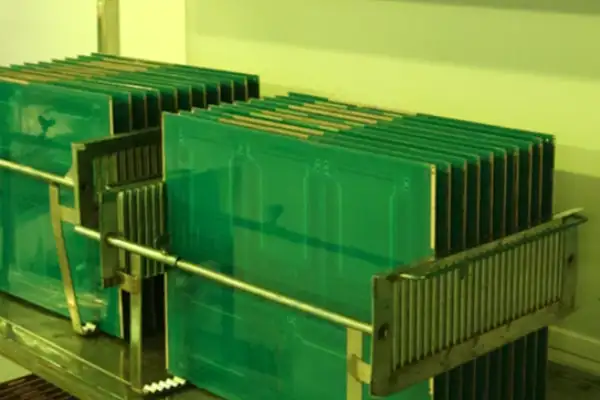
Ultimately, custom PCBA design is never a relay race where you design and hand it to the factory; it’s a marathon that requires someone to oversee the process from start to finish. I hate hearing people say, “Make it according to ideal parameters first, then consider production issues.” This kind of thinking is like building an airplane without considering how to land. The truly reliable approach is to involve manufacturing experts in the discussions early on. Even something as simple as adjusting the solder mask bridge width or optimizing the panelization can save the entire project a lot of trouble.
Now, every time I review a new design, I ask an extra question: “Will this solution remain stable at 1000 RPM?” This question often reveals the truth more than discussing theoretical performance, because mass production isn’t prototyping; it tests the resilience of the entire system under real-world conditions.
I’ve seen too many people make the same mistake when customizing PCBAs—simply handing over the design files to the factory and thinking everything is fine. In reality, from the moment you decide to make a circuit board, you should consider the actual limitations of the manufacturing process.
A client came to us last week with their drawings, saying that the factory they had previously used couldn’t do BGA soldering well. I immediately saw the problem—they had placed all the test points in the very center of the board, out of reach of the pick-and-place machine. This kind of oversight in the design phase is a disaster in production.
The worst thing about custom PCBAs is everyone working independently. Engineers only consider functionality when drawing, purchasing focuses on component prices, and the production department thinks about how to cut corners. When problems are discovered after the board is manufactured, no one can pinpoint the responsibility.
I particularly value the Design Layout (DFM) inspection stage. This isn’t simply about checking trace width and spacing; it’s about simulating the entire process from a production perspective. For example, in a medical device project, the client insisted on using 0.3mm vias, citing signal integrity requirements. Our actual testing revealed that 0.35mm vias perfectly met the requirements, but improved yield by 20%. This kind of professional advice is where the value of DFM lies.
Many teams now like to break projects into isolated phases—designing only after completion and then immediately moving to mass production. The most effective approach is to involve manufacturing engineers in layout discussions early on. A few days ago, in an automotive electronics project, we suggested distributing several heat-generating chips during the schematic stage, which saved a lot of trouble with later heat dissipation.
The key to judging the reliability of a PCBA project is whether the design team is willing to accept production feedback. Some engineers always feel that the manufacturer is nitpicking, but every suggestion we make is a lesson learned from past mistakes. For example, details like adjusting the solder mask bridge width may seem insignificant, but they directly affect soldering yield.
A recent smart home project left me with some reflections. The client initially opted for a cheap reflow oven to save money, but the large temperature difference caused poor soldering. They ended up replacing the equipment and redoing the process, but the total cost was actually higher. This reminded me of a principle—saving money in PCBA manufacturing will eventually come back to haunt you in other ways.
Ultimately, a good custom PCBA is the result of continuous dialogue between design and manufacturing. Every suggested modification is backed by real production data, not just imagination. Next time you’re designing a circuit board, ask yourself: Can this design be successfully implemented?
I’ve always felt that the most interesting part of hardware development is being able to build your own things. When I first started working on electronics projects, I always tried to save time by buying ready-made development boards. It was convenient—just plug it in and it would run. But after a while, something always felt off. It’s like wearing someone else’s worn shoes; they fit, but they’re not custom-made for you.
Later, I tried designing my own boards and making custom PCBAs, and I realized it’s a completely different story. While commercially available generic PCBA solutions appear feature-rich, they often cram in unnecessary components, resulting in high costs and limited size. For example, our team once developed a portable device and found that the existing PCBA board was larger than the battery – how could we possibly work with that?
What truly solidified my decision to pursue a custom approach was a product iteration experience. We were using a generic module, but the RF performance was consistently unstable. After two months of debugging, we discovered the problem was with the antenna matching circuit. If we had designed our own PCBA, we could have optimized the antenna section for a more compact design; I regret it now.
Many people worry about long development cycles and high risks associated with customization. However, finding a reliable partner can actually save you a lot of trouble. Our sensor project last year only took six weeks from schematic to mass production. The key was thoroughly understanding the product requirements, such as clearly telling the engineers which interfaces needed sufficient margin and which components could be replaced with cheaper alternatives.
What surprised me most was cost control. You think generic designs are cheap? Once the volume increases, the cost per board for a custom PCBA can be more than one-third lower than purchasing off-the-shelf modules. Furthermore, we can adjust component selection based on production progress – a flexibility that standardized products simply can’t offer.
Of course, not all projects require custom-designed PCBAs from scratch. For prototypes in the concept validation phase, buying ready-made PCBAs to quickly build a demo is more cost-effective. However, when you’re ready to launch your product, whether the board truly fits the product positioning will directly impact user experience and business competitiveness.
Now, when I provide hardware consulting for startups, I always ask them one question: Do you want users to remember the product’s unique value or just another familiar solution? The answer often determines whether they choose a reference design or embark on the path of customization.
Every time I see people discussing whether to build a custom PCBA, I think about one question—are we overcomplicating things? People are always struggling with the so-called balance point, but I’ve found the real problem is that many people start off on the wrong foot. They’re always thinking about how to save money, ignoring the most fundamental thing: why do you want to customize in the first place? I’ve seen too many teams choose off-the-shelf solutions to save money, only to end up with a lot of headaches and spend several times more money unnecessarily later.
The most important thing to consider when customizing PCBAs isn’t cost-cutting, but rather how to spend money wisely. For example, in one project, the client initially insisted on omitting several test points, resulting in a third of the first batch of boards needing rework. Later, by adding a few simple testing processes, the yield rate jumped to over 98%. This seemingly increased upfront investment actually reduced overall costs. Sometimes, you need to spend a little more to avoid major problems later.
Another common misconception is that customization means a longer lead time. However, if you can find a supplier with whom you have a good working relationship, you can actually save time. One supplier we worked with was particularly knowledgeable; they intervened early in the design phase, helping us avoid structural design flaws. This meant we almost never needed to rework later. This kind of synergy can’t be bought with price comparisons.
Regarding quality, many people’s understanding of customization is still limited to “better materials.” The real value lies in your ability to make targeted optimizations based on the actual usage scenario. For example, in one project requiring operation in a high-temperature environment, we adjusted the component layout for more even heat dissipation. Although the material grade remained the same, reliability was significantly improved. This flexibility is something that reference designs can never provide.
Of course, I’m not saying all projects are suitable for customization. If you’re just making a simple demo or producing a very small batch, there’s no need to go through all that trouble. However, when you have specific performance requirements or need to consider long-term iterations, the advantages of customization become increasingly apparent. It’s more like a long-term investment; the initial investment may be slightly larger, but the subsequent maintenance costs and upgrade potential will bring you greater returns.
Finally, I want to say don’t let those so-called triangular relationships confine you. The key is to clearly understand what your product truly needs. Sometimes, spending a little more for more stable quality and a shorter debugging cycle is the most worthwhile choice.
I’ve always felt that many people have a misconception about custom PCBAs—as if you can just throw your requirements at the factory and wait for a perfect product. Actually, it’s more like a dialogue process when assembling a precision instrument: you need to understand why each component is arranged this way.
I’ve seen too many people fall into the first pitfall of the customization process—writing their requirements as vague as poetry. Saying things like “I want a board that can process data” puts manufacturers in a guessing game. By the time the prototype arrives and you find that even the power connectors don’t match, it’s too late to rework.
There’s something particularly interesting: sometimes the most beautiful designs are the hardest to manufacture. For example, someone might insist on arranging components as compactly as a work of art, making it impossible for the pick-and-place machine to even pick them up. In these situations, seemingly unnecessary spacing becomes a lifesaver.
Regarding safety stock, I have a different perspective—it’s better to proactively optimize the supply chain’s responsiveness than passively stockpiling inventory. Last year, we had a project where we needed to change the heatsink design at the last minute, and our partner delivered new specifications of heatsinks within two days. This flexibility is far more practical than simply piling up inventory.
Truly reliable PCBA partners will work with you to tackle tough challenges. I remember once we were stuck on impedance matching for three days, and the manufacturer directly sent engineers with equipment to the lab to test and adjust on the spot. That attitude of treating your problem as their own is the foundation of long-term cooperation.
The worst thing is encountering manufacturers who agree to everything in the quote but only make do with whatever is available in production. The biggest taboo in custom circuit boards is “good enough.” A 0.1 microfarad difference in a single filter capacitor could mean the entire batch has to be reworked.
Now, I would advise beginners to break down application scenarios into specific technical parameters, just like when ordering food, don’t say “anything,” but specify “mildly spicy, extra vinegar” so that manufacturers can respond accurately. After all, the core of customization is never about piling on fancy features, but about the solid feel of every detail fitting perfectly.
I’ve personally experienced several custom development processes, and each time I’ve found them quite interesting. Initially, I always thought customization would take a long time, but I later discovered that’s not the case. For example, in a project we did last time, it only took about two months from submitting the requirements to receiving the final sample.
The key is to clearly understand what you want beforehand.
Many people immediately say they want to do custom PCBs, but they haven’t even figured out the basic functions. I’ve seen many teams repeatedly modify their requirements during development, resulting in endless re-prototyping, wasting all their time. In fact, if you clarify your requirements in the early stages, things will go much more smoothly later on.
I remember once helping a friend’s company build the core board for a small device. They had been using off-the-shelf modules, but the results were always unsatisfactory. They decided to do a complete custom development. We spent a week discussing every detail, including interface locations, component selection, and even the placement of heat dissipation holes. The result was a very smooth PCB design process; it passed testing on the first try.
Sometimes I feel that people these days are too impatient, always wanting immediate results. But hardware development really can’t be rushed; time is still necessary, but this time isn’t for waiting; it’s for ensuring every step is done properly. For example, when selecting components, you have to consider subsequent mass production issues. You can’t just look at performance parameters; you also have to consider supply stability. These details all affect the entire project’s progress.
Speaking of customization, I particularly appreciate approaches that combine standardization and personalization well. It’s unnecessary to design every part from scratch. You can directly use some mature functional modules and focus your energy on the parts that truly require customization. This ensures reliability, achieves differentiation, and most importantly, significantly shortens the development cycle.
The worst thing about hardware development is constant back-and-forth tweaking. Successful custom development often stems from meticulous attention to detail and a firm grasp of the overall pace—knowing when to be fast and when to slow down.
I’ve always found choosing a custom PCBA supplier quite interesting. Many people focus on price and delivery time, but what truly determines the quality of a collaboration is often those easily overlooked details. Last year, we had a project that required finding a new supplier, and I specifically spent time observing the daily operations of several factories. One factory’s engineer, during a review, could pick up a board and immediately point out three design details that could be optimized. This professionalism immediately inspired my trust. Conversely, I would almost never consider manufacturers whose quotes were beautifully written but who were vague about technical issues. This professional insight often manifests in a deep understanding of material properties, thermal design, or assembly processes. For example, they might point out that the pad design of a certain component is not conducive to uniform heating during reflow soldering, or suggest adjusting the wiring to reduce the risk of electromagnetic interference. This timely technical feedback not only improves product reliability but also significantly reduces the cost of subsequent modifications.
The biggest fear in custom PCBA manufacturing is communication breakdowns. Sometimes, the design files provided by the client may have minor issues. If the supplier simply produces according to the drawings mechanically, both parties will ultimately suffer. I appreciate partners who dare to offer suggestions early on. After all, they are exposed to various processes daily and understand which designs are easier to mass-produce. This kind of interaction goes beyond a simple outsourcing relationship and is more like jointly solving a problem. For example, in impedance control or high-frequency circuit design, experienced suppliers will suggest using specific substrate types or adjusting the stack-up structure in advance. These details often avoid yield fluctuations during mass production. They can even recommend more economical panelization solutions based on equipment capacity, helping clients optimize cost structure while ensuring quality.
My view on delivery time might be a bit different. Many people like to pursue the shortest delivery time, but I’ve found that suppliers who always promise extremely short delivery times often cut corners on quality control. Truly reliable manufacturers will give you a reasonable timeframe, with clear deadlines for each step. On one occasion, a manufacturer we urgently needed for an expedited order insisted on allowing sufficient time for quality inspection, even though they knew we would incur higher rush fees. This adherence to their bottom line actually reassured me. For example, they clearly indicated the time buffers required for flying probe testing, AOI inspection, and X-ray inspection in their production plans. This transparent management approach allowed clients to accurately predict project progress. Some manufacturers even proactively shared real-time production line status, allowing clients to clearly understand the completion status of each process.
Now, more and more custom PCBA services are shifting towards collaborative R&D, which is indeed a positive trend in the industry. Previously, suppliers might have only been responsible for producing according to orders; now, they proactively participate in early design discussions, using their experience to help clients mitigate risks. The value generated by this deep collaboration far exceeds simply reducing processing fees by a few percentage points. After all, good products require the joint efforts of the entire industry chain, not just turning drawings into physical objects. For example, during the design for manufacturability phase, suppliers might suggest changing the BGA package to the more easily inspectable LGA type, or recommend a more reliable bend protection solution for flexible circuit boards. This technical collaboration is especially crucial in the new product introduction phase, effectively shortening the product cycle from design to mass production.
Choosing a supplier is like finding a partner; the key is a shared set of values. Manufacturers willing to invest time in understanding your product philosophy and engaging in open communication during the review process are more likely to become long-term, reliable partners. After all, PCBA quality directly impacts the performance of the end product, and compromising in this area ultimately damages your brand reputation. For example, suppliers in the medical equipment or automotive electronics fields typically proactively establish stricter process control systems. This dedication to quality often aligns perfectly with the safety requirements of their clients’ products. When suppliers consider process standards from the perspective of product application scenarios, this strategic resonance translates into more consistent delivery quality.
I’ve seen too many people make the same mistake when customizing PCBAs—treating the sample stage as a mere formality. They’re eager to get their hands on a physical product to see the effects and consider it done. But the significance of samples goes far beyond that.
I remember last year a client brought us three different designs for sample comparison testing. They originally only intended to verify the basic functions before moving to mass production. However, we insisted they conduct 72-hour continuous operation tests under different temperature environments. The result was that one of the designs exhibited signal interference issues at high temperatures—a problem that wouldn’t be detected during ordinary functional testing.
In-depth testing during the sample stage often uncovers hidden design flaws. Some problems may not manifest until hundreds of hours of operation under specific load conditions. Skipping these tests and jumping directly to mass production can have serious consequences.
The transition from sample to mass production requires extreme caution. I’ve seen numerous cases where rushing to achieve quick results led to neglecting necessary transition steps, resulting in significant rework later on.
Once, we encountered a very interesting situation: a customer discovered during small-batch trial production that the soldering pass rate of a certain component consistently failed to meet expectations. After repeated investigations, it was discovered that the problem stemmed from minute differences between component batches. This issue hadn’t surfaced in the previous sample stage because different batches of components were used.
This made me realize that even seemingly identical components can have subtle differences, and these differences can have a significant impact on the final product quality.
Now, before each project begins, we spend sufficient time discussing the specific needs of our customers, especially those easily overlooked details such as the product’s future operating environment or expected lifespan. This information is crucial for developing appropriate testing plans.
Sometimes clients feel we’re overly cautious, but this caution has proven worthwhile. It helps us avoid many potential quality risks and gives clients greater confidence in our products.
Ultimately, custom PCBAs aren’t simply processing supplied materials; they require close collaboration between both parties. Only by truly understanding the product’s application scenario can we create a design that meets actual needs. This is why we consistently emphasize early involvement in the client’s R&D process.
Timely communication and feedback are crucial in this process; we call it the “Fangying” mechanism—not only responding quickly to problems but also proactively anticipating them to ensure smooth progress at every stage and ultimately deliver a satisfactory product.
Over the years of hardware development, I’ve increasingly felt that choosing the custom PCBA path was the right decision. I remember when I first started working on electronics projects, I always thought it was convenient to use readily available generic solutions—no need for drawing, debugging, or just plugging it in. However, I later discovered that this convenience hid many pitfalls.
Once, our team was working on an environmental monitoring device. The client had strict size requirements, and after searching the market, all the PCBA solutions were either too large or had unsuitable interface positions. At the time, some suggested modifying the casing design to accommodate the circuit board. I felt this was putting the cart before the horse; product experience should prioritize user needs, not be constrained by the supply chain. Later, we decided to create our own custom PCBA. Although it took two extra weeks initially, the final board perfectly fit the casing, and unnecessary functions were removed, making it more cost-effective than modifying the mold.
Many people worry about long customization cycles, but prototyping services are now very fast; you can get the board in three to five days. Using reference designs often involves compromises, such as paying for unnecessary functions like Bluetooth modules—these hidden costs are easily overlooked.
The most typical example I’ve seen is a startup team making smart home devices using reference designs. After the product launched, users complained about short battery life. Upon disassembling the board, they discovered too many redundant circuits. A redesign and custom solution doubled the battery life.
Of course, this isn’t to say reference designs are useless. For validating concepts or educational projects, they can quickly build prototypes, but to truly market, a customized PCBA solution is needed to differentiate the product. Just as ready-made clothes are always wearable, but bespoke clothing is always the best fit, the same principle applies to the hardware field.
A recent industrial sensor project I helped a friend with further validated this point. Standard reference designs don’t meet the interference requirements of factory environments. By optimizing the layout and component selection, we achieved EMC performance exceeding industry standards on a custom PCBA. This precise adjustment is something off-the-shelf solutions can never achieve.
I’ve always felt that many people have a misconception about custom PCBAs—that it’s simply changing the color or size of an existing solution. True customization begins with a shift in thinking, starting from the circuit design itself.
I remember last year our team worked on a medical device project. When the client initially came to us with a reference design for PCBA manufacturing, they emphasized cost control. But after we broke down their entire product logic, we suggested adjusting the layout of several key components—although the cost per board increased slightly by 5%, the overall assembly time was reduced by one-third. This reverse-engineering approach from the end-application perspective is where the value of customization lies.
Many so-called one-stop services on the market today are simply packaging different stages together. Truly experienced manufacturers proactively anticipate problems. For example, once during the review phase, we discovered that the connectors selected by the client did not meet automotive vibration standards and recommended changing the model to avoid subsequent recall risks.
Good customization is never about blindly following instructions; it’s a collaborative creative process. I particularly value whether manufacturers are willing to spend time understanding the product scenario. Partners who can discuss power distribution based on schematics and suggest heat dissipation solutions based on the casing structure are worth long-term collaboration.
Recently, an interesting phenomenon has emerged: more and more startups are starting to bring PCBA customization to the concept stage. They bring initial ideas to discuss technical feasibility rather than waiting until the design is fully finalized before finding suppliers. This open collaboration often leads to more optimized solutions.
Ultimately, choosing customization means acknowledging that standard solutions cannot meet unique needs. This requires courage and, more importantly, finding a partner who understands your underlying message. After all, every trace on the circuit board is connected to the user experience of the final product.
What actually makes a long-term PCB supply chain partnership work — shared
Practical, experience-based strategies for how to reduce PCB procurement risks — from
Real factory-floor lessons on how to optimize a PCB manufacturing process —
- 중소규모 배치 생산 전문가
- 고정밀 PCB 제작 및 자동화된 조립
- OEM/ODM 전자 프로젝트를 위한 신뢰할 수 있는 파트너
영업 시간: (월~토) 9:00~18:30
Get quote, solution or any question, Andre always here to help