

Heat Dissipation Challenges and Solutions in PCB Circuit Board Design
Circuit boards are more than just that green board in a phone
Every time I disassemble a newly purchased electronic product, I can’t help but take a closer look at the internal structure—those intricate circuits are arranged as precisely as a city’s transportation network. Many people think it’s just an ordinary green board. But after interacting with several PCB manufacturers, I realized that this industry is no longer just simple processing.
Last year, I encountered something interesting while helping a friend’s company choose a circuit board supplier. One manufacturer proposed modifications to the heat dissipation design during the prototyping stage, changing the double-sided wiring to a four-layer interleaved design. Initially, the engineers thought it was unnecessary, but during testing, they found that the motherboard temperature actually dropped by 8 degrees Celsius. This approach of working backward from the manufacturing end to refine the design is becoming increasingly common.
Modern smart devices have extremely demanding requirements for circuit boards. They need to fit into a space the size of a fingernail while ensuring stable high-frequency signal transmission, and some even need to be bent and worn. Once, while visiting a factory, I saw them using lasers to engrave lines on a ceramic substrate that were thinner than a human hair—a level of precision that was unimaginable ten years ago.
I particularly noticed that forward-thinking PCB manufacturers are starting to use digital twin technology. Customers can upload design drawings and virtually simulate current conduction, identifying potential problems in advance. This combination of virtual and real-world approaches is far more efficient than the previous method of making five or six rounds of physical prototypes and is better suited to the trend of small-batch customization.
Recently, I noticed an interesting phenomenon: some manufacturers are starting to collaborate across industries, such as developing washable flexible circuit boards with clothing brands or providing corrosion-resistant treatment for agricultural sensors. This approach of breaking out of the traditional electronics circle has opened up new markets.
Ultimately, excellent manufacturers are no longer just producers; they are more like co-creators. After all, even the best chip design ultimately needs to be implemented on a physical circuit board. Next time you’re smoothly watching videos on your phone, you might think about how those bridges that transform code into the physical world are becoming smarter and more indispensable.
I’ve always felt that many people’s understanding of circuit boards is still stuck at the “small green board” stage. In fact, modern PCBs are no longer just simple connectors. I remember being particularly impressed last year when I visited a local high-end PCB manufacturer – the circuit boards being produced in their workshop were as thin as paper.
A friend of mine who works in smart wearables recently complained about finding suppliers. He needed flexible circuit boards that could be bent tens of thousands of times without failure. Most manufacturers claimed they could do it, but the samples failed during testing. This is when you truly understand the threshold of high-end manufacturing.
The iteration speed of electronic products is incredibly fast. Previously, phones might be updated every two years; now, smart home devices release new models every six months. This forces PCB design to stay ahead of the curve.
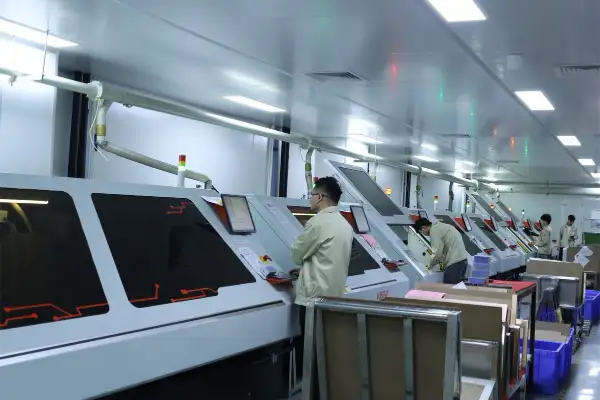
Several projects I’ve recently worked on have revealed an interesting phenomenon. Some domestic manufacturers are starting to make very interesting attempts – they are combining traditional PCBs with multi-layer ceramic substrates to create a solution that guarantees performance while controlling costs. This is more practical than simply pursuing technical parameters.
There’s a simple way to judge the quality of a PCB supplier: see how they handle your modification requests. Good manufacturers will proactively help you optimize design details.
In one medical device project I participated in, a small improvement to the circuit board increased the product’s battery life by a full eight hours.
Ultimately, choosing the right PCB still comes down to the needs of the product itself. Every time I see complex circuit board designs transformed into physical products, I wonder how many processes are involved to ensure they function reliably for so many years. I’ve worked with many PCB manufacturers and noticed an interesting phenomenon: some treat the testing phase as the final hurdle, but I think this is completely backward. True reliability should be considered from the design stage, not as an afterthought after the product is finished.
I’ve seen too many cases where the design didn’t consider the actual application environment. Even with impressive test data, various inexplicable problems still arise in the hands of users, such as high-frequency signal interference or significant performance fluctuations with slight temperature changes. These issues cannot be completely solved by post-production testing alone. A good PCB manufacturer should be proactively involved, helping customers optimize their design solutions, rather than passively producing according to the provided specifications.
Speaking of testing, many manufacturers now boast about their advanced equipment. Flying probe testing and automated optical inspection can indeed detect surface problems, but what truly affects long-term reliability are often the hidden internal defects, thermal stress testing, and material aging. These are the areas that truly test a manufacturer’s expertise. I’ve worked with a small factory whose equipment wasn’t top-of-the-line, but they spent a significant amount of time analyzing the customer’s usage scenarios before production, considering even the slightest vibrations and humidity changes. This attitude is far more valuable than simply pursuing testing accuracy.
Industry certifications are important, of course, but don’t be misled by those certificates. I’ve seen some companies treat ISO standards as mere window dressing…) Many companies pay lip service to quality, but in reality, they always take shortcuts in production. A true quality culture means every employee consciously prioritizes reliability, from material selection to welding – this awareness must be present in every process. Recently, on a medical equipment project, we even extended the PCB lifespan testing to three times the usual duration because we didn’t want any minor error to compromise the safety of the final product.
In fact, when choosing a PCB supplier, what I value most is not what they can do, but what they are unwilling to do. I’ve encountered manufacturers who, despite knowing there were flaws in the customer’s design, still went ahead with production just to get the order, resulting in mass production problems. This short-sighted behavior ultimately harms both parties. A good partner should dare to say no to unreasonable demands; that’s true responsibility for reliability.
Having worked in the PCB industry for so many years, I’ve noticed that many people have a misconception that it’s just a matter of drawing a diagram and then letting the machines do the rest. That’s completely wrong. The difference between a reliable PCB manufacturer and an ordinary processing plant often lies in the details you can’t see.
Take graphic design, for example. I’ve seen too many engineers just hand over the files and think everything is done. But every line on the drawing faces challenges during actual production. Even a slight deviation in line width can affect signal integrity; if the alignment of different layers isn’t done properly, the entire board might be ruined. This isn’t a simple printing process; it requires the manufacturer to truly understand the design intent. This is especially true when it comes to the drilling process. Do you think it’s just a matter of drilling a few holes in a board? In reality, the precision of these holes directly affects the reliability of the entire circuit. A manufacturer I worked with once showed me their drilling data; the diameter error of each hole in the same batch of boards was controlled at the micron level. This level of precision is not something just any factory can achieve.
What impressed me even more is the level of intelligence in modern PCB manufacturing. Previously, problems had to be diagnosed based on the experience of senior technicians, but now many factories have implemented full-process data tracking, with records for every step from graphic transfer to final testing.
Ultimately, choosing a PCB manufacturer shouldn’t be based solely on price. Those manufacturers who are meticulous about graphic precision and drilling quality are often the ones who can truly help you bring your design to life. After all, the circuit board is the backbone of the product; if the backbone isn’t strong, even the best design is useless.
My most painful lesson came from choosing a manufacturer with a very low quote. The boards they produced had rough graphic edges and drilling position deviations, leading to a recall of the entire batch of products. Since then, I’ve understood that saving money on fundamental components like PCBs will ultimately cost you more.
Today’s market increasingly values product stability and lifespan, and these depend on whether seemingly insignificant but crucial components like PCBs can withstand the test of time.
Every time I see a high-tech product launch, I can’t help but think about the unsung heroes behind it—the PCB manufacturers. —Those manufacturers who work with circuit boards all day long. You might think circuit boards are just layers of green boards with nothing special about them, but anyone who’s actually worked in this industry knows how complex it is.
I know several engineers who work at PCB manufacturers, and they often complain to me about how demanding their clients’ requirements are becoming. Previously, simply connecting the circuits was enough, but now they have to consider heat dissipation, signal interference, and even help clients figure out how to fit more components into a limited space. One friend of mine recently took on a project for a smartwatch; the motherboard was only the size of a fingernail, yet it needed to perform more than a dozen functions. His team spent three weeks repeatedly adjusting the design.
The changes in packaging technology are also remarkable. Modern electronic products are becoming lighter and thinner, but the performance requirements are higher, forcing manufacturers to constantly innovate in their processes. I remember five years ago, we could still use relatively traditional processes for mobile phone motherboards, but now, without high-density interconnect technology, it’s impossible to meet the precision requirements of clients.
In fact, many people underestimate the flexibility of manufacturing. Once, when I visited a PCB factory, I found that they could recommend different substrate materials based on the characteristics of the client’s product. For example, high-frequency circuits require special dielectric layers, while ordinary consumer electronics can use more cost-effective solutions. This kind of accumulated experience isn’t something you can simply acquire by buying a few pieces of equipment.
Recently, there’s been a very interesting phenomenon: many startups are starting to treat PCB manufacturers as R&D partners. Instead of simply being a contract manufacturer, one company that makes medical equipment even involves manufacturers in the early stages of circuit design because the manufacturers have a better understanding of which designs are easy to mass-produce and which are prone to problems. This deep collaboration actually shortens the product’s time to market.
I think the most interesting thing about this industry is that it’s both traditional and cutting-edge. It’s traditional because circuit board manufacturing has been around for decades, but it’s cutting-edge because now you need to understand materials science, thermodynamics, and even a bit of programming, since many testing devices are now intelligent. But ultimately, it still relies on the experience of the master craftsmen. Sometimes, a product that passes machine testing can be identified as potentially problematic by a master craftsman just by touch.
Some young people today are unwilling to enter the manufacturing industry, thinking it’s not as glamorous as the internet industry. But the sense of accomplishment from personally transforming a blueprint into a tangible, usable circuit board is something the virtual world can’t provide. A master craftsman I know always tells his apprentices, “Don’t underestimate this green board; it can turn your ideas into reality.” This statement, though simple, truly captures the essence of this industry.
Recently, while chatting with some engineer friends, I discovered an interesting phenomenon: many people think that choosing a PCB manufacturer is simply about comparing prices and finding the lowest cost. This idea is quite one-sided. Circuit boards may seem simple, but the process requirements vary greatly depending on the application. For example, when we were making smart home sensors last time, we found a manufacturer specializing in flexible circuit boards, and they helped us avoid potential problems right from the material selection stage… I’ve encountered several challenges.
Nowadays, excellent manufacturers are no longer just order-taking and production-only companies. I remember once when we were developing an industrial controller, the supplier’s engineer proactively suggested that we adjust the width of certain traces by 0.1 millimeters. At first, we thought they were making a big deal out of nothing, but later tests showed that this minor adjustment improved signal stability by 20%. The value brought by this kind of in-depth cooperation is simply incomparable to simply negotiating for lower prices.
The accelerating pace of technological iteration is also particularly interesting. Five years ago, when we were making drone flight control boards, we were still using ordinary FR4 material. Last year, when we did a similar project, the manufacturer recommended a board material with better high-frequency characteristics. Although the unit price was higher, it saved us a lot of trouble in later debugging.
A common misconception is that large manufacturers are always reliable. In fact, small and medium-sized manufacturers often have unique expertise in specific fields. One manufacturer I collaborated with, specializing in medical equipment, was not large in scale but was exceptionally professional. Their laboratory testing equipment was more comprehensive than some large manufacturers, and they provided detailed impedance test reports before each delivery. This level of professionalism made us feel more confident.
Ultimately, choosing a manufacturer is like finding a partner. Just looking at the price list is not enough. You need to see if they are willing to spend time understanding your product logic and whether they can provide constructive suggestions on technical details. A good collaboration should be a process where both parties grow from the project.
I’ve always felt that many people have misconceptions about PCB manufacturing— I used to think that everything would be fine as long as the circuit design was flawless. However, the factors that truly determine a product’s lifespan are often those invisible aspects. Last year, our company had a project where the design underwent seven or eight revisions before being finalized. Yet, the first batch of samples was scrapped because the circuit boards were damaged by moisture, resulting in unacceptable insulation resistance. This incident made me realize that even the most ingenious design can’t withstand negligence in the manufacturing process.
Now, when I look for a PCB manufacturer, the first thing I ask about is their testing procedures. Some manufacturers charge for testing as an extra service, which is quite short-sighted. Truly professional manufacturers integrate testing into every production stage, such as performing microsection analysis after lamination and sampling the copper thickness of plated through-holes after electroplating. These details may seem to increase costs, but they actually help customers avoid greater risks. For example, during the lamination process of multilayer boards, professional manufacturers use scanning electron microscopy to observe the interlayer bonding state, ensuring there are no delamination risks; and during surface treatment, they regularly measure the phosphorus content of the immersion gold layer to prevent black pad issues that lead to poor soldering. This comprehensive quality monitoring is like putting an “ECG” on the manufacturing process, allowing for real-time detection of process deviations.
I particularly value a manufacturer’s sensitivity to abnormal data. Once, while visiting a supplier’s laboratory, I found that they had created a data archive for every single board, even recording the current fluctuations during copper plating. This level of rigor isn’t simply following standard procedures, but truly understanding the meaning behind the testing – like a skilled traditional Chinese medicine doctor taking a pulse… They can not only monitor heart rate but also analyze subtle changes in pulse patterns. For example, when they find that the dielectric constant of a batch of circuit boards fluctuates by more than 3%, they trace it back to the curing curve of the resin system, rather than simply determining whether it is qualified or not. This data-driven analytical capability often allows them to predict potential quality fluctuations two weeks in advance.
Recently, I encountered an interesting phenomenon among several manufacturers that emphasize green manufacturing: their product yield is actually higher. Later, I understood that environmentally friendly processes often require more precise temperature control and material ratios. This refined management naturally improves overall quality. Taking lead-free soldering as an example, due to the increase in melting point by approximately 34℃, manufacturers must upgrade their preheating systems and strictly control the active components of the flux. This process upgrade actually results in more uniform solder joint crystallization. One factory even stabilized the copper ion concentration within an extremely narrow range of ±0.5 g/L by recycling the etching solution. This stability directly reduced the roughness of the circuit edges by 20%.
Customers actually want more than just a certificate of conformity; they want a sense of control over unknown risks. A good manufacturer should be like a medical examination center, not only identifying problems but also predicting potential issues. For example, using thermal stress testing to infer a product’s performance in extreme environments is far more valuable than simply meeting standards. For instance, for automotive electronic components, forward-thinking manufacturers conduct thousands of cycle tests from -55°C to 125°C and build failure models to predict lifespan degradation curves under different road conditions. One company has also developed a “virtual aging” system that uses accelerated test data to simulate performance changes after ten years of use, allowing customers to optimize their heat dissipation layout during the design phase.
Currently, there’s a misconception in the industry that fast delivery is the core competitive advantage. However, customers with urgent orders often prioritize reliability. Last year, a supplier for a medical equipment project proactively suggested extending the aging test period. Although this resulted in a three-day delay in delivery, it avoided potential batch rework later. This responsible attitude is the foundation of long-term cooperation. During the extended 72 hours, the supplier simulated 2000 hours of continuous operation, ultimately discovering a 0.1mm assembly tolerance in the heatsink of a certain chip. This seemingly insignificant discovery reduced the product’s failure rate in high-temperature environments from 0.3% to 0.05%.
Ultimately, PCB manufacturing is not simply processing incoming materials; it’s a culmination of technology and experience. Excellent manufacturers see themselves as product partners for their customers, approaching everything from material selection to process verification with a forward-looking perspective. After all, no one wants their designed circuit board to fail due to manufacturing oversights.
After recently talking with some PCB manufacturers, I discovered… An interesting phenomenon is that many manufacturers are now pursuing higher-layer multilayer PCB technology, but I think overemphasizing the number of layers might be a misconception. I remember an engineer complaining to me that their company, in pursuit of impressive specifications, had pushed a design that could be done with 12 layers to 20.
Advances in packaging technology have indeed made components smaller. However, I’ve noticed that some manufacturers are overly conservative in their material selection. Once, during a factory visit, I saw they were still using a ten-year-old formula, even though there are now much better dielectric materials available. This made me realize that sometimes technological upgrades aren’t simply about pursuing the most advanced technology, but about finding the most suitable solution.
In fact, the stability of multilayer PCBs largely depends on the compatibility of the base materials. I’ve seen too many cases where the wrong base material was chosen, causing problems in temperature and humidity tests for entire batches of products. Especially in high-frequency applications, the dielectric constant stability of materials is more important than we imagine.
Many manufacturers like to use fully automated production lines as a selling point, but I’ve observed that factories that truly produce high-quality products retain some key manual quality control steps. After all, even the most sophisticated equipment cannot replace manual quality control. The experience and judgment of seasoned workers.
Speaking of this, I recall a small factory I visited last year. While they couldn’t handle overly complex packaging processes, they were exceptionally solid in the field of standard multilayer PCBs. The owner told me they insisted on performing aging tests on every batch of raw materials. This emphasis on fundamental quality is far more practical than blindly pursuing technical parameters.
Sometimes I wonder if the industry is too obsessed with so-called cutting-edge technology. In reality, most applications don’t require such high configurations. Instead of obsessing over whether you can make 30-layer boards, it’s better to improve the yield rate of 8-layer boards by two percentage points.
Whenever someone asks me how to choose a PCB manufacturer, I find it quite interesting—it’s not about how advanced their equipment or how big their factory is, but whether they truly understand what you’re doing.
I’ve seen many teams that initially aim for “high-end equipment,” only to find that the other party couldn’t keep up with their pace. For example, in a project we worked on last year for IoT devices, we partnered with a seemingly large PCB manufacturer, only to find they couldn’t offer any constructive advice on material selection. We originally… We wanted to use a special substrate, but they simply said, “We haven’t made that before,” instead of helping us analyze alternatives.
This made me realize that a manufacturer’s true value lies not in their standard processes—even small factories can make multilayer boards now—but in their ability to handle unconventional needs. For example, the manufacturer we worked with last time had a high-frequency signal integrity issue, and their engineers proactively proposed two different stack-up designs, complete with comparative test data. This deep involvement is more reassuring than any equipment list.
Supply chain integration capabilities are actually the most easily underestimated aspect. Once, we needed a special thermal adhesive, and the manufacturer we worked with coordinated with three suppliers to send samples that same day and even helped us with compatibility testing. This kind of response speed simply cannot be achieved with equipment.
Now, I value more whether a manufacturer is willing to treat a client’s project as their own. Good partners will proactively ask, “What function does this board actually need to achieve?” instead of mechanically asking, “How many layers do you need?” After all, the PCB is not the final product; it carries the soul of the entire product.
Circuit boards are more than just that green board in a phone
From disassembling old routers to visiting electronics manufacturing plants, I gradually realized
As an electronics enthusiast, I’ve come to understand firsthand the impact of
- 중소규모 배치 생산 전문가
- 고정밀 PCB 제작 및 자동화된 조립
- OEM/ODM 전자 프로젝트를 위한 신뢰할 수 있는 파트너
영업 시간: (월~토) 9:00~18:30