

Heat Dissipation Challenges and Solutions in PCB Circuit Board Design
Circuit boards are more than just that green board in a phone
I recently chatted with a friend who works in smart hardware, and he mentioned that he was particularly struggling when looking for a PCB supplier. Actually, choosing a manufacturer isn’t just about who offers the lowest price. You need to see if they truly understand your needs.
Some suppliers, despite their large scale and numerous production lines, are incredibly slow to respond; even a small change can drag on for two weeks. I encountered a manufacturer that could perform high-precision impedance control, but communication was extremely difficult; we had to confirm the design intent three or four times each time. This kind of collaboration is incredibly energy-consuming.
Good PCB manufacturers proactively anticipate problems instead of waiting for us to discover them and then try to fix them. For example, once, a heatsink hole in our design was poorly positioned; their engineer called directly to suggest adjustments and even sent us several similar case studies with measured data for reference. This professionalism is far more valuable than simply lowering the price.
Many domestic manufacturers are now making rapid progress in the application of special materials, especially in high-frequency boards. Last year, we had a project requiring PCBs for millimeter-wave radar. After comparing three or four companies, we finally chose a medium-sized manufacturer in Shenzhen because they not only had stable delivery times but also provided complete material certification reports and even simulated the soldering temperature profiles for us. This attention to detail truly reflects manufacturing prowess.
In fact, the simplest way to judge whether a PCB manufacturer is reliable is to see if they dare to make their production process transparent. I’ve visited several factories, some of which lacked even basic anti-static measures. Workers carelessly stacked boards together, a sight that sent chills down my spine. Professional manufacturers, on the other hand, had clear operating procedures for every step, from material preparation and lamination to electroplating and testing. They didn’t even allow water cups into the workshops.
Ultimately, choosing a manufacturer is like finding a partner. Just looking at the equipment list in a brochure isn’t enough; the key is their attitude towards problems. Good suppliers treat your problems as their own, even preparing backup plans for things you haven’t thought of. This tacit understanding takes time to develop, but once established, it saves countless troubles later.
I now prefer to work with manufacturers who are willing to spend time understanding the product’s application scenario. After all, PCBs don’t exist in isolation; they are ultimately installed in specific equipment. Environmental factors like temperature and vibration all affect board selection and process design. Manufacturers who can think from the perspective of the entire machine are truly valuable partners.
Sometimes, small-batch trial production reveals problems more clearly than large-scale production. I once encountered a manufacturer whose samples looked exceptionally good, but once mass production began, the yield rate plummeted. It turned out their electroplating tank maintenance cycle couldn’t keep up with the pace of continuous production. Therefore, no matter how urgent the situation, I always insist on running a small-batch test to verify process stability first.
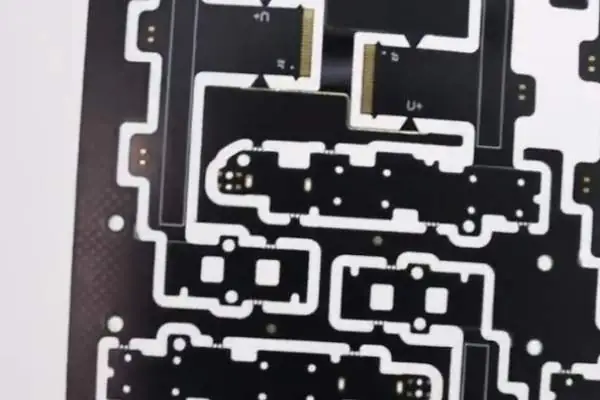
While some manufacturers in the industry have started to embrace the concept of digitalization, my experience shows that many so-called smart factories are simply adding an MES system interface; the data is still manually entered. Truly valuable digitalization should be able to identify problems and trends from production data, such as predicting changes in plating uniformity through current fluctuations—this kind of in-depth analysis is the direction that intelligent manufacturing should take.
I believe that the PCB circuit board manufacturers that will survive in the future will be those who can perfect their technology and services, not those who rely on price wars to grab market share. After all, hardware innovation is accelerating, and the requirements for board performance and process precision will only increase. Whoever is more meticulous about details will win trust.
In the past few years of doing electronic product R&D, I’ve increasingly felt that choosing the right partner is more important than the technology itself. Especially finding a PCB circuit board supplier—it’s like finding the other half for a project. Recently, one of our smart home projects almost failed due to circuit board quality issues—the design was fine, and the small-batch samples met standards, but signal interference appeared during mass production. It was later discovered that the manufacturer had cut corners on the stability of the board material.
Finding a PCB manufacturer is no longer just about price. Some suppliers boast about their advanced equipment, but in reality, their engineers can’t even handle impedance matching. Truly reliable manufacturers will proactively discuss layer stack-up design and even anticipate potential heat dissipation issues. I particularly value manufacturers who come to us with suggestions for improvement.
Supply chain fluctuations have led many to re-evaluate local partnerships. Last year, during the chip shortage, our Guangdong PCB manufacturers were able to coordinate special substrates to help us meet deadlines. This adaptability is more important than so-called international qualifications.
A factory visit I recently visited left a deep impression. A medium-sized PCB factory had its testing workshop resembled an operating room, with each board undergoing three optical inspections from different angles. The factory manager said they would rather take fewer orders to ensure a high yield rate—an attitude so rare in today’s fast-paced environment.
Actually, there’s a simple way to judge a manufacturer’s strength: see if they dare to openly display their production processes. Those who allow you to tour their production lines at any time are usually confident, while those who always use trade secrets as an excuse should be viewed with caution. After all, PCB manufacturing requires substantial technological expertise; it can’t be solved simply by acquiring a few imported machines.
There’s a misconception in the industry that large manufacturers are always reliable. However, one listed company we worked with actually suffered delays due to rigid processes, while several medium-sized manufacturers specializing in specific areas paid more attention to detail. Choosing a supplier is like choosing teammates; the key is whether both sides are on the same page.
Recently, new energy vehicle customers have become increasingly demanding in their requirements for PCBs, demanding both high-temperature resistance and lightweight construction. Good manufacturers can tackle tough challenges together; we’ve encountered suppliers who revised their designs overnight to accommodate our testing; this spirit of mutual support is more valuable than any certification. Ultimately, finding a partner isn’t just about procurement, but about a technological alliance.
I’ve recently been chatting with some friends who are starting hardware businesses, and I’ve found they often fall into a trap when choosing PCB manufacturers—focusing solely on price. This is like buying clothes; you often won’t find a good fit just because it’s cheap.
I’ve contacted many PCB manufacturers, and I’ve found that the truly reliable ones are often not the ones with the lowest prices. A long-established manufacturer with nearly 30 years of experience told me that their most valuable asset is actually the intangible aspects. For example, how to handle special board materials? How to adjust impedance control when deviations occur? This kind of experience can’t be acquired by just hiring a new factory.
I remember once we had a project that required impedance matching, and we compared two suppliers. One offered a very low price but couldn’t even provide a basic layer stack-up solution; the other, although more expensive, directly provided three different design solutions and explained the advantages and disadvantages of each in detail. This difference in professionalism can’t be compensated for by saving a little money.
Many PCB manufacturers now advertise how many machines they have and how large their factories are. But frankly, while these hardware investments are important, what truly determines the upper limit is the capability of the engineering team. I’ve seen factories with very new equipment that still make basic mistakes; I’ve also seen older factories with older machines, but experienced engineers who can solve problems in their infancy.
Speaking of capability, I find manufacturers that focus on niche markets particularly interesting. For example, some manufacturers specialize in high-frequency boards, others excel in flexible circuits, and still others are particularly skilled in metal substrates. This kind of experience accumulated through deep expertise in a specific field is often more valuable than manufacturers who can do a little bit of everything but are not proficient in anything.
Recently, a project required finding overseas suppliers. After contacting several PCB circuit board manufacturers, I found that the gap between domestic and international suppliers wasn’t as large as I had imagined. Especially in the small-batch, rapid prototyping stage, domestic manufacturers actually have an advantage in response speed. Of course, there is still room for improvement in ultra-high-layer boards or special materials.
Ultimately, choosing a manufacturer is like finding a partner. Besides looking at hardware conditions, it’s even more important to consider their professional attitude and problem-solving abilities. After all, there are countless pitfalls between the design on the blueprints and the actual product that require experience to overcome.
I often discuss selecting PCB circuit board manufacturers with colleagues, and we’ve found that people easily fall into a misconception—overly focusing on the numbers on the technical specifications. Indicators like HDI level and back-drilling precision are indeed necessary to understand. But what truly determines the quality of cooperation is often what isn’t visible on the reports.
For example, last month we had an urgent project where the PCB supplier listed all the processes perfectly in their technical questionnaire. However, after production started, we found that their testing process couldn’t keep up with the requirements of complex boards. The problem wasn’t whether a flying probe tester was on the equipment list, but whether the operators understood why impedance control areas needed 100% testing. This kind of quality awareness can’t be automatically acquired just by purchasing top-of-the-line equipment.
Now, when evaluating new manufacturers, I pay special attention to their decision-making logic. When production capacity is tight, do they shorten the testing cycle to meet delivery deadlines, or do they insist on allowing necessary time for quality control? A PCB manufacturer in South China that we worked with last year left a deep impression. When faced with material delays, they proactively offered to deliver in batches. They sent 10 boards first for our internal verification, instead of delivering the entire batch of potentially defective boards at the last minute.
Many people only focus on factory size when it comes to supply chain resilience. In fact, small and medium-sized PCB manufacturers have unique advantages. They are usually more willing to cooperate with customers to perform special process verifications, like in our recent rigid-flex board project. Their engineers were stationed on-site for two days to adjust the lamination parameters. This level of flexibility is difficult to achieve in large, standardized factories. Of course, this also depends on the ability to handle sudden increases in demand.
Recently, a car electronics project changed my perspective. I was initially worried that the equipment of a second-tier manufacturer wasn’t advanced enough. However, I discovered that the blind via precision they achieved using older laser drilling machines was actually more stable than some manufacturers who blindly upgraded their equipment but lacked process optimization. The key is whether the entire production chain has a data feedback mechanism. For example, does the electroplating line monitor thickness fluctuations in real time?
Ultimately, choosing a partner is like a jigsaw puzzle. Technical parameters are just the most basic pieces of the board. What truly makes a project run smoothly are often the softer indicators—whether engineers ask questions about the layout when reviewing design documents, and whether quality inspectors have the authority to stop production when they find minor flaws. These details determine whether a circuit board can ultimately function reliably in the equipment.
After all, what we need isn’t a perfect supplier profile, but a partner who can help us solve the problem when the production line suddenly alarms at 2 AM.
I’ve seen many engineers fall into a common misconception when choosing PCB manufacturers: they always think they should choose the most well-known companies in the industry. But it’s not that simple.
Last year, our team was developing an industrial controller. Initially, we also tended to choose suppliers who boasted about their ability to make highly complex boards. However, after contacting them, we found that some manufacturers, while having advanced equipment, had exorbitantly high prices, while smaller manufacturers were more specialized in specific areas. The key is to consider the level of manufacturing process required for your product.
For example, our project had extremely high reliability requirements, needing to meet Class 3 standards, but the number of layers wasn’t actually that high. In this case, it wasn’t necessary to pursue manufacturers specializing in high-end boards with 20 or more layers. Later, we found a mid-sized PCB supplier who focused on industrial-grade products. Although their equipment wasn’t the most advanced, they were extremely meticulous about quality control.
One detail that impressed me was when I visited their factory and saw yield rate charts for the past three months posted next to each testing machine. This dedication to quality is more convincing than any promotional material. Furthermore, their engineers proactively discussed design details with us and even suggested adjusting the positions of a few vias to improve reliability.
Many people nowadays focus too much on surface data when choosing PCB circuit board manufacturers, such as production capacity or the number of certifications. But what truly matters is the manufacturer’s attitude towards quality and their expertise in specific processes. Some manufacturers may not be large overall, but their technological accumulation in a particular niche is often more solid than that of larger companies.
I think it’s better to spend time understanding the technical characteristics of several potential partners than to obsess over finding so-called top-tier manufacturers. Sometimes the best supplier for you may not be the most dazzling star in the industry, but their expertise perfectly matches your needs. This match is often more important than simply pursuing a big name.
After all, a good partnership is like a jigsaw puzzle; not every piece needs to be the brightest, but they must fit perfectly.
When choosing a PCB circuit board manufacturer, I think you can’t just look at the numbers on the price list. Sometimes the cheapest quote hides a pitfall, such as secretly downgrading the board material or perpetually delaying delivery. I once encountered a supplier whose initial quote was 15% lower than others, but the first batch of boards had impedance deviations, resulting in a one-day production line downtime and losses far exceeding the supposed cost savings.
Now, when I assess PCB manufacturing capabilities with my partners, I first ask them to send actual board samples. I examine the thickness of the immersion gold plating on the pads with a magnifying glass and check the copper foil adhesion with a blade. These details are far more reliable than certifications in brochures. One manufacturer’s samples always had burrs on the edges; while this didn’t affect functionality, it indicated potentially inadequate mold maintenance.
Regarding cost, I particularly value whether manufacturers are willing to disclose their cost breakdown. I’ve encountered suppliers who quote ordinary FR-4 as a high-frequency material, and I’ve seen them charge for immersion gold plating as optional gold plating. Good PCB suppliers will proactively explain why increased copper thickness is needed in certain areas and which surface treatment is best suited for our application. This transparency makes me more willing to cooperate long-term.
Choosing a supplier is like putting together a jigsaw puzzle; price is just one piece. Technical compatibility, quality stability, and communication efficiency all need to be balanced. Sometimes, spending a little more money on an engineering team that’s willing to work through the night with you to revise designs is far more worthwhile than saving a few cents on board material costs. After all, the circuit board is the skeleton of the product, and any cost savings here will eventually be repaid many times over in the after-sales process.
I increasingly feel that finding a manufacturer is like finding a marriage partner; focusing solely on the dowry is definitely a mistake. You need to consider whether they are willing to share their lab data, whether they can provide immediate video support in case of production line emergencies, and even whether they will proactively suggest using cheaper alternative materials. These details reveal the true value of the partnership.
Every time I see articles that exaggerate the capabilities of circuit boards, I find it somewhat amusing. It’s as if any PCB supplier can solve all problems. That’s simply not the case.
I’ve worked with many PCB manufacturers and found that many people’s understanding of multilayer boards is still stuck at the stage where more layers equate to greater sophistication. Once, for a project, we needed to make a 12-layer board, and the company that claimed to be professional couldn’t even handle impedance control properly. Later I realized that truly reliable PCB circuit board manufacturers don’t just boast about how many layers they can produce.
The packaging process is particularly easy to overlook. I’ve seen too many cases where entire batches of boards were scrapped due to poor packaging design. A friend who works in automotive electronics almost delayed his entire project due to packaging issues with their metal substrate. This made me realize that when choosing suppliers, you can’t just look at the price; you need to see if they have genuine technical expertise.
Many companies now claim to be expert-level, but few can truly solve real-world problems. I remember once needing to make a special high-frequency board; several companies said they could do it, but the samples came out with significantly lower performance.
When choosing a manufacturer, I value their past projects more. For example, have they made multilayer boards of similar complexity? Do they have experience handling special materials? These are much more reliable than simply looking at their equipment list. Sometimes small-batch trial production is much more effective than listening to their boasts.
I think what this industry lacks most are teams that can focus on doing things properly. Too many people are thinking about making quick money but are unwilling to invest in the details of the process. Manufacturing high-quality PCBs requires time and experience.
Now I focus more on communication with manufacturers, explaining my needs in as much detail as possible.
Ultimately, finding the right partner is paramount. After all, the quality of the PCB directly impacts the success or failure of the entire product.
Circuit boards are more than just that green board in a phone
From disassembling old routers to visiting electronics manufacturing plants, I gradually realized
As an electronics enthusiast, I’ve come to understand firsthand the impact of
- 중소규모 배치 생산 전문가
- 고정밀 PCB 제작 및 자동화된 조립
- OEM/ODM 전자 프로젝트를 위한 신뢰할 수 있는 파트너
영업 시간: (월~토) 9:00~18:30