

Why the Best PCB Supply Chains Are Built Like Relationships, Not Transactions: Lessons for Satellite Communication PCB Programs
What actually makes a long-term PCB supply chain partnership work — shared
I’ve noticed that many junior hardware engineers have some misconceptions about the complex via technologies used in PCB design, often assuming that “more advanced” automatically means “better.” That isn’t necessarily the case; often, the expensive manufacturing processes you might opt for aren’t actually required. Take buried via PCBs, for example—it sounds impressive, doesn’t it? These interconnections are completely hidden inside the board, invisible from the outside. However, unless your design is incredibly complex, there is really no need to use them.
You’re likely aware that many miniaturized devices—such as the motherboards in ultra-thin smartwatches or foldable phones—utilize this technology. These devices require multiple circuit board layers to be laminated together into an extremely thin package. If you were to use traditional through-holes that penetrate every layer from top to bottom, those holes would consume valuable routing space on each layer, ultimately limiting routing density. Furthermore, through-holes leave pads on the surface, which can be problematic for products requiring an ultra-flat profile. In wearables, for instance, internal space is at a premium; a tiny through-hole pad could encroach upon space needed for a battery or sensor.
However, the manufacturing process for buried vias is far more complex. They aren’t simply drilled in a single pass like standard holes. You have to fabricate the inner-layer circuitry first, drill and metallize the holes that connect only internally, laminate the inner-layer boards together, and only then create the outer-layer circuitry. These additional steps translate into higher costs and longer production times. I’ve seen many projects adopt buried-via designs simply to chase “technological sophistication,” only to see the board price more than double. It’s not just about drilling costs; it involves yield risks associated with multiple lamination cycles and stricter alignment requirements.
Another point many overlook is the difficulty of testing. When connection points are completely buried inside the board, diagnosing or repairing issues becomes nearly impossible—standard test probes simply cannot reach those points. Consequently, you must devise a comprehensive testing strategy during the design phase, which increases upfront investment. This means planning for extra test points or employing indirect methods like boundary scan, thereby adding to the design’s complexity.
Of course, I’m not saying the technology is bad; in certain scenarios, it is indeed the only viable option. For instance, when dealing with ultra-high-layer-count boards (say, 10 to 20 layers), failing to use buried vias to free up routing space might make it impossible to route even the basic circuitry. Similarly, for high-speed digital or RF circuits with stringent signal integrity requirements, the judicious use of buried vias can minimize signal path discontinuities. Buried vias prevent the formation of excess via stubs on the top or bottom layers; these stubs act like antennas, reflecting and radiating signals, which degrades high-speed signal transmission quality.
However, I believe there is an unfortunate trend in the industry toward over-engineering. People often insist on using an eight-layer board with a complex mix of buried and blind vias for a problem that could easily be solved with a six-layer board using through-hole vias and a few blind vias. It’s like buying a sports car when a bicycle would suffice for your commute—it adds cost and complexity without offering any real benefit. This mindset often stems from a lack of confidence in the technology or a desire to cater to a client’s blind pursuit of “high-end” features.
So, my advice is to start with the most basic and straightforward solution. Start by implementing your design using through-hole vias. If you encounter routing bottlenecks or performance issues, then consider introducing advanced techniques like blind or buried vias. After all, the ultimate goal of a design is to create a reliable product, not to showcase technical complexity. During the prototyping stage, using standard processes allows for faster, more cost-effective verification of core functions and helps avoid unnecessary manufacturing complications.
Remember, a good engineer isn’t defined by how many complex technologies they use, but by their ability to solve problems using the simplest possible solution. This requires a deep understanding of the balance between circuit principles, layout constraints, and cost—a truly advanced skill.
Whenever I see complex PCB designs, I wonder: are we focusing too much on surface-level details? I’ve seen many engineers cram traces onto the outer layers to save space, completely overlooking the vast, usable area available within the inner layers.
This brings to mind an interesting point: many people assume that once a PCB’s internal structure is encapsulated, it’s set in stone—but that’s not the case.
We can utilize “buried vias” to create internal connection channels. These channels are completely invisible from the outside—much like electrical conduits hidden within a building’s walls—serving their function without compromising the exterior appearance.
I recently worked on a fascinating project that required high-speed signal transmission within a very limited board area. Had they followed the traditional approach of placing all vias on the outer layers, there would have been pitifully little room left for components. Instead, they shifted some connections to the inner layers using channels embedded in the core board. The results were remarkable: routing became more flexible, and signal interference was significantly reduced.
This concept applies across many fields—think of utility lines hidden within walls in architectural design or invisible structural components in automotive engineering. Their purpose isn’t to be seen, but to make the entire system more efficient.
Regarding the actual manufacturing process, the most critical step is preparing these channels before lamination. You must drill and metallize the individual core board first; only then is it stacked with other materials. After undergoing high-temperature and high-pressure processing, these pre-formed channels become permanently sealed within the board’s interior. The process sounds a bit like making a sandwich: you prepare all the fillings, stack them layer by layer, and finally press everything together to set the shape.
I really enjoy looking at cross-sections of finished circuit boards. You can clearly see the interfaces between different material layers and the connection points hidden inside; they act like time capsules, recording every step of the manufacturing process.
Sometimes I wonder why we always tend to make things increasingly complex. Perhaps it’s because we’re conditioned to think in terms of addition—believing that “more is better”—when, in reality, subtraction often leads to more elegant solutions.
Take this technology, for instance: its greatest advantage isn’t what it adds, but what it removes—specifically, the burden on the surface layer. This allows designers to focus more energy on optimizing functionality rather than fighting for space.
I remember chatting with a veteran engineer once; he remarked that young people today rely too heavily on software simulations and overlook the actual constraints of the physical world. His words gave me plenty to think about. Indeed, even the best simulation must eventually translate into a real-world manufacturing process, and understanding the characteristics of these internal structures is precisely what many young designers lack.
That’s why I believe that instead of chasing superficial refinement, it’s better to spend time studying internal possibilities. Whether you can break new ground often depends on how well you understand these unseen elements; after all, the entire system is usually supported by obscure details rather than surface-level ornamentation.
I feel that whenever people hear “embedded design,” they immediately think of high-end, sophisticated applications, but the truth is, it’s quite common in ordinary circuit boards too. Just think about it: sometimes chip pins are packed incredibly tightly—especially with BGA packages—creating a landscape of pads underneath that looks like a miniature city. If you rely solely on traditional through-holes in a scenario like that, there’s simply no room to route the traces; everything gets blocked. I’ve seen plenty of boards designed by novices that had to be made unnecessarily large for this very reason.
As for the true value of embedded design, I think it lies in the subtle, unobtrusive way it handles signal integrity. Consider this: when a signal exits a chip pin and immediately dives into an inner layer of the board, it’s far less susceptible to external interference. It avoids the need for through-holes that pierce every layer and disrupt the continuity of the reference plane. Specifically, when a high-speed signal transitions between layers via a through-hole via, it creates an impedance discontinuity known as a “stub”—much like a sudden sharp curve on a highway—which is prone to causing signal reflections and energy radiation. In contrast, buried or blind vias do not traverse the entire board; the resulting “stub” effect is significantly reduced, and any disruption to reference plane integrity is localized. This creates a “quieter” and more continuous transmission environment for high-speed signals—an advantage that is particularly pronounced for GHz-range clock lines, differential pairs, and RF traces.
I recall a particularly striking example from when I was debugging an RF board. We used two different via configurations for the same circuit layout: one relied entirely on through-hole vias, while the other incorporated a significant number of buried vias. The result was a noticeably lower noise floor in the latter design. Observations on a spectrum analyzer revealed distinct spurious radiation spikes at specific frequencies in the through-hole design—likely caused by resonance or coupling associated with the via structure—whereas the version using buried vias exhibited a much cleaner, smoother spectral background. This translates to a tangible performance boost for circuits requiring high receiver sensitivity or high spectral purity in transmission.
In reality, the biggest challenge with this type of design isn’t the technology itself, but clearly communicating your intent to the manufacturer. Many standard process parameters—such as drilling depth and plating time—no longer apply and must be recalibrated. For instance, you need to explicitly specify the start and end layers for each buried or blind via, typically detailed through specific drill files and layer stack-up diagrams. The plating process also demands finer control to ensure uniform copper thickness on the walls of high-aspect-ratio vias, preventing the “dog-bone” effect where excessive plating at the via opening leaves the copper inside too thin or prone to fracturing. Furthermore, the manufacturer requires sufficient experience and data to compensate for the varying expansion and contraction coefficients of different materials (such as FR-4 versus high-frequency laminates) during the repeated lamination and drilling cycles.
I’ve also noticed a common misconception that simply using this technology is a cure-all for every problem.
In truth, it merely provides an additional design option; essential measures like impedance matching and filtering circuitry remain just as critical as ever. It acts much like a skilled “urban planner,” providing overpasses and underground tunnels for a dense network of signal lines to prevent surface-level congestion and mutual interference. However, the quality of the “roads” themselves—that is, signal integrity—still depends on the quality of the “roadbed” and “pavement materials” (specifically, impedance control, termination matching, and component performance). If the fundamental circuit design is flawed, even the best “multi-level traffic system” cannot salvage it.
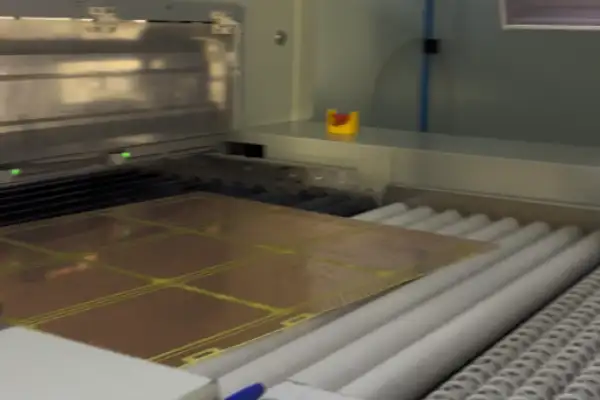
That said, the technical capabilities of many manufacturing plants have improved significantly. Orders that once might have been handled only by major manufacturers can now be executed well by smaller, ordinary factories—though the price remains higher, given the additional processing steps involved. This progress is largely due to the widespread adoption and maturation of laser drilling technology. Traditional mechanical drills struggle with tiny hole diameters and precise depth control, whereas UV or CO2 laser drilling enables the creation of smaller (e.g., 0.1mm or less) and more precise blind vias, while causing less damage to surrounding materials. Improvements in the stability of multi-stage lamination processes have also made the production of complex HDI boards—featuring multiple layers of buried vias—far more accessible than before.
Sometimes I reflect on how the proliferation of this technology actually mirrors a broader trend: the ongoing effort to resolve the inherent conflict between the demand for miniaturization and the need for high performance in electronic products.
In the past, making a device slightly larger or thicker might have been acceptable, but that is no longer the case. Consumers demand powerful functionality alongside a slim, portable form factor, forcing designers to unlock the potential of internal space.
If you look at the motherboards of smartphones or the core boards of smartwatches, you will almost certainly find traces of this structural design, even if it remains invisible to the average user. Take modern smartphones, for instance: their motherboards are typically HDI boards with ten or more layers. Processors and memory chips utilize ultra-fine-pitch BGA packaging, requiring the dense arrays of solder balls beneath them to “fan out” via first-order, second-order, or even any-layer blind and buried vias to route signals to various functional areas. Without this technology, it would be impossible to pack such complex functionality into a device the size of a palm.
I believe this technology will become increasingly common—perhaps even a standard feature, much like multi-layer boards are today—where designers routinely incorporate these types of vias to optimize layout.
Of course, this requires designers to shift their mindset; instead of always defaulting to routing on the outer layers first, starting directly from an inner layer can sometimes yield a much smoother design process. This means that during the initial layout planning stage, one must adopt a “3D routing” mindset, simultaneously considering critical high-speed signal paths, power and ground plane segmentation, and the selection of via types. For instance, one might prioritize routing the most sensitive signals on inner layers and planning paths that utilize buried vias for layer transitions whenever possible, thereby maximizing the shielding benefits provided by the internal board space.
I recently chatted with some friends in hardware design and noticed an interesting phenomenon: everyone gets a headache at the mere mention of PCB prototyping quotes—especially when looking at designs packed with dense via arrays. We often agonize over which via strategy offers the best cost-effectiveness.
Many people assume that through-hole technology is the obvious first choice because it is the simplest and cheapest process. However, the reality is not quite that straightforward. While it is true that through-hole processing is convenient, fast, and relatively low-cost, have you considered the issues it introduces during high-speed signal transmission? Those long metal barrels can act like antennas, generating unwanted electromagnetic interference and increasing signal latency. This impact becomes particularly pronounced when dealing with high-frequency signals or RF circuits.
In contrast, the blind via process is far more complex because it penetrates only a portion of the board layers rather than the entire thickness of the PCB. This requires precision positioning and additional manufacturing steps, naturally driving up the cost. Yet, the advantages are significant: for example, it can effectively shorten signal paths and enhance overall circuit performance.
As for buried via technology, the process is even more complex since the vias are completely concealed between the PCB’s inner layers. Being invisible from the outside, they are the most difficult and expensive to manufacture. However, they offer unparalleled benefits, such as minimizing electromagnetic interference and maximizing signal integrity and stability.
I recall encountering a similar issue while working on the design of a high-speed communication device.
Our team spent a long time debating which via strategy to adopt without reaching a consensus. Some insisted on through-hole vias to save on costs, while others advocated for blind vias to boost circuit performance.
We eventually decided to run actual tests to compare the pros and cons of each approach. The results showed that while through-hole vias were indeed the cheapest, they performed the worst during high-speed signal transmission. Blind vias, on the other hand, cost a bit more but offered significantly better performance.
As for buried vias, they came with the highest cost but delivered the best performance—advantages that became particularly apparent when handling high-frequency signals or RF circuits.
So, I believe that when choosing a via strategy, you shouldn’t focus solely on cost while ignoring performance. After all, a good circuit design needs to balance cost-effectiveness with practicality and reliability.
Of course, that doesn’t mean we should blindly chase high performance without considering costs; every project has its own budget constraints and requirements.
The key is finding a balance that meets performance needs while staying within the budget.
For instance, in standard consumer electronics where performance demands aren’t critical, through-hole vias might be a good choice to keep costs down.
In high-end electronics where performance is a priority, blind vias could be used to enhance circuit performance.
For specialized applications with extremely high performance requirements—such as in aerospace or military sectors—buried vias might be the best option to ensure absolute circuit reliability and stability.
Ultimately, I think the choice of via strategy should be based on the specific application and requirements. You can’t apply a one-size-fits-all approach or simply follow trends blindly.
Every project has unique characteristics and needs; finding the most suitable solution is the only way to achieve the best results.
I hope these insights and experiences prove helpful to you.
I recently chatted with some friends in circuit design and noticed an interesting phenomenon: whenever high-end PCB technology comes up, people tend to get bogged down in complex technical parameters. In reality, we often overlook the fundamentals. Take “buried via” PCB technology—often referred to simply as buried via technology—for example. Many people view it as a high-end feature reserved for achieving ultimate performance. Yet, I’ve seen plenty of designs where using this technology was completely unnecessary.
I recall a team designing automotive camera modules that insisted on using a multi-layer buried via structure, believing it would ensure more stable signal transmission. The result? Production costs doubled, and maintenance became a nightmare—a minor issue meant scrapping the entire board.
Nowadays, many engineers are intimidated by technical jargon, often assuming that greater complexity equates to superior technology.
In reality, the success of an automotive ADAS system often hinges not on how many layers of buried vias a circuit board has, but on whether the overall system architecture is sound.
One clever approach I’ve seen involves routing critical signal lines on the outer layers while using simple through-hole vias to connect to internal power planes; this ensures signal integrity while significantly cutting manufacturing costs.
Speaking of which, the trending field of AI chip design sees everyone scrambling to stack up PCB layers to meet high-speed signal requirements.
However, I believe there is a misconception here: many assume that multi-layer buried vias are a cure-all for signal integrity issues. In fact, problems often stem from more fundamental aspects, such as the design of the power distribution network or the logic of component placement.
I remember a project team developing a server accelerator card that initially designed a 12-layer board with buried and blind vias, only to discover later that an 8-layer through-hole design offered sufficient performance and superior reliability.
This brings me to a key principle: technology choices should be based on actual requirements rather than a blind pursuit of what is deemed “advanced.”
Many manufacturers like to market buried via PCBs as a magic bullet for every problem, which is actually quite misleading.
A truly excellent design achieves the most stable performance using the simplest possible technology, not the other way around.
Of course, I’m not saying buried via technology is useless; it certainly offers advantages in specific scenarios, such as high-frequency RF circuits or devices with extremely limited space.
The key is to understand exactly when to use a specific technology, rather than simply following the crowd.
I believe engineers should maintain this kind of clear judgment and avoid being led astray by flashy technical buzzwords. While designing circuit boards, I’ve noticed an interesting phenomenon: when people talk about multi-layer boards, they often immediately think of blind and buried via technologies as a way to save space and increase density. That is certainly true, but I have to offer a word of caution: don’t get so caught up in the apparent benefits that you overlook the pitfalls of actual manufacturing.
I’ve seen engineers create overly complex designs in pursuit of maximum routing density, believing that simply using buried vias will solve every problem. That mindset is actually quite risky.
What really gave me headaches were the seemingly simple applications. For instance, we once ran into trouble with a high-speed signal processing board—we just couldn’t get the signal integrity right.
We eventually discovered the issue lay in the densely packed blind vias. Even slight deviations in depth control for these vias affected impedance matching. In contrast, the internal buried connections were far more stable; being securely embedded within the dielectric layers, they were less susceptible to external interference. Of course, that doesn’t mean blind vias are bad; the key lies in how you leverage the specific characteristics of each type.
My current approach is to use buried vias for relatively static elements, such as power networks. This allows the internal ground plane to remain intact, providing a stable reference for signals. Meanwhile, signal lines that require frequent adjustments are kept on the outer layers or connected via blind vias to facilitate later modifications.
Advancements in via-filling technology have certainly turned previously unthinkable designs into reality. High-aspect-ratio micro-via filling technology is now quite mature.
I recall worrying about void formation with these designs a few years ago, but that’s rarely a concern now. However, this does place higher demands on the manufacturer’s process control—not every shop can handle it properly.
That’s why, when selecting a partner, you shouldn’t just look at whether they have the equipment; you need to examine their track record—especially for applications requiring high reliability, such as automotive electronics or industrial control systems.
In these contexts, the stability of buried vias really shines, as they are completely encapsulated within the board and shielded from the external environment. Blind vias, on the other hand, have openings that—despite being treated—still present potential points of failure.
I believe these two technologies will continue to evolve in parallel rather than one replacing the other. After all, different applications call for different solutions; no single technology is a cure-all. What truly matters is understanding the specific characteristics of each technology and making the right choice based on your actual needs—that is what an engineer should do, rather than blindly chasing the so-called “latest technology.”
Many people believe that being a professional in PCB design means chasing the flashiest technical specifications. However, after years of working in hardware development, I’ve found that isn’t the case at all. Take the connection channels embedded within the circuit board—commonly known as “buried vias”—for example. People often get hung up right away on extreme figures like the minimum achievable hole diameter or the aspect ratio.
I think that completely puts the cart before the horse.
The most important thing is to first figure out: does your product actually need this? Is it absolutely essential? I’ve seen too many projects—such as cost-sensitive home appliance control boards—where complex internal connection structures were shoehorned in simply to achieve “technological sophistication.” The result? Not only did the board cost more than double, but it also introduced extra manufacturing risks, leaving the final product uncompetitive in the market.
Those channels embedded in the inner layers—connecting only specific internal layers—do have advantages. They can free up valuable surface space for critical components or antenna traces and help reduce signal crosstalk.
But the trade-offs are significant. First, they are expensive—and not just by a little. The entire manufacturing process becomes much more complex, and production cycles lengthen. If there’s a minor design change or a need for later adjustments, it becomes a major headache; a small tweak can have a ripple effect across the entire design.
So, my view is simple: don’t be intimidated by fancy technical jargon.
You need to focus on the product itself. If it’s an ordinary consumer electronic device—where stable, reliable functionality and cost control determine market survival—there is really no need to mess with these advanced processes. Mastering standard multi-layer through-hole designs is enough to create a great product.
Of course, I’m not saying these technologies are useless. In scenarios demanding extreme performance density—such as key RF modules in high-end communication equipment or high-speed computing units handling massive data—judicious use of these internal connection resources can solve tricky problems. They allow for complex interconnects within limited space and let you bury sensitive traces inside the board to minimize external interference.
However, this requires strong collaboration between design and manufacturing; it’s not something you can just casually mark down while drawing a schematic. You need to have a clear understanding of a PCB manufacturer’s capabilities—specifically their process windows, which designs they handle easily, and where they tend to run into trouble. You should plan your layout and routing based on this information rather than the reverse—drawing a densely packed board based on an ideal scenario and then dumping it on the factory to figure out the logistics. That approach is often a recipe for disaster.
I highly recommend sitting down with a reliable factory engineer early in the project to review the design. Let them offer feedback from a manufacturing perspective—such as where internal connections could be optimized or where spacing might pose a risk. They have encountered far more pitfalls than you have, and this kind of early communication can save you from countless headaches down the line.
Ultimately, technology is a tool, not the end goal.
Don’t use advanced processes just for the sake of it, thinking it makes you look more skilled. True competence lies in creating a product using the most suitable, simple, and reliable methods—and successfully selling it. That is what really matters. Those intricate structures hidden inside the board should be unsung heroes serving the product’s objectives, not mere ornaments for showing off technical prowess.
I’ve noticed an interesting phenomenon lately: many hardware engineers get a headache at the mere mention of buried vias. They view them as overly complex—costly, troublesome to manufacture, and prone to hurting yield rates. But I have to say, that mindset is a bit outdated.
I used to think the same way when I first started out in PCB design. Back then, buried vias felt like a luxury feature that only deep-pocketed companies could afford. It wasn’t until I worked on a few projects myself that I realized that wasn’t the case at all.
Manufacturing technology has advanced significantly. While buried vias used to be problematic, many factories have now mastered the process, achieving excellent yield control and much lower costs than before.
The key is to be clear about why you are using buried vias. Many people use them simply because others do—a “keeping up with the Joneses” mentality—which is the wrong approach.
A classic example I’ve seen involved a team developing a smartwatch. In their quest for a slim, lightweight design, they created an overly complex PCB layout that relied heavily on multi-layer buried via technology. The result? Costs skyrocketed, yet reliability actually suffered.
In reality, the product didn’t need such a complex structure. When they later simplified the design and used buried vias more selectively, the product actually performed better. So, my view is that buried vias are indeed a great tool, but it all depends on how you use them.
They aren’t a cure-all solution; they are just one tool among many. Sometimes a simple through-hole via does the job, and insisting on a buried via is just asking for trouble. Yet, there are times when your design simply cannot be realized—or won’t meet performance requirements—without using buried vias.
Finding that balance is up to you. I feel that the problem with many hardware teams today isn’t a lack of technical skill, but a lack of deep thinking. They rely too heavily on off-the-shelf solutions, always looking for a “standard answer” to follow blindly.
But in hardware design, there is no such thing as a standard answer. Every project is unique and requires you to make judgments based on the specific circumstances.
Take buried vias, for example: there are so many factors to consider—product positioning, cost budgets, production timelines, the manufacturer’s process capabilities, and so on. Technical specs alone can’t cover all of this; it requires a comprehensive assessment.
I recently worked on an industrial controller project where we faced a similar issue. The client required the circuit board to operate stably in high-temperature environments while also keeping the board thickness within limits. Traditional through-hole designs didn’t offer sufficient heat dissipation. We tested several approaches and ultimately found that a design incorporating buried vias worked best—it controlled costs while meeting performance requirements. We had to make multiple adjustments during the process to find the optimal solution. So, you see, this isn’t a simple multiple-choice question; it’s a process of constant experimentation and optimization.
Ultimately, hardware design is about finding the best balance amidst various constraints. Buried vias are just one means to achieve that goal. Don’t mystify them, but don’t oversimplify them either—just treat them pragmatically. Use them decisively when appropriate, and firmly avoid them when they aren’t needed. That is the mark of a true professional.
What actually makes a long-term PCB supply chain partnership work — shared
Practical, experience-based strategies for how to reduce PCB procurement risks — from
Real factory-floor lessons on how to optimize a PCB manufacturing process —
- 중소규모 배치 생산 전문가
- 고정밀 PCB 제작 및 자동화된 조립
- OEM/ODM 전자 프로젝트를 위한 신뢰할 수 있는 파트너
영업 시간: (월~토) 9:00~18:30
Get quote, solution or any question, Andre always here to help