

Optimizing PCB Manufacturing Without Big Capital Spend: Shop-Floor Lessons for OLT PCB Production
Real factory-floor lessons on how to optimize a PCB manufacturing process —
The fact that circuit boards are typically green is quite an interesting phenomenon. A few days ago, while tidying up my room, I dug out an old mobile phone from ten years ago to take apart for fun—and that’s when I first noticed this pattern: from routers to game console motherboards, almost all of them feature shades of green ranging from light to dark. Many people assume this color choice is mandated by industry standards, but in reality, it seems to be more of a collective, unconscious consensus.
I once discussed this issue with a production-line engineer during a factory tour. He casually picked up a board and remarked, “Look—this dark green background, paired with the silvery-white solder points, is the most comfortable combination for the eyes.” Workers on the assembly line have to stare at inspection monitors for eight hours a day; if the boards were bright yellow or vivid red instead, they’d likely need to use eye drops the moment their shift ended. This reminded me of why hospital operating rooms use blue-green scrubs; the issue of visual fatigue is particularly critical in the realm of precision manufacturing.
However, the situation has begun to shift in recent years. While getting my computer repaired, I’ve seen purple-red motherboards inside “punk-style” PC builds, and high-end gaming graphics cards often feature pure black baseboards. Naturally, these personalized designs come with a higher price tag. Niche colors mean the production line must formulate ink mixtures separately, and quality control teams have to recalibrate their optical inspection equipment; these hidden costs are ultimately passed on to the consumer. Consequently, standard home appliances and consumer electronics generally stick to the reliable old green—after all, when you’re producing in massive volumes, practicality and efficiency take precedence.
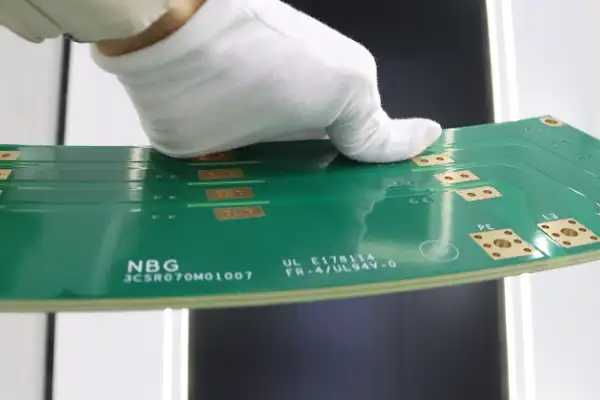
Interestingly, even environmentalism has now become a justification for specific color choices. Some “Green Circuit Boards“—touted as being dyed with plant-based pigments—can cost up to 30% more than standard versions. Although there is no actual difference in performance, simply slapping an “eco-friendly” label on the product allows companies to charge a premium. Ultimately, the choice of color is never a purely technical matter; rather, it is a form of performance art—an ongoing act of balancing cost control, visual requirements, and marketing rhetoric. A designer friend once vented to me about this phenomenon: when you swap a circuit board’s base color to fluorescent pink—and perhaps outfit the chips with some RGB lighting effects—the actual technical specifications might remain unchanged, yet young consumers are willing to shell out an extra two thousand dollars for it. This “psychological premium” far outweighs the cost of simply switching ink colors. So, don’t underestimate the significance of a circuit board’s color; it encapsulates the very survival wisdom of the entire manufacturing industry.
I’ve always found that green layer on circuit boards particularly fascinating. Whenever I dismantle an old electronic device and see those green circuit boards—in various shades of light and dark—I always wonder: why, of all colors, did green become the standard? There are actually quite a few interesting stories hidden behind this choice.
I remember taking apart a radio when I was a child and discovering that the circuit board inside was a brownish-yellow color. I later learned that, in the early days, the solder mask—the protective coating on the board—did indeed feature brownish-yellow as its dominant hue. Back then, workers found this color too drab, so engineers began experimenting with color mixing. Adding red tended to darken the tone, whereas adding yellow actually helped produce a more visually pleasing shade. After numerous rounds of fine-tuning, the industry eventually reached a consensus and widely adopted the deep green we see today.
A friend who works in an electronics factory told me that military-grade equipment places exceptionally high demands on circuit boards. The U.S. military was among the first to adopt solder masks to ensure that equipment would function reliably even in harsh environments; naturally, green—being a standard camouflage color used by the armed forces—became the preferred choice. This practice gradually trickled down into the civilian sector, eventually evolving into an industry-wide convention.
In reality, the choice of solder mask color isn’t merely an aesthetic consideration; it also involves practical efficiencies in the manufacturing process. Since glass-epoxy resin—the base material for these boards—naturally possesses a greenish tint, simply utilizing this inherent color eliminates the need for numerous color-mixing steps, which is particularly advantageous for mass production.
I’ve encountered engineers who deliberately opted for black or blue solder masks, only to find them jarring or unfamiliar during the debugging phase. After all, having grown up surrounded by electronic devices that were predominantly green, we’ve developed a certain visual inertia; switching abruptly to a different color inevitably requires a period of adjustment.
Although circuit boards are now available in a wide spectrum of colors, factories still offer the classic green version as their default standard. This isn’t a sign of conservatism, but rather a choice that has stood the test of time—it aligns with the usage habits of the majority while simultaneously ensuring manufacturing efficiency. Why wouldn’t one choose that?
I’ve always felt that green PCBs possess a unique charm. Do you remember that deep-emerald circuit board you saw the first time you took apart an old-fashioned radio? That sense of understated solidity and reliability somehow brings a strange sense of comfort. Nowadays, PCB designs come in a wide variety of colors, yet I still maintain a preference for the traditional green version. A few days ago, while helping a friend repair a game console, I noticed that the flashy black or blue boards found in modern electronics produce significant glare; during debugging, I had to constantly adjust the viewing angle just to make out the circuit traces. In contrast, the natural contrast created by a green base paired with white lettering strikes the perfect balance.
A friend of mine who works in hardware development shared an interesting observation with me: while recently testing the performance of various colored circuit boards in their lab, they discovered a consistent pattern. Although, in theory, every color falls within the performance parameters required by industrial standards, subtle differences in actual performance do indeed exist in practical applications. This is particularly evident in scenarios involving high-density routing; lighter-colored boards tend to cause visual afterimages, while darker boards can sometimes obscure fine details.
My own experience confirms this: working with green-based circuit boards for extended periods is genuinely easier on the eyes. This may be linked to the human visual system’s sensitivity to wavelengths located in the middle of the light spectrum. Just as green is often the most soothing hue when we gaze upon natural landscapes, the presence of green elements within electronic devices seems to evoke a similar calming effect.
Some manufacturers are now beginning to introduce eco-friendly green circuit board materials—a development certainly worth keeping an eye on. After all, while pursuing technological innovation, striving to simultaneously uphold the principles of sustainable development represents a far more meaningful endeavor. However, the real-world performance of these novel materials still requires further practical validation.
Whenever I encounter an innovatively designed, colorful PCB, it prompts me to reflect: perhaps the reason certain classics endure is precisely because, having withstood the test of time, they have settled upon the most optimal equilibrium. Much like the timeless design languages that surround us, these enduring forms often embody a profound understanding of the very essence of human-machine interaction.
The next time you disassemble an electronic device, take a moment to observe the color choice of its circuit board; you may well discover that, behind these seemingly arbitrary design decisions, lies a unique and deliberate logic.
I’ve always found the subject of circuit board colors to be quite fascinating. Whenever I see those colorful, kaleidoscopic PCBs scattered across a workbench, I can’t help but wonder: why is green the color that has become so ubiquitous? As it turns out, the answer involves far less mystique than one might imagine.
When I first began dabbling in electronics projects, I, too, was captivated by the allure of black circuit boards. They certainly looked cool and exuded a high-end aesthetic. However, I soon discovered that locating specific traces during soldering was an incredibly arduous task. On one occasion, while repairing a device, I nearly misconnected a solder joint. From that moment on, I learned a valuable lesson: functionality trumps aesthetics—every time. Currently, most of the prototype boards in our studio are still green. During debugging, the routing of the traces is immediately obvious—a true blessing, especially when working late into the night with tired, blurry eyes. This practical advantage is simply unmatched by any other color. Just last week, I helped a friend modify a drone flight controller built on a blue PCB; simply tracing the power lines took me an extra half-hour.
A veteran technician at our manufacturing plant shared an interesting detail with me: the production process for green solder mask ink is the most mature. Its curing time is significantly shorter than that of other colors, allowing the workshop to push through two extra batches of boards per day. This efficiency advantage becomes particularly pronounced during mass production runs.
I’ve seen people commission custom pink PCBs for their keyboards just to add a personal touch. The result? A three-week delay in delivery. Special colors require custom ink formulations, and their rework rates tend to be significantly higher than those of standard green boards. While experimenting with small-batch custom runs is fine for a hobbyist, when designing a commercial product, one really has to prioritize practical costs.
Recently, I experimented with using a matte green finish for some audio equipment. I discovered that it offers far better scratch resistance than glossy finishes; even if a soldering iron accidentally brushes against it during repairs, it leaves hardly a trace. Many people might overlook such details, but they genuinely impact the user experience during day-to-day use.
Ultimately, a PCB is fundamentally a functional component. Designs that prioritize visual distinctiveness often do so at the expense of practicality. From the initial design phase through production and into long-term maintenance, the cumulative advantages of green circuit boards remain incredibly difficult to replace.
While recently tidying up my studio, I stumbled upon an old, worn-out green circuit board. That familiar shade of dark green reminded me of the confusion I felt when I first entered the industry: “Why are almost all PCBs this color?” It wasn’t until I gained more experience that I realized green is, in fact, the most balanced and sensible choice.
On one occasion, while helping a friend modify a stereo system, I opened it up to find a black PCB inside. It certainly looked sleek and premium, but debugging it nearly drove me to the brink of insanity. Under the glare of a desk lamp, the circuit traces were virtually invisible; in the end, I had no choice but to painstakingly trace the connections point-by-point using a multimeter. That experience taught me a valuable lesson: good industrial design cannot be solely about aesthetics.
Designers of medical equipment have shared their own unique dilemma with me: they must ensure that medical staff can quickly identify connectors and interfaces, while simultaneously guaranteeing the long-term stability and reliability of the device. They experimented with using white solder masks paired with dark silkscreen legends; while this made the labels crystal clear, the white surface tended to yellow over time. Their eventual compromise was to employ high-contrast color schemes for critical areas—where immediate identification is paramount—while reverting to the standard, reliable green for the rest of the board.
Nowadays, some smart home brands are starting to get creative with their designs—I’ve even seen circuit boards in shades of burgundy or featuring gradient color schemes. However, when it comes to mass production, green remains the optimal balance point between cost and practicality. Take, for instance, a smart LED strip project we worked on last year: the client insisted on a custom blue PCB. Consequently, during mass production, issues with the solder mask ink’s adhesion caused the yield rate to plummet by 15%.
Ultimately, the color of a circuit board is much like choosing work attire: while special occasions may call for specific outfits, for daily use, the most practical choice remains that durable, dirt-concealing—and essentially foolproof—”industrial green.” After all, when you’re debugging in a lab at 3:00 AM, what you need most isn’t a flashy aesthetic, but rather the visual clarity that allows you to quickly pinpoint the problem.
That said, the technology behind green circuit boards is evolving, too. I’ve recently encountered several boards featuring a matte green finish; they manage glare effectively—preserving essential visibility while simultaneously elevating the perceived quality and texture. Perhaps this represents the future trajectory of industrial design: gradually refining aesthetic details while remaining firmly grounded within a framework of pragmatism.
I’ve always found the discussion surrounding circuit board colors quite fascinating. Many people assume that a black PCB automatically signifies a premium product—a notion that is, in reality, entirely psychological. Just the other day, I dismantled an old server that had been in service for five years; inside, every single board was green, yet it ran even more stably than some of our newer equipment.
The perception that black equates to “high-end” likely stems from marketing strategies within the consumer electronics sector. Manufacturers know that black visually conveys a sense of sophistication and professionalism—evoking associations with specialized industrial equipment—but this has absolutely no bearing on actual performance. The true determinants of a circuit board’s quality are the choice of materials and the precision of the manufacturing process, not the superficial layer of paint applied to its surface.
I’ve observed numerous DIY enthusiasts who specifically opt for black PCBs when building their computers, only to discover that the dark surface actually compromises thermal dissipation. Furthermore, under certain lighting conditions, dark surfaces make it significantly more difficult to visually inspect circuit traces, thereby prolonging the troubleshooting and repair process. Some manufacturers even exploit this characteristic to mask manufacturing defects—a practice that completely undermines the very rationale behind choosing a dark-colored board in the first place.
Nowadays, even some entry-level electronic devices are being fitted with black PCBs, further underscoring the fact that there is no inherent correlation between color and quality. What truly matters are the substantive specifications: the thickness of the substrate material, the quality of the copper foil, and the precision of the soldering process. The next time you’re selecting an electronic product, I encourage you to focus on these practical parameters rather than letting the superficial appeal of a particular color sway your judgment.
Ultimately, a circuit board is a purely functional component; its primary objective is to perform its designated tasks reliably. Rather than fixating on the aesthetic choice of color, one’s attention is far better directed toward the design details that genuinely impact performance. After all, even the most attractive exterior cannot compensate for fundamental design flaws.
Whenever I disassemble an electronic device and see those green circuit boards, I am invariably reminded of the first time I soldered by hand back in college. At the time, the lab was piled high with PCBs of every imaginable color—red, blue, and even gold—yet my instructor insisted that we cut our teeth on the most ordinary green boards. I was quite puzzled back then; surely, with such a colorful array available, wouldn’t the more unique-looking boards be the superior choice?
Over time, however, I gradually came to realize that green truly possesses unique advantages within the world of circuit boards. I recall one instance while troubleshooting an audio device featuring a black PCB; it took me ages—working under intense lighting—just to discern the layout of the traces. In contrast, when working with green boards, the visual contrast between the copper traces and the solder pads is remarkably distinct. This visual comfort is likely one of the key reasons why green has remained the enduring standard.
That said, claiming that color alone determines quality would be far too simplistic. Last year, while helping a friend refurbish an old stereo system, I encountered a yellowed green PCB on which several capacitors had already begun to bulge. Conversely, the 3D printer in my studio—which I’ve been using for five years—features a bright red circuit board and, to this day, hasn’t developed a single cold solder joint. This experience led me to conclude that, rather than obsessing over the color of a circuit board, one is better off focusing on its layout design and the quality of its components.
Nowadays, many manufacturers favor black PCBs to project a sense of premium luxury; however, those who truly understand the trade tend to pay far more attention to the thickness and uniformity of the solder mask. I once visited an electronics market where a vendor was holding up samples of various colors, touting the “superiority” of the black boards; yet, upon closer inspection, it was evident that the silkscreen printing on the green sample was significantly sharper. Such details often speak volumes more than the color itself.
It is actually quite fascinating when you think about it: we are conditioned to use color as a quick heuristic for judging value, but circuit boards taught me that it is the elements hidden beneath the surface that truly determine success or failure. The next time I encounter a green PCB, I might just offer a knowing smile—for behind that color lies the accumulated wisdom of decades of practical experience.
As the demand for personalization grows, we are indeed seeing more colorful circuit boards appear in niche electronic devices. Yet, I suspect that green will continue to hold the dominant position; after all, in the vast majority of cases, reliability trumps aesthetics.
Ultimately, choosing a circuit board color is much like selecting a tool: the critical factor is the specific context in which it will be used. For educational or experimental purposes, green might indeed be the most user-friendly option; however, if you are aiming for a specific aesthetic, other colors each have their own distinct merits. The important thing is not to let color become the sole criterion for judging quality.
I’ve recently noticed a rather interesting phenomenon: many modern electronic products tend to use black PCBs to project a sense of premium sophistication. In reality, this is much like swapping out a phone case—the underlying essence remains unchanged; it’s merely a cosmetic reskin.
I recall helping a friend repair a game console last year; upon opening it up, I was surprised to find it utilized a red circuit board, which really stood out visually. This design is actually quite clever: it allows repair technicians to trace the circuitry at a glance, making the troubleshooting process far more efficient than with the standard green boards.
A friend of mine who works in PCB 제조 once complained to me that many smaller factories are blindly jumping on the black PCB bandwagon, only to see their production yield rates drop as a result. Color selection isn’t something to be done haphazardly; one must carefully consider the practicalities of the manufacturing process.
Personally, I find red solder masks to be particularly practical in certain contexts—for instance, in automotive electronics modules. Using red not only makes the board highly visible but also allows it to better withstand the temperature fluctuations typical of an automobile interior. I’ve also seen control boards in industrial equipment that deliberately feature white lettering against a red background; this design ensures that veteran engineers can clearly read the labels and markings from as far away as two meters.
Some manufacturers have begun experimenting with the “Green Circuit Boards” concept, which essentially involves applying a specialized coating over eco-friendly base materials. At first glance, these boards appear indistinguishable from standard green PCBs, but under ultraviolet light, their unique properties become apparent—making them well-suited for applications where anti-counterfeiting measures are required.
Ultimately, choosing a PCB color is much like selecting a pair of eyeglass frames: you must prioritize practical utility rather than blindly chasing trends. I once saw a high-end audio amplifier board crafted from transparent acrylic with gold-plated circuitry—that, to me, represents a true instance of integrating the circuit board itself into the overall aesthetic design.
The last time I visited an electronics market, I came across a vendor’s stall where various colored PCB samples were displayed on the wall, looking almost as if they were selling paint swatches. The proprietor explained that there is now even a demand for white solder masks, driven primarily by the smart home sector, where manufacturers prioritize visual uniformity across their product lines.
What actually surprised me the most was the defense industry sector, which—contrary to expectations—insists on using the most ordinary shade of green. Reportedly, this is because the data regarding its long-term stability testing is the most comprehensive. Sometimes, the most unassuming choice turns out to be the most reliable solution—one that has truly stood the test of time.
I’ve always felt that green circuit boards possess a unique charm; beneath that industrial aesthetic lies a wealth of fascinating details. Many people may not realize it, but that green solder mask layer isn’t merely for looks; it acts as the circuit board’s “skin,” shielding the delicate copper traces running beneath it.
I recall an instance when I was hand-soldering a board myself, and I truly came to appreciate the utility of this protective coating. My hand slipped, and I nearly created a short circuit by bridging adjacent traces; fortunately, that layer of green mask blocked the excess solder. This seemingly simple design is actually quite thoughtful, making the soldering process far less prone to error.
Nowadays, many manufacturers are shifting toward more eco-friendly versions—for instance, by using lead-free solder. Although this requires slightly higher soldering temperatures, it is significantly kinder to the environment. I’ve experimented with various materials and found that a high-quality solder mask can indeed extend a circuit board’s lifespan considerably.
Sometimes, as I gaze at these intricate traces, I imagine them as the road network of a bustling city. In this analogy, the solder mask serves as the median strip: it protects the roadway from damage while preventing vehicles from swerving haphazardly and causing chaos. This same design philosophy can be observed in countless other contexts as well.
When soldering, the greatest fear is creating a “solder bridge”—an accidental short circuit—especially between the closely spaced pins of integrated circuits. I encountered this very issue once while repairing an old piece of equipment, and cleaning it up was a particularly tedious task. Since then, I’ve paid much closer attention to ensuring the integrity of the solder mask.
In truth, modern circuit boards are no longer limited to green; I’ve seen them in black, blue, and various other colors. Yet, for some reason, seeing a green board still evokes a sense of warmth and familiarity. Perhaps it’s because most educational development boards—the kind used by beginners—come in this color, instantly transporting me back to the days when I was just starting my journey in electronics.
Every time I pick up a soldering iron, I’m reminded of my very first soldering experience—my hands were trembling uncontrollably, and I nearly burned myself. Although I’m far more proficient now, I still approach every single solder joint with the utmost care and attention. After all, even the finest protective coating is only as effective as the proper technique applied alongside it.
I believe the most fascinating aspect of electronics design lies in the interplay of these minute details. From circuit layout to material selection, every single stage is critical; sometimes, a seemingly minor refinement can make a world of difference. While recently sorting through some old belongings, I stumbled upon a circuit board from twenty years ago. That familiar shade of military green reminded me of an interesting phenomenon: Why are most circuit boards green? It seems like a simple question, yet it is one worth pondering.
I remember the first time I disassembled an old radio; I noticed that the yellowed circuit boards possessed a unique translucence when viewed under a light source. Later, after gaining exposure to electronics manufacturing, I learned that this quality is related to light transmittance. The green solder mask allows ultraviolet light to penetrate uniformly during exposure—much like subjecting the circuit board to a precise form of light therapy.
Some friends prefer the sleek, “cool” aesthetic of black circuit boards, but in actual production, dark colors can present quite a few challenges. During a factory tour once, I watched a quality inspector repeatedly adjust the light source angle of their inspection equipment while examining a blackboard; the surface material of such boards tends to absorb light, which can easily lead to misdiagnosis. In contrast, a green surface is like a face without makeup—any flaws or defects are immediately apparent.
In modern devices featuring transparent casings, one occasionally spots blue or red circuit boards; these colored boards certainly do catch the eye. However, upon closer inspection, you might notice that the edges of their solder joints rarely appear as crisp and clean as those on green boards. After all, using specialized pigments requires adjusting the curing parameters—much like suddenly switching flour recipes while baking—which inevitably compromises the stability of the final product.
Speaking of the legacy of “Green Circuit Boards,” I feel that green became the dominant standard through a process akin to natural selection. After experimenting with a wide spectrum of colors, early engineers discovered that green struck the perfect balance in terms of cost-effectiveness, ease of inspection, and repairability. It is a color that, unlike white, does not easily show dirt…
I have always found those green circuit boards particularly fascinating. They serve as the “backdrop” of the electronic world—sitting quietly inside various devices, performing the most fundamental of tasks. I have even seen people hang computer motherboards on their walls as decorative art pieces; those varying shades of green truly possess a unique, industrial aesthetic.
However, what you might not realize is that this green hue is actually just a thin layer of coating applied to the surface. We call it the “solder mask,” and its primary function is to prevent short circuits during the soldering process, as well as to protect the copper traces from oxidation and corrosion. Although circuit boards of various colors can be found on the market today, green remains—and likely will continue to be—the most common choice.
On one occasion, while visiting a friend’s electronics studio, he showed me a prototype board that had just arrived from the fabrication shop. What covers the surface is the quintessential “Green Circuit Board”—that specific shade of green that appears particularly soft under lighting. A friend once told me that this color is the most comfortable for workers on the production line; staring at it for extended periods doesn’t strain the eyes.
Personally, however, I suspect that beyond the practical factors, this color became the mainstream standard partly due to historical inertia. Early factories likely chose a specific shade for reasons of procurement convenience or cost-efficiency, and over time, everyone simply continued to use it out of habit. After all, in the manufacturing sector, once a standard is established, it is difficult to change it easily.
Nowadays, when I occasionally come across red or blue circuit boards, it actually feels a bit jarring. Much like how you expect the sky to be blue and leaves to be green, you expect the circuit board inside an electronic device to be green. This visual expectation has become deeply ingrained in our minds.
It’s actually quite fascinating if you stop to think about it: a color choice that was perhaps initially made on a whim eventually became an iconic hallmark of an entire industry. The next time you crack open an old mobile phone or router, take a moment to examine the intricate web of circuits and components inside; quietly tucked beneath that protective layer of green, they have been working tirelessly for thousands of hours.
I’ve always found the choice of color for circuit boards to be a rather interesting subject. Many people assume that a black board signifies high-end, sophisticated, and premium quality—but in reality, it’s really not that complicated.
A few days ago, a friend who had just entered the industry asked me why the vast majority of circuit boards are green. I explained to him that it has absolutely nothing to do with performance. Those flashy, colorful boards—red, blue, or even purple—are, at the end of the day, simply standard solder masks with some added pigment.
I’ve personally handled numerous projects and experimented with various colors. On one occasion, a client insisted on a custom pink board; however, during production, we discovered that the pigment batch was inconsistent, resulting in significant color variations across the entire batch—which, in turn, ended up delaying the project schedule.
The primary reason green became the mainstream standard is that it is the least sensitive to ambient lighting conditions; the circuit traces remain clearly visible regardless of the light source, making it particularly user-friendly for debugging and maintenance tasks.
I recall one late night when I was rushing to debug a black circuit board and nearly lost my mind—I had to crank my desk lamp to its absolute brightest setting just to barely make out the circuit traces. By comparison, working with a green board is a much more hassle-free experience.
Nowadays, many manufacturers favor darker color schemes to project a sense of premium quality; however, to be honest, those who truly understand the trade are far more concerned with the quality of the circuit layout and the selection of components.
I’ve seen far too many instances where practicality is sacrificed purely for the sake of visual aesthetics. For instance, certain dark-colored solder masks can obscure minor soldering defects, thereby creating hidden risks for quality inspection.
Ultimately, choosing a color is much like selecting an outfit: some prioritize fashion, while others value practicality. The key factor is the specific context of its application. For standard consumer electronics, using the classic green solder mask is both economical and reliable; why, then, insist on pursuing flashy, impractical alternatives?
Of course, in special circumstances where a differentiated design is required, opting for a different color is perfectly justifiable. However, one must be careful not to lose sight of what truly matters—never make color the primary criterion for judging the quality of a circuit board; to do so would be the mark of a complete amateur.
Real factory-floor lessons on how to optimize a PCB manufacturing process —
PCB manufacturing standardization brings quality assurance and industry-wide coordination, but it also
When exploring how to evaluate PCB supplier capability for a Packaging Machine
- 중소규모 배치 생산 전문가
- 고정밀 PCB 제작 및 자동화된 조립
- OEM/ODM 전자 프로젝트를 위한 신뢰할 수 있는 파트너
영업 시간: (월~토) 9:00~18:30
Get quote, solution or any question, Andre always here to help