

Tire Pressure Monitoring PCB Failures: From Corroded Battery Pads to Antenna Detuning Inside the Rim
A tire pressure sensor that lost signal after six months, taken apart,
I’ve always felt that many people’s understanding of flexible circuit boards is too limited. They always focus on the properties of bending and twisting. What’s truly interesting is the adaptability of these materials.
I remember once helping a friend repair an old camera. Upon disassembling it, I found that it used very thin flexible circuitry. That thing could actually twist and turn in such a small space to connect various components. I thought to myself, “That design is so clever!”
Later, after getting to know it better, I discovered that the appeal of flexibility goes far beyond this. It opens up many more possibilities for product design. For example, many smartwatches now use this technology in their heart rate monitoring modules. The sensor needs to be in close contact with the wrist skin to provide accurate readings, which is where ordinary rigid circuit boards become completely useless.
Speaking of substrate selection, I think the industry is currently overly reliant on polyimide. While it’s stable, not all scenarios require such high temperature resistance; sometimes, its rigidity can actually hinder design flexibility.
I’ve seen some emerging brands experimenting with other types of substrates with good results, especially in applications requiring frequent bending. While these new materials may not be as advanced as traditional materials in some parameters, they are actually more suitable for practical applications.
Recently, while researching wearable device design, I’ve found that flexible circuit boards truly shine here. They can not only adapt to the curves of the human body but also maintain stable connections during movement, something traditional PCBs struggle to achieve.
However, I’ve also noticed a problem: many designers don’t have a deep enough understanding of the properties of these materials. Sometimes, in pursuit of thinness and lightness, reliability is sacrificed, which is a misconception. Good design should find a balance between performance and durability.
I believe that with future technological advancements, we may see more innovative applications, such as in medical devices or smart clothing. These applications require circuits that can better adapt to various complex shapes, not just simple bending.
Ultimately, technology is just a tool; the key is how to use it to solve practical problems. Sometimes the simplest solution is the most effective. Don’t blindly pursue the highest-end configuration; what’s suitable is best.
I’ve always found the most fascinating aspect of flexible circuit boards to be their unassuming presence. You almost never notice them in everyday devices, yet they quietly work in the most critical parts. I remember once disassembling an old foldable phone and seeing the thin circuitry inside bending and folding like paper; that’s when I truly understood what “flexibility” meant. It’s not simply about softening; it’s about maintaining the stability of circuit connections through repeated bending.
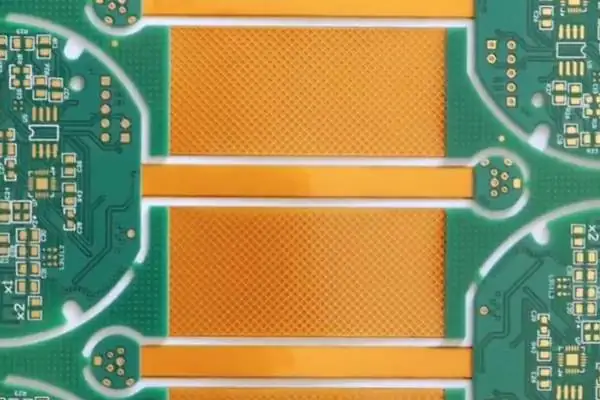
This design philosophy actually gives us a lot of inspiration. Many products now pursue extreme thinness and lightness, but often overlook inherent adaptability. Flexible circuit boards precisely demonstrate this: true strength doesn’t necessarily come from rigidity, but from the ability to adjust to environmental changes. Just like in design, overly rigid structures are more prone to breakage under pressure.
The most ingenious application I’ve seen is in medical devices. Monitoring instruments that need to conform to the curves of the human body simply cannot achieve accurate measurements using traditional rigid circuits. Flexible circuit boards can naturally integrate into ergonomic designs, ensuring both comfort and functionality. This wisdom hidden in the details particularly impresses me—technology doesn’t have to flaunt itself; a well-integrated approach is a higher level of sophistication.
Sometimes, looking at these winding circuit traces is quite interesting. Unlike the straight lines of traditional circuit boards, they flow naturally like the veins of a river. This form itself embodies a certain philosophy: connections don’t necessarily have to be straight lines; curves that adapt to the shape often create more stable systems. Now, even wearable devices are starting to adopt this design extensively, indicating that people are finally recognizing the value of flexibility.
The design of flexible circuit boards is actually quite interesting. When I first started working with these products, I was always thinking about how to make the circuitry more compact. Later, I discovered that the real challenge lies in the structural handling of the bending areas.
I remember once, after repeated bending, a test sample developed micro-cracks at the connections. Upon disassembly, it was discovered that the ductility of ordinary board material couldn’t keep up with the demands of dynamic use. Switching to a specialized flexible substrate significantly improved the situation. This material maintains the stability of its internal structure during bending. This substrate is typically composed of a polyimide film and a special adhesive, and its molecular chain structure offers superior elastic recovery. For example, in wearable devices, the flexible substrate needs to withstand hundreds of bending cycles daily. Ordinary FR-4 board material might experience fatigue fracture after tens of thousands of cycles, while specialized flexible materials can achieve a lifespan of over a million cycles. We also use finite element analysis software to simulate stress distribution under different bending radii to identify high-risk areas most prone to cracking.
The treatment of the hole walls is also crucial. Using through-hole technology on ordinary circuit boards directly on thin materials can easily lead to breakage due to stress concentration. We later adjusted the drilling process and added special treatment to the hole walls during the metallization stage to ensure the copper layer maintains connection reliability during bending. Specifically, we adopted a stepped drilling technique to create a smoothly transitioning conical structure for the hole walls, avoiding stress concentration at right-angle bends. In the chemical copper plating process, the deposition rate was specifically controlled to ensure that the uniformity of the copper layer thickness on the via walls was controlled within ±3 micrometers. These improvements enabled the through-holes to maintain a resistance change rate within 5% of the initial value after 100,000 bending tests.
The use of PI material does offer many advantages; its heat resistance and mechanical strength are suitable for scenarios requiring repeated deformation. However, its cost is significantly higher than conventional materials, requiring careful consideration during the initial design phase. For example, a common 50-micrometer-thick PI substrate has a glass transition temperature exceeding 250°C, far higher than the 130°C of ordinary FR-4 material. This means that PI substrates can better resist thermal deformation when soldering components. However, the cost per square meter is 2-3 times higher than that of FR-4 of the same specifications. Therefore, we typically only use PI material in dynamically bending areas, while using a hybrid design of rigid or semi-flexible boards in static areas to balance costs.
A smartwatch project left a deep impression on me; the client required the circuitry to adapt to various wrist movements. We experimented with flexible design solutions of varying thicknesses and ultimately solved the space constraint issue through a layered layout. The product received positive feedback after its launch. In implementation, we placed large components such as the core processor in a rigid area within the casing, while the wiring connecting the display and sensors used three layers of 0.1mm thick flexible circuitry for three-dimensional routing. The middle layer was dedicated to power routing, and the upper and lower signal layers used staggered routing to avoid crosstalk from long parallel traces. This design allows the circuit board to deform collaboratively, like an accordion bellows, when the wrist is bent.
The biggest challenge in this type of design is simply applying the rigid board approach. Flexible layouts require more three-dimensional spatial imagination; sometimes, a simple adjustment to the routing path can significantly improve durability. For example, changing straight traces to curved paths can make stress distribution more even; using serpentine traces in bending areas can absorb deformation energy like a spring. We also added stress relief grooves at key nodes. These micron-level structures act like “joints” on the circuit board, making deformation more natural and smooth.
Seeing more and more consumer electronics products using flexible circuits is quite impressive; this design approach truly brings a different experience. From the interwoven hinge circuits of foldable phones to the spiral wiring in TWS earphone charging cases, these innovations are constantly breaking through the limitations of traditional electronic product form factors. Recently, we’ve also been experimenting with embedding strain sensors in flexible circuits, enabling the circuit board not only to transmit signals but also to monitor its own deformation in real time, bringing more interactive possibilities to smart devices.
I’ve always found the field of flexible circuit boards particularly interesting. Many people think it’s just a bendable circuit board, but the choice of materials is key. Take PI material, which we commonly use, for example; its heat resistance is undeniable, able to withstand high-temperature soldering processes, which is especially important in precision electronic devices.
However, sometimes I wonder if all products need such high heat resistance standards? I remember once working on a small-batch wearable device project where the client insisted on using PI substrate, which doubled the cost. Later, we discovered that many everyday electronic products don’t actually need such high heat resistance levels, which only added unnecessary cost burdens.
The choice of copper foil is also quite important. Rolled copper is indeed flexible, but it’s also expensive. For some low-frequency applications, ordinary electrolytic copper foil is perfectly adequate and can save a significant amount of budget. I’ve seen too many engineers habitually choose the most expensive materials, when in fact, performance is often excessive.
Recently, I’ve been paying attention to the development trend of adhesive-free materials. This process, which directly coats copper foil onto the substrate, does make products thinner and more reliable, but the manufacturing process is significantly more difficult, and many small factories simply can’t handle it.
When designing, I always prefer to clarify the actual application scenario of the product before deciding on the material combination, rather than blindly pursuing the highest configuration. After all, the most suitable is the best.
I’ve always felt that many people’s understanding of flexible circuit boards is limited to the concept of “bending.” What’s truly interesting is the freedom it brings to product design. I remember once when we were developing a heart rate monitoring module for a smart bracelet, we found that traditional rigid boards simply couldn’t fit into the curved space. We finally solved this problem using an ultra-thin flexible solution.
Multi-layer designs are actually more challenging in the flexible field than rigid boards because each layer must maintain insulation while preserving overall flexibility. I’ve seen engineers strive for signal stability by making multi-layered flexible boards resemble layered cakes, only to have them delaminate after a few bends.
Signal transmission on flexible boards definitely requires special attention. In one test, I discovered that the same circuitry experienced a sudden and significant signal attenuation when bent; it turned out the impedance abruptly was due to an excessively small turning radius. Now, when wiring high-speed signals, I always intentionally leave buffer zones to avoid right-angle turns.
The automotive electronics field has extremely stringent requirements for flexible boards. For example, automotive camera modules must not only withstand high temperatures but also the continuous vibrations of the engine compartment. We once replaced traditional wiring harnesses with double-layered flexible boards made of special materials, reducing weight by 70% and achieving a higher reliability test pass rate.
The flexible circuitry in medical devices is truly ingenious. I visited a pacemaker manufacturing plant where they used multi-layered flexible boards as thin as paper yet capable of carrying critical signals for life support systems. In such scenarios, circuit stability directly impacts safety; designers must repeatedly calibrate even 0.01 millimeter deviations.
The aerospace field has taken the advantages of flexible boards to their extreme. The intricate wiring inside satellites often employs a combination of rigid and flexible designs, enabling three-dimensional cabling within limited space while allowing for the installation of heavy components in rigid sections.
The allure of flexible boards lies in their ability to break many traditional design boundaries. For example, the circuitry in the hinge of today’s popular foldable phones must withstand hundreds of thousands of bends while maintaining uninterrupted video signals—a requirement unimaginable five years ago.
Material selection often determines the success or failure of a flexible solution. We’ve encountered clients who insisted on using artificial leather to wrap smart wearable devices; ordinary flexible boards simply couldn’t withstand humid environments. Only after switching to a specially coated substrate did they pass testing.
Recently, I’ve come across new technologies for stretchable circuitry, with substrates that can extend like rubber bands by 30%. This has made me wonder if even the fixed form of the “circuit board” will be redefined in the future.
Ultimately, the core value of flexible technology lies not in replacing rigid boards, but in opening up new possibilities. Just as fabric and steel each have their own applications, the key is to find the most suitable carrier for the product’s essence.
I’ve always felt that the most fascinating aspect of flexible PCBs isn’t their flexibility itself, but rather how they fundamentally change the way we design electronic products. In the past, we always thought about how to cram rigid circuit boards into a pre-designed casing. Now, the opposite is true; we can make circuits conform to the shape of the product and the human body. This shift from “adaptation” to “integration” is the real breakthrough brought about by flexible technology.
I remember my first encounter with a practical application was in a health bracelet project. Traditional rigid boards require specific space for placement, often resulting in bulky devices or uncomfortable wear. When we tried a flexible solution, we discovered that the circuitry could conform to the curve of the wrist like a band-aid. This experience made me realize that electronic products shouldn’t be cold, mechanical parts, but rather natural extensions of human activity.
Currently, much discussion focuses on how many times materials can be bent or their high-temperature resistance. But I think what’s more noteworthy is how flexible technology can promote cross-disciplinary innovation. For example, the concept of electronic skin being explored in the medical field combines sensors and flexible circuits into a thin film, directly attached to the human body surface to monitor health data. This cutting-edge exploration integrating biomedicine and electronic engineering cannot be achieved solely with traditional PCB technology.
Some worry that excessive pursuit of flexibility will make products fragile. In fact, the next generation of PCB technology has made groundbreaking progress in materials science.
Recently, while organizing electronic components in my studio, I found several dusty flexible circuit boards. These paper-thin contraptions reminded me of my first encounter with flexible PCBs ten years ago—back then, I couldn’t understand why anyone would make a circuit board as soft as a chewing gum wrapper. Looking back now, that limited understanding is like thinking a mobile phone can only be used to make calls.
What fascinates me most about flexible circuit boards is that they break the inherent logic of electronic product form. Traditional PCBs are like load-bearing walls in a building, requiring a square shape to occupy a fixed space; while flexible PCBs are more like flowing blood, meandering along the product’s framework. I was particularly struck by this last week when I disassembled my daughter’s children’s watch—the motherboard was only the size of a fingernail, and it relied entirely on a few golden, serpentine lines to connect the screen and sensors. This design allows the entire watch case to be made into a curved shape that fits a child’s wrist, something rigid PCBs simply cannot achieve.
Many people think flexible technology is a recent trend, but NASA actually used similar wiring principles in spacesuits as early as the Apollo program. However, the materials back then were indeed bulky, like old-fashioned telephone cord coils, and would break after only a few dozen bends. Things are different now. The flexible PCB on my desk, salvaged from a discarded foldable phone, shows the glass fiber warp and weft woven into the substrate when held up to the light—this composite material allows its impedance change to remain below 3% even after 200,000 folds.
Interestingly, flexibility doesn’t equate to fragility. Last year, while testing in-car entertainment systems for a car manufacturer, we discovered that the wiring in the center console, which moves with the air conditioning vents, was actually more resistant to high-temperature vibrations than the rigid motherboards fixed in the engine compartment. The engineers told me this is because flexible design inherently disperses stress, just as a willow branch is harder to break than a tree trunk in the wind.
A conversation with R&D personnel at a medical device company once opened my eyes even wider. They were experimenting with printing micro-sensors onto biocompatible films. These circuit boards, thinner than a human hair, can be applied to the skin like a band-aid to monitor heart rate, and even implanted directly into blood vessels to measure blood pressure. Traditional PCBs are simply ineffective in such scenarios—you can’t exactly insert a rigid green board into the human body, can you?
However, flexible PCBs aren’t a panacea. A smart home startup team once insisted on using a fully flexible motherboard for their robot vacuum cleaner, but the machine swayed like a jellyfish while working, actually reducing its cleaning efficiency. They later solved the problem by using rigid modules in key moving joints. This reminded me of playing with modeling clay as a child—softness alone isn’t enough; you also need support points to create stable shapes.
Every time I see concept videos of smartwatches with circular screens or rollable phones, I wonder about the wiring behind them. Perhaps in ten years, when we discuss PCBs, we won’t distinguish between flexible and rigid—just like no one emphasizes “color televisions” anymore, because monochrome displays are a thing of the past. When technology matures to a certain point, certain characteristics become the norm.
I’ve always felt that many people have a misconception about circuit boards—as if they should be rigid, green boards. Actually, what I’ve enjoyed tinkering with most these past few years are things that can be bent. I remember the first time I held a foldable circuit board; it felt like discovering a new world.
Traditional rigid boards are indeed sturdy and durable. But they become problematic in situations requiring repeated bending, such as the wiring in the hinge of a foldable phone, or sensors in medical equipment that need to move with the body. This is where the advantage of flexible materials becomes apparent—they can be rolled up like paper and tucked into small spaces.
Once, I helped a friend modify the image transmission antenna for a drone, using a rigid-flexible design with reinforcing ribs. The antenna section uses a flexible material to adapt to the arm’s curvature, while the main control section maintains a rigid structure for easy fixation. This design ensures signal stability and avoids circuit breakage caused by repeated vibrations.
However, the most troublesome aspect of flexible boards is stress concentration at bends. We’ve seen too many cases of copper foil breakage due to excessively small bending radii. We’ve learned our lesson; in dynamic bending areas, we change the circuit routing to a rounded transition, like giving the wire sufficient sway.
Another interesting detail is that many people believe thinner boards are more flexible. Actually, it depends on the overall structure. Sometimes, adding a 0.1mm reinforcing steel sheet at critical locations can extend the lifespan. This is like finding the right support point for a spring.
My recent smartwatch prototype used a three-layer flexible circuit design. The innermost layer handles sensor signal transmission, the middle layer distributes power, and the outermost layer processes data exchange. Each layer uses a different material for the cover film to control elasticity, which is much more reliable than using ribbon cables.
In reality, neither purely flexible boards nor rigid-flex hybrid boards are particularly mysterious. The key is to clearly define which parts need movement and which need stillness. It’s like designing a garment—the joints need elastic fabric, while the shoulder line needs to remain crisp.
I once observed an interesting phenomenon during a factory visit: experienced craftsmen would always bend the flexible boards by hand a few times when checking their quality. They said that truly good boards have a unique resilience when they spring back, an experience that machines can’t replicate.
Now I pay special attention to products that cram circuit boards into irregularly shaped spaces. For example, the winding wiring in a car’s dashboard, or the circuitry running along curved surfaces in smart home devices. These designs often showcase the engineer’s ingenuity more than just the appearance.
Ultimately, choosing between rigidity and flexibility is never an either-or choice. Good design knows how to use the right materials in the right places—just as composing music requires rests and sustain pedals.
A tire pressure sensor that lost signal after six months, taken apart,
A decade in solar taught me that most MPPT controller PCB failures
A fiber laser marking machine that ran perfectly for six months can
- 중소규모 배치 생산 전문가
- 고정밀 PCB 제작 및 자동화된 조립
- OEM/ODM 전자 프로젝트를 위한 신뢰할 수 있는 파트너
영업 시간: (월~토) 9:00~18:30
Get quote, solution or any question, Andre always here to help