

Tire Pressure Monitoring PCB Failures: From Corroded Battery Pads to Antenna Detuning Inside the Rim
A tire pressure sensor that lost signal after six months, taken apart,
Speaking of RF, many people might find it mysterious. The key lies in the material of the board itself. I’ve seen many beginners use ordinary materials to save money, resulting in severe signal attenuation and making later debugging extremely difficult. For example, in 5G base station equipment, ordinary FR-4 boards cause signal loss exceeding 3dB in the 28GHz band, while specialized RF boards can control the loss to within 0.5dB. This difference directly determines the stability of the equipment’s communication distance.
Manufacturing RF circuit boards is a bit like cooking; if the ingredients aren’t good, even the best cooking skills are useless. You need to find a reliable RF PCB manufacturer. They usually have a selection of materials specifically designed for high-frequency applications. I remember our team once tested a new composite material that maintained low loss while having significantly better mechanical strength than traditional PTFE. Although it was more expensive, the overall performance improvement was obvious, especially for equipment requiring long-term stable operation—making the investment worthwhile. This material typically uses a ceramic-filled PTFE system with a dielectric constant that can be stably maintained at 2.2±0.02, making it particularly suitable for the array antenna design of millimeter-wave radar modules.
Many people easily overlook the issue of material thermal stability, especially when operating in high-temperature environments. Ordinary boards are prone to deformation over time, leading to system malfunctions. Reputable RF circuit board manufacturers strictly control temperature profiles during production to ensure strong adhesion between each layer. This has a greater impact on RF performance than most people realize. For example, in automotive electronics, circuit boards in the engine compartment must withstand cyclic shocks ranging from -40°C to 125°C. Professional manufacturers use segmented heating and lamination processes to keep the Z-axis expansion coefficient of the board below 40ppm/°C.
I appreciate manufacturers willing to invest in material research and development. They not only sell products but also provide solutions. For instance, some manufacturers recommend specific substrate combinations for different frequency bands. This saves designers a lot of trial and error time, as RF technology has too many variables; having a knowledgeable partner is crucial. For example, Rogers’ RO3003 series is specifically optimized for frequencies below 6GHz, while the RO4835 is more suitable for automotive radar applications in the 24-77GHz range. This professional grading prevents designers from blindly choosing materials.
Another interesting point is that the manufacturing level of many domestic RF circuit boards has caught up. Previously, people blindly trusted imported brands, but now you’ll find that some domestic manufacturers are more flexible in handling details. They can adjust process parameters according to your actual needs; this customized service is particularly helpful for small and medium-sized projects. For example, Shennan Circuits’ recently launched high-frequency board material has reached international standards in Dk/Df parameter consistency and supports small-batch mixed dielectric lamination processes, which is particularly useful for IoT device developers.
Ultimately, material selection isn’t about choosing the most expensive, but the most suitable. You need to weigh frequency range, power requirements, and cost budget. Sometimes, a mid-priced hydrocarbon ceramic board material is more suitable for your application scenario than high-end PTFE. This needs to be judged based on actual testing. For example, in Wi-Fi 6 router design, when the power does not exceed 2W, using Shengyi Technology’s S1000-2M material can reduce costs by 30% while still ensuring an EVM index better than -35dB.
What I fear most is encountering clients who blindly pursue low prices. Some choose substandard boards to cut costs, resulting in rework of the entire project and ultimately costing more. In the RF field, you truly get what you pay for; the money you save on materials will eventually be paid off double during the commissioning phase. For example, in a drone image transmission project, the client insisted on using ordinary boards costing 200 yuan per square meter. As a result, the dielectric constant drifted under high temperatures, causing image pixelation. Ultimately, the circuit board had to be redesigned, extending the project cycle by two months, and the losses far exceeded the difference in material costs.
Recently, I talked with some engineers working on RF projects about choosing circuit boards and discovered a rather interesting phenomenon. Many people think that as long as they find an ordinary PCB manufacturer, the RF part will be fine, but they often find that the signal loss is ridiculously high during the testing phase.
In fact, RF circuit boards and ordinary circuit boards are completely different concepts. Just as you can’t use ordinary wires to transmit high-definition signals, the transmission of high-frequency signals has extremely demanding requirements for the medium. A friend who works on a 5G base station project complained to me that they initially chose a generic manufacturer to save money, only to find severe millimeter-wave signal attenuation on the board, almost causing the entire project to fail.
Currently, there aren’t many professional RF PCB manufacturers on the market, and those capable of producing high-quality millimeter-wave boards are even rarer. A friend working on connected vehicles told me that their team tested samples from three different RF PCB manufacturers and found that even though they all claimed to be able to make high-frequency boards, the actual performance difference could be over 30%. Especially in the 5G millimeter-wave band, the dielectric constant stability of the board material directly determines the signal quality.
The most extreme example I’ve seen is a smart home project that initially planned to use ordinary FR4 material for a 2.4GHz WiFi module, but during mass production, they found the yield rate to be less than 60%. Switching to a specialized RF board solved the problem, and in fact, it was more cost-effective. This made me think that many engineers easily fall into the trap of low prices, neglecting the later debugging and time costs.
Speaking of 5G equipment, many manufacturers are now promoting sub-6GHz and millimeter-wave dual-mode solutions. This places higher demands on RF circuit board manufacturing, requiring a single board to simultaneously meet the performance requirements of different frequency bands. A customer who manufactures small base stations told me that their top priority when selecting suppliers is material consistency—after all, if the board parameters fluctuate significantly during mass production, the entire batch of products has to be scrapped.
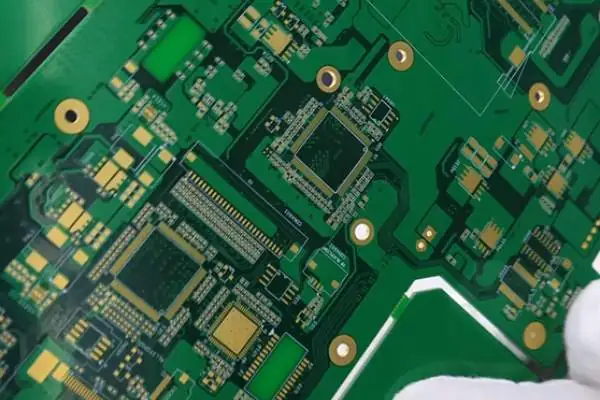
Recently, we’ve also noticed a trend: more and more RF circuit board manufacturers are starting to offer design support services. High-frequency circuit layout is extremely delicate; even a few millimeters of extra length in a trace can affect the VSWR. One manufacturer in Shenzhen even provides simulation analysis for its clients, which is a significant improvement over simply selling boards in the past.
Ultimately, choosing the right RF board is as crucial as fitting the right tires to a high-speed sports car. Signal integrity cannot be compensated for by later adjustments; a solid foundation must be laid from the base material stage. Especially now that 5G devices are becoming increasingly widespread, a good RF circuit board directly determines the user experience.
I recently chatted with some friends in the hardware industry and noticed a rather interesting phenomenon. Now, when people talk about RF circuit board manufacturing, they tend to steer the conversation towards hot topics like AI data centers, as if not mentioning them means being out of touch with the times. However, based on our actual project experience, things are not that simple.
An engineer working on a military project told me that when they were prototyping RF PCBs with domestic manufacturers last year, they encountered a problem: samples from domestic manufacturers consistently showed slightly lower stability in extreme environments, even with the same board material parameters. Either the dielectric constant drifted or the coefficient of thermal expansion exceeded the limit. They eventually had to increase the price by 30% and source from Europe, adding two months to the delivery time, but at least the equipment didn’t malfunction in the desert region. For example, during testing in the Gobi Desert where the temperature difference between day and night exceeds 50 degrees Celsius, the domestically produced boards exhibited micron-level deformation, leading to a deterioration in the antenna’s VSWR, while the European supplier’s substrate, with the addition of special glass fiber cloth, maintained a stable dielectric constant during thermal cycling tests.
This reminded me of another incident. A listed company claiming to specialize in RF PCB manufacturing received an urgent order for AI servers last year, but due to an excessive pursuit of layer compression, heat dissipation problems caused mass rework. Their technical director privately complained that there’s a strange phenomenon in the industry—some PCB manufacturers are pushing the thickness to unbelievable levels to secure orders, neglecting the phase consistency of RF signals on ultra-thin substrates. In reality, when the board thickness is compressed to below 0.2mm, the electromagnetic field distribution exhibits edge effects, requiring gradient dielectric constant design for compensation. However, this necessitates expensive simulation software and testing equipment.
A long-established RF circuit board manufacturer I know has maintained a clear head. In the past two years, they’ve slowed down their acceptance of AI-related orders, focusing more on upgrading their electroplating lines. The boss aptly put it: “High-frequency signals are like spring water pipes; too many bends and even the purest water will lose its flavor by the time it reaches the end.” In recent tests of flexible RF boards for aerospace units, they discovered that using a new ceramic filler material allowed them to control losses to within 0.5dB even in the millimeter-wave band. The key to this material lies in controlling the alumina particle size distribution within the 3-15 micrometer range, using plasma treatment to chemically bond the filler to the polyimide matrix.
However, the tight supply chain has indeed spurred some new approaches. Last month, I visited a factory in Shenzhen and saw them using a vision inspection system combined with adaptive algorithms to dynamically calibrate the copper foil thickness of each PCB on the lamination line. This rudimentary approach to AI is far more practical than empty talk about intelligent manufacturing; at least it solves the problem of impedance abrupt changes caused by batch variations in materials. They’ve even developed a real-time dielectric constant mapping technology based on millimeter-wave scanning, capable of predicting material performance fluctuations before large-scale lamination.
Interestingly, some small and medium-sized RF circuit board manufacturers are now finding innovative solutions in specific areas. For example, a Zhejiang-based company specializing in automotive radar boards has created a hybrid structure using traditional FR4 materials and special resins, reducing costs by 30% while achieving automotive-grade millimeter-wave performance. This unconventional approach is nowhere to be found in textbooks, but it effectively solves the cost pain point in mass production. Specifically, they spin-coat a fluoropolymer onto the surface of the FR4 core material, forming a gradient dielectric constant transition layer, maintaining radiation efficiency in the 77GHz band while significantly reducing board material costs using existing FR4 production lines.
Ultimately, I think what the industry lacks most right now isn’t sophisticated technical concepts, but rather an engineering mindset that can combine material properties, process parameters, and practical scenarios. As an experienced engineer once said, even the most advanced HVLP copper foil will result in a useless RF board if you can’t even calculate basic three-wire impedance matching. He cited the example of some young engineers who overly rely on simulation software, neglecting the pad effect in actual assembly—even a 0.1mm solder bump can cause a 0.8dB variation in insertion loss at 28GHz.
I’ve always felt that choosing an RF circuit board supplier is like choosing a barber—their skill directly determines the final result. I remember last year when our team was designing a new wireless device, we encountered an interesting situation. During testing, we consistently experienced signal instability.
We later discovered it was due to the circuit board’s substrate. Those seemingly minor details are actually crucial.
Good RF design requires considering many factors. For example, in high-frequency environments, the signal transmission path is like driving on a highway—any uneven surface will affect the speed. This is why professional RF circuit board manufacturers pay special attention to material uniformity.
I’ve seen some engineers choose ordinary materials to save costs, resulting in devices whose performance completely falls short of expectations. This is like using ordinary glass for a telescope lens; you can see, but the clarity is far inferior.
In fact, many excellent manufacturers are now investing heavily in materials research and development. They understand the high stability requirements of radio frequency (RF) applications, from mobile phone base stations to medical devices.
Sometimes I wonder if our industry’s pursuit of precision is a bit excessive. But every time I see projects I’ve participated in running stably for years, I feel that all this persistence is worthwhile.
When choosing partners, I value their professional attitude more than their size. After all, manufacturing RF circuit boards requires not only equipment but also meticulous attention to detail.
Over the years in the RF circuit board industry, I’ve increasingly realized that choosing the right materials is paramount. Some manufacturers always try to save costs by using ordinary boards, resulting in problems as soon as high-frequency signals are applied. Truly reliable RF circuit board manufacturers understand one principle: a good horse needs a good saddle.
I remember a project last year where the client insisted on using ordinary FR4 material for the 5G antenna board, and the VSWR couldn’t be adjusted properly. Later, by switching to a specialized high-frequency board, the problem was solved. This is like trying to drink red wine from a regular glass.
I’ve always felt that manufacturing RF circuit boards (PCBs) is a true test of a manufacturer’s patience and technological expertise. Last year, we had a project where we had to work with several RF PCB manufacturers to get samples before discovering the problem—those promising three-day delivery couldn’t even achieve basic impedance matching.
The most troublesome aspect of RF PCB manufacturing is signal integrity. Once, during testing, we discovered abnormal transmission loss in a 5G module. After much trial and error, we found it was due to an unstable dielectric constant in the substrate. Ordinary FR4 material is a disaster under high-speed signals; dielectric loss can consume half the signal strength. This made me realize the importance of choosing a professional RF PCB manufacturer.
Many people easily overlook the impact of lamination processes on impedance. In fact, even slight misalignment during multilayer board lamination can cause a characteristic impedance shift. The ±5Ω design tolerance sounds lenient, but maintaining this precision in practice requires extremely precise temperature control.
The most extreme case I’ve seen was a sample from a manufacturer that resonated in the microwave band. Upon dissection, it was found that uneven copper thickness in the vias caused a sudden impedance change. A qualified RF circuit board manufacturer should control the process from the metallization stage, as even a tiny discontinuity in the signal path can cause reflection problems.
More and more designs are now using hybrid lamination structures, which brings new challenges to circuit board manufacturing. Differences in the thermal expansion coefficients of different materials can lead to uneven impedance distribution after lamination. Experienced manufacturers will predict these changes in advance through simulation.
Sometimes choosing a supplier feels like finding a partner. RF circuit board manufacturers that proactively provide impedance test reports are often more trustworthy. They understand that in the RF field, all parameters need quantitative verification, not just experience-based estimations.
Ultimately, the worst thing in RF board manufacturing is encountering a layman guiding an expert. Once, a partner insisted on using cheap materials, resulting in a three-month delay and rework. No matter how you calculate it, this cost was more than using better materials. This lesson taught me that compromising costs in the RF field often means incurring greater consequences.
I’ve recently noticed something interesting—even community access control systems are now using radio frequency (RF) technology. This reminds me of a dilemma I encountered last year when helping a friend choose smart home devices: why could routers, both claiming to support 5G bands, have prices that differed by three times? Upon closer inspection, I discovered the more expensive one used a custom-designed RF circuit board.
A friend who works in hardware development told me that finding a reliable RF PCB manufacturer is like finding a partner—ISO 9001 certification alone is far from enough. His company just switched to their third RF PCB manufacturer last month because the manufacturer’s material documentation was always incomplete. This is especially true for boards used in medical equipment; even a single misaligned capacitor could lead to a recall of the entire batch of devices.
Actually, the most troublesome thing about RF is the lack of standardized specifications. European customers insist on RoHS certification, while Japanese customers are fixated on halogen-free standards. Once, we received orders from two countries simultaneously, almost paralyzing our production line. Later, we learned our lesson and prepared two separate production lines with different processes. Although the cost increased, at least we didn’t have to constantly change the bill of materials.
I remember a master craftsman from a long-established manufacturer with over 20 years of experience demonstrating to me how to visually judge impedance matching—he could tell if the plating thickness was uniform simply by lightly running his fingernail across the microstrip line. This kind of experience cannot be replaced by machine testing. Many new RF PCB manufacturers are now too reliant on automated equipment, losing this kind of craftsmanship.
Recently, I’ve been in contact with several manufacturers that have obtained military-grade certifications, and I’ve noticed they trace even the batches of their raw materials. This reminded me of a car electronics workshop I visited before—each circuit board had a complete file card, and all the data, from copper foil rolling to final product testing, was traceable. Although the delivery cycle was long, it was certainly reassuring.
Actually, the most demanding test of a manufacturer’s skill is stability under high-frequency conditions. I once saw a tester put a board in a -40°C freezer and immediately transfer it to an 85°C oven, cycling it fifty times. Those barely passing tests usually couldn’t last more than twenty cycles before the substrate delamination occurred.
Now, many customers are starting to pay attention to whether manufacturers have a complete reliability verification system. After all, nobody wants their product to be complained about after it’s launched because of a phase drift issue with a filter. Good RF design is like a carefully tuned instrument; it requires precise components and a skilled craftsman who understands how to play them together.
I’ve always felt that choosing a reliable RF PCB manufacturer is like choosing a partner—judging solely by surface data can easily lead to problems. Last year, our team did a project using RF boards made of ordinary FR4 material, and the signal attenuation was severe, ultimately requiring a complete rework.
That experience taught me a valuable lesson: the sensitivity of high-frequency signals to materials is far greater than imagined. Many RF circuit board manufacturers now emphasize low-loss materials, but what’s truly crucial is the material’s stability at different temperatures.
I’ve seen some manufacturers cut corners in the RF section to control costs, resulting in equipment that performed perfectly in the lab but malfunctioned in the field.
The worst thing in RF manufacturing is making assumptions.
A common misconception is that using high-end materials guarantees performance. In reality, every step, from board material selection to circuit layout, affects the final result.
I remember visiting a professional RF circuit board manufacturing plant once, and their engineers showed me a very interesting comparison: circuit boards with the same design could exhibit performance differences of up to 30% at high frequencies due to different lamination processes.
This made me realize that the manufacturing process is just as important as the materials themselves.
Many customers immediately ask about the board material used, but few care about the manufacturer’s control over the details of the manufacturing process.
I think when choosing a supplier, you should look at their actual case studies, especially their experience in similar frequency bands.
After all, theoretical discussions are easy; those who can translate theory into stable products are the true partners.
Recently, while working on a 5G base station project, we placed particular emphasis on the manufacturer’s practical experience in the high-frequency field, rather than simply relying on their parameter tables.
This pragmatic approach helped us avoid many potential problems.
Ultimately, RF engineering requires a deep understanding of the entire supply chain, not just expertise in a single link (or step).
I’ve always felt that choosing an RF circuit board manufacturer is a bit like finding the right partner. It’s not just about picking anyone that can do it. You have to consider their actual ability to handle high-frequency signals.
I remember once our team was looking for an RF PCB manufacturer for a millimeter-wave project. One supplier used ordinary FR4 material and assured us it would be fine. However, the samples showed their flaws as soon as they arrived in the lab—the dielectric constant fluctuated wildly. We only discovered the significant difference after switching to a factory specializing in RF circuit boards.
Many people easily overlook the issue of substrate material compatibility. For example, some materials touted as high-frequency-specific can experience a dramatic performance drop at certain temperatures. Once, during testing, we found that the loss tangent suddenly deteriorated at -20 degrees Celsius, almost causing the entire project to be delayed.
Military-grade standards are indeed stringent, but not necessarily suitable for all scenarios. I’ve seen too many teams blindly pursue the highest standards, only to slow down their progress. Sometimes, commercial-grade RF circuit boards can operate stably for over five years if the right manufacturer is chosen.
In automotive electronics, temperature cycling tests are particularly important. Manufacturers who claim to meet automotive-grade standards should provide actual road test data; lab reports alone are not reliable.
Actually, a very intuitive way to judge a manufacturer’s level is whether they dare to let you tour their production line, especially the impedance control process. Those who are secretive about key steps can generally be disregarded.
Some emerging RF circuit board manufacturers now proactively offer design simulation support. This collaborative model is more valuable than a simple buyer-seller relationship, since optimizing high-frequency circuits requires repeated collaboration between the manufacturing and design teams to find the best solution.
Ultimately, choosing a manufacturer is like getting glasses; looking at the specifications is useless—you have to try them on to know if they fit. This is especially true when finding an RF PCB partner.
I recently talked with some friends who work in RF design, and I found that everyone is quite conflicted when choosing a manufacturer. Many people think that simply finding a manufacturer that can make RF PCBs is enough, but the intricacies are far more complex than imagined. For example, an RF PCB manufacturer I previously worked with, while capable of basic fabrication, consistently encountered problems when laminating multilayer boards. Once, a six-layer board we designed suffered from severe interlayer signal interference during testing, requiring three rework attempts to resolve the issue.
When choosing a reliable RF PCB manufacturer, I particularly value their technical expertise. Some manufacturers boast about their advanced equipment, but their engineers can’t even clearly explain the principles of impedance matching. A truly professional team will proactively discuss material properties with you, such as the stability of different substrate types during high-temperature lamination. I remember once when we tried a new ceramic filler material, a manufacturer we’d worked with for many years directly presented their accumulated process parameter library, even specifying shrinkage rates to two decimal places.
RF PCB manufacturing is where a manufacturer’s attention to detail is most crucial. While the tolerance for linewidth on ordinary PCBs might be relaxed to 10%, RF components often need to be controlled within 5%. I’ve seen manufacturers use ordinary etching processes to create microstrip lines, resulting in jagged, sawtooth-like edges that cause a significant increase in signal reflection. Now, I turn my back on manufacturers like that.
The lamination process is where the real difference lies. Many small manufacturers simplify the process to save costs. For example, they use rapid heating where gradual heating is needed, causing substrate delamination. Once, during acceptance testing, we found air bubbles in the middle layer, and the manufacturer argued that it wouldn’t affect usability. The result? This batch of boards failed after only three months in base stations.
Now, I pay special attention to a manufacturer’s technological iteration capabilities. During a recent visit to a startup company, their vacuum lamination technology was impressive. By precisely controlling the air pressure, they could control the thickness error of multilayer boards to within 0.05 millimeters—precision crucial for millimeter-wave products.
Finding a manufacturer is like finding a partner; focusing solely on price will inevitably lead to losses. I’d rather spend more money on manufacturers willing to invest time in understanding the design intent. After all, in RF technology, even a small error can have significant consequences; sometimes, the location of a grounding hole can affect the entire system’s performance.
A tire pressure sensor that lost signal after six months, taken apart,
A decade in solar taught me that most MPPT controller PCB failures
A fiber laser marking machine that ran perfectly for six months can
- 중소규모 배치 생산 전문가
- 고정밀 PCB 제작 및 자동화된 조립
- OEM/ODM 전자 프로젝트를 위한 신뢰할 수 있는 파트너
영업 시간: (월~토) 9:00~18:30
Get quote, solution or any question, Andre always here to help