

What Separates the Best Prototype Printed Circuit Board Manufacturers When You’re Building a Telecom Rectifier PCB
Many people assume the key to circuit-board manufacturing is high-end equipment, but
I’ve always felt that current PCB manufacturing is overly focused on speed. Everyone wants rapid PCB manufacturing services, which is understandable, but what truly determines quality are those seemingly insignificant traditional process steps.
I remember once designing an RF board that ran into a major problem because its over-reliance on LDI technology led to impedance control deviations. While eliminating the film fabrication step was certainly faster, in high-frequency applications, traditional processes actually provide a more stable dielectric constant. That experience taught me that technological innovation cannot be a one-size-fits-all approach.
Many manufacturers are now touting the advantages of film-free systems, but I’ve found that for precision circuits, the stability provided by film is irreplaceable. Especially when the board material is exposed to temperature and humidity changes, traditional manufacturing methods better control expansion and contraction.
Regarding character printing, I do acknowledge the advancements in inkjet technology. However, many people may not know that on certain special boards, the adhesion of UV-cured inks is actually not as good as traditional screen printing. I had a board where characters peeled off during assembly due to this issue.
The same principle applies to testing. Flying probe testing is indeed flexible, but for mass production, building a dedicated test fixture is more economical and reliable. I’ve seen too many cases of missed tests due to prioritizing testing speed.
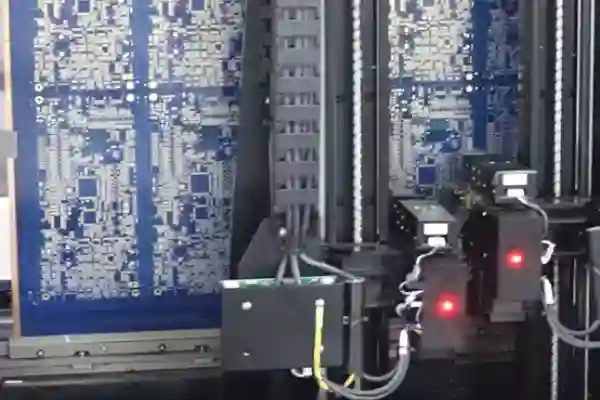
Ultimately, the choice of process depends on the specific requirements. For simple single-sided boards, LDI can indeed significantly shorten delivery time; however, for multi-layer high-frequency boards, it may be necessary to combine traditional processes to ensure performance. I think the key is to find a balance, rather than blindly pursuing so-called “speed.”
Having worked in this industry for several years, I’ve noticed an interesting phenomenon—many people, when they hear about rapid PCB manufacturing, immediately think of rushing and compressing cycles. It seems that as long as the speed is fast enough, other issues can be postponed. But the reality is often not like that.
I remember last year a team making IoT devices came to me for help. To meet their deadlines, they had hired a factory that claimed to be able to ship within 24 hours. When the boards arrived and were tested, the signal quality was terrible. Where did the problem lie? Impedance matching wasn’t done properly. Although they achieved the so-called fast delivery, the poor signal integrity meant the entire project had to be redesigned.
This makes me think that many manufacturers are now advertising their rapid production capabilities, but very few can truly guarantee quality. Some manufacturers have fast PCB production lines, but they can’t even do basic impedance control properly. The most extreme case I’ve seen is a difference of over 20% in characteristic impedance within the same batch of boards.
Actually, rapid production and quality control aren’t contradictory. The key is finding manufacturers who truly understand high-speed circuit design. They know when to go fast and when to slow down for careful inspection.
The reliable manufacturers I currently work with all share a common trait—they monitor impedance changes in real time during production. This might sound technical, but simply put, they constantly check the quality of signal transmission during manufacturing.
I once personally witnessed their quality inspectors adjusting equipment parameters to ensure more stable high-frequency signal transmission. This attention to detail is true professionalism.
Material selection is also crucial. Some manufacturers, in pursuit of speed, use a few fixed, generic materials to fulfill all orders. But truly professional rapid PCB service providers will recommend suitable substrates based on your design requirements.
For example, I previously worked on an RF project that required special low-loss materials. The manufacturer I worked with not only provided samples promptly but also proactively helped me test the performance differences between materials of different thicknesses.
Many teams now prefer to separate PCB manufacturing and assembly. Finding a manufacturer that provides complete services actually saves a lot of trouble.
A recent smart hardware project I worked on is a good example—it took less than two weeks from design to finished product. The key was the seamless integration of manufacturing and assembly. The manufacturer started preparing components while the PCB was being produced, and the boards immediately entered the surface mount technology (SMT) process as soon as they came off the production line.
This kind of holistic solution truly leverages the advantages of rapid manufacturing.
Ultimately, pursuing speed is not wrong, but it shouldn’t be put in the wrong way. Good rapid PCB services should guarantee both timeliness and stable performance. After all, what’s the point of fast delivery if you receive unusable boards?
I think many people have a misconception about rapid PCB manufacturing. They always think that speed comes at the cost of quality. Actually, in my work, I’ve found the opposite. Those manufacturers who truly excel in rapid manufacturing pay more attention to detail.
Last week, I had a project that required an urgent redesign. I initially thought of just finding an ordinary manufacturer to do it. However, I discovered that those manufacturers that touted low prices couldn’t even handle basic processes properly. Conversely, manufacturers specializing in rapid PCB manufacturing excel in impedance control and circuit precision.
Good rapid manufacturing processes are now fully automated. From document review to final product, minimal human intervention is required, minimizing the possibility of human error.
The most egregious example I’ve seen is a team rushing to meet deadlines by choosing an unreliable rapid PCB manufacturer. The result? Even basic circuitry issues were found on the boards.
Truly professional rapid PCB manufacturers prioritize quality control. They understand that rework costs significantly higher for quality problems.
When choosing a manufacturer, don’t just look at the price and time commitment. Consider the specific equipment and processes they use.
I once spoke with a manufacturer about their quality control process and discovered they monitor data in real-time at every stage.
Many startups fall into the trap of prioritizing speed over reliability.
Good rapid manufacturing should minimize cycle time while maintaining quality.
I remember a medical device project last year that was able to complete clinical trials on time because they chose a reliable rapid PCB manufacturer.
Therefore, I believe that when choosing a PCB manufacturer, professional capabilities should be the top priority, with speed being just one factor.
Truly valuable rapid manufacturing services should save you overall project time, not simply focus on shortening the production cycle.
I’ve seen too many people oversimplify rapid PCB manufacturing. They always think the machines will start running immediately after placing an order. In reality, the real challenge often lies in the time before you click confirm.
Many people don’t realize that the CAM (Computer-Aided Manufacturing) stage is the nerve center of the entire process. Once, I urgently needed a sample for testing, and after sending the design files, I discovered an impedance matching issue that required adjustment. Just waiting for the engineer’s review took up most of the day. This made me realize that true speed depends on front-end data processing capabilities.
Some manufacturers are now introducing more automated systems, which can indeed save a lot of trouble. For example, after uploading the file system, common trace width issues or spacing violations can be identified in seconds, eliminating the need for repeated email confirmations. However, this automation isn’t a panacea; for special process requirements, experienced engineers still need to make judgments.
I believe judging a manufacturer’s reliability depends on how they balance speed and precision. Manufacturing with only speed and no quality control will only lead to more problems. I once received a batch of boards that looked fine, but during power-on testing, a minor short circuit was found on one power layer. Later, I learned they had skipped certain inspection steps to meet deadlines.
Automation can indeed improve efficiency, but over-reliance can overlook details. For example, while panelization optimization can save materials, if the algorithm doesn’t consider the stress distribution of the boards, it can cause problems during later assembly. Therefore, the key is not how many new technologies are used, but whether these technologies truly contribute to the reliability of the final product.
Ultimately, the essence of manufacturing lies in controlling details. Speed is just one dimension. What I value more is whether the manufacturer can maintain transparency at every stage, allowing you to clearly see where time is spent, rather than being led astray by vague promises. After all, circuit boards are used in real products; any oversight can delay the entire project, which is the most undesirable risk.
I’ve seen many teams oversimplify rapid PCB manufacturing, always thinking that simply adding more money can shorten the cycle. In reality, what truly impacts progress is often the preliminary preparation—circuit diagrams are frequently revised three or four times before finalization. A smart home client last week is a case in point: they assumed production would begin on Monday after receiving the documents on Friday, only to discover an error in the impedance calculations, stalling them for three days just in the design phase. This is especially true when the design involves high-frequency signals; a 0.1mm deviation in microstrip line width can cause signal integrity failure, making these minor reworks incredibly time-consuming.
What many people easily overlook is that so-called “speed” is actually a systemic process. For example, can component procurement keep pace? Some manufacturers promise five-day delivery, but special chips require two weeks. I recommend confirming inventory with suppliers during the circuit diagram stage, rather than waiting until the board is finished before placing an order. Last year, a medical equipment team we collaborated with learned this the hard way; the board was completed in two days, but due to a sensor shortage, the entire project was delayed by more than twenty days. For certain processors from TI or specific frequency band filters from Murata, global shortages sometimes require ordering three months in advance.
A truly efficient process requires seamless coordination across all stages. One industrial controller client impressed me deeply: they contacted component distributors simultaneously during the design phase, and components were already delivered to the factory and ready for shipment as soon as the circuit diagrams were approved. This forward-looking planning is more valuable than simply pursuing manufacturing speed. After all, board etching can be accelerated, but the waiting time for materials cannot be shortened. They even prepared alternative models for critical chips; this risk management awareness is worth learning.
Sometimes, slow is fast. I’ve seen too many people skip design reviews to meet deadlines, resulting in boards that don’t match the structural components, forcing a redesign. Instead of blindly believing in “three-day delivery” advertisements, it’s better to spend time on early verification. A recent drone project really impressed me: the team spent a week repeatedly simulating heat dissipation schemes, ultimately passing the test on the first try and saving the trouble of a second prototyping. They used a thermal imager to measure the temperature rise of different layouts and found that rotating the power MOSFET by 15 degrees reduced the junction temperature by 8°C. This kind of meticulous design is true efficiency.
Ultimately, rapid manufacturing isn’t a magic button, but an art of balance. Balancing quality and schedule requires experience to determine which steps can be streamlined and which must be completed with sufficient time. The worst scenario is a client throwing in a complex six-layer board in the morning demanding completion by the afternoon – like expecting a chef to cook Buddha Jumps Over the Wall in three minutes – utterly unrealistic. For example, blind via design requires calculating the stacking accuracy of laser drilling, and rigid bonding plates need controlled thermal expansion coefficients during lamination; these process nodes have physical limits.
Good collaboration should be like a relay race, where each participant knows when to take the baton, rather than everyone crowding the starting line to sprint. After the design engineer completes the DFM (Design for Manufacturing) check, the purchasing staff immediately follows up on material preparation, and the factory dynamically schedules production based on material availability. One of our clients even uses a shared spreadsheet to update the logistics status of each component in real time; this transparent collaboration has reduced the average delivery time by 40%.
Many people assume the key to circuit-board manufacturing is high-end equipment, but
Every time you open up an electronic device, that iconic green circuit
Chasing perfection at the Prototype PCB Production stage can actually plant hidden
- 중소규모 배치 생산 전문가
- 고정밀 PCB 제작 및 자동화된 조립
- OEM/ODM 전자 프로젝트를 위한 신뢰할 수 있는 파트너
영업 시간: (월~토) 9:00~18:30
Get quote, solution or any question, Andre always here to help