

Heat Dissipation Challenges and Solutions in PCB Circuit Board Design
Circuit boards are more than just that green board in a phone
I’ve always felt that the most interesting part of sensor design is those seemingly insignificant details. Take the recent industrial vibration monitoring project, for example; our team argued for two whole days about the thickness of the gold fingers. Some people think that following standard procedures is sufficient, but actual testing revealed that micro-vibrations during high-speed operation cause fluctuations in contact resistance. We later solved the problem by thickening the gold finger plating—these details are invisible on blueprints and only become apparent when the actual device operates in a real environment.
Choosing PCB materials is often more challenging than circuit design. I remember once using ordinary board material to meet a deadline, resulting in fluctuating sensor readings under large temperature variations. Switching to a special substrate, although costing a third more, significantly improved stability. This experience taught me that sometimes the most expensive solution is the most cost-effective.
Many people overlook the importance of solder resist ink. We conducted comparative tests; under the same vibration conditions, ink with poor adhesion began to bubble and peel off after six months, while high-quality ink remained intact after three years. This reminded me of when I repaired older equipment,often seeing traces of glue reinforcement on the edges of circuit boards.
Now I understand that was the wisdom of experienced technicians using rudimentary methods to combat vibration.
Recently, I’ve been working with aerospace-grade sensor PCBs and discovered that they even consider the venting properties of the board material. While we don’t use such stringent standards in our daily projects, the design thinking under these extreme conditions truly inspired me. Just like how handling high-end ingredients in cooking can sometimes elevate the quality of everyday dishes.
In fact, every field has its unique barriers to entry. Automotive sensors must withstand the high temperatures and vibrations of the engine compartment, medical equipment must consider biocompatibility, and industrial instruments must resist dust and moisture. But good designs all share a common thread: anticipating potential problems in advance, rather than patching things up after they happen.
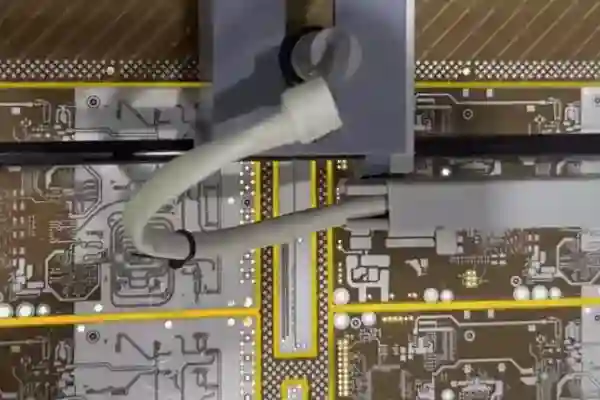
I’ve now developed a habit of conducting vibration aging tests on every sensor PCB design I complete.
Even a simple electric toothbrush with a modified clamp can simulate a long-term vibration environment—it’s not professional, but it’s very practical.
Once, I discovered a micro-crack in the gold fingers this way, avoiding after-sales risk for an entire batch of goods.
These experiences have made me realize that an engineer’s value lies not only in drawing circuit diagrams, but also in understanding real-world usage scenarios.
After all, blueprints are ideal, while reality is always full of unexpected vibrations and temperature variations.
Every time I see the sensor PCBs in precision instruments, I wonder: are we spending too much energy pursuing optimal parameters? I remember once disassembling an industrial-grade temperature sensor board and finding its shielding design surprisingly simple—just a thin layer of copper foil surrounding the sensitive element, with a very solid grounding. This seemingly simple approach was actually more effective than complex layered shielding.
I’ve seen many engineers overemphasize the properties of the materials themselves when designing sensor PCBs. While rolled copper does have better surface flatness, in practical applications, electrolytic copper, with proper treatment, can achieve similar results. The key isn’t using the highest-grade substrate, but rather the rationality of the entire circuit layout. Once, we tested sensor boards with two different copper foils and found that the performance difference was negligible under the same layout.
What truly affects sensor accuracy are the easily overlooked details. For example, the distance between the shielding layer and the grounding point; many people deliberately widen it, but a moderate spacing can create a more stable electric field. Also, the design of the protective ring doesn’t necessarily require a complete surround—in some cases, leaving a specific gap can better guide interference current. These experiences are learned through repeated debugging. Many manufacturers now like to pile on new technologies on sensor PCBs, but the most reliable methods are often the time-tested traditional practices. As veteran engineers often say, good shielding isn’t about caged signals, but about providing a suitable outlet for interference. When I helped a friend modify a humidity sensor’s circuit board, I found that moving the digital section to the edge of the board improved the stability of the analog signal by 30%.
Regarding grounding methods, I don’t think it’s necessary to blindly believe in single-point grounding. In some high-frequency applications, multiple grounding points can dissipate noise faster. The key is to adjust it according to the sensor’s operating frequency. A millimeter-wave radar board I recently tested used a hybrid grounding strategy, and the results were surprisingly good.
The importance of manufacturing processes is often underestimated. A small factory made a sensor PCB for us using ordinary materials, but because of their extremely precise control over solder mask openings, the overall anti-interference capability was stronger than samples from large manufacturers. This made me realize that sometimes precision is more important than the materials themselves.
The most interesting part of designing sensor PCBs is that each project presents new challenges. Last week, the current sensor I was debugging had its shielding effectiveness affected by the casing material, and it was only resolved by adding a row of grounding vias along the PCB edge. This constant need to adjust one’s approach is what makes the work so enjoyable.
I’ve always felt that many people overcomplicate sensor PCB design. The key is whether the materials can keep up with the demands of the actual application. For example, I’ve recently been researching the design of a flexible sensor for health monitoring and found that traditional rigid PCBs are simply unsuitable for devices worn for extended periods. When you make the circuit board flexible, the entire design approach has to change.
The advantage of flexible materials is their ability to adapt to various irregular surfaces. I previously tried sewing a rigid PCB into sportswear, and the user felt uncomfortable with any movement. After switching to a flexible circuit based on polyimide, not only was the fit much better, but its thickness was only a quarter of that of a traditional circuit board, reducing the weight by about 60%, making the device almost imperceptible to wear. This material also has excellent bending resistance; its electrical performance remained stable after tens of thousands of bending tests, making it particularly suitable for motion monitoring scenarios requiring frequent movement.
The issue of temperature effects is also quite interesting. During testing of a prototype temperature sensor, we discovered inaccurate readings. It turned out the poor thermal conductivity of the standard FR-4 substrate was causing heat buildup. Replacing it with a material with better thermal conductivity resolved the issue. Specifically, we used a metal-based composite material, whose thermal conductivity is more than five times that of ordinary materials, allowing for rapid heat transfer from the chip to the casing for dissipation. Simultaneously, this material’s coefficient of thermal expansion closely matches that of the silicon chip, avoiding the risk of solder joint cracking during temperature cycling.
Many smart wearable devices now utilize flexible PCB technology. For example, I’ve seen a heart rate monitoring patch that attaches to the skin; its circuitry is only 0.1 mm thick, employing a serpentine trace design that maintains normal operation even when stretched by 20%. This design also considers biocompatibility, using medical-grade silicone encapsulation, allowing for continuous wear for seven days without causing skin allergies.
Another easily overlooked aspect is the impact of mechanical stress on sensors. In industrial vibration environments, we’ve encountered situations where sensor solder joints failed due to continuous vibration. Later, finite element analysis was used to optimize the circuit board support structure, and cushioning material was added around key components, enabling the device to pass a 10g random vibration test.
I believe the future development of sensors will focus more on practicality and adaptability. For example, the application of self-healing materials is very promising; when microcracks appear in the circuit, microcapsules in the material release a repair agent to automatically repair the wires.
Sometimes the simplest solution is the most effective. For example, in applications requiring high-precision measurements, we abandoned complex digital compensation circuits and instead chose thick-film resistors with more stable temperature coefficients. This single change reduced temperature drift error by 70%.
Many manufacturers are now pursuing thinner and lighter sensor designs. A recent project we participated in embedded sensors into smart fabric, with circuitry directly woven between the fibers, achieving true “electronic fabric.” This design not only maintains the fabric’s breathability and softness but also allows for machine washing without damage.
Ultimately, the choice of PCB solution depends on the specific application scenario. Medical devices prioritize biocompatibility and reliability, while industrial sensors must prioritize environmental tolerance. For example, in chemical applications, corrosion-resistant polytetrafluoroethylene (PTFE) sheets are required, rather than ordinary FR-4 materials.
I’ve seen too many cases of projects failing due to inappropriate material selection. One outdoor weather station project, using ordinary epoxy resin substrates, experienced yellowing and decreased insulation after only six months of UV exposure. It was only after switching to cyanate ester resin, which has better weather resistance, that the five-year lifespan requirement was met.
Truly good design should make technology invisible, so people can’t even feel the device’s presence—that’s the ideal state. Like some smart bracelets now using curved batteries and 3D stacking technology, highly integrating previously scattered components, reducing the device size by 40% while doubling battery life. This human-centered design philosophy is key to driving technology adoption.
Recently, while researching electronic devices, I discovered an interesting phenomenon—the most inconspicuous components often determine the success or failure of the entire system. Take our common smart devices, for example; what truly makes them “smart” are the various sensors hidden inside.
I remember once disassembling a fitness tracker and seeing several micro-components integrated into a PCB board the size of a fingernail. At the time, I wondered how such a tiny device could accurately capture our daily step count. Later, I learned that this was thanks to MEMS technology; these microelectromechanical systems are like equipping devices with sensitive senses.
Speaking of sensor packaging, I think many people underestimate its importance. Once, in a project I was involved in, we encountered a problem: a sensor used for environmental monitoring had inaccurate readings due to insufficient packaging, resulting in humidity affecting its performance. This made me realize that even the most advanced sensors, if their “home”—the PCB board—is poorly designed, can affect the entire system.
Many high-end devices are now pursuing extreme miniaturization. I’ve seen sensor PCBs in some medical devices, covered with lines thinner than a human hair. This level of precision amazes me; modern electronics technology has truly reached an incredible level.
However, I think what’s most fascinating is the reliability of these sensors. Imagine, some industrial equipment sensors need to operate for years in extreme environments; the test this puts on the PCB materials is immense. An engineer I know once said that they simulate various harsh conditions during testing to ensure these sensors can withstand the test of time.
Sometimes I think that the seemingly simple smart functions in our lives actually rely on these sophisticated sensing systems. They are like the eyes and ears of the devices, silently collecting information from their surroundings. Next time you pick up your phone or put on a smartwatch, think about how those tiny sensors inside are working—it’s actually quite interesting.
Ultimately, good sensor design is not just a technical issue, but an art of balance. Finding the optimal balance between performance, size, and cost requires designers to have a deep understanding of every detail. In my experience, it’s often the most inconspicuous design decisions that ultimately determine the success or failure of the entire product.
I’ve been pondering an interesting phenomenon lately: many electronic products today rely heavily on those tiny sensor circuit boards. They are like the nerve endings of the device, responsible for sensing all changes in their surroundings.
I remember once disassembling a smart bracelet to see its internal structure; the tiny PCB was densely packed with various components. What surprised me most was how such a small board could handle such weak bioelectrical signals. This made me realize that we often focus too much on sensor performance while neglecting the importance of the PCB itself that houses these components.
The accuracy of a sensor largely depends on the design of its circuit board. For example, if the thermal expansion coefficient of the PCB material doesn’t match, the temperature reading will drift. These subtle differences might be imperceptible in everyday use, but they can have serious consequences in medical devices or industrial control.
I’ve seen engineers prioritize functional integration in their designs, neglecting basic signal integrity. They place digital and analog circuits too close together, resulting in analog signals being severely interfered with by digital noise. This is like having a party in a library—you can’t read in peace.
Regarding material selection, I think there’s a misconception about blindly pursuing high-end materials. For most applications, ordinary FR-4 material is perfectly adequate; the key is proper shielding and isolation. An agricultural monitoring project I participated in used basic PCB materials and a well-designed layout to achieve high-precision soil moisture monitoring.
Another easily overlooked aspect is environmental adaptability. Some sensors need to operate under extreme conditions; for example, the PCB of a temperature sensor in a car engine compartment must withstand high temperatures and vibrations. In these cases, good components alone are not enough; the reliability of the circuit board itself is crucial.
I’ve noticed that many young engineers rely too heavily on simulation software. Simulation can indeed identify problems, but unexpected situations always arise in real-world applications. Once, a sensor we designed performed perfectly in the lab, but a grounding issue caused data fluctuations in the field—an experience simulation cannot provide.
Ultimately, no matter how advanced a sensor is, it still needs a PCB to function. This is similar to how even the smartest brain needs a healthy nervous system to transmit information; both are indispensable.
I believe the future direction of sensor development isn’t necessarily pursuing higher precision, but rather how to achieve more intelligent signal processing while ensuring reliability. Perhaps more preprocessing functions should be integrated into the PCB layer instead of pushing everything onto the main chip.
Every time I see those ingenious sensor designs, I think the best technology is often the one that’s imperceptible. When a sensor can silently fulfill its mission, that’s a truly successful design.
Sometimes simplicity is more effective. Instead of piling on complex features, it’s better to solidify the basics. A good PCB design can enable ordinary sensors to perform exceptionally well, which is more meaningful than simply pursuing hardware parameters.
Circuit boards are more than just that green board in a phone
From disassembling old routers to visiting electronics manufacturing plants, I gradually realized
As an electronics enthusiast, I’ve come to understand firsthand the impact of
- 小・中ロット生産のエキスパート
- 高精度PCB製造と自動アセンブリ
- OEM/ODM電子プロジェクトの信頼できるパートナー
営業時間:(月~土)9:00~18:30