

Heat Dissipation Challenges and Solutions in PCB Circuit Board Design
Circuit boards are more than just that green board in a phone
I recently re-examined the issue of PCB substrate selection when designing a millimeter-wave radar project. Traditional FR4 materials are sufficient for low-frequency circuits, but when you need to handle signals above 24GHz, dielectric loss becomes particularly significant. At this point, special materials must be considered.
Many people think of PTFE when it comes to high-frequency PCBs, but this material is actually a double-edged sword. Its low dielectric constant does reduce signal delay, but pure PTFE is too soft and easily deforms during processing. Once, we tried using unfilled PTFE boards for an antenna array, and during the etching process, we found burrs on the edges of the microstrip lines. This problem was later solved by using a glass fiber-reinforced composite laminate.
The more common practice now is to use modified PTFE materials. For example, in some satellite communication modules, we use ceramic-filled laminates. This composite material retains the low-loss characteristics while improving dimensional stability. However, it’s important to note that PTFE boards from different manufacturers vary significantly in their thermal expansion coefficients, so special attention must be paid to interlayer alignment when designing multilayer boards.
In fact, not all high-frequency circuits require PTFE. I’ve worked on several automotive radar projects, where the 77GHz array antenna used Rogers’ hydrocarbon ceramic laminate, and its performance was actually more stable than some PTFE boards with nominally higher parameters. The key is to select materials based on the actual application scenario—such as operating frequency, power capacity, and ambient temperature. Recently, some manufacturers have started promoting low-temperature co-fired ceramic (LTCC) substrates as an alternative. While this material has a higher initial cost, it allows for finer circuit structures, which is advantageous for high-frequency modules requiring integrated passive components. However, its brittleness is a major drawback, making it unsuitable for applications with mechanical vibration requirements.
When selecting laminates, the surface treatment process is often overlooked. Even with the same PTFE substrate, improper chemical gold plating can lead to additional losses due to the skin effect at high frequencies. Our lab tested samples with different surface treatments and found that in some cases, the losses caused by the treatment process even exceeded the differences in the substrate material itself.
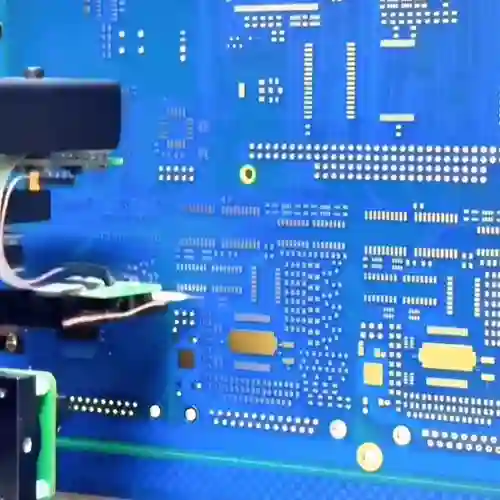
The true test of PCB performance often lies in its behavior under extreme conditions. Once, we tested samples in an 85°C/85% humidity environment for 500 hours. The insertion loss of ordinary FR4 increased by 15%, while the change in specially treated PTFE boards was controlled within 3%. This long-term reliability is the key reason why high-end applications are willing to pay a premium.
With the popularization of 5G millimeter-wave applications, I believe more composite laminates will emerge in the future. Simply pursuing the ultimate performance of a single parameter is no longer sufficient; finding a balance between processability, cost, and performance is a problem that engineers need to continuously consider.
I recently discovered an interesting phenomenon while researching data center equipment upgrades: many engineers instinctively recommend Teflon-based PCB boards whenever high-frequency signal transmission is mentioned. This material does perform well in certain scenarios. However, in practical applications, I’ve found that excessively pursuing the characteristics of a single material can lead to new problems.
I remember a data center renovation project last year where the team, in pursuit of ultimate signal integrity, replaced all critical circuits with PTFE PCBs. After three months of operation in a high-temperature, high-humidity environment, some of the boards experienced unexpected micro-deformation of the dielectric layer. This made me rethink the balance in material selection. After all, the operating environment of data centers is complex and ever-changing. Focusing solely on one parameter might overlook overall stability.
Now I prefer a mixed-material approach. For example, using Teflon PCBs locally on critical signal paths that truly require ultra-low loss, while using more cost-effective conventional materials for other ordinary circuits. This layered design not only controls costs but, more importantly, avoids staking the reliability of the entire system on a single material. On one occasion, we even tried compounding other dielectric layers onto a Teflon substrate. Unexpectedly, this also improved thermal management performance.
In fact, PCB materials are like seasonings in cooking. More expensive or rare doesn’t necessarily mean better. The key is whether it can perfectly integrate with the entire system. I’ve seen too many projects where blindly pursuing so-called top-tier configurations actually increased the risk of failure. Truly excellent design should be based on a precise understanding of material characteristics. After all, the stable operation of data centers affects the experience of tens of thousands of users. Every decision needs to be made with extreme caution.
Some new composite materials we’ve recently tested have also given me a lot of inspiration. They may be slightly inferior to pure PTFE materials in individual metrics, but their overall performance is more suitable for actual operating environments. This has further reinforced my belief.
I’ve always felt that high-frequency circuit design is a bit like performing delicate surgery—every detail is critical. A recent project made me re-evaluate the selection of PCB materials, especially those with polytetrafluoroethylene (PTFE) coatings. I originally thought that any conventional material would suffice for millimeter-wave frequency requirements, but the signal attenuation was so severe it was like trying to hear someone talking through a wall.
At the time, we tested several different PCB boards with different substrates and found that ordinary boards were like leaky pipes in high-frequency environments. The signal strength dropped dramatically, and even worse was the heat accumulation problem. It wasn’t until I encountered PTFE-treated PCBs that I understood why professionals prefer this material. Its dielectric properties are truly unique.
I remember being quite inspired by observing the plasma treatment process. During the activation treatment of the PTFE surface in a vacuum chamber, the technicians mentioned a detail: the naturally hydrophobic and oleophobic nature of this material actually became an advantage. After plasma bombardment, a microscopic roughness is formed on the surface. This nano-level uneven structure significantly improves the adhesion of the metallization layer, increasing the copper foil peel strength by more than three times. Especially in high-frequency multilayer board applications, this stable interface bonding effectively reduces interlayer signal crosstalk.
In practical applications, we observed an interesting phenomenon: circuits using PTFE substrates showed stable performance in temperature drift tests. On one occasion, we deliberately subjected the material to temperature fluctuations from -40°C to 120°C, and the dielectric constant variation was controlled within ±0.05. This is crucial for phased array systems that require extremely high phase consistency. In contrast, epoxy resin substrates under the same conditions would experience fluctuations exceeding 0.3, leading to significant deviations in beam pointing.
Now, when designing high-frequency circuits, we pay special attention to material compatibility. For example, using ordinary FR4 boards for automotive radar modules would result in significant waveform distortion at the 77GHz frequency band. However, using specially optimized PTFE PCBs can maintain signal integrity, with a loss tangent as low as 0.0019, an improvement of two orders of magnitude compared to conventional materials. This is particularly critical for achieving accurate ranging and imaging in millimeter-wave radar.
However, these materials also have their drawbacks. On one occasion, during soldering, we found that the solder kept shrinking into a ball. Later, we learned that PTFE has a very low surface energy and requires special treatment. Now, when encountering similar situations, we first perform plasma cleaning, introducing polar groups to the surface using argon plasma, increasing the wetting tension from 18 dynes/cm to over 50, thus achieving perfect solder joint formation.
Recently, while researching satellite communication equipment, we encountered this familiar material again. Outgassing from ordinary PCB materials in a vacuum environment is a significant problem, but PTFE has an extremely low vacuum outgassing rate, with a total mass loss of less than 0.1%, which prevents contamination of precision optical components in space. Its stable chemical properties also resist atomic oxygen erosion, extending the lifespan of spaceborne equipment.
Ultimately, choosing circuit board materials is like choosing eyeglasses – higher specifications aren’t always better. For example, in the consumer electronics field, excessively pursuing low-loss materials can lead to soaring costs, while the actual performance improvement may be negligible. The key is to weigh the options based on the frequency range, power level, and environmental conditions of the application.
Now, when I see design proposals that blindly pursue high-performance parameters, I always ask more questions. On one occasion, during a review of a base station project, the team insisted on using top-of-the-line PTFE boards, but the actual operating frequency band was only 2.4GHz. Through simulation verification, switching to a medium-loss hydrocarbon ceramic substrate reduced costs by 40% while the performance difference was less than 0.5 dB. This precise matching is the essence of engineering design.
Sometimes, the most suitable solution is often hidden in the inherent properties of the material itself. For example, when designing flexible circuits, we discovered that the ductility of the PTFE substrate was much better than expected, with a fracture elongation of up to 300%. This allowed it to withstand repeated bending without developing microcracks. This characteristic enabled us to implement a more compact three-dimensional wiring scheme in wearable devices.
Similarly, during antenna array debugging, we discovered a crucial principle: it’s better to choose the right materials from the start than to frantically compensate for losses later. By using materials with better characteristic impedance stability, we not only eliminated multiple matching circuits but also increased antenna efficiency by 15%. This proactive thinking completely changed my design process.
This shift in perspective has made me focus more on the underlying logic during design. Now I spend more time studying fundamental parameters such as the thermal expansion coefficient and anisotropy of materials, instead of rushing into circuit simulation. This in-depth thinking often reveals hidden design pitfalls, such as a welding reliability problem caused by mismatched Z-axis CTE in the material.
After all, good circuit design should be as natural and smooth as breathing, not a constant patching process. When material characteristics perfectly match circuit requirements, the debugging process becomes effortless. For example, the 60GHz point-to-point communication module I recently designed passed certification testing on the first try because I chose the right materials. This kind of seamless experience is the greatest sense of accomplishment for an engineer.
Circuit boards are more than just that green board in a phone
From disassembling old routers to visiting electronics manufacturing plants, I gradually realized
As an electronics enthusiast, I’ve come to understand firsthand the impact of
- 小・中ロット生産のエキスパート
- 高精度PCB製造と自動アセンブリ
- OEM/ODM電子プロジェクトの信頼できるパートナー
営業時間:(月~土)9:00~18:30