

From Novice to Expert: Sharing My Experience in Pin Header PCB Selection
As an electronics enthusiast, I’ve come to understand firsthand the impact of
I’ve recently observed a particularly interesting phenomenon: when developing circuit boards, many people treat the manufacturing phase and the assembly phase as two entirely independent undertakings. This is as absurd as hiring two chefs to prepare a single dish—one responsible for chopping the ingredients and the other for cooking them—yet never allowing them to communicate with one another.
Take, for instance, that smart home project we worked on recently. When the prototype boards came back, they looked beautiful—the green solder mask was smooth, and the circuit traces were crisp and clear. However, problems arose the moment we reached the surface mounting stage; the solder paste simply refused to stay put on the pads. We later discovered that the formulation of the solder mask had reacted chemically with the solder paste. It’s a bit like an arranged marriage: if the two parties aren’t a compatible match, they simply won’t be able to get along.
In reality, PCB manufacturing and assembly constitute a process that demands close coordination. I’ve seen far too many teams focus solely on price when selecting materials, while completely overlooking the critical “chemistry” or compatibility between those different materials. For instance, someone might choose a specific type of solder mask lacquer to save money, only to find that it directly compromises the quality of the solder joints during the high-temperature reflow soldering process.
Sometimes, I feel that building a circuit board is much like raising a child: simply bringing it into the world isn’t enough—you also have to consider the environment in which it will subsequently grow and develop. The substrate material you choose, the solder mask formulation you select, and even the surface finish process you employ will all directly influence how the board performs during assembly. Those seemingly minor details are often the very factors that determine the ultimate fate of the entire board.
I recall one instance where we decided to use a new type of eco-friendly solder mask material, intending to align ourselves with the growing trend of “green manufacturing.” I never expected that during the reflow soldering process, micro-cracks would appear beneath several BGA-packaged chips. We later discovered that the issue stemmed from a mismatch between the substrate’s and the chips’ coefficients of thermal expansion. This type of problem is completely undetectable when testing the PCB in isolation; it only becomes apparent during the assembly phase.
My team and I have since developed a habit: before finalizing any PCB design, we always convene a meeting with the manufacturing and assembly engineers. We lay all our respective requirements and considerations on the table for open discussion. Although this consumes a bit more time upfront, it allows us to avoid a host of complications down the road.
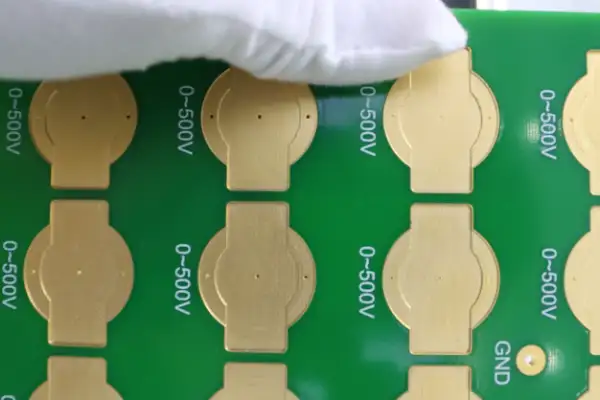
Ultimately, designing circuit boards is not merely a simple assembly-line task; it is a technical endeavor that demands a holistic perspective. No single stage exists in isolation; rather, they are interconnected by a myriad of intricate threads. Only by harmonizing these relationships can one truly produce a reliable product.
I recently discussed the subject of electronics product development with some friends and realized that many people still adhere to the traditional practice of outsourcing PCB manufacturing and assembly to different vendors. While this approach may appear to save money on the surface, it actually sows the seeds of numerous potential problems. I have witnessed far too many projects go awry due to this fragmented approach, ultimately necessitating costly rework.
I was once involved in a project that exemplified this very situation: the design team contracted a low-cost PCB manufacturer, then outsourced the assembly work to a separate company. Consequently, once the boards were produced, we encountered persistent soldering issues. Both parties engaged in a blame game—one claiming the board’s pad design was flawed, the other arguing that the soldering process was inadequate. We spent over a month going back and forth, with all our time and energy consumed by this unproductive bickering.
In reality, PCB manufacturing and assembly are two intrinsically linked processes. Factors such as the board’s material composition, thickness, and even surface finish can directly impact the quality of the subsequent soldering. If these tasks are parceled out to different vendors—each focused solely on its own specific segment—it becomes exceedingly difficult to hold any single party accountable for the overall quality of the final product.
I have since worked on projects that utilized “one-stop-shop” services, and the results were vastly superior. From material selection to soldering processes, the entire workflow was coordinated and managed by a single vendor; consequently, if issues did arise, we could quickly identify the responsible party. Although the initial quotation might be slightly higher than that of a fragmented procurement strategy, the overall cost—when factoring in the savings on time and effort—actually proves to be more economical and hassle-free.
Many startup teams, in an effort to control costs, often opt for this fragmented procurement model; however, I believe this approach warrants careful reconsideration. Electronics product development is, by its very nature, a complex systems engineering endeavor in which the seamless coordination of every stage is paramount. Rather than risking future complications merely to save a modest sum upfront, it is far wiser to partner with a reliable one-stop service provider capable of streamlining and integrating the entire development process. I’ve seen far too many teams stumble when it comes to PCB manufacturing. They often assume that separating PCB fabrication from component procurement will save them money—thinking it’s more cost-effective to hire one factory to make the bare boards and another to handle the surface-mount assembly. However, anyone who has actually gone through this process knows that such a fragmented approach often creates far more headaches than it solves.
I recall a smart home startup team complaining to me last year about the chaos in their procurement workflow. The hardware lead was spending his entire day—making a dozen or more phone calls daily—just to cross-reference shipping schedules from various suppliers. Sometimes the factory would have the bare boards ready to go, but the components would still be stuck in customs. Production line workers would sit idle, waiting for materials—a sight that pained the boss to watch. On the surface, this fragmented procurement strategy seems to offer the flexibility to cherry-pick suppliers; in reality, it merely overcomplicates a fundamentally simple process.
The root of the problem lies in the disruption of the information flow. When PCB fabrication and assembly are handled by different manufacturers, quality traceability becomes incredibly difficult. For instance, if a batch of products turns out to be defective, it is nearly impossible to quickly determine whether the issue stems from a flaw in the bare board itself or a problem with the assembly process, because the records for these two stages are completely disconnected. I’ve seen teams spend two whole weeks going back and forth in a blame game just to pinpoint the cause of a single soldering defect—only to end up with no definitive conclusion.
Another easily overlooked factor is the strain on warehousing and inventory management. Do you think sourcing separately reduces your inventory burden? Quite the opposite: the bare boards arrive first and require storage space; then, when the components finally arrive, you have to find *additional* space to house them. If either party experiences a delay, your entire production schedule has to be thrown out and readjusted. This kind of uncertainty can be absolutely fatal for small to mid-sized teams.
In reality, the “one-stop shop” services offered by many manufacturers today are often the more reliable option. While the unit cost might appear slightly higher at first glance, the savings in management overhead—plus the value of mitigating risk—far outweigh that marginal price difference. This is especially true when your product requires rapid iteration; an integrated service allows you to focus your energy on design and innovation, rather than getting bogged down in endless coordination tasks.
Some people remain fixated on finding the absolute cheapest supplier for every single stage, forgetting that time is also a cost—and that a team’s energy and focus are even scarcer resources. Once you’ve experienced a few supply chain disruptions or quality disputes firsthand, you’ll quickly realize that reliability is infinitely more important than a low price tag.
Ultimately, hardware development is complex enough as it is; there is no need to saddle yourself with unnecessary burdens during the manufacturing phase. Partnering with vendors who can provide comprehensive, end-to-end solutions is often the surest way to keep your project on a steady, successful track.
I’ve seen far too many teams stumble when it comes to PCB manufacturing. Even though we partnered with specialized vendors for every stage—designers focused solely on schematics, board manufacturers on fabrication, and assembly houses on soldering—the final products were plagued by constant issues. This “siloed” approach, where each party manages its own specific domain, may appear to offer clear divisions of labor on the surface, but in reality, it is riddled with vulnerabilities.
Take a situation we encountered just last week, for instance: a team handed their finalized design files directly to a PCB fabrication plant for production. It wasn’t until the boards arrived at the assembly facility that they discovered a critical oversight—several key chips lacked the necessary test points on their undersides. At that stage, adding the missing test points required the creation of entirely new test fixtures—effectively doubling tooling costs—and resulted in a delay of two full weeks.
However, the most vexing issue of all is the lack of standardized testing criteria. The PCB fabrication plant performed basic continuity testing using their own internal standards, and their reports indicated that every board had passed with flying colors. Yet, when the boards reached us for functional testing, we discovered that the voltage on a specific power pin was unstable. After extensive troubleshooting, we traced the problem back to the board substrate itself—specifically, the insulating layer was thinner than specifications allowed, resulting in minute current leakage. This type of defect is simply undetectable during the earlier fabrication stages.
I want to offer a strong reminder to everyone: designing a circuit board is not merely a matter of snapping building blocks together. You must anticipate future testing requirements right from the initial design phase. For instance, it is best practice to leave ground test points adjacent to high-frequency signal traces to facilitate waveform capture using an oscilloscope later on. Furthermore, you must allocate sufficient clearance around BGA chips to allow X-ray inspection equipment to effectively scan the solder joints.
Increasingly, teams are beginning to experiment with bringing the assembly house into the design process at an earlier stage. Once we receive the preliminary PCB schematics, we review them from a manufacturing process perspective and annotate areas requiring optimization—for example, identifying test point placements that might interfere with the movement of the pick-and-place machine’s nozzles, or locating via positions where solder balls are prone to getting trapped. These seemingly minor adjustments can often save a tremendous amount of time and money on rework costs down the line.
Ultimately, a high-quality circuit board is the product of a continuous, iterative refinement process between design and manufacturing. Simply carving up the project into isolated tasks and outsourcing them piecemeal often serves only to inflate communication overhead. The ideal scenario is one in which the manufacturing partner is given a meaningful voice in the process—empowered to propose modifications to the design based on their actual production capabilities. After all, they are the experts who best understand which design configurations are most conducive to mass production and which layouts facilitate the most efficient testing.
I have witnessed far too many teams stumble and fall when it comes to circuit board development. They often operate under the misguided assumption that splitting the workload—assigning PCB fabrication to one factory and component assembly to another—is a clever strategy, primarily because it allows them to drive down costs through competitive bidding. However, they are invariably left dumbfounded and helpless when problems inevitably arise, and the two vendors begin playing the “blame game,” endlessly tossing the responsibility back and forth between them. While this fragmented procurement model may appear to save a little money on the surface, it actually sows the seeds of significant future problems.
I recall a smart home hardware team complaining to me last year about frequent signal interference issues with their mainboards during the testing phase. After spending nearly a full day troubleshooting, they finally discovered the root cause: a mismatch between the material properties of the PCB substrate and the soldering temperatures used during assembly. The board manufacturer adamantly insisted their substrates were flawless, while the assembly plant maintained that their process parameters met all industry standards. The two parties bickered back and forth for over a month; ultimately, the team had no choice but to order a complete set of new prototypes, delaying their entire product launch cycle.
In reality, truly seasoned hardware teams have long understood a fundamental truth: PCB manufacturing and assembly are, in essence, an inseparable whole—much like how the heat control and seasoning must work in perfect harmony when cooking a dish. If you design a board with an exceptionally thin substrate but then hand it off to an assembly plant unfamiliar with that specific board manufacturer’s process nuances, the result is likely to be widespread warping or lifted solder pads.
Some engineers have a tendency to get bogged down in minutiae, insisting on splitting every single stage of the process to shop around for the lowest price. However, they overlook a critical point: when your design requires specialized processes—such as impedance control for high-frequency boards or lamination techniques for rigid-flex PCBs—assigning the manufacturing and assembly tasks to two different vendors makes it nearly impossible to even pinpoint where the responsibility lies when problems inevitably arise. The board manufacturer might claim the issue stems from improper stress control during assembly, while the assembly plant might counter-argue that the board material itself failed to meet the required glass transition temperature (Tg) specifications.
I know a medical device company that took a much smarter approach; they partnered with a single supplier capable of handling both the PCB fabrication and the component assembly. On one occasion, the mainboards for their pulse oximeters required an Electroless Nickel Immersion Gold (ENIG) surface finish, along with a post-soldering cleaning process to remove flux residues. Their supplier was able to directly fine-tune the chemical bath formulation to address these specific requirements, thereby preventing the microscopic short circuits that frequently plague such designs. This level of synergistic efficiency is something a fragmented procurement strategy can simply never achieve.
Nowadays, many startups tend to blindly mimic the supply chain models of large corporations, forgetting that they completely lack the bargaining power those giants possess. Large companies have dedicated quality assurance teams stationed on-site at their suppliers’ facilities to monitor every stage of production; small companies, conversely, find that the more they fragment their processes, the more difficult it becomes to maintain quality control. Just think about it: when you take a batch of bare PCBs fabricated by “Factory A” and hand them over to “Factory B” for assembly, do you really expect Factory B’s engineers to invest the time and effort to thoroughly analyze the specific process characteristics of Factory A? At best, they will simply run the boards through their own standard, generic assembly workflow.
Then there is the even more pragmatic issue: the cost of time. Splitting your procurement between multiple vendors means you end up spending double the amount of time communicating technical specifications, redundantly vetting supplier credentials, and—when problems inevitably arise—organizing cumbersome three-way meetings just to sort things out. Last year, a team developing industrial drones wasted two whole weeks just waiting for technical personnel from two different factories to coordinate. They eventually discovered the issue stemmed from an incompatibility between the solder mask ink and the solder paste—something that, in reality, should have been resolved within the scope of basic process compatibility checks.
Ultimately, the decision to split or integrate your manufacturing processes depends on what you prioritize most. If you are producing standard consumer electronics where reliability requirements are not particularly stringent, sourcing components and manufacturing separately might save you some money. However, if you are working on industrial-grade or medical-grade products, I strongly advise you to partner with a provider capable of handling both PCB manufacturing and assembly as a unified package. After all, no one wants to see their hard-won product design fail simply due to supply chain coordination issues, right?
After years of working in hardware development, I’ve come to a profound realization: when selecting suppliers, you simply cannot cut corners or seek the path of least resistance by settling for a hodgepodge service provider. Not long ago, during a small-batch production run, we tried out a company that claimed to offer a seamless, “one-stop-shop” solution for both PCB manufacturing and assembly—and we paid the price for it. While they did indeed handle the procurement of both the bare boards and the components, their internal teams were completely out of sync. The bare-board factory failed to promptly synchronize their design adjustments with the assembly factory; consequently, when it came time for surface-mount assembly, we discovered that two critical alignment holes didn’t match up, resulting in a full week’s delay in our production schedule.
This kind of superficial “one-stop-shop” approach actually creates far more headaches than simply engaging specialized vendors for each specific task. A truly reliable integrated solution—like the one provided by the partner we subsequently engaged—involves deep involvement right from the design review stage, where their engineering team utilizes bare-board test data to directly optimize the surface-mount assembly process. On one occasion, while producing a board with strict impedance control requirements, their TDR tester detected a deviation in the microstrip lines; they immediately adjusted the thickness of the solder mask layer to compensate. That kind of real-time feedback and proactive problem-solving is where the true value lies.
I’ve also learned some hard lessons regarding component sourcing. Some suppliers promise a “one-stop” procurement experience, yet the moment you require a niche or hard-to-find component, they simply leave you to scramble for a substitute yourself. Nowadays, I place a premium on a supplier’s supply chain resilience. For instance, when we recently required a batch of automotive-grade MCUs, our partner was able to immediately mobilize inventory from authorized distributors across three different regions—and even provided us with a compatibility verification report. That kind of operational agility and problem-solving capability is far more valuable than simply offering the lowest price quote.
Many people tend to overlook the importance of continuity within the testing phase. A truly competent service provider will correlate and analyze data from various sources—such as flying-probe tests and X-ray inspections—to derive actionable insights; for example, by using 3D scans of solder joints to reverse-engineer and optimize the stencil aperture design. We recently worked on a project involving BGA packages where, thanks to the comprehensive testing data chain provided by our partner, we were able to successfully mitigate the risk of “cold solder joints” (poor connections) that might otherwise have necessitated a costly and risky second reflow soldering pass. Regarding digital transparency, I personally feel there is no need to obsess over flashy systems; as long as key operational data can be tracked in real-time, that suffices. I recall an instance where a delay occurred in the plating process at a PCB fabrication plant; our partner immediately created a group chat to share live video footage and explain the situation. That kind of immediate candor is far more reassuring than a cold, impersonal system status update.
Ultimately, every stage of hardware manufacturing is inextricably linked. When selecting a supplier, you must assess whether they can truly integrate the upstream and downstream processes into a cohesive whole—rather than simply bundling disparate services together for sale. After all, we are the ones who ultimately bear the cost of any product quality issues.
I have always found the PCB manufacturing and assembly industry to be particularly fascinating. Many people assume that simply producing the circuit board is enough; however, in reality, every single step—from initial design to final product delivery—serves as a rigorous test of a team’s technical proficiency. I recall a client who approached us last year with a design proposal, complaining that their previous manufacturing partner was constantly running into issues. The root of the problem lay not in the manufacturing processes themselves, but in the fact that the partner had treated the fabrication and assembly stages as completely separate, disconnected operations. This disconnect resulted in the final products delivered to the client being plagued by a host of minor defects.
A truly reliable PCBA service should fit together as seamlessly as interlocking building blocks. Designers must be fully aware of the practical constraints of the production line, while assembly technicians must thoroughly understand the specific annotations and specifications detailed in the design schematics. We have encountered numerous cases where—despite every metric in the manufacturing phase meeting all quality standards—the product simply could not be assembled smoothly during the subsequent stage. We later discovered that the issue stemmed from a pad design that failed to account for the tolerance range of the surface-mount technology (SMT) placement machines. Such critical details are often only recognized after gaining hard-won experience through the rigors of real-world projects.
Nowadays, many clients are beginning to prioritize comprehensive solutions. After all, no one wants to get caught in a back-and-forth blame game between multiple vendors. As one client—a manufacturer of industrial control equipment—once remarked, their greatest fear is having a product fail after it has been deployed and running in the field for some time. Consequently, whenever we undertake a project, we now make a point of conducting tests under simulated extreme conditions. For instance, we might place a circuit board inside a high-temperature, high-humidity chamber to run continuously for 72 hours, and then immediately transfer it to a low-temperature environment for a sudden power-on test. While this rigorous “torture testing” does entail somewhat higher costs, it ensures that our products remain reliable and do not let our clients down during actual operation.
Interestingly, this very strict testing regimen has actually helped us secure more long-term partnerships. Just last week, a long-standing client referred a new project to us, specifically citing the fact that our previous batch of boards had successfully withstood the harsh conditions at their construction site—operating without a single failure for three years. That kind of word-of-mouth is far more effective than any marketing campaign.
Ultimately, providing excellent PCBA services involves much more than simply soldering components onto a board. It requires the manufacturing and design teams to share the exact same commitment to quality, and it demands that everyone involved in every stage of the process be willing to think one step ahead. After all, end-users don’t care which specific step in the production process went wrong; their only concern is whether or not the product functions stably.
PCBs are fascinating things. I was recently chatting with a few old friends who work in hardware development, and I noticed that everyone has completely different approaches when it comes to selecting suppliers. Some insist on splitting the manufacturing and assembly tasks between different vendors, believing this allows them to drive down costs; however, in my experience, this approach often creates more headaches than it solves and makes it easy to fall into pitfalls. Just think about it: PCB manufacturing and assembly are inherently two links in the same chain. If you artificially sever that chain and hand the two segments over to two separate parties, it becomes the norm for them to simply play the blame game whenever an issue arises. For example, we once had a board where the impedance readings were abnormal after the surface-mount assembly process; the PCB manufacturer claimed the assembly house hadn’t properly calibrated their temperature profile.
I’ve been pondering a specific question lately: Why are more and more people now gravitating toward service providers that can handle the entire process—from PCB manufacturing all the way through to assembly? It’s not simply a matter of convenience.
Remember that project our team worked on last year? We initially thought we could save money by sourcing manufacturing and assembly from separate vendors—but in the end, we wasted two whole weeks just trying to coordinate the scheduling and timing discrepancies between the different stages. And that’s not even mentioning the back-and-forth squabbling we had to endure later on when we discovered mismatches in the design parameters. That experience taught me a valuable lesson: a truly reliable “one-stop-shop” service provider offers much more than just process consolidation.
Some suppliers will simply outsource the actual PCB fabrication to a third party and then mark up the price before quoting it back to you. On the surface, this might seem like a hassle-free solution, but it creates significant vulnerabilities in quality control. The most extreme case I’ve ever witnessed involved a last-minute switch in board material suppliers; this resulted in an entire batch of PCBs exceeding acceptable limits for thermal expansion coefficients. Consequently, the entire lot had to be scrapped during the reflow soldering stage—a financial loss that was easily five times greater than the meager cost savings achieved by switching suppliers in the first place.
A truly excellent PCB manufacturing and assembly service should be involved right from the design phase. This entails proactively considering how component placement impacts thermal dissipation, or adjusting pad designs to suit the specific characteristics of the pcb assembly equipment being used. Such intricate details simply cannot be resolved through back-and-forth email exchanges; they require a unified technical team to oversee and manage the entire process.
Nowadays, the market is flooded with providers touting “one-stop shop” services. The critical factor, however, is determining whether they have truly integrated their manufacturing and assembly operations under a single, unified management system. Sometimes, a quick tour of the factory floor is far more revealing than reviewing a stack of ten certification documents. Personally, I pay close attention to whether their SMT workshop can directly access and utilize the data from the bare boards that have just rolled off the production line—that kind of real-time collaboration is the mark of true expertise.
Of course, some people worry about the risks of “putting all their eggs in one basket.” However, if you look at it from a different perspective: should quality issues arise, you only need to deal with a single point of contact rather than having to act as a referee between a separate PCB fabrication plant and an assembly facility. The value generated by this boost in efficiency far outweighs any theoretical risks involved.
Ultimately, choosing a PCB service provider is akin to selecting a business partner: in the short term, the focus may be on price; but in the long run, what truly matters is whether their professional expertise can help you steer clear of those unseen pitfalls.
As an electronics enthusiast, I’ve come to understand firsthand the impact of
Why is green the universal choice for circuit boards? Behind this seemingly
As a hardware entrepreneur, I often see teams fall into a trap
- 小・中ロット生産のエキスパート
- 高精度PCB製造と自動アセンブリ
- OEM/ODM電子プロジェクトの信頼できるパートナー
営業時間:(月~土)9:00~18:30