

Heat Dissipation Challenges and Solutions in PCB Circuit Board Design
Circuit boards are more than just that green board in a phone
I recently chatted with some friends in the hardware industry and discovered a rather interesting phenomenon—everyone’s attitude towards Chinese PCB manufacturers is particularly divided. On one hand, they can’t live without their cost-effectiveness and keep placing orders; on the other hand, there are always people worried about the risks of over-reliance on a single supply chain.
In fact, this dilemma reflects the growing pains of upgrading the entire manufacturing industry. Many Chinese PCB suppliers are no longer just contract manufacturers producing basic double-sided boards. During my visits to several companies in Shenzhen, I witnessed robotic arms and AGVs facilitating material flow, with the entire production scheduling system automatically adjusting parameters based on order fluctuations – a far more intelligent system than I had imagined.
However, the problem lies in the fact that this intelligent transformation hasn’t been fully implemented. Some small and medium-sized manufacturers are still struggling with semi-automated equipment, leading to market polarization. Leading companies can secure high-end orders from Apple and Huawei, while smaller manufacturers are still embroiled in price wars. I once heard an industry insider say that the price difference for the same HDI board between different factories can be three times. This is no longer just a matter of cost competition but a technological gap.
Speaking of high-end transformation, one detail impressed me deeply: a company that makes control boards for new energy vehicles established a dedicated materials laboratory. They discovered that while imported high-frequency resins had stable performance, their delivery cycles were too long. Later, they developed their own composite materials, which surprisingly passed automotive-grade testing. This kind of innovation starting from the materials end is the key to truly breaking through bottlenecks.
The talent gap may be more challenging than equipment upgrades. What’s needed now are multi-skilled professionals who understand both chemical materials and data analysis. These individuals are often poached by internet companies with high salaries. I know a senior engineer who switched to industrial software sales; the reason is simple—tuning parameters in a factory doesn’t earn as much as writing solutions for clients.
Globalization isn’t simply about moving production capacity to Southeast Asia. Some companies place basic production capacity in Vietnam but keep their R&D centers and high-end production lines in China. This “dual circulation” model actually strengthens China’s irreplaceable position in the supply chain, since Southeast Asia currently lacks a complete supporting industrial ecosystem.
Recently, a client complained to me that they originally planned to distribute orders across different countries, only to find that their PCB factory in Vietnam still had to import electroplating chemicals from China, and the pass rate of Malaysian boards fluctuated too much. This roundabout approach actually proved the depth and advantage of China’s supply chain. Sometimes, the risk doesn’t necessarily come from geographical concentration but from insufficient awareness of technological shortcomings.
I think we’ll see a more pronounced Matthew effect in the next decade. Chinese PCB manufacturers that invested early in intelligent transformation are forming technological barriers, just like Japanese companies mastered high-end material formulas. Once these barriers are established, it’s difficult for newcomers to break through them with low-price strategies. True supply chain security isn’t about putting all your eggs in one basket, but about making yourself an indispensable part of someone else’s supply chain.
Having worked in the electronics industry in China for many years, I’ve noticed a fascinating phenomenon—many people believe we’re far behind in core technologies, but every time I visit a factory in Shenzhen, this notion is overturned. Those Chinese PCB manufacturers hidden in industrial zones are no longer just order-taking contract manufacturers. They can now discuss signal integrity and point out which traces affect EMC performance based on design drawings. This transformation didn’t happen overnight.
I remember last year, a project required high-frequency boards, and we compared prices from several Chinese PCB suppliers. One factory in Dongguan was particularly interesting; their engineers brought an improvement plan to the meeting, pointing out that a via in our original design increased losses, and even presented their own simulation data. Later, I learned they had a dedicated team researching material properties—an investment unimaginable ten years ago.
What surprises me most about the entire industry now is its responsiveness. Last Friday afternoon, I sent an urgent request to a manufacturer in Zhejiang. Monday morning, they shipped three different types of sample boards, along with impedance test reports. This level of cooperation surprised even our European and American clients, as production scheduling there takes two weeks.
Of course, there have been problems. Once, during mass production, we discovered solder pad oxidation, which turned out to be a batch issue with the electroplating solution. Although the manufacturer sent someone to the site to resolve the problem that same day, it exposed weaknesses in our supply chain management. Now, my partners and I place great emphasis on quality control systems when selecting manufacturers; price alone is no longer sufficient.
The recent explosive growth of new energy vehicles has further fueled the industry. A PCB factory in Jiangsu that I know mainly produced consumer electronics boards last year, but this year their production lines are entirely dedicated to battery management boards and automotive radar boards. Their technical director said that customers now use X-rays to inspect every buried via during acceptance testing, which places entirely new demands on the process.
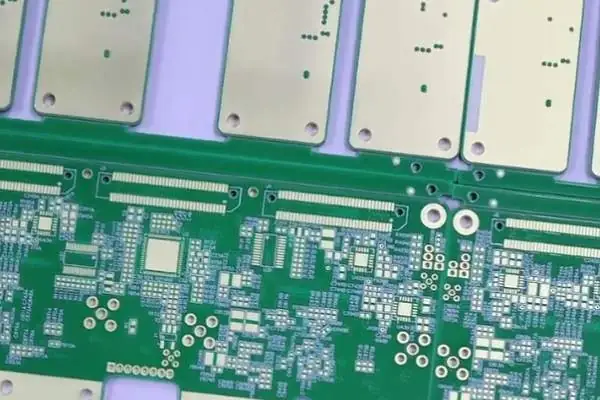
Looking at these changes, I feel that the resilience of China’s electronics industry is precisely reflected in these seemingly insignificant aspects. While others are still discussing technological barriers, frontline engineers have already paved the way with real-world projects. Next time someone says “Made in China” only imitates, I really want to take them to see what it’s like inside a workshop that can produce 20-layer HDI boards.
I’ve always felt that many people have a misconception about China’s PCB industry—that we only survive by competing on price. But over the years, I’ve found that’s not the case at all.
Take a local supplier we’ve worked with, for example—last year they proactively raised their copper foil inspection standards on their production line by 30%. This wasn’t at the customer’s request—it was purely because they discovered that a tiny scratch might affect high-frequency signal transmission—so they adjusted the process parameters overnight. This kind of meticulous self-discipline is something I rarely see in manufacturers in other regions.
Once, during a visit to their lab, an engineer showed me a stack of copper plate samples of different thicknesses—from standard models to special alloy formulations. They weren’t simply copying foreign technology—they were researching how to make the thermal expansion coefficient of the substrate more suitable for the extreme environment of new energy vehicles. That afternoon, we weren’t talking about price or delivery time—but about how to achieve more stable impedance control on a 5mm square board. Looking back, the most impressive aspect of Chinese PCB manufacturers might not be economies of scale, but rather their rapid iteration capabilities. Last week, a client urgently needed to reduce the trace width from 3 mils to 2 mils—the supplier provided a new etching solution within two days. Behind this flexibility lies the maturity of the entire industry chain—close cooperation from copper foil raw materials to processing technology.
I’ve seen some foreign clients initially come to compare prices—but later transfer their core product orders to us. The reason is simple—when your product requires three prototype iterations per week—only partners who can adjust production lines online at any time can keep up. This goes far beyond simple manufacturing—it’s more like collaborative R&D.
Recently, they’ve started experimenting with environmentally friendly materials—even though the client didn’t explicitly request it. Engineers say that a certain biodegradable substrate they’re currently using costs 40% more than ordinary FR-4 board—but they can switch immediately should new EU regulations come out next year. This forward-thinking, innovative approach—perhaps this is the true essence of this industry.
Recently, chatting with some friends in the hardware industry, I noticed an interesting phenomenon: the focus when looking for Chinese PCB suppliers has changed. Previously, price advantage might have been the primary focus, but now more people are discussing the value of long-term partnerships.
A client of mine who makes smart home products switched to a new Chinese PCB manufacturer last year. Initially, it saved some money, but later they encountered problems with sample testing, leading to repeated revisions and delays of two months. Ultimately, the time cost was higher. This experience made me realize that simply pursuing low prices might overlook other hidden costs, such as communication efficiency and production stability.
Many Chinese PCB manufacturers are now investing surprisingly a lot in environmental protection. During a recent visit to a medium-sized factory, I saw that their wastewater recycling system was far more advanced than I had imagined. The manager explained that although the initial investment was large, in the long run, it not only complies with regulations but also reduces raw material waste. This shift in thinking makes me feel that the industry is indeed progressing and is no longer just about price wars.
Regarding cost pressures, I think the focus now should be on overall cost-effectiveness. Some suppliers may not offer the lowest prices, but they can provide more stable delivery cycles or more flexible small-batch trial production services, which is more practical for startups. After all, the loss from a product launch being delayed by even a month can be much higher than the cost of the PCB itself.
Another trend I’ve noticed is that more and more Chinese PCB suppliers are proactively integrating peripheral services, such as helping clients with component procurement or providing design optimization advice. This one-stop support indirectly reduces the overall project risk for clients.
Of course, challenges remain in the industry, such as balancing environmental investment with production costs. However, overall, the Chinese PCB industry is transforming from simple manufacturing to solutions services, which is good news for technology companies that need rapid iteration.
Having dealt with the electronics industry extensively over the years, I’ve noticed an interesting phenomenon: many people, when they think of PCB manufacturing, believe that finding reliable suppliers overseas is essential. Actually, this idea is somewhat outdated.
I’ve met many Chinese PCB manufacturers, and they’ve long since moved beyond simply being OEMs. I remember visiting a factory in Suzhou once; they had their own R&D team working on new materials and making significant improvements for the high-temperature environment of automotive electronics. This proactive problem-solving spirit surprised me.
The electronics industry is changing too fast. Now, many Chinese PCB suppliers are transforming into providing comprehensive solutions, not just selling boards. For example, a Shenzhen company is collaborating with clients to develop control boards for smart homes. I was involved in the entire process, from circuit design to post-testing.
The industry support is also quite interesting. Last year, a project required a special impedance control board, and I initially thought I’d have to find a German manufacturer. However, I found a suitable supplier in Dongguan, and they worked very well with the local copper-clad laminate factory.
However, I also noticed a problem: some domestic manufacturers are too focused on scale expansion. On the contrary, some small and medium-sized PCB factories are more specialized in their niche areas. I once met a manufacturer that makes medical device boards; although small in scale, their technology was very solid.
Many large international manufacturers are now actually collaborating with Chinese PCB manufacturers. A friend of mine who works in industrial control said that their recent projects, completed in cooperation with domestic suppliers, have a much faster response time than those overseas.
Ultimately, this industry is no longer simply a matter of geographical clusters; competition is more about technological accumulation and service capabilities.
I’ve always felt that many people’s impression of circuit boards is still stuck in the era of green plastic boards covered with copper wires. In reality, modern PCBs are far more than just simple connectors, especially as electronic products become smaller and more complex.
I remember being quite surprised last year when I visited a Chinese PCB manufacturer’s production line. They showcased a mobile phone motherboard that was only 0.6 millimeters thick yet integrated over a dozen layers of circuitry. This made me realize that many manufacturers are now pursuing thinner substrate designs.
Packaging technology has advanced rapidly in recent years. I used to think chip packaging was a strength of foreign companies, but now many Chinese PCB suppliers are doing quite well in this area.
I’ve noticed an interesting phenomenon: many electronic product designs are now adopting a modular approach.
Speaking of which, the applications of flexible circuit boards are becoming increasingly widespread.
Recently, I chatted with an engineer who mentioned that product design now considers balancing performance and cost more.
I think we’ll likely see more innovative substrates in the next few years.) Materials have emerged.
Actually, when choosing a partner, what I value most is whether they understand the original intention of the product design.
Sometimes, I feel it’s a pity to see new products sacrifice reliability in pursuit of thinness and lightness.
Ultimately, good circuit design should be like building a solid infrastructure for electronic products; it needs both innovation and practicality to allow the final product to truly perform as intended. I think many Chinese PCB manufacturers have done a great job in this regard and are constantly improving, which is truly promising. Their future development prospects are increasingly broad, especially since the entire industry is moving towards higher-end directions, which is very helpful in improving the level of the entire industry chain.
Recently, I noticed an interesting phenomenon while chatting with some friends in the hardware industry: when it came to choosing a PCB supplier, their first thought was still the names of established overseas manufacturers. Actually, there have been significant changes in China in recent years, especially for manufacturers that focus on technological accumulation; they are no longer just at the level of producing basic single-sided boards as previously perceived.
I After contacting several domestic manufacturers of high-end multilayer PCBs, I found that they are actually more flexible in material adaptation and process details. Once, our design required a special low-loss board material, and the lead time from the overseas supplier was three months. However, a factory in Shenzhen produced samples in just two weeks, and the performance tests even exceeded expectations. This responsiveness is actually the result of production line optimization and the accumulation of engineers’ experience; it’s not something that can be achieved simply by having equipment.
Many people may not realize that domestic multilayer PCB processes can now cover many complex scenarios. For example, high-density boards used in medical equipment require controlling signal attenuation while ensuring interlayer alignment accuracy. A Jiangsu company we previously collaborated with could control the impedance tolerance within 5%. This reminds me of the years when we always had to repeatedly modify designs to accommodate process limitations; now, suppliers can optimize processes based on requirements.
Of course, not all Chinese PCB manufacturers are suitable for high-end orders. Some factories specializing in consumer electronics do prioritize cost control, but those deeply involved in automotive electronics or industrial fields… Companies that focus on core technologies often have a more solid understanding of reliability. I’ve seen the production line of a supplier in Hubei; they simulate over a dozen different solutions for the placement of heat dissipation holes on the boards they make for autonomous driving radar. This meticulousness is highly competitive in the global market.
Ultimately, choosing a supplier is like finding a partner; the key is whether both sides are on the same page. Once, when we urgently needed to revise a design, a factory in Dongguan directly sent engineers to our site to debug parameters. This level of cooperation largely alleviated my concerns about the stability of domestically produced boards. Now, more and more domestic companies in the industry can produce high-frequency, low-loss boards, which makes us reflect—are we relying too much on the “safety net” of overseas brands?
Sometimes, the technological gap narrows faster than expected, especially when market demand and manufacturing capabilities create a positive cycle. Looking at the domestic PCB industry now, it seems to be pursuing a differentiated path: not simply replacing imports, but developing unique solutions in specific fields. This may be a more sustainable growth model.
When talking about China’s electronics manufacturing capabilities, I often think of a scene I witnessed last year during a visit to a small-to-medium-sized PCB factory in Dongguan. Workers were debugging a newly introduced production line; while not the most advanced, the entire process was remarkably smooth. The owner pointed to a sample just coming off the line and told me it was a custom-made PCB for a European medical equipment company—half the thickness of standard products, but with extremely high stability requirements.
This seemingly ordinary collaboration reflects the unique position of Chinese PCB suppliers in the global supply chain. We are no longer simply taking on low-end orders; we are partners capable of quickly adjusting processes and even participating in early-stage design based on customer needs.
I’ve noticed an interesting phenomenon: many international brands are now choosing suppliers based on rapid response capabilities, not just price. Last month, an American customer needed to modify a design at the last minute. Our engineering team in Shenzhen adjusted parameters overnight and provided three alternative solutions the next day. This flexibility is unparalleled in many regions.
Of course, we also face our own challenges. In recent discussions with several manufacturers, they all mentioned the same issue: while we have a clear advantage in the field of standard products, we still need to make breakthroughs in certain applications of special materials. For example, the special substrate materials used in high-frequency communication equipment still mainly rely on imports, which is indeed a weakness that needs to be addressed.
However, overall, Chinese PCB manufacturers are undergoing a quiet transformation. Previously, we may have focused more on production capacity; now, more and more companies are establishing their own R&D teams. One Suzhou-based company even set up its laboratory next to a customer’s R&D center—this deep collaboration model is changing traditional supply chain relationships.
Changes in the global industrial landscape are also bringing new opportunities to Chinese companies. While Southeast Asia has lower labor costs, a complete supporting system cannot be built in the short term. If a piece of equipment malfunctions, parts can be found in the Pearl River Delta within two hours, which is difficult to achieve in other regions.
In the next few years, I think the key is to transform manufacturing advantages into technological advantages. Just like the smartphone industry’s journey from OEM to independent innovation, we need to establish our own technical standards in more niche areas. After all, as the skeleton of electronic products, the importance of PCBs will continue to increase with the wave of intelligentization.
What impressed me most during this visit were the technicians in their twenties in the workshop. They not only skillfully operate imported equipment but can also write and debug their own programs. The formation of this talent pool may be the most valuable asset of Chinese manufacturing.
It’s quite interesting to see how the electronics industry has changed over the years. I used to think manufacturing was just about following a set production line. Now I realize it’s completely different, especially for PCB manufacturers. The demands they face are changing so rapidly.
A friend of mine works for a domestic PCB company. He says customer requirements are now incredibly diverse. Some need ultra-thin designs, some demand environmentally friendly materials, and others require stable operation in extreme environments. This forces them to constantly adjust their production lines and even retrain their workers.
This change reminds me of the electronic devices I used as a child. Back then, if something broke, I could take it apart and fix it myself. Now, the equipment is increasingly sophisticated, and the manufacturing processes behind it are vastly different.
I really admire these manufacturers’ adaptability. Every technological update requires a significant investment in equipment upgrades, but they always seem to find a balance—keeping up with the times without blindly following trends.
Recently, I’ve noticed some Chinese PCB suppliers starting to focus on niche markets, such as specializing in medical equipment or automotive electronics. This specialization seems to be working well. After all, different industries have very different requirements for PCBs.
Industrial upgrading is never a one-off event. It requires a commitment to continuous improvement and a keen awareness of market changes. These manufacturers are writing their own development stories through their practical actions.
Sometimes I think this is perhaps the charm of manufacturing. It’s always dynamically seeking the optimal solution. Every technological breakthrough is like opening up new possibilities.
Watching this industry evolve step by step feels like witnessing a quiet revolution. There are no earth-shattering declarations, only pragmatic innovation day after day.
This evolutionary process is particularly real. It doesn’t pursue instantaneous, dazzling transformations, but focuses on continuous optimization of every detail.
Perhaps one day in the future, we will find that it is precisely these seemingly ordinary advancements that ultimately converge into a force that changes the world.
This process continues.
I recently chatted with some friends in the hardware industry and discovered an interesting phenomenon: more and more foreign teams are now seeking cooperation with Chinese PCB suppliers. Previously, they might have prioritized price advantages, but now they specifically mention that some domestic manufacturers are even more flexible in their cooperation on high-speed board designs than established European manufacturers.
A German customer who manufactures industrial control equipment shared with me that they tested samples from three suppliers before ultimately choosing a manufacturer in Shenzhen. It wasn’t because of the lowest price, but because the Shenzhen manufacturer’s engineers provided five modification solutions for their impedance matching problem within 48 hours, along with simulation data. This responsiveness shortened their product iteration cycle by three months. This service model reflects the deep understanding that domestic manufacturers have of their customers’ pain points—they even research the industry’s standard certification requirements in advance, reserving room for EMC testing improvements during the design phase. For example, they proactively suggested using a stepped capacitor arrangement in the power module layout; this forward-thinking design approach surprised their overseas customers.
In fact, many Chinese PCB manufacturers have long since moved beyond simply producing to order. During a recent visit to a factory in Dongguan, their lab displayed various automotive radar boards undergoing testing. Engineers used oscilloscopes to explain how microstrip line design affects signal integrity. This ability to refine technical details is what truly sets them apart. During my visit, I noticed that their lab’s temperature control accuracy reached ±0.5℃, specifically designed to simulate high-frequency performance changes in automotive environments. Engineers demonstrated a technique that reduced signal loss by 0.8dB by adjusting the dielectric layer thickness, a data-driven optimization process that was impressive.
I noticed some small and medium-sized electronics companies are starting to shift their core board orders back to China. On the one hand, while Southeast Asia’s production capacity is lower in cost, yield rates fluctuate greatly when dealing with multilayer board processes. On the other hand, domestic manufacturers can now provide one-stop support from design review to surface mount technology (SMT). For example, a team making medical instruments, which previously used Taiwanese manufacturers for OEM production, discovered a supplier in Jiangsu that could not only manufacture 24-layer blind and buried via boards but also optimize their heat dissipation hole layout. This supplier also developed a unique via-filling electroplating process, improving the thermal expansion coefficient of the vias’ compatibility with the core material by 40%, which is crucial for medical equipment requiring long-term high-temperature sterilization.
Of course, the challenges are also obvious. For example, there’s the issue of reliance on imported high-end materials; some high-frequency boards still need to be sourced from Rogers, but we’re already seeing some domestic manufacturers collaborating with universities to develop ceramic substrates. Breakthroughs in these fundamental materials may be more meaningful than simply expanding production capacity. A university-industry collaborative project has developed a composite substrate with a dielectric constant stability of ±0.15, which is currently being validated in the field of millimeter-wave radar for new energy vehicles. This material shows a 12% improvement in phase consistency compared to imported products under operating conditions ranging from -40℃ to 125℃.
A recent case I encountered was quite interesting: a Beijing-based startup developing brain-computer interface devices needed flexible circuit boards thinner than a human hair. Ultimately, a Zhuhai-based manufacturer, primarily focused on military orders, won the contract. This cross-industry collaboration spurred new process standards. The manufacturer improved upon the polyimide molding technology used in the aerospace field, achieving 25-micron linewidth precision control, and simultaneously developed a biocompatible coating, allowing the circuitry to directly contact human tissue.
Ultimately, upgrading the manufacturing industry isn’t about how many imported machines are in the factory, but about the ability to use engineering capabilities to turn concepts into reality when customers make seemingly impossible demands. I’ve seen PCB factory owners personally lead their R&D teams to customer product launches; this deep, collaborative model is far more sustainable than price wars. At an embedded systems exhibition in Germany, I once saw a team of engineers from a domestic supplier demonstrating a newly debugged test fixture on-site. This ability to provide immediate technical support allows customers to quickly verify the feasibility of their designs, greatly shortening the cycle from prototype to mass production.
Circuit boards are more than just that green board in a phone
From disassembling old routers to visiting electronics manufacturing plants, I gradually realized
As an electronics enthusiast, I’ve come to understand firsthand the impact of
- 小・中ロット生産のエキスパート
- 高精度PCB製造と自動アセンブリ
- OEM/ODM電子プロジェクトの信頼できるパートナー
営業時間:(月~土)9:00~18:30