

Tire Pressure Monitoring PCB Failures: From Corroded Battery Pads to Antenna Detuning Inside the Rim
A tire pressure sensor that lost signal after six months, taken apart,
I recently discovered an interesting phenomenon while studying the internal structure of mobile phone cameras. Many people discuss pixel count but overlook the most fundamental thing – the PCB board that carries all the components. In fact, the performance bottleneck of the camera module is often not in the sensor itself.
I remember disassembling an old mobile phone last year and seeing that camera module PCB, smaller than a fingernail. The dense network of circuits reminded me of a city’s transportation network. Even the most advanced sensor needs these hair-thin circuits to transmit signals. Sometimes image noise is not a lens problem but interference during circuit transmission.
Now, manufacturers always promote pixel count but rarely mention how they solve heat dissipation problems. During high-load operation, that tiny module can get scorching hot. I’ve seen some designs that incorporate graphene material in the PCB layers, but this increases the thickness. Mobile phone space is already limited, and this balance truly tests the ingenuity of engineers.
A friend in R&D told me an interesting story about their recent testing of new materials. They wanted to use a thinner substrate to reduce the module thickness, but found that the signal distortion was severe during high-speed continuous shooting. Later, they discovered that the mismatch of the circuit board’s dielectric constant caused signal attenuation. You see, sometimes the most inconspicuous material choice becomes the key.
The protruding cameras on the back of many mobile phones are actually a compromise. They need to accommodate larger sensors and arrange complex PCB circuits in a limited space. I think the future direction might be to integrate some processing functions directly into the module itself, rather than relying entirely on the main processor.
I noticed a detail when I recently tried a new model from a certain brand. Its ability to focus quickly in low light wasn’t due to a superior sensor, but because the module had a dedicated signal optimization circuit. This made me realize that a good photography experience is the result of the entire system working together, not something achievable by a single component alone.
Looking at the increasing number of cameras on the back of current smartphones, I’m thinking about another issue. Each lens requires a separate PCB, and these circuit boards need to communicate with each other. If we truly want to achieve seamless zoom in the future, we may need to rethink the entire module’s architecture design, rather than simply increasing the number of lenses.
Sometimes, innovation doesn’t necessarily require pursuing the latest technology; combining existing components in a clever way can also yield impressive results. Like building with LEGOs, finding the most reasonable layout is often more important than simply piling on more materials. After all, users want high-quality photos, not a detailed spec sheet, right?
I’ve always found the manufacturing process of camera modules particularly interesting, especially the seemingly insignificant details. Many people may not realize that every solder pad on the PCB directly affects image quality. I remember once when we were testing a module, the circuit was fine, but the image was always blurry. We later discovered that uneven surface treatment of the solder pads caused unstable connections. This kind of thing is really frustrating.
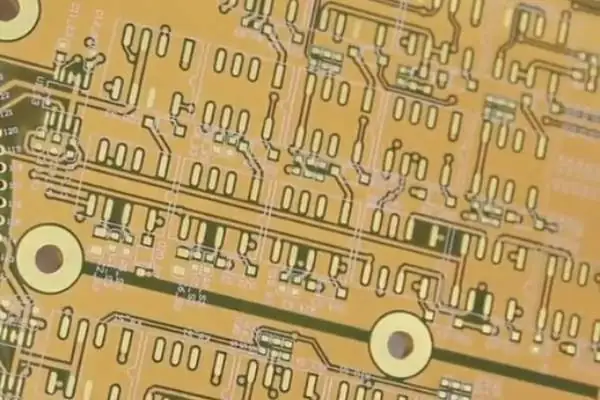
Many manufacturers are now pursuing higher pixel counts, but I think the real key is stability. I’ve seen too many cases where unreasonable PCB design leads to performance fluctuations in the entire module due to temperature changes. Especially in areas that require bending, if the materials for the flexible circuit board aren’t chosen correctly, cracks will appear after a short time. This isn’t a problem that can be solved by simply replacing a lens.
The testing phase is actually where problems are most likely to be exposed. Some factories skip certain detailed inspection steps to meet deadlines, but it’s often these seemingly minor oversights that lead to mass quality problems. For example, if impedance testing of high-speed signal lines is only done through sampling, it’s very likely that some defective boards will be missed.
I admire manufacturers who are willing to put in the effort on the details. They might use localized thick copper plating on the PCB to handle high currents or embed copper blocks in critical areas to enhance heat dissipation. While these designs increase costs, they greatly improve long-term reliability.
Solder pad quality control is also a technical challenge. With ultra-fine pitch components becoming increasingly common, even slight imperfections in surface treatment can affect soldering results. Sometimes, seemingly perfect boards fail on the production line, often because the solder pad treatment wasn’t done properly. The assembly process of a module is actually the ultimate test of the PCB design. Even the best single board design is useless if the alignment accuracy during assembly or the differences in thermal expansion coefficients haven’t been considered. I think the design and manufacturing teams really need to work closely together from the beginning of the project, instead of working independently.
I’ve disassembled many mobile phone cameras and noticed an interesting phenomenon: phones that boast about their camera capabilities often put a lot of effort into the thermal design of the camera module. Once, I compared the teardown diagrams of two phones’ cameras and found that one of them had a PCB covered with numerous tiny thermal vias. Later, I learned that these small holes are actually designed to quickly conduct the heat generated by the image sensor to the metal bracket.
Modern mobile phone cameras are becoming increasingly complex; cramming so many components into one module makes heat dissipation a significant problem. I remember one time during the summer, my phone showed an overheating warning after only ten minutes of shooting video outdoors – a typical example of poor heat dissipation. A good camera module design should distribute heat evenly, rather than concentrating it in one area.
Speaking of electromagnetic interference, this is a detail that many people overlook. I encountered a situation where photos had streaks, and after sending the phone back for repair, I found out it was a problem with the PCB’s shielding layer. Especially now that many phones have multi-camera modules, different cameras can interfere with each other. Designers need to achieve signal isolation in a limited space, which requires a very high level of technical expertise.
The requirements for PCBs vary greatly depending on the application of the camera. Car cameras need to withstand bumpy roads, and the circuit boards for medical endoscopes need to be particularly precise. The most extreme example I’ve seen is the module used in industrial inspection cameras; its PCB was incredibly thick, with over a dozen layers.
In fact, when ordinary people are choosing a mobile phone, they can pay more attention to the camera’s heat dissipation performance. For example, how hot the phone gets when continuously shooting 4K video, or whether the image quality remains stable after prolonged use. These details often reflect how much effort a manufacturer puts into the design of the camera module.
Sometimes I wonder if mobile phone manufacturers are overly focused on pixel count and neglecting these fundamental but important design aspects. After all, what’s the point of high pixel count if poor heat dissipation or signal interference leads to reduced image quality?
I recently disassembled the rear camera of an old phone and found that the inside of that small camera module was much more complex than I imagined. Especially the PCB board that carries all the components, it’s like a miniature city. Image sensors, focusing motors, and various chips are densely packed on it, with lines so fine they’re almost invisible.
Many people might think the core of a camera module is the lens or the sensor, but I think what truly determines image stability is this inconspicuous PCB. It not only needs to ensure the accuracy of signal transmission but also withstand vibrations and temperature changes during daily use. I remember once when shooting a time-lapse video, I noticed the image occasionally shaking. After sending it for repair, I learned that a solder joint on the PCB had come loose.
High-end smartphones are now competing on camera specifications, but few mention the PCB technology that supports these specifications. For example, multi-layer stacking technology allows camera modules to be thinner while accommodating more functions, but this requires the PCB wiring accuracy to reach the micron level. Once, while visiting a factory, I saw workers using magnifying glasses to inspect the circuit layout, and only then did I understand why cameras with the same pixel count can have such different image quality.
Heat dissipation design is also an easily overlooked point. Uneven heat distribution on the PCB during prolonged 4K video recording can lead to increased image noise. Some manufacturers use metal substrates to improve this problem, but the cost increases significantly, which is probably one of the reasons why professional photography equipment remains expensive.
In the future, flexible PCBs may bring new breakthroughs. Imagine a camera module on a foldable phone that can change its angle as the screen bends, perhaps enabling more freedom in composition. However, this will be a huge test of the material’s durability.
Ultimately, the progress of camera technology is never the result of upgrading a single component, but rather the synergistic evolution of the entire system, and the PCB is like the skeleton silently supporting this transformation, deserving more attention.
I’ve recently been thinking a lot about the PCB board in camera modules. This thing looks inconspicuous, but it truly affects the photos we take every day. Many people think the lens and sensor are the key, but the PCB connecting them is the unsung hero. I remember disassembling an old phone and finding that the module designs of different manufacturers varied greatly; some PCBs had densely packed circuits like a map, while others were much simpler. This made me realize that the design of the circuit board directly affects the stability of signal transmission.
Now, phone manufacturers are always promoting how many megapixels their cameras have and how wide the lenses are, but they rarely mention the underlying hardware that supports these features. During one test of prototype devices, I discovered that the same sensor mounted on two different PCBs yielded vastly different night photography results—the image from the noisier board was practically unusable. An engineer friend told me it’s like building a highway; even the best car won’t perform well on a bumpy road. High-frequency signals are particularly sensitive to circuit design on PCBs; even slight interference can affect image quality.
When choosing module suppliers, I pay close attention to whether they prioritize PCB development. I’ve seen some manufacturers use cheap substrates to save money, resulting in phones that develop focusing problems after only six months. Conversely, manufacturers who invest in quality circuit board materials produce more durable products, as every circuit line carrying image data affects the final image. During a factory visit, I saw them using microscopes to inspect the circuit plating; this attention to detail is truly reassuring.
Ultimately, camera modules aren’t simply a collection of parts. The PCB, as the central hub, must withstand daily physical vibrations while ensuring stable high-speed data transmission. Some manufacturers are now experimenting with flexible circuit boards to address space limitations, which is an interesting approach. After all, users want to be able to take great photos with a simple point and shoot, and achieving this requires solid engineering at every stage.
Looking at this disassembled old phone in my hand, I suddenly thought of an analogy: the PCB is like a city’s drainage system—invisible during normal times, but its effectiveness becomes apparent during heavy rain. The imaging system’s performance in extreme scenarios like backlighting or high-speed movement reveals whether the circuit design is truly reliable. This is why I now pay more attention to the circuit design sections in manufacturers’ technical white papers, rather than just the pixel count.
I’ve always found the PCB design of camera modules particularly interesting because it’s an art of compromise. You see phone manufacturers constantly advertising the size and pixel count of their sensors, but few people consider how these components are crammed into such a small space. Every time I get a new phone, I can’t help but wonder how many design iterations it went through.
I remember visiting an electronics factory and seeing the camera module PCBs on the assembly line before they were fully assembled; they were much thinner than I expected. The engineers said their biggest challenge was making the circuits more compact while maintaining signal quality. Especially now, with increasingly advanced sensors requiring higher data transmission speeds, the amount of data flowing through those thin lines is astonishing. A friend of mine who works in testing at a mobile phone company told me that the most easily overlooked problem is thermal expansion. In the summer, after taking pictures outdoors for extended periods, the phone heats up, and those tiny solder joints can shift, leading to unstable signals. Therefore, good design isn’t just about drawing circuit diagrams; it also requires considering how materials behave at different temperatures. Sometimes, they have to repeatedly test dozens of different soldering solutions to ensure the stability of a single connection point.
Many people think a PCB is just a green board with no real technical sophistication. But look at the density of the circuits in the camera modules of high-end phones today—it’s practically a work of art. I once examined a discarded camera module PCB under a microscope, and the precision of the circuits was completely comparable to chip design. And these circuits have to withstand countless power cycles every day; long-term stability is where the true test of design skill lies.
What I admire most are the designs that manage electromagnetic interference so well. Imagine, in such a small space, crammed with sensors, processors, and various capacitors and resistors, the electromagnetic fields generated are like a small battlefield. A good PCB layout ensures these signals don’t interfere with each other; a poor design will result in image noise or slow autofocus.
I’ve always believed that evaluating a camera module shouldn’t just be based on the specifications sheet. Truly good designs are those that have been proven in the market and maintain stable performance in various environments, and all of this depends on the meticulous layout behind that tiny PCB.
I’ve been thinking about camera modules lately, and it’s quite interesting. Many people think that a phone’s camera performance mainly depends on the lens and sensor parameters, but the inconspicuous PCB is the real unsung hero. Every time I disassemble a phone and see that tiny camera module, I wonder how they manage to cram so many functions into such a small space.
I remember visiting a factory once and being particularly impressed by the assembly process. The precise components were placed onto the PCB as if by magic, the whole process was incredibly fast and dazzling. But what surprised me most was how thin the module designs are now; this was unimaginable just a few years ago.
Engineers working on camera modules today have a really tough job. They have to consider heat dissipation, control the thickness, and ensure signal transmission quality. Especially the design of multi-layer PCBs is like playing a 3D puzzle; every layer has to fit perfectly. I’ve seen some high-end models where, to achieve extreme thinness, the PCB is even thinner than a credit card. Speaking of the development of surface mount technology, the progress in recent years has been truly remarkable. Previously, there might have been concerns about components easily falling off, but that worry has essentially disappeared. Current adhesive and soldering technologies are quite mature, capable of securely fixing even the smallest components.
However, I think the most crucial aspect is the overall design’s coordination. Even the best components are useless if they don’t work well together, just like a band playing – each instrument needs to produce the right sound at the right time. The same applies to camera modules; the sensor, lens, and PCB must work together perfectly to produce good photos.
Sometimes I wonder if the future direction of camera evolution will be to have the PCB handle more intelligent processing functions. After all, much of computational photography currently relies on the main processor. If some algorithms could be integrated directly onto the camera module’s PCB, it might lead to faster response times. This sounds a bit far-fetched, but who knows what technological advancements will bring?
In reality, when people take pictures with their phones, few think about the complex technology behind it. But that’s precisely the brilliance of the engineers – making complex technology so seamless that you don’t even notice its existence; that’s truly good design.
I’ve recently been wondering why smartphone cameras are getting thicker and thicker, and I’ve discovered that it’s largely related to the design of the camera module’s PCB. I used to think that simply adding more components meant increasing the sensor size, but now I see that the choice of materials and structure of the substrate is the real, hidden battleground.
If you disassemble a flagship phone’s camera, you’ll notice something interesting—those sensors boasting extra-large sizes often have thick metal brackets underneath. This is actually to solve the dilemma of heat dissipation and deformation. When the sensor is working, it’s like a small hand warmer, concentrating heat in one spot. Ordinary FR4 material substrates can’t conduct heat fast enough. I’ve seen some engineering samples where, after prolonged 4K video recording, the edges of the image would become slightly out of focus—this is the result of localized heating causing micro-deformation of the substrate.
Some manufacturers are trying to replace traditional materials with ceramic substrates, which can increase thermal conductivity several times over. But the cost is incredibly high; a board the size of a fingernail costs enough to buy three ordinary PCBs. A compromise solution is to embed copper blocks in critical areas, like reinforcing concrete with steel bars, controlling costs while improving heat dissipation efficiency. However, this design requires extremely precise bonding processes. I once saw workers on the assembly line measuring flatness with a micrometer—the level of precision was comparable to that of a Swiss watchmaker.
There are even more ingenious solutions involving flexible circuit boards. With foldable phones becoming so popular, cameras need to bend with the screen, and polyimide substrates have a clear advantage in this scenario. But flexible materials are inherently soft, so ensuring the lens’s optical axis doesn’t shift becomes a new challenge. I saw one manufacturer’s solution: designing miniature guide rails at the hinge position, allowing the entire module to slide like a drawer—a truly innovative idea.
What impresses me most is that the industry’s pursuit of precision has reached the micrometer level. I once visited a laboratory and saw them using a laser interferometer to test the flatness of the substrate; a 0.5-degree fluctuation in ambient temperature required recalibration. The experienced technician said that the coplanarity tolerance of high-end modules is now thinner than a human hair—one-tenth of a hair’s width. No wonder every lens looks like a work of art when you take it apart.
These details are invisible to ordinary users, but it’s precisely these unseen aspects that determine the upper limit of image quality. Next time someone brags about how many megapixels their phone camera has, I always want to ask them if they know how complex the precision system behind it is.
A tire pressure sensor that lost signal after six months, taken apart,
A decade in solar taught me that most MPPT controller PCB failures
A fiber laser marking machine that ran perfectly for six months can
- 小・中ロット生産のエキスパート
- 高精度PCB製造と自動アセンブリ
- OEM/ODM電子プロジェクトの信頼できるパートナー
営業時間:(月~土)9:00~18:30
Get quote, solution or any question, Andre always here to help