

Tire Pressure Monitoring PCB Failures: From Corroded Battery Pads to Antenna Detuning Inside the Rim
A tire pressure sensor that lost signal after six months, taken apart,
Having worked in HDI PCB production for so many years, I’ve found that many people focus too much on technical parameters, neglecting the most fundamental aspect—reliability cannot be achieved simply by using high-end materials.
I remember last year a client came to us with what they claimed was the most advanced HDI solution, but the first batch of samples showed serious interlayer delamination problems. They thought that using the best materials would guarantee success, but they forgot that even the best materials require matching processes to support them. We spent two whole weeks conducting failure analysis and finally discovered that it was caused by improper lamination temperature curve settings.
Many HDI PCB suppliers are now boasting about how advanced their technology is, but I always believe that the real core competitiveness lies in the control of details. For example, the microvia plating process, seemingly simple, directly affects the product’s lifespan. We once encountered a case where contamination of the plating solution caused tiny voids in the via walls. These defects are difficult to detect with conventional testing, but they can lead to open circuit failures after long-term use.
Speaking of the testing process, I think there’s a misconception in the industry—over-reliance on automated equipment while neglecting the value of human experience. Once, our automated optical inspection system gave a batch of boards a green light, but an experienced technician noticed an abnormal color during visual inspection. It was later confirmed that there was a problem with the surface treatment process. This kind of keenness gained from accumulated experience is something that even the most advanced equipment cannot replace.
In fact, the longer I work in this industry, the more I appreciate the complexity of HDI manufacturing. It’s not like ordinary PCBs that can be handled by standardized processes; each project requires a customized solution. For example, in high-frequency applications, we need to consider not only line accuracy but also pay special attention to the consistency of the dielectric constant. Sometimes, to address even a slight deviation of a few tenths in the dielectric constant, we need to repeatedly adjust the lamination parameters of the prepreg.
A recent typical case illustrates this point well: an HDI board from a medical equipment manufacturer experienced functional abnormalities in a low-temperature environment. After thorough investigation, it was finally discovered that the problem was caused by a mismatch between the CTE of the solder mask ink and the substrate material. This case further reinforced my belief that in the HDI field, any seemingly insignificant auxiliary material can become a fatal weakness.
I now place great emphasis on establishing a complete quality traceability system. From material warehousing to finished product shipment, every link has detailed data records. This allows us to quickly pinpoint the specific process step when a failure occurs. Last year, we successfully prevented a large-scale quality incident by analyzing historical data, which is far more valuable than post-mortem remediation.
In my opinion, the key to successful HDI manufacturing is not in pursuing the latest technology, but in perfecting every fundamental aspect. Like building a house, a solid foundation is essential for a stable superstructure. With the current intense industry competition, those companies that can calmly refine their processes are the ones that will go further.
I recently talked to a few friends in the circuit board industry about HDI PCB production. One interesting phenomenon is that many manufacturers are struggling with which laser technology to use. Some think that CO2 lasers are sufficient, given their low cost and high speed, but they encounter problems with fiberglass, requiring pre-processing and then ablation, which is very troublesome.
I believe that UV lasers are the future direction. Although the equipment is more expensive, it can directly process copper foil and dielectric layers without requiring so many pre-processing steps. Especially when making boards with ultra-thin copper foil, the cold processing characteristics of UV lasers almost completely avoid thermal damage to the material.
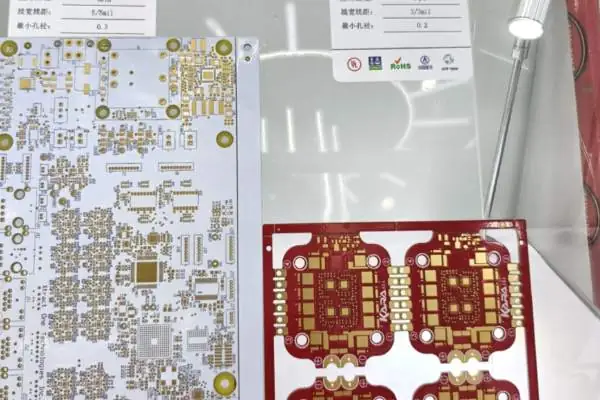
I remember visiting an HDI PCB supplier last year whose production line was equipped with both types of laser equipment. The operators said that in actual production, they flexibly choose the laser based on the board material characteristics, sometimes even using a composite process – first using UV to open the copper window and then using CO2 to quickly clean the resin layer. This combination approach ensures both precision and efficiency.
However, the post-laser ablation treatment is the critical step. I’ve seen some factories skip plasma cleaning to save costs, resulting in residual carbides on the hole walls, leading to poor copper plating adhesion and a 30% drop in yield. This reminds me of my experience sanding models with sandpaper – if the surface isn’t properly prepared, the paint will definitely bubble.
Nowadays, the requirements for dielectric materials in high-end HDI boards are becoming increasingly demanding. During a test of low-loss materials, we found that conventional FR-4 struggled with high-speed signals. We switched to special materials, and although the cost doubled, the signal integrity improved significantly.
Choosing laser technology is like choosing a tool; the key is compatibility. Simply pursuing parameter specifications is less effective than actual prototyping and verification, as different materials react very differently. Recently, we tried using UV lasers for micro-drilling on 1/4 ounce ultra-thin copper foil, and the results were better than expected, even eliminating the traditional windowing process.
Ultimately, there’s no standard answer in HDI manufacturing; those claiming to have universal solutions are often the least reliable. A good supplier should be able to flexibly adjust the process based on design requirements, rather than rigidly following fixed procedures. Next time you’re selecting a supplier, ask them how they handle special material combinations – these details often reveal their true expertise.
By the way, some factories are now using lasers for direct pattern transfer, which is a new approach, but it requires extremely precise beam control. Even a slight misstep can lead to excessive etching of the board, so it’s best to try it on a small batch first.
Sometimes I feel that making PCBs is like cooking; a slight difference in cooking time can result in vastly different tastes. Just looking at the recipe isn’t enough; you need to get your hands dirty and taste the results.
I’ve been in this industry for over ten years. When I first started working with HDI PCB production, I thought it was incredibly complex. Looking back now, I realize how naive I was.
I remember the first time I saw a finished product; I was completely stunned. The lines were as thin as hair, densely packed together. At the time, I wondered what kind of process could achieve this level of precision. Later, I gradually learned that it’s supported by a whole system of precision manufacturing. For example, laser drilling technology can achieve micron-level accuracy, and the multi-layer lamination process requires absolute alignment between layers under high temperature and pressure; any slight misalignment will lead to signal transmission failure. The coordinated operation of these processes is like a well-trained symphony orchestra, where every element must work together perfectly.
What impresses me most about HDI PCB manufacturing is its attention to detail. Sometimes a micron-level deviation can render an entire batch of products unusable. I’ve seen too many cases where companies suffered losses because they overlooked this. Once, a manufacturer skipped the plating thickness inspection to meet a tight deadline, resulting in signal attenuation in the entire batch of circuit boards under high-frequency conditions, causing losses exceeding one million dollars. This lesson taught me a profound understanding that in the microscopic world, every parameter is a critical node where a single change can affect everything.
Choosing a reliable HDI PCB supplier is truly crucial. It’s not about the lowest price, but about their ability to control these subtle details. Some suppliers cut corners to lower prices, resulting in significantly compromised product performance. For example, using inferior base materials or simplifying surface treatment processes may seem to reduce costs in the short term, but it leads to problems such as shortened product lifespan and inaccurate impedance control. Truly professional suppliers will equip themselves with testing equipment such as scanning electron microscopes to perform cross-sectional analysis on each batch of products, ensuring that the internal structure meets design requirements.
In fact, after working in this industry for a long time, you’ll find that the most fascinating aspect of the PCB industry is its constant progress. Technology that seems incredibly sophisticated today might be obsolete tomorrow. This feeling of constantly pushing the boundaries is particularly captivating. From early through-hole technology to today’s any-layer interconnects, wiring density increases by an order of magnitude every three years. The recently emerging mSAP process has pushed line widths and spacing to below 15 micrometers, a technological leap that was completely unimaginable ten years ago.
I often tell my team not to limit their vision to the current level of technology. Achieving 30-micrometer line widths is already impressive, but who knows if even more advanced technology will emerge next year? Just as 5G equipment requires more precise impedance matching, and autonomous driving systems demand more reliable signal integrity, these application scenarios are constantly pushing the boundaries of technology. We are currently researching the application of new resin-coated copper foil materials, which can achieve more precise dielectric constant control.
Ultimately, the essence of HDI technology is to achieve more functionality in a limited space. It’s like building a precise city in the microscopic world, where every line and every via must be meticulously designed. For example, the motherboard of a modern smartphone uses a stacked design, and an 8-layer board may contain tens of thousands of laser microvias. These holes, only one-third the diameter of a human hair, must handle diverse transmission tasks such as data, power, and signals. Sometimes I use mobile phones as an example: modern phones are getting thinner and thinner, yet their functionality is becoming increasingly powerful. This is all thanks to the support of HDI (High-Density Interconnect) technology. Without high-density wiring, it would be impossible to achieve such a compact and feature-rich design. Taking the latest foldable screen phones as an example, the flexible circuit board in the hinge area needs to withstand hundreds of thousands of bends. This requires the circuit design to maintain high density while also possessing fatigue resistance – ordinary PCB technology simply cannot meet these demanding requirements.
However, while pursuing excellence, we must also consider the needs of practical applications. Not all products require the most cutting-edge technology; the right technology is the best. For example, a smart home sensor might only need a 4-layer board to meet its requirements. Blindly adopting a 10-layer HDI design would only lead to wasted resources. We once helped a client optimize a wearable device, and by reasonably reducing two technology levels, we saved 35% of the cost while maintaining performance.
I’ve seen many clients blindly pursue the highest specifications, resulting in soaring costs but only marginal improvements in actual performance. This kind of misplaced priority is truly undesirable. One medical equipment company insisted on using a 20-layer arbitrary layer interconnect board, only to find that its core functions could actually be achieved with an 8-layer conventional HDI board, resulting in three times the unnecessary cost. This case further reinforces my belief that the technical solution must match the product positioning.
Ultimately, the most important thing in this industry is to maintain a clear head, knowing when to pursue excellence and when to stop at a reasonable point. This sense of balance is more important than technology alone. Just as architectural design must consider both structural strength and practicality and aesthetics, excellent engineers should be like composers, finding the best harmony in the technical spectrum, avoiding both over-engineering and functional shortcomings.
Now, every time I see a new HDI product, I pay special attention to its process details. Those invisible aspects often best reflect a company’s strength and standards. For example, observing the uniformity of copper plating on the hole walls and checking the interlayer alignment accuracy – these invisible indicators are like the meshing gears of precision machinery; although users can’t see them, they directly determine the reliability and lifespan of the product.
This is also why I always insist on working with ambitious suppliers, because they put in the effort in these subtle details, and this dedication is ultimately reflected in every detail of the product. For example, one of our partners insists on performing 3D tomography scans on every board. Although this increases inspection costs, it has resulted in a record of zero customer complaints for five consecutive years. This dedication to quality often holds more long-term value than price advantages.
Having worked with HDI for many years, I’ve realized something: many people immediately study the Type classification table but overlook the essence—the key to choosing the right type lies in understanding the interconnection density the product actually needs.
I remember a smart wearable project team last year struggling with whether to use a Type IV structure. They thought the thinner and lighter the product, the more advanced it would be, but when the samples came out, they discovered that the micro-via processing costs were more expensive than the main board. In reality, the data exchange volume of this kind of sports bracelet didn’t require arbitrary layer interconnection at all. Switching to Type I and optimizing the layout saved 30% of the space.
Some suppliers now like to present HDI technology as something very mysterious, constantly recommending high-end solutions. But a truly reliable partner will first ask about the data flow your device needs to handle, how the power supply modules are arranged, and even consider the thickness of the heat sink. Once, we tested the HDI PCB manufacturing processes of different manufacturers and found that products claiming to be able to produce Type III had a twofold difference in micro-via precision, which directly affected the stability of the 5G module.
I strongly recommend that engineers discuss technology with actual application scenarios in mind. For example, a drone flight control board needs anti-interference capabilities, so the focus should be on the uniformity of copper plating in the micro-vias; medical equipment prioritizes long-term reliability, so overly aggressive stacking designs should be avoided.
Several automotive electronics cases I’ve recently encountered are quite interesting. Traditionally, it’s believed that automotive-grade products must use conservative solutions, but the electronic control systems of new energy vehicles actually require more efficient HDI designs than mobile phones. However, this requires strengthening thermal management on top of the Type II structure; suppliers who simply copy consumer electronics experience usually fail at this point.
Ultimately, the selection process isn’t about who uses the most advanced technology, but whether the interconnection solution can accurately match the product’s lifecycle. Some flagship phones do require the dense wiring of Type III, but using high-end HDI for ordinary home appliances will only increase unnecessary failure points.
I remember when our team took on a medical device project last year, the client wanted to fit an entire monitoring system into a space the size of a fingernail. My first reaction was that it was completely impossible—until we turned our attention to HDI PCB manufacturing. What impressed me most about this technology wasn’t the micron-level line width data on the parameter sheet, but that it truly broke the mindset that “circuit boards must be flat.” During a visit to an HDI PCB supplier’s laboratory, I saw them creating flexible circuit structures using translucent materials, like a form-fitting undergarment for electronic devices. This three-dimensional configuration allows medical probes to navigate freely through body cavities, something traditional circuit boards, which are like brittle crackers, simply cannot do. Many implantable devices can now be made smaller than a capsule.
I’ve always found the field of HDI PCB manufacturing particularly interesting. Many people think it’s just about making the lines thin enough, but the real test of skill lies in the coordination of the entire manufacturing process. I remember visiting an HDI PCB supplier’s factory once, and the rhythm of the precision instruments in their workshop left a deep impression on me. Every step requires extremely precise control; even a slight deviation can render an entire batch of boards unusable.
In the HDI manufacturing process, I’m most concerned with the invisible details in between. For example, the alignment of micro-vias; sometimes they look fine to the naked eye, but problems only become apparent after power is applied. This made me realize that relying solely on final inspection is far from sufficient. Now, many manufacturers are starting to move the testing stage to after each process step. Although this increases costs, it does allow them to detect many potential problems early on.
Speaking of testing, I have firsthand experience with this. Last year, one of our company’s projects required rework because the initial testing wasn’t comprehensive enough. Since then, I’ve placed great importance on the completeness of testing plans. This is especially crucial for high-density HDI boards.
Simply performing basic continuity tests isn’t enough; you also need to consider various stress conditions in real-world applications.
When choosing an HDI supplier, I place great importance on their quality control system. One manufacturer I’ve worked with does an excellent job; they not only have multiple inspection checkpoints on the production line but also conduct destructive testing on samples from each batch. This meticulous approach to quality makes me feel more confident.
I think there’s a misconception in the industry right now: an overemphasis on technical parameters while neglecting practicality. A good HDI product should meet performance requirements while also possessing stable reliability. Sometimes, a simple and reliable design is more practical than blindly pursuing high technical specifications.
Some recent cases have confirmed my view. One client initially wanted the most advanced technology, but after discussions, they switched to a relatively mature solution. As a result, not only did the cost decrease, but the yield rate also improved. This shows that in the HDI field, what’s appropriate is best.
Every time I see a phone that’s a millimeter thinner but has new features, I wonder how many engineers are working hard behind the scenes. HDI PCB manufacturing is far more complex than simply making the lines thinner; it’s more like embroidering on a strand of hair while ensuring every stitch is precise. I’ve worked with several HDI PCB suppliers, and I’ve found that their biggest headache isn’t the technology itself, but how to maintain stability during mass production. One engineer complained to me that they can achieve micron-level line widths in the lab, but the yield rate plummets in the factory. In this industry, having just blueprints isn’t enough. For example, a 0.5°C fluctuation in ambient temperature and humidity can lead to differences in plating uniformity, or moisture absorption by the substrate can cause micro-bubbles during lamination. These seemingly insignificant variables are amplified into systemic risks in million-unit mass production.
Moore’s Law is often used as a benchmark for technological development, but I think it’s more of a psychological suggestion now. Chips can be made smaller and smaller, but HDI boards must simultaneously address heat dissipation, signal interference, and mechanical strength issues. Last year, I disassembled a folding phone, and the bending area of its motherboard used special materials. This innovation goes beyond traditional circuit design. Technological iteration is no longer a single breakthrough but a collective upgrade of materials, processes, and design concepts. For example, using modified polyimide to replace traditional FR4 substrates maintains flexibility while improving thermal conductivity by incorporating ceramic particles.
Some people think HDI is just a part of manufacturing, but I think it’s more like an art of balance. For example, to cram in more layers of circuit boards, manufacturers have to get creative with the insulating dielectric material, but beyond a certain thinness, signal integrity can collapse. I saw a case where a manufacturer, in pursuit of extreme density, actually saw a decline in high-frequency performance. It’s like starving yourself to lose weight until you’re too weak to run. They achieved a 20-layer stack using a 5-micron dielectric layer, but electromagnetic simulations showed a 40% increase in crosstalk noise, forcing them to revert to an 8-micron solution and redesign the grounding and shielding structure.
In the future, devices demanding ubiquitous connectivity will place even more absurd demands on HDI PCB manufacturing. Imagine if circuits had to be embedded in clothing fibers or implanted in medical devices; current laser drilling processes might have to be completely overhauled. I was chatting with a technical team once, and they mentioned experimenting with using plasma instead of chemical etching. It sounds like science fiction, but it might be the prototype of the next generation of technology. They demonstrated etching conical micropores on a polymer surface using low-temperature plasma, controlling both the pore diameter and taper while avoiding chemical contamination of the biocompatible surface.
What fascinates me most about this industry is that it’s constantly pushing its own boundaries. Today’s technological benchmark might be in a museum tomorrow, and the real challenges often lie in the moments when you think “it’s good enough.” Like the embedded passive component technology that the industry is currently working on, attempting to integrate resistors and capacitors directly into the dielectric layer. This requires controlling the dielectric constant accuracy to within ±0.25, as any small deviation will cause the filter’s center frequency to shift.
I’ve been working in this industry for quite a few years. When I first started working with HDI PCB production, I thought it was simply a matter of making the lines thinner, but I later realized it’s far more complex than that.
The real challenge lies in balancing the gap between design and manufacturing processes.
Many engineers, when approaching HDI PCB suppliers with their designs, only focus on line width and spacing, neglecting the properties of the material itself. For example, using ordinary FR4 for high-frequency signal transmission is a disaster. The most ridiculous design I’ve seen had the micro-via spacing smaller than the solder pads, resulting in the entire board being scrapped during the laser drilling stage.
Actually, there’s a very simple way to judge a factory’s HDI manufacturing level – look at how they handle the alignment of blind and buried vias. During my last visit to a Japanese-owned company, I discovered that their X-ray alignment system could achieve accuracy within 5 micrometers, which completely overturned my understanding of domestic manufacturing processes. They even employed real-time compensation technology, dynamically correcting coordinate deviations during laser drilling using a CCD vision system. This closed-loop control allowed them to consistently maintain multi-layer board alignment accuracy within 8 micrometers. Even more surprisingly, they had established a complete compensation database for the thermal expansion coefficients of different board materials. For example, for high-speed materials, a 10-degree increase in the Tg value required a 0.3-micrometer pre-compensation in the drilling position.
Now, more and more customers are requesting through-hole designs, a structure that presents the ultimate challenge for electroplating filling processes. One customer, a medical equipment manufacturer, insisted on microvias on 0.35mm BGA pads. We tested seven different filling inks before finding a solution with a matching expansion coefficient. In reality, this high-density interconnection structure is most susceptible to the “volcano” phenomenon, where the hole opening is recessed, leading to air gaps during solder ball assembly. We later discovered that using pulse plating with special additives allowed for a top-down gradient deposition of the copper layer within the microvias, ultimately controlling the hole opening flatness to within 3 micrometers. This process requires extremely precise control of the chemical solution concentration and current density, requiring real-time monitoring to ensure copper ion concentration fluctuations do not exceed ±5%.
Recently, we encountered an interesting case: a new energy vehicle manufacturer wanted to change their traditional 8-layer board to a 6-layer HDI structure. Initially, everyone thought it was impossible until we changed four of the layers to any-layer interconnection, and surprisingly, we found that it could even reduce parasitic capacitance by 15%. This was mainly due to the any-layer interconnection technology eliminating the stub effect of traditional through-holes, while the staggered microvia layout resulted in a more direct signal path. Through simulation, we found that when the spacing between the signal layer and the reference layer was reduced from the conventional 60μm to 40μm, the inductance of the return path decreased by 22%, which was particularly significant for improving the signal integrity of millimeter-wave radar modules.
Sometimes, I feel like HDI manufacturing is like creating miniature works of art. Behind those seemingly cold parameters are countless trials and errors. I remember one time, to optimize impedance control, we even adjusted the dielectric thickness to one-third the diameter of a human hair. During the initial lamination process, we discovered that the flowability of the prepreg material caused a ±7% deviation in the dielectric layer thickness. Later, we switched to 1080 glass fabric prepreg with a low flow coefficient and used a vacuum laminating press to control pressure fluctuations within ±0.02 MPa, finally achieving the target of a total board impedance error of no more than ±5%. This process required repeated adjustments to the lamination temperature curve, especially controlling the heating rate to 2-3℃/minute to prevent premature resin gelation.
When choosing partners, I particularly value their attention to detail. A good HDI PCB supplier won’t blindly promise extreme parameters but will honestly tell you which design aspects require compromise – this is crucial. For example, when a customer requested a 50μm line width/spacing design, experienced engineers would suggest using teardrop-shaped transitions at corners to avoid the risk of line breaks during acid etching, and would also advise using a grid pattern for copper plating on the power layer to balance thermal stress. These seemingly minor suggestions often prevent delamination and board failure during thermal stress testing.
Now, every time I see a new stacking scheme, I recall those failed samples from years ago. Perhaps these experiences have given me a clearer understanding of the boundaries of HDI manufacturing.
When choosing an HDI PCB supplier, I particularly value their approach to detail. During a factory visit, I found their additive manufacturing method for circuit lines very interesting – directly chemically depositing a copper layer on the substrate and then electroplating to thicken the lines, resulting in sharp, knife-edge-like edges. This process is more suitable for fine lines than the traditional subtractive method. The uniqueness of this process lies in its ability to avoid the undercutting problems caused by traditional etching methods, making it particularly suitable for fine lines below 20 microns. For example, when manufacturing antenna lines on mobile phone motherboards, the additive method ensures signal transmission stability, while traditional methods are prone to impedance fluctuations due to uneven line width.
What truly surprised me was the level of micro-via processing. High-quality manufacturers take an extra step after electroplating – grinding the vias to a mirror-like finish. This prevents unevenness during subsequent lamination. I’ve seen some factories skip this step to save time, resulting in unstable impedance in several areas after multi-layer board lamination. The grinding process requires a special ceramic grinding head to polish the vias at a constant speed. I once saw a Japanese-owned factory adjust grinding parameters by real-time monitoring of grinding head pressure, ensuring that every micro-hole met the surface roughness requirement of Ra < 0.2 μm.
Many factories are now touting laser drilling technology, but I think the key is not the equipment itself, but how to control the cleanliness after drilling. During one test, we found residual dust in the micro-holes, leading to unreliable connections. The supplier later improved their dust removal system to solve the problem. Sometimes, the most basic steps are the most challenging. Their improved method involved adding a multi-stage filtration system inside the laser drilling machine and immediately blowing high-pressure nitrogen gas after drilling. More professional companies even randomly inspect the cleanliness of micro-holes under a microscope and use an electronic balance to measure the weight of collected dust to quantify the cleaning effect.
Regarding the etching process, I prefer manufacturers who insist on two etching steps. Although the production efficiency is lower, the first rough etching and the second fine-tuning ensure that the line width tolerance is controlled within 3 micrometers, which is especially necessary when processing HDI boards with more than 10 layers. During the second etching, different concentrations of etching solution are used: a fast etching solution removes most of the copper layer, and then a slow etching agent protects the side walls of the traces for fine-tuning. This method is particularly important when manufacturing differential signal lines, ensuring the uniformity of the spacing between lines.
Recently, I tried a new supplier who added a special process during sequential lamination – plasma treatment of the board surface before each lamination. This significantly improved the resin filling effect in the micro-holes, but this process requires extremely high cleanliness in the workshop, making it difficult for ordinary factories to replicate. Plasma treatment activates the chemical bonds on the surface of the board material, resulting in stronger adhesion of the prepreg during lamination. I noticed that their workshop not only met the Class 1000 cleanroom standard but also strictly controlled the environmental humidity within 45% ± 5%.
Actually, there’s a simple way to judge the manufacturing level of HDI PCBs: look at how they handle scrapped boards. Professional factories classify waste boards separately; some materials can even be recycled for low-end products. Factories with poor management often mix all waste materials together, indicating a lack of sophisticated management awareness. For example, gold-containing waste is stored separately for making gold finger connectors, while high-frequency board waste can be used to manufacture ordinary RFID tags. This type of classified recycling is not only environmentally friendly but also reduces production costs by 5-8%.
During a conversation with an engineer about the use of prepreg materials, I discovered a small detail: excellent manufacturers adjust the fluidity of the prepreg based on the number of layers. For example, when making two-layer microvias, high-fluidity materials are needed to perfectly fill the blind vias. This detail is never mentioned in the specifications but directly affects reliability. They even adjust the viscosity coefficient of the resin based on the aspect ratio of the blind vias; when the aspect ratio is greater than 1:0.8, they use low-viscosity resin and control the flow rate through preheating temperature.
Finally, I want to emphasize that you shouldn’t blindly trust equipment specifications. I’ve seen some factories that bought the most advanced LDI equipment, but the operators couldn’t even perform basic daily calibrations. Even the best technology ultimately depends on people to implement it. Therefore, when evaluating suppliers, I always pay attention to their employee training records. For example, laser energy calibration requires daily testing with a power meter, and alignment accuracy needs to be verified weekly using a standard grid plate. One Taiwanese factory requires engineers to pass 200 hours of equipment practical training before they can work independently. This rigorous attitude is directly reflected in the product yield.
A tire pressure sensor that lost signal after six months, taken apart,
A decade in solar taught me that most MPPT controller PCB failures
A fiber laser marking machine that ran perfectly for six months can
- 小・中ロット生産のエキスパート
- 高精度PCB製造と自動アセンブリ
- OEM/ODM電子プロジェクトの信頼できるパートナー
営業時間:(月~土)9:00~18:30
Get quote, solution or any question, Andre always here to help