

What Separates the Best Prototype Printed Circuit Board Manufacturers When You’re Building a Telecom Rectifier PCB
Many people assume the key to circuit-board manufacturing is high-end equipment, but
Every time I see someone searching the world for the best PCB manufacturer, I feel like they’re overcomplicating things. There’s no such thing as an absolute best choice; the key is knowing what you really need. I’ve gone through several rounds of searching for manufacturers and found that many people focus on price and delivery time, neglecting the most fundamental aspect – whether the manufacturer truly understands their design intent.
I remember one time we designed a board with high-frequency signals. The first manufacturer offered a very cheap price and fast delivery. However, when the boards came back, the signal integrity was terrible. Later, we switched to a more expensive manufacturer, and their engineers called us directly to ask about our specific impedance matching requirements and suggested widening some traces by a few micrometers. After that experience, I understood that a good PCB manufacturer should be a partner who can discuss the design with you, not just a factory that processes according to the drawings.
Now, when I deal with suppliers, I always lay out the design challenges upfront. For example, whether there are any special impedance requirements on the board, how to handle blind and buried vias, and whether the minimum line width and spacing can be guaranteed. Sometimes, what you think is a huge problem might be routine for an experienced manufacturer. They’ve seen too many failures and know which design details are prone to problems.
I strongly dislike the mindset of treating manufacturers as mere factories. A truly reliable partnership is when you send the drawings, and the other party can identify unreasonable aspects of your design and even suggest improvements. This kind of interactive relationship is far more meaningful than simply comparing prices. After all, a poorly manufactured board doesn’t just cost you the processing fee; it also impacts project progress and team morale. Recently, we’ve started trying to involve manufacturers earlier in the design phase. For example, we’ll have video conferences with their engineers to discuss manufacturing limitations while we’re still designing the circuit boards. Sometimes, what we think are great design solutions might encounter yield problems during mass production, and discovering these issues early can save us a lot of trouble. This collaborative model, although it takes more time upfront, saves us significantly more in revision costs later on.
Ultimately, choosing a PCB manufacturer is like finding a marriage partner; it’s not enough to just look at appearances and dowry; you need to see if your values align. Are you on the same page regarding quality? Is communication smooth? Are they willing to work together to solve problems? These soft metrics are far better predictors of a long-term partnership than cold, hard performance metrics.
The industry is changing so fast that today’s best choice might be outdated tomorrow. I think instead of struggling to find the so-called “best,” it’s better to cultivate a few partners who can grow with you. After all, even the best standards can’t compare to a manufacturer who understands your needs.
Choosing a PCB manufacturer isn’t always about who has the biggest name or the most factories. Having worked in the electronics industry for over a decade, I’ve noticed an interesting phenomenon: many companies immediately list a bunch of hardware specifications, such as the number of layers they can handle or the minimum line width and spacing they can achieve. But honestly, these numbers are more like a manufacturer’s “resume”; you only truly understand their capabilities once you start working with them.
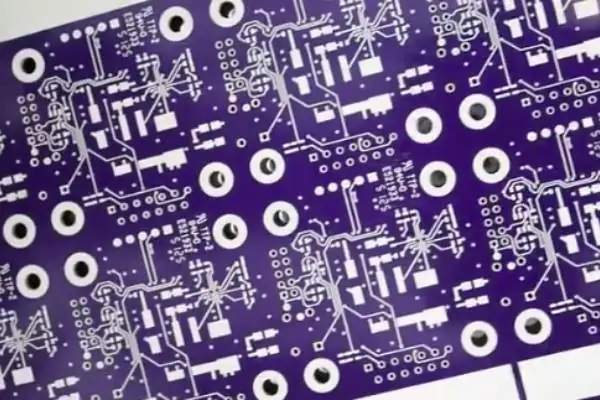
I’ve seen many manufacturers who claim to handle high-difficulty PCBs with over 30 layers. But once you send them the design files, the problems become apparent. Some manufacturers do have advanced equipment, but their engineers lack a deep understanding of special materials. For example, high-frequency laminates aren’t simply a matter of having the right machinery; it involves understanding material properties and the ability to fine-tune process parameters. This kind of experience often requires time to accumulate and can’t be solved simply by investing in equipment.
The PCB manufacturers I’ve found truly reliable are less likely to boast about their hardware specifications. They focus more on understanding your specific needs, the environment your product will be used in, and any special reliability requirements. Once, we had a project that required an uncommon substrate to match a specific thermal expansion coefficient. The manufacturer we partnered with didn’t immediately promise they could or couldn’t do it; instead, they took samples, conducted several rounds of testing, and worked with us to adjust the solution. This problem-solving approach is far more valuable than simply quoting a list of technical parameters. Another easily overlooked aspect is a manufacturer’s adaptability. The industry frequently encounters situations like sudden material shortages or last-minute changes in customer requirements. This is where a manufacturer’s true capabilities become apparent. Some large manufacturers with numerous production lines have rigid processes, requiring days of approval for even minor changes, while some small and medium-sized manufacturers can respond quickly, even rearranging production schedules within two or three days. This flexibility is often more important than sheer production capacity at critical moments.
Ultimately, choosing a PCB manufacturer is like choosing a partner; simply looking at the numbers in a brochure is far from enough. You need to consider their attitude towards problems, their ability to handle unexpected situations, and their deep understanding of material properties – these are the key factors determining the longevity of the partnership.
I’ve thought about choosing PCB manufacturers many times. Many people immediately focus on large, well-known companies, looking at price lists and technical specifications – this is quite one-sided.
A friend of mine who works in industrial control equipment learned this the hard way last year. They partnered with a seemingly cost-effective PCB manufacturer. Everything went smoothly during small-batch trial production, but problems arose during mass production. Subtle differences between batches of circuit boards led to a surge in soldering defects, almost jeopardizing the entire project’s delivery schedule.
The lifespan of electronic products often depends on the weakest link, and the PCB, as the carrier, determines overall reliability. Especially for equipment requiring long-term operation, such as power monitoring devices or outdoor communication base stations, you certainly don’t want to see the system fail prematurely due to circuit board aging. Choosing a manufacturer that prioritizes long-life design is crucial; they will invest more effort in substrate selection, surface treatment, and process control.
Scalability isn’t simply about the size of the factory. Truly excellent PCB manufacturers integrate quality control into every production stage, ensuring that the electrical performance of the first and last boards in a 100,000-piece order remains consistent.
I’m increasingly convinced that finding the best PCB manufacturer is like finding a long-term partner. Simply comparing prices or technical parameters can be misleading; the key is whether the manufacturer understands your product’s application scenario and can maintain consistent quality levels after mass production.
I recently encountered a manufacturer specializing in automotive electronics, and one detail impressed me: their production line employees proactively record temperature and humidity changes during each shift. This seemingly ordinary data is a crucial foundation for ensuring product consistency. This attention to detail is more reassuring than simply advertising equipment precision. Ultimately, a good manufacturer should be able to help you transform your product concept into a reliable product. This process requires both parties to reach a consensus on technical standards and quality control principles. After all, no one wants their design to be compromised by flaws in the manufacturing process.
Choosing a PCB manufacturer is quite interesting. Many people immediately ask about price and delivery time – of course, these are important – but I’ve found that what truly makes the difference are the things you can’t see. For example, a factory I recently worked with was quite special.
One of their engineers mentioned a detail during a conversation that left a deep impression on me. He said that they don’t like to emphasize that they are the “best PCB manufacturer,” because every customer’s needs are so different. The key is whether both parties can communicate on the same wavelength.
For example, we once needed to make a batch of high-frequency boards with very strict impedance requirements. Instead of rushing to give a quote, they first asked us how we planned to test these boards and then presented a complete set of their internal process control data. I remember the Cpk value very clearly; they proactively showed the fluctuation range of key parameters and explained how they monitored them daily.
This detail made me feel confident. Many manufacturers only promise “no problem,” but they can’t explain how they guarantee quality. The fact that they could break down the indicators we cared about into specific actions on the production line was very different.
Another thing I value is their attitude towards problems. Once, there was a minor issue with a sample board that didn’t affect functionality, but they discovered it during their own testing and immediately contacted us to discuss whether to adjust the process parameters and remake a batch. This proactive approach of exposing problems instead of hiding them made us feel more at ease.
Ultimately, choosing a manufacturer isn’t about buying a standard product, but about finding a partner. A low price is good, of course, but long-term cooperation depends on whether the other party has a continuous improvement mindset and whether they treat your needs as their own. Sometimes, a few conversations about what they care about can reveal more than comparing a bunch of parameters.
After all, the boards are going to be used in the product, and it affects the success or failure of the entire project. Finding a team that can work with you to overcome challenges is far more valuable than simply pursuing the “best” label.
Every time I see someone simplify the process of choosing a PCB manufacturer to just comparing prices, I feel that they’re oversimplifying things. As hardware designers, the rapport and trust we build with a reliable manufacturer over time is something that can’t be bought with a simple price quote. I remember a previous project where the board itself wasn’t particularly large, but the signal integrity requirements were incredibly demanding. There was internal pressure at the time to consider two new suppliers for price comparison. But I insisted on using the factory we had been working with for three years. Their engineers proactively called us after receiving the design files and pointed out several potential impedance matching issues that we hadn’t even noticed. This single detail saved us at least two rounds of revisions later on.
Complexity really comes in many forms. Some boards have many layers and are densely packed, testing the manufacturer’s basic process stability; others may not have many layers, but require extremely high precision in material processing and loss control at specific frequencies. It’s like finding a tailor to make clothes: some only cut according to the pattern, but a good tailor will discuss fabric characteristics, wearing occasions, and even adjust the pattern to make the garment more comfortable.
There are indeed many options in the market now. Some manufacturers advertise themselves as being able to do everything, sounding very versatile; others focus on a specific niche, such as high-frequency microwave or automotive electronics. My experience is that the term “best PCB manufacturer” is quite misleading – the best one is the one that best suits your needs. If your product is consumer electronics and you’re pursuing the lowest possible cost, then some manufacturers in Southeast Asia might have an advantage; but if you’re making a core board for industrial control or medical equipment, then reliability and traceability are far more important than a few cents difference in unit price.
I’m increasingly finding that choosing a manufacturer is like choosing a marriage partner. Looking at a list of specifications isn’t enough; the key is whether communication is smooth and whether the other party truly understands your needs. Sometimes a small, urgent order can reveal their level of cooperation – whether they mechanically follow procedures or are willing to work with you to find solutions. This kind of long-term understanding and trust is the most valuable asset.
Every time I see advice on how to choose a PCB manufacturer, I want to laugh. Too many people overcomplicate this. After more than ten years of hardware design, I’ve learned one thing: the best PCB manufacturer isn’t chosen based on a scoring system.
I remember last year we had a medical equipment project and chose a manufacturer that claimed to be top-tier in the industry. They had so many certification certificates they could cover the entire conference table. The first batch of boards had serious problems – the impedance control was completely off the design specifications. Later, I discovered that their engineers hadn’t even carefully reviewed our stacking requirements.
This made me realize that finding a manufacturer is like finding a partner. Simply looking at how many certifications they have is useless; the key is whether communication is smooth. Now I value partners who are willing to take the time to understand the product’s application scenarios. For example, when working on consumer electronics, I look for manufacturers who are particularly sensitive to cost control; while for industrial equipment, I choose manufacturers who are obsessed with reliability.
Many people are fixated on large manufacturers, but I think medium-sized manufacturers are often more flexible. Last month, we had an urgent project that needed to be expedited, and a local manufacturer directly sent engineers to our site to debug the parameters. This level of cooperation is something many large international companies can’t provide. Of course, this also depends on the specific needs – if it’s a product with millions of units in mass production, I might still choose a larger manufacturer with a higher degree of standardization.
Recently, I’ve increasingly felt that choosing a manufacturer requires considering the product lifecycle. Some projects only need small-batch trial production, but they insist on finding manufacturers suitable for large-scale production, resulting in mold costs alone exceeding the budget.
Ultimately, choosing a PCB manufacturer is like making a key – even the most exquisite key is useless if it can’t open the lock. There’s no need to obsess over the so-called “best” choice; finding the most suitable partner for the current project is already good enough.
I’ve thought about choosing PCB manufacturers many times. In the electronics industry, people often struggle with whether to choose those manufacturers that claim to be the “best.” Actually, I think the key isn’t whether they have ISO certification or customer portals – these are almost standard in the industry now.
Last year, we had a bad experience with a medical device project. We chose a supplier who promised real-time data sharing. However, we found that their production data updates were always delayed by two or three days. Truly reliable manufacturers don’t deliberately emphasize these features. Their engineers will proactively call you and say, “The impedance on the third layer of the board is slightly off. We’ve adjusted the etching parameters. We can show you samples on Thursday.” These are the people who are truly using data for collaboration.
Speaking of environmental certifications, it’s even more interesting. I’ve seen many companies display their ISO 14001 certificates in the most prominent place on their website. But if you take a walk through their workshop, you can smell the pungent chemical fumes. Factories that truly value environmental management even have water-saving signs in their restrooms.
Now I place more importance on a manufacturer’s attitude towards conflict minerals. A PCB manufacturer in Shenzhen left a deep impression on me – they created traceability records for every batch of copper foil. Even the biodegradability of the delivery drivers’ lunchboxes was included in their assessment criteria.
The Taiwanese manufacturers I’ve recently interacted with are quite interesting. They’re not so keen on promoting how advanced their HDI technology is; instead, they always ask, “How do you plan to iterate your products over the next three years?” This focus on the customer’s long-term development is more convincing than any certification.
Actually, there’s a simple way to determine if a supplier is suitable: look at their engineers’ social media posts. If they’re constantly posting about working overtime and rushing deadlines, there might be management problems; if they frequently post photos of technical seminars, it at least shows the team is learning and growing.
Ultimately, choosing a PCB manufacturer is like finding a marriage partner; just looking at resumes isn’t enough. You need to see whether their first reaction when problems arise is to shirk responsibility or to solve the problem.
When I was recently helping a friend’s company choose a PCB supplier, I noticed an interesting phenomenon. Many people immediately ask, “Which is the best PCB manufacturer?” This question itself is somewhat flawed. It’s like buying clothes; nobody asks, “What’s the best clothing brand in the world?” It depends on what kind of clothes you want to buy.
It’s like choosing between sportswear and formal wear – are you attending a gala dinner or going mountain climbing?
The same principle applies to finding a manufacturer. Once, a startup team approached a manufacturer specializing in military-grade PCBs with their smart bracelet design, and the price quoted nearly scared them away. Conversely, if a company making radar sensors chose a factory primarily producing consumer electronics boards, even the cheapest price would be useless, as it wouldn’t meet the signal integrity requirements.
When I assess a PCB manufacturer’s reliability, I first look at the samples displayed in their workshop. I once visited a factory where the display cases were filled with simple double-sided boards for LED strips; I knew then and there what kind of company they were. Another factory was much more impressive, showcasing boards ranging from medical equipment to automotive electronics, and their engineers could clearly explain the impact of different materials on signal loss.
Technical expertise can’t be faked. Good manufacturers can discuss impedance control down to the dielectric constant fluctuations of different board materials, while inferior manufacturers will only repeatedly emphasize, “Our equipment is all imported.” In reality, almost every moderately sized factory has some German or Japanese machines. The key is how they utilize the equipment effectively.
I particularly value a manufacturer’s attitude towards problems. Once, a board had a minor issue. One manufacturer immediately tried to shift the blame, claiming our design files were flawed. Another manufacturer’s engineer flew to our company that very night, bringing instruments for on-site testing, and ultimately discovered that one of their process parameters was set too conservatively. This kind of partner is worth long-term trust.
Ultimately, finding a PCB manufacturer is like finding a partner; simply looking at a list of specifications isn’t enough; you need to actually work with them. Sometimes, medium-sized manufacturers are more attentive than industry giants because they value each customer more. After all, in customized PCB production, a skilled technician on the assembly line paying extra attention to your order might be more valuable than spending an extra hundred thousand on equipment.
New technologies are constantly emerging; just as we understand flexible-rigid PCB technology, mSAP comes along. Good manufacturers will proactively share industry trends with you, while inferior ones will only rush you to place an order. So, instead of agonizing over who is the so-called “best,” it’s better to find a partner who can grow with you.
Many people assume the key to circuit-board manufacturing is high-end equipment, but
Every time you open up an electronic device, that iconic green circuit
Chasing perfection at the Prototype PCB Production stage can actually plant hidden
- 小・中ロット生産のエキスパート
- 高精度PCB製造と自動アセンブリ
- OEM/ODM電子プロジェクトの信頼できるパートナー
営業時間:(月~土)9:00~18:30
Get quote, solution or any question, Andre always here to help