

What Documents Are Required for PCB Production: A Field Guide From Real Industrial Weighing Controller PCB Projects
Many engineers focus too much on technical parameters early on and overlook
I’ve seen many teams stumble in small-batch PCB manufacturing. They always think that finding a factory that can take orders is enough, only to find that the other party can’t even gather enough materials for ten boards. A truly knowledgeable supplier will tell you which materials are readily available. Factories that immediately ask for hundreds of dollars in engineering fees are generally not suited for small-batch production.
Once, we urgently needed to revise and test a new design, and the factory we found took two weeks to say they were out of materials and needed to re-procure. Later, we switched to a team specializing in small batches, and they immediately found alternative materials in their inventory and shipped them out in three days. This flexibility isn’t measured by factory size; the key is the volume of orders they handle daily.
Price transparency is extremely important. Some quotes may seem a few cents cheaper per board, but hidden engineering and testing fees can make it much more expensive. I prefer suppliers to break down each cost item clearly, such as the cost of the board material and the percentage of drilling fees, to avoid falling into traps.
The biggest fear with small-batch production is dealing with factories with rigid processes. They’re used to ordering tens of thousands of boards at a time, and a design change requires approval from seven or eight departments. Good suppliers’ engineers can provide optimization suggestions on the same day, even proactively suggesting merging certain hole positions to save a step. This collaborative efficiency is the core value.
The criteria for judging a supplier are actually quite simple: ask them how quickly they can deliver five boards. Those who stammer and say they have to wait for a schedule can basically be passed over. Teams truly focused on small batches will give you specific dates and even proactively remind you of design details that can optimize delivery times. This responsiveness reflects the adaptability of the entire supply chain.
Dollar pricing is sometimes more intuitive. Suppliers who settle international material purchases in USD often have a channel advantage, especially when using special substrates or imported components. However, be aware that some manufacturers may temporarily add exchange rate surcharges during periods of high exchange rate fluctuations; it’s best to confirm this beforehand.
Ultimately, finding a supplier is like finding a partner. Just looking at the price quotes is useless; you need to see if they understand the needs of small-batch iteration. Be wary of those who immediately advise you to go for large-batch production to save costs; they may not understand the value of rapid trial and error.
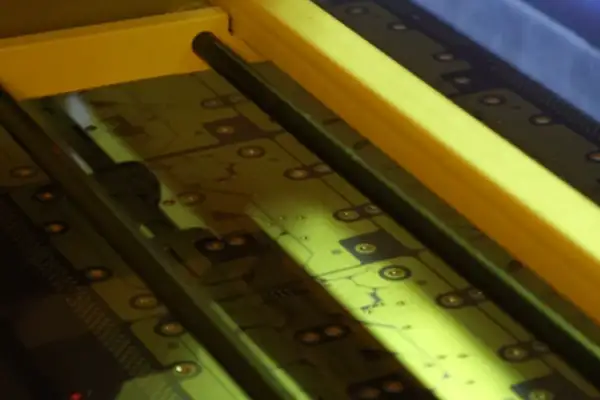
Having worked in hardware for many years, I’ve increasingly felt that the most fascinating aspect of Small Scale PCB Manufacturing isn’t how much money you save—although that’s important, of course—but rather the unhurried pace it gives you.
I used to always hear people say that it’s only cost-effective to do large orders. The reality is that when faced with an order for thousands of boards, you start to feel uneasy. It feels like betting everything on one thing; if the market shifts or there’s a small design oversight, the warehouse full of boards becomes a hot potato.
A friend of mine learned this the hard way last year. He developed a smart home accessory and ordered 3,000 boards for the first batch, only to discover that an interface protocol wasn’t compatible with mainstream platforms. The product either didn’t work or the user experience was compromised, ultimately forcing him to sell it at a discount. Considering the warehousing and capital tied up, that lesson made him completely switch to a small-step, rapid-response model.
Now, I prefer to produce around 500 boards first to test the waters. This quantity is just enough to test the production line’s stability and gather feedback from the first batch of real users. Most importantly, it doesn’t tie you down. For example, last time we made a controller with a display, after the first 500 boards were shipped, a user mentioned that the viewing angle wasn’t ideal under strong light. This detail is impossible to detect in a lab. We immediately adjusted the screen selection; although the cost per board increased slightly, the second batch immediately followed suit with the improvements. This ability to iterate rapidly is the core value of small-batch production.
Many worry that high unit prices for small batches are uneconomical. But you have to consider another factor: finished boards sitting in the warehouse consume your cash flow daily, and more importantly, they occupy your reaction time. The market won’t wait for you to clear your inventory before changing. The lifecycle of electronic products is now incredibly short; new technologies may emerge within six months. Holding a large amount of stock is essentially a race against time, and the odds of winning are slim.
I prefer to view each investment of a few hundred units as a hedge against uncertainty. It’s like a flexible tuition fee, allowing you to experiment and optimize at a controllable cost. Sometimes it’s not even a major problem; it might just be that the solder pad design of a component could be optimized for automated production. These subtle adjustments accumulate and make the product increasingly robust.
Ultimately, the charm of manufacturing lies not in making something perfect the first time, but in how much room you have to refine it. Small-batch production is like leaving a window for creation; you can peek out at the scenery at any time and then come back to polish your work. This freedom is far more valuable than simply lowering costs by a few percentage points because it helps you avoid unseen risks while quietly accumulating real competitiveness.
Looking at the latest batch of 500 boards on the workbench, I know that some of them might be put into the sample cabinet as part of this iteration, but every single one will go to market with a more mature solution. This feeling is much more reassuring than simply completing a large order, because you know you’ll do even better next time.
When doing small-scale PCB manufacturing, I had a profound realization—many people immediately stare at the unit price of those 500 boards for a long time. But what they should really be calculating is the total cost, not just the unit price.
I’ve seen many teams, in pursuit of so-called “economies of scale,” push their order volume to several thousand boards. And what’s the result? Only after the product is launched do they discover a fatal design flaw requiring redesign. At this point, you’re not facing the scrap cost of a few hundred boards, but the inventory pressure of the entire warehouse. For example, a team making smart wearables ordered 3,000 sets in their first batch, but due to an antenna design flaw, the signal attenuation was severe. They not only lost raw material costs but also had to bear the burden of warehousing backlog and cash flow pressure.
The charm of small batches lies precisely in their flexibility. You can treat the first batch of 500 boards as a real testing ground rather than a simple production task. This means you can verify key parameters such as the thermal management performance and component compatibility of circuit boards in real-world usage scenarios. For example, small-batch trial production can detect the cumulative tolerance effects of components from different batches; such subtle issues are difficult to fully simulate before large-scale production.
A smart home project I recently helped a friend with is a typical example. They initially produced only 300 samples and distributed them to seed users, only to discover that a sensor would misread under certain conditions. This discovery was a lifesaver before large-scale production—the cost of modifying the BOM was negligible compared to recalling the entire batch. Specifically, they found that when the ambient humidity exceeded 80%, the infrared sensor would experience a 5% false alarm rate due to moisture interference; this vulnerability was completely unreproducible in standard laboratory tests.
Fixed cost amortization needs to be viewed from a different perspective. Those engineering fees and stencil fees, seemingly extra expenses, are actually insurance for your product. For example, with an eight-layer board, small-batch engineering fees might account for 15% of the total cost, but this investment ensures that impedance matching issues are detected during trial production, avoiding later batch rework. Data shows that 52% of design flaws in electronic products are exposed in real-world usage scenarios.
A common misconception is that waiting until the design is perfect before mass production saves money. However, the reality is that there are never perfect designs, only products that continuously iterate. One industrial controller project I worked on went through six revisions before stabilizing, but each revision was kept under 200 units, resulting in a total R&D cost 30% lower than teams that aimed for a “one-step solution.” In the third version, this project discovered insufficient CAN bus interference immunity, which was solved by adding a ferrite core and adjusting the layout. Meanwhile, other teams at the same time had to recall entire batches of products due to similar issues.
With the rapid pace of new product iterations today, by the time you produce 5,000 units, your competitors may already be testing their second-generation products. Especially in consumer electronics, the supply cycle for some chips can be longer than the product iteration cycle. A small-batch strategy allows for flexible solution switching. For example, one team discovered during trial production that the main control chip was about to be discontinued; they switched to a new platform in time to avoid the risk of supply chain disruptions.
The truly smart approach is to treat small-batch production as a necessary step in product evolution, not a sacrifice for cost control. Those seemingly higher unit costs actually reduce the overall project risk exposure. Just like agile development in software, hardware also needs a rapid trial-and-error mechanism. By establishing a closed loop of small-batch verification-feedback-optimization, the failure rate after product launch can be significantly reduced.
Recently, I admired a medical device team that insisted on producing 150 clinical test units for each version. Although the cost per unit was 40% higher, this avoided the huge costs of later registration changes. This approach is truly professional. During the clinical phase, they discovered that the heat dissipation holes on the casing needed adjustment. Because they had reserved room for modification in advance, they completed the mold modification in just two weeks. If they had waited until after registration to make changes, it would have required at least six months of re-reporting.
Ultimately, the manufacturing industry’s accounting cannot only look at the numbers from the purchasing department; it must also look at the total investment throughout the product lifecycle. Sometimes, spending a little more money is the most cost-effective approach. For example, a project discovered a resistor selection problem through small-batch trial production, avoiding tens of thousands of yuan in potential after-sales repair costs with a cost of only 200 yuan. This kind of hidden benefit is often overlooked by traditional cost accounting.
I recently chatted with a friend who works in smart home technology and noticed an interesting phenomenon. Their team spent over half a year developing a new product and was facing a dilemma when preparing for launch – how many units should they produce in the first batch? Some thought placing a large order would lower the unit price and be more cost-effective, while others insisted on producing a few hundred units first to test the waters. This reminded me of the pitfalls I encountered when I first entered the industry.
Back then, I always felt that Small Scale PCB Manufacturing was a transitional stage and I couldn’t wait to skip it. Once, we were working on a smart wearable device, and the market research data was particularly optimistic. Management decided to place an order for 5,000 units. However, after the product was launched, we discovered a design flaw in a sensor, requiring the entire batch to be reworked. Just modifying the PCBs alone resulted in a loss of over 200,000 RMB.
Looking back now, the value of small-batch production lies precisely in the room for error it provides. For example, when we were making an industrial controller, we discovered in the first batch of 300 units that a capacitor’s temperature resistance was insufficient. Although the unit price per board was indeed 15% higher than with a large batch, it avoided the risk of a large-scale recall later. This kind of trial-and-error cost is actually more important than blindly pursuing low prices.
Many people fall into the trap of focusing solely on unit price; the real calculation should be the overall cost. Last week, a startup team consulted me, debating whether to increase their order quantity from 200 to 1000 PCBs to lower the unit price. I showed them our project’s financial statements from last year—while small-batch production costs 3 yuan more per PCB, the cash flow savings are enough to support the R&D and testing of two new features. This is far more meaningful than simply lowering the unit price.
Recently, several teams I’ve contacted have started to change their approach. One medical device team even broke down their initial mass production into three batches of 50 units each, adjusting the design based on clinical feedback after each batch. Although their PCB supplier had to readjust the production line each time, customer satisfaction after the product launch was over 40% higher than with traditional methods.
Ultimately, with the rapid iteration speed of electronic products today, it’s more important to focus on overall cost control than obsessing over the price of a single board. Last year, one of our products was able to seize a niche market before competitors by iterating rapidly three times using small-batch production. This opportunity cost saving is the greatest benefit.
I recently chatted with some friends in the hardware industry and discovered an interesting phenomenon. Many people instinctively think that Small Scale PCB Manufacturing is a bad deal—small quantities mean higher unit prices, right? But after running several rounds of prototyping, I realized that you have to think about it the other way around. The significance of small-batch production isn’t about competing on unit price with large-batch production, but rather about giving you room for error. Last year, I had a smart home project that required three board modifications during the trial production phase. If we had gone straight to mass production, the scrapped boards alone would have been enough to buy an electric car. Looking back now, the extra premium we paid for small-batch production felt like buying insurance.
Flexible manufacturing is the hidden advantage of small-batch production. Once, we needed to add a temperature sensing module to an earphone board, and Prin Circuits simply adjusted the solder mask design and delivered it in three days. This kind of flexibility is simply unattainable on mass production lines.) Imagine the losses from a single day of production line downtime – enough to cover ten small-batch production runs. Don’t just focus on the component costs on the BOM; the real money-burning part is the pile of inventory that becomes electronic waste when you bet on the wrong thing.
Many people imagine mass production as the final destination, but I think it’s more like a security checkpoint. You need to thoroughly verify circuit stability and heat dissipation details with small batches before you can confidently pass through the gate. I’ve seen too many teams skip trial production to lower unit prices, only to discover impedance problems during mass production, forcing them to sell the entire batch at a discount. Ultimately, the cost of hardware products is dynamically calculated; the sampling fees you save might turn into after-sales service pitfalls.
Recently, a client who makes industrial sensors really impressed me. They always keep their orders under 50 pieces, but… We placed orders for eighteen consecutive months. This rolling, small-batch approach avoids the risks associated with component replacements while ensuring healthy cash flow. Compared to those who aim for 100,000 units at a time but get bogged down in inventory turnover, this strategy is closer to real market demand.
Choosing small batches is essentially buying time flexibility. When your product requires rapid iteration, suppliers who can provide engineering feedback and manufacturability analysis are more important than those who simply offer the lowest price. After all, the biggest cost in hardware startups isn’t the PCB itself, but the opportunity window consumed during the trial-and-error cycle.
I’ve seen many people stumble with small-batch PCB manufacturing. They always try to save money, but end up spending more. The key isn’t about being stingy, but about… How to spend money wisely.
Take engineering costs, for example. Many people get a headache just seeing a $200 figure. But have you considered that this money is actually buying professional assurance? I know a small team that insisted on handling the design documents themselves, and because a drilling symbol wasn’t clearly marked, the entire batch of boards was scrapped. Re-issuing the boards cost three times more than the original engineering cost.
The biggest danger in small-batch production is making assumptions. Some people think more layers mean higher quality and insist on using 8-layer boards, when 4 layers are perfectly sufficient and save half the engineering cost. Not to mention those who pursue special processes; in the end, the testing fixtures alone could buy ten sets of ordinary boards.
Material procurement can be a real trap. You might think buying full sheets of raw material is the cost-effective option—but once you factor in storage costs and the capital tied up in inventory, you won’t be smiling anymore. Nowadays, many manufacturers offer “material-sharing” services; much like splitting a grocery order with friends, this allows you to access high-quality materials without the need to stockpile inventory. For our recent smartwatch project, for instance, we pooled our order for high-frequency PCB laminates with another company—a move that saved us a full 30% on costs.
Those who truly understand the industry view small-batch production as an opportunity for iterative testing and error correction. They start by producing a small run—say, 50 boards—to validate the design; if issues arise, they fix them immediately before optimizing the second batch. This phased approach is far more prudent than producing a massive run of 500 boards all at once, only to have the entire batch rendered useless if a critical flaw is discovered.
And don’t forget to engage frequently with the manufacturer’s engineers. They have witnessed countless failures, and a single piece of advice from them could save you six months of wasted effort. I once took an engineer’s suggestion to slightly thicken the “gold fingers” (edge connectors) by just 0.5 microns; as a result, our product yield rate doubled overnight. That outcome was infinitely more valuable than simply saving a mere $200 on production costs.
Ultimately, successful small-batch production requires adaptability and flexibility, not a penny-pinching mindset. If you treat every stage of the process as a learning opportunity, you will find that these investments eventually translate into a tangible competitive advantage for your product.
When it comes to small-scale PCB manufacturing, I’ve always felt that many people tend to overcomplicate it. I get a headache whenever I see those rigid, prescriptive checklists—as if you absolutely must follow a strict, step-by-step protocol to get the job done right. In reality—based on my experiences over the years—the teams that truly excel at small-scale PCB manufacturing are the ones that have gradually discovered their own unique rhythm through hands-on practice.
I remember when I first started sourcing suppliers, I tried that highly standardized, “by-the-book” approach. I would meticulously list every requirement and cross-check every single detail repeatedly; yet, I soon discovered that the more rigid I became, the more constrained and stifled I felt. Later, a seasoned veteran in the field told me that finding a supplier is much like finding a business partner: the key is to determine whether they truly understand your specific needs. Some manufacturers, despite their modest size, possess a profound understanding of the nuances of small-batch production—they know how to remain agile and flexible while still upholding rigorous quality standards.
Nowadays, I prefer to start by simply having a conversation with potential suppliers about their operational workflow. For instance, I ask how they handle design revisions, or what contingency plans they have in place should material shortages arise. These operational details are often far more critical than the raw numbers listed on a price quote. I recall one instance involving an urgent project where our usual suppliers all turned us down, claiming their production schedules were completely booked. However, a small, unassuming supplier—one we hadn’t previously relied on heavily—worked through the night to reconfigure their production line specifically for us; against all odds, they managed to deliver the first batch of samples within just three days. When it comes to cost control, I believe the most critical step is to break the mindset that “the more you save, the better.” Some teams, in an effort to drive down prices, repeatedly lower their technical specifications—only to end up spending even more time on rework later. Nowadays, I prefer to allocate a bit more budget upfront to ensure that every stage of the process is robust and reliable. After all, the primary advantage of small-batch production lies in its ability to iterate rapidly; if you slow down the overall progress just to save money, that is where the real waste occurs.
I had a recent project that really drove this point home. The client originally intended to skip the mass production pilot run entirely, but during the trial production phase, we discovered that the supply of a specific component was extremely unstable. Fortunately, we insisted on conducting a small-batch trial run of 50 units first, which allowed us to adjust the design plan in time. These seemingly “superfluous” steps often serve to prevent much larger losses at critical moments.
Ultimately, what small-batch production requires most is a tolerance for uncertainty. Rather than chasing a perfect schedule, it is better to cultivate the team’s adaptability. Sometimes, making a last-minute change to material specifications or tweaking the production sequence can actually lead to the discovery of a more optimized solution. This kind of flexibility is the true essence of small-batch manufacturing.
I feel that many people have a somewhat skewed understanding of small-scale circuit board production. There is a persistent notion that simply bundling several orders together will magically solve all problems—a view that is far too idealistic.
Last year, we took on an order for smart home sensors; the client required only 200 finished units. They believed that manufacturing the sensor boards and power supply boards simultaneously would save a significant amount of money. However, the two types of boards differed in thickness by 0.2 millimeters, which meant the parameters for the surface-mount technology (SMT) machine had to be completely recalibrated. The line changeover process alone consumed the better part of a workday, and in the end, we realized it would have been more cost-effective to produce them separately.
In reality, today’s compact SMT machines are far removed from the antiquated relics of a decade ago. The domestic-made machine in our workshop, for instance, can complete a line changeover in under 20 minutes. The critical factor, however, is operator proficiency; the efficiency gap between a seasoned veteran and a novice can be as wide as threefold.
I was particularly impressed by a client in the medical device sector. They consistently order batches of just 50 mainboards for patient monitors, yet they insist on producing each batch as a standalone run. Although this requires recalibrating the equipment every single time, they have done the math: medical products demand a “zero-defect” standard, and the savings on post-sales support and warranty claims far outweigh the costs associated with the line changeovers. Manual processes can indeed impact efficiency—yet certain specialized components truly cannot do without human intervention. Take BGA chips with shielding covers, for instance: machine placement is prone to creating “cold solder joints” (poor electrical connections), whereas a skilled technician using a hot-air gun to heat them gently and slowly proves far more reliable.
The inspection phase is the most easily underestimated part of the process. What is the greatest advantage of small-batch production? It is the ability to detect issues early! Just last week, while testing an LED driver board, we discovered that the resistance value of a specific resistor had drifted. Had this occurred during a mass production run, the problem wouldn’t have surfaced until the final product inspection—at which point the financial losses would have been substantial.
Ultimately, the decision to opt for small-scale production isn’t driven by a desire for lower costs, but rather by the need for greater controllability. It is akin to the difference between a bespoke suit and an off-the-rack garment: the former may require several fittings to perfect the cut, but the final fit and finish exist on an entirely different level of quality.
When it comes to small-batch PCB manufacturing, many people mistakenly assume it is essentially the same as mass production; in reality, they are two completely different beasts. I have seen numerous teams stumble right out of the gate due to their component selection—specifically, by insisting on using the newest and most expensive chips, only to discover that the suppliers’ Minimum Order Quantities (MOQs) were simply unmanageable for their project scale. On one occasion, while working on a small smart-home project, we required only about thirty-odd sensors; yet, the manufacturer quoted an MOQ of 5,000 units, a requirement that nearly brought the entire project to a grinding halt.
I subsequently realized that the most critical aspect of successful small-scale PCB manufacturing is to thoroughly assess the supply chain landscape during the design phase itself. For instance, for a circuit performing an identical function, using components with standard packaging may prove far easier to procure than those utilizing ultra-compact packaging. On one project, we redesigned the board layout to swap out several hard-to-find ICs for standard, readily available models; although this resulted in a slightly larger board footprint, the overall production cost actually dropped by a third. This mindset—prioritizing flexible adjustments—is particularly vital in the context of small-batch production.
Panelization (combining multiple boards onto a single panel) can indeed save on material costs, but one must also prioritize the operational convenience of the subsequent manufacturing stages. I have witnessed instances where teams, in a desperate bid to conserve PCB material, crammed eight individual boards onto a single panel; the result was that the pick-and-place machine’s vacuum nozzles repeatedly collided with the panel’s frame, ultimately driving up the scrap rate. Nowadays, I prefer to allocate ample “process borders” (buffer zones) around the boards; even if this entails slightly higher material costs, it is invariably preferable to the expense and hassle of rework later in the process. After all, the true value of small-batch production lies in the ability to rapidly validate ideas and concepts—not in penny-pinching over a few cents saved on each individual board.
While “turnkey services” may sound like a hassle-free solution, their effectiveness ultimately hinges on whether the manufacturer in question truly possesses genuine experience in handling small-batch production runs. While some large-scale manufacturers are willing to accept orders with a Minimum Order Quantity (MOQ) of just one unit, their internal workflows remain rigidly geared toward large-volume production; consequently, simply waiting for materials to arrive can take two to three weeks. I eventually discovered several small-scale workshops specializing in low-volume production. They maintain a standing inventory of hundreds of common components—and are even willing to break open component reels to sell individual resistors and capacitors. Although the unit cost is slightly higher, the overall project timeline is significantly accelerated.
In fact, many open-source hardware projects today employ a modular design approach to circumvent these very issues. For instance, core functionalities are often encapsulated within “stamp-hole” modules, while the baseboard utilizes standard FR4 PCB material. This strategy facilitates rapid design iteration without the need to worry about component inventory management. This approach is particularly well-suited for makers and small teams: since one cannot alter the rules of the supply chain, it is far more practical to simply adapt one’s own design methodology.
Many engineers focus too much on technical parameters early on and overlook
As someone who has worked in PCB outsourcing for years, I’ve found
Cramming a camera, amplifier, dual-mic array, and Wi-Fi radio into a palm-sized
- Expert en production de petites et moyennes séries
- Fabrication de circuits imprimés de haute précision et assemblage automatisé
- Partenaire fiable pour les projets électroniques OEM/ODM
Heures d'ouverture : (Lun-Sam) De 9:00 à 18:30
Get quote, solution or any question, Andre always here to help