

Heat Dissipation Challenges and Solutions in PCB Circuit Board Design
Circuit boards are more than just that green board in a phone
I’ve seen too many engineers make the same mistake when designing Rigid Flex Boards—they focus solely on material selection, neglecting the most critical mechanical properties. Once, our team took on a folding device project where the client insisted on using the thinnest substrate for ultimate lightness and thinness, resulting in the sample cracking after only three bends.
The problem wasn’t with the material itself, but with their failure to understand the laws of stress distribution. In that project, the connection between the rigid and flexible zones was too abrupt, like inserting a steel bar directly into a sponge; every bend created a huge stress concentration at the junction. Later, we adjusted the structure of the transition zone, making the stiffness change smoother, and the same material easily passed tens of thousands of tests. Specifically, we designed the transition zone as a stepped, gradual structure, controlling the thickness reduction of each dielectric material layer to within 15%, and using rounded cuts instead of right-angle cuts, reducing the stress peak by about 60%. This design also considered the matching of thermal expansion coefficients at different temperatures, preventing internal delamination due to environmental changes.
The real test of Rigid Flex Board design often lies in the unseen details. For example, when disassembling a competitor’s product, we discovered that they had made tiny perforations in areas prone to stress. This design was ingenious—not simply creating a groove, but dispersing stress along a specific path, like branching branches. This approach is far more effective than simply thickening the material. Through finite element analysis simulations, we discovered that when the perforated pattern is arranged using Fibonacci curves, it can withstand 30% more cyclic bending cycles than a traditional circular perforation. This is because fractal structures in nature can more efficiently distribute energy, much like the principle of leaf veins resisting wind and rain.
Now, when encountering applications requiring frequent bending, I pay special attention to the arrangement of the conductors. Parallel routing produces uneven stretching when bent, while slightly angled serpentine routing better distributes the force. This is similar to the principle of folding a paper fan; when fully unfolded, each rib experiences a different force. In actual wiring, we arrange critical signal lines in a 15-20 degree staggered pattern and reserve a 2% margin for copper foil compensation in bending areas. In a previous design for a medical endoscope project, the impedance change of the circuit using this wiring method remained within 3% after simulating 100,000 bends.
Recently, I made an interesting discovery: in some cases, moderately increasing local stiffness can actually improve overall flexibility. For example, embedding small reinforcing materials in areas prone to bending acts like a guide for a spring, preventing additional stress from irregular deformation. This counterintuitive approach solved a durability problem in a robot joint project. After attaching 0.1mm thick stainless steel sheets to the joints, we didn’t increase stiffness; instead, we made the bending trajectory more controllable, increasing fatigue life by more than five times. This is similar to the role of articular cartilage in human joints, providing support while ensuring freedom of movement.
In fact, the biggest danger in making rigid-flexible composite panels is dogmatism. I once saw a supplier’s design specifications that rigidly limited the bending radius. Actual testing revealed that slightly exceeding this value actually extended the lifespan—because their model didn’t consider the redistribution of forces from the interaction of multiple layers. When we adjusted the standard 3mm radius to 2.8mm, the tighter encapsulation of the layers created a stable, mutually constraining structure. This case illustrates that specifications need to be dynamically adjusted based on the specific layering scheme.
Good design should be like practicing Tai Chi; it’s not about directly resisting external forces, but about guiding energy through a smooth transition. Every time I see solutions that sacrifice reliability in pursuit of maximum parameters, it feels like building a skyscraper on sand. Truly durable products often maintain a delicate balance in their structure. Like the balance spring system in a high-end mechanical watch, it doesn’t rely on material strength to withstand impacts, but rather on a precise geometric structure to convert energy into rhythmic release. This design philosophy is especially important when dealing with complex operating conditions, such as the rigid-flexible circuitry in a spacecraft deployment mechanism, which must withstand the intense vibrations of launch while ensuring precise deployment in the space environment.
I’ve seen too many engineers make the same mistake when designing Rigid Flex Boards—they focus solely on circuit layout. In reality, what truly determines a product’s lifespan are often the unseen mechanical details.
I remember a medical device project last year that left a deep impression on me. The team spent over half a year optimizing the signal integrity test results, which were excellent, but the first batch of samples failed the reliability test entirely. Disassembling the faulty components revealed the problem lay in the transition area between the rigid and flexible parts—after repeated bending of the flexible section, the copper foil peeled off the interface in one piece, as cleanly and neatly as tearing off tape.
This kind of failure isn’t a material defect at all, but rather a typical case of slow death caused by stress concentration. When the rigid area remains perfectly still while the adjacent flexible part bends hundreds of times a day, the connection between them becomes the weakest point in the entire system. Imagine a steel bar suddenly becoming a rubber band – how could the junction not fail?
Interestingly, the solutions often don’t require sophisticated new materials. Once, we simply adjusted the extension length of the cover film, extending it by 3 millimeters into the rigid area, and the failure rate dropped by 70%. This fine-tuning is like adding a buffer slope to a cliff edge; the change is small, but it effectively disperses the impact force.
Now, when I see designs that make the rigid-flexible transition zone a right angle, I always think of the prototypes creaking and groaning under the strain of bending testing machines. A truly reliable design should allow mechanical properties to transition smoothly like a stream flowing into the sea, rather than abruptly changing course at the interface.
I’ve seen too many engineers designing Rigid Flex Boards focusing solely on the circuit layout. In reality, what truly determines a product’s lifespan is often those inconspicuous connections. Once, our team’s product encountered a problem during high-temperature testing—not a component failure, but rather the appearance of micro-cracks in the flexible area. It turned out the issue was a mismatch in the expansion and contraction rates of the two materials.
Many people think that simply gluing the rigid and flexible parts together is enough, but in reality, different materials deform to completely different degrees when heated. I remember a medical device project where neglecting this point caused the yield rate to drop below 60% during mass production.
Now, when designing, I pay special attention to the material properties at the joints. For example, if the base material of the flexible part has too high an expansion and contraction rate, even the strongest adhesive won’t withstand repeated temperature changes. This is like forcibly gluing rubber and steel together; a large temperature difference will definitely cause problems.
Actually, solving this problem doesn’t require advanced technology; the key is to calculate the deformation data under different operating conditions in advance. We later adjusted the copper plating method in the flexible area and added a gradient transition at the joint, which significantly improved the results.
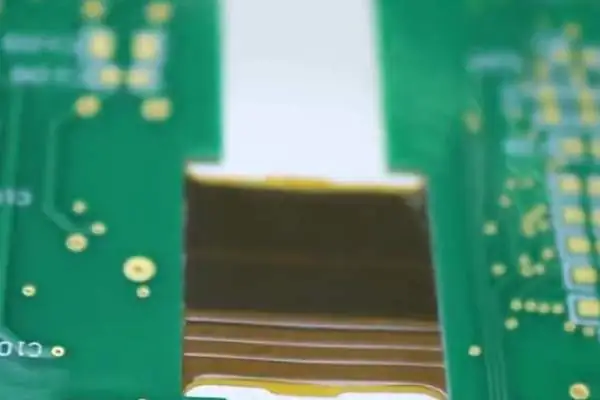
What impressed me most was a military project where the client required stable operation between -40°C and 120°C. We tested seven different bonding methods before finding a material combination that maintained both toughness and temperature resistance.
Sometimes I feel that designing rigid-flex boards is like mediating between people with different personalities—maintaining their individual characteristics while ensuring they can coexist harmoniously. Simply pursuing performance indicators in one area can easily create hidden problems.
Many people tend to overlook a fundamental fact when designing Rigid Flex Boards—materials themselves have a life of their own. I remember truly understanding this when I first saw an entire batch of boards expand and contract due to temperature changes on the production line. Those precisely calculated circuit patterns undergo subtle deformations after the hot-pressing process, like stretched canvas requiring recalibration.
The junction between the flexible and rigid sections is often the most challenging part of the design. Once, we discovered micro-cracks at the drilled hole location, later finding it was due to stress concentration caused by the different expansion coefficients of the two materials. This made me realize that simply pursuing precision indicators can be counterproductive; the key is to give the material room to breathe.
Now, when designing, I intentionally leave elastic buffer zones in the rigid-flex transition area, like giving the circuit board a flexible outer layer. A recent project experienced delamination on a traditional symmetrical board during extreme temperature testing, while our gradient transition design remained intact. This reinforced my belief that the combination of rigid and flexible materials requires a delicate balance, like dance partners.
In fact, the most easily overlooked factor is the human element in the manufacturing process. During a factory visit, I noticed experienced workers would feel the temperature of the board material by hand before removing the cover. This experiential judgment often allows them to detect subtle changes that equipment cannot. This intuitive understanding of material properties is more direct than any theoretical calculation.
What truly determines the reliability of a Rigid Flex Board is often not the highest precision equipment, but a deep understanding of the material’s properties. Just as cultivating plants requires following their growth patterns, designing circuit boards also requires learning to coexist with the nature of materials rather than trying to constrain every aspect with rigid standards.
I’ve always found the most interesting thing about electronic design to be—you never know which step will suddenly surprise you. Take our commonly used Rigid Flex Board, for example. It looks quite advanced, but it’s actually very delicate. Once, a sample our team spent two weeks developing suddenly failed during testing. It turned out to be caused by a seemingly insignificant operation during assembly.
That experience taught me a valuable lesson: sometimes the most advanced processes are the most prone to problems. I remember being extremely careful during the unpacking process, using the latest equipment, but problems still arose. We later discovered the issue lay in a fundamental problem—the thermal expansion coefficients of the materials weren’t properly matched. The rigid and flexible parts expanded and contracted differently with temperature changes, causing micro-cracks at the joint.
In fact, these kinds of problems are impossible to detect in a lab because the testing conditions are too ideal. Real-world usage environments are incredibly diverse; users might take the equipment from an air-conditioned room to direct sunlight, and even a few minutes of temperature difference is enough to expose those tiny defects. I later developed a habit of subjecting each design to extreme environments for several days, repeatedly switching between high and low temperatures, sometimes even deliberately dropping it.
Speaking of failure analysis, I think the most important thing isn’t finding the problem, but understanding the logic behind it. Once, we encountered a particularly strange faulty circuit board that worked intermittently. After much investigation, we discovered that the adhesive layer in the flexible part became slightly conductive under certain humidity levels. These kinds of problems are difficult to spot even with the most sophisticated instruments unless you actually disassemble the board and analyze it piece by piece.
Now, when I design, I pay more attention to holistic thinking. The advantage of Rigid Flex Boards is their ability to adapt to complex spaces, but this also means that each part must consider the characteristics of other parts. Rigid areas need to ensure strength, flexible areas need to ensure durability, and the transition zone between the two is crucial. Sometimes, for overall reliability, I even deliberately lower the performance parameters of a certain part.
Actually, electronic product design is quite similar to cooking; too little heat won’t work, and too much heat won’t work either. The art of combining rigidity and flexibility lies in finding that perfect balance. Now, every time I review a design proposal, I ask myself, “Will this design still be this reliable three or five years from now?” rather than just looking at whether it works normally now.
These experiences are all hard-earned from trial and error, so I now particularly understand why some senior engineers are so meticulous about certain details. After all, in the electronics industry, a small oversight can mean the failure of the entire project, and such lessons are often more profound than any theory.
I’ve always found the most fascinating aspect of Rigid Flex Boards to be their combination of rigidity and flexibility. I remember being particularly amazed when I first saw the sample—it could be folded repeatedly like a book page without breaking. However, after working with it more, I realized that many people’s understanding of it is still limited to “a bendable circuit board.”
The real test of design skill lies in balancing the rigid and flexible areas. We once stumbled on a smartwatch project—in pursuit of thinness, we made the flexible section too narrow, resulting in cracks after less than 10,000 bends. We solved the problem by adopting a stepped transition design, which made me realize that the rigid section not only mounts components but also distributes stress.
Now, when working on medical endoscope projects, we pay special attention to the selection of low-loss materials. After all, signals need to be transmitted through such thin lines and undergo more than ten bends; ordinary materials simply cannot withstand it. The new substrate we recently tested performed well; even in high-temperature and high-humidity environments, signal attenuation remained within acceptable limits.
Speaking of bending tests, I don’t blindly trust lab data. In actual use, where would you expect mechanical movement at a fixed angle? For example, the opening and closing angles and force of foldable phones vary daily, not to mention the impact of temperature differences. We prefer to simulate real-world scenarios by subjecting samples to random bending at different temperatures, which reveals many issues overlooked by standard tests.
Once, while disassembling a flagship phone, I noticed their ingenious handling of the rigid-flex interface—not a simple splicing, but rather allowing the flexible layer to extend into the rigid area like tree roots. This ensures signal integrity while improving bending resistance. This design approach is more valuable than simply piling on parameters.
In the future, I’m more optimistic about the development of rigid-flex technology in wearable devices. Current smartwatches and fitness trackers are still too bulky. If the motherboard could be made into a wristband shape, it would save space and improve comfort. Of course, this presents a greater challenge in materials and manufacturing processes, but some new materials have already shown promising prospects.
I’ve seen too many engineers treat Rigid Flex Boards as a panacea. They always think that as long as they use this design, all space constraints can be solved. But in reality? The most troublesome thing about this type of board is its so-called “rigid-flexible” characteristic. On the surface, it is indeed very flexible! It maintains the stability of the rigid parts while achieving a flexible connection. However, the problem lies in this transition area.
Remember a wearable device project our team worked on last year? We chose this design to achieve a thinner and lighter design. But during durability testing, we found that the signal became unstable after more than 30,000 bends. Upon disassembly, we discovered microcracks at the connection between the rigid and flexible areas. This made me realize a crucial point—the so-called “advantages” are often the most easily overlooked hidden dangers.
Many people believe that as long as the right materials are chosen, everything will be fine. However, what truly determines a product’s lifespan are the unseen design details. For example, what should be the bending radius of the flexible parts? This seemingly simple question directly impacts the reliability of the entire product. I once compared two design schemes with different bending radii and found that even a difference of just 0.5 millimeters could result in a difference of more than double the bending lifespan.
Another easily overlooked factor is the influence of environmental factors on material properties. Temperature changes cause different materials to have different coefficients of thermal expansion, which will continuously generate internal stress during long-term use. I conducted an experiment where the same Rigid Flex Board failed more than three times faster in a high-temperature, high-humidity environment than in a normal environment.
Therefore, when designing now, I focus more on the overall structural harmony rather than simply pursuing the ultimate in a particular parameter. After all, products are meant to be used, not just observed in a laboratory. Sometimes, appropriately increasing the thickness or adjusting the layout can significantly extend the actual lifespan of the product.
This shift in design thinking has taught me a valuable lesson: in the engineering field, there are never perfect solutions, only the most suitable balance point for specific scenarios. Instead of obsessing over a particular technical parameter, it’s more important to consider the problems users will encounter in actual use. After all, even the most advanced technology is just empty talk if it cannot withstand real-world testing.
I’ve been pondering an interesting phenomenon lately: Rigid Flex Boards, touted as combining strength and flexibility, are actually more prone to problems in actual use. On the surface, they seem to combine the advantages of both materials, but the real test is the invisible and intangible “stress.” This is like a lurking killer.
I remember once testing samples, we specifically designed different bending angles. We found that the most frequent problems weren’t in the fully bent sections, but in the small transition area between the rigid and flexible zones. Each bend caused a particularly drastic change in stress in that area. The material had to maintain rigidity while simultaneously deforming, like a person being pulled in two directions at the same time.
Temperature changes are also a hidden killer. Once, we placed samples in a high-temperature environment for cyclic testing. Everything was normal for the first few days, but around the tenth day, fine cracks began to appear in the transition area. This is because different materials expand at different rates when heated, and the accumulated internal stress eventually exceeded the critical point.
I think the root of the problem lies in our pursuit of overly idealistic designs. The constant desire to perfectly blend two properties often overlooks their inherent contradiction. Rigid materials require stability, while flexible materials need deformation; this contradiction is amplified to its extreme at the interface.
Now, when designing, I pay special attention to leaving buffer space in transition zones. For example, I make the bending radius slightly larger than the theoretical value; or I add a protective layer in areas prone to stress. These seemingly conservative approaches actually significantly extend the product’s lifespan.
Sometimes I think the term “rigid-flexible balance” sounds beautiful; however, in engineering practice, perhaps acknowledging the limitations of materials and allowing each to play to its strengths is a more pragmatic choice.
I’ve seen too many rigid-flex boards fail prematurely due to improper design. Many people think that simply connecting the circuitry is enough, but there are many details to consider.
Take Rigid Flex Board, for example; the most easily overlooked aspect is the compatibility between materials. Once, during sample testing, we found that after several temperature cycles, subtle delamination began to appear at the board’s edges. Further analysis revealed that this was caused by a mismatch in the expansion coefficients of the different materials. For example, the commonly used FR4 substrate and polyimide have different degrees of expansion and contraction when heated. If this difference isn’t considered in the design, internal stress will be generated during temperature changes.
The choice of copper foil is also interesting. I’ve encountered people who used ordinary electrolytic copper foil to save money, only to find cracks appearing quickly in areas of repeated bending. While rolled copper foil is more expensive, its grain structure is more suitable for applications requiring frequent bending.
When designing traces, I have a habit of avoiding right-angle turns in bending areas. Rounded transitions not only look better but, more importantly, disperse stress. Furthermore, traces on different layers should ideally be staggered to reduce localized stress concentration.
Another small detail that many people overlook is the placement of vias. I generally advise clients to place vias away from bending areas, leaving at least a few millimeters of safety distance. This is because vias are inherently weak points, and repeated bending can easily cause failures starting from there.
In fact, after working in this industry for a while, you’ll find that good design is often reflected in these details. Sometimes, seemingly unnecessary preventative measures can significantly extend a product’s lifespan.
When working with rigid-flex boards, I’ve found that many engineers fall into a trap—focusing on functionality while neglecting the structural load. In fact, the most critical challenge with rigid-flex boards lies in balancing the mechanical properties of the rigid and flexible areas.
I remember once our team encountered a problem while designing a wearable device. The product performed perfectly in lab tests, but after a month of actual use, micro-cracks appeared at the joints. Analysis revealed that the flexible area had accumulated stress from repeated bending. This lesson taught me that simply pursuing thinness and flexibility while ignoring stress distribution is like walking a tightrope.
Now, when designing, I pay more attention to the overall structural mechanical performance. For example, adding gradient structures in the rigid-flex transition areas avoids stress concentration caused by right-angle bends. Sometimes, seemingly simple adjustments to curvature can increase a product’s lifespan several times over. This isn’t just a matter of drawing skills; it requires the ability to anticipate material properties and stress conditions.
I increasingly believe that good rigid-flex design should be like a human joint. Sufficient flexibility is essential, but the ability to withstand the wear and tear of long-term activity is equally crucial. The hidden stress distribution within the design is often more important than the surface circuit layout.
Some competitors like to attribute problems to materials or processes. However, more often, the issue lies in misjudging mechanical properties during the design phase. For example, excessively pursuing the minimum bending radius while neglecting fatigue life, or sacrificing necessary support structures to save space.
Truly reliable designs require integrating stress analysis into every step. Considering the mechanical environment the product will experience in actual use from the concept stage is far more effective than reactive measures. After all, modifying a product after it’s prototype is often too late.
Recently, I’ve seen some new products overemphasize the bending count of flexible components while avoiding discussions of long-term reliability. This marketing-driven design approach will inevitably reveal its problems sooner or later; users want durable, reliable products, not impressive lab data.
Ultimately, the design of rigid-flex boards requires breaking free from traditional PCB thinking and considering the issue from a structural engineering perspective. Only in this way can we create products that are both aesthetically pleasing and practical.
I’ve seen too many engineers get bogged down in technical specifications when designing Rigid Flex Boards. While thickness coefficients and bending radii are certainly important, the real determinants of product lifespan are often the overlooked details.
I recall a medical device project where the client demanded 100,000 bends according to industry standards. The sample cracked after only 30,000 bends. Upon disassembly, we discovered the problem was the wrong copper foil type. A material with dynamic specifications was used for a static application. Over-design actually led to resource waste.
The copper foil treatment in bending areas requires exceptional care. In one test, a wire broke. The root cause was uneven stress on the copper foil during bending. We later adjusted the extension range of the cover film, allowing the flexible section to better distribute the pressure. This change increased the product lifespan fourfold.
There’s a simple way to judge the quality of a Rigid Flex Board: feel the transition area between rigid and flexible sections for any abrupt steps. A smooth transition is more reliable than any parameter. We once had a batch that met all test standards, but it felt slightly raised to the touch. It was later proven that that batch did indeed have a risk of delamination. Material combinations require practical verification. A theoretically perfect combination may fail during temperature-dependent testing. We are accustomed to conducting extreme environment tests on samples. Cycling from -40°C to 120°C is most effective at revealing problems. Once, we discovered that a certain adhesive became brittle at low temperatures. Timely replacement prevented a batch incident.
The impact of manufacturing processes is often underestimated. The same design documents can produce vastly different results in different factories. Temperature profile control during lamination is particularly critical. Too fast a process leads to stress concentration, while too slow a process impacts production efficiency. Customized adjustments based on material properties are necessary.
Now, when inspecting new products, we first check for stress-relief designs at the rigid-flexible joints. This detail can prevent many potential failures. A recent drone project made improvements in this area. Although costs increased by 5%, the rework rate decreased by 60%, making it more cost-effective in the long run.
A truly reliable Rigid Flex Board should function like a human joint, maintaining structural integrity while providing flexibility. This requires designers to have an intuitive understanding of material properties, not just blindly following design specifications.
Every time I test bending performance, I think about this: A good design should allow the circuit board to bend without feeling any resistance, as natural and fluid as a skilled dancer’s movements. This level of refinement requires repeated adjustments to achieve.
When designing the Rigid Flex Board, I noticed a particularly interesting phenomenon—many people focus on material selection but ignore the most basic laws of physics. I remember once reviewing a proposal, a young engineer confidently declared he could achieve a bending radius of 0.5mm. I asked him if he had ever tried folding a credit card with his fingers. He hesitated for a moment and said it would leave a permanent crease.
That’s the problem. We always want to push the limits, but sometimes we have to respect the nature of the materials. Last time I went to the factory to observe testing, a sample suddenly failed after being repeatedly bent 30,000 times. Upon disassembly, we found spiderweb-like cracks in the copper foil. The nominal bending radius was 1mm, but actual measurements revealed it was only 0.8mm at the corners.
In fact, similar experiences are everywhere in life. If you repeatedly fold a piece of paper, the final crease will always break first. The same principle applies to making Rigid Flex Boards. The key isn’t how much it can bend, but finding the balance point that satisfies both the design and the material’s comfort. I like to leave some leeway in critical areas; for example, if the theoretical calculation requires a 2mm radius, I’ll use 3mm.
I once saw a particularly clever approach: they made the bending area a gradual transition, like a gentle curve on a highway. This prevents stress from concentrating at a single point, distributing it smoothly. Although it takes up a few millimeters more space, the reliability is significantly improved.
Now, when I encounter clients demanding extreme thinness, I always show them the aging test bench. Those prototypes that have undergone 100,000 bends speak for themselves—boards with sufficient radius still have smooth copper foil, while those that are over-compressed are cracked like parched earth. This is more convincing than any theory.
Recently, while working on a smartwatch project, I’ve realized even more that the real challenge isn’t making the board too flexible, but ensuring that the areas that need rigidity are rigid enough, and the areas that need flexibility remain elastic. Sometimes, increasing the bending radius by 0.5mm can double the product’s lifespan. This kind of trade-off may seem simple, but it’s the judgment that engineers most need to cultivate.
In fact, the best designs are often hidden in the details. For example, making the wiring a curved transition in curved areas avoids stress concentration caused by right-angle turns. These seemingly small adjustments, accumulated over time, allow the product to withstand the test of time.
Circuit boards are more than just that green board in a phone
From disassembling old routers to visiting electronics manufacturing plants, I gradually realized
As an electronics enthusiast, I’ve come to understand firsthand the impact of
- Expert en production de petites et moyennes séries
- Fabrication de circuits imprimés de haute précision et assemblage automatisé
- Partenaire fiable pour les projets électroniques OEM/ODM
Heures d'ouverture : (Lun-Sam) De 9:00 à 18:30