

Microvia PCB Quality Control: How Plating Parameters Affect Via Filling Results
As a PCB engineer with years of industry experience, I share a
The world of Fabrication de circuits imprimés is quite fascinating, though I often feel that many people nowadays tend to view new technologies with an almost mystical reverence. It is true that the field of PCB printing has seen plenty of new innovations—for instance, using inkjet technology to apply solder masks sounds pretty cool on paper. But honestly, I’ve seen too many factories adopt new technologies simply to chase trends, only to end up overcomplicating tasks that were previously quite simple.
I recall visiting a small factory last year that had just installed a piece of imported inkjet equipment. The owner enthusiastically declared his intention to phase out their traditional screen printing processes entirely. Yet, when I checked back three months later, I discovered they had secretly kept two of their old-school screen printing machines on standby. Why? Because when dealing with specialized substrates, the adhesion provided by the inkjet method simply couldn’t meet the required standards; furthermore, whenever they received a moderately large batch order, that “prized” new machine simply couldn’t keep up with the production pace.
In my view, the key to selecting a manufacturing process lies in addressing actual needs rather than blindly chasing after the latest high-tech fads. For instance, many of the industrial control boards we’ve produced don’t require highly sophisticated surface finishes, but they absolutely demand a stability lifespan of ten years or more. In such cases, the older, traditional processes actually prove to be far more reliable. While the edges of a screen-printed solder mask may not be quite as razor-sharp, the uniformity of its thickness is excellent—a distinct advantage that becomes particularly evident after undergoing rigorous high-temperature and high-humidity testing.
Of course, I’m not suggesting that inkjet technology is useless. During the small-batch prototyping phase, its flexibility is truly irreplaceable; this is especially true when creating complex patterns or multi-colored markings, as it eliminates the need for plate-making—thereby saving a significant amount of time. The problem, however, is that some manufacturers today are hyping inkjet technology as a “universal cure-all,” which is simply an unrealistic expectation. I once helped a client debug a circuit board where the manufacturer had adamantly boasted about the high precision of their inkjet solder mask process. However, during the surface-mount assembly stage, we discovered that the ink layer was too thin, causing several solder pads to exhibit slight lifting. Ultimately, we had to switch to a screen-printing process and remake the boards to resolve the issue. This experience taught me a valuable lesson: no matter how advanced a new technology is, it must undergo rigorous real-world validation.
Ultimately, PCB manufacturing is much like cooking: you don’t need to use the latest, most high-tech kitchen gadgets for every dish. Sometimes, that well-seasoned cast-iron wok you’re accustomed to yields a dish with far more authentic flavor and “wok hei.” The key is to first determine exactly what kind of “dish” you intend to create, and then decide which tools are best suited for the job. Don’t let yourself be led astray by fancy technical jargon; practicality is the ultimate truth.
My advice to clients nowadays usually goes something like this: If you are working on an experimental project or require rapid iteration, feel free to give the inkjet process a try. However, if you are entering mass production—especially for products where reliability is paramount—it is wiser to prioritize traditional methods that have stood the test of time. After all, PCBs are destined for use in tangible, real-world products; having impressive technical specifications on paper simply isn’t enough.
I’ve recently noticed an interesting trend: some manufacturers have begun combining the two processes. For instance, they might use screen printing for the main body of the board to ensure fundamental performance, while reserving inkjet printing for specific areas that require finer, more intricate detailing. I think this approach is quite clever—isn’t it far superior to being forced to choose just one method exclusively?
I’ve long felt that we need to shift our perspective on PCB printing. Many people fixate on technical parameters—obsessing over minute differences of a few tenths of a millimeter—but this focus is actually somewhat misguided. The factors that truly determine the quality of the finished product are rarely about how fine a line the equipment can print; rather, they lie in the easily overlooked details embedded within the overall manufacturing workflow. For example, fluctuations in workshop temperature and humidity can cause ink to spread unevenly—potentially shifting the alignment by half a millimeter. In this context, ensuring environmental stability is a far more practical priority than chasing after the absolute limits of precision.
During a factory tour, I once observed a veteran technician testing the viscosity of the ink paste by simply dabbing it with the back of his hand—a quick, intuitive gesture that yielded results ten seconds faster than any instrument could. While modern printing technologies are indeed becoming increasingly intelligent, certain forms of traditional, hands-on expertise can still effectively fill the “blind spots” left by data-driven metrics alone. Nowadays, some companies rush blindly to upgrade to high-end equipment, yet fail to even address basic dust control; if lint and debris are floating through a “precision” workshop, even the most advanced machinery won’t be able to produce a compliant product.
Recently, while helping a friend debug a small batch of PCBs, I stumbled upon a curious phenomenon. Using the exact same design files, two different manufacturers both opted for an inkjet printing solution. Yet, in the finished products, one manufacturer’s circuit traces had blurry, indistinct edges, while the other managed to maintain crisp, razor-sharp definition. It was later discovered that the difference lay not in the printer itself, but rather in the varying degrees of plasma surface treatment applied to the substrate during the pre-processing stage. The importance of this “invisible” process is often underestimated.
I believe there is a common misconception in the industry right now: an excessive emphasis on the absolute superiority of a specific technology. In reality, screen printing, inkjet printing, and LDI each have their own suitable applications; the key lies in how they are combined. For instance, in mass production scenarios, using screen printing for the base layer—combined with digital printing for variable data—offers far greater flexibility than putting all one’s eggs in the basket of a single type of equipment. I have seen companies insist on using inkjet printing for full-board solder mask applications, only to encounter blistering issues during soldering because the ink accumulation became too thick.
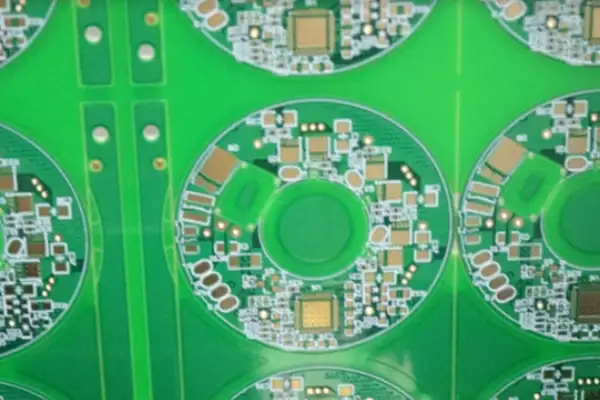
The true test of expertise lies in one’s grasp of the specific characteristics of different materials. Polyimide substrates and FR4 boards exhibit vastly different ink adhesion properties, yet many engineers simply apply the same parameters to both. While debugging flexible circuits in the past, I discovered that standard inks would crack at the flex points; however, after switching to an elastomer-modified formula, the circuit traces remained intact even after being bent tens of thousands of times. This level of material-specific adaptation is far more valuable than merely debating printing precision in the abstract.
Another frequently overlooked point is the disconnect between the design and manufacturing ends of the process. Engineers often design for the absolute minimum line width without fully understanding the actual precision limitations of the factory’s exposure equipment, leading to frequent compensation and rework during production. If manufacturing personnel were involved in the design review process from the outset, many “idealized” designs—which are impractical to manufacture—could be avoided. Our team recently piloted a cross-departmental collaboration initiative, and as a result, the number of design revisions required has dropped by 30%.
It is actually quite fascinating to observe the shifts within the industry. Some smaller manufacturers are now repurposing second-hand equipment and pairing it with proprietary algorithms; surprisingly, in certain niche areas, they are outperforming their larger counterparts. This agile, iterative approach may well represent the true evolutionary path for printing technology. After all, the ultimate yardstick for success is not how technologically advanced a process is, but whether it can consistently produce products that meet specific requirements.
I recently chatted with a few friends who work in the PCB industry and noticed an interesting phenomenon: although everyone is currently touting the advanced capabilities of LDI technology, many factories are actually still relying on traditional screen printing for their solder mask applications—and the results are every bit as good.
A friend who works in the industrial power supply sector told me that the old-school screen printing line at his factory has been running continuously for over a decade, processing at least several hundred thousand circuit boards each year. The key takeaway is that their clients have never once complained about precision issues; after all, the circuitry on power supply boards doesn’t require extreme fine-line resolution, making a 0.2mm line width—which is well within the capabilities of screen printing—more than sufficient for the job. However, when it comes to the shifting landscape of the PCB printing industry, one can certainly feel the impact brought about by LDI (Laser Direct Imaging) technology. Last year, I visited a factory that manufactures components for medical devices; the entire workshop was as pristine as a laboratory. A dozen or so LDI units were lined up in a row, and workers simply needed to adjust parameters on a computer, allowing the laser heads to automatically configure the exposure patterns.
Such a scene would be utterly unimaginable in a traditional screen-printing workshop—there, veteran technicians would have to repeatedly fine-tune screen tension and painstakingly align registration marks, calibrating them inch by inch. Nowadays, young professionals are far more inclined to master computer operations; consequently, digitized production methods like LDI have indeed attracted a significant influx of fresh talent to the industry.
That said, the capital investment required for LDI equipment—often running into the millions—is simply beyond the financial reach of smaller manufacturers. I know one business owner who, two years ago, gritted his teeth and invested in two second-hand LDI machines. He subsequently discovered that the cost of the accompanying photosensitive materials was 30% higher than that of standard inks; now, he has to carefully calculate his profit margins before accepting any new orders.
Conversely, some small-to-medium-sized factories specializing in control boards for home appliances have found a viable middle ground: they utilize LDI for the primary circuitry to ensure high precision, while relegating less precision-critical stages—such as the application of solder mask layers—back to traditional screen printing. This hybrid approach effectively keeps costs in check while simultaneously satisfying clients’ demands for intricate circuitry.
In reality, technological upgrades are rarely a matter of choosing one option to the absolute exclusion of the other. Much like when digital cameras first became widespread, many professional photographers continued to rely on film for specific types of subject matter. The key lies in clearly defining one’s own market positioning; if your business focuses primarily on industrial control equipment or basic electronic products, blindly chasing the latest technology may simply result in unnecessary cost escalations.
Recently, a client of mine—a manufacturer of LED display screens—specifically requested that we use screen printing for the solder mask layer. They argued that the greater thickness achieved through screen printing offers superior protection for circuit boards destined for long-term outdoor use. You see? Sometimes, older technologies can actually provide the best solutions for modern challenges.
Nevertheless, the overarching trend remains quite evident. During a visit to an electronics trade show last week, I noticed that even manufacturers of fishing gear and fish finders were proudly advertising that their products incorporated LDI processing. This sort of subtle, gradual transformation is fascinating to observe; as the entire supply chain begins to prioritize precision and miniaturization, LDI will naturally evolve into a standard industry requirement—much in the same way that one can no longer find a smartphone motherboard produced using traditional screen-printing methods today.
That said, I believe that for at least the next decade, these two distinct processes will continue to coexist side by side. After all, global demand for circuit boards is incredibly diverse—ranging from simple boards found in toy cars to high-density boards used in spacecraft—meaning that every technology can find its own niche. The crucial point is to select the right manufacturing process based on a product’s specific characteristics, rather than blindly following trends.
I’ve recently been contemplating the shifts occurring in the field of PCB printing, and I’ve noticed a rather interesting phenomenon. While everyone is busy discussing the conveniences that inkjet technology can offer, I feel that many people are overlooking the most fundamental issue: the quality of the ink itself is the truly decisive factor.
I recall a particularly striking example I witnessed last year while visiting a small electronics factory. They had invested a substantial sum to acquire the latest inkjet equipment, fully prepared to ramp up production significantly. Yet, they hit a major roadblock at the materials stage; the conductive inks—touted as “high-performance”—consistently suffered from connectivity breaks during actual printing runs, rendering entire batches of circuit boards unusable. Their technicians were forced to repeatedly tweak parameters—a process that, ironically, ended up being even more time-consuming than traditional manufacturing methods.
This reminds me of the early trajectory of digital cameras: no matter how high the pixel count of a sensor, if the quality of the lens doesn’t measure up, the resulting photos will still turn out blurry. Similarly, some manufacturers today overemphasize the precision of their inkjet equipment while conveniently sidestepping the issue of ink stability—which is akin to fitting a high-performance sports car with low-grade tires.
In reality—from a purely physical standpoint—developing functional inks that strike the right balance between viscosity, surface tension, and drying speed is inherently challenging. This is to say nothing of the additional requirement that they must withstand the intense heat encountered during subsequent soldering processes. I’ve seen laboratory samples that developed cracks after less than a week of testing in a climate-controlled chamber; clearly, such materials still have a long way to go before they are ready for industrial-scale application.
Of course, I am not entirely dismissing the potential of this technology. For instance, when working with flexible circuits or specialized substrates—areas where traditional methods often struggle—inkjet printing can demonstrate a unique adaptability. However, at this current stage, I tend to view it more as a complementary tool rather than a complete replacement for existing methods. After all, stability on the production line will always take precedence over theoretical performance specifications.
Some industry peers are prone to hyping up new technologies with extravagant claims, but anyone with actual production-floor experience knows that the true key lies in the seamless compatibility of every single process step. Rather than blindly chasing equipment upgrades, it is far more prudent to first gain a thorough mastery of the characteristics of the materials currently at hand; after all, even the most advanced inkjet system cannot compensate for fundamental flaws inherent in the base materials themselves.
I’ve recently been spending a lot of time pondering the minute details involved in PCB fabrication. Sometimes, when examining the boards delivered from the factory, I find myself wondering: How is it possible for the edges of these circuit traces to be so incredibly crisp and sharp? As it turns out, the answer to that question is far more closely tied to the printing stage of the process than we might initially imagine. I remember one time, after receiving a batch of prototypes, I noticed that the solder mask was consistently misaligned in one specific area. After spending half a day troubleshooting, I finally discovered that the issue stemmed from the inkjet print head operating in an unstable state. This digital approach has indeed opened up new possibilities for manufacturing, allowing us to move away from a complete reliance on traditional screen-printing processes.
Nowadays, for many small-batch projects, using inkjet technology to apply legends and solder masks is actually more cost-effective than traditional methods. Although I initially felt this new technology lacked reliability when I first encountered it, practical application has shown that the yield rate has actually improved significantly.
However, I believe it is still too early to claim that it will completely replace traditional methods. After all, for mass production, the efficiency advantages of established processes remain undeniable. Yet, one trend is becoming increasingly clear: a growing number of specialized PCB substrates are now adopting direct-printing technologies for circuitry—which is truly excellent news for rapid prototyping and development.
What I look forward to most is the realization of a fully digitized PCB manufacturing workflow in the future. Imagine a process where everything—from the circuitry to the solder mask—is entirely data-driven; in such a scenario, prototyping lead times could potentially be reduced to an almost unimaginable degree.
On one occasion, I experimented with using water-based inks to produce a test board, and the results were surprisingly impressive. Although the drying time was slightly longer, the environmental benefits were significantly enhanced—a realization that underscored how the industry is steadily shifting toward greener, more sustainable practices.
Now, whenever I come across a new piece of printing equipment, I find myself paying extra attention to its technical specifications. These seemingly minor advancements are, in reality, quietly revolutionizing the manufacturing methodologies of the entire industry.
Sometimes, while tweaking design files late at night, a thought suddenly crosses my mind: wouldn’t it be wonderful if every single layer of a PCB could be printed simultaneously in a single pass? While that idea might sound a bit naive, who knows? Perhaps in just a few years, it will become the industry standard.
The world of PCB manufacturing is quite fascinating. I’ve seen plenty of engineers excitedly rush their design files to a manufacturer for prototyping, only to stumble and hit roadblocks because they selected an inappropriate manufacturing process. The truth is, every technology has its own unique quirks and temperament; you have to truly understand its nature to master it effectively.
Take, for instance, that batch of boards we produced recently; they featured several extremely tiny identifiers—mere fractions of a millimeter in size. Had we attempted to apply those using traditional screen printing, they would undoubtedly have ended up as nothing more than smudged blobs. Instead, we decided to try inkjet technology, and the results were astonishingly good: the lines were razor-sharp—as crisp as if they had been carved with a knife—and, best of all, we completely bypassed the need for screen-making, saving a considerable amount of time.
That said, inkjet technology isn’t a universal panacea; once the production volume scales up significantly, the associated costs can quickly become prohibitive. In this context, screen printing actually comes across as the more reliable option. Although the initial machine setup can be a bit of a hassle, once it gets going, it runs as steadily and reliably as an old ox pulling a cart.
Speaking of LDI technology, I believe its greatest strength lies in its ability to control fine details. I recall a time when a board we designed featured an exceptionally narrow solder mask bridge—barely a few hundredths of a millimeter wide—which simply couldn’t be produced using standard processes. However, after switching to LDI, we achieved a perfect result on the very first attempt; the level of precision was truly astonishing.
That said, don’t assume that higher precision is always better; sometimes, excessive intricacy can actually become a burden. I know a team that insisted on using LDI for standard consumer electronics boards; as a result, their production costs ended up 30% higher than their competitors’, completely eroding their market competitiveness.
Ultimately, choosing the right manufacturing process is much like choosing an outfit: it all depends on the occasion. For high-volume runs of basic boards, screen printing is more than sufficient. However, when dealing with exceptionally fine circuitry—or when you need samples in a hurry—LDI and inkjet printing can prove invaluable.
What I dread most is encountering designers who, while drafting their layouts, focus solely on aesthetics and completely disregard the limitations of the manufacturing process. I once saw a design draft featuring traces as fine as a strand of hair, yet the designer stubbornly insisted on using traditional manufacturing methods—essentially setting the manufacturer up for an impossible task.
In reality, the best approach is to have a conversation with the manufacturer before you start designing to understand the specific limitations of their equipment. Every manufacturer’s machinery is unique; older machines might struggle to reliably produce trace widths of even 0.1 millimeters, whereas newly acquired equipment might be capable of handling much finer dimensions.
I remember a time when we were preparing to produce a batch of boards that required printing some tiny QR codes. To ensure the job was done right, we visited three different factories specifically to compare their equipment capabilities. We ultimately chose a manufacturer that, while modest in scale, had recently upgraded its inkjet system—and the results turned out to be surprisingly excellent.
So, while PCB manufacturing may appear to be a purely technical discipline, it is, in fact, deeply rooted in human interaction and interpersonal dynamics. Communicating frequently with your manufacturer is far more important than simply burying your head in your design software; after all, even the most beautiful design is utterly useless if it cannot actually be manufactured.
I’ve recently noticed a rather interesting phenomenon: many people seem to believe that PCB manufacturing is as simple as pushing a button. However, anyone who has actually gotten their hands dirty in the process knows just how much trouble a mere few millimeters of error can cause.
I remember the first time I attempted to fabricate a circuit board on my own, I used thermal transfer paper. Back then, I naively assumed that simply printing out the design and ironing it onto the copper-clad board would be all there was to it; however, the edges of the traces ended up riddled with jagged irregularities. It was only later that I realized the print quality directly determines the reliability of the final product. This is especially true for areas requiring precision soldering: even a deviation of just a few tenths of a millimeter can render the entire board completely useless.
Looking back now, the issues we encountered back then were actually concentrated in the printing stage. For instance, if the solder mask coverage is uneven, short circuits can easily occur during soldering. Similarly, if the component markings are blurry or illegible, the assembly process becomes a tedious cycle of cross-checking, resulting in significant time delays.
A friend working on a smart home project once faced a similar issue: the markings on their PCBs weren’t printed clearly enough, causing their pick-and-place machine to repeatedly misidentify components. They eventually resolved the problem by switching to a higher-precision screen-printing technique, ensuring the character height was kept above 1mm. This experience made me realize that, all too often, we focus so heavily on circuit design itself that we overlook these seemingly fundamental details.
In reality, every stage—from initial design to the final product—serves as a test of our understanding of the printing process. For example, selecting different ink types affects the board’s thermal resistance, while adjusting screen tension directly impacts the clarity of the printed patterns. These insights cannot be gained merely by watching tutorials; they require hands-on experimentation and a willingness to learn through trial and error.
I now tend to view PCB fabrication as a holistic system. While circuit layout is undoubtedly important, the quality of the printing process often dictates the board’s actual performance. Sometimes, investing a little extra time to fine-tune printing parameters proves far more effective than repeatedly revising the circuit design. After all, even the most brilliant circuit design will yield lackluster results if the printing stage falls short.
I recently experimented with Laser Direct Imaging (LDI) technology for prototyping and discovered that it imposes much stricter requirements regarding ambient temperature and humidity compared to traditional methods. However, the payoff is the ability to achieve much finer line widths—potentially even below 0.05mm—which is particularly critical for high-frequency circuits.
Ultimately, PCB fabrication is a process that demands constant refinement and adaptation. Every problem encountered serves as an opportunity to accumulate new experience—experience that is often far more practical and valuable than theoretical knowledge alone.
I’ve long felt that when discussing PCB manufacturing, people tend to focus too heavily on the high-tech, sophisticated machinery while overlooking the most fundamental stages. Take the printing step, for instance: it essentially serves as the “rough draft” for the circuit board; if that initial draft isn’t executed properly, no amount of subsequent processing will be able to salvage it. I’ve witnessed far too many instances where entire batches of boards had to be scrapped simply because the initial printing was substandard. For example, in the production of double-sided PCBs, a micron-level misalignment of the bottom-layer pads can prevent component leads from making proper contact during surface mounting, thereby leading to cold joints or short circuits. Such defects are notoriously difficult to detect fully during subsequent testing phases; they often remain hidden until the final product assembly stage, at which point the resulting rework costs frequently amount to several times the value of the raw materials themselves.
I recall visiting a factory once where I observed them using an old-fashioned screen-printing machine to produce sample boards; it took seven or eight iterations of fine-tuning before they finally met the quality standards. As the veteran technician made his adjustments, he muttered about how this traditional method relies too heavily on the operator’s experience—noting that a novice would be utterly incapable of striking the delicate balance between ink thickness and positional accuracy. Yet, viewed from another angle, this type of craft-intensive work actually fosters a deeper, more profound understanding of the underlying process principles. The veteran technician could predict how the ink would spread simply by observing the interplay between the squeegee angle and the screen tension; this intuitive grasp of the process—forged through years of accumulated experience—is something that automated equipment struggles to replicate. On one occasion, I witnessed him resolve an issue involving distorted solder pads—caused by fluctuations in ambient temperature—solely through manual adjustments based on tactile feel. This capacity to adapt and respond effectively to unforeseen circumstances represents one of the most invaluable assets of traditional manufacturing processes.
Nowadays, an increasing number of factories are adopting digital PCB printing technologies, which offer distinct advantages—particularly when fulfilling small-batch orders. Just last week, a client brought me a sample board produced via inkjet printing for comparison; under identical line-width specifications, the edge definition demonstrated a marked improvement—elevating the quality by a full tier compared to screen-printed counterparts. However, this new technology imposes more stringent requirements regarding material compatibility; not every type of ink is suitable for use. For instance, certain functional inks require a specific viscosity range to ensure the proper operation of the piezoelectric print heads, while UV-curable inks necessitate careful consideration of the interplay between light transmittance and curing rates. Crucially, the surface energy of the substrate material must maintain an appropriate differential relative to the surface tension of the ink; failure to achieve this balance can result in poor wetting or excessive ink spreading.
Interestingly, the choice of printing method can, in turn, influence the design philosophy itself. For example, knowing that a high-precision inkjet process will be utilized in the subsequent manufacturing stage empowers designers to specify narrower line widths; conversely, when traditional screen printing is selected, designers will proactively incorporate additional design margins to accommodate the process limitations. This dynamic interplay—the mutual constraints and dependencies between successive manufacturing stages—often proves far more fascinating than the mere pursuit of isolated technical parameters. A recent smartwatch project serves as a prime example: by adopting Direct Laser Imaging (DLI) technology, the team successfully reduced the antenna trace width to a mere 25 microns while maintaining a positional accuracy of ±3 microns—a level of precision that would be virtually unattainable using traditional manufacturing methods. However, this advancement also necessitated that the design team re-evaluate and relearn their impedance calculation protocols, as the heightened precision in line widths meant that variations in the dielectric layer thickness emerged as a new, critical factor influencing the overall electrical performance. I have always maintained that the quality of PCB printing cannot be judged solely by equipment specification sheets. During the acceptance testing of a new production line last year, I discovered that printers of the exact same model—sourced from different manufacturers—exhibited a stability variance of over 30%. It later became apparent that this discrepancy stemmed primarily from seemingly minor details: specifically, workshop temperature and humidity control, and adherence to standardized operating procedures. For instance, one facility strictly enforced a 30-minute environmental acclimatization waiting period when changing materials, whereas another immediately powered up and commenced production; consequently, the latter facility produced batches of boards suffering from insufficient ink adhesion. Closer observation revealed that even the choice of gloves worn by operators—cotton versus nitrile—could impact the cleanliness of the substrate surface; indeed, it is often these management nuances at the microscopic level that prove decisive in determining overall quality.
Several projects I have recently encountered are attempting to integrate AI-driven inspection into the printing stage. One manufacturer installed cameras at the output of every printer to capture real-time images and detect deviations; over a three-month period, their defect rate dropped by 15%. This approach—combining traditional manufacturing processes with intelligent monitoring—may prove more pragmatic than simply upgrading equipment in isolation. The algorithms they developed are capable of identifying defect patterns—such as pinholes and jagged edges—that are often imperceptible to the human eye; furthermore, by analyzing the morphology of ink dot diffusion, the system can even predict aging trends that may manifest three months down the line. Even more ingeniously, the system autonomously learns the operational habits of different staff members; when it detects that a novice operator is at the controls, it automatically increases the sampling frequency. This dynamic adjustment strategy ensures quality control without compromising production efficiency.
Ultimately, regardless of how technology evolves, the core objective of PCB printing remains constant: finding the optimal balance between quality and cost. I have witnessed far too many instances where a blind pursuit of the latest, cutting-edge equipment ultimately resulted in failure due to prohibitive operational costs; conversely, solutions that prioritize selecting the appropriate process based on specific product characteristics tend to achieve far greater longevity and success. After all, even the most advanced technology must ultimately serve the practical demands of actual production. Consider, for example, an automotive electronics manufacturer that steadfastly utilizes modified semi-automatic screen printers to produce engine control units. Although the throughput speed of this equipment is only 60% that of fully automated systems, its exceptional adaptability to thick-copper substrates resulted in an overall yield rate that was 12 percentage points higher. This wisdom—the strategic selection of processes based on inherent product characteristics—is often a subject far more worthy of in-depth exploration than the technology itself.
While recently observing a master technician calibrating new PCB printing equipment on the workshop floor, a curious phenomenon suddenly struck me: nowadays, whenever the subject of circuit board manufacturing arises, everyone seems eager to discuss the degree of automation involved, yet very few people pay any heed to the subtle nuances of the underlying, fundamental manufacturing processes. Take the humble screen stencil, for instance: our factory currently retains three sets of screen-printing equipment spanning different eras—ranging from manual to semi-automatic, and finally to fully automatic systems. With every transition between these setups, one can perceive subtle shifts in how the ink penetrates the substrate.
I recall a rather classic scenario we encountered last month while fine-tuning a new product: using the exact same formula of solder mask ink, the semi-automatic equipment consistently produced jagged edges; yet, when we switched to the older, manual screen-printing method, it yielded a remarkably full and uniform coating. Our veteran process engineer crouched beside the machine, puzzling over the issue for quite some time, before finally identifying the culprit: the uniformity of the mesh tension in the newer-generation screens was negatively impacting the ink transfer efficiency. This kind of insight is never found in equipment manuals; it relies entirely on a tactile intuition honed through years of accumulated experience.
There is a fascinating paradox currently at play within our industry: the more factories strive for total automation, the greater their need to preserve the inherent flexibility of certain traditional processes. A recent batch of circuit boards for medical equipment serves as a prime example: the client demanded that the printed characters achieve a specific, three-dimensional tactile effect. Our inkjet printers failed to meet the required thickness specifications after more than a dozen attempts; ultimately, the problem was resolved by employing a modified screen-printing technique. Those “revolutionary” new technologies, so often touted as game-changers, frequently find themselves having to compromise and coexist with traditional methods in real-world applications.
Sometimes, when I observe our young engineers poring over computer simulations and tweaking parameters, I suggest they spend half a day down in the ink-mixing workshop. The factors that truly determine printing precision are not limited to equipment parameters alone; they also include seemingly insignificant variables—such as how fluctuations in room temperature affect ink viscosity. During a night shift once, a sudden downpour caused a rapid shift in humidity, resulting in a slight deformation across an entire batch of screen stencils. Had our veteran engineer not reacted immediately to adjust the squeegee angle, we would have faced the costly loss of over three hundred circuit boards.
In truth, it is rather regrettable that so many factories today relegate their traditional screen-printing sections to obscure corners of the facility. Those yellowed, aging machines serve as tangible records of our entire industry’s technological evolution. I have witnessed the solder-masking process for even the most intricate BGA boards—a task where, in practice, the on-site engineers still rely on a hybrid approach that combines laser positioning with manual fine-tuning. Technological iteration is rarely a simple matter of one method completely replacing another; rather, it resembles a process of mutual interpenetration between different layers of manufacturing technique.
As a PCB engineer with years of industry experience, I share a
In multilayer PCB production, substrate stability is often the key to achieving
In the field of medical electronics, attention often focuses on complex algorithms;
- Expert en production de petites et moyennes séries
- Fabrication de circuits imprimés de haute précision et assemblage automatisé
- Partenaire fiable pour les projets électroniques OEM/ODM
Heures d'ouverture : (Lun-Sam) De 9:00 à 18:30