

Heat Dissipation Challenges and Solutions in PCB Circuit Board Design
Circuit boards are more than just that green board in a phone
I’ve always felt that many people’s understanding of high-frequency circuits remains at the theoretical level. Last year, while helping a friend debug a wireless module, I discovered that ordinary PCBs are like leaky pipes in high-frequency environments. Those seemingly smooth traces actually make the signal fragmented. A common misconception is that neat wiring guarantees signal quality. However, once you’ve truly worked on microwave PCB design, you’ll understand that these are two entirely different things. I remember being astonished by the precision of a professional microwave PCB manufacturer’s work the first time I saw it—they even considered the molecular-level properties of the substrate material.
Ordinary circuit boards are like building a house, while microwave PCBs are like sculpting crystal. Electromagnetic field changes at every corner must be calculated, and even the copper foil thickness must be accurate to the micrometer level. I’ve seen too many projects fail because of neglecting these details; for example, once during an antenna array test, a poorly designed ground plane caused complete phase misalignment.
Many engineers are still using low-frequency thinking to handle high-frequency problems, which is like assembling a race car with bicycle parts. Especially with the widespread adoption of 5G devices, the requirements for signal integrity are increasingly stringent. Sometimes, even a tiny impedance mismatch can paralyze the entire system—a problem that’s impossible to detect on ordinary PCBs.
Choosing a reliable microwave PCB manufacturer becomes crucial. They not only need to understand circuit design but also be materials scientists and electromagnetics experts. Good manufacturers can help you translate theoretical parameters into practical performance, while bad ones can ruin even the most perfect design.
I increasingly feel that this field needs more interdisciplinary thinking. Simply drawing circuit diagrams is no longer enough; you also need to understand how electromagnetic waves propagate in a medium and interact with various interfaces. This is probably where traditional electronics engineers most need to catch up.
I’ve always found the field of microwave PCBs particularly interesting. It’s not like consumer electronics, which is talked about every day, but it truly supports the technological fabric we don’t see in our daily lives. I remember chatting with a friend who works on communication base stations, and he mentioned that the performance requirements for microwave circuit boards used in base stations now are several times higher than they were five years ago. This made me realize that the smooth experience we have when watching videos and making phone calls is actually due to the silent upgrades of these precision components.
Choosing a reliable microwave PCB manufacturer is quite a test of judgment. Some manufacturers excel at making conventional high-frequency boards, but they falter when faced with scenarios requiring special dielectric constants or high-temperature resistance. I’ve worked with a small to medium-sized manufacturer that specializes in PCB boards for millimeter-wave radar. Although small in scale, their engineering team works alongside clients to debug impedance matching issues. This collaborative model is more valuable than simply buying and selling circuit boards—after all, even the shape of the solder pads affects performance when microwave signals are transmitted on a PCB.
Many industries are now expanding into higher frequency bands, such as the 77GHz radar used in autonomous vehicles. This is a game-changer for traditional PCB manufacturing processes. While ordinary circuit boards might only require attention to line width and spacing, microwave PCBs must consider the dielectric loss tangent and even the surface roughness of the copper foil. A common misconception is that increasing frequency simply means reducing circuit size; in fact, the phase stability of the electromagnetic waves within the board material is crucial. It’s like building a highway—narrowing the road doesn’t increase speed; you also have to consider the road surface’s adhesion to the tires.
Recently, I’ve noticed a trend: many medical devices are starting to use microwave PCBs for imaging probes. This requires the circuit board to not only have stable high-frequency characteristics but also meet biocompatibility standards. This cross-domain application expansion is forcing manufacturers to push beyond their technological comfort zones. Like the skin detection probe I saw before, its PCB substrate needs to possess both flexibility and low-loss characteristics—a composite requirement rarely seen in traditional microwave frequency band applications.
Ultimately, improving microwave PCB manufacturing is never a single-point breakthrough. It requires collaborative progress in materials science, electromagnetic simulation, precision machining, and many other areas. Sometimes, looking at those circuit boards with metal shielding in the lab, I feel that there’s so much knowledge hidden within those thin laminated structures. Perhaps it’s this unseen technological depth that keeps this field uniquely attractive.
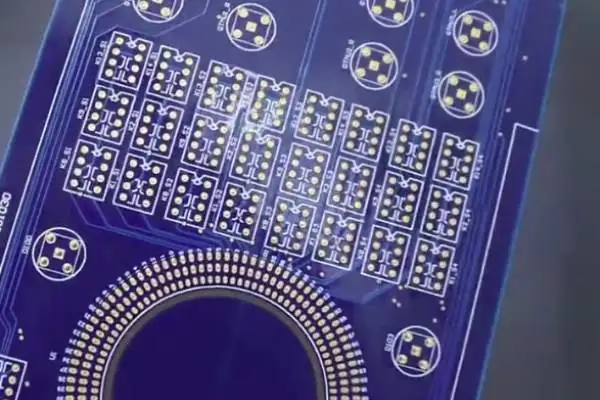
Recently, I was chatting with a friend who works in communications equipment and noticed a rather interesting phenomenon—many manufacturers are now striving to make microwave PCBs smaller and smaller. This reminded me of when I first entered this industry.
Back then, everyone generally thought that as long as the signal could be transmitted, no one cared much about the size of the circuit board. But now it’s different, especially with 5G equipment having particularly high space requirements. Antennas need to be crammed into all sorts of oddly shaped corners.
I remember once visiting a microwave PCB manufacturer’s production line. Their workshop had dozens of substrate samples made of different materials. The engineer pointed to a palm-sized board and said it was a high-frequency microwave PCB used in base stations.
I was quite surprised at the time—such a small board bearing such a heavy burden. Later, I realized this was an inevitable trend in technological development.
Now even automotive radar uses similar processes. However, I think the aerospace field is still the most technologically demanding.
Last year, a project required a special antenna board. The client required it to operate in extreme temperatures. We tried materials from three different manufacturers before finding the right one. This experience made me realize how important it is to choose the right PCB supplier.
Sometimes, looking at these precision circuit boards, I feel they are like the capillaries of modern technology. Inconspicuous yet crucial, especially with the increasing number of IoT devices.
I always believe that good design should balance performance and cost. I’ve seen too many examples of pursuing parameters at any cost.
What I admire most is the craftsmanship of veteran workers—they can judge subtle differences in the board material based on experience.
This accumulation of experience is more valuable than any theory.
I’ve worked with many microwave PCB manufacturers and noticed a fascinating phenomenon: many focus on post-processing while neglecting the importance of the materials themselves. Last year, a project required a 40GHz array antenna. We tested boards from three different suppliers, and the performance differences from the same design were surprisingly large.
Later, disassembly and analysis revealed the problem lay in the most fundamental element: the copper foil. The surface roughness of ordinary rolled copper at high frequencies is like a bumpy road, resulting in over 15% higher energy loss than expected when signals pass through it. One supplier insisted on using ultra-low profile copper foil, which, although more expensive, directly improved insertion loss by 20% in actual tests. This made me realize that when choosing a microwave PCB manufacturer, it’s more practical to check the specifications of the copper foil they use than to inquire about back-drilling precision—if the basic materials are subpar, no amount of sophisticated subsequent processes can compensate.
Many manufacturers now like to emphasize the number of laser drilling machines or lamination equipment they have, but those truly knowledgeable will pay closer attention to their material supply chain. For example, while some manufacturers claiming to use Rogers boards can provide test reports showing dielectric constant fluctuations within 0.02 across different batches, others can’t even clearly specify the type of copper foil. I recently encountered a case where a manufacturer boasted back-drilling accuracy of ±0.03mm, but due to the use of cheap copper foil, phase consistency collapsed across the entire line.
In reality, high-frequency circuits are like building a house; if the foundation isn’t solid, even the most expensive exterior tiles won’t support the weight. I strongly recommend having the manufacturer send samples of several basic materials before making microwave PCBs, and then testing the insertion loss and phase stability yourself. Sometimes changing the copper foil supplier is more useful than worrying about plated via uniformity—after all, due to the skin effect, current only flows a few micrometers deep on the conductor surface; a roughness reduction of 0.2μm might be more effective than doubling the copper plating thickness.
The most outrageous example I’ve seen is a military project requiring 10-layer hybrid laminates. The manufacturer focused their marketing on laser blind via technology, but the first batch of boards blistered extensively during temperature difference testing due to insufficient copper foil peel strength. Later, I switched to a microwave PCB manufacturer specializing in the aerospace field. Their first question was about the operating temperature range and bending radius; they weren’t in a rush to quote a price. This approach was truly reliable.
Ultimately, finding a supplier is like choosing a marriage partner. Just looking at the dowry list isn’t enough; you have to experience the practicalities to know if they’re a good fit. Now, when choosing a partner, I deliberately throw out a few technical questions about materials, such as how they handle matching the thermal expansion coefficients of different dielectric layers. Quick-responding manufacturers can usually even list out processing parameter adjustment schemes on the spot, while less skilled ones just repeatedly recite parameter tables from their brochures.
I recently chatted with an antenna engineer and discovered an interesting phenomenon. Many people think microwave PCBs are just ordinary circuit boards with special materials—this idea is actually quite misleading.
Anyone who has truly worked in this field knows that the problem is never the substrate itself, but rather the completely uncontrollable behavior of electromagnetic waves at the microscopic level. A friend working on a radar project complained to me that they initially chose an ordinary PCB manufacturer to save money, but the signal attenuated by 40% along the transmission path—like a highway suddenly turning into a country road.
The most troublesome thing about RF design is those invisible interferences. Last year, I visited a lab where they were debugging a 77GHz automotive radar board using a vector network analyzer. They discovered coupling between two seemingly unrelated lines, like listening to a play through a wall. This problem wouldn’t occur in low-frequency circuits, but in the microwave band, where wavelengths are only a few millimeters, even the smallest imperfections are amplified.
I particularly admire the attitude of some microwave PCB manufacturers towards impedance control. They intervene during the board curing stage, rather than trying to fix it after etching. This is like a tailor considering the pattern while weaving the fabric, rather than altering it after it’s finished.
Currently, some companies are rushing into 5G base station boards, neglecting the more fundamental testing equipment market. In fact, manufacturers capable of stably producing high-performance probe cards are thriving because the consistency requirements for these products are almost obsessive, yet the profit margins are much larger than in a red ocean market.
Recently, I’ve noticed a trend: many companies that originally made military RF boards are now venturing into the medical imaging field. This is a smart choice. Both have similar signal-to-noise ratio requirements, but the iteration cycle of medical equipment is clearly more favorable. However, the biggest challenge in this transformation is talent—people who understand both electromagnetic fields and biomedical engineering are harder to find than rare metals.
Once, I saw a satellite communication board at a research institute covered with a maze of gold traces. The engineer explained that it was using microstrip lines to simulate waveguide functionality. This design philosophy completely transcends the traditional PCB framework; it’s more like carving electromagnetic field channels onto a silicon substrate.
Ultimately, the most fascinating aspect of this industry is its constant balance between art and science. It requires the rigor of a mathematician and the intuition of an artist, and only those who can master both can truly propel microwave PCBs into uncharted territories.
Recently, I chatted with a friend who works in automotive radar. He mentioned that many manufacturers easily fall into a misconception when selecting microwave PCBs: they always think the more expensive the material, the better.
That’s not the case.
While signals at microwave frequencies are indeed very sensitive, performance isn’t solely affected by the substrate itself.
I’ve seen numerous cases where PCBs using top-tier low-loss materials suffered performance degradation due to substandard manufacturing processes. For example, once, a team developing base station antennas chose a particularly high-quality PTFE substrate, but the dielectric constant fluctuated because the temperature wasn’t properly controlled during lamination.
This made me realize that finding the right microwave PCB manufacturer is more important than choosing the right materials. Good manufacturers can help you truly realize the full potential of materials. They understand how to handle the thermal expansion of soft materials like PTFE and how to control the drilling precision of ceramic fillers.
Sometimes, even ordinary FR4 can achieve good results with special processing.
The key is to strike a balance based on the specific application scenario. Not all high-frequency circuits require the highest-end materials.
For example, in cost-sensitive automotive radar projects, using medium-loss but more stable hydrocarbon resins combined with precision impedance control technology can achieve better cost-effectiveness.
Truly professional manufacturers will offer customers multiple options rather than simply recommending the most expensive.
They focus more on optimizing overall performance through design and process compensation, such as reducing reliance on extreme material specifications by optimizing the wiring stack-up structure.
I think this industry is shifting from simply competing on material parameters to focusing more on the ability to provide comprehensive solutions.
I’ve always found choosing a microwave PCB manufacturer quite interesting. Many people immediately focus on how advanced the equipment is or how low the price is—but these aren’t the most crucial factors.
What truly determines whether a circuit board is usable are often the unseen factors.
Take material selection, for example—sometimes you receive a design that seems perfect, but the actual product doesn’t perform well; it turns out the wrong materials were chosen. The characteristics of materials differ much more at different frequencies than imagined; you can’t simply use any high-frequency board.
I’ve seen too many cases—the simulation curves look amazing during the design phase, but due to the manufacturer’s insufficient understanding of material properties, parameter settings during production deviate, resulting in significantly reduced performance.
A good manufacturer should be able to discuss material selection with you—they have experience in various application scenarios and know which materials perform more stably at specific frequencies, which is far more useful than simply looking at datasheets.
Speaking of simulation, I think there’s a misconception—many people over-rely on software, neglecting the value of practical experience.
Simulation is certainly important, but it’s ultimately based on an ideal model—real circuit boards have vias, pads, and various non-ideal factors, all of which affect the final performance.
Once, during a millimeter-wave project, the simulation showed everything was fine, but the manufacturer, based on experience, pointed out that a certain transition structure was prone to problems in actual manufacturing and suggested we adjust it. Sure enough, after following his advice, we succeeded on the first try.
This kind of experience accumulated through practice is the most valuable—it can save your design a lot of trouble.
The same is true in the manufacturing process—the level of precision directly determines the boundaries of the design. A difference of a few micrometers in linewidth can completely mess up the impedance matching.
I appreciate suppliers who can clearly explain the manufacturing details—they will tell you why a certain processing technology was chosen, what to pay attention to when drilling different materials, and even specific details like temperature control during lamination. These seemingly trivial details are often the key to success or failure.
Ultimately, finding a microwave PCB partner is like finding a doctor—a reputation alone isn’t enough; you need to see if they’ve handled similar cases and can provide practical solutions tailored to your specific needs.
A good manufacturer should be a partner in solving problems, not just a processing plant—they understand materials and processes, and more importantly, they know how to connect design and manufacturing to truly bring ideas to life.
In this industry, the two types of people you should avoid the most: those who only manufacture according to blueprints and those who talk a lot about theory but are detached from reality—truly valuable collaborations are always built on practical experience and professional judgment.
I recently chatted with an antenna engineer and discovered an interesting phenomenon—many people nowadays only focus on material parameters when discussing high-frequency circuits. While choosing a low-loss substrate is indeed important, the truly decisive factors in microwave PCB performance are often the easily overlooked details. For example, once when we tested a millimeter-wave radar board, we used boards with the same dielectric constant from two different microwave PCB manufacturers, and the phase consistency differed by a full 15 degrees.
This reminded me of a pitfall I encountered early in my RF design career. I thought that completing the circuit layout was all that was needed, until I measured the antenna pattern in an anechoic chamber and discovered the problem—due to improper packaging grounding, the sidelobe level in the 5G band spiked by 8dB. Later disassembly revealed that parasitic radiation was generated by the gap between the metal casing and the PCB ground. This subtle effect is negligible at low frequencies, but once in the microwave band, even a 0.1mm assembly error makes the electromagnetic field distribution unpredictable.
Some manufacturers are now attempting to integrate antenna arrays directly within the package, which is an interesting approach. However, it’s important to note that when electromagnetic waves propagate within the dielectric, even the particle size of the molding compound can alter the effective dielectric constant. The most extreme case I’ve seen was a Wi-Fi 6E module where batch variations in the molding compound caused a 300MHz shift in center frequency during mass production.
In fact, rather than chasing new materials, it’s more effective to thoroughly understand the boundary values of existing processes. Take the most common example, microstrip lines: impedance fluctuations at different locations on the same board can reach ±7%, due to microscopic changes in linewidth caused by differences in etching solution flow rates. Experienced microwave PCB manufacturers address this through dynamic compensation curves—a technique rarely mentioned in technical white papers, yet crucial for ensuring mass production consistency.
Recently, while testing a terahertz sensor board, I discovered a phenomenon: when the circuit feature size approaches one-tenth of the wavelength, the surface roughness of the copper foil begins to dominate the loss characteristics. Conventional rolled copper in the 110GHz band has 40% higher additional losses than low-roughness copper foil; this difference is enough to reduce system sensitivity by two levels. Therefore, sometimes seemingly ordinary material selection can be the deciding factor in high-frequency design.
The conclusion repeatedly verified in the lab over the years is that microwave circuit performance is actually the result of a trade-off between design, materials, and manufacturing. Simply emphasizing the advantages of a single aspect is not very meaningful; what is truly needed is a comprehensive quality control awareness across the entire chain. Just as a good chef doesn’t just boast about the origin of their ingredients, the key is knowing how to use heat control to bring out the true flavor of the ingredients.
I’ve always found choosing a reliable microwave PCB manufacturer particularly interesting. Many people think that just finding a factory that can make high-frequency boards is enough. That’s completely different.
I remember last year our team evaluated several suppliers. One manufacturer boasted that they could make 40GHz RF boards. The problem became apparent as soon as the samples arrived and were tested—the dielectric constant fluctuated so much that it was unusable in high-precision radar systems. This experience taught me a valuable lesson: being able to manufacture microwave PCBs and being able to stably manufacture high-performance microwave PCBs are two completely different things.
Many manufacturers now advertise that they have mastered special processes. But the real test of skill lies in the stability during mass production. Especially in applications like phased array antennas, even slight differences between boards from the same batch can degrade the performance of the entire system.
I appreciate manufacturers who are willing to take the time to understand the design intent. Once, a partner specifically adjusted the compensation design at a transmission line corner; their engineers proactively discussed why this was necessary instead of simply manufacturing according to the drawings. The value of this interaction far exceeds mere production service.
Recently, some domestic suppliers I’ve encountered have made significant progress, especially in high-frequency boards used in 5G base stations. It’s clear they’ve put real effort into this area. However, achieving military-grade reliability standards will still require time and experience.
Ultimately, finding a supplier is like finding a partner; the key is their serious attitude towards technology. After all, in the microwave field, any oversight in any detail can ruin the entire project.
Circuit boards are more than just that green board in a phone
From disassembling old routers to visiting electronics manufacturing plants, I gradually realized
As an electronics enthusiast, I’ve come to understand firsthand the impact of
- Expert en production de petites et moyennes séries
- Fabrication de circuits imprimés de haute précision et assemblage automatisé
- Partenaire fiable pour les projets électroniques OEM/ODM
Heures d'ouverture : (Lun-Sam) De 9:00 à 18:30