

Why the Best PCB Supply Chains Are Built Like Relationships, Not Transactions: Lessons for Satellite Communication PCB Programs
What actually makes a long-term PCB supply chain partnership work — shared
I’ve always felt that the process of designing a printed circuit board (PCB) is somewhat akin to building with LEGO blocks. This analogy struck me just the other day while I was tinkering with the Crossover Network PCB for an audio device—aren’t those dense arrays of pins just like the studs and tubes on LEGO bricks? The only difference is that, in circuit design, we must first figure out exactly where each “brick” belongs by mapping it out in the schematic diagram.
I once made a rookie mistake—accidentally swapping the input and output pins of an operational amplifier (op-amp). More recently, while delving deeper into circuit design principles, I observed a rather interesting phenomenon: many engineers, when designing Crossover Network PCBs, seem fixated on arranging their traces in perfectly neat, orderly rows. In reality, this obsession with symmetrical aesthetics can actually stifle design flexibility.
I recall an instance where I was helping a friend revise the design for an audio device. The original layout strictly segregated the high-frequency signal paths from the low-frequency ones. However, during actual testing, we discovered that the mid-range frequency band was consistently plagued by faint interference. I subsequently experimented with allowing the two signal traces to intersect within a specific region of the board—and, counter-intuitively, this resolved the problem entirely. Of course, this intersection wasn’t executed arbitrarily; it required precise calculations regarding signal phase relationships and impedance matching.
Nowadays, many designs tend to rely heavily on standardized modular components. Yet, I’ve found that truly exceptional circuit designs often require a willingness to break free from conventional thinking. For instance, when handling the mixing of multiple signal channels, the traditional approach is to isolate each channel as much as possible; I, however, prefer to allow them to interact—or “cross over”—within a carefully controlled environment.
On one occasion, while testing a new type of electronic component, I deliberately arranged the signal paths for different frequency bands to interweave across specific layers of the PCB. The result was an unexpected revelation: this design approach not only saved 30% of the available board space but also significantly enhanced the purity and integrity of the signal. The key lies in mastering the precise positioning and angles of intersection points; much like the design of a transportation hub, judiciously placed crossovers can actually enhance overall efficiency.
I increasingly feel that circuit design is akin to painting an abstract masterpiece. At times, lines that appear to intersect in chaotic disarray actually harbor a subtle, exquisite balance. The crucial element is understanding the unique characteristics of each signal and the intricate interactions between them—rather than rigidly adhering to textbook routing rules.
A project I’ve been working on recently embraces this very philosophy. By implementing meticulously calculated crossover structures at critical nodes, we not only resolved a previously intractable ground interference issue but also boosted the entire system’s signal-to-noise ratio by 2 dB. This experience has further solidified my conviction that, occasionally, breaking conventional norms with unconventional crossover designs can yield truly unexpected and superior results.
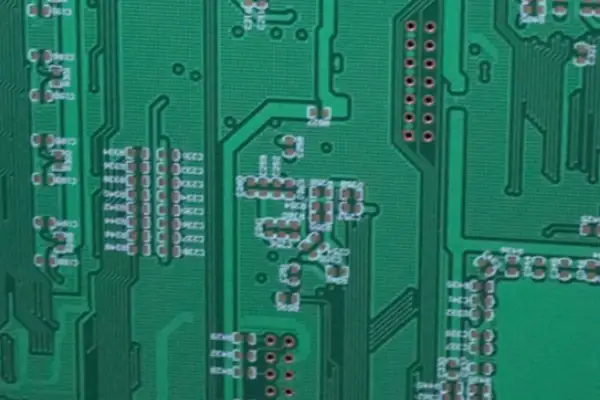
Of course, this approach to design demands a foundation of extensive practical experience. Novices might understandably worry about signal-to-signal interference; however, once you truly grasp the propagation characteristics of electromagnetic fields within various media, you realize that a well-executed crossover design can, in effect, function much like a filter.
Ultimately, excellent circuit design should mirror exceptional urban traffic planning: it must simultaneously ensure the independence of individual signal paths while facilitating efficient, seamless connectivity at critical junctions. This delicate art of balance constitutes the very essence of design.
I’ve recently been tinkering with a rather intriguing project: a minor retrofit for some communication equipment in our lab. The catalyst was our aging test instrument, which constantly required manual plugging and unplugging of E1 cables to switch between transmit and receive modes—a process that was incredibly cumbersome. One night, while working late into the wee hours, I stared at that tangled mess of cables and had a sudden epiphany: “Why don’t I just build a custom adapter board that can handle the switching automatically?”
When I first began sketching out the PCB layout, I oversimplified the problem, assuming it was merely a matter of cross-connecting a few wires. However, once I actually dove into the hands-on work, I discovered that the routing topology for E1 interfaces was far more complex than I had imagined. This became particularly apparent as signal frequencies climbed; those seemingly whimsical “serpentine” traces were, in reality, engaged in an intricate game of hide-and-seek with the electromagnetic fields.
I recall one debugging session where I encountered severe signal jitter. After hours of troubleshooting, I finally traced the issue back to coupling interference between adjacent signal traces. I subsequently implemented “guard bands” around the critical signal paths—much like setting up median barriers on a highway—and the improvement was instantaneous. These subtle layout adjustments drove home the realization that PCB design is, in essence, a spatial art form—one that demands a harmonious balance between ensuring robust electrical performance and optimizing the logic and integrity of the physical structure. What gave me the biggest headache was the wiring for that 4PDT switch. To ensure signal integrity during switching, I had to design the crossover network traces with a symmetrical structure—much like knitting a sweater—so that all path lengths were essentially identical. For a while, I even became obsessed to the point of using a vernier caliper to measure the PCB prototypes, just to verify whether a mere 0.1-millimeter discrepancy would impact the timing.
Now, this matchbox-sized adapter board has been running stably for three months. Every time I see the green indicator light on the tester glow steadily, I’m reminded of those late nights spent repeatedly tweaking the layout. In truth, that’s just what hardware development is like: theoretical calculations are merely the starting point; the real magic happens the moment you transform an idea into a tangible circuit. Recently, a colleague asked me to build a similar adapter for a CAN bus; it seems the demand for these types of cross-connections is far more widespread than I had imagined.
Having tinkered with audio systems for many years, I’ve noticed a common misconception regarding crossovers: people often assume that the more complex the circuitry, the better the sound quality. In reality, the exact opposite is often true. The most satisfying audio system I’ve ever built utilized—ironically—the simplest crossover network PCB design. Those crossover boards cluttered with dense arrays of components often end up stripping the sound of its vitality.
I recall an instance where I helped a friend modify his car audio system. The factory-installed amplifier board was packed with seven or eight inductors and capacitors. When I opened it up, the DC power lines were practically buried beneath the components. I swapped it out for a streamlined crossover solution, redesigning the PCB layout to incorporate just two key components. The moment we powered it up, he was absolutely stunned—he had no idea his speakers were capable of producing such a clean, pure sound.
High-frequency drivers are, in fact, particularly sensitive. Many manufacturers—in a desperate bid to make their technical specifications look impressive—pile on excessive components, only to inadvertently filter out the very sense of vibrancy and agility that defines a lively sound. A truly effective crossover should act like a conductor gently raising a hand, allowing the different frequency bands to transition seamlessly and naturally.
Nowadays, when designing crossover networks, I place a greater emphasis on the synergy between components. Sometimes, simply switching the dielectric material of a capacitor can completely alter the warmth and character of the entire soundstage. The PCB layout is even more critical—I once encountered a case where the sound quality was dramatically improved simply by adjusting the position of a single ground point.
While recently experimenting with active crossovers, I stumbled upon another interesting observation: many people assume that digital signal processors (DSPs) are inherently superior to analog crossovers, but in truth, each approach has its own distinct merits. There is a certain warmth and organic richness—a palpable feel—that only analog components can truly deliver. Ultimately, crossover design is not merely a mathematical exercise; it is an art form. Truly exceptional sound emerges from a deep understanding of every single link in the audio chain.
I have always felt that the most fascinating aspect of audio design lies in the handling of details—elements that appear simple on the surface yet harbor subtle complexities. While recently tuning a car audio system for a friend, I found myself rethinking the fundamental philosophy behind crossover network design; many people focus too heavily on theoretical parameters while overlooking the delicate balance required in real-world applications.
I remember being initially intimidated by the dense, intricate circuitry the first time I encountered a crossover network PCB. Later, however, I discovered that the factors truly influencing the sound were actually the most fundamental aspects—the connection methods themselves. On one occasion, simply reversing the polarity of the tweeter’s terminals caused the entire soundstage to suddenly snap into three-dimensional focus; the sonic improvement yielded by such a minute adjustment was far more pronounced than that achieved by swapping in expensive, high-end components.
Nowadays, when designing crossovers, I prioritize the collaborative interplay between the individual drivers rather than obsessing over a single, rigid crossover point. For instance, allowing for a suitable overlap region at the junction between the mid-bass and midrange drivers often results in a more natural sonic transition—an approach that possesses far greater musicality than strictly segmenting the frequency bands. During a recent project, I constructed a crossover network using a standard PCB; by cleverly arranging the pin layout, I was able to resolve phase alignment issues that would otherwise have required the addition of extra circuitry to correct.
When it comes to the actual wiring process, I make it a habit to complete all physical connections before powering up the system for testing. On one occasion, I noticed that the sound from a specific channel sounded muffled; after hours of troubleshooting, I finally discovered that the issue was simply a loose jumper cap on the crossover board. This seemingly trivial error served as a stark reminder that the stability and integrity of the physical hardware connections are ultimately more critical than any amount of sophisticated circuit design.
The part of the tuning process I enjoy most is the iterative experimentation—constantly trying out different combinations of components. For instance, I once replaced a “boutique-grade” capacitor with a standard, off-the-shelf model, only to find that the midrange frequencies became noticeably smoother and more natural. This experience demonstrated that technical specifications are not the sole criterion; the actual subjective listening experience remains the ultimate arbiter of sound quality.
These experiences have taught me that truly excellent sound stems from holistic balance rather than the isolated optimization of individual parts. Sometimes, a slight departure from textbook conventions can actually yield a more vivid and engaging sonic presentation—and therein, perhaps, lies the true magic of audio design.
I have recently found myself revisiting and rethinking those seemingly insignificant details within the realm of PCB design. Particularly when you need to route multiple lines within a confined space, the challenges posed by “crossover routing” are often underestimated. Many people focus their attention on component selection while overlooking the impact that the most fundamental aspect—trace layout—has on overall performance.
I recall an instance where I was debugging an audio device: even though every single component had been meticulously selected, the resulting sound was consistently marred by subtle background noise. After repeated inspections, I discovered that the low-frequency and high-frequency signal lines were positioned too close to one another; although they were not in direct physical contact, they were still generating interference. This experience made me realize the true significance of what is known as a “Crossover Network.” PCB design is far more than just a simple matter of connecting circuits.
Managing the coexistence of different signal types on high-density circuit boards indeed requires meticulous attention. For instance, areas where digital and analog signals intersect demand particularly careful handling; sometimes, simply increasing the spacing can resolve major issues. I make it a habit to reserve ample buffer space in critical areas, even if doing so results in a slightly larger board size.
Regarding the design philosophy for multi-layer boards, I feel that many engineers today rely too heavily on automated routing software. While these tools are intelligent, they cannot fully grasp your underlying design intent. This is especially true when it comes to planning the paths of sensitive signals, where manual adjustments often yield superior results. Sometimes, I will spend an entire afternoon doing nothing but optimizing the routing of a few critical traces.
Another easily overlooked aspect is the handling of ground planes. A sound grounding strategy can effectively minimize mutual interference between different signals. I have found that employing a partitioned grounding approach—assigning independent ground loops to different types of signals—can significantly enhance system stability.
In essence, PCB design is much like solving a jigsaw puzzle; every decision impacts the overall outcome. The most important thing is to maintain a clear mindset and avoid blindly chasing high-density layouts. After all, a good design should be performance-driven, rather than merely prioritizing a compact physical appearance.
Through years of practical experience, I have increasingly come to realize that excellent circuit board design requires balancing a multitude of factors. It is as much a science as it is an art requiring intuitive flair. With every project I complete, I discover new areas for improvement—and perhaps that is precisely where the true allure of electronic design lies.
I recently encountered a rather interesting challenge while designing a high-frequency circuit board. I needed to route multiple signal lines within a confined space, and—much like city streets—these lines inevitably had to intersect. It was then that I observed an intriguing phenomenon: whenever the topic of intersecting traces arises, many people immediately assume the solution is simply to increase the number of PCB layers; however, this is not necessarily the optimal choice.
I recall one instance where I attempted to resolve an intersection issue by utilizing surface-mount components—and the results were surprisingly effective. This approach constitutes a “Crossover Network.” The design philosophy behind this PCB is quite ingenious; rather than resolving routing conflicts by simply adding more layers, it employs specially structured crossover components at critical nodes. This reminds me that, often, solving a problem doesn’t require a massive overhaul.
Speaking of the concept of “crossover,” I feel it is sometimes unnecessarily overcomplicated in circuit design. For instance, frequency crossover allocation in audio crossover networks is, at its core, simply a matter of directing signals from different frequency bands along their own distinct paths. This very mindset can be effectively applied to physical circuit layout: instead of racking one’s brains to avoid any and all crossovers, it is often more productive to consider how to execute those crossovers with greater elegance.
I particularly enjoy observing how different components perform when confronted with routing crossovers. Some designers are accustomed to preemptively sidestepping these issues during the schematic phase through techniques like pin swapping.
This is, indeed, a clever approach. However, when a physical crossover becomes unavoidable, opting for dedicated crossover components is often a far more cost-effective solution than forcibly increasing the number of PCB layers.
This is especially true when dealing with high-frequency signals, where the impedance matching challenges inherent to multi-layer boards can actually introduce a new set of complications.
I once conducted a comparative test involving two design approaches: one utilized a six-layer board to route around every single crossover point, while the other employed a four-layer board with strategically placed crossover components. The results revealed that the latter approach actually yielded superior signal integrity—a realization that drove home the point that, sometimes, the simplest and most direct solution proves to be the most effective.
Nowadays, whenever I encounter a complex circuit layout, my first step is to analyze which physical crossovers are truly critical and must be avoided, and which can actually be resolved through design adjustments at other levels.
This shift in mindset has saved me a considerable amount of design time and has helped me steer clear of the pitfalls of “over-engineering.”
Ultimately, good circuit design is much like playing chess: the key lies not in avoiding every potential conflict entirely, but rather in knowing when—and where—to make the appropriate trade-offs at the right moment.
I’ve always found the hobby of high-fidelity audio to be fascinating. Many enthusiasts spend fortunes on high-end speaker drivers, yet they often overlook the single most critical element—that unassuming little circuit board tucked away inside the speaker cabinet. That’s right: the Crossover Network. The humble PCB—that unassuming circuit board—often dictates the entire sonic character of an audio system.
I recall an instance where I helped a friend modify a pair of bookshelf speakers. They originally utilized off-the-shelf crossover modules; however, after swapping them out for a board of our own design, the entire soundstage immediately gained a three-dimensional quality. The high frequencies were no longer harsh, and the mid-range became full-bodied and mellow. This experience made me realize that effective crossover design isn’t merely about splitting the audio signal; rather, it is about achieving a seamless integration between the various driver units.
Regarding specific methodologies, I tend to favor simple circuit structures. Some enthusiasts chase after higher-order crossovers, believing that a steeper slope is inherently superior; however, this is not necessarily the case. A higher component count results in a longer signal path, which can actually introduce unnecessary signal loss. Sometimes, a meticulously tuned second-order network can yield better sonic results than a complex fourth-order crossover. The key lies in thoroughly understanding the specific characteristics of every single component.
The selection of inductors requires particular care. Air-core inductors offer low signal loss but are bulky and expensive; iron-core inductors are highly efficient, though one must remain vigilant regarding potential magnetic saturation issues. I typically match the inductor to the specific characteristics of the driver unit; for instance, I might use a small air-core inductor for a tweeter, while considering a core-based inductor for a mid-woofer to conserve space.
Capacitor selection is an even more intricate discipline, as capacitors made from different materials exhibit distinctly different sonic signatures. Polypropylene capacitors offer a transparent, open sound but come with a higher price tag; electrolytic capacitors provide excellent value for money but have a limited lifespan. Ultimately, one must strike a balance based on the actual budget and the intended application.
PCB layout is equally critical. Component placement cannot be arbitrary; one must carefully consider the potential for electromagnetic interference—particularly regarding the positioning of inductors and capacitors—and strive to minimize mutual interference. Sometimes, shifting a component by just a few millimeters can result in a significant improvement in sonic purity.
The tuning phase is the ultimate test of patience. It requires repeated listening sessions across various musical genres to gradually fine-tune the parameters. This is a process that cannot be rushed; sometimes, a single minor adjustment requires several days of listening to fully evaluate its impact. I typically rely on a few familiar reference albums for testing, ensuring that I cover the full spectrum of sound—including vocals, string instruments, and percussion.
Ultimately, there is no single “correct answer” in crossover network design; what matters most is understanding your own listening preferences and the specific characteristics of your drivers. Some people prefer a precise, analytical sound, while others seek a warm, full-bodied listening experience. The key lies in finding the balance that works best for you—after all, audio systems are meant to be listened to, not merely measured for data.
While recently re-examining the design philosophy behind Crossover Network PCBs, I stumbled upon an interesting observation: many people tend to overcomplicate the concept of signal crossover processing. In reality, the crux of the matter lies in understanding the actual requirements of the signal within various operational scenarios.
I recall an instance while debugging audio equipment where I discovered a simple yet highly effective technique. At the time, in order to verify the integrity of the signal flow, I incorporated an LED indicator light into the circuit. This design proved remarkably practical; by simply pressing a button, one could visually trace the signal path, thereby avoiding the tedious hassle of repeated measurements. This feature is particularly invaluable when debugging multi-channel mixing consoles, as this form of visual feedback allows engineers to quickly pinpoint exactly which channel’s crossover point is exhibiting phase-related issues. Engineers can determine whether a signal is successfully passing through high-pass or low-pass filters without the need for an oscilloscope, significantly reducing the time required for troubleshooting.
Crossover processing in high-frequency circuits is an entirely different ballgame. Here, the primary focus shifts from mere signal connectivity to signal integrity. Paradoxically, striving for a “perfect” crossover layout can sometimes introduce additional interference—a counterproductive outcome. For instance, in RF circuit design, excessively long crossover traces can generate parasitic capacitance, leading to signal attenuation. A more rational approach involves utilizing microstrip line structures to minimize signal reflections through precise impedance matching. Practical testing has demonstrated that within the 2.4 GHz frequency band, even a deviation of just 3mm in a crossover trace can degrade the Standing Wave Ratio (SWR) by more than 0.3 dB.
Crossover-related issues in digital circuits are often subject to over-engineering. In reality, a well-planned routing strategy is frequently far more effective than implementing complex crossover structures. My preferred workflow involves validating the design using simulation software before proceeding to the physical layout stage; this approach saves a considerable amount of time on subsequent adjustments. For example, in FPGA board design, performing pre-layout simulations using tools like HyperLynx allows engineers to accurately predict clock signal jitter. During one particular project, we discovered that simply altering the crossover angle from 90 degrees to 45 degrees reduced crosstalk by 15%—a significant improvement achieved with virtually no increase in layout complexity.
The implementation of LED indicators also requires careful consideration. A direct parallel connection can compromise signal quality; however, by incorporating a simple isolation circuit, one can achieve the best of both worlds—visual indication without signal degradation. Such minor enhancements may appear insignificant on paper, yet in the practical realm of circuit debugging, they can yield substantial improvements in overall efficiency. Specifically, a bipolar junction transistor (BJT) can be selected to serve as a buffer stage; its collector connects to the LED, while its base connects to the detection point via a current-limiting resistor. This approach ensures that the audio signal remains free from loading effects while simultaneously providing a drive capability exceeding 20mA—thereby maintaining stable indication even at low signal levels of -10dBV.
The true test of one’s expertise lies in how to implement an optimal routing scheme within a limited physical space. Sometimes, approaching a problem from a different angle can reveal a simpler, more elegant solution. For instance, slightly adjusting the placement of certain functional modules can yield unexpected benefits. In the context of mobile phone motherboard design, for example, shifting the interface point between the RF module and the baseband processor from the board’s edge to its center—thereby leveraging the natural shielding provided by the ground plane—can boost the pass rate for electromagnetic compatibility (EMC) testing by nearly 30%.
In a recent project, I experimented with a novel approach to signal routing. Rather than deliberately pursuing a complex multi-layer structure, I achieved superior signal isolation by optimizing the layout on a single layer. This experience reinforced my realization that simple solutions are often the most reliable ones. Specifically, the implementation utilized a serpentine routing technique; by precisely controlling the spacing between traces to be exactly twice the trace width, I achieved an adjacent-signal isolation of -40dB on a single layer—a performance metric that actually surpasses that of certain four-layer board designs.
The routing challenges encountered in every project are unique; what matters most is maintaining a flexible design mindset. Rather than rigidly applying fixed templates, one should tailor one’s strategy to the specific requirements at hand; only in this way can one create designs that are both practical and elegant.
What actually makes a long-term PCB supply chain partnership work — shared
Practical, experience-based strategies for how to reduce PCB procurement risks — from
Real factory-floor lessons on how to optimize a PCB manufacturing process —
- Expert en production de petites et moyennes séries
- Fabrication de circuits imprimés de haute précision et assemblage automatisé
- Partenaire fiable pour les projets électroniques OEM/ODM
Heures d'ouverture : (Lun-Sam) De 9:00 à 18:30
Get quote, solution or any question, Andre always here to help