

Heat Dissipation Challenges and Solutions in PCB Circuit Board Design
Circuit boards are more than just that green board in a phone
I’ve always felt that many people have a somewhat one-sided understanding of rigid-flex PCBs. Everyone likes to emphasize its space-saving and weight-reducing capabilities, which is certainly true. But what I find truly interesting is that it actually changes the way we think about designing electronic products. Previously, we had to connect individual components with connectors; now, circuits can flow directly between different materials.
I remember chatting with a friend who works in the medical device industry. Their team was struggling with the casing of a wearable device—they needed to ensure the stability of the internal sensors while also considering wearing comfort. They discovered the real breakthrough wasn’t in the hardware itself, but in how to make the circuitry adapt to the natural curves of the human body. This wasn’t about forcibly bending the circuitry with connectors, but about allowing the copper foil to extend like capillaries.
Different types of rigid-flex PCBs correspond to different design philosophies. Some manufacturers like to categorize them very finely, but I prefer to see them as a continuous spectrum: one end is purely functional extension, and the other end is deep integration with the product form factor. For example, the wiring hidden in a smartwatch strap needs to withstand daily bending while maintaining signal stability, which goes beyond the scope of traditional circuit boards.
When choosing a reliable rigid-flex PCB manufacturer, I don’t focus too much on how many layers they can make, but rather on whether they understand the product’s ultimate use case. Once, during a factory visit, I noticed their engineers repeatedly bending samples to test not the specifications, but the subtle resilience. This understanding of the material itself is more important than technical specifications.
The most fascinating aspect of flexible electronics lies in its breaking the limitations of two-dimensional planes. When circuits can conform to curved surfaces like fabric, the possibilities for products are entirely different. I recently saw someone weave light-emitting circuits into fabric; the seamless integration is something that cannot be achieved with just a few miniature connectors.
Ultimately, technology is merely a tool. What’s truly worth considering is how we can use this three-dimensional circuit language to express more human-centered designs. When current crosses the boundary between rigidity and flexibility, it carries a more natural way of communicating between the product and the user.
I recently chatted with a friend who works in medical device R&D and discovered an interesting phenomenon—their team spent a full six months finding a suitable rigid-flex PCB manufacturer. This reminded me of my first experience with such specialized circuit boards five years ago.
At that time, we were designing an industrial sensor that needed to simultaneously meet vibration resistance requirements and complex wiring needs. Traditional rigid boards are prone to cracking under vibration; purely flexible boards cannot support high-power components. It was that experience that made me realize the unique value of rigid-flex—it’s neither a simple splicing nor a crude stacking.
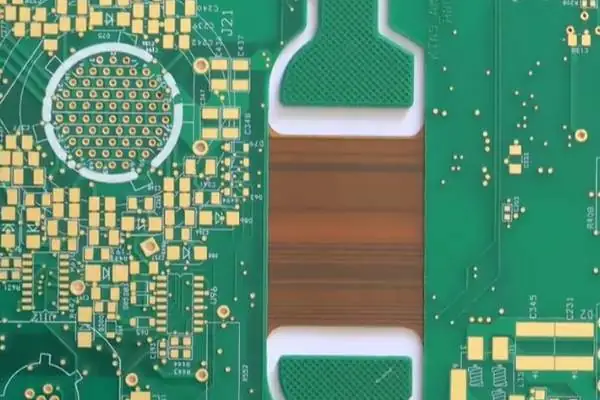
Many people easily overlook the fact that finding the right manufacturer is more important than technical parameters. Last year, I visited a small factory that left a deep impression on me. Their workshop was filled with walls displaying various failed samples, from delamination to copper foil breakage; every flaw was marked with an improvement record. This dedication to process details is more convincing than any certification.
Currently, many manufacturers claim to produce rigid-flex PCBs, but their actual capabilities vary greatly. Some are still using ten-year-old hot-pressing processes on new materials, resulting in insufficient interlayer bonding. The most egregious case I’ve seen is a drone manufacturer who, to save costs, chose a supplier with immature technology; the flexible parts of the aircraft delaminated under high-altitude, low-temperature conditions.
Truly excellent manufacturers often possess material modification capabilities. For example, they adjust the glass transition temperature of the polyimide substrate or optimize the cover film thickness to balance flexibility and protection based on the customer’s product usage environment. These details are key to product reliability.
Recently, while helping a friend evaluate a medical endoscope project, I noticed an interesting trend: more and more manufacturers are starting to design rigid and flexible areas as a whole system. For example, they use a gradient copper thickness design at the connection points to avoid stress concentration. This shift in thinking has increased product lifespan by more than three times.
Ultimately, choosing a rigid-flex PCB supplier is like finding a research and development partner. They need to understand not only circuitry but also how your product will function in real-world scenarios. After all, these seemingly ordinary boards may ultimately determine whether precision instruments can function properly in space or whether medical equipment can operate stably during surgery.
I’ve always found circuit boards that can simultaneously achieve rigidity and flexibility particularly interesting. Unlike traditional circuit boards, they aren’t rigid and can accommodate complex wiring designs within limited space. I remember once seeing an engineer cram such a rigid-flex PCB into a very small device, and that’s when I truly understood the value of this design.
Many electronic products now strive for thinner and lighter designs, which places higher demands on the layout of internal components. Ordinary circuit boards often require bending space to achieve specific angles of installation, while rigid-flex PCBs can directly conform to the curvature of the device’s casing. This design not only saves internal space but also reduces the number of connectors and improves overall reliability.
When choosing a rigid-flex PCB manufacturer, I value their manufacturing process. This is because these circuit boards need to achieve rigid support and flexible bending functions in different areas on the same substrate, which places high demands on both materials and processes. Good manufacturers can perfectly blend these two characteristics, allowing the circuit board to maintain sufficient rigidity in load-bearing areas and good flexibility in bending areas.
This design concept is actually quite common in everyday life. Just as a steel bar, though strong, is easily broken, adding the right amount of flexible material allows it to maintain both strength and elasticity. The same principle applies to rigid-flex circuit boards—they retain the stability advantages of traditional circuit boards while increasing wiring flexibility.
The most ingenious application I’ve seen is in the medical device field. The probe of an endoscope needs frequent bending and rotation, but the stability of the internal circuitry must be ensured. A rigid-flex circuit board perfectly solves this contradiction—the end near the sensor remains flexible for bending and detection, while the other end remains rigid for easy connection to the host device.
From an engineering perspective, this design truly reflects the wisdom of modern manufacturing. It doesn’t trade off rigidity and flexibility but rather uses innovative processes to allow both to complement each other.
I’ve always felt that many people have a misunderstanding of rigid-flex PCBs. People always focus on technical parameters, neglecting the fact that it essentially solves the contradiction between space and function. I remember once seeing engineers racking their brains over the design of a wearable device. Traditional rigid boards made the product feel like a brick, while fully flexible solutions couldn’t support the weight of the core components. This is precisely the value of rigid-flex PCBs—they allow electronic products to move beyond black-and-white choices.
Designing the flexible areas is particularly demanding in terms of experience. During a visit to a rigid-flex PCB manufacturer’s production line, I noticed they weren’t most concerned with theoretical bending counts, but rather with practical application scenarios. For example, medical endoscopes require repeated bending with a fixed amplitude, while industrial sensors may remain in a curved state year-round. These two situations have completely different requirements for material fatigue resistance, yet many designers apply the same set of standards.
I particularly appreciate solutions that create a smooth transition between the rigid and flexible areas. The most ingenious approach I’ve seen is using a gradually thickening structure at the connection point, like giving the circuit board a perfectly elastic tracksuit. This design avoids stress concentration from sudden bending while maintaining overall stability. Some rigid-flex PCB manufacturers use laser cutting to create micron-level transition bands, far more sophisticated than simply creating a window.
Material selection is the real art. Polyimide film is indeed common, but different applications require different combinations. High-temperature environments may require special adhesives, while frequently bent components might benefit from rolled copper foil. A manufacturer specializing in rigid-flex PCBs showed me their sample library; the same substrate paired with different cover layers exhibited completely different bending characteristics.
Many innovations today actually stem from cross-disciplinary inspiration. For example, the structure of foldable phone hinges inspired new arrangements of multi-layer rigid-flex PCBs, while the shock-absorbing design of automotive flexible circuitry has been borrowed for industrial robot joint wiring. This cross-application often breaks through the design limitations of traditional rigid-flex PCBs.
Ultimately, good design should make people forget the existence of the technology itself. The true mark of a successful rigid-flex technology is when you can fold the device naturally without worrying about circuit breakage and performance fluctuations under different temperatures.
I recently chatted with a friend who works on smart wearables; their team encountered a dilemma when choosing a circuit board. Should they choose a traditional rigid board or try a rigid-flex PCB? This is actually quite a common question, and many people struggle with this when designing products. I’ve seen many projects encounter numerous problems during later debugging because the wrong board material was chosen from the outset.
The biggest advantage of rigid-flex PCBs lies in their ability to balance stability and flexibility. Traditional rigid boards are particularly prone to problems in scenarios requiring bending, while purely flexible boards are not robust enough in certain critical areas. A drone project I worked on was quite interesting; they used a rigid PCB for the main body and a flexible design for the gimbal connection. This ensured the stability of the main control board while allowing the camera to rotate flexibly.
When choosing a rigid-flex solution, the most important consideration is the actual application scenario. For example, endoscopes in medical devices require complex circuit connections within a small space, making a rigid-flex solution particularly suitable. However, for ordinary household appliance control boards, such complexity may not be necessary.
Speaking of finding manufacturers, I’ve found that many people fall into a misconception—focusing excessively on price while neglecting technical capabilities. A good rigid-flex PCB manufacturer should provide professional design advice, not simply produce according to drawings. They need to understand your product requirements, especially providing expert advice on which parts require rigid support and which require flexible connections. Once, I visited a factory, and their engineers showed me a very interesting case. A client’s initial design for the flexible component had a bending radius that was too small, causing the finished product to experience circuit breakage after only a few hundred uses. The problem was solved after a redesign, adjusting the material thickness and wiring. This illustrates the importance of manufacturing experience.
Now, more and more products are adopting this technology, from foldable phones to industrial robots. However, I think the key is to consider the specific needs. If your product needs to switch between different form factors or achieve complex functions within a limited space, a rigid-flex solution is definitely worth considering. But for ordinary circuit board applications, traditional solutions may be more economical and practical.
Ultimately, the choice of circuit board should come down to the product’s own requirements. Communicating with manufacturers about real-world examples is more meaningful than simply comparing parameters. After all, a good design should strike a balance between meeting functional requirements and ensuring reliability.
I’ve always felt that the most fascinating aspect of electronic product design is the unseen details. For example, when you open the latest foldable phone, you might not expect what secrets it holds. Many precision devices actually use a special type of circuit board—boards that can remain rigid and stable in certain areas while also being flexible and adaptable where bending is needed. This design approach is particularly suitable for today’s increasingly thin and light electronic products.
I remember visiting a factory that specializes in this type of product once, and their engineers showed me a very interesting example. It was a control module used in medical equipment that needed to complete a complex circuit layout within a very small space. Using traditional rigid boards wouldn’t fit it at all; using flexible boards wouldn’t be able to secure the core components. The final product they created was like designing a system for the electronic components that had both a skeleton and joints.
What impresses me most about this technology is that it breaks the black-and-white thinking. We used to think of circuit boards as either rigid or flexible; this approach of combining these two characteristics opens up new possibilities. I’ve seen some smartwatches whose heart rate monitoring modules use this design to fit snugly against the wrist’s curve while ensuring the stability of the processing chip.
When choosing these types of products, what I value most is the manufacturer’s integration capabilities. Seamlessly connecting components of different materials requires extremely precise process control. I once saw a failed case where improper adhesive layer treatment caused cracks to appear at the bending points within six months. This made me realize that seemingly simple bonding actually requires a deep level of technical expertise.
Many innovative products are now exploring this direction, such as wearable devices or industrial robots, which require both robustness and flexibility. I think we will see more unconventional designs in the future, as the best solutions often lie at the intersection of traditional categories.
I particularly enjoy observing the performance of these products in actual use. Sometimes the simplest test is to repeatedly bend them to see if fatigue marks appear at the interface. This speaks volumes about manufacturing quality more than any parameter. After all, even the most sophisticated technology must ultimately be implemented in terms of reliability in daily use.
I recently talked to a rigid-flex PCB manufacturer about their production process and found that many people’s understanding of these products is still superficial. Everyone tends to focus on how thin and flexible the material is, but the key to whether a rigid-flex PCB is usable often lies in those unseen details.
For example, the application of laser technology is particularly interesting. Traditional machining easily generates stress when dealing with flexible areas, but laser cutting is like performing minimally invasive surgery on the circuit board. I’ve seen them use ultraviolet lasers to treat the transition area of rigid-flex circuit boards, creating clean cuts that look like naturally formed boundaries.
Many people think flexibility means bending it arbitrarily, which is a misconception. True durability comes from the scientific ratio of rigidity to flexibility. Good design allows the flexible parts to bend naturally at specific locations, like human joints.
I remember seeing an interesting phenomenon during a production line visit: the same material performed drastically differently under different processes. An engineer showed me two seemingly identical samples; one could withstand thousands of bending tests, while the other cracked after only a few dozen. The difference lay in how the rigid-flexible transition area was treated.
Now, many manufacturers are realizing that simply pursuing flexibility is meaningless. The key is to balance the ratio of rigidity to flexibility based on the specific application scenario.
The testing process was also quite interesting. They had a test bench that simulated a real-world usage environment, where they would repeatedly bend the finished boards under different temperatures and humidity levels. This test, seemingly simple, could expose many problems from the design phase. Sometimes, a circuit board might perform perfectly in a static environment, but once it’s moved, hidden problems will be revealed.
Speaking of which, I’ve noticed many clients get caught up in a parameter race. Actually, instead of obsessing over a single metric,
what impresses me most is their attention to detail.
Ultimately, a good rigid-flex PCB should be an intelligent structural design.
I recently chatted with a friend who works in medical device R&D and discovered an interesting phenomenon—their team spent six months designing a wearable monitoring device prototype, but it kept getting stuck on the circuit board. Either the wiring broke at bends, causing signal instability; or after the device ran for a while, overheating caused fine delamination at the seams of different materials.
This reminds me of how many engineers tend to fall into an either-or mindset when choosing circuit solutions—either using all traditional rigid boards for stability, or blindly pursuing thinness and using only flexible boards. In fact, many fields now need precisely this seemingly contradictory yet intelligent solution: the rigid-flex PCB.
Last year, I visited the production line of a high-end rigid-flex PCB manufacturer. They had a particularly vivid analogy: manufacturing such PCBs is like dressing precision instruments; it requires ensuring free movement at the joints while maintaining rigid support in critical areas. For example, the wristband of a smartwatch needs to be bent repeatedly; this is where the advantages of flexible materials become apparent. Meanwhile, the main control area inside the dial must rely on a rigid substrate to support the chips and heat dissipation module.
The real test of technical skill occurs at the junction of the two materials. I once saw their engineers adjusting lamination parameters under a microscope; their focus was comparable to that of a surgeon. The polyimide film in the flexible part and the FR-4 material in the rigid part are like organ transplants with different blood types; they require a special adhesive system and precise temperature and pressure control to achieve molecular-level fusion.
I particularly admire this manufacturer’s attitude towards material compatibility; they never blindly follow standard formulations. Once, when customizing a rigid-flex PCB for an aerospace client, they discovered that conventional epoxy resin produces trace amounts of volatiles in a vacuum environment. The team later developed a new composite adhesive through more than thirty experiments. This obsession with detail ironically makes a product irreplaceable.
Many consumer electronics brands are now realizing that excellent product design often lies in these unseen intersections. Like the hinge of a foldable phone or the curved mounting point of a car radar; these scenarios require the circuit board to be as flexible and adaptable as rice paper while simultaneously possessing the structural strength of a metal skeleton. Truly mature rigid-flex technology should allow users to completely ignore the material transition.
Sometimes I feel this technological philosophy also applies to product development thinking—being flexible when necessary and firm when required. The most important thing is to find that smooth balance between different states; perhaps this is what is meant by design wisdom.
Circuit boards are more than just that green board in a phone
From disassembling old routers to visiting electronics manufacturing plants, I gradually realized
As an electronics enthusiast, I’ve come to understand firsthand the impact of
- Expert en production de petites et moyennes séries
- Fabrication de circuits imprimés de haute précision et assemblage automatisé
- Partenaire fiable pour les projets électroniques OEM/ODM
Heures d'ouverture : (Lun-Sam) De 9:00 à 18:30