

What Documents Are Required for PCB Production: A Field Guide From Real Industrial Weighing Controller PCB Projects
Many engineers focus too much on technical parameters early on and overlook
When I first started working on LED projects, I assumed that standard circuit boards would suffice. However, I soon discovered that heat dissipation issues were a major headache. It was only later that I gradually came to understand why everyone recommends using aluminum-based PCBs. These boards are truly fascinating; their most significant difference from traditional circuit boards lies in their metal substrate layer, which is capable of rapidly conducting heat away.
I recall an instance where I helped a friend modify a garage light fixture. Shortly after installation, we noticed a distinct drop in brightness. Upon disassembling the unit, we found that the back of the standard circuit board had turned yellow from the heat. That was the moment I truly realized just how critical heat dissipation is for LEDs. We subsequently switched to a fixture featuring an aluminum-based PCB; operating at the same power output, the working temperature dropped significantly. Now, after more than two years of use, the brightness remains virtually unchanged.
In fact, the structure of an aluminum-based PCB is quite ingenious. The central insulating dielectric layer—though thin—offers high voltage resistance while simultaneously ensuring excellent thermal conductivity. I once measured the operating temperatures of an aluminum-based board and a standard fiberglass board of identical dimensions while powering an LED; the difference was over ten degrees Celsius. Such a temperature disparity has a far-from-insignificant impact on the lifespan of electronic components.
Nowadays, many high-power devices utilize this design—such as automotive headlights and power converters—precisely because a metal substrate offers superior heat dissipation efficiency and allows for more compact designs. However, it is worth noting that during fabrication, these boards cannot be cut as casually as standard board materials; they require specialized milling machines or laser equipment, as improper cutting can easily lead to edge deformation.
I believe that when selecting circuit board materials, one should not focus solely on the initial cost. For devices intended for long-term use—such as LEDs—heat dissipation performance is often the more critical factor. Sometimes, spending a little extra to opt for an aluminum-based PCB proves to be the more cost-effective choice in the long run—if only to spare you the constant worry of overheating-related damage.
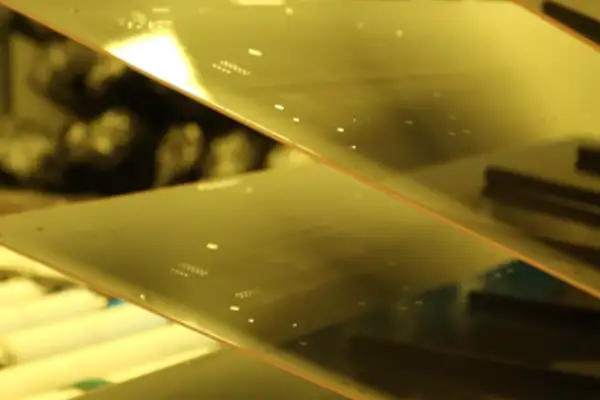
I’ve recently been tinkering with an LED driver project, and I’ve discovered that selecting the right aluminum-based PCB truly makes the work twice as efficient. I used to think these boards were nothing more than standard circuit boards with a metal backing, but once I started using them in practice, I realized there is far more nuance to them than I had imagined. This is especially true when you need to manage the heat generated by high-power components—standard FR4 boards simply cannot withstand that level of heat accumulation.
What appeals to me most about aluminum-based PCBs is that they integrate heat dissipation directly into the design process, rather than treating it merely as an afterthought or a remedial fix. I recall a specific test run where I used a standard board; the surface of the chip became so scorching hot that you could practically fry an egg on it. However, after switching to an appropriate aluminum-based PCB, the temperature dropped by over twenty degrees Celsius almost instantly. This discrepancy made me realize that thermal conductivity isn’t just a numbers game on a datasheet; it is a tangible factor that critically impacts a product’s lifespan.
Many people tend to obsess over the thermal conductivity of the insulating layer, but I believe the choice of copper foil is equally worthy of careful consideration. On one occasion, in an effort to cut costs, I opted for thinner copper foil; the result was that, under high-current conditions, the heat generated by circuit impedance actually negated the substrate’s inherent heat-dissipation advantages. Later, when I switched to a thick-copper design, not only did the current-carrying capacity improve, but the overall thermal distribution became significantly more uniform. This taught me that thermal management is a systemic issue—focusing solely on the thermal conductivity of the aluminum base layer makes it all too easy to overlook other critical points of thermal resistance within the system.
Nowadays, whenever I see promotional material boasting “ultra-high thermal conductivity,” I approach it with a healthy dose of skepticism; in real-world applications, the thermal resistance of the insulating layer is often the true bottleneck. Take, for instance, a recent automotive electronics project I worked on: although we selected an aluminum substrate with excellent thermal conductivity, what truly boosted the heat-dissipation efficiency was actually optimizing the contact area between the power components and the aluminum base. Sometimes, simply expanding the copper coverage area yields more immediate and tangible results than upgrading to higher-spec materials.
After working with these types of boards extensively, you begin to realize that thermal design is essentially an art of balance. You must manage costs while simultaneously ensuring performance—requiring a holistic approach that weighs the aluminum base thickness, copper foil weight, and insulating materials all together. Recently, I experimented with using an aluminum substrate to serve directly as a structural component within a small power supply module; this approach eliminated the need for a separate heatsink while simultaneously reducing the overall device footprint. This kind of unconventional, cross-functional application actually opened up entirely new avenues of design thinking.
I’ve always found aluminum substrates to be quite fascinating. Many people assume—the moment the term is mentioned—that they are strictly “high-end” components reserved exclusively for applications with extremely demanding thermal requirements. In reality, that’s not entirely the case.
I recall a project last year where I helped a friend redesign a small LED light strip. The original design utilized standard FR4 material, but the moment the LED beads heated up, their brightness would suffer a severe drop-off. We switched to a simple, single-sided aluminum substrate—which added a mere three dollars to the cost—and the improvement in heat dissipation was immediate and dramatic. So, sometimes you shouldn’t let the label “high-end” intimidate you; what truly matters is how you choose to utilize the technology. The selection of the insulating layer is where the true craftsmanship lies. To save effort, some manufacturers opt for ordinary epoxy resins; consequently, the thermal conductivity suffers drastically. The most extreme case I’ve ever witnessed involved a motor driver board with an uneven insulating layer; this led to localized overheating so severe that it actually melted the copper traces. Nowadays, high-quality aluminum-based PCBs utilize polymer composites filled with ceramic powder—while slightly more expensive, they offer a world of difference in terms of stability.
Surface treatment of the substrate is another area often overlooked by many. If the aluminum surface isn’t properly treated, the coating adhesion will be insufficient; this makes it prone to blistering later on, particularly when subjected to significant temperature fluctuations. For devices requiring frequent switching—where rapid heating and cooling cycles occur—gaps can easily form between the insulating layer and the metal substrate after just a few thermal cycles.
There is also a subtle detail regarding the lamination process: if the pressure isn’t precisely controlled when bonding the copper foil, air bubbles can easily become trapped. My standard practice during the prototyping phase is to use an ultrasonic scanner to inspect the boards directly. Although this adds an extra step to the workflow, it is far preferable to scrapping an entire batch during mass production—after all, unlike FR4, aluminum substrates cannot be easily reworked.
Recently, I experimented with replacing traditional ceramic substrates with thin-profile aluminum-based PCBs in smart home sensors. I was pleasantly surprised to find that this approach proved remarkably effective at suppressing temperature drift. In fact, for these types of low-power applications, the advantages of superior material stability are often even more pronounced.
A truly effective aluminum-based PCB doesn’t necessarily require an overly complex structure; sometimes, it simply comes down to executing every fundamental step flawlessly—for instance, maintaining the insulating layer’s thickness tolerance within a margin of 0.01mm. This approach is far more practical and effective than simply stacking up expensive materials.
I’ve long felt that many people’s understanding of aluminum-based PCBs remains limited to the single concept of “good heat dissipation.” In reality, the truly fascinating aspect of this technology is how it seamlessly integrates circuit design and thermal management into a single, unified process. I remember when I first encountered aluminum PCBs, I, too, assumed they were nothing more than standard circuit boards with a metal backing.
It wasn’t until I worked on an LED automotive lighting project that I realized the issue was far more complex. The driver ICs in that project generated an immense amount of heat—so much so that a standard FR4 board simply couldn’t keep the temperature under control. We experimented with several different solutions at the time before finally discovering that the critical factor wasn’t the metal substrate itself, but rather the choice of insulating layer. That thin layer of insulating material, it turned out, was the true determinant of the entire board’s thermal efficiency.
During one of our testing phases, we compared insulating layers of varying thicknesses and discovered that by reducing the layer’s thickness by just 30%, we could nearly double the heat dissipation performance. This experience served as a powerful reminder that we often focus too heavily on the metal components while overlooking these seemingly insignificant details—details that, in reality, play a pivotal role. I often see engineers today still getting hung up on the thickness of the substrate; in reality, what truly impacts performance is the compatibility of the entire material system. Particularly in high-power applications, the dielectric layer’s voltage withstand capability and thermal conductivity are often far more critical than the choice of the metal base material itself.
A recent project involving photovoltaic inverters further reinforced this perspective for me. Their original, traditional design scheme constantly suffered from thermal derating issues; however, after switching to an optimized aluminum-based substrate, they not only reduced the overall volume by 20% but also achieved superior stability. This approach—integrating thermal management directly into the circuit design—represents the true direction of future development in power electronics.
Technological advancements have indeed overturned many traditional notions. For instance, new processes now allow for circuit traces to be laid directly onto aluminum surfaces—eliminating the etching step while simultaneously boosting precision. Just five years ago, such a feat would have been virtually unimaginable.
Ultimately, the key to effectively utilizing aluminum-based substrates is to break free from the conventional “printed circuit board” mindset. Instead, one must treat it as a complete thermal management system; every link in the chain—from material properties to structural design—interacts with and influences the others. Sometimes, the simplest changes yield the most dramatic results.
I have encountered far too many engineers who get overly fixated on material parameters when selecting circuit boards. Did you know? Sometimes, the simplest choice proves to be the most effective. Take, for example, an LED lighting project I worked on recently: the team was initially locked in a debate over whether to adopt a ceramic substrate or install a complex system of external heat sinks.
The outcome? I insisted on using a standard, off-the-shelf aluminum PCB solution.
Many people assume that effective thermal management requires a stack of high-tech, exotic materials. In reality, the key lies in understanding the fundamental pathways of heat conduction. During that project’s testing phase, we specifically compared the performance of dielectric layers with varying thicknesses—and discovered that an overly thick dielectric layer can actually create a thermal bottleneck. The truly intelligent approach is to facilitate the rapid transfer of heat through the dielectric layer to reach the underlying metal base.
I recall a vendor once boasting about a substrate they produced that utilized some “special alloy.” I took a sample back to the lab to test its actual performance—and found that its thermal efficiency was no match for a standard aluminum base paired with a thoughtfully designed dielectric layer structure.
You might be wondering: why does the aluminum-based substrate perform so exceptionally well in these scenarios? Its true strength lies in the synergy of its entire thermal dissipation pathway. Heat generated by the components first conducts into the copper circuit layer; it must then pass efficiently through that thin dielectric layer to finally reach the aluminum base. In this process, every single link in the chain must perform flawlessly—there is simply no room for failure. I have witnessed numerous project failures stemming from an excessive focus on a single parameter—such as blindly chasing high thermal conductivity in insulating materials—while completely overlooking the overall system compatibility.
After completing that particular project, we disassembled several competing products. To our surprise, we discovered that devices boasting “high-end” thermal solutions actually utilized a more fundamental aluminum-substrate design internally—yet their thermal performance was far superior to what we had anticipated. This experience taught me that, at times, engineering decisions must return to the fundamentals rather than being dazzled by flashy technical specifications.
Ultimately, effective thermal design is not defined by the performance parameters of individual components, but rather by the system’s ability to transfer heat seamlessly—much like a relay race, passing the baton from one stage to the next. If the flow is obstructed at any single point, the entire effort is rendered futile. This is precisely why I increasingly favor adopting reasonably optimized aluminum-substrate solutions for power devices; they transform complex thermal challenges into simple, straightforward problems.
While recently debugging a high-power LED project, I observed an interesting phenomenon: many people’s understanding of aluminum substrates remains stuck at the rudimentary level of “as long as it dissipates heat, it’s fine.” In reality, the value of this material extends far beyond that.
I recall making a similar mistake myself when I first began working with aluminum PCBs. In an effort to accelerate the project timeline, I haphazardly clustered the power devices along the edges of the board. Consequently, localized temperatures skyrocketed—to the point where the chips failed to even meet their nominal performance specifications. Later, after relocating the heat sources to the central region of the substrate, the situation improved immediately. This experience drove home the realization that the length and efficiency of the thermal path are far more critical than the properties of the material itself.
Looking back now, simply utilizing an aluminum substrate as a glorified heatsink strikes me as a significant waste of its potential. Its true advantage lies in its ability to rapidly diffuse heat from a concentrated point across a broad surface area—effectively acting as a thermal equalizer for the circuit, rather than merely serving as a passive heat sink.
A common misconception involves placing excessive emphasis on the thermal conductivity of the insulating layer while neglecting the quality of the physical contact between the substrate and the device enclosure. I have encountered instances where engineers employed top-tier thermal interface materials, yet the overall heat dissipation efficiency was severely compromised due to the presence of air gaps introduced during assembly. It is akin to wearing a premium down jacket while leaving the collar wide open; no matter how superior the material, it cannot prevent heat from simply escaping through the gaps.
Truly efficient thermal management requires systemic collaboration. For instance, during a recent project involving automotive headlight drivers, we mounted the MOSFETs directly onto the aluminum substrate, simultaneously leveraging the board’s metal core to serve as a structural support element. This approach not only eliminated the need for a separate heatsink but also facilitated heat dissipation across the entire vehicle chassis—a strategy far more intelligent than simply “throwing materials” at the problem.
Sometimes, it is necessary to step back and view the problem from a perspective that extends beyond the circuit board itself. I once worked on a project where the client insisted on using extra-thick copper foil. However, practical testing revealed that increasing the copper thickness provided only marginal improvement in lateral thermal conductivity, while simultaneously doubling processing costs. We eventually switched to a stepped aluminum-substrate PCB featuring a thermal adhesive layer; this solution effectively resolved the heat dissipation issue while keeping the project within budget.
Ultimately, the key to mastering aluminum-substrate PCBs lies in understanding the behavior of heat. Unlike electric current—which obediently follows the designated conductive paths—heat actively seeks out every possible avenue to escape. A truly effective design doesn’t attempt to block the heat; rather, it meticulously maps out a clear escape route for it.
I’ve recently been experimenting with an intriguing combination: integrating an aluminum-substrate PCB with a thermoelectric cooler (TEC). This setup automatically activates active cooling whenever localized overheating is detected. This dynamic approach to thermal management offers far greater flexibility than simply relying on passive cooling—though, of course, that is a topic for another discussion.
In truth, every aluminum-substrate PCB possesses its own unique “personality”; unlocking its full potential requires tailoring its application to the specific operational context. Blindly applying generic formulas often results in diminishing returns; after all, thermal management is a practical art form—not a simple fill-in-the-blank exercise.
I’ve always found the process of selecting PCB substrate materials to be quite fascinating. Many people, the moment they hear “aluminum-substrate PCB,” immediately fixate on its superior heat dissipation capabilities. However, having worked on numerous projects, I’ve discovered that traditional FR-series materials are sometimes actually the more appropriate choice—particularly in cost-sensitive applications that do not demand extreme levels of thermal management.
I recall a project last year involving a small-batch consumer electronics product. The client initially insisted on using the most expensive aluminum-substrate PCBs available, citing the need for maximum stability. Yet, after conducting several rounds of testing, we demonstrated that standard FR-series boards were entirely adequate for the product’s operating temperature range—a switch that ultimately saved the client nearly 40% in costs. The critical factor was ensuring that the thermal dissipation pathways were meticulously planned in advance—for instance, by allocating sufficient ventilation space or incorporating a small heatsink.
Of course, aluminum-substrate PCBs do indeed excel in high-temperature environments—particularly in applications such as high-power LED lighting arrays or automotive electronics. However, a common pitfall is that many designers overlook the inherent manufacturing complexities associated with these boards. On one occasion, we designed a circuit with a relatively high component density; consequently, the manufacturing yield rate plummeted by half during the aluminum-substrate etching process, forcing us to subsequently revise the trace widths and spacing to resolve the issue.
I like to think of material selection as being akin to choosing an outfit: you have to dress for the occasion. If you’re designing a low-power control board and insist on using an aluminum substrate, you’re essentially using a sledgehammer to crack a nut—an act of overkill that merely adds unnecessary weight and cost. Conversely, if you are designing equipment destined for continuous, full-load operation, then prioritizing a metal-based substrate is undoubtedly the prudent choice.
There is one specific detail that many people tend to overlook: the insulating layer within an aluminum-substrate PCB serves as a critical litmus test for the manufacturer’s process engineering expertise. I have seen instances where manufacturers, in an effort to cut costs, used cheap adhesives; consequently, when the products operated under high-temperature conditions, their insulation performance degraded, leading to the recall of entire batches. For this reason, whenever I collaborate with suppliers now, I make it a specific requirement to review the voltage withstand test reports for the insulation layers.
Ultimately—whether dealing with FR-series materials or aluminum-based substrates—the key lies in understanding the actual operating environment of the product. I recall a project involving outdoor equipment where, despite utilizing a high-end aluminum-based PCB, we encountered a failure because the protective coating was improperly selected, allowing moisture to corrode the circuitry. This lesson taught me that while materials serve as the foundation, what truly matters is ensuring the overall design solution is perfectly aligned with real-world requirements.
I have always felt that when discussing aluminum-based PCBs, many people place excessive focus on technical specifications. Just last week, a client approached me with a datasheet, asking which aluminum alloy offered superior thermal conductivity. I responded with a direct question: “Have you ever physically felt the temperature difference between substrates of varying thicknesses while they are in operation?”
During a testing session on one occasion, I placed my hand on a piece of running equipment and distinctly felt that the 1mm-thick board heated up significantly faster than the 2mm-thick one. This kind of intuitive, tactile experience is far more tangible than merely poring over a datasheet. Nowadays, many engineers rely so heavily on data that they inadvertently overlook the actual thermal performance exhibited in real-world applications.
I recall a design revision I worked on last year for an automotive electronics project; the original design, which utilized standard FR4 boards, kept triggering overheating alarms. After switching to an aluminum-based substrate bonded with thermally conductive adhesive—even though its measured thermal conductivity coefficient wasn’t the highest on paper—the unit operated continuously for four hours over rough, bumpy terrain without a single issue. Sometimes, the theoretically “optimal” solution may actually prove less effective when put to the test in a real-world scenario.
I typically arrange samples of various thicknesses on my desk for comparison: the 0.8mm version is lightweight but prone to deformation, while the 3mm version feels robust yet offers limited surface area for heat dissipation. Recently, I have tended to recommend specifications around 1.5mm; finding a balance between structural integrity and thermal efficiency proves to be the most practical approach.
Nowadays, some manufacturers—in a quest for impressive technical specifications—pack excessive amounts of filler material into the insulating layer. The result is that while laboratory data may look impressive, the actual yield rate during mass production is abysmal. A truly high-quality Aluminum PCB should be like a slow-simmered soup: the precise ratio of ingredients requires careful attention to the “cooking process.”
The most extreme case I’ve encountered involved a client who insisted on pushing thermal conductivity to its absolute limit; consequently, the substrate cracked outright during installation because it had become too brittle. This lesson taught me that during the design phase, one must take into account factors such as the installation environment and potential vibration. After all, a circuit board is meant to be installed within a device and put to work—not merely placed in a laboratory to generate data points.
In fact, after reviewing numerous case studies, one discovers that the most truly effective circuit board materials are rarely the ones boasting the most dazzling technical specifications. It is much like choosing a business partner: the critical factor is their consistent performance in real-world operational scenarios. Sometimes, a more moderate choice can actually yield unexpected improvements in overall reliability.
Lately, I’ve increasingly come to feel that rather than agonizing over marginal differences of a few tenths of a watt in thermal conductivity, it is far more productive to invest that time in optimizing the overall thermal management structure. After all, even the finest substrate is merely one link in a larger system; the ultimate objective is to ensure that it works in harmony with all other components to achieve peak performance.
I’ve always found the subject of circuit board materials to be quite fascinating. When the topic of heat dissipation arises, many people instinctively think of adding fans or heat sinks; however, the most fundamental solution actually lies in addressing the substrate material itself.
I recall an instance where I helped a friend modify a low-power controller. The original design utilized a standard FR4 board, which would become uncomfortably hot to the touch after running for even a short period. We subsequently switched to an Aluminum PCB, and the improvement was immediate and dramatic. The key advantage of this type of board is its ability to rapidly conduct heat across the entire metal base, thereby preventing heat from accumulating in localized hotspots.
Speaking of solder pad design, I’ve noticed that many people tend to overlook a specific detail: when soldering onto an aluminum-based PCB, the rapid thermal conductivity of the substrate necessitates a slightly higher soldering iron temperature than usual. I once attempted to solder at my standard temperature, only to find that the solder simply wouldn’t adhere to the pad—leaving me to mistakenly believe I had purchased a batch of defective solder. In reality, the requirements for circuit boards vary significantly depending on the specific application scenario. In settings involving industrial equipment—where long-duration, high-load operation is the norm—the inherent stability advantages of aluminum-based PCBs become particularly evident. However, aluminum substrates aren’t the ideal choice for every situation; for instance, in handheld devices where weight is a critical factor, one must carefully weigh the trade-offs.
The trickiest situation I’ve encountered involves using aluminum substrates in high-frequency circuits. While they offer superior heat dissipation, the metal base can negatively impact signal integrity; consequently, one must devote extra effort to careful routing and grounding techniques.
Ultimately, there is no single “right answer” when it comes to material selection; the key lies in making decisions based on actual project requirements. Sometimes, attempting to cut costs by using standard board materials can backfire, leading to even greater headaches down the line as heat dissipation issues emerge. My experience suggests that it is far better to invest a little extra upfront in high-quality materials than to struggle with troubleshooting and rework later on.
In a project I’m currently working on, we are experimenting with a hybrid approach: utilizing different board materials within a single design. We’ve placed the high-heat-generating components on a dedicated aluminum substrate, while the remaining circuitry resides on standard board material. This strategy allows us to effectively manage both costs and thermal dissipation challenges.
I believe this process of continuous experimentation and refinement is precisely what makes working in electronics so fascinating. Every time you solve a problem, you learn something new—and perhaps that is where the true joy of being an engineer lies.
I’ve recently been pondering a rather interesting phenomenon: as many electronic products pursue a design trajectory focused on becoming thinner, lighter, and more compact, the importance of effective heat dissipation is—paradoxically—receiving even greater emphasis! This observation reminds me of several real-world scenarios I’ve encountered in past projects.
I recall an instance where I was helping a friend’s company evaluate their LED lighting driver solution. We discovered a fascinating detail: the standard FR4 board material they had initially selected exhibited a significant and alarming temperature rise during actual testing. However, the moment they switched to an aluminum-based substrate, the improvement was immediate and dramatic! The most distinctive feature of this type of board lies in its structural design philosophy, which differs completely from that of conventional circuit boards. The specialized insulating layer sandwiched within the board acts as a dedicated thermal conduit for the circuit components, allowing heat to be rapidly transferred to the metal base layer and subsequently dissipated into the surrounding environment.
However, there is a subtle detail here that is often overlooked: many people mistakenly assume that the thicker the aluminum base layer, the better the heat dissipation will be. In reality, the critical factor determining thermal efficiency is often that seemingly inconspicuous insulating dielectric layer situated in the middle! I’ve seen some engineers, in their pursuit of ultimate thermal performance, blindly increase the thickness of the metal base layer—only to end up increasing the overall weight and cost instead! In reality, as long as you select the right insulating material formulation, you can achieve ideal results even with a base layer of moderate thickness.
Speaking of the criteria for selecting insulating layer materials, it’s actually quite an interesting subject! The aluminum-based PCB products currently on the market vary wildly in terms of their insulating dielectric formulations. Some manufacturers specifically emphasize their use of special filler technologies to boost thermal conductivity. However, based on my experience, such technical specifications must be evaluated within the context of specific application scenarios. For instance, in the field of automotive electronics, the requirements for high-temperature resistance and vibration durability are far more stringent than those for standard consumer electronics.
Another point worth discussing concerns the processing limitations associated with aluminum-based PCBs. Due to the presence of the metal base layer, these boards require special care during the drilling and cutting stages. I recall visiting a PCB manufacturing facility once and observing that they utilized specialized water-jet cutting equipment specifically for processing aluminum-based boards. This is because traditional mechanical drilling methods are prone to generating metal shavings that can lead to short circuits—a critical detail that is often overlooked by novice engineers.
An increasing number of power modules and power semiconductor devices are now adopting aluminum-based PCB designs—particularly in the industrial equipment sector, where components are often required to operate under heavy loads for extended periods. I’ve recently noticed a distinct trend: specialized aluminum-based PCBs—previously confined primarily to high-end applications—are now gradually penetrating the mid-range market. This indicates a widespread and growing recognition of the critical importance of thermal management.
However, I’ve also observed an interesting phenomenon: while aluminum-based PCBs offer clear advantages in terms of thermal dissipation, they are not the optimal choice for every situation. For instance, in applications where weight is a critical factor or where flexible bending is required, designers may instead opt for other types of metal-based substrates. This logic of selection essentially reflects the “art of balance” inherent in engineering design—the constant quest to identify the optimal equilibrium between performance, cost, and practical requirements.
As for future developments, I believe the most exciting prospects lie in potential breakthroughs in materials science, which could yield entirely novel solutions. For example, I’ve recently heard of research teams experimenting with the incorporation of nanocomposite materials into insulating layer designs. Such innovations could potentially pave the way for the emergence of a new generation of thermal substrates—ones that are simultaneously thinner, lighter, and even more efficient than their predecessors.
Just the other day, while tinkering with the headlights of my old car in the garage, I took one apart only to discover that the circuit board inside was actually an aluminum-based PCB. I had always assumed that circuit boards were exclusively those green, fiberglass-based types; I never imagined they could also feature a metal substrate like this! The heat dissipation capabilities of these aluminum-based circuit boards are truly impressive. When high-power LEDs are in operation, they get hot enough to fry an egg. If we were using standard circuit boards, they would have scorched yellow long ago. Aluminum-based boards channel heat directly to the metal casing, effectively turning the entire lamp body into a massive heat sink.
I recall helping a friend retrofit some solar streetlights last year; the controller kept burning out repeatedly. It wasn’t until we switched to aluminum-based boards that the problem was completely resolved. Aluminum conducts heat far more rapidly than conventional materials, whisking the heat away before it even has a chance to accumulate. This is especially critical for devices like power inverters, which are required to operate under heavy loads for extended periods. An aluminum-based board essentially acts as a built-in air conditioning system for electronic components.
I once observed a fascinating phenomenon while touring an electronics manufacturing plant. Two LED modules of identical power output were on display: the one utilizing a standard PCB required the addition of heavy heat sink fins, whereas the aluminum-based version needed nothing more than a thin layer of thermal paste. The resulting reduction in both weight and volume is a massive advantage—one that is absolutely vital for applications such as automotive headlights. This lightweight design approach allows for efficient heat dissipation without the added bulk.
That said, aluminum-based boards are not a universal panacea. Their manufacturing cost is significantly higher than that of standard circuit boards, making them an unnecessary expense for certain low-power devices that are not particularly sensitive to temperature fluctuations. However, in any application involving high currents or significant heat generation—such as motor drivers or power conversion systems—the distinct advantages of aluminum-based boards truly come to the fore.
Nowadays, whenever I design power circuitry, heat dissipation is the very first factor I consider. While aluminum-based boards may carry a higher price tag, the investment is well worth it when weighed against the potential repair costs incurred if a device were to overheat and fail. This is particularly true for outdoor equipment, which must endure the grueling test of prolonged exposure to direct sunlight; aluminum-based boards play a crucial role in effectively extending the operational lifespan of electronic components.
I’ve recently been researching potential upgrades for electric vehicle (EV) charging stations. Managing heat dissipation within the charging modules presents a significant engineering challenge. I’m currently planning to experiment with a solution utilizing aluminum-based boards featuring a thick copper layer. Copper offers even superior thermal conductivity—and while this will inevitably drive up costs, the resulting boost in reliability is substantial. For products where safety is paramount, such as these charging stations, the willingness to invest a little extra for enhanced quality is a decision that pays dividends.
While mulling over these concepts recently, I noticed a rather intriguing trend: whenever the topic of high-performance circuit board design arises, it seems everyone now operates under the default assumption that an “Aluminum PCB Circuit Board” is the only acceptable solution. This reminds me of an experience I had last year while helping a friend retrofit an outdoor LED display screen; the supplier kept aggressively pushing what they touted as a “high-end configuration,” yet when we actually disassembled the unit to inspect it, we discovered it was nothing more than a bog-standard, entry-level aluminum-based board. In reality, many people’s understanding of this type of circuit board remains limited to the basic notion that it “dissipates heat.” Only those who have actually worked with various materials truly grasp just how significant the performance disparities can be—even among boards sharing the same metal substrate—depending on the specific manufacturing processes applied. I recall a comparative test we conducted: we mounted chips of identical power output onto both a standard FR4 board and a three-layer aluminum-substrate board. After running them for half an hour, the temperature difference felt to the touch on the back of the boards was substantial. However, there is a common misconception here: not every application requires pursuing the absolute maximum in thermal conductivity.
Current product marketing often loves to tout “high thermal conductivity” as a key selling point; yet, in practical applications, the primary consideration should be overall system compatibility. For instance, automotive electronics must balance weight constraints with stability requirements; in such cases, a standard-thickness aluminum-substrate board is often far more practical than those ultra-high-conductivity ceramic composite boards. After all, mechanical strength is a critical factor in high-vibration environments, and focusing solely on thermal conductivity ratings can easily lead one astray.
I have a particular aversion to the indiscriminate practice of “over-engineering”—blindly piling on premium materials without justification. I’ve seen instances where top-tier, thermally isolated structures were applied even to control boards for standard home appliances—a complete waste of resources. Ultimately, selecting a circuit board is much like getting fitted for eyeglasses: it must be tailored specifically to the actual usage scenario. I recently worked on a fascinating project where the client insisted on a double-sided routing design; in reality, a single-sided aluminum-substrate board combined with an optimized layout would have fully met the thermal requirements while saving 30% on costs.
Sometimes, perusing manufacturers’ technical datasheets can be rather amusing; a document crammed with performance parameters often makes it harder to identify what truly matters. The truly critical factors are often the details not listed in the specifications—such as the thermal expansion coefficient match between the substrate and the components, or the long-term stability of the board under varying climatic conditions. These empirical insights often hold far more practical value than theoretical data points.
At the end of the day, the choice of a metal-substrate circuit board is never a simple “black or white” decision. It is much like adding spices while cooking: the key lies in understanding exactly what dish you are trying to create. The next time someone tries to convince you that a particular circuit board is a “universal solution,” take a moment to ask a few follow-up questions regarding the specific application conditions—it’s a tactic that has helped me steer clear of quite a few pitfalls.
Many engineers focus too much on technical parameters early on and overlook
As someone who has worked in PCB outsourcing for years, I’ve found
Cramming a camera, amplifier, dual-mic array, and Wi-Fi radio into a palm-sized
- Expert en production de petites et moyennes séries
- Fabrication de circuits imprimés de haute précision et assemblage automatisé
- Partenaire fiable pour les projets électroniques OEM/ODM
Heures d'ouverture : (Lun-Sam) De 9:00 à 18:30
Get quote, solution or any question, Andre always here to help