

Why the Best PCB Supply Chains Are Built Like Relationships, Not Transactions: Lessons for Satellite Communication PCB Programs
What actually makes a long-term PCB supply chain partnership work — shared
I recently noticed an interesting phenomenon while helping a friend with a PCB project. Some manufacturers love to play word games when providing PCB quotes, especially regarding testing. They might tell you that they’ve done 10 basic tests and that’s it, but a reliable board requires a verification mindset throughout the entire process. For example, I’ve seen cases where impedance control was clearly required, but the manufacturer simply used a standard continuity test, resulting in a significant performance drop in the board at high frequencies.
Testing isn’t as simple as a production line stamp. It’s more like checkpoints set up at different stages of manufacturing—from inner layer etching to lamination alignment to surface treatment, each stage has corresponding verification methods. We once specifically compared quotes from two manufacturers; one listed flying probe testing as a separate, five-item breakdown, while the other only vaguely listed electrical testing. Although the latter seemed 10% cheaper, three short circuits appeared in the first small batch of production.
The real headache is the hidden costs. You might think you’re happy about saving on testing fees, but if a problem occurs, you have to remake the stencil and readjust the placement process. These subsequent investments are much more expensive than doing proper testing in the first place. Now, when I receive a quote, I always ask them to clarify which stages they’ve set up testing standards for, especially in areas like impedance control and thermal stress testing where it’s easy to find loopholes. After all, the board is used in a product, not just a decorative item.
Some manufacturers like to package testing as an optional feature to lower prices and attract customers. But after several rectifications, I’ve realized—testing is never an option, it’s a mandatory one. It’s like buckling up your seatbelt while driving; it might seem inconvenient at times, but it can prevent major problems in critical moments. Now, I’d rather spend a little more money to find manufacturers who clearly explain their testing procedures; at least they’re willing to discuss costs openly.
I always laugh when I see discussions about PCB prices. Many people immediately ask, “How much is the unit price in dollars?” as if that’s all.
A friend of mine messed up his smart home project last year because of this. He asked three suppliers for PCB quotes and chose the lowest one—two cents cheaper per board! The first batch of 500 boards turned out to have huge problems.
Paneling is crucial, you know? It’s not simply about putting several small boards together. My friend’s designer, trying to save time, created a haphazard layout that resulted in severe material waste.
Later, he switched suppliers and redrew the quote analysis, only to discover the problem—the new manufacturer optimized the panelization method, increasing material utilization from over 60% to over 80%. Although the price per board seemed about the same, the actual total cost decreased by nearly 20%.
The worst part is the hidden fees! Some suppliers break down engineering and testing fees, making the unit price seem attractive, only to reveal a bunch of additional costs when you place the order, making it much more expensive than other suppliers.
Now, when I look at PCB quotes, I consider the overall cost, including material utilization, process complexity, and delivery time—looking at the price per board alone is meaningless.
Actually, everyone in the hardware industry understands this, but sometimes people are misled by the surface numbers, especially when starting a project, easily falling into this trap.
Ultimately, choosing a supplier shouldn’t just be about price numbers; you also need to consider whether they can optimize the entire production process for you—that’s where real cost savings come in.
Every time I see those densely packed numbers on a PCB quote, I just want to laugh. Last year, a supplier gave me an ridiculously low price, which initially pleased me. However, the first batch of boards I received revealed blistering in the solder mask layer. It turned out they were using recycled materials and had cut corners on surface treatment. This experience taught me a valuable lesson: evaluating PCB suppliers shouldn’t be based solely on numbers; you need to see if they’re willing to disclose the details of their manufacturing processes.
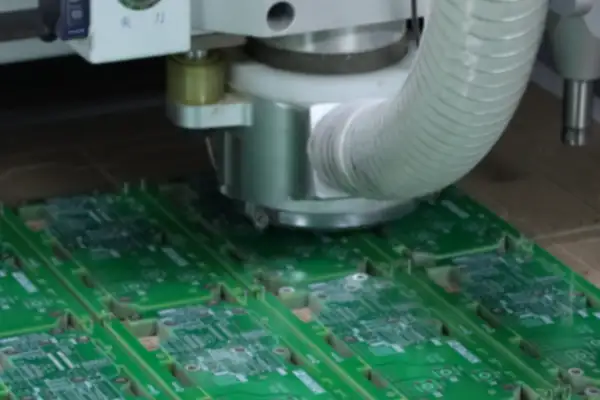
Now, when communicating with new suppliers, I directly ask a few questions: Are your plating lines vertical or horizontal? Do you perform plasma cleaning before the solder mask process? These questions often reflect the true level of expertise more than the price. Once, a salesperson hesitated for a long time before answering, and I knew then that the company’s technical management had problems.
Many people fall into the misconception that comparing prices from three suppliers will give them the best solution. But PCB manufacturing isn’t like buying groceries; you can’t judge the internal quality from the appearance alone. The most egregious example I’ve seen is a large manufacturer making a six-layer board only 1.6mm thick to save costs, resulting in completely messed-up impedance control. These hidden problems weren’t discovered until the final product testing, which was too late.
A good quote should be like a medical report, with all indicators meeting standards. I particularly value a manufacturer’s transparency regarding special processes, such as how they handle drilling holes smaller than 0.2 mm or how they control the uniformity of lead-free tin plating thickness. Suppliers willing to explain these details in detail are generally more trustworthy.
A factory I recently worked with was quite interesting; their quotation included a record of the production workshop’s temperature and humidity. This seemingly redundant information actually reassured me, at least showing they valued the stability of their production environment. Sure enough, after six months of cooperation, the board yield consistently remained above 98%.
Ultimately, choosing a PCB supplier is like choosing a marriage partner; focusing solely on the dowry will definitely lead to losses. You need to examine their technical expertise, quality awareness, and even their attitude towards problems. After all, these circuit boards will be used in products for several years; spending more time evaluating them now is better than constantly putting out fires later.
Every time I see those so-called PCB quotationes, I want to laugh. The numbers look impressive on the surface, but once you actually implement them, you discover pitfalls everywhere. I’ve seen too many people smugly accepting the unit price from the supplier, only to turn green with envy when they tallied up the final costs at the end of the project.
I remember last year helping a friend with a project; the supplier’s unit price was indeed tempting. But upon closer inquiry, I discovered that engineering fees were charged separately, and testing required additional payment. The most outrageous thing was that on the delivery day, they suddenly announced a handling fee, which was completely unfounded. These miscellaneous fees added up to almost 30% higher than the initial quote.
Now, when negotiating prices with suppliers, I’m very clear about everything. Does the engineering fee include it? How will the testing be done? How is logistics calculated? Don’t play word games with me. Especially for international orders, customs duties and VAT must be clearly stated in black and white. Some suppliers like to quote EXW prices, only to find out you have to pay a large customs clearance fee when the goods arrive at the port.
Actually, you can tell if a supplier is reliable just by looking at their pricing. Professional suppliers will proactively ask for Gerber documents and care about your specific needs. Those who only keep asking for your budget are likely planning something underhanded later. I’d rather spend a little more money to find a reliable supplier than worry about saving a few bucks.
A recent project made me quite reflective. Two suppliers quoted 20% different prices, but choosing the more expensive one actually saved me money. Because they laid out all potential costs clearly, even detailing how to handle possible quality issues. The cheaper supplier was straightforward, but when asked about details, they started dodging the question.
Ultimately, PCB procurement can’t be based solely on the unit price. Just like buying a house, you can’t only look at the price; renovations, property taxes, and other fees all add up. Some people are always haggling over the unit price, ignoring the larger costs that might be hidden elsewhere. A good quote should be like a jigsaw puzzle, showing all the pieces so you can see the whole picture.
I’ve developed a habit of checking the remarks section first when I receive a quote. If it’s empty or only has a few ambiguous lines, I can basically pass on it. Truly responsible suppliers will list all possible scenarios, even if it makes the quote look less attractive.
After all, the most important thing in business is to have a clear understanding of the costs. I’d rather know how much it will cost from the start than be caught off guard by unexpected expenses.
I recently noticed something interesting while helping a friend with a PCB project. The same design file sent to different manufacturers for PCB quotes could yield PCB prices that differed by two to three times. It took me a long time to figure out the problem.
Many people’s first reaction to receiving quotes is to compare the total price, ignoring the details that truly impact cost. For example, I once encountered a situation where two manufacturers quoted 40% different prices for the same four-layer board. Upon closer inquiry, I discovered the lower-priced manufacturer used recycled materials, while the higher-priced manufacturer used virgin materials. Although the difference isn’t immediately apparent, recycled materials have significantly lower impedance stability under high temperatures.
In fact, the impact of layer count on cost is more complex than we imagine. In one project I handled, the initial design was a six-layer board, but it turned out that optimizing the routing allowed a four-layer board to meet the requirements. After the change, the cost dropped by more than a third. However, some engineers, for safety, tend to design with more layers, which actually leads to waste.
A common misconception is that testing should be cut wherever possible. The most outrageous example I’ve seen is a manufacturer that quoted a lower price for AOI (Automated Optical Inspection) than for regular electrical testing, only to find out that their so-called AOI was actually just manual visual inspection. These hidden costs will ultimately be passed on to product yield, and the cost of rework will be much higher than the testing fees saved initially.
Aperture size is also an area where pitfalls can easily occur. Last time, a design used 0.25mm micro-holes, and one manufacturer quoted a very low price. Upon delivery, it turned out they had drilled the holes with ordinary drills, resulting in holes with walls as rough as sandpaper. Reliable manufacturers will clearly tell you the corresponding process routes for different hole sizes. For example, laser drilling, although more expensive, guarantees a higher yield.
Now, when I look at PCB quotes, I first turn to the process specification page to see if the manufacturer’s description of details such as material precision is specific. Those that only list a total price and are vague about everything else can basically be ignored. A good quote should clearly show you where every penny is spent, such as the type of substrate used for the layers and whether the surface treatment is leaded or lead-free—all of which directly affect the final cost.
Sometimes, asking a few more questions can uncover many problems. For example, once I asked why a certain company’s impedance control quote was so low. The person hesitated for a long time before admitting that they didn’t actually perform impedance testing, but simply adjusted the trace width based on experience. This seemingly cost-saving practice could ultimately render an entire batch of boards unusable.
Ultimately, PCB quotes are like medical reports; you can’t just look at the final number, you have to understand the meaning behind each indicator. After all, we’re not buying a board, but a stable solution.
Every time I receive PCB quotes from different manufacturers, I have a strange feeling—how can boards that look similar have such vastly different prices? I was initially puzzled by this phenomenon, but I gradually discovered that there are actually quite a few interesting tricks involved.
Many people rush to buy at low prices, thinking they’ve gotten a bargain, but this isn’t necessarily a good thing. I’ve seen people choose small workshops to save a few cents, only to find that the vias on the boards weren’t even properly plated. After two months, a large number of boards developed problems, and the cost of rework was more than ten times the money they initially saved. Conversely, a friend insisted on using the most expensive manufacturer for ordinary double-sided boards, believing that expensive meant better. Later, he discovered that the boards were almost indistinguishable from those from mid-range manufacturers, resulting in a waste of tens of thousands of dollars.
I think there’s a deep-seated misconception about PCB pricing: focusing too much on the unit price and ignoring the supporting factors. For the same FR4 board, the price difference between ordinary TG and high TG can be over 30%. Immersion gold and tin plating processes have completely different costs, not to mention the details hidden in the engineering fees. Small factories might skip basic checks like impedance calculations, while large factories would spend half a day on design optimization. These differences are simply not reflected in the initial quote.
Once, I specifically compared the breakdowns of three manufacturers’ quotes and found that the lowest-priced one listed testing fees separately on the second page, while the mid-range manufacturer included flying probe testing in the base price, and the highest-priced one added three extra quality sampling checks. You see, just understanding these items requires considerable industry experience, let alone making accurate judgments.
Now, I view PCB quotes more like evaluating a long-term partner. Salespeople who can clearly explain the cost structure are often more trustworthy. They are willing to spend time discussing material selection and may even suggest downgrading certain unnecessary high-specification components. This honesty is reassuring, because the circuit board is used in the product, and quality and stability are paramount.
Actually, stepping outside of price itself, what we really need is reliable production capacity, not just a piece of paper with numbers on it. Sometimes, spending a little more money for peace of mind can make subsequent work smoother. This is probably the lesson I’ve learned from years of experience.
Every time I see a PCB quote, I find it quite interesting. Many people’s first reaction is to stare at the unit price for a long time. But it’s not that simple. I’ve seen many people lured in by low prices when making purchases, only to discover a host of hidden costs upon receiving the invoice. Engineering fees are a prime example—this one-time investment is often overlooked, but its impact on the total cost can be greater than the unit price.
I remember helping a friend with a project last year; the supplier’s unit price seemed incredibly attractive. However, when it came time to place the order, they mentioned additional engineering and testing fees. Spreading these over a small batch order, the actual cost was significantly higher than the initial figure. This experience made me realize that simply comparing unit prices can easily mislead judgment.
The real factors affecting the final price are often those not immediately apparent. For example, the same process requirements can result in completely different pricing structures for different batch sizes. A higher proportion of fixed costs is natural for small-batch production, just like printing documents—the cost of printing one sheet is definitely different from printing a hundred.
Now, when reviewing quotes, I pay special attention to the non-unit price components. Sometimes, a seemingly high-priced solution is actually more cost-effective when engineering fees and other costs are factored in. Especially when you have long-term needs or potential follow-up orders, the initial one-time investment actually saves you money later.
A recent case is a typical example. Two suppliers quoted the same product: Supplier A had a lower unit price but higher engineering fees, while Supplier B had a slightly higher unit price but almost no engineering fees. If it’s just a small batch, Supplier A might be more cost-effective; however, if it’s for multiple orders, Supplier B’s solution is clearly more suitable. Without doing the calculations, it’s easy to make the wrong choice.
Ultimately, you need a holistic approach to PCB pricing. Break down the costs of each stage and compare them based on your actual needs to find the truly suitable solution. After all, every project is different, and blindly copying others’ choices may not be reliable.
Every time I see a PCB quote, I want to laugh. Those numbers seem straightforward, but there are so many hidden tricks behind them. I’ve seen many engineers looking at PCB quotes from different manufacturers, completely baffled as to why the same number of layers and the same dimensions can have such vastly different prices.
Many people assume that—since they are all FR materials—they are essentially interchangeable, and that any option will suffice as long as it works. This line of thinking is far too naive; the differences between various FR materials are far greater than you might imagine. We once worked on an industrial control project where we selected a manufacturer that offered an exceptionally low quote. The result? The circuit boards warped severely when exposed to high-temperature environments. Upon disassembling and inspecting them later, we discovered that they hadn’t used the high-Tg materials they had specified at all; instead, they had substituted the most basic, standard-grade materials. Ultimately, every penny saved upfront was completely lost on subsequent after-sales repairs.
Sometimes, manufacturers will list high-end materials on their quotes, but secretly substitute lower-grade ones in actual production. This kind of substitution is common in the industry. You have to understand that the real cost differences are often hidden in these details, not something you can see by simply comparing a few numbers.
I’ve encountered even more outrageous cases. One supplier listed testing fees separately in their PCB quote, making the total price seem low. But when you actually placed the order, you discovered that even basic connectivity testing was charged extra. This kind of robbing Peter to pay Paul pricing is purely a psychological game.
Ultimately, judging the reliability of a PCB quote shouldn’t just be based on the total price; you need to see if they dare to clearly state the materials and manufacturing process details. Reliable manufacturers will clearly state the grade of FR material they use, the thickness tolerance, and even the ink brand. Vague quotes are often suspicious.
I remember once comparing quotes from three suppliers. The one that came out on top wasn’t the lowest, but they laid out every cost component, even providing the batch number of the board material. This transparency gave us more confidence, and we found that quality issues were rare after we started working with them.
Now, I’m more wary of overly attractive PCB quotes. Sometimes, unusually low prices aren’t due to high efficiency, but rather manipulation in certain areas. After all, making PCBs isn’t like buying vegetables; saving money can easily become a headache later.
PCB pricing is quite interesting. I’ve seen many people completely confused when they receive PCB quotes from different factories. There’s a particularly easily overlooked point—many people focus too much on the board material type and ignore other details.
Take copper foil, for example. Once, I helped a friend review a power board quote. Both factories listed FR material, but the prices differed significantly. Upon closer inspection, I discovered that one supplier used thin copper foil, while the other explicitly stated it was thickened. The thinner foil overheated and discolored during thermal testing.
Sometimes, factory specifications may seem similar, but the actual manufacturing quality can vary drastically. I’ve encountered situations where the design documents specified a particular thickness, but it was secretly downgraded during production. Such cost-cutting may not be immediately apparent, but the problems will surface over time.
Truly reliable manufacturers will clearly communicate the rationale behind every selection detail during the quotation stage. They won’t just vaguely state that FR material is used; they’ll specify the model and even suggest adjustments based on your actual needs. This transparency inspires confidence.
I believe that choosing a supplier shouldn’t be solely based on price; you must consider their attitude towards technical details. Factories that write ambiguous specifications often cut corners where you can’t see them. After all, circuit boards are used long-term; saving a little money can create major problems.
Now, whenever I receive a PCB quotation, I pay special attention to how they describe material specifications. Manufacturers who clearly specify copper foil thickness and substrate type are usually more trustworthy. This level of attention to detail reflects, to some extent, their craftsmanship.
Ultimately, finding a factory is like finding a partner; both technical strength and integrity are indispensable. The fact that some low prices may come at the expense of quality is particularly evident in the circuit board manufacturing industry.
What actually makes a long-term PCB supply chain partnership work — shared
Practical, experience-based strategies for how to reduce PCB procurement risks — from
Real factory-floor lessons on how to optimize a PCB manufacturing process —
- Expert en production de petites et moyennes séries
- Fabrication de circuits imprimés de haute précision et assemblage automatisé
- Partenaire fiable pour les projets électroniques OEM/ODM
Heures d'ouverture : (Lun-Sam) De 9:00 à 18:30
Get quote, solution or any question, Andre always here to help