

SprintPCB Wraps Up the Global Sources Fall Show with New Global Partnerships
SprintPCB wraps up the 2026 Global Sources Fall Show with 49 prospective
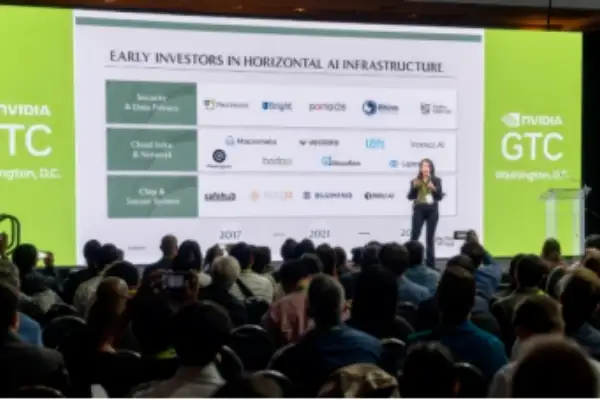
After the recent GPU announcements at NVIDIA GTC, most attention has been focused on computing power. However, behind the scenes, the real price surge is happening elsewhere — in PCB materials, especially copper clad laminates (CCL).
Driven by AI infrastructure demand, the industry is rapidly shifting from a compute-driven competition to a materials-driven pricing cycle.
1. Technology Shift: Why M9 Materials Are Becoming Critical
The latest AI server architectures are reshaping hardware design:
Interconnects are moving from cables to PCB backplanes
Data transmission performance is becoming the new bottleneck
This shift places extreme demands on PCB materials.
CCL materials are typically classified from M1 to M9, based on:
Dk (dielectric constant) → signal speed
Df (dissipation factor) → signal loss
While M7/M8 are widely used today, M9 is emerging as the next-generation standard for AI servers.
This is not an incremental upgrade — it is a material-level transition.
As data rates increase from 800G to 1.6T and beyond, signal loss rises exponentially. Without M9 materials, high-speed data transmission becomes increasingly difficult.
M9 requires a full upgrade across multiple material layers:
Glass fabric → from standard to Low-Dk and quartz (Q-glass)
Copper foil → from HVLP3 to HVLP5 (ultra-smooth surfaces)
Resin systems → shifting from epoxy to hydrocarbon materials
Fillers → from angular to spherical silica for higher loading
2. Price Surge: Three Key Drivers
This round of price increases is sharp and structural.
① Capacity Constraints in High-End Materials
AI server PCBs increased from 20–24 layers to 40–70+ layers
Value per unit is up to 8× higher than standard servers
Supply shortages are becoming critical:
HVLP copper foil → supply gap exceeding 50% (forecast)
High-end glass fabric (Q-glass) → lead times extended beyond 60 days
② Geopolitical and Energy Cost Pressure
Raw materials linked to oil-based chemicals are rising:
Copper prices ↑ ~43%
Glass fabric ↑ up to 100%
Resin ↑ ~20%
Global instability continues to impact supply chains and pricing.
③ Upstream Pricing Power Shift
High-end material supply is highly concentrated:
Glass fiber → dominated by Japanese suppliers
Copper foil → controlled by a few global players
Advanced resins → largely monopolized
Recent price increases from major suppliers signal a clear trend:
Pricing power is moving upstream.
3. Industry Impact: Margin Pressure on PCB Manufacturers
Material cost structure of CCL:
Copper foil: 40–50%
Resin: 23–30%
Glass fabric: 18–27%
With ~90% of cost tied to upstream materials, margin pressure is inevitable.
CCL suppliers → benefiting from price increases
PCB manufacturers → facing margin compression
In this environment, yield and process control become critical.
A defective board now means losing not only processing cost, but also high-priced materials.
4. How Leading PCB Manufacturers Respond
In a rising-cost environment, technology-driven PCB manufacturers are showing greater resilience.
By focusing on:
Advanced material selection
Process optimization
Supply chain partnerships
They can partially absorb cost pressure rather than pass it directly to customers.
This reflects a key industry shift:
Competitiveness is no longer based on price, but on technology capability and delivery reliability.
5. Structural Shift in the Value Chain
This AI-driven cycle is fundamentally changing the industry:
Companies that secure stable access to high-end materials will gain a long-term competitive advantage.
At the same time, the current supply pressure is accelerating local supply chain development and material innovation, creating new opportunities across the ecosystem.
The PCB industry has long been highly competitive, but this pricing cycle is reshaping its rules.
Low-cost competition is no longer sustainable.Instead, engineering expertise, supply chain depth, and manufacturing consistency are becoming the defining factors.
About SprintPCB
Shenzhen SprintPCB CO., LTD. specializes in advanced PCB solutions, including:
With strong expertise in advanced materials and process control, SprintPCB provides reliable hardware support for AI, data center, and high-performance electronics applications, helping customers meet the growing demands of next-generation technologies.
SprintPCB wraps up the 2026 Global Sources Fall Show with 49 prospective
Discover how SprintPCB celebrates Mid-Autumn Festival with mooncake gifts and a festive
SprintPCB’s 2026 Mid-Autumn Festival and National Day holiday schedule, including order processing
Get quote, solution or any question, Andre always here to help