

Heat Dissipation Challenges and Solutions in PCB Circuit Board Design
Circuit boards are more than just that green board in a phone
Every time I see the inside of complex electronic devices, I think of the unsung heroes who manufacture the circuit boards. They do far more than simply turn blueprints into physical objects; they’re like building the skeleton and nervous system of the product.
I’ve seen too many teams focus all their energy on design and marketing. When it comes time to find a PCB manufacturer, they just pick the cheapest one. The result? Either delivery delays disrupt the entire plan, or they receive circuit boards with various minor flaws. These small problems are often only discovered during the testing phase, but by then, the cost of modifications has multiplied several times over.
A good PCB manufacturer actually acts as a risk manager. They know which materials are more stable in high-temperature environments. They understand the impact of different processes on signal integrity. They can even anticipate potential problems in the design. This kind of experience isn’t something you get from simply following a blueprint. Partnering with a good PCB fabrication manufacturer is like hiring an experienced driver who knows the roads well. They can help you avoid many unseen pitfalls.
I remember once we needed a circuit board made of a special material for a compact device. Our long-term manufacturer suggested using a flexible substrate instead. They also shared their previous experience with similar cases and their thermal management solutions. This suggestion reduced the product thickness by one-third. This value far exceeded the simple processing cost.
The industry is changing so fast now. The processes that are popular today might be obsolete next year. Truly reliable partners continuously update their technological capabilities. When you need to break through existing technological bottlenecks, they can provide practical and feasible solutions. Choosing a manufacturer is essentially choosing a partner for mutual growth. Their professionalism directly impacts the potential of your product.
I’ve seen too many engineers underestimate the complexity of PCB manufacturing. They think that simply drawing the schematics and sending them to the factory is all there is to it. However, the true test of a PCB manufacturer’s skill isn’t how fine a line width they can achieve, but their ability to maintain consistency during mass production. I would never use a factory that produces perfect prototypes but encounters problems during mass production.
Many people focus solely on the values in the design software when it comes to impedance control, neglecting the fluctuations in actual production. A good PCB fabrication manufacturer will tell you the variations in their material batches and how significantly temperature and humidity on the production line affect the signal integrity of the final product. Once, we designed a high-speed board where the impedance matching looked ideal in simulations, but the first batch of boards showed a deviation of over 10%. We later discovered that the substrate supplier had switched to a different type of copper foil, and the manufacturer hadn’t made the necessary process adjustments.
Packaging technology is becoming increasingly important, especially for boards with directly mounted chips. I value a manufacturer’s sensitivity to new materials and processes. For example, some PCB manufacturers have been researching embedded devices for high-density interconnects for years, while others are still stuck in the through-hole mounting era. This gap isn’t something that can be bridged by simply buying a few new pieces of equipment; it’s more about overall technological accumulation.
Consistency is the gold standard for measuring a factory’s capabilities. I always ask to see their production data records for the past three months before placing an order, especially the CPK values of critical parameters. Truly reliable manufacturers will proactively share this information because they are confident in their process capabilities. Those who hesitate and cite trade secrets usually have something to hide.
Recently, a project gave me a profound insight. We used a small factory for flexible PCBs, and found that the bending life of different batches varied by more than three times. We later realized that they had mixed different sources of coverlay materials to reduce costs. These seemingly insignificant details often determine the final reliability of the product.
Finding a supplier is like finding a partner; technical capabilities are important, but even more crucial is their attitude towards quality. During a factory visit, I noticed that their quality control personnel displayed defective products in the most prominent location, analyzing the reasons every morning during their meetings. This kind of quality awareness is more valuable than any certification.
The industry is changing rapidly, from traditional rigid boards to rigid-flex combinations and then to system-level packaging. Each stage presents new demands on manufacturers. I believe that instead of pursuing the most cutting-edge technology, it’s better to first find a partner who can master the fundamental processes. After all, even the most advanced design requires reliable manufacturing to be realized.
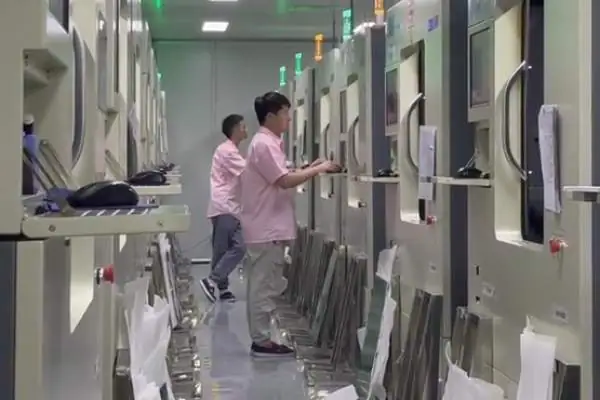
Every time I walk into a PCB manufacturing plant, I always start by observing their work environment. Are the employees operating the equipment in an orderly manner? Are there various certification labels posted on the walls? This isn’t about being picky, but because a truly reliable PCB manufacturer often reveals its professionalism through everyday details. ISO certification is certainly important—it’s like an admission ticket, proving that the factory at least knows how to follow the rules. But certificates alone are not enough.
I’ve seen some companies frame their ISO certificates and hang them in the most conspicuous place. But when you ask about the traceability mechanism in specific production processes, they become vague. A truly good factory integrates the traceability system into every step, from raw material warehousing to finished product shipment, making everything traceable. This is not just about passing inspections, but a responsible attitude towards customers.
Last year, we collaborated with a PCB fabrication manufacturer who had a particularly simple approach: each batch of boards had a handwritten process card attached. Although it looked a bit old-fashioned, it allowed them to quickly pinpoint the specific machine and shift when quality problems occurred. This down-to-earth management style makes me feel more confident than those companies that only showcase their luxurious testing equipment.
Now many customers ask, “Which industry certifications do you have?” Actually, I value the manufacturer’s attitude towards problems more than the number of certificates. Once, a batch of boards had a micro-short circuit. The manufacturer not only investigated the problem overnight but also proactively re-inspected all similar products. This kind of conscientiousness is more convincing than any certification.
When choosing a partner, I often advise my team not to just look at the wall of honors in the brochures. Go to the workshop, see if the employees on the assembly line are focused, and observe how many boards are piled up in the rework area. These real-life details are the touchstone for testing the strength of a PCB manufacturer.
Ultimately, certifications and traceability are just tools; the key is whether the user has a sense of responsibility. Just like having the most advanced kitchen equipment doesn’t guarantee you can cook good food. A good PCB factory will instill quality awareness into the daily actions of every employee—this is the most valuable competitive advantage.
I recently chatted with a few friends who do hardware development, and I found that everyone is quite conflicted when choosing a PCB manufacturer. Some people, seeking lower costs, chose small workshops, which ultimately delayed project progress; others blindly trusted big brands only to find that these companies didn’t care about the needs of small-batch orders.
Finding a manufacturing partner is actually quite simple and straightforward – it’s about whether they truly care about your needs. Once, when I visited the production workshop of a PCB fabrication manufacturer, I noticed an interesting phenomenon: their engineers proactively recorded the special process requirements proposed by customers. This surprised me because most factories only follow standard procedures. For example, one customer needed an HDI board with impedance control accuracy of ±5%. They not only specifically adjusted the lamination parameters but also proactively provided dielectric constant test reports for three different materials for the customer to choose from. This ability to translate customer needs into specific technical solutions precisely reflects the manufacturer’s technical expertise.
Performance evaluation shouldn’t only focus on the numbers on the reports. Our company was once let down by a PCB manufacturer with seemingly impressive surface data; their batch pass rate looked very high, but in actual use, we found that the impedance control accuracy did not meet the design requirements. Later, we adjusted our audit method and began to focus on the manufacturer’s response speed to unconventional requirements. Now, during the quotation stage, we throw out several technical challenges, such as requiring the thickness of a specific signal layer in a 10-layer board to be controlled within ±0.02mm, and observe whether the other party directly refuses or provides a feasibility analysis. One manufacturer even used simulation software to demonstrate the impact of different lamination schemes on layer deviation, and this depth of technical response impressed us.
Now, before collaborating with any new supplier, I ask them to provide case studies of how they handled special processes in the past six months. For example, have they done mixed lamination of high-frequency materials? What unique experience do they have with blind and buried vias? These details are often more telling than certification certificates. Once, a supplier showed a case study: they solved the delamination problem when mixing PTFE material with FR-4 for a medical equipment client. By adjusting the concentration of the browning solution and the lamination curve, they increased the bonding strength to more than 1.2 N/mm. This kind of specific technical problem-solving case is more convincing than vague quality promises.
I’ve made an interesting discovery: PCB manufacturers who frequently proactively offer design optimization suggestions are usually easier to work with. They don’t blindly cater to the customer but provide professional opinions from a manufacturability perspective. This type of interaction actually helps us avoid many production risks in advance. For example, when designing a 6-layer board, the manufacturer suggested changing the blind hole diameter from 0.15mm to 0.2mm. Although this would increase costs by 5%, the yield rate would improve by 20%. They demonstrated the impact of different hole diameters on plating uniformity using actual test data. This advice, based on their process capabilities, helped us avoid potential quality issues.
Recently, we’ve been trying to transform supplier audits from periodic inspections to dynamic evaluations. We record their process stability with each prototype run, especially their strictness in tolerance control. This is more valuable than a single inspection at the end of the year. Specifically, we place five consecutive prototype orders with the same manufacturer, requiring them to maintain the same line width tolerance and hole position accuracy. By measuring the actual deviations each time, we can see if the manufacturer’s process control capabilities are stable. Once, we found that a manufacturer’s solder mask thickness fluctuation reached ±5μm, far exceeding their claimed ±3μm standard. This dynamic data reflects their true capabilities better than any certification document.
In fact, there’s an easily overlooked detail in manufacturing: truly reliable manufacturers never emphasize “minimum order quantity.” They are more concerned with solving customer problems through technological expertise. Once, a manufacturer even optimized drilling parameters specifically for our 500-piece trial production order. This attitude is more reassuring than any certificate. Their engineers mentioned a detail: for the 0.3mm micro-holes on our board, they tested three different drill bit angles and finally selected a 130-degree angle drill bit, reducing the hole wall roughness from 25μm to 18μm. This willingness to optimize processes even for small orders is the foundation of long-term cooperation.
After working in the circuit board industry for a while, you’ll notice an interesting phenomenon. Many people’s first reaction when looking for a PCB manufacturer is to compare prices. That’s normal; who doesn’t want to save money? But focusing solely on the numbers on the price list might cause you to miss what’s truly important.
I’ve seen many customers who initially chose the lowest-priced PCB manufacturer, only to later experience repeated quality problems, delaying project progress. Considering the time cost and rework expenses, it ended up being more expensive than choosing a mid-priced manufacturer. So now, when friends ask me which manufacturer to choose, I always remind them to first consider the intended application of the board.
For example, if you’re making a simple student experiment board, there’s no need to find a high-end manufacturer. However, if it’s for medical equipment or automotive electronics, I advise you to be more cautious. The reliability requirements in these fields are no joke; a single failure can have serious consequences. This is where the technical expertise and quality system of the PCB fabrication manufacturer become particularly crucial.
I appreciate manufacturers who are willing to spend time communicating details with their clients. They don’t rush to give you a quote, but instead clarify your application scenarios and even help you analyze potential areas for design optimization. While this collaborative approach takes more time initially, it saves a lot of trouble in the long run.
A friend of mine in industrial control suffered a loss last year. To save costs, he chose a small factory, but the first batch of boards had impedance problems, requiring the entire batch to be reworked. Later, he switched to a different manufacturer, and although the unit price was 15% higher, the first-pass yield was close to 100%, making it more cost-effective overall. This experience reinforced my belief that you shouldn’t only look at the surface price when choosing a manufacturer.
There’s a trend in the industry now where more and more manufacturers are focusing on overall service capabilities. Good PCB manufacturers not only excel in the production process but also provide technical support during the design phase. This deep collaboration benefits both parties: clients get more reliable products, and manufacturers can anticipate and avoid production difficulties.
Ultimately, choosing a manufacturer is like finding a partner; the key is whether the two parties are a good fit. Some clients prioritize extreme cost-effectiveness, while others value technical strength more. There’s no absolute right or wrong, only what’s suitable. The important thing is to consider all possibilities before making a decision and not let short-term costs influence long-term judgment.
I recently chatted with several friends who work in hardware development and noticed an interesting phenomenon. Many people’s first reaction when choosing a PCB manufacturer is to compare prices and delivery times, but this often leads to problems. In one of our previous projects, to save costs, we chose a small factory, but the circuit board impedance control was unstable, causing the yield rate of the entire batch to drop below 70%. Especially when the product needs to withstand high temperature and humidity environments, this impedance drift can lead to signal timing errors. For example, the differential pairs we used in communication equipment at the time had completely unusable eye diagrams. We had to urgently add a surface coating treatment, which made the cost per board 40% higher than if we had chosen a qualified supplier from the start.
Truly reliable PCB manufacturers often have their own expertise in material selection and matching. For example, which substrate material should be used for high-frequency boards to simultaneously control loss and cost? How to balance heat resistance and signal integrity for boards used in medical equipment? Large manufacturers typically accumulate a vast amount of data on these details. During a visit to an established PCB fabrication manufacturer, their engineers showed me test records of the thermal expansion coefficient of different board materials; they had been tracking this data for three years. They also showcased a modified PTFE material for 5G millimeter-wave applications, controlling the dielectric constant temperature coefficient within ±50 ppm/°C by adding ceramic fillers. This material formula is considered a core trade secret in the industry.
Many teams now simply send their design files to the factory and wait for the finished product, but they’re missing a crucial step. Good manufacturers will proactively provide feedback on design risks, such as BGA fan-out vias being too close to the board edge or power plane segmentation potentially causing localized overheating. I encountered a Taiwanese PCB manufacturer who, during the engineering review, suggested moving a certain filter capacitor by 2 millimeters, and as a result, the EMC test passed on the first try. They even established an intelligent detection system that can automatically identify acid trap issues in the design—sharp corners in the traces where chemical solutions can easily get trapped during the etching process, a detail that even many experienced layout engineers overlook.
Ultimately, choosing a PCB supplier is a bit like finding a long-term partner. Simply looking at their equipment list isn’t very meaningful; what truly matters is their ability to solve unconventional problems. Last time, we had a board that required metal edging while maintaining impedance accuracy. We consulted three factories, and only one could clearly explain the impact of laser cutting on the dielectric layer. That manufacturer also showcased their special edging process developed for aluminum substrates, controlling the heat-affected zone to within 15 micrometers by controlling the laser pulse frequency, thus avoiding carbonization damage to the adjacent insulation layer.
Sometimes, niche areas reveal true expertise. For example, flexible circuit boards that need to withstand hundreds of thousands of bends while maintaining solder joint reliability are orders that most factories wouldn’t dare accept. But professional PCB manufacturers will create gradient changes in the copper foil thickness at each stress point—this kind of experience isn’t covered by standard procedures. The most impressive thing I’ve seen was a reinforcement solution for aerospace-grade FPCs, using a spiderweb-like copper plating on the polyimide substrate, ensuring both dynamic flexibility and stress distribution through the mesh structure. This design was later included in an industry white paper.
Nowadays, some startups are quick to seek out the top ten global PCB manufacturers, but this isn’t necessarily the best approach. I once collaborated with a small PCB manufacturer with only two production lines, but they specialized in military-grade blind and buried via boards, controlling the gold plating thickness to within ±0.5 micrometers—more precise than many large factories. They had a unique technique using pulsed electroplating instead of direct current electroplating, adjusting the duty cycle to ensure more uniform gold ion deposition in the holes. This process allowed them to achieve over 85% uniformity in deep-hole gold plating.
There’s a clever way to judge the level of a circuit board manufacturer: see if they are willing to share their failure cases. During a factory visit, a director directly showed us microscope images of a batch of boards with rough hole walls due to deviations in electroplating parameters. This transparency was reassuring. They also demonstrated a two-stage countercurrent rinsing system they developed to solve this problem, controlling the concentration of residual complexing agents in the holes to below 0.3 ppm by adding a deionized water spraying process. This improvement increased the copper-to-hole adhesion by 30%.
Lately, I’ve come to realize that geographical location is becoming less important. Our manufacturing partner in Shenzhen, which produces industrial motherboards for German clients, still manages to obtain TÜV certification, while a Swedish family business specializing in medical PCBs actually uses pressing equipment manufactured in Dongguan. The key lies in quality control philosophy. That Shenzhen factory recently introduced AI visual inspection, using deep learning algorithms to identify defects such as circuit gaps and burrs, reducing the misjudgment rate by half compared to traditional optical inspection. This technological iteration capability is the core competitiveness.
I recently chatted with several friends in the hardware industry and found that many fall into a common misconception when choosing PCB manufacturers – they think that Southeast Asian factories are cheaper and therefore the best option. However, cost is only the most superficial aspect.
Last year, we had a project with a Vietnamese PCB manufacturer. The quote was indeed 15% lower than domestic prices, but the first batch of boards had significant impedance control deviations. We later learned that their process parameter library lacked sufficient experience in adapting to high-speed materials. This hidden cost delayed the project by a month.
PCB manufacturing is quite interesting. Some mass-production manufacturers can produce ordinary multilayer boards at rock-bottom prices, but when it comes to adjusting dielectric thickness or special copper foil treatment, their production line flexibility falls short. I’ve seen even more extreme cases where a PCB fabrication manufacturer didn’t even have basic Tg150 material in stock.
What truly tests a manufacturer’s capabilities is often the details. For example, when making 8-layer boards, some factories can control the interlayer alignment tolerance within 50 micrometers, while others can’t even guarantee 100 micrometers. During a visit to a technology-oriented factory in Shenzhen, I was impressed by the laser drilling precision of their any-layer HDI boards – this kind of process capability directly determines whether they can produce motherboards for wearable devices.
Now I place more importance on a manufacturer’s responsiveness to new materials. Low-loss materials commonly used in 5G equipment often require three rounds of parameter adjustments from prototyping to mass production. Some manufacturers balk at the idea of changing the lamination program, while excellent PCB manufacturers proactively provide material database comparison solutions.
The flexible circuit board field is even more complex. Some manufacturers still use ten-year-old hot-pressing processes for FPC production, leading to bubbling in the coverlay. A factory in Suzhou that I collaborated with was quite impressive; their rigid-flex boards for medical equipment could even pass 2000 bending tests. Ultimately, choosing a supplier isn’t about selecting the cheapest option, but rather the one that understands the product best. A good PCB manufacturer should be like a research and development partner, able to advise you on which stacking structure offers the best cost-performance ratio and which surface treatment is suitable for automotive electronics. After all, what we ultimately need isn’t just a circuit board, but the overall competitiveness of the entire product.
Circuit boards are more than just that green board in a phone
From disassembling old routers to visiting electronics manufacturing plants, I gradually realized
As an electronics enthusiast, I’ve come to understand firsthand the impact of
- Pienten ja keskisuurten erien tuotannon asiantuntija
- Korkean tarkkuuden piirilevyjen valmistus ja automatisoitu kokoonpano
- Luotettava kumppani OEM/ODM elektroniikkaprojekteihin
Aukioloajat: (ma-la) klo 9:00-18:30.