

What a Printed Circuit Board Quote Doesn’t Tell You: The Hidden Traps Behind a Panic Button PCB Order
Every time you receive a Printed Circuit Board Quote, have you ever
When discussions turn to factory automation, attention naturally goes to the sophisticated visible equipment — the robotic arms, the precision vision systems, the automated guided vehicles. A different focus has more value for understanding what actually determines whether a production line runs reliably: the circuit boards that nobody sees. The board hidden inside the equipment is what determines whether the entire production line runs smoothly. It must withstand the unending vibration of the shop floor while adapting to constantly shifting temperature conditions. Not just any circuit board can do this.
Too many cases have been encountered where a single board problem caused an entire line to stop. The losses in those situations are not trivial — even a few minutes of downtime are painful. This has driven increasing attention to controlling the complete production process, from material selection at the start through every test stage at the end.
In material selection, industrial and automotive-grade components are selected by preference — components that have been tested more rigorously and can operate stably across temperature ranges from minus 40 to plus 85 degrees Celsius or beyond. At the testing stage, beyond standard electrical performance tests, three-proof coating inspection, X-ray verification of solder joint quality, and loaded burn-in testing that simulates actual operating conditions are introduced to ensure the circuit board remains reliable in harsh environments.
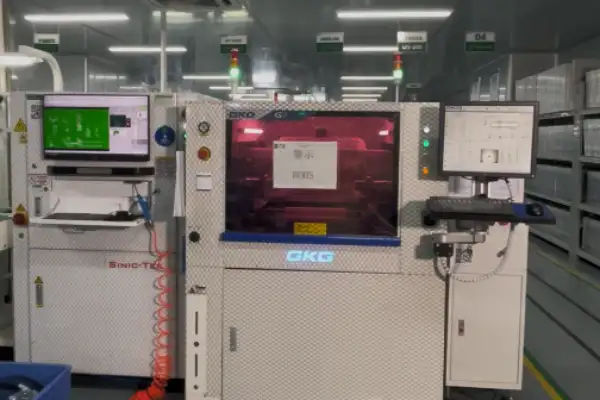
What Has Changed in PCB Assembly Services
The biggest change in PCB Assembly Services is that the competition is no longer about who can produce faster. Past competition centered on throughput capacity. What is valued now is the precision of the entire process and the ability to respond flexibly. The requirement is to rapidly adjust production plans based on customer needs while ensuring every board meets quality standards under scrutiny.
When customers make temporary design changes or component substitutions, a capable service provider can quickly assess the impact, adjust process paths and programming files, without requiring extended re-preparation periods.
Experience with Turnkey PCBA suppliers has confirmed that good service providers genuinely reduce operational burden. They do not simply mount components and stop — they plan the entire production process from start to finish. In the procurement stage, they account for long-term supply stability to avoid situations where a component discontinuation later causes scrambling. They maintain alternative material libraries and maintain close communication with original manufacturers, providing early warning of supply risks and even making strategic inventory investments for customers’ key products.
Automation That Matches Actual Requirements
The increase in automation level brings real benefits. Many advanced production lines now achieve full traceability — which materials were used on each board and which processes it passed through are all clearly recorded. For industrial control applications, this traceability is especially important: when problems require root-cause investigation, this data proves invaluable.
However, some factories have pursued full automation to excess and ignored actual requirements in the process. Not every stage requires the highest level of automation. The key is finding the production method that fits the product’s characteristics. Sometimes maintaining appropriate manual inspection stages actually produces better quality assurance. For irregularly shaped components, flexible circuit board assembly, or process points requiring special handling, experienced technicians using visual inspection and auxiliary tools can detect subtle, non-standard defects that machine vision misses.
Looking ahead, the development direction for Factory Automation PCB Assembly should be more intelligently flexible production: satisfying the needs of large-batch orders while flexibly addressing small-batch customization requirements. This requires better coordination and collaboration across the supply chain.
Intelligent flexibility means the production system can self-optimize based on real-time data — automatically adjusting baking time based on component moisture sensitivity level, or dynamically compensating placement pressure based on actual PCB warpage. These capabilities distinguish adaptive production from simply running programmed equipment faster.
Mixed-Process Workflow for Industrial Applications
Industrial automation PCBs frequently require both surface-mount and through-hole components — high-density digital processing and communications circuits alongside large-format connectors, power relays, and terminal blocks designed to handle significant mechanical stress.
One project provided a useful demonstration. Both the client’s design team and the manufacturing team initially favored converting everything to surface-mount, reasoning that this was more “advanced.” Recommendation was made based on experience: those large through-hole power components would face problems with cost, heat dissipation, and mechanical strength if forcibly converted to surface-mount packaging. Retaining through-hole design and handling it with high-quality wave soldering produced a board that was highly reliable, to the customer’s satisfaction.
The lesson this example illustrates: good manufacturing means knowing how to make trade-offs and find the best match between different requirements rather than pursuing any single technology to an extreme. A “mixed process” — part surface-mount, part wave soldering or other soldering methods — is sometimes the most practical and reliable choice. It tests the service provider’s depth of understanding of the entire production process, not mastery of any trendy terminology.
Solder paste management is a frequently underestimated variable. Paste not properly temperature-conditioned before use produces solder joints with different microstructure characteristics than joints produced from properly conditioned paste. Under sustained vibration, the difference in solder joint fatigue life can be substantial.
The Value of Single-Responsibility Supply
When factories pursue cost reduction by splitting design, procurement, and assembly across separate vendors, a specific failure mode appears. The system installed on the production line begins showing intermittent faults. Each vendor points to the others’ work. Investigation after months of troubleshooting identifies the root cause: the different vendors were using materials and process standards that were not mutually compatible, creating hidden compatibility problems.
The resolution cost in lost production time exceeded the initial savings many times over.
This is where Turnkey PCBA service mode creates genuine value. It is not only about eliminating coordination cost. More importantly, it establishes a single accountability — when a problem appears, there is no basis for attributing it to design defects, material issues, or soldering process, because one entity is responsible for all three. A true Turnkey service provider gets involved at the design stage to assess manufacturability, identifies elements that create manufacturing risk, and suggests modifications that improve yield or long-term reliability before any file is released to fabrication.
What to Look for in a Supplier
Understanding the customer’s usage scenario and potential risks to determine the actual technical requirements — rather than simply executing against a specification document — is the quality of engagement that distinguishes capable industrial PCB assembly suppliers.
Equipment specifications establish a capability baseline, but process controls determine whether the equipment’s capability is consistently realized across production runs. A supplier whose placement machines achieve stated accuracy but whose solder paste management is undisciplined, whose oven profiles are not validated for specific board designs, and whose floor temperature and humidity are uncontrolled will produce less consistent results than a supplier with slightly less impressive equipment specifications but disciplined process controls throughout.
Small-batch flexibility is real value for industrial development programs, but the correct interpretation is not fastest single-board turnaround. It is the ability to produce small pilot quantities using the same materials, process parameters, and inspection standards as volume production — so that design validation results actually transfer to production reliability. A supplier whose prototype process differs materially from their production process provides false confidence at the validation stage.
The circuit boards these products carry will operate in industrial environments for years, possibly for more than a decade. Only a genuine understanding of the customer’s usage scenarios and potential risks translates that understanding into a product that holds up. Inspecting a supplier’s electrostatic protection implementation, its workshop temperature and humidity controls, and its material storage management often reveals more about long-term reliability than reading their specification documents.
When equipment runs day and night on the production line, the additional effort and cost invested during Turnkey PCBA supplier selection proves its value. The boards that make it run reliably are the invisible foundation of everything visible above them.
Every time you receive a Printed Circuit Board Quote, have you ever
Every time I receive a freshly built Off-Grid Solar Inverter PCB prototype,
Many engineers focus too much on technical parameters early on and overlook
- Pienten ja keskisuurten erien tuotannon asiantuntija
- Korkean tarkkuuden piirilevyjen valmistus ja automatisoitu kokoonpano
- Luotettava kumppani OEM/ODM elektroniikkaprojekteihin
Aukioloajat: (ma-la) klo 9:00-18:30.
Get quote, solution or any question, Andre always here to help