

PCB Manufacturing Standardization: Why the Best Server Cooling Controller PCB Designs Break the Rulebook on Purpose
PCB manufacturing standardization brings quality assurance and industry-wide coordination, but it also
While recently tidying up my studio, I stumbled upon several old-school through-hole circuit boards. Holding them in my hands—feeling their substantial weight and texture—brought back memories from the very beginning of my career. Back then, I always felt that these perforated boards were technologically inferior to their surface-mount counterparts; looking back now, I realize just how naive I was.
Many people assume that the dense array of holes on a circuit board serves a purely simple connective function; in reality, the design choices behind varying hole diameters involve a great deal of nuance. I recall an instance where I was helping a friend repair a vintage instrument; I discovered that a 0.8mm structural mounting hole had been mistakenly utilized as an electrical via, completely disrupting the board’s thermal dissipation pathways. This design error—mixing structural holes with electrical ones—strikes me now as simultaneously amusing and a cautionary tale worth heeding.
The critical importance of matching hole diameters is a detail often overlooked by beginners. During one experiment, I attempted to force a component lead with a 1mm diameter into a 0.9mm hole; the result was not only damage to the plating but also a short circuit between adjacent traces. It was only then that I truly understood why veteran engineers always advise, “Leave some room for tolerance”—especially in scenarios involving manual soldering, where an extra 0.1mm of clearance can make the assembly process significantly smoother.
Nowadays, I occasionally encounter designs where, in the pursuit of miniaturization, hole diameters are pushed to their absolute minimum limits—a practice that, ironically, increases the difficulty of mass production. I once had a client who insisted on using 0.3mm through-holes for the thermal dissipation of power components; consequently, they experienced repeated failures involving poor solder fill during the wave soldering process. In reality, simply widening the holes slightly to 0.5mm would have ensured adequate solder penetration without consuming an excessive amount of board real estate. These experiences have led me to realize that behind the seemingly simple drilling process lies a delicate balance between electrical performance, manufacturing costs, and reliability. Sometimes, taking a step back and opting for more conventional parameters can actually yield a more stable overall result. After all, a good design should resemble the work of a seasoned craftsman—where every dimension reflects careful consideration of its practical application.
I have always found the design of through-hole circuit boards particularly fascinating. I recall an instance where I disassembled an old radio; upon observing its double-sided board structure, I suddenly realized that this design harbored a hidden ingenuity—those seemingly simple holes actually serve a critical function in electrical conduction. Internally, these holes typically utilize a chemical copper deposition process to form a conductive layer, the thickness of which must be precisely controlled within the 15–25 micron range to ensure stable current transmission. Early manufacturing processes often employed rivets to reinforce mechanical strength, whereas modern techniques rely on optimizing plating bath formulations to enhance the adhesion of the hole walls.
Many people may overlook the impact of board thickness on practical applications. I have encountered engineers who, in an effort to cut costs, specified board thicknesses of less than 1mm; this resulted in deformation issues during soldering, a problem that was ultimately resolved only after increasing the thickness to 1.6mm. This taught me that sometimes, the pursuit of extreme thinness can inadvertently introduce hidden risks. This is particularly true during the wave soldering process, where thin boards are prone to warping when exposed to heat, leading to poor contact between component leads and the solder. One manufacturer of small home appliances once experienced a batch failure involving cold solder joints—resulting in a rework rate as high as 12%—because they had used a 0.8mm substrate; after switching to a 1.2mm FR-4 material, their defect rate plummeted to a mere 0.3%.
Speaking of conductive performance, a test I conducted on one occasion revealed that double-sided boards made of the exact same material can perform vastly differently under varying humidity levels. Customers located in the humid southern regions reported sporadic signal interference in our products; subsequent investigation revealed that inadequate surface treatment on the boards had compromised their insulation properties when exposed to moisture. Through comparative testing, we discovered that boards treated with chemical gold plating maintained an insulation resistance of 10^12 Ω even in an environment with 85% humidity, whereas boards treated with a standard hot air solder leveling (HASL) process saw their insulation resistance drop significantly to 10^8 Ω. One security equipment project, having overlooked this critical detail, subsequently experienced false alarms during the rainy season.
Nowadays, many novice designers tend to blindly chase after ultra-high precision; in reality, a trace width of 0.2mm is more than sufficient for the vast majority of applications. A project involving an industrial controller that I managed serves as a prime example of this principle: a circuit board manufactured using the most basic processes remained stable after five years of operation. The key lay in allocating a limited budget to the most critical element—protective coatings. For instance, when selecting a conformal coating, a polyurethane-based option—though 30% more expensive than acrylic—offers effective resistance against salt spray corrosion. One piece of equipment deployed in a coastal factory continued to function normally precisely because the right coating was chosen; even when oxidation spots appeared on the circuit board, its performance remained unaffected.
I recently assisted a friend in refining the circuit design for a smart home device. He had originally planned to use a four-layer board, but I suggested trying a double-sided board with targeted optimizations instead. The result? Costs were reduced by one-third, while performance remained entirely adequate for the application. This experience reinforced a fundamental truth: the *appropriate* solution is always the *best* solution; there is no need to overcomplicate every design. Specifically, we added ground copper pours in areas carrying high-frequency signals, widened the power supply traces to 2mm, and minimized electromagnetic interference through intelligent component placement. Final testing revealed that harmonic distortion was kept within 0.01%, fully meeting the standards required for home audio equipment.
Some manufacturers constantly boast about the extreme precision of their trace widths, yet in practical applications, a 0.3mm hole diameter is sufficient to meet the requirements of most through-hole components. What truly matters is ensuring the uniformity of the copper plating; I have encountered far too many cases of poor electrical contact caused by insufficient copper plating inside the vias. In one instance, an automotive electronics module failed during thermal cycling tests; a subsequent teardown revealed a 5-micron gap in the plating at the bottom of a 0.2mm via. The issue was resolved by switching to a horizontal chemical copper plating line equipped with an oscillation mechanism, which ensured that the plating thickness variation within the vias remained within a tight tolerance of ±3 microns.
In fact, there is a very intuitive method for assessing the quality of a circuit board: simply inspect the edges of the solder pads to see if they are clean and uniform. I once rejected an entire batch of boards because I discovered burrs on the solder pads. Although the measured dimensions fell within the specified tolerances, my experience told me that such minute defects would inevitably lead to problems down the line. These burrs typically stem from focal errors in the exposure equipment or inconsistencies in the concentration of the developing solution, and they frequently cause component misalignment during the surface-mount assembly process. In one notable case, a batch of smart electricity meters suffered from widespread soldering defects because jagged protrusions—approximately 2 microns in size—on the edges of the solder pads caused the pick-and-place machine’s vision system to miscalculate the component placement coordinates. Whenever I see those densely packed circuit board traces, I am reminded of the time when I first started getting into electronics design. Back then, I always felt that a “Through-Hole Circuit Board” was the safest bet—you simply insert the components, solder them in place, and you’re done; it was simple and straightforward. However, as time went on, I gradually realized that as circuits became increasingly complex, relying solely on single-sided or double-sided boards was simply insufficient—especially when dealing with high-frequency signals or high-current applications.
I recall working on a power supply module project where I initially used a standard double-sided board layout. The moment I powered it up, however, I noticed a very significant voltage drop. I subsequently switched to a multi-layer board structure, dedicating a specific internal layer solely for the power plane, and the situation improved dramatically. The advantage of multi-layer boards isn’t just the convenience of routing; they also allow for the isolation of different signal types, thereby minimizing mutual interference. This is particularly critical in RF or high-speed digital circuit designs; without a complete reference plane, signal reflections can become a severe issue.
That said, not every application requires a multi-layer board. For simpler control boards or one-off prototypes, a single-sided or double-sided board is often perfectly adequate. Sometimes, to save on costs or meet tight deadlines, I will opt for these simpler solutions. After all, not every project necessitates a board with a dozen or more layers; ultimately, choosing the solution that is most appropriate for the specific context is what matters most.
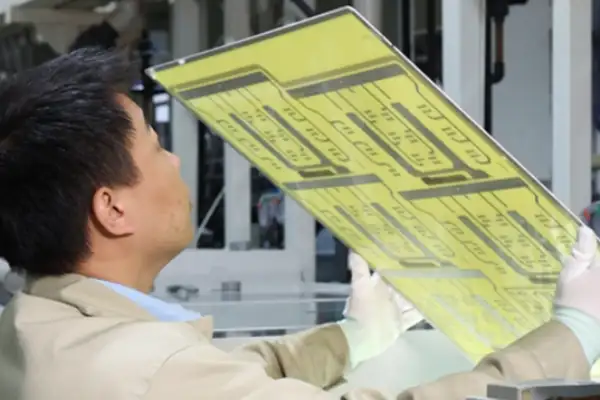
I have also encountered designs with particularly stringent thermal management requirements. For instance, on an LED driver board I designed previously, the power output was quite high; a standard 1oz copper thickness simply couldn’t withstand the heat generated during prolonged operation. I subsequently switched to a thicker copper layer, and the results were immediate: copper is an excellent thermal conductor, so allowing the heat to dissipate effectively prevented localized overheating. However, it is worth noting that increasing the copper thickness also increases the complexity of the manufacturing process.
Speaking of PCB-valmistus precision, capabilities have indeed become increasingly refined. On some high-density boards, trace widths can now be reduced to mere hundredths of a millimeter—thinner than a human hair. In my actual design practice, however, I generally avoid pushing for these extreme parameters; after all, the finer the manufacturing tolerances, the higher the cost, and the more demanding the requirements become for the production process itself.
Sometimes, when reviewing designs by beginners, I notice they tend to route traces that are unnecessarily thin and densely packed. This isn’t actually necessary; as long as the signal can be transmitted reliably, leaving sufficient design margin is the key priority. My personal practice is to leave ample clearance around critical signal traces to prevent crosstalk.
After working in hardware design for a while, you come to realize that no single solution is a universal panacea; different scenarios call for different approaches. Through-hole technology has its own inherent reliability, just as high-density interconnect (HDI) boards have their own distinct advantages. It is crucial to understand the underlying principles and then make choices based on actual needs, rather than blindly chasing high-end solutions or rigidly clinging to old methods. Whenever I see those dense arrays of vias scattered across a circuit board, I’m always reminded that they are far more than just simple connection points. These seemingly inconspicuous little holes actually harbor a great deal of technical nuance; particularly when handling high-frequency signals, the impact they exert is far more complex than we might imagine.
When I first started out in circuit design, I, too, assumed that simply connecting the lines would suffice. It wasn’t until later that I realized things weren’t quite that simple—especially once you begin to focus on subtle signal variations. You discover that every single detail on a through-hole circuit board warrants careful scrutiny. Take that tiny via, for instance: it doesn’t merely serve as a conduit between different layers; it also introduces certain undesirable characteristics, such as parasitic capacitance and inductance. These elements might go unnoticed in low-frequency circuits, but once the frequency ramps up, they start wreaking havoc.
I recall an instance where I was debugging a high-frequency amplifier and noticed that the signal just seemed “off.” The circuit layout appeared perfectly sound, yet the output waveform simply wasn’t clean enough. It wasn’t until I shifted my focus to the frequently used vias that I pinpointed the problem: excessive layer transitions had allowed parasitic effects to accumulate and impact the signal. Although the contribution of a single via might be negligible, their collective impact becomes impossible to ignore when they appear in large numbers. This experience taught me that during the design process, one cannot simply fixate on the primary components; one must also pay close attention to these seemingly secondary details.
Speaking of the impact of inductance, I find it even more vexing than capacitance. The nature of inductance causes it to generate a back-EMF whenever the current changes rapidly—a phenomenon that proves particularly troublesome in high-frequency environments. For instance, when utilizing multiple vias in the connections for power supply bypass capacitors, each via contributes a certain amount of inductance. The result is a significantly compromised filtering effect—sometimes even to the point of exacerbating power supply noise. In such situations, you are compelled to rethink your layout, striving to minimize unnecessary vias or optimizing their dimensions and placement.
Of course, this is not to suggest that vias are entirely useless; after all, they provide essential connectivity. The key lies in understanding how to strike a balance. My own experience suggests that, in high-frequency sections of a circuit, one should aim to limit the use of vias as much as possible. If they cannot be avoided, then one must devise ways to optimize their parameters—such as adjusting their diameter or length—to mitigate the impact of parasitic effects on circuit performance. Ultimately, designing a circuit is an exercise in trade-offs: one must ensure connectivity while simultaneously minimizing unwanted side effects. Achieving that optimal balance requires a process of continuous experimentation and refinement.
I’ve long felt that many people harbor a misconception regarding through-hole circuit boards—namely, the notion that they represent nothing more than an antiquated, obsolete technology. In fact, when working with high-frequency PCBs these days, one often discovers the true merits of through-holes.
This became particularly evident during a recent debugging session for an antenna module. At the time, we attempted to use blind and buried vias for impedance matching, but the results were consistently unsatisfactory. We eventually reverted to a traditional through-hole structure, which proved to be far more stable; the key advantage lies in the fact that through-holes can effectively bond the ground planes of different signal layers into a cohesive whole.
However, the fabrication of through-holes truly puts a manufacturer’s expertise to the test. I recall once inspecting a batch of boards and discovering hairline cracks in the barrel walls of a few individual through-holes. We later realized this was caused by an improperly calibrated temperature profile during the lamination process, leading to uneven shrinkage of the substrate material. Such subtle defects often remain undetected until the actual soldering stage.
Speaking of lamination, I’ve made a rather interesting observation: many manufacturers today prioritize achieving high layer counts while neglecting the fundamental precision of layer-to-layer alignment in multi-layer boards. I once encountered a 16-layer board where—upon close inspection of the edge—one could actually see visible misalignment in the internal layers. Such issues are virtually impossible to spot during the prototyping phase; one only realizes the gravity of the problem—often too late—when the BGA pads fail to align properly during the surface-mount assembly stage.
I am particularly fond of the practice of designating specific test points on the board surface—especially within power circuitry sections. By utilizing through-holes to route sampling points from the inner layers up to the surface, one facilitates easier debugging without compromising the integrity of the power plane. On a motor driver board I recently designed, for instance, I laid out over a dozen temperature-sensing points right next to the MOSFETs—all implemented using through-hole vias.
In fact, there is a very intuitive method for gauging the competence of a PCB manufacturer: observe how they handle surface finishes in areas densely populated with through-holes. I once examined a board produced by a major manufacturer where, beneath a 0.5mm-pitch BGA package, every single solder mask opening was crisp and clearly defined. Achieving such precision requires an exceptionally high degree of alignment accuracy during the silkscreen printing stage.
Sometimes, the simplest solutions prove to be the most reliable. Take, for instance, the mounting holes used to secure heat sinks: we still steadfastly insist on using plated through-holes for this purpose. Although this approach is more costly than using press-fit nuts, it offers superior long-term reliability in environments subject to constant vibration. We gleaned this lesson from a piece of industrial equipment designed over a decade ago—a system whose PCBs are, to this day, still functioning flawlessly in the harsh conditions of the desert.
I have always found the entire fabrication process for through-hole circuit boards to be particularly fascinating. Many people might dismiss these details as trivial, but in reality, every single stage of the process involves its own unique nuances and technical intricacies.
I recall visiting a factory on one occasion and observing the workers performing the “via plugging” procedure. They didn’t simply fill the holes with material and call it a day; rather, they meticulously adjusted the viscosity of the plugging material to suit the specific diameter of each individual via. If the mixture is too viscous, it tends to trap air bubbles; conversely, if it is too thin, it can result in surface depressions. Striking this delicate balance requires accumulated experience—it is not something one can master simply by reading a few technical manuals.
The electroplating stage, in particular, serves as a true test of one’s technical proficiency. I have observed manufacturers who, in an effort to cut costs, shorten the plating duration—a practice that ultimately leads to uneven copper layer thickness. While this approach may appear to save money on the surface, it actually sows the seeds of future trouble. During operation, such circuit boards become prone to localized overheating; in severe cases, this can even lead to the complete failure of the entire system.
Speaking of process improvement, I believe the most critical area of focus is how to maximize material utilization efficiency. Traditional methods often result in significant waste; however, some manufacturers are now beginning to experiment with recycling their excess plating solutions. This initiative is driven not merely by cost considerations, but also by a commitment to environmental sustainability.
There is a subtle detail that is often overlooked: seasonal fluctuations in temperature and humidity can significantly impact the effectiveness of the via-filling process. For instance, during the humid summer months, the material curing time must be adjusted accordingly. Such practical insights are typically acquired through gradual trial and error during actual operations—rarely can one find ready-made answers in textbooks.
In truth, the greatest pitfall in this industry is complacency—the refusal to move beyond established routines. Technology evolves daily; a process deemed excellent yesterday may well have a superior alternative available today. Maintaining a mindset of continuous learning is paramount, given the incredibly rapid pace at which electronic products are updated.
I have a deep appreciation for manufacturers who are willing to invest the effort in perfecting the minute details. They refuse to cut corners or simplify procedures merely to meet tight deadlines, striving instead to execute every single step with precision and thoroughness. Ultimately, this meticulous attitude is reflected in the stability and longevity of their products.
Ultimately, a high-quality circuit board is akin to a meticulously crafted piece of artisanal work—it demands both patience and the accumulation of experience. Those seemingly minor details of the manufacturing process often prove to be the decisive factors in the final product’s quality.
While recently tidying up my studio, I stumbled upon a few dust-covered through-hole circuit boards. I suddenly realized that these “old-timers” actually inspire a greater sense of confidence than many of today’s trendy designs. This is especially true of that classic double-sided layout—the sight of component pins passing firmly through the substrate to be soldered on both sides always reminds me of those parts in vintage radios that would reliably last for twenty years.
Some people believe that through-hole circuit boards should have been phased out long ago. Yet, consider the modules within automotive engine control units that must withstand violent vibrations, or the controllers in industrial machinery that operate continuously in high-temperature environments. In such settings, surface-mount components are prone to lifting away from the board due to thermal expansion and contraction. Through-hole pins, however, act like nails driven through a wooden plank, with the solder forming a three-dimensional anchor point inside the hole; the reliability afforded by this physical connection simply cannot be matched by mere surface adhesion.
Last week, I helped a friend repair a piece of test equipment from the 1990s. Upon opening it up, I found the interior filled with gleaming gold-plated through-hole contacts—still making excellent contact after more than thirty years. By contrast, some modern products—in an effort to cut costs—feature solder pads as thin as paper, which detach from the substrate at the slightest physical stress. For equipment truly intended for long-term service, only through-hole connections can truly stand the test of time.
Of course, this is not to say that one should blindly opt for a through-hole approach in every scenario. For instance, the mainboard of a smartwatch would certainly prioritize high-density interconnect technology; however, if I were designing a power management module for an outdoor weather station, I would absolutely insist on using through-hole soldering for the power components. After all, during a torrential downpour, the last thing you want is for your equipment to fail due to a poor solder joint on the circuit board.
Recently, I experimented with a hybrid approach on a drone flight controller board: I used micro-pitch BGAs for the core processor to maximize performance, while switching all motor drive interfaces to through-hole sockets. The results of vibration testing revealed that only the through-hole connections remained absolutely motionless. This hybrid philosophy may well represent the smartest approach to engineering design—one that embraces new technologies without abandoning proven, classic solutions.
Gazing at the circuit boards on my workbench—each featuring its neat array of through-holes—I suddenly felt that they resembled the sturdy rivets of a bridge rather than the rootless, floating patches of a surface-mount assembly. When your design must withstand the rigors of the real world, this method of end-to-end interconnection often proves to be the most modern choice.
I have always felt that when discussing circuit board design, many people tend to oversimplify the concept of Through-Hole Circuit Boards. In reality—from the perspective of practical application—the value of through-hole technology extends far beyond the mere act of connecting different layers. I recall an instance while troubleshooting a piece of vintage equipment where I discovered that those seemingly bulky through-hole components actually demonstrated greater stability than their surface-mount counterparts when subjected to high-temperature environments.
While the advantages of multilayer boards are undeniable, I have observed that many engineers tend to overlook a critical detail: the quality of the plating on the hole walls directly impacts the stability of the entire system. This is particularly true when the circuit board is required to withstand mechanical vibration, where the thickness of the copper plating surrounding the through-holes often serves as the decisive factor in determining connection reliability.
I encountered just such a scenario while working on an industrial equipment project. What initially appeared to be a component-related issue was later traced back to intermittent connection failures caused by uneven plating on the through-hole walls. Such defects are notoriously difficult to detect during laboratory testing but inevitably reveal themselves once the equipment is deployed in actual operating conditions.
While many contemporary designs prioritize miniaturization and slim profiles, I believe that in certain contexts, one must return to prioritizing practical requirements. For instance, in fields demanding high reliability—such as industrial control systems or automotive electronics—Through-Hole Circuit Boards are often a more worthy consideration than purely surface-mount solutions. After all, the quality of the inter-layer connections directly dictates the overall lifespan of the final product.
Several recent projects I have been involved with have further validated this point. One manufacturer of outdoor equipment, for example, initially intended to transition entirely to surface-mount technology; however, subsequent testing revealed that—in environments characterized by significant temperature fluctuations—retaining a partial through-hole design was essential to ensure the stability and robustness of the connections.
Ultimately, the choice of technology should be dictated by the specific application scenario. There is no need to blindly chase the latest manufacturing processes; sometimes, classic through-hole technology can yield unexpected improvements in reliability.
Whenever I observe discussions surrounding complex circuit board designs, a single question invariably crosses my mind: Why are so many people still agonizing over whether or not to utilize Through-Hole Circuit Boards? In my experience, this is not fundamentally a question of technological advancement; rather, it serves as a signal that a shift in design mindset is long overdue. When I first started out in electronics design, I always felt that through-hole components offered a greater sense of security; after all, every pin passes physically through the board and is firmly soldered in place—a tangible sense of physical robustness that surface-mount technology simply cannot replicate. However, several subsequent projects completely changed my perspective. A particularly pivotal experience involved upgrading an industrial sensor: the original design relied heavily on through-hole components, yet during vibration testing, it unexpectedly suffered from solder joint fatigue issues.
Interestingly, once we switched to an appropriate surface-mount solution, the overall reliability of the board actually improved, while production costs simultaneously decreased. This made me realize that mechanical strength does not necessarily have to be achieved through physical perforations; in certain scenarios, a well-considered layout combined with the right material choices can yield far superior results.
Nowadays, when I see many engineers still clinging to the notion that “through-hole is inherently more reliable,” I suspect it may simply be a form of cognitive inertia—much like the hesitation older generations of engineers displayed when transitioning from vacuum tubes to transistors. Technology is constantly evolving; what we need is a more open-minded approach to evaluating the specific applicability of each manufacturing process, rather than simply treating it as a binary choice.
An audio amplifier I recently helped a friend debug serves as an excellent case in point. He insisted on using a traditional through-hole layout, convinced that it was the only way to achieve “pure” audio fidelity. The result was a board that was bulky, heavy, and highly susceptible to interference. We subsequently switched to a hybrid design—retaining through-hole components for critical sections while utilizing surface-mount components for the rest. Not only did the board’s physical size shrink by a third, but its signal-to-noise ratio actually improved. This experience further reinforced my conviction that effective design requires the flexible application of the strengths inherent in various manufacturing processes, rather than being shackled by rigid traditions.
Speaking of the concepts of *ei* and *kei*, I view them less as rigid rules and more as benchmarks that remind us to focus on overall design efficacy. Sometimes, an excessive fixation on the performance of a single specific component can lead one to overlook opportunities for optimization at the system level. It is much like threading a needle: using the thickest possible thread is not necessarily the best approach; rather, the key lies in finding the specific thread thickness that fits the eye of that particular needle perfectly.
PCBs are truly fascinating subjects. While tinkering with through-hole circuit boards in the lab recently, I observed a curious phenomenon: many people seem to believe that through-hole technology is obsolete and ought to be phased out. In reality, nothing could be further from the truth.
Just the other day, I disassembled an old-fashioned oscilloscope. Upon seeing the dense array of through-hole solder joints, I had a sudden realization: the structural stability inherent in this design is something that surface-mount technology struggles to replicate—particularly in industrial equipment that is required to withstand significant mechanical stress. Through-hole components, anchored by pins that pass through the substrate, effectively withstand vibrations and shocks across various axes; this physical connection strength far exceeds the solder-joint adhesion of surface-mount components. In extreme-environment applications—such as those in the military and aerospace sectors—the reliability data for through-hole technology is three orders of magnitude higher than that of SMT.
An engineer friend of mine recently shared some feedback regarding a new Through-Hole Reflow (THR) production line installed at their facility. Initially, they indeed encountered numerous issues—such as poor control over solder climb height—but after several adjustments to the reflow oven’s temperature profile, their yield rate actually surpassed that of their pure-SMT production lines. They discovered that by employing a stepped temperature profile during through-hole soldering—preheating at 150°C for 90 seconds to eliminate moisture from the substrate before rapidly ramping up to a peak temperature of 235°C—they could ensure the solder formed a uniform meniscus along the inner walls of the holes. This process is particularly beneficial for multilayer boards, as the copper plating within the through-holes acts as a thermal bridge, facilitating a more uniform distribution of heat across all layers.
I find it rather unfortunate that many modern designs tend to create an artificial dichotomy between HDI boards and traditional through-hole boards. The last time I revised a drone flight control board, I deliberately placed several through-hole test points around the BGA chip; during maintenance, probing these holes directly is far less hassle than attempting to scrape solder paste off tiny, densely packed surface-mount pads. These through-holes serve not only as test points but also as thermal conduits, channeling heat generated by the BGA chip down to the ground plane on the bottom layer—a technique empirically proven to lower the core temperature by approximately 7°C. Furthermore, in RF circuit design, an array of through-holes encircling critical components can function as an electromagnetic shielding wall, effectively suppressing high-frequency signal crosstalk.
In fact, a look at the automotive electronics sector clearly explains why components such as fuses and relays continue to utilize through-hole designs. During sudden emergency braking, the vibration intensity experienced by the circuit board is so severe that surface-mount components could genuinely be shaken loose. Automotive electronics validation standards mandate that components must withstand mechanical shocks of up to 15G; through-hole pins are uniquely capable of absorbing this energy through plastic deformation—a capability that is absolutely critical in vehicle collision safety systems. Moreover, the contact resistance of through-hole connections within high-current paths typically measures a mere 0.1 mΩ—an order of magnitude lower than that of “via-in-pad” designs. The most ingenious design I have ever encountered involved placing ground vias immediately adjacent to high-speed signal layers. This approach simultaneously resolves electromagnetic interference issues and reserves space for structural mounting points—a three-dimensional layout concept that would be exceedingly difficult to realize using HDI technology alone. These vias effectively form a three-dimensional electromagnetic shielding enclosure, isolating sensitive signal traces from the power planes. Even more brilliantly, the designer applied copper plating to the inner walls of the structural mounting holes, allowing them to serve a dual purpose: functioning as screw mounts while also acting as vertical conduits for inter-layer electrical connections.
While recently disassembling a new gaming console, I noticed a fascinating detail: the back side of the motherboard utilized 0.3mm laser-drilled blind vias, yet the power delivery section steadfastly adhered to traditional through-hole vias. This hybrid architecture may well represent a future trend in design. This design philosophy bears a strong resemblance to the “core-wall” structure found in architecture—employing through-holes to construct a robust electrical “skeleton,” while utilizing micro-vias to execute the intricate routing of signal layers. The through-holes within the power section typically feature diameters exceeding 0.6mm; this sizing allows them to carry currents of up to 20A without exceeding a temperature rise of 30°C.
To be honest, many engineers today prioritize routing density to an excessive degree, often at the expense of maintainability. I recently encountered a failure in an 8-layer HDI board used in medical equipment; because it was impossible to drill new holes or patch the internal traces, the entire board had to be scrapped. These high-density boards frequently employ a “filled-via” plating process; consequently, if an internal trace is damaged, conventional repair methods are simply rendered impossible. In contrast, a design incorporating through-hole test points—though it may consume an additional 5% to 10% of board real estate—can reduce fault diagnosis time by over 70%.
I view PCB design much like cooking: not every ingredient needs to be chopped as finely as possible. Sometimes, retaining a few “rougher” through-hole structures actually serves to make the entire system more robust and durable. Just as bone-in chicken offers a more satisfying texture than boneless meat, the mechanical anchoring and thermal management advantages provided by through-holes often remain beyond the reach of purely HDI-based designs. A truly excellent design should adhere to the principles of Traditional Chinese Medicine’s “Monarch, Minister, Assistant, and Guide” hierarchy: assigning the through-holes the role of the “Monarch” (the primary agent) to provide structural support, while allowing the micro-vias and buried vias to serve as the “Ministers” (the supporting agents) by handling the intricate signal routing—each fulfilling its specific, vital function.
I have encountered quite a few people who speak of “through-hole circuit boards” as if they were relics of an obsolete era. In reality, however, many complex electronic devices today continue to utilize through-hole components—particularly at connection points that are required to withstand significant physical stress. Just consider the connectors on industrial equipment or the heat sinks found in power supply modules, and you’ll immediately understand the rationale.
The last time I disassembled an old oscilloscope for repair, I noticed that its entire power supply section utilized power transistors attached via through-hole soldering. Although modern SMT (Surface Mount Technology) allows for circuit boards to be incredibly compact and refined, applications involving significant insertion/extraction forces or exposure to vibration still require the reliability provided by pins that pass through the circuit board layers.
Interestingly, many modern designs are now adopting a hybrid approach. For instance, the main control boards in smart home devices often utilize SMT packaging for the processor and memory, while steadfastly retaining through-hole soldering for the power connectors. This strategy ensures a slim, lightweight overall profile while simultaneously providing robust mechanical strength in critical areas.
I learned this lesson the hard way once while helping a friend modify a drone’s circuitry. In an effort to save time and effort, I opted to use surface-mount components for everything; however, after just a few takeoffs and landings, the motor connectors developed cold solder joints. Ultimately, I had to revert to through-hole soldering—the more traditional method—to finally resolve the issue.
In reality, determining which technology to use is quite simple: just give the component a gentle wiggle with your finger. If you detect any noticeable movement or instability, you should strongly consider using a through-hole mounting method to secure it to the board.
Recently, I’ve observed some designers pushing for the absolute maximum level of integration by making every single component surface-mount. Ironically, this often makes repairs incredibly difficult; sometimes, simply replacing a single capacitor requires sending the entire board back to the factory for rework.
Good design should be akin to building with LEGOs: use through-hole technology where structural rigidity is paramount, and surface-mount technology where compactness is the priority. By combining the strengths of both methods, one can create products that are both highly reliable and easy to maintain.
Whenever I look at those densely populated circuit boards, I’m reminded of the days when I first started dabbling in electronics projects. Back then, I assumed that all circuit boards were essentially the same—just flat, smooth surfaces—and it wasn’t until much later that I came to appreciate the unique charm and distinct advantages of through-hole circuit boards.
I recall an instance where I ordered a batch of prototype boards from Jieying; their engineers actually took the time to call me personally to verify the specific details of the order. This meticulous attention to detail deeply impressed me—after all, manufacturing circuit boards is far more than just a simple assembly game.
I’ve also collaborated with Moco on several occasions, and they approach every single order with the same level of dedication and care one would reserve for a work of art. Once, I needed a batch of boards produced in a non-standard, custom size—even though it was a small-batch order, they not only delivered on time but also proactively offered several design optimization suggestions.
Nowadays, many people blindly chase after the high component density offered by surface-mount technology, often overlooking the inherent reliability advantages that through-hole technology brings to the table. Particularly in applications subject to mechanical stress, the structural robustness of through-hole components is simply irreplaceable.
A project I’ve been working on recently illustrates this point perfectly. The device in question requires frequent relocation; had we used surface-mount components, there would have been a high risk of them detaching due to vibration. However, by adopting a through-hole design, the connections remain just as secure as the day they were assembled—even after undergoing numerous disassembly and reassembly cycles.
When selecting a PCB supplier, one must not focus solely on the price tag. Some manufacturers offer very low quotes, yet the quality of the actual products delivered can be highly inconsistent. Rather than spending countless hours later on debugging and repairs, it is far wiser to choose a reliable partner right from the start.
I make it a habit to request physical samples before placing an order; this allows me to gain a firsthand impression of the board material quality and soldering workmanship. Sometimes, simply reviewing technical specifications isn’t enough; only by physically handling the boards can one truly discern the subtle differences in detail.
PCB manufacturing is a process that demands patience. Every stage—from initial design to final product—requires meticulous attention to detail; even a minor oversight can result in an entire batch of products being rendered useless. This is precisely why I place such high value on a supplier’s professional attitude and diligence.
The current market features manufacturers with diverse specializations: some focus on high-volume mass production, while others excel at low-volume, customized orders. The key lies in identifying the partner whose capabilities best align with the specific requirements of your project.
I’ve long felt that many people today hold a somewhat skewed perception of “Through-Hole Circuit Boards.” I’ve particularly noticed how anxious many engineers become at the mere mention of PTH (Plated Through-Hole) technology—as if even the slightest imperfection would inevitably spell disaster for the entire system.
In fact, a project I managed last year serves as a compelling case in point. It involved a multi-layer PCB control board designed for industrial equipment. When the fabrication plant delivered the samples, one of the boards featured through-holes that appeared visually imperfect; the edges of several holes were indeed slightly rough. To be honest, my heart skipped a beat the moment I laid eyes on them.
However, the actual test data that subsequently emerged took me completely by surprise. Those visually “imperfect” PTHs performed with remarkable stability under real-world operating conditions; after running a continuous 72-hour burn-in test, the signal integrity remained entirely uncompromised.
This realization prompted me to reconsider whether our obsession with “perfection”—or what we perceive as such—has gone too far. This became particularly apparent recently while I was helping a friend inspect the 5G equipment in their laboratory; I noticed that many novice engineers tend to fall into a common trap: treating specific process parameters as the sole standard, while inadvertently overlooking the overall system compatibility.
Of course, I am not suggesting that the quality of a Through-Hole Circuit Board is unimportant. Rather, I believe that instead of fixating rigidly on a single metric, it is far more beneficial to focus on the synergistic interplay between the various stages of the process.
Take, for instance, a circuit board I was debugging just last week: although the precision of every single through-hole met the required specifications, the layout failed to adequately account for thermal dissipation paths. Consequently, during high-frequency operation, localized heat buildup actually compromised the board’s overall stability.
Sometimes, I find myself thinking that this process is much like cooking: simply piling together the finest ingredients does not guarantee a delicious meal; the true key lies in whether those ingredients can interact to create a harmonious “chemical reaction.”
Ultimately, PCB design is, at its core, a systems engineering discipline. Rather than obsessing over whether a specific detail is absolutely flawless, it is far more beneficial to invest your energy in understanding the operational logic of the entire system. After all, even the most exquisitely crafted individual component can become a liability if it is placed in the wrong position.
Nowadays, when reviewing design schematics, I pay much closer attention to the spatial relationships between through-holes and other components. As for those minute details—the kind visible only under a microscope—I personally feel there is no need to be overly anxious about them, provided they do not compromise the system’s overall performance.
After all, real-world application scenarios are rarely—if ever—as pristine as an idealized laboratory environment. A circuit board that can withstand and adapt to complex operating conditions is, surely, the mark of a truly good design—wouldn’t you agree?
I have long felt that when discussing circuit boards, people tend to focus too heavily on flashy, cutting-edge technologies. Take the “through-hole circuit board,” for instance: many people dismiss it as old-fashioned, yet in my actual projects, I frequently find myself reverting to this fundamental design approach. This is particularly true when working with high-power modules; the reassuring sense of solidity—derived from component leads passing directly through the board—is something that surface-mount technology simply cannot replicate.
I encountered this very situation again last week while debugging an industrial controller. Heat generated by a 5G module caused slight deformation in the adjacent, densely routed traces; however, the robust through-hole connections within the power supply section remained absolutely steadfast and unshaken. In the context of modern electronics design, this kind of inherent physical durability has actually become a rare and valuable quality. For instance, in high-vibration environments, through-hole components can withstand shock accelerations exceeding 20 Gs—conditions under which equivalent surface-mount components might already be exhibiting cracked solder joints. This disparity in reliability is particularly critical in applications such as automotive electronics or heavy industrial machinery.
Some people are prone to viewing technological evolution solely through the lens of “replacement”—assuming that newer technologies simply supersede older ones. In reality, however, the relationship is far more often one of symbiosis. A recent base station project undertaken by our team serves as a prime example: we utilized HDI boards to handle signal processing within the millimeter-wave band, yet we steadfastly adhered to through-hole technology for the power management section. Different technologies each have their own distinct roles and optimal domains; attempting to force a uniform approach across the entire design would, in this instance, have resulted in a compromise of reliability. Much like in power conversion sections, the substantial physical volume of through-hole components actually aids in heat dissipation; moreover, their pins can double as thermal conduits—an advantage that tiny surface-mount components struggle to replicate.
I have seen far too many engineers overcomplicate simple problems. During a design review once, a young colleague insisted on using an eight-layer PCB to implement a function that could have been easily resolved using a double-sided board with through-hole components. This isn’t to say that high-density designs are inherently bad, but rather that they must be justified by actual requirements. It is akin to choosing a mode of transport: for a trip from your residential complex to the local market, riding a shared bicycle is far more sensible than hailing a ride-sharing car. Over-engineering not only inflates manufacturing costs by upwards of 30% but also prolongs the debugging cycle. Experienced engineers understand that the simplest solutions are often the ones that best stand the test of time.
There is currently a misconception within the industry that every device must chase the “5G trend.” Yet, in reality, many scenarios simply do not require such high data transmission speeds. During a recent visit to an automated manufacturing plant, I observed that their sensor network was still utilizing modified 2G modules—deployed on meticulously designed through-hole PCBs—to effectively withstand the electromagnetic interference prevalent on the factory floor. Such a pragmatic approach is, in fact, highly worthy of emulation. Their temperature sensors, for instance, upload data only once every ten minutes; in this context, connection stability takes precedence over high speed. Here, through-hole technology creates a natural electromagnetic shielding enclosure, effectively safeguarding the sensitive circuitry within.
Truly excellent design should resemble the craftsmanship of an old-school carpenter—knowing precisely when to employ a traditional mortise-and-tenon joint versus when to simply use glue. Every through-hole on a circuit board serves as a signature of the designer’s craft; these metal-lined conduits piercing through the board material do more than merely connect circuits—they act as anchors firmly embedded within the digital realm. This is particularly critical in areas involving connectors that undergo frequent insertion and removal, where the mechanical robustness provided by through-hole mounting enables the interface to withstand tens of thousands of connection cycles. Such design wisdom stems from a profound understanding of material properties.
Perhaps it is because I have personally weathered several product recall crises, but I now place a particularly high premium on design fault tolerance. Through-hole technology may not be the flashiest option, but the physical redundancy it provides often serves as a vital safety net for a product. In an era obsessed with thinness and lightness, a little extra physical bulk can occasionally prove to be an advantage. I recall an instance where a client inadvertently connected a 24V power supply to a 12V device; it was precisely the inherent design margin of the through-hole components that prevented the entire board from burning out—a real-world protective value that simulation software could never fully predict.
I have always found the art of circuit board design to be a fascinating endeavor. While recently tinkering with a project, I stumbled upon an interesting phenomenon: whenever people hear the term “Through-Hole Circuit Board,” their immediate, subconscious assumption is that it necessitates traditional manual insertion and soldering processes. In reality, however, many through-hole components today are fully capable of keeping pace with the demands of modern automated manufacturing.
A while back, I helped a friend redesign the circuit board for a piece of legacy equipment. The original design utilized old-fashioned connectors that required manual soldering—a particularly laborious and tedious task. Later, we experimented with using connectors specifically designed to support Through-Hole Reflow (THR) processing, and the results were unexpectedly excellent. The most immediate benefit was that the entire production workflow became much cleaner and more streamlined; we no longer had to schedule a separate wave soldering pass solely to accommodate a handful of through-hole components.
Some people worry that the high temperatures involved in reflow soldering might cause the plastic bases of through-hole components to deform; this is indeed a valid concern that requires careful attention to material selection. I typically prioritize models that explicitly specify their thermal resistance parameters—components made from materials capable of withstanding temperatures exceeding 300°C, for instance, are generally a safe bet. However, one factor that is often overlooked is the compatibility of the pin lengths: attempting to use 3mm pins on a 1.6mm-thick PCB, for example, can result in insufficient solder wicking and lead to unreliable “cold solder” joints.
What I appreciate most about THR is the design freedom it affords. Previously, designers constantly had to worry about keeping certain components—particularly connectors—out of the wave soldering zone; now, with a sensible layout, you can even place connectors right next to IC chips and have everything soldered in a single pass through the reflow oven. This integrated approach is particularly well-suited for small-batch production runs; after all, eliminating a single step from the assembly line can save a significant amount of time on setup and debugging.
Of course, not every through-hole component is a good candidate for this technique. For high-power components requiring heat sinks, or connectors featuring complex mechanical latches, sticking to traditional soldering methods remains the safer and more reliable option. However, for standardized components—such as simple pin headers or terminal blocks—experimenting with the THR process can open up new design possibilities. At the very least, I haven’t had to lose any sleep over soldering-related headaches on any of the boards I’ve designed recently.
Sometimes, technological advancement isn’t about completely upending the status quo, but rather about finding smarter ways to bridge existing processes. Approaches like this—which integrate the mindset of Surface Mount Technology (SMT) into traditional through-hole workflows—are often more readily accepted by manufacturing facilities than attempts to force a complete, all-SMT transition. After all, when experienced assembly technicians see those familiar through-hole structures, they often feel—at least subconsciously—that the project is already half-way to success.
PCB manufacturing standardization brings quality assurance and industry-wide coordination, but it also
When exploring how to evaluate PCB supplier capability for a Packaging Machine
Many people assume the key to circuit-board manufacturing is high-end equipment, but
- Pienten ja keskisuurten erien tuotannon asiantuntija
- Korkean tarkkuuden piirilevyjen valmistus ja automatisoitu kokoonpano
- Luotettava kumppani OEM/ODM elektroniikkaprojekteihin
Aukioloajat: (ma-la) klo 9:00-18:30.
Get quote, solution or any question, Andre always here to help