

What Separates the Best Prototype Printed Circuit Board Manufacturers When You’re Building a Telecom Rectifier PCB
Many people assume the key to circuit-board manufacturing is high-end equipment, but
Every time I see someone struggling with custom PCB costs, I want to laugh. They keep comparing prices but forget the most fundamental question—are you buying a circuit board or a solution? I’ve seen too many projects end up costing tens of thousands more in repairs because of trying to save a few hundred dollars on board costs.
I remember last year a medical equipment team came to me for advice on PCB procurement. They were excitedly comparing the price differences per square centimeter from three suppliers. I interrupted them directly: “Have you considered the cost of recalling these boards if they malfunction in your patient monitors?” The meeting room fell silent.
Truly knowledgeable engineers communicate with manufacturers about material selection from the very first design draft. For example, should a high-frequency board use FR4 or Rogers 4350B? The difference of two thousand dollars per square meter seems small, but the performance and stability are worlds apart. Once, during testing for a base station project, we discovered excessive signal attenuation. The investigation revealed that the problem stemmed from fluctuations in the dielectric constant of the substrate; the rework costs were enough to buy three years’ worth of high-end board materials.
Now, when I negotiate contracts with suppliers, I always put the inspection standards at the very beginning. For example, clauses requiring 100% flying probe testing or specific temperature cycling times. These clauses, which may seem to increase initial costs, often prevent catastrophic losses during mass production. Just last week, a customer thanked me for insisting on spending an extra 800 yuan on gold plating thickness testing. The result was uneven plating on a batch of solder pads, allowing us to switch suppliers in time and avoid the return of the entire batch of products.
Logistics is an even bigger hidden cost hog. Once, we urgently needed to ship goods from Shenzhen to Germany. To save two days, we used air freight, and the freight cost alone was equivalent to half the cost of the boards. Later, we switched to the China-Europe Railway Express. Although it took ten more days, the overall cost was reduced by 40%, and we didn’t have to worry about customs clearance.
Recently, the chip market has been volatile. I strongly recommend that customers stock up on materials six months in advance. Even if it means paying more for warehousing, it’s better than finding alternatives at the last minute. Last month, an automotive electronics project almost stopped production due to a shortage of main control chips. Fortunately, we had secured long-term agreements with three suppliers at the beginning of the year.
Ultimately, the cost of custom PCBs is never simply the sum of the board material and labor; it’s about risk management throughout the entire product lifecycle. Procurement methods that only look at the numbers on a quote should have been phased out long ago.
I’ve always felt that many people have misconceptions about customization. Every time I see someone complaining about the high cost of custom PCBs, I think—this is actually a matter of expectation management. You don’t want an ordinary circuit board; you want a customized solution that perfectly matches your ideas, which inherently means additional investment.
Last week, a friend who works in smart home technology came to me saying he got quotes from three manufacturers with ridiculously large differences—the most expensive was more than twice the price of the cheapest. After reviewing his design documents, I discovered the problem—he mixed four different thicknesses of copper foil on the same board and required five areas of partial gold plating. This special process is highly difficult for any manufacturer. This reminds me that often when we feel something is expensive, it’s not because manufacturers are overcharging, but because the complexity of our designs exceeds the scope of conventional production.
The real key to price often lies in seemingly insignificant details. For example, the cost difference between FR-4 standard board and high-frequency board can be three or four times, but if you’re just making a regular control board, there’s no need to pursue special materials. Furthermore, changing the minimum linewidth/spacing setting from 6mil to 4mil can directly reduce your yield rate by 20%, and this loss will ultimately be reflected in the price.
My most painful lesson was when I first started making flexible circuit boards, thinking it was similar to rigid boards, only to find that the prototyping fee was five times that of a regular board. Later, I realized that flexible boards require special substrates, the manufacturing process is much more difficult, and even the testing methods are different. Now, I advise beginners to start with the most basic design, get the functionality working, and then consider whether to pay for special requirements.
Sometimes, what seems expensive is actually saving you trouble later. Last year, I helped a medical equipment project select materials. There were cheaper options, but I insisted on using high-TG materials. Although it cost tens of dollars more per square meter, the product’s stability under high temperatures was significantly improved, and the customer’s subsequent return rate was almost zero. This kind of hidden cost saving is often more important than the few dollars saved up initially.
Ultimately, customization is never about pursuing the lowest price, but about finding the most suitable balance. Just like buying a suit, no matter how cheap a ready-made one is, it’s not as good as a custom-made one that fits perfectly. The key is that you need to know what value you are willing to pay.
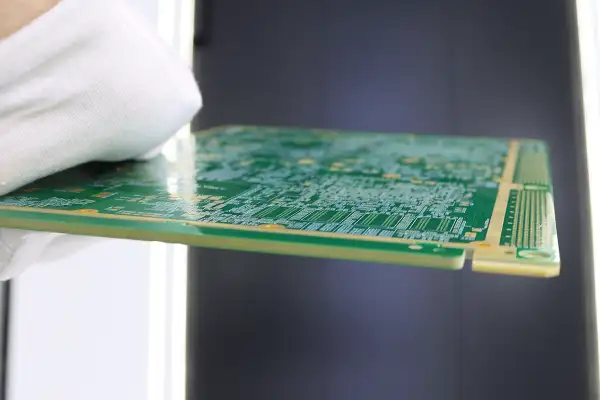
I get a headache every time I see someone simplify the cost of a custom PCB to the unit price of the board. It’s as unreliable as buying a house by only looking at the price per square meter.
Recently, while helping my team choose a PCB supplier for a new project, I noticed an interesting phenomenon. After sending the same design files to three factories for quotes, the price difference could reach 40%. The cheapest supplier included engineering and testing fees in the board price, making the unit price seem attractive, but a bunch of hidden costs appeared at the final settlement.
The real factors affecting the cost of custom PCBs are often those that are not easily quantifiable. For example, one supplier, although slightly more expensive, had engineers who pointed out a heat dissipation problem in our design during the review stage, helping us avoid rework later. This kind of value is hard to show in the initial quote, but it definitely saves a lot of modification costs.
Regarding material selection, I think many people misunderstand the FR series. Not all high-frequency applications require top-of-the-line materials; sometimes, by optimizing the layout design, standard FR4 can meet the requirements. Last time, we had an RF module that we originally planned to use high-end materials, but after adjusting the grounding scheme and using ordinary FR4, it passed the test, directly saving 30% on material costs.
I have a different view on supplier tier building. Instead of maintaining too many alternatives simultaneously, it’s better to cultivate deep partnerships with two or three core suppliers. We’ve established a quarterly review mechanism with our main current factories, analyzing the cost structure together after each batch of production. They even proactively suggest adjusting line widths to optimize utilization without affecting performance.
I’ve also encountered some logistical pitfalls. Air freight sounds fast, but customs clearance delays can be slower than sea freight. Now, we use a mix of transportation methods based on the actual project schedule and needs: critical components are shipped by air, and regular batches by sea. This flexible arrangement makes our inventory turnover healthier.
What’s most easily overlooked is communication costs. Some suppliers offer lower prices, but each modification requires repeated confirmation, which is time-consuming and labor-intensive. Partners who respond promptly can help us shorten the entire development cycle; this time value should also be included in the total cost consideration.
Tariffs are becoming increasingly important. We recently started requiring suppliers to provide complete certificates of origin. Although the process is a bit more complicated, it avoids demurrage charges due to incomplete documentation upon arrival at the port, making it more cost-effective overall.
Ultimately, cost control for custom PCBs isn’t about relentlessly pushing down unit prices, but about finding partners best suited to your project’s pace. Sometimes, spending a little more on engineering support can accelerate the product’s market launch. This holistic perspective is what procurement truly needs to cultivate.
Many people’s first reaction to PCB manufacturing is to ask about price. However, the factors behind it are far more complex than imagined. When I first started, I thought it was simply a matter of pricing based on size. Later, I discovered that the same design can have prices several times higher depending on the factory. The key is that each factory has completely different process standards and quality control requirements.
Once, I helped a friend manufacture a small batch of boards for medical equipment. I contacted three suppliers. The lowest quote came from one who explicitly stated they didn’t make medical-grade products. The middle quote was moderate, but they clearly stated that certification fees would be added. The most expensive supplier turned out to be the most reliable because they already possessed complete medical-grade certifications. We eventually chose the middle supplier for our quality system. Although the unit price of the PCBs themselves wasn’t high, the ISO 13485 certification increased the cost per board by about 15%. However, these boards are for use in patient monitoring equipment, so spending a little extra for peace of mind is well worth it.
Many small factories attract customers with the promise of low-priced custom PCBs, but you should carefully inquire whether their testing equipment is complete and whether they have a basic quality management system. I once saw a workshop-style factory that outsourced even the most basic flying probe testing. Tracing responsibility after problems arose was extremely difficult, especially for products exported to the European and American markets. Having only a RoHS report wasn’t enough. The hidden costs of frequently requiring additional CE or UL certifications are often easily overlooked by beginners.
In fact, from an economic perspective, it’s more cost-effective to use reputable manufacturers with transparent pricing. They will clearly list all possible cost items upfront, such as stencil fees, SMT programming fees, and testing fixture fees. Although there may seem to be many items, they won’t add extra charges midway. The worst experience I’ve had was when a manufacturer suddenly demanded an X-ray inspection fee halfway through the collaboration, claiming the board had BGA chips. This kind of last-minute price increase is more troublesome than a fixed price.
Logistics is another easily underestimated aspect. Ordinary double-sided boards can be shipped by land, but when dealing with high-frequency boards or special surface treatments, temperature and humidity control during air transport becomes crucial. Once, a batch of our immersion gold boards suffered greater losses due to solder pad oxidation caused by moisture during transport than the shipping cost itself. Now, I always confirm packaging plans in advance, using moisture-proof bags and vacuum packaging. These details, while adding a little cost, prevent even greater losses.
Having worked on several projects, I’ve realized that the cost of custom PCBs is never just about materials and processing fees; more importantly, it’s about the underlying technical expertise and quality assurance. Sometimes, spending a little more money on a reliable partner can save a lot of trouble later.
PCB manufacturing is quite interesting. Many people immediately think about saving money by buying cheap materials or ordering from the lowest-priced manufacturer. However, the most easily overlooked aspect is the true impact of the design phase on the cost of custom PCBs.
I’ve seen too many engineers spend time agonizing over substrate selection while neglecting the layout itself. In one project, we initially planned to use a six-layer board, but later discovered that by adjusting the wiring spacing and merging some signal lines into inner layers, we could achieve a four-layer solution. This directly saved the cost of two substrate layers and two lamination processes.
Sometimes I wonder why everyone gets so fixated on materials instead of re-evaluating their design habits. For example, the common misconception is that thicker copper is always better, when in fact, thicker copper foil is unnecessary in many areas, increasing etching time and material consumption.
Heat dissipation is indeed a major issue, but it doesn’t necessarily require expensive metal substrates. In a power module project, I achieved the desired effect by rationally distributing heat-generating components and using a simple array of ventilation holes, saving nearly 30% in cost compared to using an aluminum substrate, and also reducing weight.
There’s an interesting phenomenon in the industry now: as chip integration increases, PCB design has become more simplified. This means we can achieve functionality with fewer layers while maintaining performance, which is actually a good thing for optimizing overall costs.
Truly effective cost control is never achieved by cutting prices or using cheap materials, but by considering the chain reaction of each decision from the design stage. Sometimes, what seems like an extra two weeks spent replanning and re-layouting can ultimately bring unexpected benefits in production.
I’ve seen too many people obsess over the cost of custom PCBs. Actually, it’s not that complicated; the key is whether you’re willing to think outside the box.
Many people immediately focus on the price of the PCB, obsessing over a few dollars difference in material costs per square foot. But the real money is spent on the unseen aspects – for example, trying to save a few square meters of board by overly dense circuitry can drastically reduce yield. A friend of mine conducted an experiment, increasing the board area by 15%. Although the material cost increased slightly, the scrap rate dropped from 30% to 5%, resulting in a 20% cost saving.
While special shapes do increase the cost of custom PCBs, this doesn’t mean you should completely avoid them. Last year, we worked on a smart wearable project where we specifically designed the motherboard to fit the wrist curve. Although the mold cost increased by 5,000 yuan, it saved time on manual adjustments during assembly, and the product’s premium increased by 30%. Sometimes, the extra money spent isn’t increasing costs, but rather buying efficiency.
Speaking of material selection, it’s quite interesting. There’s a current trend of blindly pursuing high-performance boards; some people insist on using Rogers materials for a simple controller. Once, I showed a client test data for FR-4 and high-end boards. In 85% of application scenarios, the performance difference was imperceptible, yet the cost difference was more than three times.
The choice of surface treatment requires a pragmatic approach. ENIG technology is almost mythologized now, but for most consumer electronics products, HASL is perfectly adequate. We once compared batch return rates; in non-extreme environments, the difference between the two processes was negligible, but the cost difference per square foot was enough to buy two more hot pot meals.
The most easily overlooked cost is the hidden cost of panelization design. I’ve seen people cram entire copper-clad boards together with traces requiring different impedances, resulting in two weeks of struggle with impedance matching alone during the debugging phase. In such cases, you realize that the so-called board utilization rate is a false proposition.
Ultimately, controlling PCB costs isn’t about subtraction, but multiplication. Sometimes, investing 10% more in one area can yield a 30% return in others. Like building blocks, the key isn’t the price of individual blocks, but how to combine them for maximum stability.
When it comes to PCB design, many people focus solely on the unit price from the outset, which can easily lead them astray. I’ve seen too many projects where the focus on the price of a single board resulted in an overall loss.
Take custom PCB costs, for example. The most easily overlooked factor is the impact of design-stage decisions. Sometimes, to save a few cents on board costs, a solution with insufficient layers is chosen, leading to three or four rounds of debugging and revisions later on—enough time to produce two batches of boards.
The complexity of the PCB does affect costs, but I’ve noticed a common misconception: more components mean more money. The key isn’t quantity, but whether the components you use are common specifications. Once, I helped a friend modify a design, replacing five uncommon chips with two standard models. Although each chip was more expensive, the overall BOM cost decreased by a third, and the surface mount technology (SMT) plant was happy to take the order.
Speaking of layers, more isn’t always better. Trying to do something with six layers when four can do it can more than double the cost per square centimeter. Conversely, the same applies. If signal integrity requires six layers but is compressed into four, noise issues can cause half a month of troubleshooting, costing enough to make ten more boards. I usually start by prototyping with the simplest solution I have, and only consider layer optimization for mass production if it passes testing.
The impact of shape and size is greater than imagined. Irregularly shaped cut boards not only have low utilization rates, but are also prone to deformation during reflow soldering. A recent project changed L-shaped boards to rectangular ones; although the area increased by 8%, the manufacturer’s quote was actually 15% cheaper because more boards could be produced.
The most troublesome costs are those unseen expenses. For example, choosing a cheap but difficult-to-communicate factory means sending dozens of emails back and forth every time you confirm the process; or trying to save on shipping costs by bundling orders results in customs delays of half a month. These hidden costs often add up to more than the board itself.
Ultimately, cost control is a dynamic balance process. Spending an extra two hundred dollars on impedance testing upfront might avoid redoing a two thousand dollar board later; upgrading to a slightly better substrate during mass production can improve yield and save enough to open another mold. The key is to understand the cost of each step, not just look at the numbers on the quote.
I’ve always felt that many people have a misunderstanding about the cost of custom PCBs. They think it’s as simple as charging by area—which is completely different.
Remember a project our team did last year? We wanted to try a special substrate material to improve heat dissipation. We found that the material alone increased the overall cost by nearly 30%. This doesn’t even include the production process adjustments needed due to new materials.
The real determinants of custom PCB costs are often the unseen details. For example, how many vias are in your design? How stringent are the trace width and spacing requirements? Is impedance control necessary? These seemingly minor choices will all be reflected in the final quote.
I’ve seen many teams desperately compress these parameters during the design phase to save money. The result is boards with either signal interference or severe overheating—ultimately requiring re-prototyping and costing twice as much. This reminds me of an interesting phenomenon: sometimes spending a little more money on a more refined PCB design can actually save the need for several heatsinks or shielding covers in the final product.
More and more manufacturers are now offering tiered pricing. This is particularly beneficial for startups—you can start with small-batch trial production to verify the design’s effectiveness, without tying up a large sum of money in inventory upfront.
I think the ideal situation is to find a manufacturer with whom you can work long-term. Once they are familiar with your design habits and quality requirements, they can often provide more reasonable suggestions. For example, some tolerances can be relaxed, while certain processes cannot be omitted—this kind of experience can really help you control costs while ensuring quality.
Ultimately, cost management for custom PCBs is more like solving a balancing act: meeting performance requirements, controlling the budget, and considering mass production feasibility. Each new project feels like solving an interesting math problem—the process is mentally taxing, but the sense of accomplishment when finding the optimal solution is real.
Recently, there’s been an interesting trend: some manufacturers are starting to offer design optimization services. They review your design documents from a manufacturing process perspective, pointing out areas for optimization to reduce costs—this upstream and downstream collaboration model might become the mainstream in the future. After all, good cost control should start from the design stage, not just when you’re scrambling for a quote.
I always laugh when I see people agonizing over the cost of custom PCBs. Did you know? Those who constantly talk about detailed quotes often overlook a crucial point—what truly determines cost isn’t the logistics terms, but the choices made during the design phase.
I’ve seen too many engineers spend their time comparing prices but are unwilling to optimize the layout. Last week, a client insisted on using an eight-layer rigid PCB for their smartwatch, complaining that flexible solutions were ridiculously expensive. In reality, simply reducing the motherboard area by 20% and replacing it with a four-layer flexible PCB could actually reduce the overall cost by 30%.
While flexible PCBs are indeed more expensive per unit, they eliminate the need for connectors and assembly processes. Consider how many additional adapter boards and cables would be required for a product that needs to bend; using a traditional rigid PCB would add up to significantly higher hidden costs than directly adopting a flexible design.
The cost increase of multilayer PCBs is not linear. Jumping from a double-sided board to a four-layer board might only increase the price by 50%, but going from six to eight layers often doubles the price. The key is finding a balance between signal integrity and cost; sometimes, slightly reducing the clock frequency can eliminate two signal layers.
What frustrates me most is that many people blindly pursue the latest technologies. If your product is simply controlling a rice cooker, why use HDI technology? Ordinary through-holes are stable and reliable enough, saving 30% in manufacturing costs.
Companies that truly know how to save money understand the importance of focusing on the design phase. They’ll have PCB designers and structural engineers sit down and discuss whether a single rigid-flex board can replace three rigid boards, improving reliability and reducing overall assembly costs.
Remember, good design should be like assembling building blocks, not carving ivory. My most successful case study involved reducing the drone’s main control board from ten layers to six while maintaining the same performance through optimized routing, directly lowering the cost per board by 40%.
Next time you’re struggling with custom PCB costs, ask yourself: Does this component really need a 0805 package? Would a 0603 be cheaper? Is impedance control necessary for these two signal lines? Often, the answer lies in the most basic design choices.
PCB design can be quite perplexing at times. When I first started, I thought just getting things made was enough, but I later discovered it’s far more complex than I imagined. Take PCB surface treatment, for example—many people immediately think of using the most expensive, believing that expensive equals good, but that’s not necessarily true.
I’ve seen many projects where standard OSP (Surface Mount Technology) would suffice, but they insist on using immersion gold or immersion tin, drastically increasing costs without significantly improving performance. This is especially true when you’re just doing prototype verification—the focus should be on rapid trial and error and rapid iteration! Spending a lot of money on surface treatments is really unnecessary.
Speaking of custom PCB costs—I think many people overlook a crucial point: the complexity of your design directly determines the final cost.
Once, I helped a friend review a design—he was striving for “perfection” and set the trace width and spacing extremely small—resulting in a manufacturer’s quote almost double the price of a standard design! Later, we slightly relaxed the requirements—which had no impact on functionality—and the price immediately dropped.
And then there’s impedance control—it seems to have become standard practice now? But honestly—if your signal frequency isn’t that high—there’s really no need to obsess over this parameter.
The biggest mistake in the prototyping stage is getting bogged down in details—trying to perfect every single thing—resulting in repeated revisions and prototypes, wasting time and money on trivial matters.
My current habit is: verify the core functionality first before considering anything else—additional features can wait until the product is finalized.
Regarding storage lifespan—it’s really not an issue for most R&D projects! Think about it—a prototype usually goes through a few months from prototyping to testing to revisions—why worry about oxidation? Unless you’re making a product for long-term inventory—don’t fret about it too much.
Sometimes I wonder—are hardware developers nowadays being held hostage by all sorts of “high standards”? They complicate things that could be done simply, ultimately increasing costs without necessarily improving the results.
Ultimately—the most important thing in hardware development is pragmatism—knowing when to save and when to spend—that’s the key!
I recently helped a friend with a PCB design issue in a project and found that many people have a misunderstanding of the cost of custom PCBs. Many think that simply drawing the circuit is enough, but there’s more to it than that. For example, some engineers like to cram in various special components to improve performance.
I remember a smart home team insisting on using a six-layer board with a bunch of precision resistors for their temperature control module. They found that the PCB prototyping alone cost three times more than expected. Later, we tried redesigning the circuit using a four-layer board with a reasonable layout, which resulted in better heat dissipation.
Choosing the appropriate number of layers is indeed crucial, but fewer isn’t always better. I once participated in an industrial control project where, to save money, we used double-sided boards, resulting in severe signal interference and forcing a rework. Sometimes, investing in the right number of layers can prevent greater losses later.
Many young engineers today tend to fall into a technology-first mentality, trying to perfect every detail. However, simplifying the design while meeting basic performance requirements often brings unexpected benefits. For example, I saw someone insisting on using three different resistor values; using standard components wouldn’t have affected functionality and would have saved on procurement hassles.
Truly good design strikes a balance between cost and performance. The smartest approach I’ve seen is someone compressing an RF module that originally required eight layers into six through optimized routing. This not only reduced board costs but also improved soldering yield. This flexible adjustment is more valuable than simply pursuing the lowest price.
Ultimately, custom PCB design isn’t a fill-in-the-blank exercise but a comprehensive one. It requires considering component procurement cycles, board characteristics, and even factory manufacturing practices. Sometimes, simply changing a common connector or adjusting the board shape can save a significant amount of budget. These are experiences that can’t be learned from theory alone.
I think it’s better to spend more time communicating with manufacturers than worrying about the price of a particular component. They can often offer more practical advice. After all, in mass production, the accumulated cost difference from a small change can be surprisingly large.
Many people assume the key to circuit-board manufacturing is high-end equipment, but
Every time you open up an electronic device, that iconic green circuit
Chasing perfection at the Prototype PCB Production stage can actually plant hidden
- Pienten ja keskisuurten erien tuotannon asiantuntija
- Korkean tarkkuuden piirilevyjen valmistus ja automatisoitu kokoonpano
- Luotettava kumppani OEM/ODM elektroniikkaprojekteihin
Aukioloajat: (ma-la) klo 9:00-18:30.
Get quote, solution or any question, Andre always here to help