

The Success Illusion of Prototype PCB Production: Why a Bidirectional DC-DC Converter PCB Works as a Sample but Fails at Volume
Chasing perfection at the Prototype PCB Production stage can actually plant hidden
I’ve been thinking a lot about 5G lately. You might think 5G is just about faster internet speeds. But what really interests me are the small things hidden in base stations and equipment. Like that board called a PCB. It looks insignificant, but if it doesn’t keep up, the entire 5G system will be down.
I remember once visiting a factory that makes 5G equipment. An engineer pointed to a palm-sized board and said, “This needs to run millimeter waves.” I was puzzled. How could they guarantee no signal loss at such high frequencies? Later I understood. It requires special materials. The epoxy resin used in ordinary PCBs simply can’t withstand the stress of millimeter waves. Special polymer materials are needed. It’s like the difference between ordinary highway tracks and high-speed rail tracks.
Many 5G PCB manufacturers are currently struggling with heat dissipation. The higher the frequency, the more heat is generated. I’ve seen some manufacturers manipulate the copper foil thickness, and others add ceramic powder to the board. But the most crucial aspect is the design. How those winding lines are routed, how components are arranged—all directly affect the final result.
A friend who works on base stations complained to me that their biggest fear during testing is signal crosstalk. Signals that should go to the antenna are diverting to the power lines. This kind of problem is difficult to fully simulate in a lab; it often only becomes apparent in real-world scenarios. Therefore, reliable manufacturers now conduct field tests. I think we’ll see more interesting innovations in the next few years. For example, integrating antennas directly onto the PCB, or using 3D stacking to save space. These changes could completely transform our perception of circuit boards.
Ultimately, a good PCB is like the capillaries of a 5G network. Although invisible and intangible, it’s indispensable.
Sometimes it’s quite amazing how humans have tamed electromagnetic waves to this extent.
It’s all thanks to these seemingly ordinary technological accumulations, where every step must be meticulously refined.
Only delicate things like millimeter waves will obediently serve us; that’s probably the charm of engineering.
Looking at the 5G signal signs everywhere is quite interesting. Many people think it’s just about faster internet speeds! But the changes to the circuit boards behind them are truly revolutionary! I’ve talked to many friends who work in communication equipment, and they all marvel at how increasingly sophisticated the work has become!
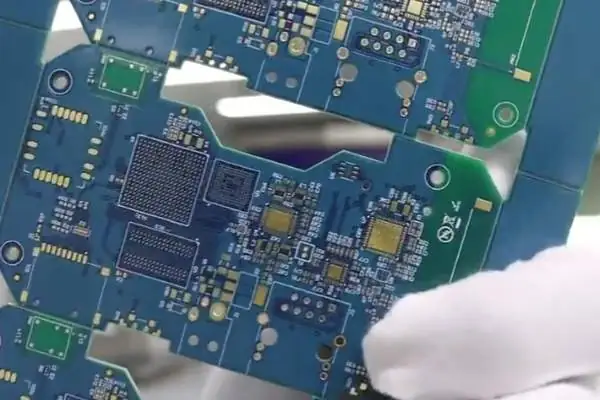
Previously, making boards for ordinary routers or 4G base stations felt like assembling building blocks—just put the modules on, connect them, and it would basically run! However, in the 5G era, especially with millimeter-wave devices, the entire design philosophy has to be rewritten! Once, I visited a lab specializing in antennas, and they showed me a sample board without its casing. The wiring was incredibly dense, like a spider web, and the width and spacing of each line had to be calculated in micrometers. Even a slight deviation would ruin the signal quality!
This reminded me of years ago when I helped a friend debug a board used in the Sub-6GHz band. Impedance matching was already a major headache back then! The material requirements for today’s high-frequency PCBs are so demanding, it’s like creating a work of art! Ordinary FR4 material simply can’t withstand such high frequencies; the loss is too great! Specialized high-frequency boards are needed, which are expensive and extremely delicate to process! A 5G PCB manufacturer complained to me that just to ensure the consistency of a batch of boards, they had to control the temperature and humidity in their workshop like an operating room!
Antenna integration is also quite interesting! Previously, antennas were externally mounted; now they have to be integrated into the board! This isn’t just a simple matter of drawing a few lines! You have to consider electromagnetic interference, thermal expansion coefficients, and even the solder paste composition has to be specifically specified! The most extreme example I’ve seen is a board with hundreds of miniature antenna elements integrated, each requiring individual phase tuning! This kind of work would probably make an engineer lose half their hair!
However, this high level of challenge has actually spurred many interesting innovations! For example, some manufacturers are starting to use semi-flexible PCB materials for antenna integration in specific areas, ensuring signal quality while adapting to various oddly shaped enclosure designs! Others are researching how to more tightly integrate the RF front-end and digital processing sections to reduce signal transmission path loss! These attempts may encounter setbacks at first, but they are definitely worthwhile in the long run!
I think in the next few years we will see more cases of combining traditional PCB design with new materials and processes! After all, 5G applications are becoming increasingly diverse, from mobile phones to base stations to various IoT devices, each with different requirements for circuit boards! This requires designers not only to copy standard solutions but also to truly understand how electromagnetic waves travel between conductors! Sometimes, a small via design can determine the success or failure of the entire system!
So don’t let its unassuming green board fool you; it’s the backbone of the entire 5G network!
I recently chatted with an engineer working on a base station project and realized that the 5G PCB field is far more complex than I imagined. He mentioned that many manufacturers are still using traditional methods to handle high-frequency signal transmission, resulting in severe signal attenuation.
I remember visiting a 5G PCB manufacturer’s lab last year, and their samples left a deep impression. The copper foil on ordinary PCBs had a sandpaper-like surface, while their ultra-smooth copper foil was practically a mirror. This subtle difference directly determines the stability of 5G signal transmission, especially in the millimeter-wave band.
In one test, we found that using copper foil with different roughness on the same circuit board could result in a signal integrity difference of over 30%. This reminded me of the sensitive situations I never encountered when working on 4G projects. Material selection in the 5G era truly requires more meticulous consideration.
Many people think that using high-end substrates solves the problem, but the quality of copper foil is often underestimated. I’ve seen numerous cases where the best dielectric materials were chosen, yet the entire board’s performance failed to meet standards due to copper foil issues. The current trend in the industry of using copper foil roughness as a core performance indicator is indeed necessary.
Several projects I’ve recently worked on have employed interesting hybrid material solutions. For example, high thermal conductivity substrates are used in areas requiring heat dissipation, while key signal layers are paired with ultra-low loss materials. This flexible combination is more practical than simply pursuing top-tier materials, as cost control is always a real concern.
A common misconception is that 5G PCBs must use top-of-the-line components throughout. In reality, differentiated design based on specific application scenarios is smarter. For instance, base station antennas require extreme performance, but some control circuits can be handled with improved FR4; the key is proper zoning.
Looking at these changes in the industry, I believe that in the coming years, 5G PCB manufacturing will increasingly focus on detail optimization. Just like the transition from 3G to 4G, we are now at a new technological turning point; meticulous attention to every detail can bring unexpected results.
I recently chatted with an engineer working on a base station project and realized just how incredibly difficult 5G PCB design is now. When their team initially designed the antenna array board using traditional methods, the signal attenuation was so severe that they had to scrap the entire design and start over. For example, in the millimeter-wave band, where wavelengths are shortened to the millimeter level, even micrometer-level line deviations can cause impedance mismatch, leading to a severe decline in signal integrity. They later used electromagnetic field simulation software for 3D modeling and discovered that traditional symmetrical wiring produces unexpected coupling effects in the 28GHz band.
Many people easily overlook the fact that high-frequency signals are far more sensitive to substrate materials than imagined. Once, I visited the lab of a 5G PCB manufacturer, and they showed me two boards that looked almost identical, but the phase noise measured by a vector network analyzer differed by tens of dB. The key difference was that one board used a special substrate with a low dielectric constant (Df), while the other used the ordinary FR4 material from the 4G era. The lab engineers demonstrated temperature cycling tests: when the ambient temperature rose from -40℃ to 85℃, the dielectric constant of the FR4 board fluctuated by 8%, while the special substrate only changed by 1.5%. This difference in stability will have a cumulative effect over the seven-year lifespan of base station equipment.
RF circuits are particularly demanding in terms of design skills. I’ve seen some engineers stack layers excessively in pursuit of higher parameters, resulting in extremely complex heat dissipation paths. Later, in a project, they switched to a high thermal conductivity ceramic filler material combined with a design featuring a large exposed copper area on the back, achieving better thermal management with fewer layers. Specifically, they used an insulating layer with a thermal conductivity of 2.0 W/mK beneath the power devices, paired with an anodized aluminum substrate, reducing thermal resistance by 40% compared to the traditional FR4 structure. This design kept the chip junction temperature below 90°C during continuous full-load testing.
Now, consider the paradox of 5G devices: achieving high integration while controlling heat generation. Imagine cramming hundreds of RF channels into a space the size of a mobile phone; each channel’s power amplifier generates heat, making the PCB itself the most crucial heat dissipation medium. An interesting case is a manufacturer that directly installed a row of blind vias filled with thermally conductive silver paste beneath the power amplifier chip, allowing heat to be vertically conducted to the metal casing. This approach is far smarter than simply thickening the copper layer. Through thermal imaging, they discovered that this vertical heat conduction structure resulted in a more uniform temperature distribution at hot spots, preventing localized overheating. They also incorporated trace amounts of alumina particles into the silver paste, maintaining conductivity while improving mechanical strength.
In terms of material selection, I believe we shouldn’t blindly pursue high parameters. I’ve seen too many teams insist on using top-tier materials with Df values below 0.003, only to find through testing that certain mid-range materials, combined with optimized routing, offer better cost-effectiveness for their specific frequency band requirements. After all, for base station equipment, considering outdoor temperature variations, the temperature stability of materials is sometimes more important than room-temperature parameters. For example, in the Sub-6GHz band, using medium-loss materials with a grounded coplanar waveguide design results in an insertion loss 0.2dB/cm lower than high-cost materials with microstrip lines. More importantly, mid-range materials typically have better CTE matching and can withstand more thermal cycling shocks.
Ultimately, PCB design in the 5G era is more like conducting materials science experiments. Last year, a manufacturer demonstrated to me how they achieved near-specialty material-level dielectric constant stability in ordinary epoxy resin by adjusting the resin system and the weaving method of the fiberglass cloth. This kind of incremental innovation is often more valuable than chasing the latest materials. They used a combination of 1078 type ultra-thin glass cloth and high-purity bisphenol A epoxy resin, and by controlling the temperature rise curve during the curing process, reduced the Z-axis expansion coefficient of the board to 40ppm/℃. This improved material showed nearly three times the peel strength retention rate compared to standard FR4 in high-temperature and high-humidity tests.
I’ve always felt that many people’s understanding of 5G technology is somewhat misguided, focusing too much on the flashy terminal devices. What truly fascinates me are the fundamental components hidden within those devices. Take 5G PCBs, for example; they’re like the transportation hubs of a city, paving the way for signal transmission speed.
I remember once visiting a 5G PCB manufacturer’s workshop, and the boards on the assembly line, covered with intricate circuitry, left a deep impression on me. An engineer pointed to a palm-sized board and said, “This contains dozens of layers of circuitry, and the signal interference between each layer is like a subway station during rush hour.” They’ve recently been experimenting with a new packaging process, embedding the antenna directly inside the PCB, which saves space and reduces signal attenuation. However, this design places extremely high demands on heat dissipation.
The most ingenious solution I’ve seen involves working on the PCB edges. One manufacturer etched microstrip antennas into the board’s edge area like embroidery, avoiding the densely packed central component area while utilizing three-dimensional space. This design reduced the overall device thickness by a third.
High-frequency signal transmission is actually quite delicate. Once, during testing, I discovered severe signal attenuation. After much investigation, I found it was a problem with the substrate—ordinary FR4 material was like a leaky pipe at high frequencies. Replacing it with a special ceramic substrate solved the problem. This discovery made me realize that sometimes the problem isn’t in the design but in the most basic material selection.
Many manufacturers are now pursuing ultimate integration, but I think we need to leave some margin. I’ve seen too many cases of heat dissipation failure due to excessive space compression. It’s like building roads in a city; you can’t just consider the number of lanes, you also need to leave emergency lanes.
Recently, I came across an interesting compromise: making the core RF module a separate daughterboard and connecting it to the motherboard via a special connector. This ensures signal integrity and facilitates later maintenance, but it significantly increases the precision requirements for the connectors.
Ultimately, designing 5G PCBs is like dancing on a pint—finding a balance between performance, size, and cost. Sometimes, the most advanced technology isn’t necessarily the most suitable; the key is the specific application scenario. This understanding has made me more pragmatic in my design process.
I’ve always found the circuit boards hidden inside mobile phones particularly fascinating. They aren’t as eye-catching as the screen, but without them, the entire device would be a brick. Especially now, with the arrival of the 5G era, the importance of these boards is even more apparent. You might not have noticed how data flows every time you open a video or download a file; it’s all supported by these intricate components.
I’ve seen design drawings from some 5G PCB manufacturers; the circuit layouts are more complex than a city’s traffic network. Every line must ensure smooth signal flow without any interference. This reminds me of how every ramp and exit of a highway must be carefully designed to avoid traffic jams. The same principle applies to the data flow on the circuit board; even a small problem can paralyze the entire communication system.
Many people think wireless communication is just between the cell tower and the phone, but countless such boards work silently in between. They convert signals into usable information, a process that requires extremely high precision and stability. An engineer I know said his biggest fear is tiny flaws on circuit boards because troubleshooting them later is incredibly difficult.
Now, more and more devices need to connect to the internet—from smart homes to self-driving cars, everything relies on reliable connectivity. This places higher demands on 5G PCBs, requiring not only high transmission speeds but also adaptability to various environmental changes. Sometimes I think that our pursuit of faster internet speeds is actually driving these unseen technological advancements.
Recently, I heard that some manufacturers are starting to experiment with new materials for circuit boards, which could lead to even greater breakthroughs. After all, with the explosive growth of data volume, traditional designs may soon reach their limits. The future of wireless communication may depend on how far these boards can evolve.
Looking at the phone in my hand, I suddenly realized that it’s not just a communication tool, but more like the culmination of sophisticated engineering. And the foundation of all this is the circuit boards that we usually don’t even notice, silently paving the way for the entire digital world.
I recently chatted with an engineer working on a base station project and discovered that 5G PCBs are far more complex than I imagined. He mentioned that many 5G PCB manufacturers are currently struggling with deformation issues caused by the lamination process—different materials have different coefficients of thermal expansion, and slight miscontrol of the temperature during lamination can easily lead to warping. This reminded me of a factory I visited before, where they even developed segmented heating lamination curves specifically for certain high-frequency boards.
The real test of technology is in the PCBs used in devices like AAUs. These not only have to support antenna arrays and high-frequency circuits but also ensure that multiple signals do not interfere with each other within a limited space. An interesting phenomenon is that some manufacturers are starting to experiment with using rigid-flex boards to connect antenna units at different angles. Although the design is more difficult, it does improve the overall structural flexibility.
The testing phase further overturned my understanding. Simply measuring S-parameters with a network analyzer is no longer sufficient; now, the entire board must be placed in a microwave anechoic chamber for over-the-air (OTA) testing to verify actual radiation performance. A friend in R&D told me that they once found a board with perfect specifications at room temperature, but its impedance fluctuated at low temperatures. They later discovered this was due to residual stress from the lamination process.
Regarding surface treatment choices, it’s not entirely about pursuing maximum loss. While electroless nickel-palladium-gold (ECN) offers good stability…
Recently, I was chatting with a hardware friend about an interesting phenomenon—many people associate 5G with visible components like chips and base station antennas. However, the real determinant of signal quality is the most inconspicuous component—the circuit board that carries all the components.
I’ve seen many projects initially choose ordinary PCB materials to save costs, only to suffer significant losses. A team developing smart factory sensors complained about unstable signals in metal-dense environments, later discovering the problem lay in the dielectric loss of the circuit board. Switching to a 5G PCB specifically optimized for millimeter waves resulted in an order of magnitude improvement in transmission stability.
This reminds me of the early 4G era when everyone thought ordinary FR4 material was sufficient; looking back now, it’s like trying to run an F1 racetrack with a bicycle tire. Truly professional 5G PCB manufacturers have long been researching how to make high-frequency signals run more stably on the board, for example, by reducing surface roughness through special copper-cladding processes or using hybrid dielectric materials to balance performance and cost. Take Rogers’ RO4350B material as an example: this hydrocarbon ceramic-filled laminate has a loss tangent of only 0.0037 in the 28GHz band, more than five times better than traditional FR4 material, significantly reducing signal distortion during millimeter-wave transmission.
There’s a detail many might have missed—the multi-layer HDI boards in high-end routers are already quietly using technology similar to 5G base stations. I disassembled a flagship router from a certain brand and found it used a 12-layer blind via design, shortening the signal path by 40% compared to traditional designs. This is probably a typical example of consumer electronics companies learning from communication technology. This design uses laser drilling to achieve micro-via interconnection, allowing RF traces to travel precisely within the board like subway tunnels, effectively avoiding interference from surface components on high-frequency signals. Speaking of future trends, I think the challenges brought by 6G may not lie in individual performance parameters, but rather in the overall architecture restructuring. The signal attenuation problem in the terahertz band is simply unsolvable with current PCB technology. Perhaps we will see new forms of hybrid silicon photonics and traditional circuit boards. Last year, during an electronics exhibition, I saw a laboratory demonstrating glass substrate integrated waveguide technology, which already shows some signs of this. Their demonstration showed that in the 300GHz band, the micron-scale waveguide structure on the glass substrate could control signal loss to within 0.1dB/cm, providing a possible technological path for terahertz communication.
However, some devices claiming to support 5G are actually still using 4G-era board designs, simply changing the RF chip before releasing them. This is like installing new doors and windows on an old house; it’s livable, but the sound and heat insulation are ultimately lacking. The real test for 5G PCB manufacturers is finding a balance between cost and performance, rather than simply piling on high-end materials. For example, in industrial IoT scenarios, a sandwich-structured partial hybrid board design uses high-frequency materials only in critical RF areas, while other digital circuit areas still use conventional FR4. This increases overall cost by only 15% but achieves an 80% performance improvement.
I’ve always felt that good hardware design should be like cooking soup—too much heat will burn it, and too much will cause it to lose its flavor. Recently, while evaluating the supply chain for a friend’s company, I discovered that some small and medium-sized PCB manufacturers can offer more flexible solutions, such as optimizing the dielectric constant of certain layers for specific frequency bands instead of simply copying the standard solutions from large manufacturers. A factory in Dongguan has developed a four-layer board structure specifically optimized for the 3.5GHz band. By adjusting the thickness ratio of the core board and the prepreg, impedance control accuracy reaches ±5%, making it particularly suitable for small base station equipment.
Perhaps when the 6G era arrives, many of the technical details we’re currently concerned about will become irrelevant, but one thing will remain unchanged—no matter how communication technology iterates, the board that silently supports all components will always be the unsung hero determining the success or failure of the system. Just like the emerging embedded passive device technology, which integrates capacitors and resistors directly into the PCB dielectric layer, saving space and reducing parasitic parameters caused by surface mounting, this structural innovation may be more revolutionary than material upgrades.
Chasing perfection at the Prototype PCB Production stage can actually plant hidden
In circuit board design, prototyping is often the most creative and most
A tire pressure sensor that lost signal after six months, taken apart,
- Pienten ja keskisuurten erien tuotannon asiantuntija
- Korkean tarkkuuden piirilevyjen valmistus ja automatisoitu kokoonpano
- Luotettava kumppani OEM/ODM elektroniikkaprojekteihin
Aukioloajat: (ma-la) klo 9:00-18:30.
Get quote, solution or any question, Andre always here to help