

What Separates the Best Prototype Printed Circuit Board Manufacturers When You’re Building a Telecom Rectifier PCB
Many people assume the key to circuit-board manufacturing is high-end equipment, but
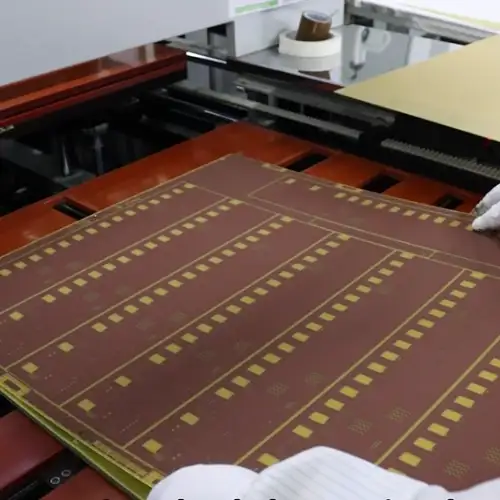
I have seen too many factories stumble on circuit boards in order to save costs. Those purchasing departments always like to use the price of consumer-grade boards to suppress the price of industrial printed circuit boards. As a result, the equipment began to break down within half a year of being installed.
In fact, to judge whether an industrial board is reliable or not, you don’t need to look at those fancy parameter certificates. Last year I went to an injection molding factory in Guangdong. The control cabinet in their workshop was full of oil and metal powder when opened, but the circuit boards inside had been running stably for more than five years. Later, I discovered that the supplier had done special anti-corrosion treatment on each connector hole, a detail that ordinary products would not consider at all.
Nowadays, many manufacturers simply understand industrial grade as using better materials. This is completely a misunderstanding. Real industrial circuit boards must consider practical factors such as vibration, humidity, and temperature differences from the design stage. For example, the boards of chemical plants must be resistant to corrosion, mining equipment must be resistant to vibration, and those used outdoors must cope with temperature changes.
Once, I helped a friend inspect a batch of equipment and found that the supplier secretly marked ordinary plates as industrial grade for delivery. If we hadn’t taken it apart and saw that the heat dissipation design of the power module had been cut corners, we would have almost been fooled. This kind of board can be tested in an air-conditioned room without any problem, but if it is placed in a workshop for continuous operation, it will be protected from overheating.
Choosing an industrial circuit board is actually a very practical issue. You have to ask yourself: In what environment is this board going to be installed? Does it need to be moisture-proof and shock-proof? How serious are the consequences of a failure? I know the owner of a food factory. They lose tens of thousands of yuan per hour of downtime for each production line, so they would rather spend 30% more to use the most reliable board.
Some engineers always like to pursue the latest technology, but what is most needed in industrial scenarios is stability and durability. I have seen too many high-end equipment undergo frequent maintenance because the basic circuit boards are not up to par. On the contrary, some old models with conservative designs can continue to work for more than ten years.
In the final analysis, industrial products and consumer electronics are fundamentally two different ideas. The former wants reliability that can withstand the test of time, while the latter often pays more attention to cost and appearance. If you are selecting equipment for your factory, it is recommended to go directly to the supplier’s production workshop to see their process level. This is much better than comparing parameter tables.
I have touched so many industrial printed circuit boards in this industry for so many years that I can’t even count them. Sometimes I think these things are quite interesting. They all look similar on the outside, but you can tell the difference once you hold them in your hands. Those boards that are really used in harsh environments always have a heavy and solid feeling. The edges are polished very smoothly and there are no burrs at all. On the contrary, some products that are called industrial grade are so light that it makes people feel unsure.
I know a guy who does equipment maintenance. There is a production line in their factory that always breaks down. I checked and found out that the fault was caused by a certain circuit board in the control cabinet. I took it apart and saw that there were fine cracks on the solder joints. If you don’t look carefully, you can’t find this kind of problem. You can’t detect it by doing regular tests in the laboratory. The machine keeps vibrating day and night for a long time. No matter how strong the connection is, it can’t withstand it. So the most feared thing in the industrial environment is this kind of chronic wear. Today is fine, tomorrow is fine, and after half a year of running, all the minor problems will appear.
Many people think that choosing components that are good enough is enough. In fact, the base material and process are the key. I have seen too many tampering with the thickness of the board in order to save costs. As a result, the resonance of the equipment soon after it was installed on site shook the chip components off. Really reliable industrial printed circuit boards will take factors such as changes in vibration coefficient and humidity into consideration during the design stage, rather than simply applying the standards of consumer electronics.
A friend who works in mining equipment told me that they purchased a batch of controllers and found that the interfaces were all rusted out in less than three months underground in a humid and corrosive gas environment. Later, they changed suppliers and used a special surface treatment process. Although the price was a bit more expensive, they had not had any problems after using it for more than three years. This difference is not obvious at ordinary times, but becomes apparent at critical moments.
I think a very simple way to judge whether a circuit board can withstand the industrial environment is to see if it dares to spread out the test data, such as the aging report and salt spray test results that simulate ten years of use. If the manufacturer always emphasizes the appearance or how high-end a certain component is, you have to be careful. The industrial scene requires reliability that can withstand loneliness, not flashy functions.
I have been working in a factory for more than ten years, and what I fear most is receiving a call in the middle of the night that the equipment is down. At that time, you want to tear up the supplier’s instructions, especially when you find that the so-called industrial printed circuit boards simply cannot withstand the test of the environment. Once there was something wrong with the humidity control in our workshop. As a result, the control board on the entire production line showed oxidation the next day, and even the most basic signal transmission was problematic. After that, I paid special attention to the protection level of the circuit board.
Many people think that industrial equipment is just an iron case with a few circuit boards. Actually this is not the case. Good industrial-grade products will take various extreme situations into consideration during the design stage. I have seen some manufacturers put ordinary civilian-level circuit boards directly into industrial equipment for sale in order to save costs. You may not notice any difference when it first starts running, but after three months, various minor problems will start to appear. The most typical one is poor contact caused by temperature changes. This kind of failure often goes up and down, making troubleshooting particularly painful.
I remember once helping a friend deal with a problem with an imported device. After taking apart the casing, I found that the layout of the circuit board inside looked like a work of art.
The issue of electromagnetic interference has been considered for each trace, and additional shielding has been performed on key parts. In comparison, the boards made by some domestic manufacturers seem too casual and do not even have the most basic heat dissipation design.
In fact, a very simple way to judge whether a circuit board is reliable is to look at its solder joint treatment. A good industrial circuit board has full and even solder joints, and will have a moisture-proof coating. The solder joints of the cheap version are often pitted, and welding is prone to occur over time. This difference in details often determines how long the equipment can run stably.
Nowadays, many factories are engaged in intelligent transformation. I think that instead of blindly pursuing new technologies, it is better to do the basic hardware well first. No matter how advanced the algorithm is, it needs reliable hardware to support it. We have seen too many cases where entire production lines have been shut down due to basic circuit board failures.
Sometimes I wonder why industrial-grade products are so much more expensive than ordinary products? Later, I gradually understood that the price difference was actually spent on things that we usually don’t pay much attention to. For example, thicker copper foil, better substrate and stricter quality control process. Although these investments increase costs, they can avoid many potential failure risks.
I always feel that circuit board design in the industrial field is overly mythologized. When some engineers mention industrial printed circuit boards, they think of using the highest quality materials and the most complex processes, as if not stacking materials would be a shame for the word “industrial”. But in fact, after working in factories for so many years, I found that what really determines whether a board can withstand an industrial environment is often the most basic design idea.
I remember one time when I went to inspect an old packaging machine, I was surprised when I opened the control cabinet – the circuit board inside was as simple as an example diagram in a textbook. But just such a board has been running continuously for more than ten years without any major problems. The wiring direction is clear, there is enough space around each component, and even the position of the heat dissipation holes seems to have been carefully calculated. This design may not be cool enough, but it is very practical. On the contrary, there are some new equipment now, the boards are made like works of art, and the densely packed components are crowded together. They look good, but it is a nightmare to repair them.
The most feared thing in the industrial scene is the tossing. Think about the equipment in the workshop: vibration, dust, temperature difference, none of them are fuel-efficient. When a circuit board works in such an environment, stability is more important than anything else. I have seen too many cases where reliability is sacrificed for the sake of performance – for example, in order to save a little space, the power components are placed too close and interfere with each other; or the circuits are so tightly hidden for the sake of appearance that even a test point cannot be found during debugging. These designs may be able to produce beautiful data in the laboratory, but they will all show their true form in the field.
In the final analysis, good industrial design should be like an old carpenter doing work – there is no need for fancy decoration, but every mortise and tenon joint must fit perfectly. The layout of the circuit board should take into account the maintenance needs for the next ten years, and sufficient margin should be reserved for the interface part. The material selection should match the actual operating temperature. These details may seem inconspicuous, but they determine whether the equipment can accompany you through countless production cycles.
Sometimes the simplest solutions are the ones that stand the test of time the most, like those old equipment that use ordinary FR-4 materials but have been running stably for twenty years. They taught me more than any technical manual.
Many people assume the key to circuit-board manufacturing is high-end equipment, but
Every time you open up an electronic device, that iconic green circuit
Chasing perfection at the Prototype PCB Production stage can actually plant hidden
- Pienten ja keskisuurten erien tuotannon asiantuntija
- Korkean tarkkuuden piirilevyjen valmistus ja automatisoitu kokoonpano
- Luotettava kumppani OEM/ODM elektroniikkaprojekteihin
Aukioloajat: (ma-la) klo 9:00-18:30.
Get quote, solution or any question, Andre always here to help