

Printed Circuit Manufacturer or Middleman in Disguise? What Buyers of a Welding Machine Controller PCB Keep Getting Wrong
During circuit-board procurement, many people assume they’re working directly with a Printed
Waiting for boards to come back is the most frustrating part of doing PCB work. I’ve lost count of how many times an originally quoted two-week lead time mysteriously stretched into a full month, and it took me a long time to figure out that what affects PCB delivery time is far more complicated than we assume. Sometimes you think the factory is just being slow, when the problem might actually be on your own side. Once, I designed a board with blind and buried vias — a Barcode Scanner PCB destined for a handheld reader — and I was confident the files were flawless, only to have the factory’s engineering review get stuck for three days because the stack-up notation wasn’t clear. This kind of oversight at the design stage often triggers a chain reaction downstream.
The real key to lead time is often hidden in the details. One small factory we recently worked with left a strong impression: within two hours of receiving our files, they had already listed seventeen technical points that needed confirmation, right down to alternative options for solder-mask-dam width. That kind of upfront communication efficiency cut a full quarter off our total production cycle.
Many people overlook material inventory as a hidden factor. Last month, a project needed a special high-frequency board material, and three suppliers gave lead times that differed by as much as ten days. It later turned out that two of them needed to temporarily source the substrate, while the one with standing inventory had it in production by day three.
Expedited service can genuinely bail you out, but don’t treat it as a cure-all. Once, rushing to get a demo unit ready for a trade show, I chose expedited service, only to have the factory still process it on their normal-process timeline because the design included a 0.2mm laser via. So-called expedite generally applies to standard processes — for a particularly complex design, even paying extra rarely compresses the schedule.
These days, before sending any board out, I spend half a day doing a “delivery rehearsal”: reviewing the design files from the supplier’s perspective, preparing a checklist for every process-confirmation item in advance, and even reserving time for the technical discussions I expect will come up. This habit has kept the actual delivery-time error on my last eight projects under two days.
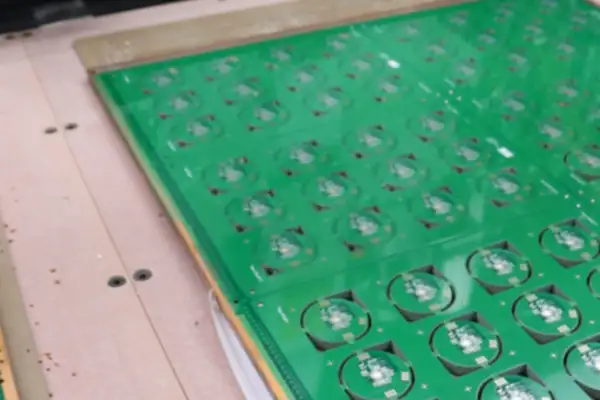
The ideal collaboration, honestly, is treating the factory as an extension of your own design process. One long-term partner now holds a video call with us to discuss manufacturability before my drawings even enter engineering review — that kind of deep communication delivers more real efficiency than any expedited service ever could.
I recently ran into an interesting situation — a customer was in a rush for a batch of boards, and it got stuck in engineering review for almost a week. Often, people overlook a key point: what affects PCB delivery time usually isn’t the speed of the production line — it’s how well the front-end communication is coordinated.
That customer’s design was fairly complex. During our DFM check, our engineers found several vias positioned too close to the board edge, which could compromise mechanical strength if we went ahead and produced it as-is. Standard procedure required customer confirmation before we could proceed, and the email sat unanswered for three days. This kind of thing happens a lot — sometimes a customer assumes a small issue doesn’t need attention, but every engineering change actually needs agreement from both sides.
I’ve noticed some customers treat engineering review as a mere formality, when in reality this stage is what truly determines delivery time. Take another project from last week — it went remarkably smoothly, because the customer proactively provided a complete process-requirement document before submitting the files, with even the impedance-control details clearly marked. That meant our engineers didn’t have to guess at design intent.
From the manufacturing side, what actually delays a project usually isn’t the technical challenge itself — it’s the dead time spent waiting for confirmation. Here’s a small tip worth sharing: if a customer can attach a design-notes document when submitting files, it saves everyone time.
Of course, special situations always come up. For instance, we once had a customer who needed a board made with a special material.
At the end of the day, PCB delivery is a bit like a game of table tennis — it requires continuous back-and-forth from both sides. Chasing production speed alone while ignoring upfront communication often creates an even bigger time loss.
Doing PCB work, I completely understand a customer’s urgency to get their boards. But what actually affects lead time is often far more complicated than people assume. Take HDI boards for a compact Barcode Scanner PCB, for example — I’ve seen no shortage of projects where the upfront design didn’t account for manufacturing process, leading to repeated revisions. Once, a customer insisted on a 0.1mm micro-via design, and it got stuck in the laser-drilling stage for a full three days — that kind of high-precision work is like carving detail into a strand of hair; you simply cannot rush it.
The plating process is often underestimated in terms of importance. Once, while producing a 16-layer board, we found copper thickness in one corner consistently falling short of spec, and it took two rounds of rework to find the cause. Plating time really isn’t something you can just compress arbitrarily — it’s a lot like simmering a broth; if the timing isn’t right, the flavor just won’t come together.
Testing is where people’s expectations are most often off. Many assume it’s the final step and should be quick. But for a complex board, flying-probe testing can run all night, and if a problem is found during testing, you might have to go back and re-trace it all over again. I remember one board where the test team spent half a day just locating a hidden short circuit.
In reality, what delays a project the most usually isn’t production itself — it’s the handoff between different stages. Things like a late material delivery, or an engineer juggling multiple projects at once — these seemingly small issues can trigger a chain reaction. I now advise customers to build flexibility into their planning, because a board delivered with real quality is worth far more than one that was rushed through.
Sometimes, watching a production line, I think maybe we need to rethink our relationship with time — not chasing speed at all costs, but giving every step enough time to guarantee quality. That’s what real efficiency actually looks like.
I’ve always felt a lot of people misunderstand PCB production timelines — they assume that with enough money, lead time can be compressed indefinitely. In reality, the factors affecting schedule are far more complex than that. Take an 8-layer board we took on last week — the customer urgently wanted three-day delivery, and the project got stuck on the most unremarkable step of all.
We specifically scheduled the lamination process to start in the middle of the night, hoping to save half a day. But when workers opened the equipment in the morning, they found slight warping along the board-material edge, forcing us to readjust temperature and pressure parameters and run the lamination again. This kind of surprise is extremely common in multilayer-board production, especially when board material comes from different supplier batches.
Sometimes what actually slows a project down is the most basic step. Take cutting, for example — most factories today use automated equipment, but for unusually shaped boards, it still requires manual operation by a veteran technician. Once, working on an irregularly shaped circuit board, cutting alone took three times longer than normal — not because the equipment couldn’t handle it, but because the cutting-head path required repeated recalibration.
I’ve seen too many projects go wrong chasing speed. Last month, a customer insisted on shortening the curing time, and the boards started delaminating within two weeks of use. In reality, what actually determines what affects PCB delivery time isn’t how fast any single step can go — it’s whether the different process stages fit together seamlessly. It’s like turning off the stove too early while cooking — the surface looks done, but the inside is still raw.
Now, before accepting an order, I always evaluate the overall flexibility in our schedule. If I know the lamination machines are fully booked for the week, I’ll move simple single-layer boards forward and reserve buffer time for more complex multilayer boards. That kind of dynamic adjustment works far better than simply pushing workers to work overtime.
At the end of the day, good PCB manufacturing is like simmering a broth — you can’t shave off a single minute that’s actually needed. Instead of obsessing over squeezing every process step faster, it’s better to focus your attention on avoiding rework — after all, the time lost redoing a job is enough to properly produce several more batches.
Every time I talk with customers about PCB delivery, I get the sense that everyone tends to focus purely on the production stage, when in reality a lot of the trouble is planted much earlier, at the design stage. I’ve seen too many examples where a small issue in the design file pushed the entire project schedule back. Sometimes it’s just a mis-drawn footprint or trace spacing that doesn’t meet spec, and the factory has to go back and forth confirming with the customer, and several days slip by before you know it. That’s not even counting the especially complex multilayer designs, which take even longer to review. So I’d say the first real hurdle affecting PCB delivery time is design quality — get that right, and you save a lot of trouble downstream. Of course, the factory’s own production scheduling is another key factor — the exact same board can be produced at very different speeds depending on which factory handles it. I once dealt with a small shop that made great promises when taking the order, only to have our order sit for a week waiting because their production line was tied up with a big customer’s order. In that situation, pushing doesn’t help — their capacity is genuinely limited. By contrast, well-managed factories will proactively communicate their production schedule, so you at least know where you stand. But what’s most frustrating of all is material supply. Many projects today use special board materials or custom inks, and procurement lead time is largely uncontrollable. I remember a customer last month who needed a high-frequency board material that’s frequently out of stock domestically — it took two full weeks just to arrive, during which the production line simply had to wait. So now I always advise customers to confirm material availability upfront, rather than discovering the bottleneck at the very last moment. At the end of the day, PCB delivery is an interconnected chain — design, factory, and materials — any one of them going wrong affects the final timeline. Sometimes, even when every step goes smoothly, logistics can still throw in a surprise. So you really can’t just look at the production days alone — you have to plan holistically from the very start.
I was recently chatting with a few friends who do hardware development and noticed something interesting — everyone tends to oversimplify PCB lead time, as if the supplier quoting a number of days settles everything. In reality, what actually affects PCB delivery time is far more complicated than we assume.
I remember a project last year where our team nearly got tripped up by a circuit board. A board originally promised in two weeks took almost a month to arrive. After talking it through in detail with the factory, it turned out the problem was copper-foil thickness — we had chosen a special-spec material for performance reasons, and the factory’s inventory fell short, requiring an emergency material transfer. This kind of seemingly minor detail is often exactly the trigger for a delay.
A lot of people assume that as long as the design file has no issues, the board will arrive on time — that’s actually a misconception. I once specifically toured a partner factory’s production line and discovered their scheduling system was far more complex than I’d imagined. Emergency rush orders, equipment commissioning, even staff shift scheduling — all of it can affect the overall timeline.
I’ve now made it a habit to ask about a factory’s current production load before placing any PCB order. Things like whether they currently have a large customer’s rush order in the queue, or whether equipment is undergoing maintenance — that kind of information is far more useful than simply pressing for a delivery date.
Logistics is another commonly underestimated factor. Once, a board was actually finished on a Friday, but because the warehouse doesn’t ship on weekends, it sat there until Monday before finally going out — that kind of invisible time loss is often the most frustrating part.
At the end of the day, PCB delivery isn’t simple assembly-line work — it’s a dynamic balancing act. As the requesting party, we need to proactively understand the key nodes in the production chain rather than passively waiting for notifications. After all, in hardware development, time is the most expensive cost of all.
Working in PCB manufacturing long enough, you start noticing an interesting pattern: two factories can quote nearly identical production cycles, so why can actual delivery times differ by one or two weeks? Sometimes it’s really not the factory dragging its feet — it’s a bunch of hidden factors quietly eating away at the schedule.
The most extreme case I’ve seen was a customer urgently needing a batch of high-frequency boards that got stuck for four full days at the impedance-testing stage. It wasn’t that testing itself takes long — it’s that the batch’s impedance value just wouldn’t settle into the target range, and engineers had to repeatedly adjust etching parameters, like performing micro-surgery on precision instruments — you simply can’t rush it. This kind of specialized testing tends to consume far more effort than a routine process: equipment needs warm-up time, staff need to watch the data curves closely, and sometimes you even have to wait for lab scheduling.
What’s genuinely frustrating is the chain reaction triggered by rework. Last month, a batch of boards failed final inspection because a grounding via’s copper thickness fell short of spec — it looked like a small issue, but tracing it back revealed that pressure parameters during inner-layer lamination had drifted, forcing the entire batch to be pulled apart and re-laminated. This is nowhere near a simple touch-up repair — it’s more like taking apart an already-assembled sandwich, swapping out the ham in the middle, and pressing it all back together again. And once that’s done, every performance test has to be re-run from scratch, and the time loss just keeps snowballing.
As for cross-border orders, customs clearance is basically Schrödinger’s cat — you never know when it’ll jump out and surprise you. Once, a package we shipped from Shenzhen to Germany, despite going through expedited air freight, sat stuck in Frankfurt customs for five days simply because a component code on the declaration paperwork was an outdated version number. We learned our lesson and now insist on DDP terms for all cross-border orders, letting the supplier handle the customs headache — at minimum, that guarantees any clearance delay won’t get passed onto us.
Geography actually matters more than people expect. Even within the same Pearl River Delta region, a factory in Dongguan is typically a couple of days faster than one in Shaoguan — not because of a technology gap, but because of differences in local supply-chain maturity. To put it plainly, in Dongguan you can find an immersion-gold shop, hop on an electric scooter, and drop the board off in twenty minutes; in a more remote area, the round-trip transport alone could eat up an entire day.
Recently, I started having my team use color-coded labels to indicate order urgency: red-tagged boards go through an expedited channel end-to-end, with raw-material procurement given top priority; yellow-tagged boards are allowed extra time on special testing steps but stay locked to strict logistics deadlines; green-tagged boards are used to balance overall production capacity. This kind of dynamic adjustment is far more practical than nitpicking efficiency at every single step — after all, circuit-board production isn’t assembly-line work; it’s more like solving an interlocking puzzle.
Years of doing PCB procurement have taught me one thing — lead time was never a simple numbers game. Staring at the date on the screen gets you nowhere; what actually matters is understanding the mechanics behind what affects PCB delivery time.
I’ve seen too many people treat a supplier like a vending machine, assuming placing an order guarantees on-time delivery. In reality, every factory has its own rhythm — during peak season, materials get held up at customs, production lines back up in a queue, maintenance technicians take leave to go home — these variables are harder to predict than a weather forecast. Last month, we had an urgent order that we thought we’d worked out perfectly with the supplier, only for their electroplating-solution supplier to suddenly halt production, triggering a chain reaction that pushed our delivery back a full ten days.
Now, whenever I discuss lead time with a supplier, I ask a few extra questions: is copper-foil inventory sufficient right now? Do they have experienced staff mentoring new hires? Could weather even affect logistics? These details matter far more than the penalty clauses written into a contract. Once, when a partner urgently needed a sample, I had the supplier ship a version made on their semi-automated line first — it cost more, but it kept the entire project from stalling.
Communication is a matter of timing. Constantly asking “is it done yet” tends to throw off the other side’s rhythm. I make a habit of calling at a fixed time each week — not to push for progress, just to check in on how the line is running. Once, a supplier proactively told me they were commissioning new equipment and suggested switching from a double-sided board to a 4-layer board, which actually saved three days. That kind of trust isn’t built by squeezing on price.
What worries me most is a customer who treats “as soon as possible” as their catchphrase. Once, R&D insisted on a design change right before end of day Friday, and I personally went to the factory with the project manager to watch the revision through overnight — parameters adjusted on the spot. Not only did we avoid a delay, we even discovered a thermal-dissipation risk that had been hiding in the original design. So really, at the end of the day, lead-time management is about getting everyone’s expectations onto the same wavelength.
We recently started color-coding projects by urgency level — red projects get common materials pre-stocked in advance, yellow projects allow the supplier some flexibility in process sequencing. It looks like more upfront preparation, but it’s actually cut down significantly on late-night emergency phone calls. Good lead-time management should have a natural rhythm of tension and release, like breathing — too tightly wound, and it’s bound to snap.
What’s most frustrating about circuit-board work is delivery timing. I’ve met plenty of customers who initially assumed that once the design file was sent, production would just start immediately. That’s really not how it works at all.
A commonly overlooked point is that your spec requirements directly affect the entire production cycle. Is the board thickness you need a common size, or something unusually thin or thick? It’s a bit like ordering a suit from a tailor — common fabrics are usually in stock, but if you want a special material, you have to wait for the shop to source it, or even have it custom-made. Once, a project needed a special substrate material, and just waiting for that material to arrive took nearly two weeks — before production had even started.
Within what affects PCB delivery time, one commonly underestimated factor is procurement efficiency. Whether a supplier already has standing inventory makes a real difference. I tend to favor factories with strong inventory management, since they usually keep ample stock of commonly used material specs, which saves a lot of waiting time.
Sometimes a seemingly simple spec change can trigger a chain reaction. For example, switching to an uncommon solder-mask color might seem like a minor tweak, but it can force the production line to temporarily adjust its process flow, or even require sourcing new raw materials. Once, chasing a particular visual effect, I chose a special shade of blue ink, and delivery ended up five days longer than expected.
Choosing a supplier is also a genuine skill. Some people focus purely on price, but an experienced factory can quickly reallocate resources when something unexpected comes up. I remember once, when component supply got tight, our long-term hdi pcb manufacturer partner tapped into their backup channel to keep the project from being delayed, while a newly found factory could only sit and wait.
The ideal approach, really, is factoring in manufacturability from the design stage. I’ve made it a habit now, when designing a circuit, to first check on current market availability for commonly used materials, and try to avoid specs with long procurement cycles. After all, good design isn’t just about achieving function — it also needs to account for the practical realities of manufacturing.
At the end of the day, circuit-board production is an interconnected chain — from design to material preparation to production, the time at every step needs to be accounted for. Planning ahead and maintaining smooth communication with the factory is far more reliable than rushing at the last minute.
Working in circuit boards, I’ve been through no shortage of frustrating situations. Sometimes you think sending over the Gerber files means everything’s set, and then the factory suddenly calls to say a particular layer doesn’t line up, forcing you to drop everything and go verify the files.
I remember once, rushing to keep a project on schedule, a simple unclear drilling-layer annotation pushed the entire PCB delivery time back a full week. Thinking it through carefully, there are actually quite a few factors affecting PCB delivery time — it’s not just about the production stage.
Many people may not realize that after a factory receives your design files, they still have to run an engineering review first. This step is especially critical — if there’s anything unreasonable in your design, like trace spacing that’s too tight or a pad size that doesn’t fit, the engineer has to reach out to confirm a revision plan with you.
I eventually learned my lesson — now, before sending any file, I always run it through the factory’s online design-check tool first. It takes an extra hour or so, but it saves a lot of trouble down the line.
One more small detail worth noting: special process requirements absolutely need to be clearly documented. Things like impedance control or back-drilling — mentioning it once in an email isn’t enough; it’s best to mark it directly in the Gerber files.
Once, working on a high-speed board for what would end up being a Barcode Scanner PCB inside a handheld reader, I forgot to note the impedance requirement, and the entire first batch came back unusable — I nearly got an earful from my boss that month.
At the end of the day, if you want to make sure a PCB gets delivered on time, the key is to think from the manufacturing side’s perspective. The more standardized your file package, the lower your downstream communication cost will be — a principle any experienced hdi pcb supplier will confirm.
I’ve made it a habit now — every time I package up a design file, I go through a checklist to cross-check everything. It’s a bit tedious, but it genuinely helps me avoid a lot of pitfalls.
During circuit-board procurement, many people assume they’re working directly with a Printed
Through a real case from a Vibration Monitoring PCB smart-hardware project, this
Practical, experience-based insights on how to ensure PCB quality consistency — from
- Pienten ja keskisuurten erien tuotannon asiantuntija
- Korkean tarkkuuden piirilevyjen valmistus ja automatisoitu kokoonpano
- Luotettava kumppani OEM/ODM elektroniikkaprojekteihin
Aukioloajat: (ma-la) klo 9:00-18:30.
Get quote, solution or any question, Andre always here to help